
REVIEW · SIGHTSEEING BUSES AND RICKSHAW RIDES
Kyoto Rickshaw Tour
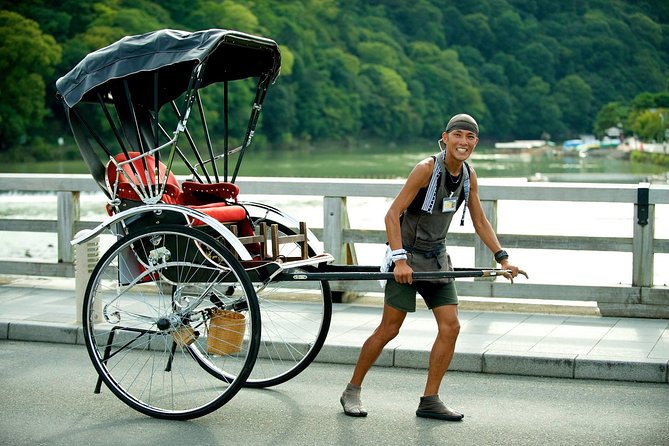
A rickshaw is a fast way to read Kyoto. This Kyoto Rickshaw Tour turns Higashiyama’s stone alleys and wooden townhouses into an easy, guided stroll, often with lively guides like Fumi and Kai setting the tone. You get the feeling of old Kyoto without spending hours fighting traffic or crowds.
What I love most is the way the pace matches the sights. The ride is slow enough to notice details, and the guides make time for stops where you can look, listen, and take pictures. I also like that you are not stuck with one rigid route, because your tour length and interests shape what you see.
The main thing to consider is comfort. Rickshaw seats are only 29.1 inches wide, and each rickshaw fits a maximum of 2 adults (with children handled by strict lap or extra-adult rules). If your group does not fit comfortably, you may want separate rickshaws.
In This Review
- Key things to know before you go
- Getting started at Ebisuya Higashiyama Rickshaw
- Why this rickshaw route works in old Kyoto
- Higashiyama’s wooden streets and landmark stops
- Geisha district lanes, townhouses, and the chance of a glimpse
- A small bridge stop and the best “Kyoto moment” photos
- Temples with gardens, then an “impressive” temple moment
- Reaching a large Gion shrine, especially around New Year
- The ride on cobblestone streets: fun, but plan for it
- Choosing your duration: 30 minutes vs 2 or 3 hours
- Comfort and group layout: seat width is the real decision-maker
- English guides and the “make it fun” factor
- Weather, pace, and keeping your day on track
- Price and value at $39.79 per person
- Should you book the Kyoto Rickshaw Tour?
- FAQ
- How long is the Kyoto Rickshaw Tour?
- Where do I meet for the tour?
- Is the tour private?
- What is included in the price?
- What is not included?
- Does the tour include hotel pickup or drop-off?
- Can I customize the tour?
- Is this tour available in bad weather?
- How many people can ride in one rickshaw?
- What if I’m late?
- FAQ
- Is Arashiyama Bamboo Forest included?
- What if my group does not fit comfortably in one rickshaw?
- Do I get a mobile ticket?
- Is the tour ticket valid at other branches?
Key things to know before you go
- Higashiyama first, Gion second, so you get Kyoto’s story arc in one outing
- English-speaking guide plus rickshaw ride included in the price
- Route length is flexible (30 minutes up to about 3 hours), but shorter times may miss some stops
- Picture stops are part of the plan, not an afterthought
- Rain or shine, so you can keep your Kyoto schedule moving
- Seat width is tight, so plan for at least one rickshaw per person if you care about comfort
Let something else do the walking
- Kyoto: Fushimi Inari, Kinkakuji, Bamboo Grove 1 Day Bus Tour
★ 4.8 · 4,316 reviews - Kyoto: Hop-on Hop-off Sightseeing Bus Ticket
★ 3.9 · 2,034 reviews - Kyoto/Osaka: Nara, Fushimi Inari Taisha, Arashiyama Bus Tour
★ 4.7 · 1,275 reviews - Kyoto: Arashiyama Customized Rickshaw Tour & Bamboo Forest
★ 5.0 · 432 reviews
Getting started at Ebisuya Higashiyama Rickshaw
Your tour begins back at the Ebisuya Higashiyama rickshaw stand (Ebisuya Higashiyama Rickshaw, 483 Shimokawarachō, Higashiyama Ward). It is a good place to anchor your day, because it is near public transportation, so you are not forced into a complicated meetup plan.
The start matters more than you’d think. Before you roll out, you will get clear direction on what your guide wants to cover in the time you booked. That is why the time you choose later feels real. A 30-minute ride can be a quick introduction. A longer ride gives room for real stops, more walking on the ground, and extra photo moments.
Why this rickshaw route works in old Kyoto
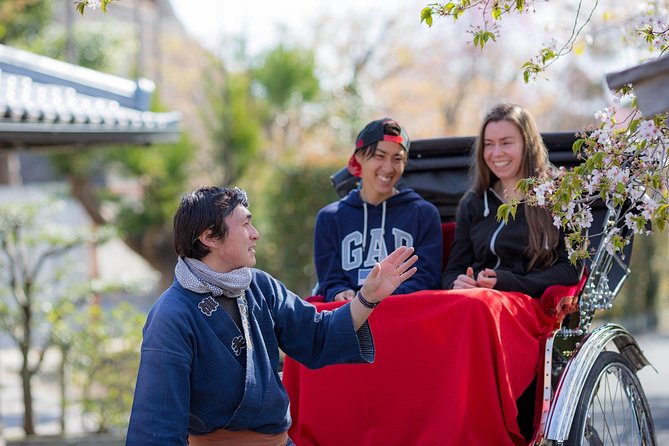
Kyoto’s Higashiyama area is famous for narrow streets, historic buildings, and stone lanes that look like they were designed for foot traffic. The rickshaw basically turns that difficulty into the point.
Sitting up top also changes how you see. Instead of weaving in and out on crowded sidewalks, you get a steady view of wooden facades, layered rooftops, and small street details that are easy to miss when you are moving fast. You also get that quiet rhythm that makes it easier to listen to your guide’s explanations without constantly looking down at your own feet.
One practical upside: this is private. Only your group rides together, so you can move at the pace your guide sets, and you are not getting pulled around by a large crowd’s priorities.
Higashiyama’s wooden streets and landmark stops
After meeting, your first segment focuses on the Higashiyama area. The early stops are designed to get you oriented. You start at a Higashiyama tour operator point, then roll toward a landmark of Higashiyama, which helps you build a mental map fast.
From there, expect classic scenes: older wooden buildings, stone alleys, and the kind of street corners where the city feels layered, not modern. This is where the rickshaw shines as a comfort upgrade. Even if you are not tired, it is still easier than trying to cover the same set of streets on foot in one go.
The ride time also matters here. If you choose something short, you’ll likely hit the best visual highlights and a couple of key stops. If you choose longer, the route opens up into more side streets and more chances to pause.
- PERFECT KYOTO 1-Day Bus Tour★ 5.0 · 13,518 reviews
- Kyoto: Fushimi Inari, Kinkakuji, Bamboo Grove 1 Day Bus Tour★ 4.8 · 4,316 reviews
- Kyoto: Tea Ceremony in a Traditional Tea House in Kiyomizu★ 4.9 · 3,519 reviews
- Kyoto Geisha Walking Tour: Gion District & Hidden Gems★ 4.7 · 3,273 reviews
- Kyoto: Tea Ceremony Ju-An at Jotokuji Temple★ 4.9 · 3,207 reviews
Geisha district lanes, townhouses, and the chance of a glimpse
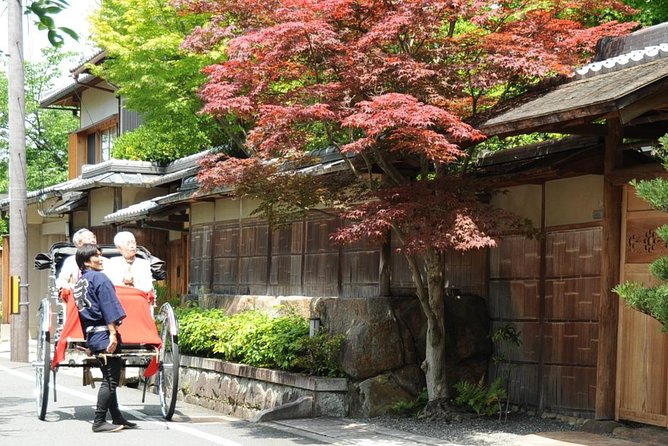
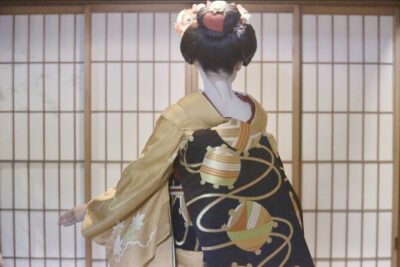
Next comes the geisha district and traditional wooden townhouses. This is usually the part people remember most because the area looks unmistakably historic. You might even spot a geisha or other traditional figures along the way, though it is never something you can schedule like a show.
Your guide’s job here is not just to point at buildings. You get context for why these streets and structures matter. You also get help reading everyday details, like how the lane design guides movement and where people tend to gather.
One detail I really appreciate in this kind of district is how the rickshaw helps you slow down without blocking others. When you’re seated, you can look longer, and your guide can time your stops so you do not feel like you are rushing through someone else’s neighborhood.
A small bridge stop and the best “Kyoto moment” photos
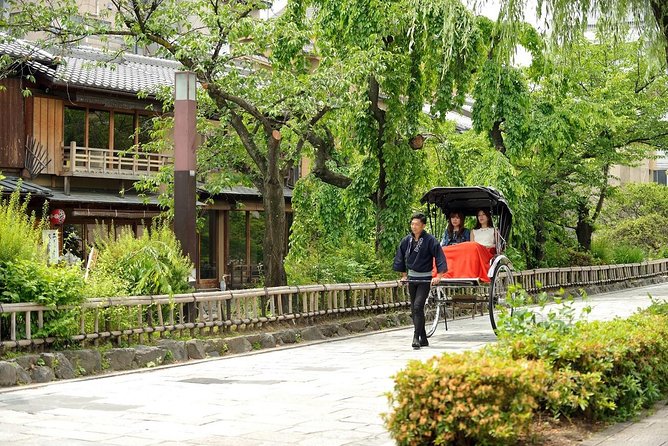
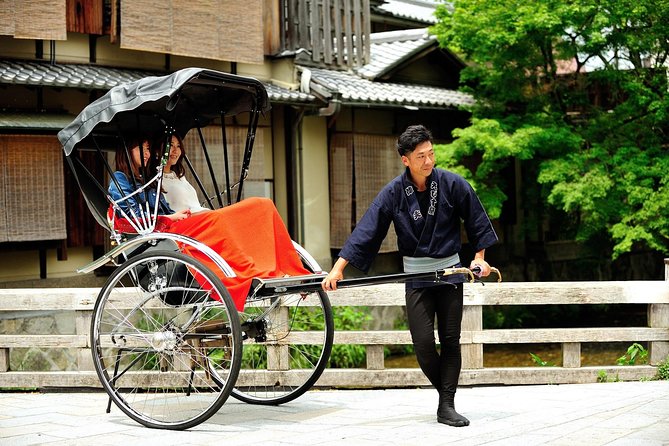
You also make time for a small bridge in the traditional district. Even if you’ve seen bridges in Kyoto photos before, the real appeal is the setting. This is the kind of place where the geometry of stone and water lines up with old architecture behind you.
If you care about photography, this is a great moment to ask for a quick picture setup. The tour experience tends to be strong on photos, and multiple guides are praised for taking excellent photos and even videos during stops. Plan to hold still, enjoy the moment, and let your guide pick the angle that works in a tight street.
If you want fewer crowds in your photo frame, a longer time slot can help, because the guide can wait for a calmer window and reposition you as needed.
Temples with gardens, then an “impressive” temple moment
The itinerary then moves into temple time, first with a beautiful temple with a garden, then an impressive temple. This shift is smart. Higashiyama gives you streets and architecture, then the temples slow your day down and add a quieter, spiritual layer.
At the garden stop, you’re usually there to appreciate composition and atmosphere, not to sprint through exhibits. You get a chance to pause, stand back, and notice how water, greenery, and stonework work together. If you like gardens, this stop can be one of the most relaxing parts of your day.
The next temple stop tends to feel more dramatic. Think size, presence, and the way temple spaces read as you approach. Your guide will also use this time to explain customs and what to look for, which makes your photos feel more meaningful later.
Practical tip: wear shoes that handle uneven stone. Even though you are on a rickshaw most of the time, you will still do short walks around stops.
Reaching a large Gion shrine, especially around New Year
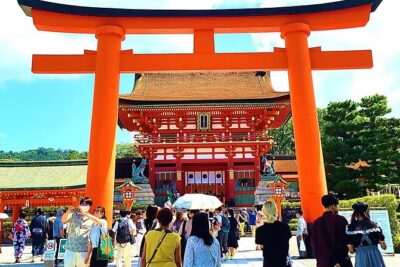
The tour’s final major landmark is a large shrine in the Gion area. The experience plan also notes it can be especially worth a visit during New Year, before or after the rickshaw ride.
That timing hint is useful even if your trip is not in late December. Big shrine grounds are where Kyoto’s seasonal rhythms become obvious, and seeing them from a guided arrival often makes the place feel easier to understand. Your guide can explain what you’re seeing without turning it into a lecture.
Also, keep in mind this tour returns to the rickshaw stand. If you want to continue on your own afterward, the Gion shrine stop can work like a natural launch point.
The ride on cobblestone streets: fun, but plan for it
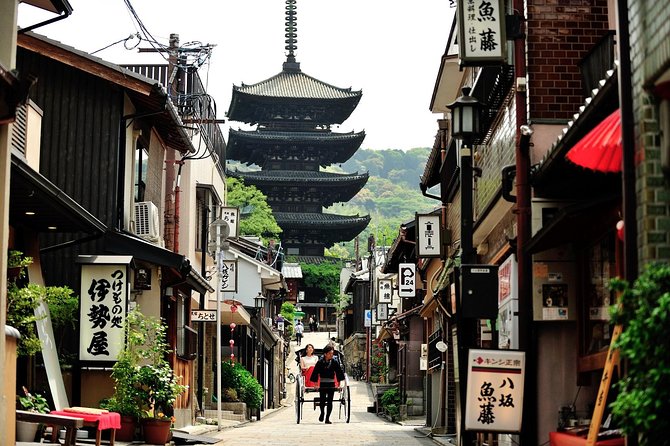
One line in the tour flow is about feeling history as you travel on old cobble stone street. That is not just poetic. Kyoto’s older lanes can be bumpy, and rickshaw rides can feel more rhythmic than smooth.
For most people, it is part of the charm. For anyone who is sensitive to rough surfaces, you should book with comfort in mind. A private rickshaw setup, based on your group size and fit, can help a lot.
If you have kids, the ride is usually a highlight. Just remember the strict rules around seating for children age 5 and under, including lap seating and adult-ticket requirements when a child is using one of the two seats.
Choosing your duration: 30 minutes vs 2 or 3 hours
This tour can run from about 30 minutes up to 3 hours. I like having the option because Kyoto is a choose-your-own-adventure city.
Here’s how I would choose:
- 30 to 70 minutes: best as a first introduction, especially if you are doing other Kyoto highlights the same day.
- 90 minutes to 2 hours: a sweet spot for seeing multiple districts and still getting a few longer stops.
- 2 to 3 hours: if you want more side streets, more temple time, and more chances for those “stop, look, take a photo” moments.
One important caution: not every landmark on the plan can be covered by shorter options. If there is a specific temple or style of stop you really care about, discuss options in advance, or ask your guide directly when you arrive.
Comfort and group layout: seat width is the real decision-maker
This tour sets a hard rule: a rickshaw can fit 2 adults, and each rickshaw is only 29.1 inches wide. The tour also notes it is sometimes more comfortable to book individual rickshaws for each passenger.
That matters because “able to fit” is not the same as “comfortable.” If your group includes two adults who do not share body space easily, or if you want extra arm room for photos and holding your phone, consider booking multiple rickshaws even if you technically could share.
For children age 5 and under, rules get specific:
- A child may sit on an adult’s lap (one child per adult).
- Up to 2 children under 5 can ride with 2 adults.
- If a child will use one of the two seats, they must book as an adult.
- Anyone not following the correct booking type can have availability limitations.
Bottom line: the price feels good at $39.79 per person, but your comfort will depend on how you book the rickshaw count.
English guides and the “make it fun” factor
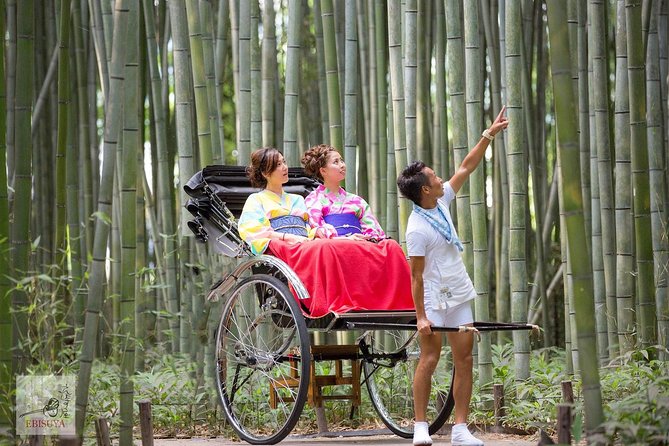
This experience includes a local English-speaking guide and the rickshaw ride. The guide is the difference between seeing old streets and actually understanding them.
In the guide style across the program, people praise a mix of humor, energy, and solid explanations. Names that come up again and again include Fumi, Kai, Fuji, Kanta, Shuhei, Yoshi, Daichi, Takumi, Hina, Kota, and Moto. Even without knowing which one you’ll get, the pattern is consistent: guides tend to be active, quick on their feet, and comfortable answering questions.
If you are the type who likes little cultural details, this is where you will enjoy yourself. Guides often point out customs and how to behave around shrines and temples, and they help you notice the kind of details that make photos look better than a quick drive-by.
Weather, pace, and keeping your day on track
Good news for planning: tours run rain or shine. So you are less likely to lose your Kyoto day to a weather swing.
Also, delays can affect your time. The tour notes that the amount of time you are late will be deducted from your tour duration, and delays of 10 minutes or more can trigger automatic cancellation. That’s not meant to be harsh, it is just how timed tours protect their schedule.
If you want the best experience, buffer your timing. Kyoto transit and sidewalks can take longer than expected.
Price and value at $39.79 per person
At $39.79 per person, this tour prices itself like an accessible “do it once” Kyoto experience. What makes it feel like value is that you are paying for three things at once: the rickshaw ride, a local English-speaking guide, and a structured route that covers multiple districts.
If you were to DIY it, you would spend time figuring out where to go and when to stop. With the rickshaw, you get a plan and an expert who can help you choose what matters. Private group format also helps. You’re not sharing your ride priorities with strangers.
The main value tradeoff is that your time is your time. If you book too short, you may miss some of the temple and shrine stops you were hoping for. If you book too long, you may find you want rest afterward. Match the duration to your overall Kyoto schedule.
Should you book the Kyoto Rickshaw Tour?
If you are visiting Kyoto for the first time, I think this is an easy yes. It is a fun way to get oriented, see Higashiyama and end up in Gion, and learn enough to make the streets feel less like a photo set and more like a lived-in place.
Book it if:
- You want a guided introduction to Higashiyama and Gion
- You care about photos and want help making them look great
- You want an option that reduces walking stress while still getting into the old streets
- You like having a guide who adds humor and local context, with strong photo support
Skip or adjust it if:
- Your group needs extra space. Seat width is tight, so plan rickshaw count early.
- You want total freedom to wander without stops. This is a guided, timed route with structured landmark visits.
- You already have another Arashiyama Bamboo Forest plan. That part is not included, and you’ll need separate plans.
My practical advice: choose the longest duration you can fit comfortably. Then plan your day so you arrive early, so you do not lose time. If you do that, you’ll leave with a clear Kyoto map in your head, and you’ll remember the streets as something you actually moved through, not just saw from afar.
FAQ
How long is the Kyoto Rickshaw Tour?
It runs from about 30 minutes up to 3 hours, depending on the option you choose.
Where do I meet for the tour?
You meet at Ebisuya Higashiyama Rickshaw, 483 Shimokawarachō, Higashiyama Ward, Kyoto, 605-0825, Japan.
Is the tour private?
Yes. Only your group participates.
What is included in the price?
The tour includes a local English-speaking guide and the rickshaw ride.
What is not included?
Food and drinks are not included, and the Arashiyama Bamboo Forest is not included.
Does the tour include hotel pickup or drop-off?
No. Hotel pickup and drop-off are not included.
Can I customize the tour?
Yes. The tour can be customized depending on your interests, and your chosen time length affects which landmarks can be covered.
Is this tour available in bad weather?
Yes, the tour takes place rain or shine.
How many people can ride in one rickshaw?
A maximum of 2 adults can ride per rickshaw. Up to 2 children age 5 and under can ride with 2 adults, and they generally need to ride on an adult’s lap.
What if I’m late?
Time you are late can be deducted from your tour duration. Delays of 10 minutes or more result in automatic cancellation.
FAQ
Is Arashiyama Bamboo Forest included?
No. The tour specifically notes it does not include Arashiyama Bamboo Forest.
What if my group does not fit comfortably in one rickshaw?
Even though rickshaws can fit two adults, the seat width is only 29.1 inches (74 centimeters). The tour recommends booking individual rickshaws for comfort. If you want to ride at the same time but do not both fit, you may need to purchase an additional rickshaw.
Do I get a mobile ticket?
Yes. A mobile ticket is offered, and confirmation is received at the time of booking.
Is the tour ticket valid at other branches?
The voucher or ticket can only be used at the Kyoto Higashiyama branch. It is invalid at the Kyoto Arashiyama branch.
Let Something Else Do the Walking

Newest Kyoto write-ups from the Loving Japan desk

Sightseeing Buses and Rickshaw Rides, side by side.
 ★ 5.0Mt Fuji and Hakone 1-Day Bus Tour Return by Bullet TrainFrom $16326,383 reviews
 ★ 5.01-Day Tokyo Bus TourFrom $12914,250 reviews
 ★ 5.0PERFECT KYOTO 1-Day Bus TourFrom $12913,518 reviews
 ★ 5.0Peaceful Hiroshima & Miyajima UNESCO 1 Day Bus TourFrom $1295,309 reviews
 ★ 4.4Tokyo Mt Fuji 5th St & Hakone Cruise Bus Tour w/Bullet TrainFrom $1545,024 reviews
 ★ 4.8Fushimi Inari, Kinkakuji, Bamboo Grove 1 Day Bus TourFrom $1224,316 reviews
 ★ 3.9Hop-On Hop-Off Sightseeing Bus TicketFrom $304,207 reviews
 ★ 4.2Mt. Fuji 5th Station & Hakone Cruise 1-Day Bus TourFrom $1292,381 reviews
Filed on these lists too