
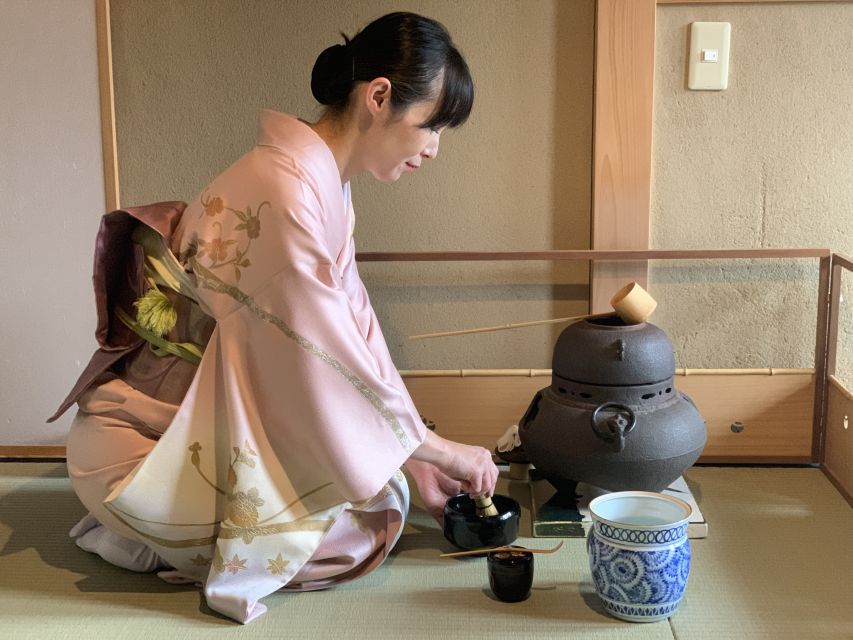
REVIEW · KYOTO TEA CEREMONIES AND MATCHA
Kyoto: Tea Ceremony Experience
Matcha turns Kyoto into a slow moment. In this traditional tea ceremony, I love that you learn the basics with real hands-on guidance and that the host walks you through the utensils and room layout. One thing to consider, though, is that sitting on the floor for much of the session can feel tough if you have knee or hip issues.
You start in a Kyoto machiya in the Higashiyama area, close to the classic temple lane by Kiyomizu-dera. The format is 45 minutes, in English, with seasonal sweets included, and you also get time for questions about matcha culture and the tea schools.
The experience can feel especially welcoming because hosts like Ikuko have a knack for explaining the ceremony clearly, and Nel has helped people who were traveling alone with photos in kimono. If you want a calm reset from Kyoto crowds, this is often the ticket.
In This Review
- Quick hits you will actually use
- Entering the machiya by Ninenzaka and the Park Hyatt
- What the first minutes cover: sweets, utensils, and room layout
- The ceremony flow: precise movements at a calm pace
- Whisking your own matcha: what you are really learning
- Included versus not included: what $32 covers
- Your comfort checklist before you go
- Where to fit it into your Kyoto day
- Who should book this matcha workshop
- Should you book the Kyoto tea ceremony with Camellia?
- FAQ
- How long is the Kyoto tea ceremony experience?
- What is the price and what does it include?
- What language is the instruction in?
- Is kimono rental included?
- Can I take photos or record video?
- What if I have trouble sitting on the floor?
Quick hits you will actually use
- Learn the tools first, so the movements make sense when the ceremony starts.
- Taste seasonal sweets with your tea, not just matcha for the sake of matcha.
- Whisk your own bowl, with step-by-step help from your host.
- Ask questions in plain English, including how the tea ceremony works and its schools.
- Plan for floor seating, or use the chairs and tables that are available.
- Expect a short, focused session, not a half-day performance.
Sit down somewhere quieter. Other tea rooms we booked
- Kyoto: Tea Ceremony in a Traditional Tea House in Kiyomizu
★ 4.9 · 3,519 reviews - Kyoto: Tea Ceremony Ju-An at Jotokuji Temple
★ 4.9 · 3,207 reviews - Kyoto: 45-Minute Tea Ceremony Lesson Experience
★ 4.3 · 2,378 reviews - Kyoto: Table-Style Tea Ceremony at a Kyo-Machiya
★ 4.9 · 1,211 reviews
Entering the machiya by Ninenzaka and the Park Hyatt
This tea ceremony experience begins in a traditional Kyoto machiya in Higashiyama, down an alley branching from Ninenzaka. The meeting point is easy to triangulate if you use big landmarks.
I recommend you aim for the Park Hyatt hotel first. Opposite the hotel you will find a Studio Ghibli store. Walk to the alley just to the left of that store, and you are in the right area. It is a narrow setting, so give yourself a few extra minutes and try not to wander too far when you see the alley signs.
Once you arrive, you settle in before the ceremony begins. The upstairs location matters too. If you have mobility concerns, note that the Garden Teahouse is wheelchair accessible, and chairs and tables are available if sitting on the floor is hard for you.
What the first minutes cover: sweets, utensils, and room layout
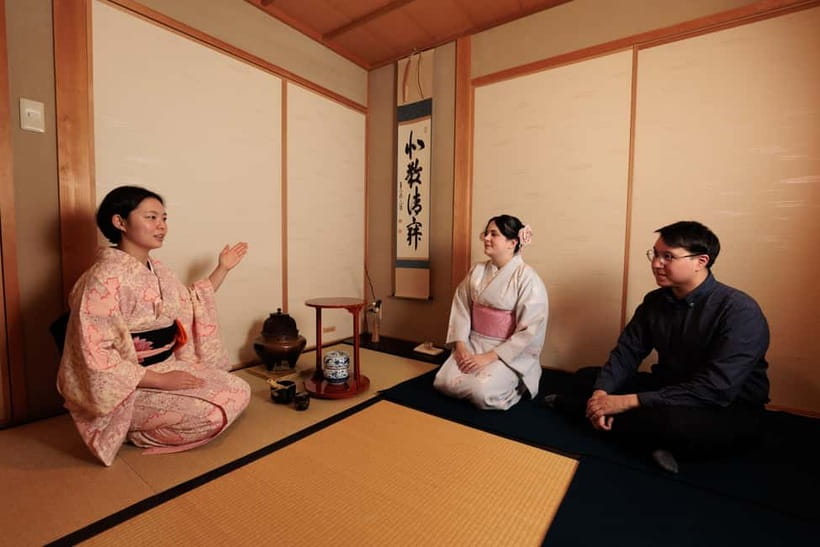
The ceremony does not start with you holding a whisk right away. First, your host sets the tone with a brief introduction to matcha and how the tea ceremony is meant to work. This early stage is part of why the experience sticks with people.
You get an overview of:
- The utensils used
- The basic steps in the ceremony flow
- The importance of the tearoom space, including decoration and room layout
Then comes a gentle moment that also teaches you something: you nibble traditional seasonal sweets with your tea while you chat. This is where you can ask questions and get context, like how different tea schools view practice, or what certain customs mean in everyday Kyoto life.
You also get a sense of pace. The host keeps the instruction clear and measured, so it feels more like a class in Japanese etiquette than a rushed show for tourists.
The ceremony flow: precise movements at a calm pace
When the ceremony begins, you watch the host perform the full sequence. The experience is designed to be peaceful, and the timing usually feels compact and intentional rather than long and drawn out.
The core point is that every movement has a reason. You will notice how the host handles the utensils carefully, how the bowl is presented, and how the preparation fits within the room’s rhythm. This is not about speed. It is about attention.
That matters for you if you want an authentic feel. Kyoto is full of things to see quickly, but tea ceremony culture is built around slowing down. The ceremony is also a break from the constant walking and shopping tempo nearby, especially around Kiyomizu-dera, Kodai-ji, Yasaka-jinja, Maruyama Park, Chion-in, and Gion.
If you are the type who likes learning how the rules create the atmosphere, this part will land.
- PERFECT KYOTO 1-Day Bus Tour★ 5.0 · 13,518 reviews
- Kyoto: Fushimi Inari, Kinkakuji, Bamboo Grove 1 Day Bus Tour★ 4.8 · 4,316 reviews
- Kyoto: Tea Ceremony in a Traditional Tea House in Kiyomizu★ 4.9 · 3,519 reviews
- Kyoto Geisha Walking Tour: Gion District & Hidden Gems★ 4.7 · 3,273 reviews
- Kyoto: Tea Ceremony Ju-An at Jotokuji Temple★ 4.9 · 3,207 reviews
Whisking your own matcha: what you are really learning
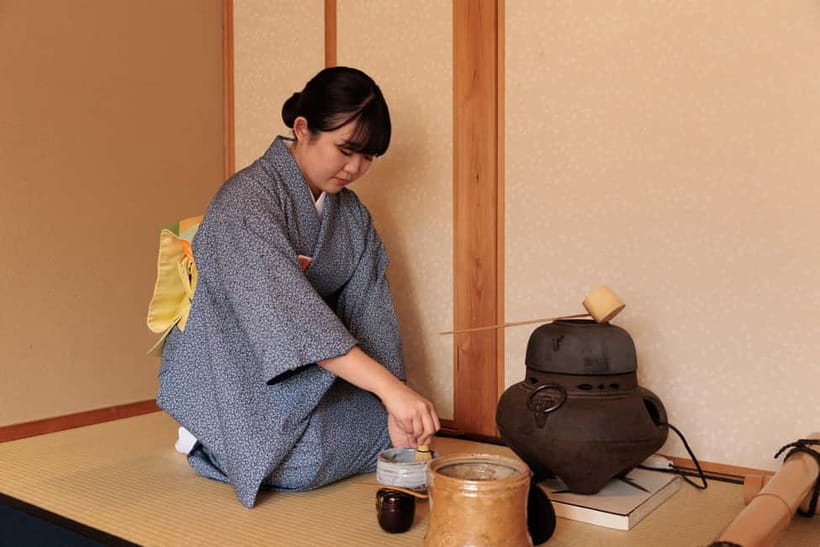
The big hands-on moment is making your own bowl of matcha with help from your host. This is where the experience goes from watching to doing.
You will learn the basics of preparing a bowl of matcha:
- How to manage the whisking process to get a frothy surface
- How to follow the steps the host demonstrates
- How the taste shifts when you do it right
Past participants have called out how helpful and patient hosts can be during the whisking, including guidance from Ikuko when someone was new to matcha. You will likely take your first sip as proof that matcha is not just a color, it is a flavor with real bite and a texture that depends on how you whisk.
Also, you are not expected to become a tea master in 45 minutes. The value is that you leave with practical muscle memory for the basic preparation, so you can make sense of what you tasted and what you watched.
Included versus not included: what $32 covers
At $32 per person, this is priced like a short, high-touch cultural class. And the “what you get” list is the reason it feels like a fair deal.
Included:
- Matcha
- Traditional seasonal sweets
- Tea-making utensils
- A personal instructor or host
Not included:
- Hotel pickup and drop-off
- Meals
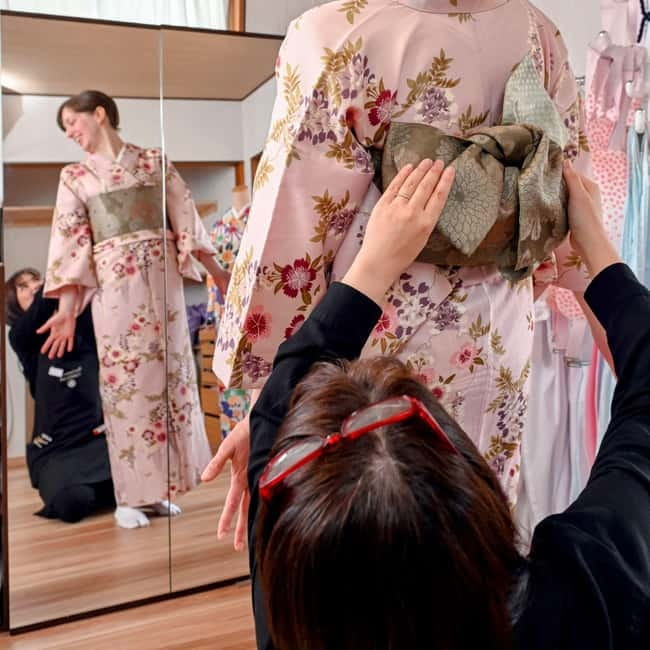
- Kimono rentals
That last one matters if you pictured dressing up. Kimono rentals are mentioned as nearby options, but they are not part of the package. If you want kimono, plan to arrange it separately.
Value tip: because utensils and instruction are included, you are not paying extra just to watch someone else work. You are paying for access to the process and a chance to do the whisking yourself.
Your comfort checklist before you go
A tea ceremony is intimate, and that can be either relaxing or awkward depending on your body and expectations. Here is what you should plan for so the experience feels good.
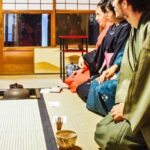
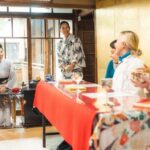
- Floor seating: chairs and tables are available if you find sitting on the floor difficult. You can also ask for a more comfortable position. You will spend much of the session seated in the tearoom.
- Upstairs location: the tearooms are upstairs, so consider stairs. If stairs are a concern, the Garden Teahouse is wheelchair accessible.
- Photography rules: non-flash, still photography is permitted, but video recording is not allowed.
- Restroom: restroom facilities are available.
- Interpreter support: if you are coming with an interpreter, a private tea ceremony is recommended to avoid disrupting other guests.
- Accompanying guides: tour guides may wait in a waiting room with WiFi and refreshments.
This is one of those activities where being prepared makes it better. Once you are comfortable, you can actually focus on the matcha and the choreography.
Where to fit it into your Kyoto day
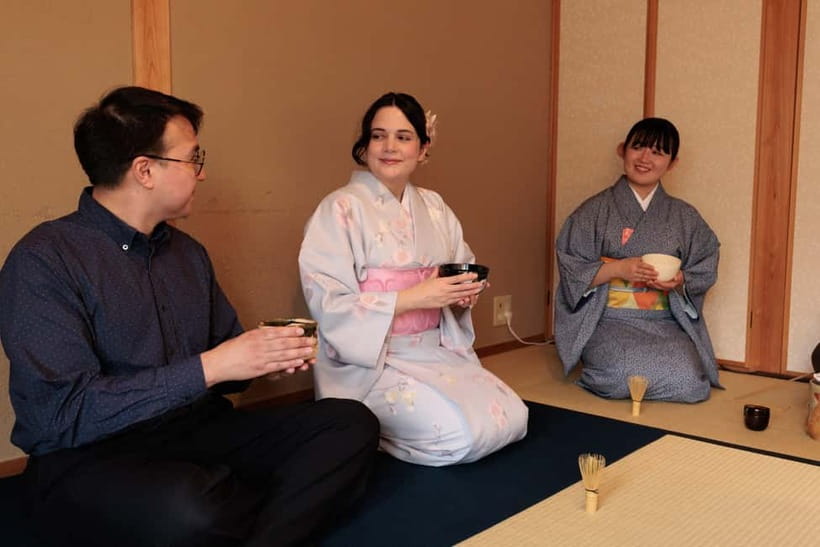
This works best when you treat it like a scheduled pause. It is close to major Higashiyama sights, including Kiyomizu-dera and the Gion area. That means you can combine it with temple wandering without feeling like you are losing your whole day.
A simple strategy:
- Do the loud sightseeing first, then use the ceremony as your calm reset.
- Afterward, you can drift toward Gion and the nearby streets without feeling you have to rush.
Walking time can be reasonable if you are comfortable on foot. The city center is accessible by bus along Higashi Oji, about 10 minutes from the teahouse. If you prefer walking, Gion is about a 25-minute walk through the geisha district area.
If you hate interruptions, book it when you are not sprinting toward another major stop immediately. The ceremony asks you to slow down.
Who should book this matcha workshop
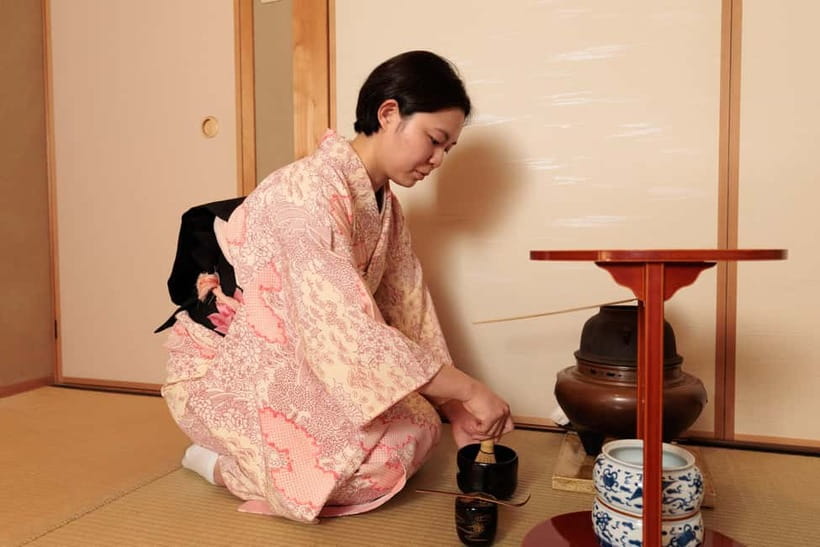
This is a strong pick if you want:
- A hands-on introduction to matcha that is more than a tasting
- A clear, structured explanation of what you are seeing
- A peaceful cultural break in a traditional Kyoto setting
- An experience conducted in English
It is also a great option for couples and small groups who like learning together. The format can be private or small groups, which usually helps if you have questions or want a quieter vibe.
If you want a long, hands-on cooking-style workshop, this may feel short. But if you want an efficient, meaningful taste of Kyoto tea culture that you can actually carry home as knowledge, 45 minutes is a sweet spot.
Should you book the Kyoto tea ceremony with Camellia?
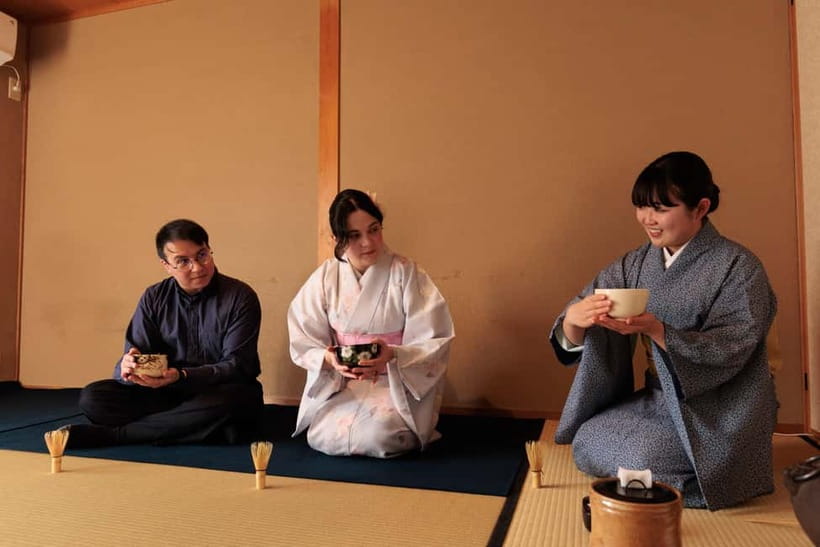
Yes, if you want a practical introduction to Kyoto tea culture that includes both watching and doing. The combination of seasonal sweets, utensil instruction, and making frothy matcha yourself makes the $32 feel like more than a souvenir stop.
Book it if:
- You are curious about matcha beyond the flavor
- You like structured cultural experiences with room for questions
- You want a calm break from the busiest streets
Reconsider if:
- You cannot comfortably sit for most of a short indoor session, even with chairs and tables
- You strongly dislike upstairs locations
- You plan to film heavily, since video recording is not allowed
If you show up a little early, use the Park Hyatt and Studio Ghibli store directions to find the alley without stress, and go in with a relaxed mindset, you will get what people tend to love most: a simple, beautiful ritual that teaches you something you can actually repeat at home.
FAQ
How long is the Kyoto tea ceremony experience?
It runs for about 45 minutes.
What is the price and what does it include?
The price is $32 per person. It includes matcha, traditional seasonal sweets, tea-making utensils, and a personal instructor or host.
What language is the instruction in?
The instructor is English.
Is kimono rental included?
No. Kimono rentals are not included.
Can I take photos or record video?
Non-flash, still photography is permitted, but video recording is not allowed.
What if I have trouble sitting on the floor?
Chairs and tables are available if you find it difficult to sit on the floor. The Garden Teahouse location is wheelchair accessible for mobility needs.
Kyoto by the Bowl
Newest Kyoto write-ups from the Loving Japan desk
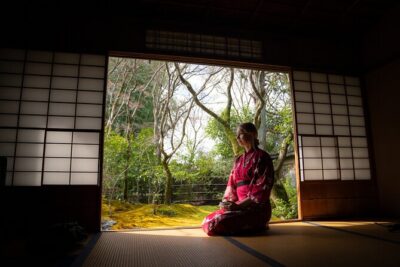
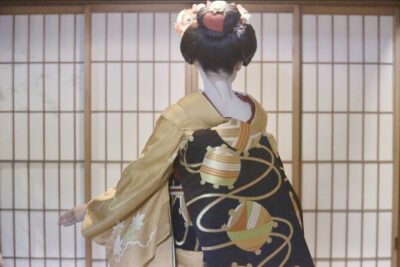
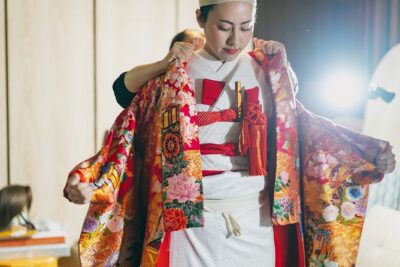
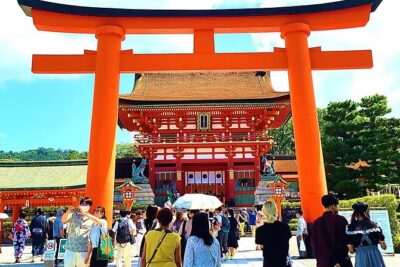
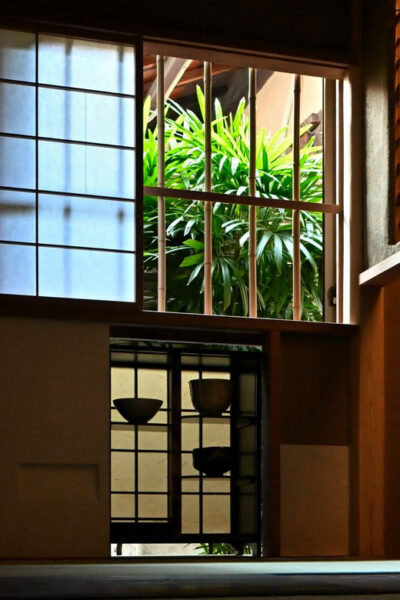
Kyoto Tea Ceremonies and Matcha, side by side.
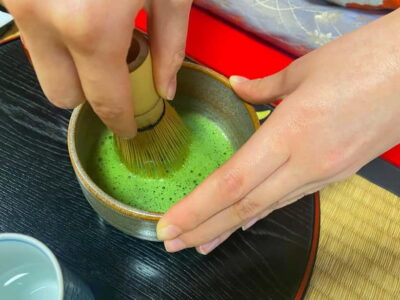 ★ 4.9Tea Ceremony in a Traditional Tea House in KiyomizuFrom $493,519 reviews
 ★ 4.9Tea Ceremony Ju-An at Jotokuji TempleFrom $293,207 reviews
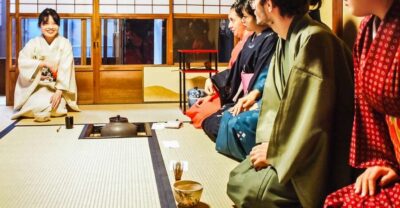 ★ 4.345-Minute Tea Ceremony Lesson ExperienceFrom $222,378 reviews
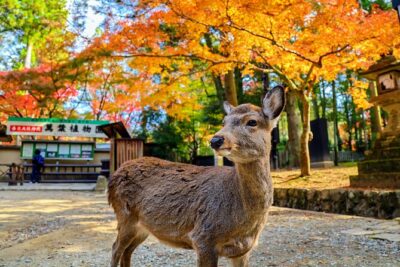 ★ 5.0World Heritage Kyoto & Nara Uji Authentic Matcha ExperienceFrom $1291,573 reviews
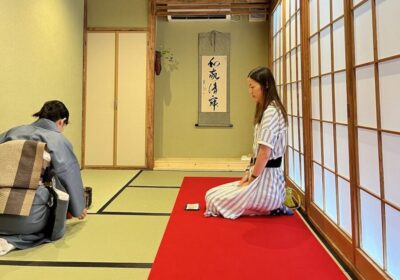 ★ 4.9Tea Ceremony ExperienceFrom $251,426 reviews
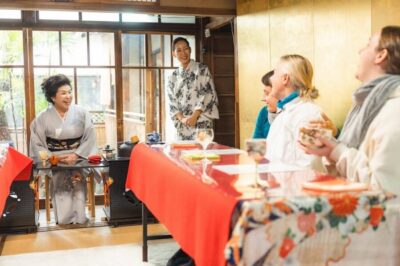 ★ 4.9Table-Style Tea Ceremony at a Kyo-MachiyaFrom $451,211 reviews
 ★ 4.8Kenrokuen Tea Ceremony ExperienceFrom $351,139 reviews
 ★ 5.0Kimono Tea Ceremony at Kyoto Maikoya, NISHIKIFrom $65911 reviews
Filed on these lists too