
REVIEW · JAPANESE GARDENS AND ZEN MEDITATION
Kyoto: Zen Garden, Zen Mind (Private)
Three Zen stops in one calm walk. This private Kyoto experience turns Zen gardens into something you can actually read, with a guide who explains what you are seeing and why it matters. I especially liked how Andrew, a landscape designer with 15 years of experience and a Master’s in landscape architecture, connects garden design details to Zen philosophy, so the places feel less random and more intentional.
The best part for me is that you cover multiple Nanzen-ji sites on foot, including Konchi-in and Tenjuan Temple, so you experience the area at a human pace and reach spots that cars and buses do not. One thing to consider up front is money and weather: the temple entrance tickets are not included, with a total of ¥1,600 per person, and the tour requires good weather.
In This Review
- Key highlights you will feel right away
- Why Nanzen-ji’s Zen gardens make more sense with a specialist
- Starting at Keage Station, then walking into a different Kyoto rhythm
- Stop 1, Konchi-in: a sub-temple that teaches you how to look
- Stop 2, Tenjuan Temple: how spirituality shows up in garden form
- Stop 3, Nanzen-ji: the head temple where the garden story comes together
- Andrew’s method: Zen philosophy meets garden design you can spot
- Price and value: $380 per group, plus the temple ticket reality
- Getting the most out of the walk: small prep that pays off
- Who this private Kyoto Zen garden tour is best for
- Should you book this Zen Garden, Zen Mind private tour?
- FAQ
- What temples are included in this private tour?
- How long is the Kyoto Zen Garden, Zen Mind tour?
- Are the temple entrance fees included?
- Where do we meet, and where does the tour end?
- Is this tour private, and how many people can join?
- What happens if the weather is poor?
Key highlights you will feel right away
- Three connected temple stops within the Nanzen-ji family, paced for walking.
- Andrew’s garden-design explanations tied directly to Zen meaning, not just facts.
- A private format for up to 4 people, so questions are easy.
- A quieter way to see Kyoto’s spirituality, because you are moving on foot between sites.
- Mobile ticket delivery for a smoother day.
Slower gardens, if the schedule allows
- Kyoto Arashiyama Walking Tour: Bamboo, Monkeys, Gardens & Secrets
★ 5.0 · 1,216 reviews - Kyoto Zen Meditation & Garden Tour at a Zen Temple with Lunch
★ 5.0 · 441 reviews - Kyoto: Zen Experience in a Hidden Temple
★ 5.0 · 437 reviews - Kyoto Arashiyama Bamboo forest & Garden Half-Day Walking Tour
★ 5.0 · 413 reviews
Why Nanzen-ji’s Zen gardens make more sense with a specialist
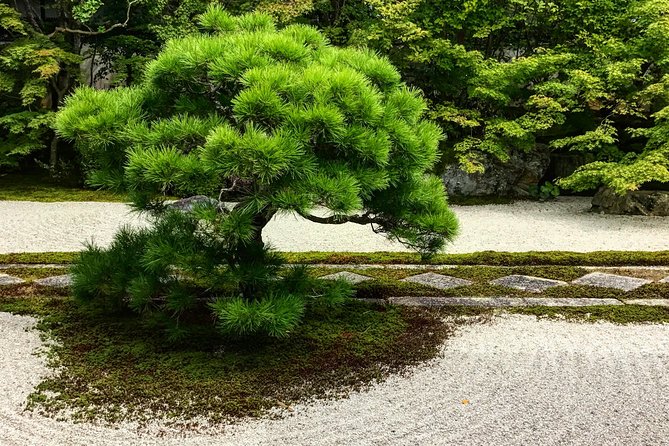
Kyoto’s Zen gardens can look simple at first glance. Rocks. Gravel. A few lines of greenery. The trick is that the simplicity is the whole point, and it is easy to miss what the layout is trying to say.
On this tour, you do not just walk from one temple to the next. You learn how to look. Andrew talks about design principles you can spot in real time, like the way lines guide your eye, and how the garden layout supports ideas like balance, restraint, and contemplation. It is not a lecture that makes you feel behind. It is more like someone handing you the right glasses, so the same stones suddenly look meaningful.
I also like the practical angle. Zen garden talk often turns abstract fast. Here, the guide keeps tying concepts to what you are literally standing in front of. If you like being able to connect visuals to ideas, this format fits you well.
Starting at Keage Station, then walking into a different Kyoto rhythm
You start near Keage Station (Higashikomonozacho), Higashiyama Ward. The meeting location is convenient because it is close to public transportation, and that matters in Kyoto, where time evaporates fast if you are constantly recalculating routes.
From there, your day becomes a slow, deliberate walk. You are moving between sub-temples and the head temple of Nanzen-ji, and you are not stuck staring at a phone screen waiting for the next bus. The walking route is part of the value. You are in Kyoto, not in a shuttle.
Expect roughly 3 hours of temple time across three stops, plus the walking time that fills out the total about 3 hours 30 minutes. It is long enough to get real context, not so long that your legs are plotting a betrayal.
Stop 1, Konchi-in: a sub-temple that teaches you how to look
Your first stop is Konchi-in, a sub-temple of Nanzen-ji. This is a smart opening because a sub-temple often feels more intimate than the head complex. You get room to focus.
What you are doing here is training your eyes. Andrew’s approach pushes you to notice design choices rather than just enjoying scenery. Even if you have seen pictures of Zen gardens before, being physically there changes everything. Gravel texture feels different. Lines feel sharper. Distance feels more dramatic.
Konchi-in also helps you understand the Nanzen-ji world as a system, not a single postcard. You begin to sense a relationship between the gardens you will see later. That is where the tour’s structure helps: by the time you reach the bigger site, you already have a vocabulary for what you are looking at.
- PERFECT KYOTO 1-Day Bus Tour★ 5.0 · 13,518 reviews
- Kyoto: Fushimi Inari, Kinkakuji, Bamboo Grove 1 Day Bus Tour★ 4.8 · 4,316 reviews
- Kyoto: Tea Ceremony in a Traditional Tea House in Kiyomizu★ 4.9 · 3,519 reviews
- Kyoto Geisha Walking Tour: Gion District & Hidden Gems★ 4.7 · 3,273 reviews
- Kyoto: Tea Ceremony Ju-An at Jotokuji Temple★ 4.9 · 3,207 reviews
Stop 2, Tenjuan Temple: how spirituality shows up in garden form
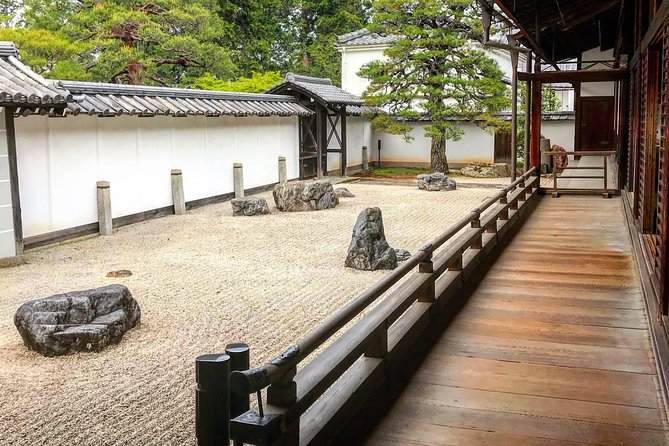
Next is Tenjuan Temple, another Nanzen-ji sub-temple. Tenjuan is where the tour tends to click for people who want meaning, not just aesthetics.
Andrew connects Buddhist and related spiritual ideas to garden design. The garden is not presented as a decorative object. It is treated as a visual language, one that supports reflection and calm. If you have ever wondered why these gardens feel orderly even when they are not symmetrical, this is the kind of explanation that helps.
You also benefit from the “quiet in motion” factor. Moving on foot between stops changes your perception. You see the approach, the space between sites, and the way the setting frames the garden. Even if you normally rush through temples, this tour slows you down in a way that feels natural.
Stop 3, Nanzen-ji: the head temple where the garden story comes together
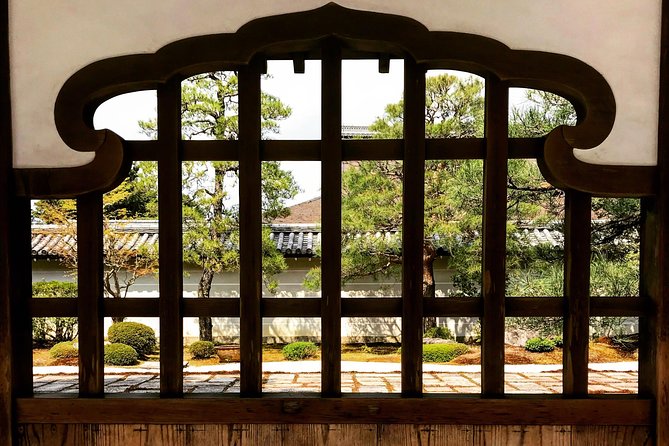
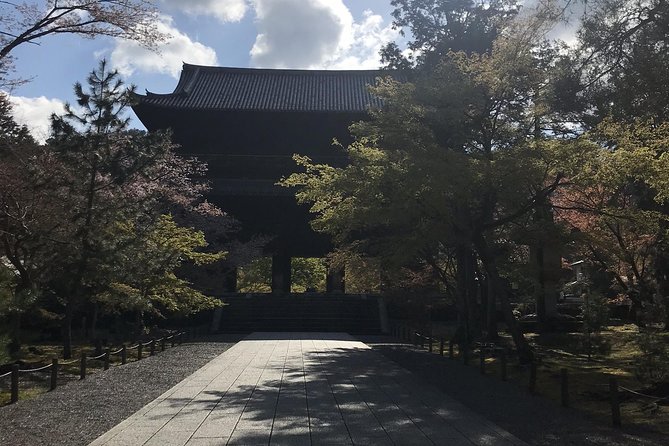
Your final stop is Nanzen-ji, the head temple of the Nanzen-ji Zen Monastery. This is where you stop thinking of each garden as an isolated scene and start seeing patterns.
From what you will learn earlier, you will likely notice how Andrew ties design to worldview. He also makes room for context beyond gardens, including the broader religious and cultural setting that shapes what you are seeing in Kyoto. That is a huge part of why this tour is so popular with people who care about Japanese spirituality, but it also works if you just love design and want deeper appreciation.
And yes, the final stop is practical too. The tour ends in front of Nanzen-ji at Nanzenji Fukuchicho, Sakyo Ward. So you are not left wandering to find the next thing. You finish at the center of the action.
Andrew’s method: Zen philosophy meets garden design you can spot
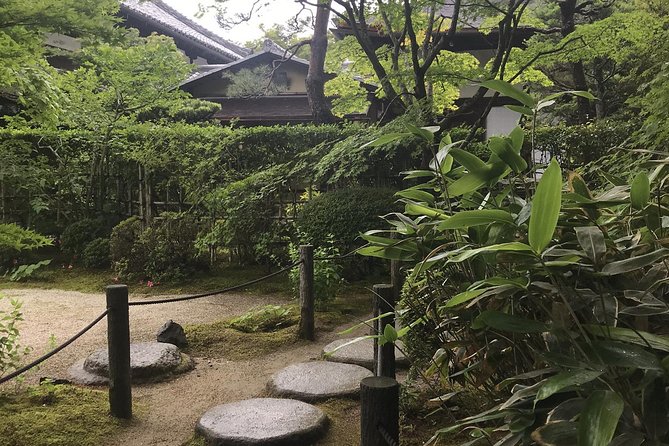
The tour’s “Zen Garden, Zen Mind” name is not just marketing. The best moments are when Andrew shifts your focus from what a garden looks like to what it is trying to do.
Here is what you can expect from his explanations, based on his background and how he teaches:
- He points out garden design principles you can recognize on the spot, especially in rock and gravel arrangements.
- He connects those principles to Zen practice, explaining how simplicity can function as a form of clarity.
- He adds context about how Buddhism and spirituality shape choices in Kyoto, not only the gardens but the surrounding temple culture.
The result is that you are not collecting random facts. You are building a way to look. If you enjoy asking questions, this is also a great setup. People tend to leave with not only better understanding, but more confidence about what they are seeing later on your own.
One more plus: the experience is private. That makes it easier for the guide to adjust pacing and angle based on what you care about, whether that is design detail, spiritual meaning, or just making sense of how Japanese garden aesthetics work.
Price and value: $380 per group, plus the temple ticket reality
The price is $380 per group, up to 4 people. For private tours in Kyoto, that is not “cheap,” but it can be good value when you spread it across a small group and compare it to the cost of doing multiple paid entries plus guide time.
At full capacity (4 people), your effective cost is about $95 per person for the guided walk and explanations. Then add the temple entrance tickets that are not included, with ¥1,600 per person total for the three temple admissions. So your total day cost will land higher than the headline price, but you are still getting one guide, one route, and three major stops.
I also like that the tour runs by mobile ticket. That may sound minor, but in a city where details matter, it helps you show up and get started without fuss.
Getting the most out of the walk: small prep that pays off

This is a walking-focused tour, so treat it like a “wear your best walking shoes” plan. Kyoto cobblestones and temple paths do not care about your schedule.
A couple of practical tips to get more out of it:
- Go in with at least a few questions, like how Zen garden design communicates meaning, or what elements are doing the work.
- Slow down when you reach each stop. Give your eyes 2 to 3 minutes before you decide you understand the garden. That pause is where Andrew’s points land.
- If you are interested in design, say so. Andrew has a background that helps, and the guide can steer the focus toward the parts you will enjoy.
One more thing: the tour requires good weather. If rain is in the forecast, have a backup mindset. Kyoto temples are still beautiful in bad weather, but this specific experience may need a reschedule.
Who this private Kyoto Zen garden tour is best for
This is a strong match for people who want more than scenic photos. You should consider booking if you:
- Love Japanese gardens and want to understand the logic behind their composition.
- Care about Buddhist and Zen ideas and prefer explanations tied to what you can see.
- Want a private, calmer pace rather than squeezing into group dynamics.
- Like learning from someone with formal training, Andrew’s Master’s in landscape architecture background shows up in the way he explains design.
It is also ideal if this is your first trip to Kyoto and you want to build a foundation for what makes the city’s spiritual sites distinctive. You will come away with a stronger ability to interpret garden choices not just at Nanzen-ji, but elsewhere.
If you are mostly trying to see as many temples as possible with zero interest in meaning, you might find this too focused. But if you enjoy “why” as much as “what,” it is a great fit.
Should you book this Zen Garden, Zen Mind private tour?
If your goal is to understand Kyoto’s Zen garden aesthetics and spirituality in a way that feels practical, I would book this. The combination of Nanzen-ji sub-temples plus the head temple, guided by Andrew’s design-and-meaning approach, is exactly the kind of structured experience that makes Kyoto feel less like a checklist.
If you are on a tight budget, do the math first because of the ¥1,600 per person entrance tickets and the fact that the tour depends on good weather. Also, because it is private for up to 4, it is easiest value if you are traveling as a small group or you really want that one-on-one attention.
One smart move: plan ahead. This tour is typically booked around 53 days in advance, so if you have a specific date in mind, lock it in early.
FAQ
What temples are included in this private tour?
You visit Konchi-in (a sub-temple of Nanzen-ji), Tenjuan Temple (another sub-temple of Nanzen-ji), and Nanzen-ji (the head temple of the Nanzen-ji Zen Monastery).
How long is the Kyoto Zen Garden, Zen Mind tour?
The duration is about 3 hours 30 minutes.
Are the temple entrance fees included?
No. The total temple ticket fee is ¥1,600 per person for the three temples.
Where do we meet, and where does the tour end?
You meet near Keage Sta. Higashikomonozacho, Higashiyama Ward, Kyoto, and you end in front of Nanzen-ji at Nanzenji Fukuchicho, Sakyo Ward, Kyoto.
Is this tour private, and how many people can join?
Yes, it is a private tour/activity. The group size is up to 4 people.
What happens if the weather is poor?
This experience requires good weather. If it is canceled due to poor weather, you will be offered a different date or a full refund.
Gardens Worth Slowing For

Newest Kyoto write-ups from the Loving Japan desk

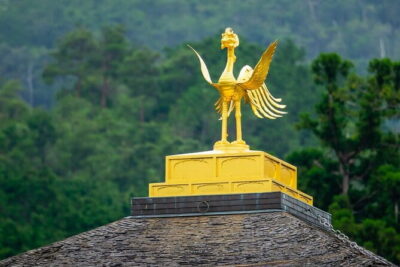

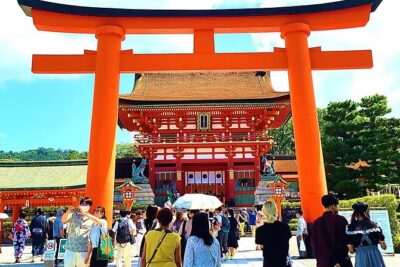
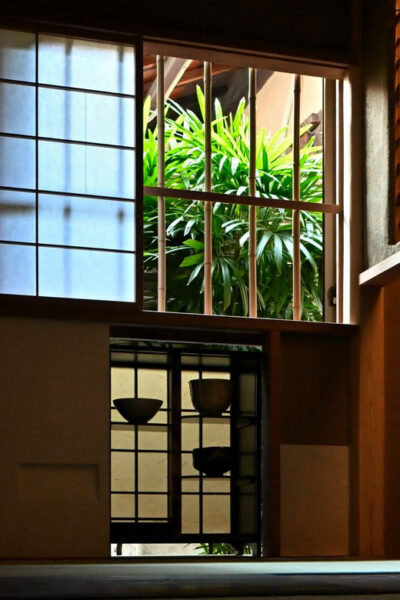
Japanese Gardens and Zen Meditation, side by side.
 ★ 4.5teamLab Botanical Garden Entry TicketFrom $111,710 reviews
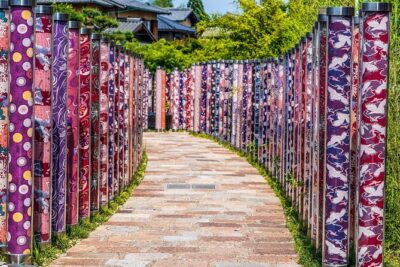 ★ 5.0Kyoto Arashiyama Walking Tour: Bamboo, Monkeys, Gardens & SecretsFrom $651,216 reviews
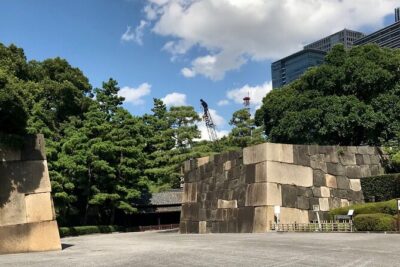 ★ 5.0Imperial Palace East Garden and Edo Castle Walking Tour in TokyoFrom $25510 reviews
 ★ 5.0Zen Meditation at a Private Temple with a MonkFrom $55510 reviews
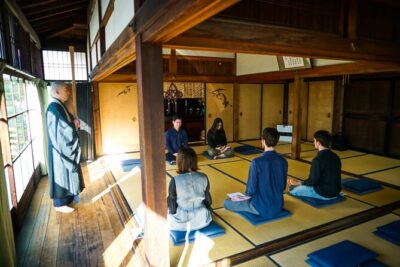 ★ 5.0Kyoto Zen Meditation & Garden Tour at a Zen Temple with LunchFrom $110441 reviews
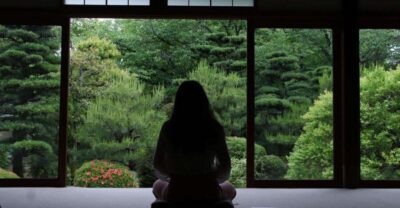 ★ 5.0Zen Experience in a Hidden TempleFrom $109437 reviews
 ★ 5.0Kyoto Arashiyama Bamboo forest & Garden Half-Day Walking TourFrom $129413 reviews
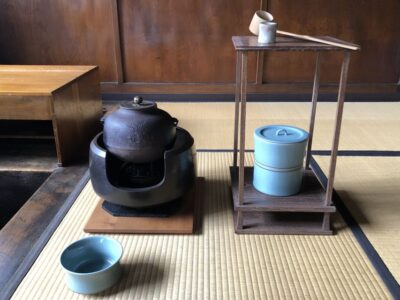 ★ 4.8Tea Ceremony Meditation – Make Matcha with Tea MasterFrom $45406 reviews
Filed on these lists too