
REVIEW · NAGASAKI MEMORIAL SITES AND CITY TOURS
Nagasaki WW2 History and Culture Tour
Nagasaki hits you in the gut, then lifts you up. This 7 to 9 hour small-group tour strings together WW2 sites, Nagasaki’s daily culture, and reflective stops like Nagasaki Peace Park, with time to see more than the usual postcard route. It’s led by Shannon Lefebvre, and the tone stays respectful while still showing you how Nagasaki lives today.
I especially like the small group size (private for your group, up to 3) paired with pickup and private, air-conditioned transport. I also love that the day is built for comfort and pacing, with still and sparkling bottled water, periodic beverages, and an included Japanese lunch that can be picnic-style or grab-and-go.
The main drawback is emotional intensity. The Atomic Bomb Museum is described as extremely graphic, and it may be heavy going if you’re not in the right mindset, or if you prefer lighter history outings.
In This Review
- Key things I’d bank on before you go
- A Nagasaki day that treats WW2 history like real life
- Price and group value, $656.88 for up to 3
- Sohonzan Shrine: the quiet start that sets the tone
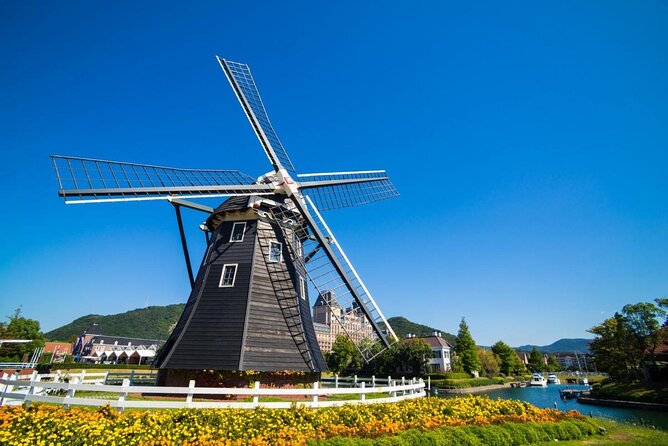
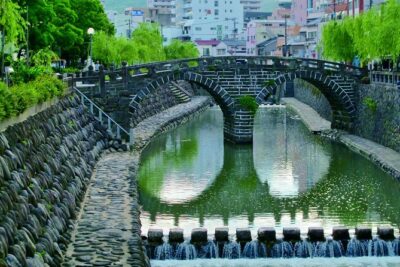
- Saikai Bridge and Hario Straits: sea power and natural drama
- Hario Radio Tower and the wartime communication story
- Umegae Sake Brewery: a softer Nagasaki pause
- Mukyudo air-raid shelter: school history under wartime pressure
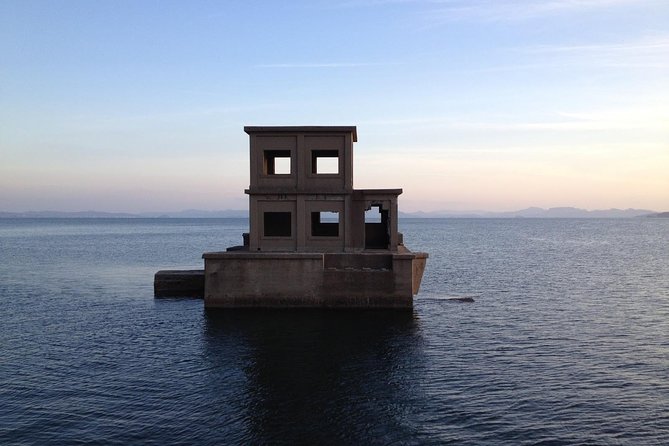
- Katashima Torpedo Base Ruins: training facilities in a massive shell
- Hasami ceramics: proof Nagasaki keeps making things
- Nagasaki Peace Park: space to reflect without rushing
- Atomic Bomb Museum: powerful, graphic, and not for everyone
- Inasayama Observation Deck: Nagasaki seen from above
- Alcohol, lunch, and pacing that keeps your brain working
- How the guide shapes the experience, Shannon Lefebvre
- Who should book this Nagasaki WW2 tour
- Should you book it? My call
- FAQ
- FAQ
- How long is the Nagasaki WW2 History and Culture Tour?
- Is this a private tour?
- What is included in the price?
- Are there pickup options?
- What about food and drinks during the day?
- Which major attractions have admission included?
- Is there WiFi during the tour?
- Is the tour duration and schedule reasonable for a full day?
- What happens if the weather is poor?
Key things I’d bank on before you go
- Atomic Bomb Museum + Inasayama Observation Deck tickets included, so you’re not juggling admissions that eat time
- Private group up to 3, meaning you can move at your guide’s pace and ask real questions
- WW2 sites plus living culture, with stops tied to Nagasaki’s ceramics and sake world
- Hario Transmission Towers area, where Nagasaki’s wartime communications show up in a very physical way
- Hydration is handled, with still and sparkling bottled water during the day
- A day-long plan that won’t feel rushed, with short stop times that keep momentum without constant rushing
Further guided walks through Nagasaki and its memorial sites
- Nagasaki: Private Walking Tour with a Local
★ 4.7 · 79 reviews - Nagasaki Full-Day Private Tour with Government-Licensed Guide
★ 5.0 · 66 reviews - Nagasaki Half-Day Private Tour with Government-Licensed Guide
★ 5.0 · 53 reviews - Visit Gunkanjima Island (Battleship Island) in Nagasaki
★ 4.0 · 32 reviews
A Nagasaki day that treats WW2 history like real life
Nagasaki has a specific feel. It’s spiritual in the morning, maritime and dramatic around the water, and then it turns sharply serious when you reach the WWII reminders. That turn is exactly why this tour works.
I like how the route doesn’t just march from one memorial to another. You start at Sohonzan Shrine, with its huge torii gate, then you shift to sea geography around Saikai Bridge and Hario Straits. After that, you move into wartime infrastructure and civilian survival spaces, and only then do you sit with the Peace Park and the Atomic Bomb Museum.
You also get a cultural counterweight built in. By the time you reach Hasami ceramics and Umegae sake, the story is broader than a single chapter of history. It helps you understand Nagasaki as a place that endured, adapted, and kept making things.
Price and group value, $656.88 for up to 3
This tour is priced at $656.88 per group (up to 3), and it’s typically booked about 65 days in advance. On paper, it might look like a premium. In practice, the value comes from three things you don’t have to coordinate yourself:
First, you get private transportation in an air-conditioned vehicle, plus pickup. That matters in Nagasaki when sites are spread out and you want the day to run like a schedule, not a scavenger hunt.
Second, admissions are included for two major stops: the Atomic Bomb Museum and the Inasayama Observation Deck. Those are the kind of tickets that can slow you down if you’re doing everything independently.
Third, you’re not traveling with a big bus crowd. A group up to 3 means the guide can shape the day to your pace, and you’re more likely to get context, not just directions.
If you’re traveling solo, the cost can feel steep. If you can pair up with one other person, it often starts to feel like a smart way to buy time, comfort, and expert framing in one go.
Sohonzan Shrine: the quiet start that sets the tone
You begin at Sohonzan Shrine, and the first thing you notice is the scale of the entrance torii gate. It’s not a small, quick stop. It signals that you’re stepping into something important and still.
This opening stop matters because it lowers your volume before the day gets heavy. You get a sense of place first, then you can mentally switch gears when you move toward wartime remnants. If you like sites that feel peaceful and not rushed, this is the kind of stop that helps the rest of the itinerary land.
Practical note: the stop time is about 30 minutes, so treat it like a moment to look closely, not a checklist item.
- Taste Local Life: Nagasaki’s Historical Street Walking Tour★ 5.0 · 27 reviews
- Nagasaki Full Day Tour with Licensed Guide and Vehicle★ 5.0 · 27 reviews
- Nagasaki Street Food Adventure: Private Walking Tour with a Local★ 5.0 · 26 reviews
- Nagasaki Private Tour with a Local – Highlights & Hidden Gems★ 5.0 · 24 reviews
- Nagasaki WW2 History and Culture Tour★ 5.0 · 19 reviews
Saikai Bridge and Hario Straits: sea power and natural drama
From the shrine, you shift to Saikai Bridge and the Hario Straits area. This is where the tour shows its geography side. Hario Straits is described as one of Japan’s three fastest flowing currents, with famous whirlpools caused by seawater from Omura Bay moving through the narrow strait as tides change.
That detail is more than scenic trivia. It helps you understand why coastal regions like this become central in times of conflict and trade, and why ships and signals matter. Even before you reach WWII sites, you’re getting a sense of physical forces shaping the city’s history.
This stop is also about 30 minutes, which is a good balance. You get time for photos and reading the scene, without losing too much momentum.
Hario Radio Tower and the wartime communication story
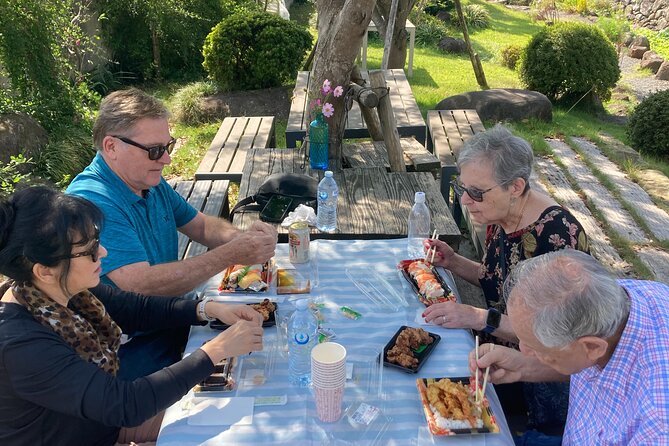
Next comes the Hario Transmission Towers area, also described as a real historical WWII site still present in Nagasaki. The key idea here is communications: these towers were linked to the start of the message officials sent to proceed with an attack.
It’s a strange thing to see, because towers look neutral until you know what they did. With this stop, the tour turns your attention from battles and dates into infrastructure. You start noticing how modern systems can become part of tragedy, depending on who controls them and for what purpose.
Expect about 30 minutes here, focused on the site and what it represented at the time.
Umegae Sake Brewery: a softer Nagasaki pause
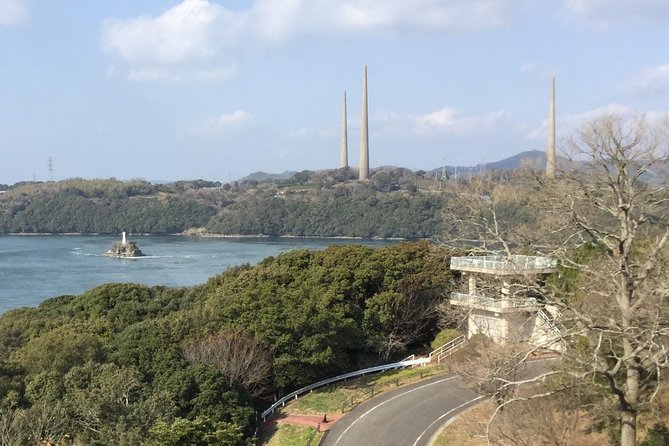
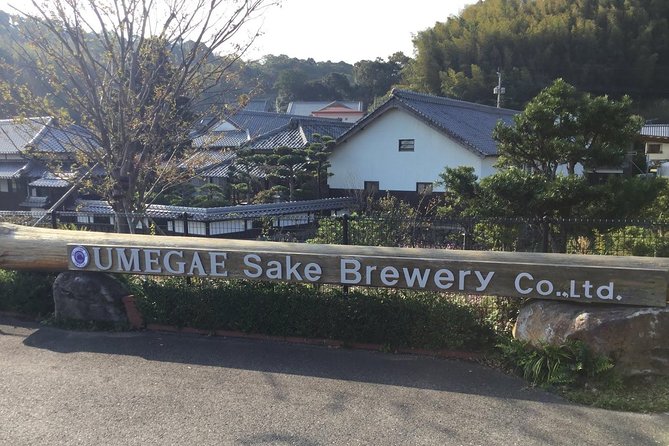
Before you go fully into air-raid and torpedo-base reminders, you stop at Umegae Sake Brewery. This is a palate cleanser, in the best way. It brings Nagasaki back into focus as a working culture, not just a memorial city.
The tour description frames it as a place with a lasting impression, and that’s the right mindset. You’re not there to romanticize. You’re there to see that Nagasaki still produces, still gathers materials and tradition, and still turns local craft into identity.
This stop runs about 30 minutes.
Mukyudo air-raid shelter: school history under wartime pressure
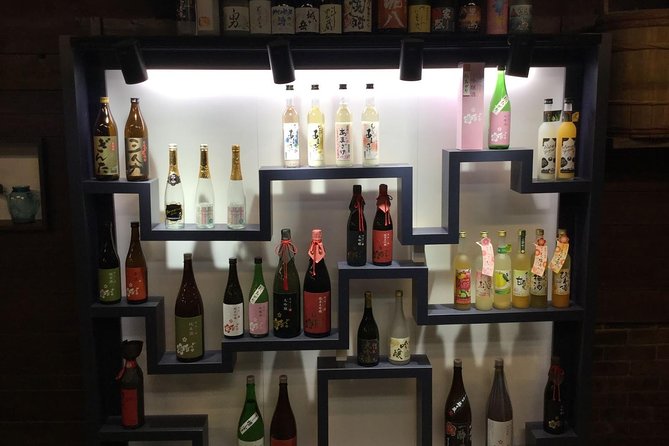
Then you reach Mukyudo, described as the air-raid shelter connected to the former Miyamura Elementary and Junior High School. Air-raid shelters are one thing. Air-raid shelters tied to education are another.
This stop is unique compared to others, because it served students from that school context and used a design that the tour description highlights as different. Even without technical deep dives, the effect is clear. You’re looking at a space that was meant to protect young people during attacks, and it reframes the war from a distant event into daily life disruptions.
Give it about 20 minutes in your schedule. Short stop time works here because the point is to understand what the site is, then move on with the day.
Katashima Torpedo Base Ruins: training facilities in a massive shell
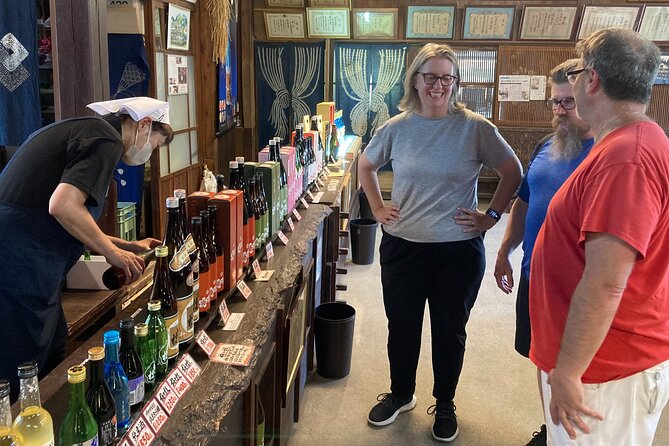
Katashima Torpedo Base Ruin is next. The stop time is about 30 minutes, and it’s described as a massive empty building with training facilities.
What you should watch for is the contrast between the physical emptiness and the mental fullness the place carries. Ruins can be eerie anywhere, but a former torpedo base adds a specific kind of weight, because it connects people, preparation, and machinery to outcomes that were devastating.
The tour notes that it can take a couple of wrong turns to locate the empty building. With that in mind, don’t worry if the site feels slightly hidden at first. Your guide should keep the day smooth, and you’ll get to the main structure.
Hasami ceramics: proof Nagasaki keeps making things
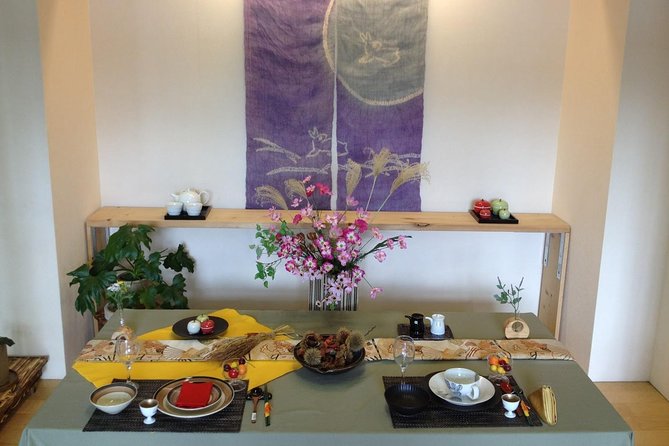
After the more somber sites, the tour shifts to Hasami Ceramics Museum and the Hasami ceramics festival angle. This is one of the most practical cultural stops on the schedule, because ceramics is a tangible craft you can understand quickly.
You’ll see Japanese and specifically Hasami porcelain on display. That matters because you can move from absorbing history to doing something concrete with your eyes. You start noticing forms and production styles, and you can leave with a clearer sense of how a local material tradition developed alongside a city shaped by global events.
This stop is also about 30 minutes. It’s long enough to slow down and look, but short enough to keep the overall day flowing.
Nagasaki Peace Park: space to reflect without rushing
Nagasaki Peace Park is designed for walking and reflecting, and the mood here is meant to be calm. It’s a place that invites you to think about the past without turning the visit into a spectacle.
You’ll spend about 30 minutes here. For me, that timeframe feels right. Too short and it becomes a quick stop. Too long and it can turn heavy in a way that drains the rest of your day. This gives you the right amount of quiet before the biggest emotional moment.
Atomic Bomb Museum: powerful, graphic, and not for everyone
The Atomic Bomb Museum is the heart of the WW2 experience. It’s described as sobering and definitely not for the faint hearted, with stories, exhibits, and pictures that are extremely graphic. People crying is mentioned in the tour notes, which tells you what kind of atmosphere you’re stepping into.
So here’s the practical advice I’d give you: decide ahead of time what you can handle. If you get overwhelmed easily, you might want to prepare mentally that this is not a light museum visit. Take breaks if you need them, and let the shock settle rather than trying to power through everything.
Admission is included, and the stop time is about 35 minutes. That’s enough to see the core message without getting lost in every detail.
This museum also changes how you interpret the rest of the itinerary. By the time you come out, the earlier stops about transmission towers, shelters, and ruins stop being separate scenes. They become pieces of the same system that led to catastrophe.
Inasayama Observation Deck: Nagasaki seen from above
To finish, you head to the Inasayama Observation Deck at Mount Inasa. The tour frames it as connected to the Mount Inasa nightview, and admission is included. Stop time is about 20 minutes.
One review note is useful here: daytime views are described as in a world of their own, while the nighttime view may not impress everyone. That lines up with how observation decks can work. Lighting conditions, fog, and weather can shift the experience fast.
My takeaway for you: if your goal is maximum scenic payoff, you’ll likely enjoy the deck most when visibility is good. Either way, treat the viewpoint as a closure. You’ve spent the day on the ground and in the past, and then you look outward at what remains.
Alcohol, lunch, and pacing that keeps your brain working
Food and drink can make or break a history day. This tour takes care of that part in a smart way.
You get still and sparkling bottled water throughout the day. Alcoholic and nonalcoholic beverages are provided at certain times. And lunch is included, either on the go or as a picnic depending on weather and timing constraints.
The pacing also matters. Stop lengths are mostly around 20 to 35 minutes, and that prevents the common problem of feeling trapped in long transitions. It also means you can keep your energy for the heavy moments like the museum.
If you’re the kind of person who needs to eat before emotional sites, plan for lunch early enough that you’re not running on empty.
How the guide shapes the experience, Shannon Lefebvre
This tour is led by Shannon Lefebvre, and his impact shows up in the way the day flows. Reviews highlight his deep involvement with local customs and history, plus the fact that he takes you to points many tourists might miss.
A couple of review notes also point to a mix of more well-known areas and quieter additions, including the chance to see the ceramics region and off-the-way museum moments. It’s a reminder that the tour is not just a fixed slideshow. Your guide helps make sense of why each stop belongs in the same story.
If you ask questions, you’ll likely get more than basic facts. Shannon’s style seems to focus on connecting sites to daily life, not just listing events.
Who should book this Nagasaki WW2 tour
This is a great fit if you:
- Want a small-group format with private transport and included admissions
- Are interested in WWII from a Nagasaki angle, including communications, shelters, and ruins
- Like pairing solemn stops with living culture like Hasami ceramics and Umegae sake
- Prefer a guide who explains context, not just directions
It might be less ideal if you:
- Know you’re sensitive to graphic museum exhibits
- Want a lighter, purely scenic day with minimal emotional intensity
- Dislike anything described as tied to war survival and aftermath
Should you book it? My call
Book it if you want your Nagasaki WW2 day to feel complete, paced, and meaningful. The included tickets for the Atomic Bomb Museum and Inasayama Observation Deck, the hydration support, and the small group size all add up to real value for the time you’re spending.
Skip or reconsider if you’re not ready for the Atomic Bomb Museum’s graphic content. In that case, you might still enjoy Nagasaki, but you should choose an itinerary that matches your emotional comfort level.
FAQ
FAQ
How long is the Nagasaki WW2 History and Culture Tour?
The tour runs about 7 to 9 hours.
Is this a private tour?
Yes. It’s listed as a private tour/activity, and only your group participates. The group size is up to 3.
What is included in the price?
The listed price is $656.88 per group (up to 3), and the tour includes admission to the Atomic Bomb Museum and the Inasayama Observation Deck, lunch, still and sparkling bottled water, private transportation, and air-conditioned vehicle service. Mobile ticket and WiFi on board are also included.
Are there pickup options?
Yes, pickup is offered.
What about food and drinks during the day?
Lunch is included and can be on the go or as a sit-down picnic depending on weather and time constraints. Still and sparkling bottled water are provided throughout the day, and alcoholic and nonalcoholic beverages are provided at certain times.
Which major attractions have admission included?
Admission is included for the Atomic Bomb Museum and the Inasayama Observation Deck.
Is there WiFi during the tour?
Yes, WiFi on board is included.
Is the tour duration and schedule reasonable for a full day?
Yes. The stops are scheduled for short visits, with durations ranging roughly from 20 to 35 minutes at key locations, fitting into a total 7 to 9 hour day.
What happens if the weather is poor?
The experience requires good weather. If it’s canceled due to poor weather, you’ll be offered a different date or a full refund. Cancellation changes are non-refundable and cannot be changed for any reason.
Nagasaki and Its Memorial Sites
Newest Nagasaki write-ups from the Loving Japan desk
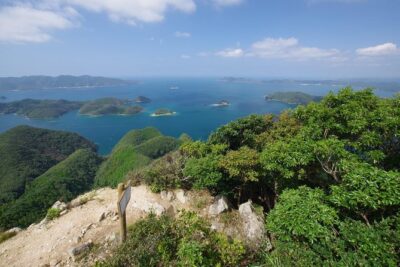
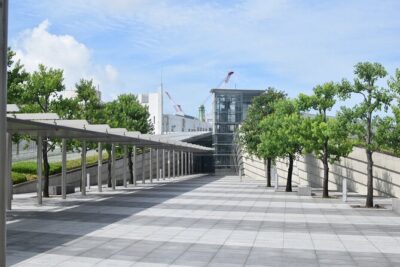
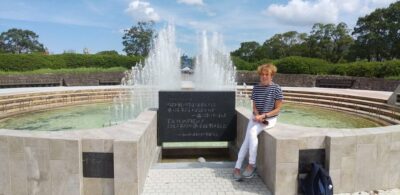
Nagasaki Memorial Sites and City Tours, side by side.
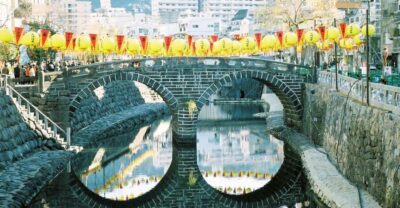 ★ 4.7Private Walking Tour with a LocalFrom $8279 reviews
 ★ 5.0Nagasaki Full-Day Private Tour with Government-Licensed GuideFrom $15566 reviews
 ★ 5.0Nagasaki Half-Day Private Tour with Government-Licensed GuideFrom $12253 reviews
 ★ 4.0Visit Gunkanjima Island (Battleship Island) in NagasakiFrom $7132 reviews
 ★ 5.0Nagasaki Full Day Tour with Licensed Guide and VehicleFrom $59827 reviews
 ★ 5.0Taste Local Life: Nagasaki’s Historical Street Walking TourFrom $10527 reviews
 ★ 5.0Nagasaki Street Food Adventure: Private Walking Tour with a LocalFrom $22826 reviews
 ★ 5.0Nagasaki Private Tour with a Local – Highlights & Hidden GemsFrom $6424 reviews
Filed on these lists too