
REVIEW · NARA DEER PARK AND TODAI-JI
Nara, Todaiji Temple & Kuroshio Market Day BUS Tour from Osaka
A long day is the price of admission for seeing Wakayama and Nara in one shot, and it pays off with Todaiji Temple and the chance to meet the sika deer. I like that this tour rolls in a guided day trip with an air-conditioned vehicle and a professional guide, plus a food stop centered on fresh seafood at Kuroshio Market. One drawback to consider: a lot of the 10-hour day can be spent riding, so it helps to plan around that and pack snacks and a little patience.
You start in Osaka at 8:30am from Umeda, then you’re off to a mix of castle sights, a seafood market with a tuna filleting moment, and Nara’s most famous temple stop. The big appeal here is simple, you trade multiple transfers for one organized route, and that makes it easier to hit major highlights without thinking about trains all day.
The question is whether the day trip format fits your style. If you want slower pacing and deep, foot-by-foot exploration, this may feel tight. If you want a practical sampler of Wakayama and Nara with a guide handling the logistics, it’s a strong setup.
In This Review
- Key Things to Know Before You Go
- From Osaka to Nara and Back, How This Day Trip Really Feels
- Wakayama Castle Stop, What You Can Expect in the Time Given
- Kuroshio Market and the Tuna Filleting Show, Food Fun With Real Logistics
- Todaiji Temple in Nara, The Big One, and How to Plan for Fees
- Meeting Sika Deer in Nara, The Fun Part That Needs Boundaries
- Price and Value, What You Pay for and What Costs Extra
- Guide Quality and Comfort, Two Things That Can Make or Break the Day
- Who This Tour Fits Best (and Who Might Want Something Else)
- Should You Book This Nara and Kuroshio Day Trip From Osaka?
- FAQ
- What time does the tour start?
- How long is the tour?
- Where do I meet for the tour?
- What is included in the price?
- What isn’t included?
- Is Wakayama Castle admission free?
- Is Todaiji entry free?
- What if the tour doesn’t meet the minimum number of travelers or weather is poor?
Key Things to Know Before You Go
- 10 hours total with heavy bus time, so bring comfort items and snacks
- Wakayama Castle is time-limited, and closure can affect your castle visit
- Kuroshio Market is seafood-focused, including a tuna dismantling/filleting show
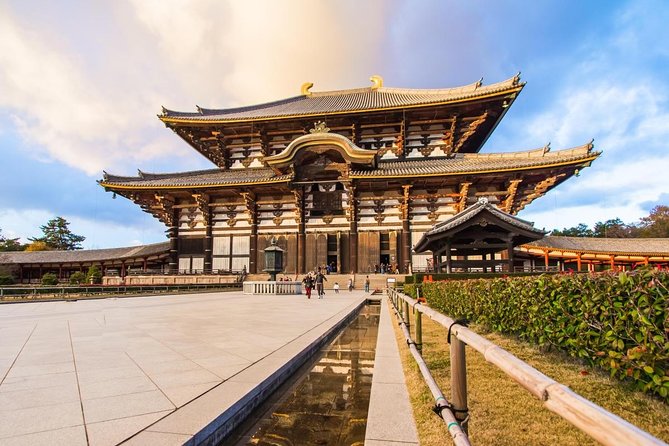
- Todaiji is the anchor stop, with several paid areas inside the complex
- Sika deer time in Nara can be a highlight, but behave and follow staff guidance
- Tour size is capped at 45, and the seating row you land in can matter
A half day in Nara goes several ways
- Ancient Capital Tour: Kyoto and Nara Highlights from Kyoto/Osaka
★ 4.5 · 332 reviews - Kyoto and Nara Day Trip from Osaka
★ 4.0 · 175 reviews - Discover Himeji, Kobe and Nara from Osaka
★ 5.0 · 101 reviews - Kyoto and Nara UNESCO Highlights Full-day Tour From Osaka
★ 4.5 · 50 reviews
From Osaka to Nara and Back, How This Day Trip Really Feels
This is a one-day, two-region plan, starting in Osaka and aiming at Wakayama first, then pushing on to Nara for the temple and deer. On paper, it sounds clean: three main stops. In real life, the ride between stops is a big part of the experience. With a total duration listed at around 10 hours, you should treat it like a full workday, not a quick sightseeing hop.
The upside of that long day is simple: you avoid planning and transfers. You meet at Umeda, climb into an air-conditioned vehicle, and you get a route that hits well-known targets. The guide, provided in English or Chinese, helps with timing and keeps you moving when crowds could otherwise slow you down.
Another quiet upside is that the “fixed schedule” format keeps your day from stretching out. Even when you feel rushed at one stop, you still get to experience the three anchors. If you’re trying to fit Osaka base sightseeing with a Nara day, this route is built for that.
My main caution is pacing. Several write-ups flagged end-of-day rushing and time allocation. I’d handle that by going into the tour with clear priorities: if you care most about Todaiji and deer, don’t let the market eat all your mental energy.
Wakayama Castle Stop, What You Can Expect in the Time Given
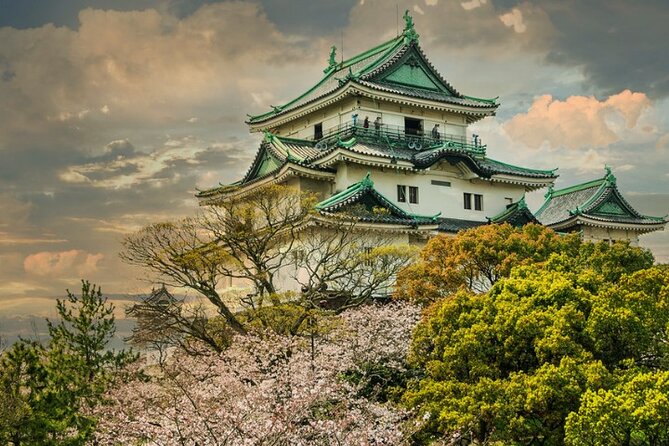
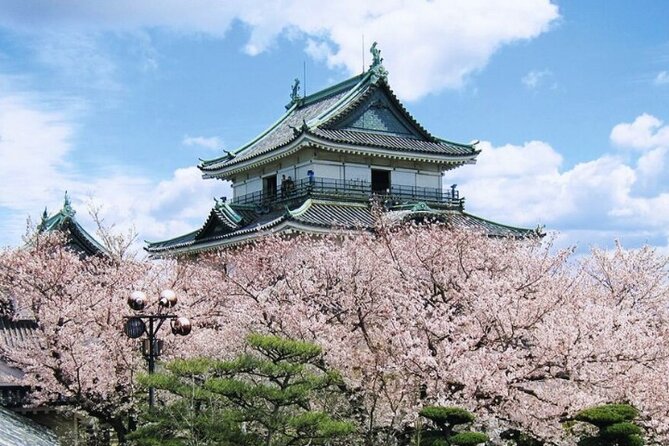
Wakayama Castle is your first major sight, and it’s a good pick if you want something historical and photogenic before you switch gears to seafood and Nara. The castle traces back to construction in 1585 by Toyotomi Hideyoshi, with later expansion and fortification by Tokugawa-era leadership. That historical connection matters because Wakayama isn’t just a transit point, it’s part of the broader story of how power shifted in Japan.
In terms of what you’ll actually do, your time is limited at about 1 hour 20 minutes, and the listing notes that admission to Wakayama Castle isn’t included. That means you should expect either paying separately or focusing on whatever portions are easiest to reach quickly.
There’s also a practical risk to factor in: at least one experience reported the castle being closed and not being informed ahead of time. I can’t promise what will happen on your date, but I’d treat this as a “check conditions” moment. If the castle is open when you arrive, you can usually get a lot from quick views and exterior exploring. If it’s closed, your time may feel underwhelming because there’s less flexibility built into the schedule.
What I like about this stop is that it changes the tone of the day. It’s not just buildings in the distance, it’s a transition from big-city convenience to a more countryside-feeling route. Even if you spend most of the time outside, it sets you up well for the shift into temple scale later.
Kuroshio Market and the Tuna Filleting Show, Food Fun With Real Logistics
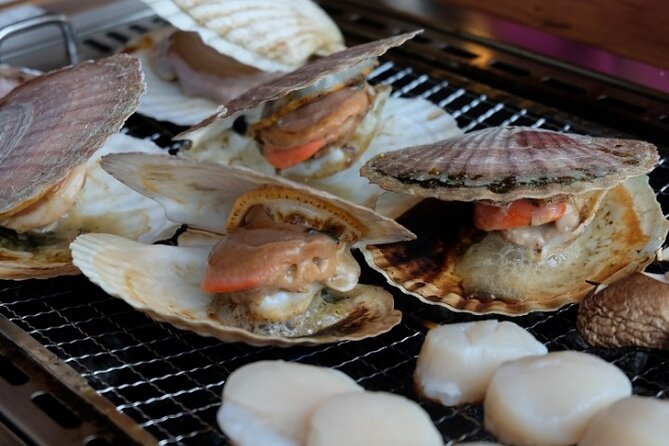
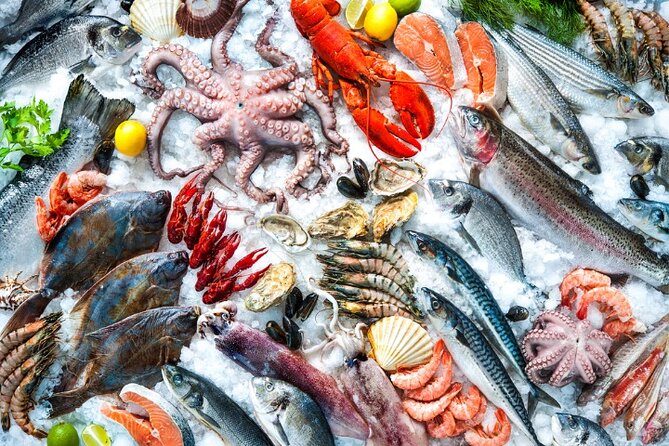
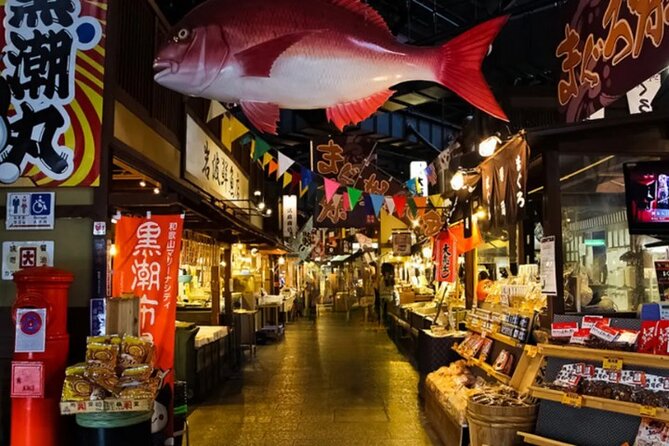
Kuroshio Market is where the day turns into food and energy. This stop is known as the “Tuna Country,” and the highlights are centered on freshly caught seafood plus the tuna dismantling or filleting demonstration.
You’re scheduled for about 2 hours at the market. That length is enough to do three things well: get your bearings, watch the show (if scheduled during your visit window), and snack or browse seafood stalls. It’s not enough for a deep seafood-shopping spree or a full sit-down meal plan.
Here’s the practical thing to know: your market time can feel different depending on whether the show is operating right when your group arrives. If you care about the demonstration, I’d prioritize it immediately after you meet your guide’s instructions, then use the rest of the time for eating and photos.
Money note: market entry is listed as free, but purchases are not. Some vendors may prefer cash, and temple fees are definitely an additional cost. I recommend carrying some cash even if you plan to use card for most things. At minimum, you’ll want the option to pay quickly for snacks so you don’t waste your market momentum.
What makes this stop worth the ride is that it’s not abstract food talk. It’s hands-on seafood culture, and the show adds a theater element that keeps the stop from feeling like a generic bazaar. If you like street food, seafood, or food demonstrations, this will likely be a good match.
Let something else do the walking
- Osaka/Kyoto: Hiroshima Miyajima Bus Tour & Shinkansen Ticket★ 4.7 · 919 reviews
- From Kyoto/Osaka: Kyoto Top Highlights 1-Day Guided Bus Tour★ 4.5 · 714 reviews
- Hiroshima & Miyajima 1 Day Bus Tour with Bullet Train Tickets★ 4.5 · 105 reviews
- Play with Snow Crab Buffet Lunch and Strawberry Picking Bus Tour★ 5.0 · 88 reviews
- Himeji Castle, Arima Onsen & Mt. Rokko: 1-Day Bus Tour from Osaka★ 4.0 · 28 reviews
Todaiji Temple in Nara, The Big One, and How to Plan for Fees
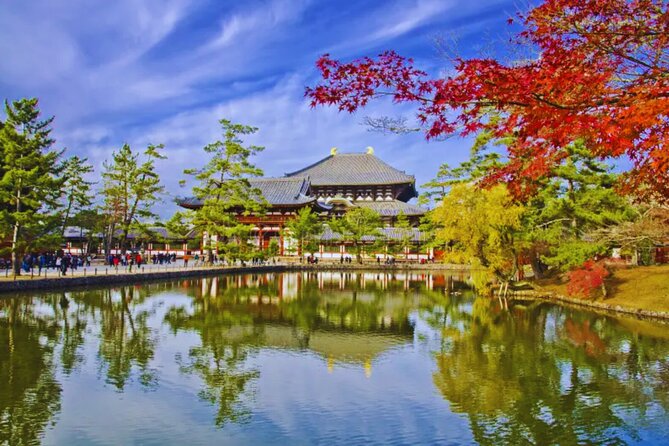
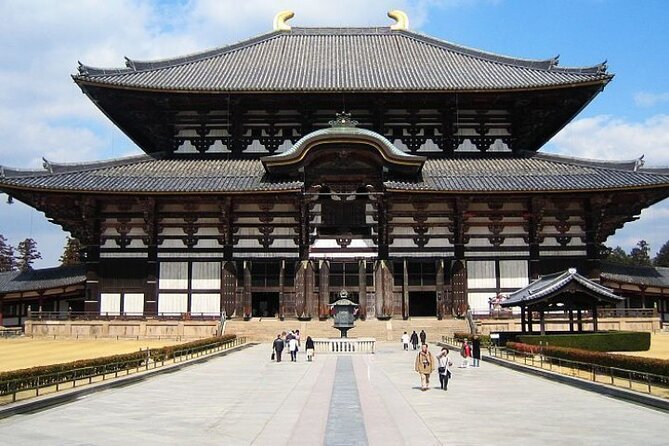
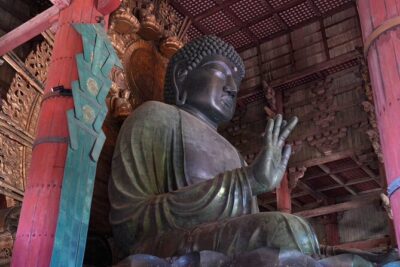
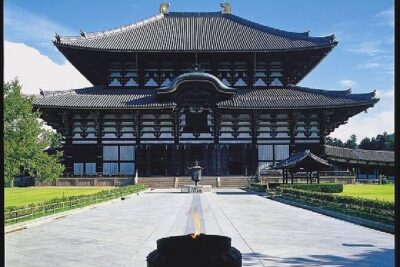
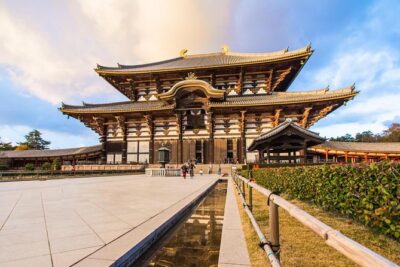
Todaiji (Todai-ji) is the anchor of the Nara part of the day. This is one of Japan’s most famous Buddhist temple sites, founded in the early 8th century during the Nara period. And scale is the point. You’re visiting Japan’s largest wooden building site, and the main draw is the Great Buddha complex.
Your scheduled time for the Todaiji stop is about 2 hours, with several attractions inside not included in the base price. The listing states an entrance fee for the Great Buddha Hall and multiple related areas including Hokke-do, Kaidan-do, Senju-do, and the Todai-ji Museum. Adult pricing is listed at JPY 600, with JPY 300 for children.
So how do you make this work smoothly? Decide in advance what you want to see inside the complex. If you try to do every single paid area, you may rush near the end. If you focus on the Great Buddha Hall and the immediate nearby highlights, you’ll feel less pressed and more able to take in the atmosphere.
This is also where a guide matters, even if you only get the basics. A good guide will help you understand what you’re looking at, and will steer your group through the right routes so you spend time in the most meaningful places instead of wandering.
One more practical point: some people want maximum time for deer and photos and may feel the temple stop is too short. If Todaiji is your top priority, consider treating the deer time as a fast, guided photo and interaction moment, then settle into the temple complex with your full attention.
Meeting Sika Deer in Nara, The Fun Part That Needs Boundaries
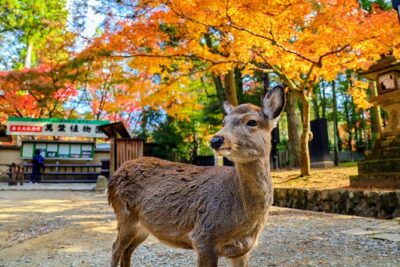
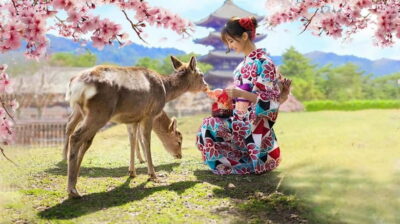
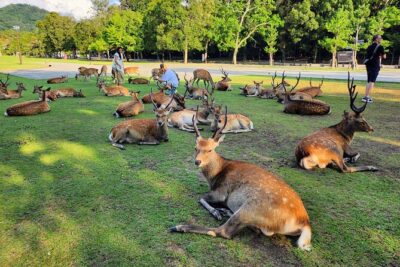
The tour overview promises interaction with adorable sika deer in Nara, including selfies and feeding. In practice, this is often the moment people remember most, because it feels personal and playful.
Still, it’s also the moment where people can lose focus on rules. Your best strategy is simple: listen closely, follow your guide’s instructions, and keep your movements calm. Deer move quickly and crowds gather fast. If you bring the right mindset, the photos feel easy and fun.
I like that this experience is included in the same day as Todaiji. You’re not just doing a temple checklist. You’re also seeing the living, everyday side of Nara that makes the place feel more than historic stone and wood.
If you’re traveling with kids, this is usually the part that gets smiles. If you’re traveling as adults, it’s a light break between heavy sights, and it helps reset your energy before you head back toward Osaka.
Price and Value, What You Pay for and What Costs Extra
The listed price is $99.04 per person, and the tour runs about 10 hours. That price includes the air-conditioned vehicle plus a professional guide (English/Chinese-speaking) and uses a mobile ticket.
Here’s the value math that matters: most of the major transport and guided flow is covered. But several key admissions are not. Wakayama Castle has a separate admission fee (adult JPY 410, child JPY 200). For Todaiji, the paid areas including the Great Buddha Hall and related spots cost JPY 600 for adults and JPY 300 for children.
So you should budget additional spending on top of the tour price. If you’re a family, those temple fees can add up, but they’re still in line with many major Japanese heritage sites.
What about the market? It’s listed as free to enter, but food and snacks are on you. And not having lunch included means you’ll need to plan quick snacks or purchases.
The other value question is time. Some write-ups complained the bus time was a lot and that the day felt rushed. Others praised pacing and found the time allocation workable. My practical take is this: the tour is best as a “maximize highlights without transfers” day. It’s less ideal if you hate sitting on a bus or if you want deep time at fewer places.
Guide Quality and Comfort, Two Things That Can Make or Break the Day
This tour is guide-led, and the guide language is stated as professional English/Chinese-speaking. Several guide names have shown up as standouts, including Chan, Poey, and Alan, with praise for humor, friendliness, and helpful explanations.
That said, guide styles can vary, and not every group may get the same level of commentary at each stop. If you really love learning, I’d go in with a small plan: ask one or two questions as you board, and ask your guide what your top priority should be at each stop. It’s a simple way to get more value from the time you pay for.
Comfort is the second variable. The tour max is 45 people, and vehicle comfort depends on seating and the condition of the ride. One experience described a van that wasn’t in great shape and less-than-ideal seating in the back row. Another experience said the ride was comfortable. If you’re sensitive to long sitting time, consider seating preferences where possible, and pack a travel layer, water, and any small cushion you like.
Also, there’s typically no mention of food or drinks in the vehicle. Since admissions and meals are on you, bring what you need to avoid getting hungry at the wrong time.
Who This Tour Fits Best (and Who Might Want Something Else)
This tour is a good match if you want:
- A guided, low-stress day trip from Osaka that hits Nara and a major seafood market in one day
- A market plus temple mix, so your day isn’t all quiet monuments
- A practical first-time Nara plan, pairing Todaiji with deer interaction
It may not fit you as well if:
- You dislike long bus rides and want more time per location
- You’re hoping for an unhurried temple experience where you can wander freely without time pressure
- You want lunch and attraction fees bundled into one price
If you’re on a tight schedule in Osaka, this is the kind of tour that can keep your itinerary from getting overcomplicated. If you already know you want a deep Nara day, you might prefer a slower, independently paced plan with more time.
Should You Book This Nara and Kuroshio Day Trip From Osaka?
Book it if you want a guided highlights day and you’re okay with a longer travel day. The combination of Todaiji Temple, sika deer, and a seafood-focused market with a tuna filleting demonstration is a fun mix that’s hard to replicate as efficiently on your own from Osaka.
Consider skipping or choosing another option if you strongly prioritize comfort, or if you want lots of time inside places like Todaiji without feeling managed by a schedule. Also, since Wakayama Castle admission is separate and closure can happen, go in with flexible expectations for that first stop.
If your goal is to see major sights with minimal planning and you’ll handle extra fees and bring snacks, this is a solid way to spend one full day.
FAQ
What time does the tour start?
It starts at 8:30am. The activity ends back at the meeting point.
How long is the tour?
The duration is about 10 hours.
Where do I meet for the tour?
You meet at 2 Chome-2 Umeda, Kita Ward, Osaka, 530-0001, Japan.
What is included in the price?
The tour includes an air-conditioned vehicle and a professional English/Chinese-speaking guide. You also receive a mobile ticket.
What isn’t included?
Admission to Wakayama Castle is not included, and several Todaiji areas have separate fees (including the Great Buddha Hall, Hokke-do, Kaidan-do, Senju-do, and the Todai-ji Museum). Personal purchases are also not included.
Is Wakayama Castle admission free?
No. Wakayama Castle admission is listed as JPY 410 for adults and JPY 200 for children.
Is Todaiji entry free?
The entry is not entirely free. While the tour lists Todai-ji as a free admission stop, it also states there is a fee for the Great Buddha Hall and related areas, listed at JPY 600 per person for the paid areas (with JPY 300 for children).
What if the tour doesn’t meet the minimum number of travelers or weather is poor?
The tour requires a minimum of 8 travelers to depart. If not met, you’ll be notified 4 days in advance. If canceled due to poor weather, you’ll be offered a different date or a full refund.
Let Something Else Do the Walking

Half a Day in Nara
Newest Osaka write-ups from the Loving Japan desk



Nara Deer Park and Todai-ji, side by side.
 ★ 5.0World Heritage Kyoto & Nara Uji Authentic Matcha ExperienceFrom $1291,573 reviews
 ★ 4.7Kyoto/Osaka: Nara, Fushimi Inari Taisha, Arashiyama Bus TourFrom $521,275 reviews
 ★ 5.0Nara Half Day Trip Walking Tour (Private Option Available)From $105937 reviews
 ★ 4.4Osaka/Kyoto: Arashiyama, Nara & Fushimi Inari Shrine w/LunchFrom $61754 reviews
 ★ 5.0Nara Early Morning Tour (Kyoto or Osaka Departure Available)From $61676 reviews
 ★ 4.5Kyoto and Nara Day Trip from KyotoFrom $194445 reviews
 ★ 5.0Full Day Guided Tour to Kyoto and Nara from Osaka by VanFrom $106420 reviews
 ★ 4.5Nara Afternoon Tour from Kyoto or OsakaFrom $102390 reviews
Filed on these lists too