
REVIEW · NARA DEER PARK AND TODAI-JI
Kyoto and Nara Day Trip from Osaka
Kyoto and Nara in one day is fast. This tour packs Kyoto’s must-sees like Nijo Castle and Kinkaku-ji plus Nara’s huge temples into a single, guided rhythm. If you want a first-timer overview without wrestling train changes, it’s built for that.
I especially like that you get a professional English-speaking guide covering the big story behind each site. Many people also mention standout guides by name, like Momo, Hatchi, and KC, for keeping things clear and moving.
The one real thing to consider is the pace. This is a “see a lot” day with limited time per stop, and a few reviews point out that hearing the guide can be tricky in crowded settings and that lunch can feel less impressive than you hoped.
In This Review
- Key things to know before you go
- Why this Kyoto and Nara day trip feels efficient
- Start in Osaka at Hotel Granvia, then get to Kyoto fast
- Nijo Castle in 50 minutes: carvings outside, stories inside
- Golden Pavilion at Kinkaku-ji: the gold look is real, but so are crowds
- Kyoto Imperial Palace, and the Kitano Tenmangu fallback plan
- Lunch options: how the meal choice shapes the second half
- Todai-ji: the 8th-century scale hits hard in 1 hour 10 minutes
- Kasuga Grand Shrine: deer-messenger tradition plus a special-area experience
- Nara Park time: feeding deer is fun, but be ready to be assertive
- The real rhythm: why some days feel rushed and others feel perfect
- Transportation and group size: where the experience can vary
- Price and value: what $198.15 buys you
- Should you book this Kyoto and Nara from Osaka tour?
- FAQ
- What time does the tour start in Osaka?
- Where does the tour end?
- What admissions and transport costs are included?
- Is lunch included?
- What lunch options are available?
- What happens if Kyoto Imperial Palace is closed?
- What happens if Nijo Castle is closed?
- Is seating reserved on the trains?
- How many people are on the tour?
Key things to know before you go
- Shinkansen time-saving transport: you ride between Osaka and Kyoto using public train service, with non-reserved seating.
- World Heritage hits, in a set order: Nijo Castle, Kinkaku-ji, Kyoto Imperial Palace, Kasuga Grand Shrine, and Todai-ji.
- Timed visits mean quick context: you get guided interpretation, not long, slow wandering.
- Lunch is optional and specific: Western set menu or vegetarian Indian thali only if you book that option.
- Plan B destinations are real: Kyoto Imperial Palace and Nijo Castle can swap to nearby alternates on closure days.
A half day in Nara goes several ways
- Ancient Capital Tour: Kyoto and Nara Highlights from Kyoto/Osaka
★ 4.5 · 332 reviews - Kyoto and Nara Day Trip from Osaka
★ 4.0 · 175 reviews - Discover Himeji, Kobe and Nara from Osaka
★ 5.0 · 101 reviews - Kyoto & Nara Private customized tour with English speaking Guide
★ 4.5 · 99 reviews
Why this Kyoto and Nara day trip feels efficient
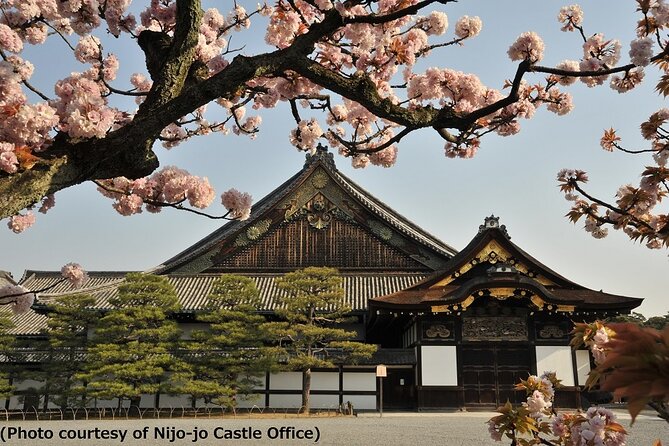
This trip is basically a route map of old Japan, done in one long day. You start in Osaka at 7:15 am, then you’re quickly transported to Kyoto, where you tackle three major sights. After that, you swing into Nara for two headline temples and a shrine stop, then head back to Osaka around 6:30 pm.
What makes it work for first-timers is that you’re not guessing. With a licensed English guide interpreter plus organized admissions and transport, you spend your energy on sightseeing instead of ticket lines and transit puzzles.
You also get a built-in culture sequence. The day moves from Kyoto’s power and aesthetics (Tokugawa-era Nijo Castle, golden temple drama, imperial residence style) to Nara’s Buddhist scale and ancient shrine traditions.
Start in Osaka at Hotel Granvia, then get to Kyoto fast
Meeting point is the Hotel Granvia Osaka in Umeda area, with pickup directed from there. From Osaka, the tour uses public transportation to Kyoto, and all train service is on non-reserved seats. That means you should assume you will stand or be packed in busy sections, and seating is not guaranteed.
Once you arrive in Kyoto, you’re directed to a specific starting desk area at Kyoto Avanti (Avanti B1 on the timeline provided), and then you transition to the next part of the day by bus. One review noted that the first real sightseeing start can feel delayed when groups collect, so I’d treat the morning as a “get organized” phase rather than “maximize photos immediately.”
Tip: keep your morning plan simple. If you’re the type who wants to stop at convenience stores for snacks and water, do it before you meet the group. Once you’re in the system, you’re on their schedule.
Nijo Castle in 50 minutes: carvings outside, stories inside
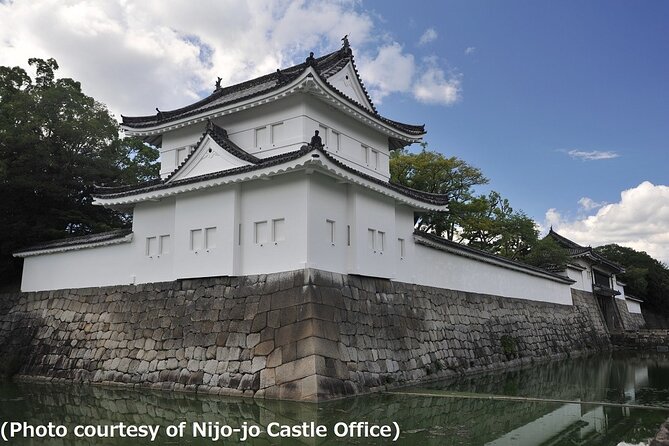
Nijo Castle is the first World Heritage stop, completed in 1626. The big idea here is Tokugawa influence, with the castle originally built as lodging for the Tokugawa shogun and also as a kind of guardian for Kyoto’s imperial presence.
In the time slot (about 50 minutes), you’ll do the guided walk approach rather than an unhurried self-guided stroll. You’re likely to see the exterior and grounds first, then move through key interior areas with the guide explaining what you’re looking at. That works well when you want context fast, but it does limit deep exploration if you’re the kind of traveler who loves reading every panel slowly.
What I like about this stop is that it teaches you how to “read” a castle. Even in a short visit, the guide can connect the architecture and design to the politics behind it. The downside is that if you want to linger in each room, you will feel the clock.
- Osaka Go Karting Tour with Funny Costume★ 5.0 · 2,658 reviews
- Osaka Castle: Museum and Tower Entry Ticket★ 4.5 · 2,380 reviews
- Osaka: Shinsekai Food Tour with 13-15 Dishes at 5 Eateries★ 4.8 · 2,204 reviews
- Osaka Food Tour: 13 Dishes at 5 Local Eateries★ 5.0 · 2,149 reviews
- Hungry Osaka Street Food Tour:15 Tastings & 3 Drinks with a Local★ 5.0 · 1,727 reviews
Golden Pavilion at Kinkaku-ji: the gold look is real, but so are crowds
Kinkaku-ji, the Golden Pavilion, is famous for a reason. The wooden architecture is layered and shines, and the temple sits near a pond that frames the reflections.
Your visit time is about 45 minutes, and that means you get a guided route and key viewpoints rather than free reign. Reviews also mention it being busy, and it makes sense because this is a top priority stop in nearly every Kyoto itinerary. On crowded days, expect school group energy and more people than you’d see if you arrived alone early.
Still, there’s value in going with a guide here. You learn what to watch for: how the gold façade relates to the pond, what parts matter for photos, and where the sightlines typically open up.
Practical move: wear shoes you can move fast in. The walking is short, but the lines and crowd flow can slow you down, and you’ll want to keep up.
Kyoto Imperial Palace, and the Kitano Tenmangu fallback plan
Kyoto Imperial Palace is the next stop, with about 40 minutes planned. Until about 150 years ago, it functioned as the emperor’s residence, and the aesthetic is known for a clean, formal Japanese style. The experience here is guided walkthrough of important spaces, with the interpretation focused on how power and design show up in daily life.
The major planning detail is closures. The palace is closed to visitors on Mondays, plus the following day if Monday is a holiday, and on days when there is an Imperial Household Agency event. If that happens, the tour swaps to Kitano Tenmangu Shrine instead.
If the closure date falls on the 25th, the backup is Nishi Hongan-ji Temple. That kind of contingency is useful, because it prevents you from losing the whole Kyoto highlight when the calendar changes.
If you care most about the palace specifically, check the day-of-week for your travel date. If it’s a Monday, don’t assume you’ll see the palace interior, plan for the shrine swap in your expectations.
Lunch options: how the meal choice shapes the second half
Lunch is included only if you select the right option when booking. If you choose with lunch, it’s either a Western-style set menu or an Indian thali set menu, depending on what you picked.
For the Western option, it’s described as a Western-style set menu, and vegetarian meals require you to inform the operator at reservation time. Requests like halal or gluten-free are not available.
For the Indian thali, it’s a vegetarian-friendly thali with items listed in the tour details: multiple curries, vegetable pakora, yogurt, naan or roti, rice, salad, and a non-alcoholic drink. Again, other dietary needs are not listed.
If you skip lunch on the booking, you get free time to eat on your own around Kyoto Station area. That can be a good strategy if you want more control over what you eat, and also if you’d rather not worry about a set-menu timing.
In reviews, lunch is the most common complaint point. Some people describe it as buffet-like and not very inspiring, while others call it great. My advice: if food quality matters to you, consider choosing your own lunch near Kyoto Station so you’re not stuck with the tour’s default.
Todai-ji: the 8th-century scale hits hard in 1 hour 10 minutes
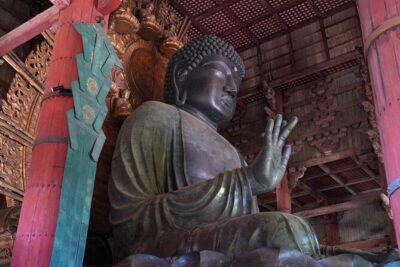
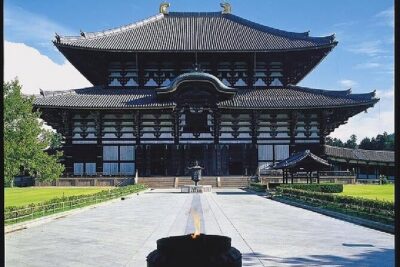
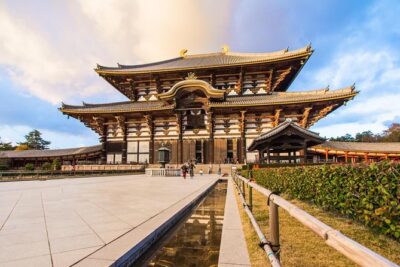
Then you move from Kyoto’s refined atmosphere to Nara’s monumental Buddhist world. Todai-ji is next, and it’s an 8th-century temple that houses Japan’s large-scale national treasures. The main highlight is the huge wooden structure and the bronze Great Buddha inside.
Your time here is about 1 hour 10 minutes, including guided orientation. In this window, you’ll likely see the major viewing areas and get explanation of what makes Todai-ji so central to Nara-period religious life.
What I like about Todai-ji is how it changes your sense of “temple size.” Even if you’re not a hardcore architecture person, the scale is obvious. It’s the kind of sight that makes the guide’s points land, because the structures do the heavy lifting.
Potential drawback: like many big sites, it can be crowded. If you prefer quiet, you’ll need to enjoy Todai-ji as a shared experience, not a private one.
Kasuga Grand Shrine: deer-messenger tradition plus a special-area experience
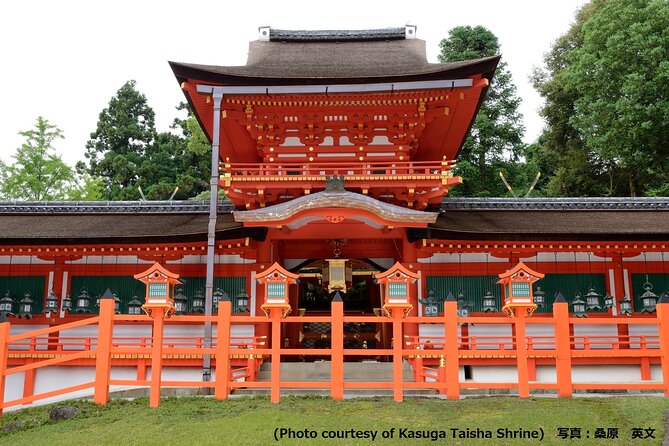
Kasuga Grand Shrine is another World Heritage stop and sits in Nara’s spiritual landscape. The tour connects it directly to the deer of Nara Park, described as messengers of the shrine.
You’ll have about 1 hour here, and the tour includes entry to the Main Sanctuary special visit area. The plan details say that from January 2025, this area is newly added, which suggests the experience may be more immersive than standard viewing when operations allow.
Still, there’s an important note: if the special visit area can’t be entered due to events or operational circumstances, you’ll visit either the Kasuga Taisha Museum or the Todaiji Museum instead. This is good to know because it protects the core value of the stop, even if you can’t access a specific area that day.
Nara Park time: feeding deer is fun, but be ready to be assertive
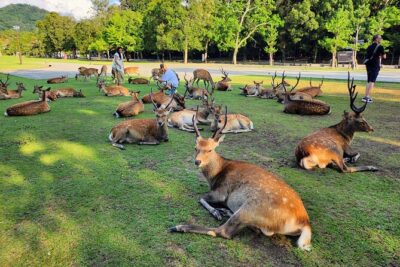
After the shrine and temple rhythm, you end up with the classic Nara moment, Nara Park deer. The day includes time for deer interaction, and reviews often mention how friendly the deer can be, including bowing when you offer crackers.
Here’s the practical side: deer are confident and can get pushy. If you’re casual or timid with the crackers, you might end up swarmed. Keep your distance when needed, and follow the guide’s cues if you’re offered deer crackers.
One more thing: Nara Park gets busy with school trips, and it can feel chaotic. That doesn’t ruin the experience, but it does change the vibe. If you want your deer photos without pressure, move with intention and don’t linger where the crowd bottlenecks.
The real rhythm: why some days feel rushed and others feel perfect
At about 11 hours 15 minutes total, this is a long day with tight time blocks. Morning in Kyoto is packed into three main stops. Afternoon is two major Nara sites plus shrine and park time.
If you like a structured overview and you don’t want to spend your limited Japan days figuring out transit, it’s an efficient use of time. Many people praise the organization, the friendly guiding, and how the guides keep everyone moving.
If you’re the type who wants to slow down, this may feel too fast. There are reports that people wanted more time for exploring inside areas, and the scheduled minutes per stop can feel limiting.
Audio can also be an issue in real world crowds. Some reviews mention difficulty understanding the guide due to accent and movement, and they wish there were headsets. If you know you struggle to hear in group tours, consider bringing simple earplugs, and position yourself near the guide when possible.
One more logistics point: seating is non-reserved on the train segments, and seating is also not guaranteed. That can turn into stress if you’re arriving tired or if the cars fill quickly.
Transportation and group size: where the experience can vary
The tour runs with a maximum group size of 40 travelers, which sounds very manageable. Yet the pace and comfort can still shift depending on crowd levels and the actual group size on your specific date.
Some reviews describe situations with larger-feeling groups and more people on buses. That matters because a bigger group slows boarding, creates longer walking lines, and increases noise at each stop. You might still get great guiding, but the day can feel more hectic.
You should also plan for the fact that you are not dropped back at your hotel. The tour ends around 6:30 pm at Osaka-Namba Station, and you’ll need to make your own way back to wherever you’re staying. One review mentioned confusion getting back because Osaka Namba is huge and underground, and Google Maps navigation can be tricky there.
My simple fix: when you book, save a basic walking and transit route from Osaka-Namba to your lodging. Also screenshot the directions. In Japan, station navigation can be faster with pre-planned steps.
Price and value: what $198.15 buys you
At $198.15 per person, this is not a budget tour. So you need to ask what you’re paying for.
Here’s what’s included, based on the tour details: a national government licensed English guide interpreter, admission fees and transportation costs, plus lunch only if you select that option. You’re also getting a mobile ticket, which reduces friction for entry.
That’s where the value can land. If you’re short on time, this tour saves you the planning overhead and ticket hunting. It also bundles multiple high-demand sites, which can be hard to stitch together smoothly on your own in one day.
But the price can feel heavy if you end up wanting more time per site or if lunch quality is important to you. Some reviews directly complain about rushing and about the cost compared to similar options.
So I think the best-fit traveler is someone who wants:
- a first pass through Kyoto and Nara,
- guided context to understand what you’re seeing,
- admissions handled for you,
- a low-effort plan with minimal decision-making.
If you are already confident navigating trains, and you love long, quiet temple time, you might prefer building your own day.
Should you book this Kyoto and Nara from Osaka tour?
Book it if you want an organized, guided highlights tour from Osaka that hits Kyoto’s major sights and then powers through Nara’s big two temples plus a shrine, all in one day. It’s especially attractive for first-time Japan visitors who value structure and context, and for travelers who would rather pay to reduce logistics.
Skip it, or at least change your expectations, if you want slow exploration, deep reading at temples, or a day that feels unhurried. The schedule is tight, and hearing the guide can be hard in crowded settings. Lunch can also be a weak point, depending on the option you choose.
If you do book, plan smart: wear comfortable shoes, be ready for non-reserved seating on train legs, and accept that you’re touring with momentum. If you match your style to the format, this is one of the most straightforward ways to get your “Kyoto and Nara starter pack” without spending the day figuring out transit.
FAQ
What time does the tour start in Osaka?
The tour starts at 7:15 am, with meeting at Hotel Granvia Osaka.
Where does the tour end?
The tour ends around 6:30 pm at Osaka-Namba Station, and there is no hotel drop-off.
What admissions and transport costs are included?
Admission fees and transportation costs are included, along with a national government licensed English guide interpreter.
Is lunch included?
Lunch is included only if you select a With Lunch option. If you choose No Lunch, you’ll have free time to eat on your own around Kyoto Station.
What lunch options are available?
With Lunch can be a Western-style set menu, or an Indian thali set menu suitable for vegetarians. Other meal requests like halal or gluten-free are not available.
What happens if Kyoto Imperial Palace is closed?
On Mondays, plus following days if Monday is a holiday, and on days with an Imperial Household Agency event, the tour visits Kitano Tenmangu Shrine instead. If the closed day falls on the 25th, it visits Nishi Hongan-ji Temple.
What happens if Nijo Castle is closed?
Nijo Castle is closed on Tuesdays in January, July, August, and December. If closed, Ryoan-ji Temple is visited instead.
Is seating reserved on the trains?
No. The tour uses non-reserved seats on the train segments (and seating is not guaranteed if public transportation is used).
How many people are on the tour?
The tour has a maximum of 40 travelers.
Half a Day in Nara


Newest Osaka write-ups from the Loving Japan desk



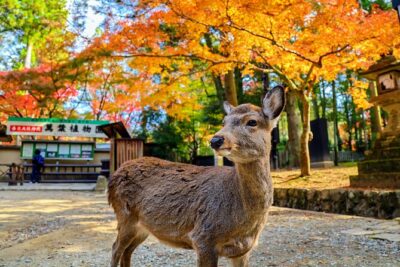
Nara Deer Park and Todai-ji, side by side.
 ★ 5.0World Heritage Kyoto & Nara Uji Authentic Matcha ExperienceFrom $1291,573 reviews
 ★ 4.7Kyoto/Osaka: Nara, Fushimi Inari Taisha, Arashiyama Bus TourFrom $521,275 reviews
 ★ 5.0Nara Half Day Trip Walking Tour (Private Option Available)From $105937 reviews
 ★ 4.4Osaka/Kyoto: Arashiyama, Nara & Fushimi Inari Shrine w/LunchFrom $61754 reviews
 ★ 5.0Nara Early Morning Tour (Kyoto or Osaka Departure Available)From $61676 reviews
 ★ 4.5Kyoto and Nara Day Trip from KyotoFrom $194445 reviews
 ★ 5.0Full Day Guided Tour to Kyoto and Nara from Osaka by VanFrom $106420 reviews
 ★ 4.5Nara Afternoon Tour from Kyoto or OsakaFrom $102390 reviews
Filed on these lists too