
REVIEW · GION, GEISHA AND MAIKO EXPERIENCES
One Hour Geisha Show in Kyoto
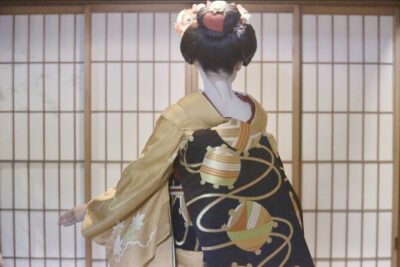
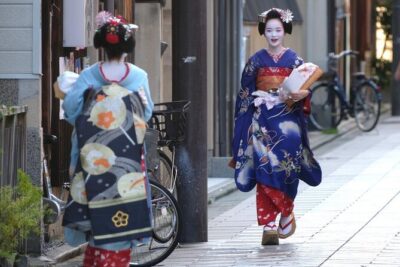
Kyoto at night, then a Maiko right beside you. In Kyoto, this short show lets you meet an apprentice geisha (a Maiko) face to face, with time for questions and photos. You also get to choose the setting, either a cozy tea house style room or a theater showhouse experience.
I especially like the close-up access. The Maiko performs multiple short dance segments, and you get time afterward for Q&A plus photos and videos. I also like that the guides keep things clear, with English or Korean support from hosts like Genki and Rin on recent sessions, so you can actually understand what you are seeing instead of just staring.
One thing to consider: the dancing is intentionally short. Even though the session is around an hour to about 105 minutes, the Maiko will not perform continuously for the entire time, because that brevity is part of how the art is respected.
In This Review
- Key things I would not miss
- Why Kyoto’s Maiko Access Feels Different
- Tea House vs Gion Theater: Choose Your Room, Choose Your Timing
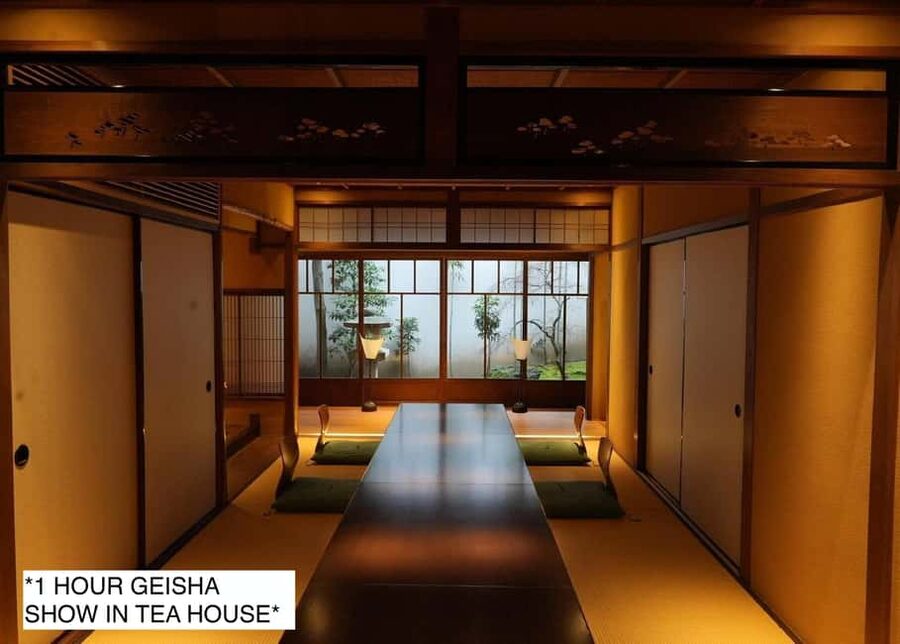
- Tea House option, Kyoto style house
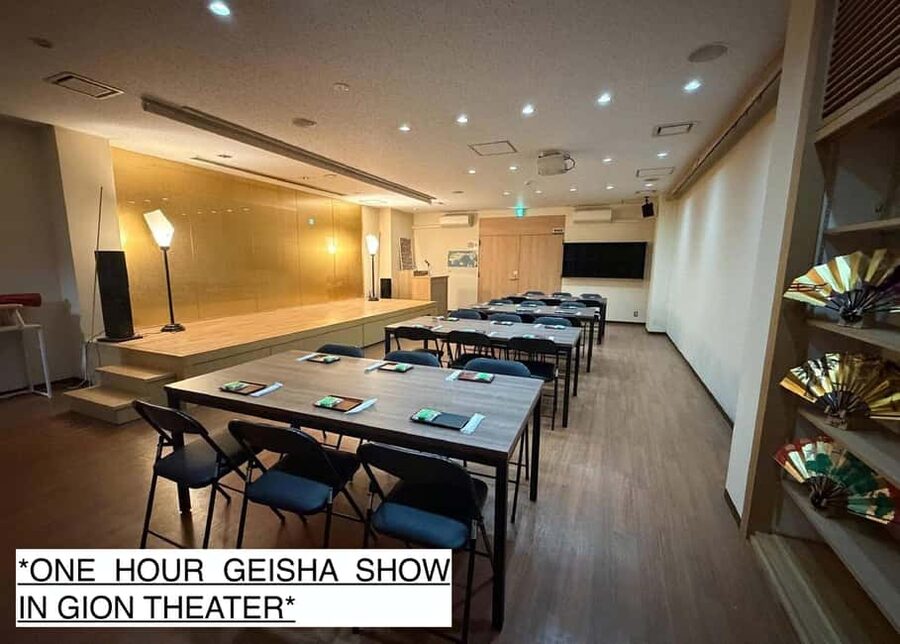
- Gion Theater option, showhouse
- The 1-Hour Show Flow: What Happens After You Arrive
- First act: a traditional dance segment
- Second and third acts: two shorter dances
- Q&A, photo-taking, and a traditional game
- The Q&A and Photo Time: How to Get Real Value
- Kitano Tenmangū Shrine: The Optional 30 Minutes That Changes the Day
- Price and Value: Why $50 Can Actually Make Sense
- Practical Tips: Socks, Seating Style, and Making It Easy for Everyone
- Bring socks, and plan ahead
- No strollers, and keep it simple
- Consider age and comfort
- Group size affects how “personal” it feels
- Where the Tour Starts and How to Plan Your Timing
- Should You Book This Kyoto Maiko Show
- FAQ
- How long is the Maiko show?
- Will the Maiko perform continuously for the full hour?
- Can I take photos and videos during the show?
- What is included in the price?
- Is there a shrine visit?
- What is the difference between the Tea House and Gion Theater options?
- Are wheelchairs allowed?
- What should I bring, and what is not allowed?
Key things I would not miss
- Meeting a real Maiko in Kyoto, where this is rare because the city has only a limited number of apprentices at any time
- Short dance segments plus real interaction, including Q&A and a chance to play a traditional Japanese game
- Photo and video time is built in, so you are not stuck waiting for a brief moment
- Tea and traditional Japanese snacks included, which makes the experience feel more like cultural time than a quick photo stop
- Tea house vs Gion Theater option matters, including where you sit and whether you add Kitano Tenmangu Shrine
Evening walks through the old quarters, compared
- Kyoto Geisha Walking Tour: Gion District & Hidden Gems
★ 4.7 · 3,273 reviews - Kyoto: Gion Magical Night Walking Tour with Geisha Trivia
★ 4.9 · 2,393 reviews - Kyoto: Gion Geisha District Walking Tour – Stories of Geisha
★ 4.7 · 2,187 reviews - Best of Kyoto: Gion, Geisha, Pagodas & Cobblestones
★ 4.9 · 2,058 reviews
Why Kyoto’s Maiko Access Feels Different
If you have Kyoto on your itinerary, this is one of those experiences that ties the city’s culture to something tangible. Kyoto is the one place where you can meet a Maiko and see her performance world up close. And the big idea here is proximity without chaos.
The show is designed around respect and timing. In Geisha and Maiko culture, performances are short on purpose, so the grace stays intact. That means you should expect the schedule to feel structured, not nonstop. You are there to see the details, ask questions, and leave with memories that feel personal, not like you sprinted through.
Also, the rarity angle is real. The experience is built on the fact that there are only around 40 Maikos left in Kyoto, so seeing one is special even for people who come to Kyoto often.
Tea House vs Gion Theater: Choose Your Room, Choose Your Timing
You will pick between two formats, and the differences affect the whole vibe of the day.
Tea House option, Kyoto style house
This option takes place in a Japanese Kyo-Machi-ya, a Kyoto style house. It can feel more intimate because the room setup tends to be smaller and more personal. It also includes a walking tour element that connects with a shrine visit.
The tradeoff is accessibility and group size rules. The Tea House option has a maximum group size of 23 people, and it is not wheelchair accessible.
- PERFECT KYOTO 1-Day Bus Tour★ 5.0 · 13,518 reviews
- Kyoto: Fushimi Inari, Kinkakuji, Bamboo Grove 1 Day Bus Tour★ 4.8 · 4,316 reviews
- Kyoto: Tea Ceremony in a Traditional Tea House in Kiyomizu★ 4.9 · 3,519 reviews
- Kyoto Geisha Walking Tour: Gion District & Hidden Gems★ 4.7 · 3,273 reviews
- Kyoto: Tea Ceremony Ju-An at Jotokuji Temple★ 4.9 · 3,207 reviews
Gion Theater option, showhouse
This option is held in a theater showhouse, which can feel more straightforward if you prefer a typical show setting. It is also the option where wheelchair access is allowed. The group size is capped a bit higher at 30 people.
If you are deciding based on comfort, the theater option is often the easier pick for mobility needs. If you are deciding based on atmosphere, the tea house format usually feels more like you stepped into an old Kyoto space.
The 1-Hour Show Flow: What Happens After You Arrive
No matter which room you choose, the structure is the same idea: short performance, then interaction, then photos.
First act: a traditional dance segment
The Maiko begins with a traditional dance that runs around 10 minutes. This opener matters because it sets the tone and lets you see the style in full form before the show turns into a conversation. You are watching in a way that lets you catch gestures, posture, and the overall pacing, not just the big picture.
Second and third acts: two shorter dances
After the opener, there are two more dances, each about 5 minutes. Together, these segments give you a chance to compare style and energy across short pieces. It also helps keep the performance aligned with that cultural idea of brevity.
Q&A, photo-taking, and a traditional game
Then comes the part many people remember most: the questions and interaction. The host guides the process, and you get time for photo-taking and videos with the Maiko. After that, you play a traditional Japanese game with her.
In some recent sessions, people specifically mentioned playing a game called Konpira Fune Fune. Even if the exact game varies by night, the point stays the same: you are not just watching, you are participating in a light, respectful way.
The Q&A and Photo Time: How to Get Real Value
This is not a silent performance. The time afterward is where you turn curiosity into understanding.
The guide typically explains cultural context before or alongside the dancing. Based on how hosts like Chihiro and Genki have supported recent groups, the goal is to help you understand what you are seeing, including details like what the attire and presentation mean. Once you know what to look for, the dances land harder.
Then you can ask questions directly. People often come in with practical ideas, like what each part of the performance signifies, how training works, or what daily life is like for an apprentice. The guide acts as the bridge, which is especially important if your question is in English or Korean and the Maiko’s responses need careful translation.
And yes, photo and video access is part of the experience. The advantage is timing. You are not scrambling for one shot. You can take pictures during the designated portion, then still have time to enjoy the moment without rushing.
Kitano Tenmangū Shrine: The Optional 30 Minutes That Changes the Day
Only one option adds the shrine component, and that matters for how you plan the rest of your Kyoto day.
If you choose the Tea House format, you add a Kitano Tenmangū Shrine guided session of about 30 minutes. There is also a walking tour connection to the shrine as part of this Tea House option.
What the shrine time adds is contrast. You go from a performance space to an outdoor cultural setting, and it helps you connect the Maiko experience to Kyoto’s everyday spiritual geography. If you like pairing culture-on-the-spot with a calm walk, this is the version worth considering.
If you choose the Gion Theater option, you skip the shrine session, so your day stays more show-focused.
Price and Value: Why $50 Can Actually Make Sense
At $50 per person for about 1 hour to 105 minutes, the first reaction is usually, is that pricey? In Kyoto, it can be. But here’s why it often feels like fair value.
You are paying for several things that are hard to replicate on your own:
- Access to a real Maiko performance segment and structured interaction
- Translation support from a professional guide in English or Korean
- Included tea and traditional Japanese snacks
- Built-in time for Q&A, photos, videos, and a traditional game
And the group size caps help too. With a maximum of 23 in the Tea House option or 30 in the theater option, you usually get a more controlled experience than something that turns into a line of quick snapshots.
Also, the time is compact. You are not committing to a half day or evening. You can fit it near other Gion or Kyoto cultural stops, then still keep your energy.
One practical way to think about it: if you want the cultural access plus the explanation plus the interaction, the price feels less like paying for a show and more like paying for guided understanding and respectful contact.
Practical Tips: Socks, Seating Style, and Making It Easy for Everyone
This is where you can avoid awkward moments.
Bring socks, and plan ahead
Socks are required. Bare feet are not allowed. So pack a pair you are comfortable wearing for about an hour. If you have sensitive feet, choose thicker socks so you do not feel the floor.
No strollers, and keep it simple
Baby strollers are not allowed. Alcohol and drugs are also not allowed. If you show up with a normal daypack, you will likely be fine, but keep it tidy and easy to manage.
Consider age and comfort
The experience is not suitable for people over 95 years. If you are older or have mobility limitations, choose the option that best matches your needs, because the Tea House option is not wheelchair accessible while the Gion Theater option is.
Group size affects how “personal” it feels
Smaller groups can make interaction feel calmer. If you care a lot about the Q&A and photos, the Tea House option’s max group size of 23 may help.
Where the Tour Starts and How to Plan Your Timing
Meeting points can vary based on the option you book, so confirm what your starting location is when you register. Starting points include places like 梅乃 UMENO and the Kitano Tenmangū Shrine area, depending on your selected format.
The duration is listed as 1 hour to 105 minutes, and the extension usually connects to the shrine add-on for the Tea House option. So when you plan your Kyoto day, leave breathing room afterward. You will want a little time to decompress, review photos, and grab a snack or drink nearby.
One more smart move: keep your questions ready, short and specific. With a guided Q&A, clarity beats complexity.
Should You Book This Kyoto Maiko Show
I think this is a strong pick if you want:
- A rare chance to see and meet a Maiko in Kyoto
- A short, well-structured experience with Q&A
- Photo and video time that is built into the event
- Tea and traditional snacks, not just a ticket to watch
Book it if you are the type who likes understanding what you are seeing, and you appreciate cultural rules around respectful distance and short performances.
I would skip it if you want nonstop dancing for the entire hour, or if you dislike the idea that the show has planned breaks for questions, photos, and a game. The whole point is the pacing, so if that sounds frustrating, this probably will not feel satisfying.
FAQ
How long is the Maiko show?
The experience runs about 1 hour, and it can extend up to 105 minutes depending on the option you choose.
Will the Maiko perform continuously for the full hour?
No. The performance is intentionally short and will not run continuously for the entire duration. The rest of the time includes Q&A, photo-taking, and a traditional game.
Can I take photos and videos during the show?
Yes. You are welcome to take pictures and videos, and there is a time set aside for photo-taking.
What is included in the price?
The included items are the Geisha show (about 1 hour), tea and traditional Japanese snacks, a professional tour guide, and a 30 minute Kitano Tenmangū Shrine session only for the tea house option.
Is there a shrine visit?
Yes, but only with the tea house option. The shrine session is for Kitano Tenmangū and lasts about 30 minutes.
What is the difference between the Tea House and Gion Theater options?
The Tea House option is held in a Japanese Kyo-Machi-ya style house and includes the shrine add-on, with a walking tour element. The Gion Theater option is held in a showhouse and does not include the shrine session.
Are wheelchairs allowed?
Wheelchair access is not available for the Tea House option. Wheelchair access is available for the Gion Theater option.
What should I bring, and what is not allowed?
Bring socks. Bare feet are not allowed. Baby strollers are not allowed, and alcohol and drugs are not allowed.
Evenings in the Old Quarters




Newest Kyoto write-ups from the Loving Japan desk
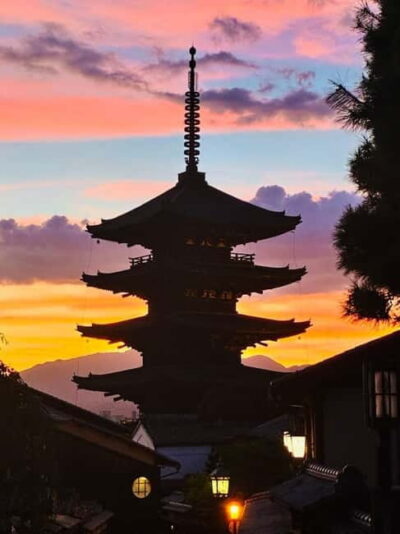
Gion, Geisha and Maiko Experiences, side by side.
 ★ 4.7Kyoto Geisha Walking Tour: Gion District & Hidden GemsFrom $253,273 reviews
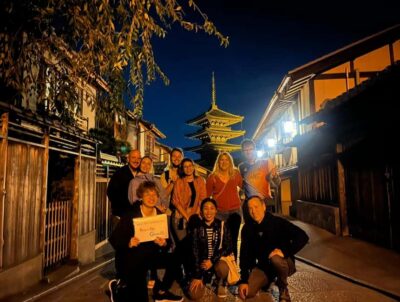 ★ 4.9Gion Magical Night Walking Tour with Geisha TriviaFrom $242,393 reviews
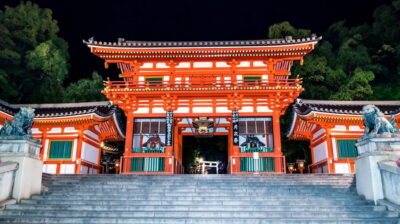 ★ 4.7Gion Geisha District Walking Tour – Stories of GeishaFrom $202,187 reviews
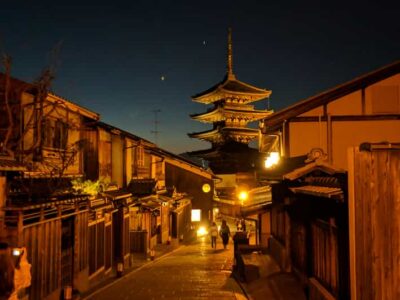 ★ 4.9Best of Kyoto: Gion, Geisha, Pagodas & CobblestonesFrom $242,058 reviews
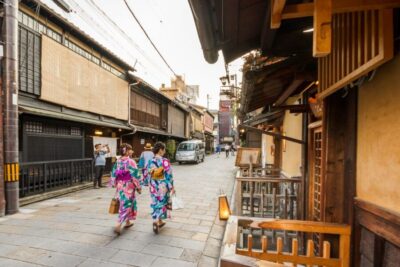 ★ 4.5Night Walk in Gion: Kyoto’s Geisha DistrictFrom $212,003 reviews
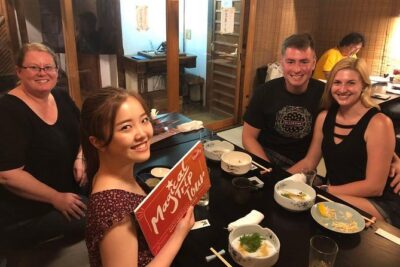 ★ 5.0Kyoto Night Foodie Tour in Gion (9+ dishes + 6 Sake tastings)From $1631,762 reviews
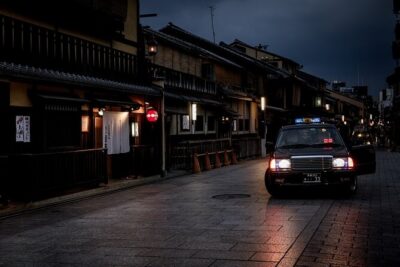 ★ 5.0Kyoto Gion Geisha District Walking Tour – The Stories of GeishaFrom $251,441 reviews
 ★ 5.0Kyoto Gion: 2-Hour Geisha Culture & History Walking TourFrom $231,186 reviews
Filed on these lists too