
REVIEW · RAMEN AND NOODLE TOURS
Professional Ramen & Gyoza with Ramen Chef in a restaurant!
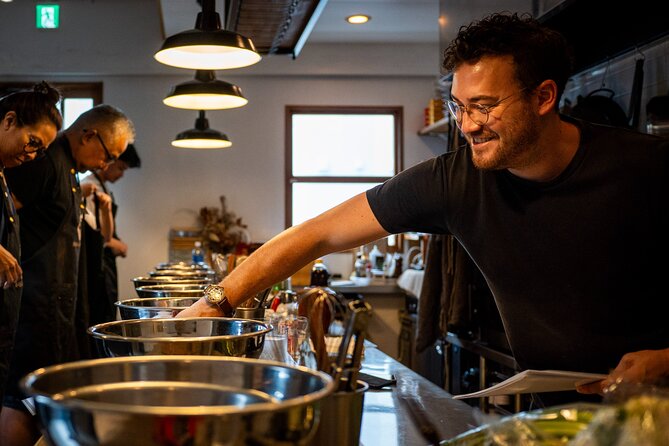
Ramen starts at your hands. This hands-on Tokyo class has you making ramen noodles and gyoza in a working restaurant kitchen, led by bilingual chefs. With a small group of up to six, you get real feedback while you choose a broth style that fits your taste.
Two things I really like are the setup and the teaching style. You use kitchen-grade gear, and the chefs also coach you on ramen technique and ramen etiquette so the meal feels like more than just food prep. The one potential drawback is effort: this is hands-on for about four hours, with hot tools and close attention needed.
- Noodle-making and gyoza are done in a real Tokyo restaurant kitchen
- Small group size (max 6) for more direct coaching
- You choose between two broth options
- Dietary needs can be accommodated with advance notice
- You leave with a cooking e-book to recreate your ramen at home
In This Review
- A Ramen Kitchen Class, Not a Home Demo
- Finding Baba Ramen Cooking Meguro at 9:00 AM
- Ramen Etiquette and the Bowl Formula You’ll Actually Use
- Make Fresh Ramen Noodles from Scratch
- Roll and Pan-Cook Gyoza Alongside Your Noodles
- Broth Choice and Building Restaurant-Style Flavor
- Small Group Size Means You Get Real Feedback
- Diet-Friendly Options in a Tokyo Restaurant Kitchen
- What You Take Home: The Cooking E-Book
- Is This $159.18 Tokyo Ramen Class Worth It?
- Should You Book This Ramen and Gyoza Class?
- FAQ
- What time does the ramen and gyoza class start?
- How long is the experience?
- Where is the meeting point?
- What is the maximum group size?
- Is the class held in a restaurant?
- Are vegetarian or vegan options available?
- Is there a gluten-free option?
- Can you make it pork-free?
- What do I receive to take home?
- What is the cancellation policy?
A Ramen Kitchen Class, Not a Home Demo
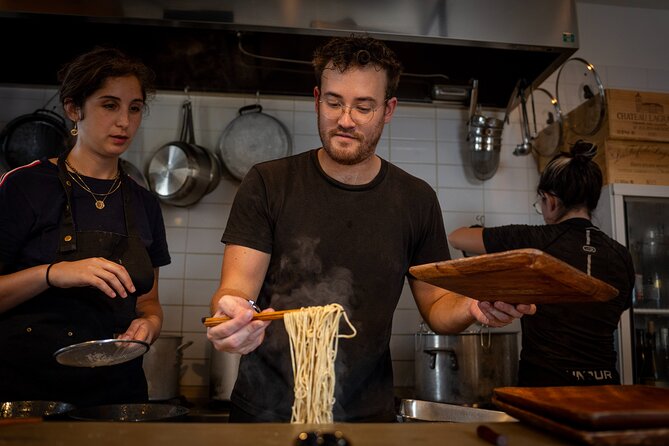
This is the kind of cooking class that helps you understand why ramen tastes the way it does. Instead of watching someone else work, you actually do the key steps, including making fresh ramen noodles and wrapping and cooking gyoza in the same session.
What makes it especially appealing in Tokyo is that it’s not staged in a random studio. You’re in a restaurant environment with professional tools, which changes how the class flows. The pacing feels like real service training, not a slow craft project.
If you want a relaxed, just-watch-and-snack experience, this may feel like work. But if you like learning a technique you can repeat, it’s a strong choice.
A bowl somewhere else in Tokyo
- Eat and Drink Like a Local: Tokyo Ueno Food Tour-Taverns&Ramen
★ 5.0 · 957 reviews - Ramen & Gyoza Cooking Class in Tokyo with Local Supermarket Visit
★ 5.0 · 823 reviews - Tokyo: Ramen Tasting Tour with 6 Mini Bowls of Ramen
★ 4.9 · 432 reviews - Tokyo: Easy Ramen Cooking Experience in Kabukicho, Shinjuku
★ 4.6 · 321 reviews
Finding Baba Ramen Cooking Meguro at 9:00 AM
The class meets at Baba Ramen Cooking Meguro101, in Meguro City: 3-chōme-7-32 Shimomeguro, Meguro City, Tokyo 153-0064. It starts at 9:00 am and ends back at the meeting point, so you can plan your morning and not worry about a transfer.
It also runs near public transportation, which matters in Tokyo, where “closest station” can still be a bit of a walk. I’d build in extra time so you arrive calm, not rushed, especially since you’ll be doing hands-on prep right after.
This is also a mobile ticket experience. That sounds minor, but it’s one less thing to manage on a busy Tokyo day.
Ramen Etiquette and the Bowl Formula You’ll Actually Use
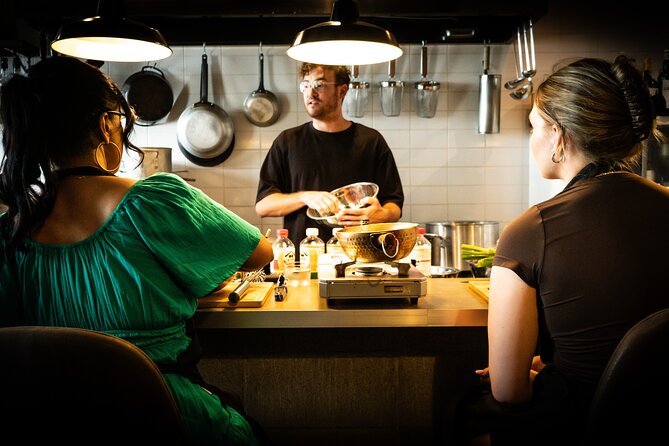
A big part of the value here is how the chefs teach the bowl, not just the steps. Expect cultural background about ramen and explanations tied to each part of the process. That includes etiquette, the kind of small rules that make ramen feel like a Japanese craft instead of an international noodle soup.
The chefs leading the class are bilingual (English and Japanese). In the class vibe, you’ll see names like Andrew and members of his team such as Eric, Jae, and Leo mentioned in guest feedback, which fits the overall “professional but fun” tone.
Here’s the practical takeaway for you: when you understand what each component does, it’s much easier to fix your ramen at home. If something tastes off later, you’ll have a mental map for where to adjust, instead of guessing randomly.
Make Fresh Ramen Noodles from Scratch
The centerpiece is the noodle work. You’re not buying fresh noodles and calling it ramen class. You’re making ramen noodles from scratch, and the training emphasizes technique, timing, and the feel of the dough.
Hands-on noodle making takes focus. You’ll be working in a way that’s close to commercial kitchen flow, using equipment designed for the job. One reason guests love this setup is that it keeps you on track. When you’re in a restaurant kitchen, the process has less “home kitchen chaos” and more structure.
Plan on getting a little busy. Multiple guests highlight that you’re involved in almost every stage, not just a quick rolling or tasting. That’s a feature if you want real skill growth, but it’s also why comfortable clothes matter.
- Mt Fuji and Hakone 1-Day Bus Tour Return by Bullet Train★ 5.0 · 26,383 reviews
- 1-Day Tokyo Bus Tour★ 5.0 · 14,250 reviews
- Tokyo: teamLab Planets TOKYO Digital Art Museum Entry Ticket★ 4.6 · 9,779 reviews
- Mt Fuji & Hakone Cruise, Drum Show Bullet Train 1 Day from Tokyo★ 4.0 · 7,413 reviews
- Tokyo: Shinjuku Food Tour (13 Dishes at 4 Local Eateries)★ 5.0 · 6,603 reviews
Roll and Pan-Cook Gyoza Alongside Your Noodles
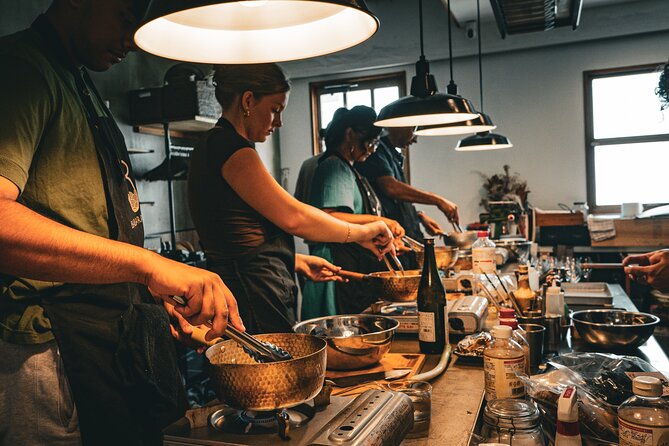
While the ramen noodles are progressing, you’ll move into gyoza. This isn’t a passive add-on. You’ll learn how to handle fillings and wrapping, then you’ll cook them in a way that matches the Japanese approach to gyoza.
In practical terms, gyoza is where you feel the difference between “I made dumplings” and “I cooked dumplings like a pro.” Pan heat, timing, and the finishing step are what turn decent gyoza into something you’d happily order in Japan.
Also, the class structure matters. Since you’re cooking in the same restaurant environment as the ramen prep, the timing is designed so you can eat what you make while everything is at its best. That’s a real advantage over classes that separate steps too far in time.
If you’re a fan of dumplings, this is a great two-for-one morning, because you learn two skills that complement each other: noodle craft and gyoza technique.
Broth Choice and Building Restaurant-Style Flavor
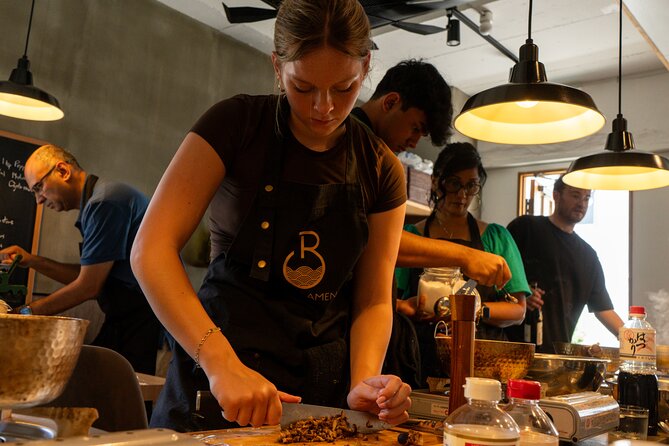
You get to choose from two broth options. The point isn’t just taste preference. It’s also about learning how different broths change the way the bowl builds overall flavor.
The chefs walk you through how ramen comes together, including the steps that create the base and the flavor components. One guest specifically talked about making and using shoyu-tare afterward at home, which is a useful hint that the class is not vague. They aim to give you recipes and guidance you can actually follow.
In a restaurant kitchen, broth and seasoning work is all about control. Even if you never become the next ramen chef, this teaches you what to prioritize when you cook at home. You’ll likely come away understanding why ramen can taste “deep” without being complicated, once you get the order of operations right.
Small Group Size Means You Get Real Feedback
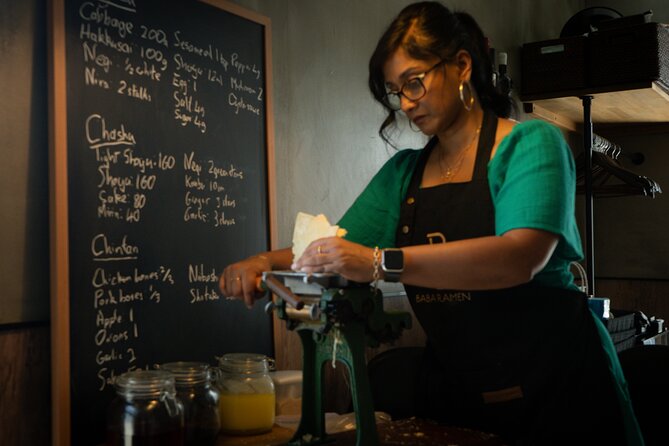
This class caps at six travelers, which is the difference between a fun workshop and a skill-building session. With a group that size, the chefs can watch what you’re doing and correct details quickly. That matters most when you’re working with dough, heat, and folding technique.
You’ll also notice the atmosphere is social without being chaotic. Guests repeatedly describe it as interactive, hands-on, and smooth-running, with chefs who keep things moving while still answering questions. In that kind of group, you’re not stuck waiting for the room to clear before you can ask something.
For you, the practical benefit is confidence. After four hours of direct coaching, it’s much easier to reproduce the result later, because you know what you did right and what you should tweak.
Diet-Friendly Options in a Tokyo Restaurant Kitchen
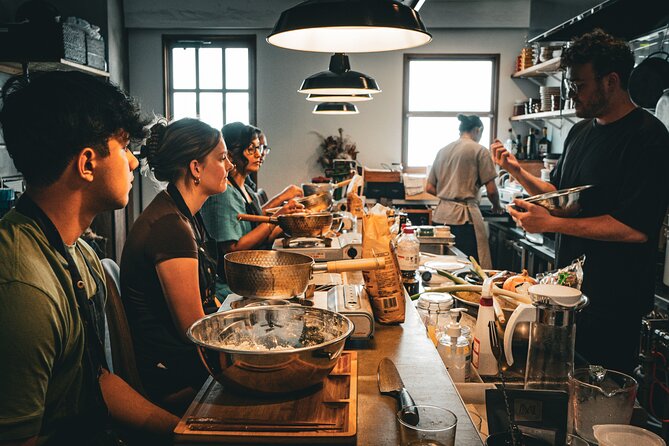
Tokyo ramen often feels like it automatically means pork. This class tries to break that assumption. Vegetarian and vegan options are available if you request in advance, subject to availability. There’s also a gluten-free option and a pork-free option with advance notice.
That’s a big deal because many cooking classes can only do small swaps at the last minute. Here, the experience explicitly mentions these dietary accommodations, which suggests the kitchen is prepared to handle them rather than forcing you into a “guess and hope” meal.
If you have allergies, send your needs clearly when booking. One guest with allergies described the team as communicative and not making it feel like a burden. That lines up with how you should approach food safety: give details early, and then let the kitchen plan.
Even if you’re not strictly vegetarian, these options can still be useful. You’ll end up with a ramen experience tailored to how you eat, not one-size-fits-all.
What You Take Home: The Cooking E-Book
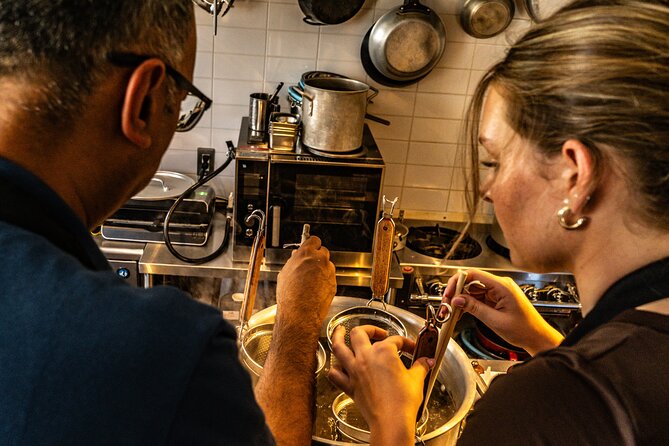
You don’t just leave with a full stomach. You take home a cooking e-book so you can recreate the recipe at home. That matters because the main risk with cooking classes is forgetting what you did the day after.
The e-book also helps you practice your ramen without relying on memory. If you’ve ever cooked something once and then scrambled to recreate it from vague recollection, you’ll understand why this is valuable.
I also like that the chefs teach enough context that you don’t feel locked into one exact bowl. With ramen, slight changes in seasoning, texture, and cook time can shift the final result. The more structured guidance you have, the easier it is to adjust for your own kitchen.
Is This $159.18 Tokyo Ramen Class Worth It?
Let’s talk value, because $159.18 per person is not “throwaway” money. The best way to judge it is what’s included and what skill you gain.
You’re paying for:
- Pro restaurant equipment and a professional kitchen setup
- Hands-on ramen noodle making and gyoza rolling and cooking
- Broth choice (two options)
- Instruction that includes technique and ramen etiquette
- A take-home cooking e-book
A bowl of ramen in Tokyo can be affordable, but you’d pay that price repeatedly without learning the method. Here, you’re paying once to learn a process you can repeat. And since the class is small (max six), you’re also paying for more direct attention than you’d get from big group tours.
Where price might pinch you is if your goal is only to eat ramen, not to cook. If that’s you, consider pairing one meal out with a cheaper hands-on option elsewhere. But if you love food crafts and want a real “I can do this” skill, this class earns its cost.
Also, the quality signal is strong. The experience is rated 4.9 with 223 reviews, and 96% of reviews recommend it. That doesn’t replace your own judgment, but it is a good sign that the class consistently delivers.
Should You Book This Ramen and Gyoza Class?
Book it if:
- You want a hands-on Tokyo food experience, not just a tasting
- Fresh noodle making and dumplings are your kind of hobby
- You want a restaurant-kitchen setup with small-group coaching
- You need dietary options like vegan, gluten-free, or pork-free, and you can request ahead
Skip it if:
- You want a casual, low-effort tour
- Your schedule is tight and four hours of active prep feels stressful
- You’d rather spend the morning on independent ramen hunting instead of cooking
My quick decision rule: if you’ll be excited to learn and mess a little, you’ll leave happy. If you just want the easiest ramen in Tokyo, you may prefer a restaurant meal and a lighter food walk.
FAQ
What time does the ramen and gyoza class start?
The class starts at 9:00 am.
How long is the experience?
It runs for about 4 hours.
Where is the meeting point?
You meet at Baba Ramen Cooking Meguro101, 3-chōme-7-32 Shimomeguro, Meguro City, Tokyo 153-0064, Japan.
What is the maximum group size?
The class has a maximum of 6 travelers.
Is the class held in a restaurant?
Yes, the ramen-making experience takes place in a restaurant kitchen.
Are vegetarian or vegan options available?
Yes. Vegetarian and vegan options are available if you comment in your request, subject to availability.
Is there a gluten-free option?
Yes. A gluten-free option is available if you comment in your request, subject to availability.
Can you make it pork-free?
Yes. A pork-free option is available if you comment in your request, subject to availability.
What do I receive to take home?
You take home a cooking e-book so you can recreate the recipe at home.
What is the cancellation policy?
You can cancel for free up to 24 hours in advance for a full refund. Weather cancellations may also trigger a full refund or an offered different date.
One More Bowl




Newest Tokyo write-ups from the Loving Japan desk




Ramen and Noodle Tours, side by side.
 ★ 5.0Ramen Cooking Class at Ramen Factory in KyotoFrom $1311,937 reviews
 ★ 5.0Eat and Drink Like a Local: Tokyo Ueno Food Tour-Taverns&RamenFrom $95957 reviews
 ★ 5.0Ramen & Gyoza Cooking Class in Tokyo with Local Supermarket VisitFrom $122823 reviews
 ★ 4.9Ramen Cooking Class at a Ramen Factory with SouvenirFrom $127532 reviews
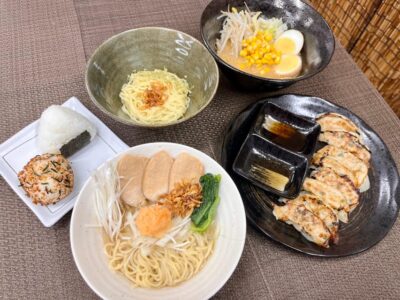 ★ 5.0Ramen, Gyoza, and Onigiri Cooking ClassFrom $90445 reviews
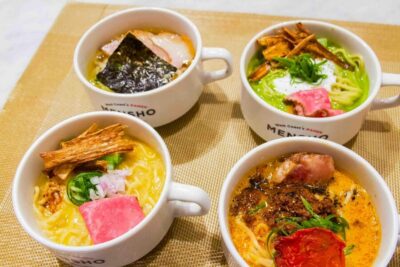 ★ 4.9Ramen Tasting Tour with 6 Mini Bowls of RamenFrom $122432 reviews
 ★ 4.7Five Must-See Highlights Walking Tour & Ramen LunchFrom $56411 reviews
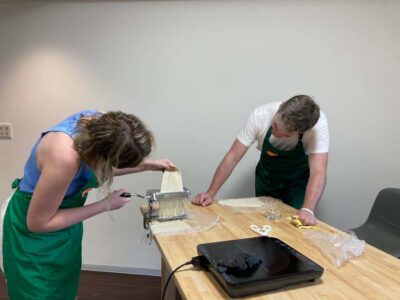 ★ 5.0Ramen and Gyoza Cooking Class in DotonboriFrom $70378 reviews
Filed on these lists too