
REVIEW · KYOTO TEA CEREMONIES AND MATCHA
Scenic Green Tea Fields of Hidden Kyoto & Local Tea Exp (Private)
Tea country in Kyoto feels almost unreal. This private half-day trip takes you out to Wazuka, the area behind Uji matcha, plus Byodo-in and Shoju-in for that serene, old-Japan feel.
I especially love two things. First, the tea fields are camera candy year-round, with that geometric pattern of green stretching toward the sky. Second, the tea stops are practical, you taste real matcha and green tea at local farmer-supplied cafes and you can shop for premium tea at prices that are far kinder than what you usually see in central Kyoto.
One thing to consider: temple entrance fees are not included, and you will also do short walks and some stairs. If you hate paying add-ons once you arrive, budget for Byodo-in (¥600 per person) and Shoju-in (¥1,000 per person) up front.
In This Review
- Key things you will notice on this Kyoto tea tour
- Why Wazuka tea country feels different from central Kyoto
- Getting to the countryside with pickup that actually saves time
- Byodo-in Phoenix Hall: the 10-yen temple that means more than a photo
- Wazuka-cha cafe: tasting tea that is built for matcha lovers
- Ishitera tea plantation: sky-high tea-field photos that actually feel quiet
- Ujitawara-cho: a tea-production area where you can walk into the view
- Shoju-in: the heart-window moment in the south countryside
- What the private guide adds (especially for photos and tea talk)
- Price and value: $250.38 for up to 6, plus the tea and temple fees
- How long you will be on the road and what to wear
- Who this tour suits best
- Should you book this Scenic Green Tea Fields of Hidden Kyoto tour?
- FAQ
- How long is the tour?
- Is pickup offered?
- Is this a private tour?
- Which stops are included?
- Are temple entrance fees included?
- Are tea and coffee included?
- What transportation do I ride in?
- Where is the start time?
- Can I cancel for a full refund?
- Is the tour suitable if I need easier walking?
Key things you will notice on this Kyoto tea tour
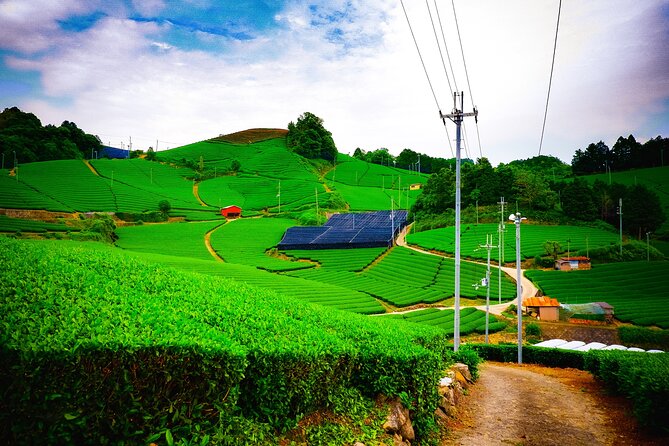
- Wazuka tea country views year-round, including the winter-ready “waves” of planted green
- Matcha tasting at a local-cha cafe, with desserts made using top-quality tea
- Several tea-photo stops, not just one quick look, so you can actually enjoy the countryside
- A real temple day built in, not only “tea and photos,” with Byodo-in and Shoju-in
- Private transport and pickup, with an air-conditioned van for groups or a Mini Cooper convertible for solo riders
Sit down somewhere quieter. Other tea rooms we booked
- Kyoto: Tea Ceremony in a Traditional Tea House in Kiyomizu
★ 4.9 · 3,519 reviews - Kyoto: Tea Ceremony Ju-An at Jotokuji Temple
★ 4.9 · 3,207 reviews - Kyoto: 45-Minute Tea Ceremony Lesson Experience
★ 4.3 · 2,378 reviews - Kyoto: Table-Style Tea Ceremony at a Kyo-Machiya
★ 4.9 · 1,211 reviews
Why Wazuka tea country feels different from central Kyoto
Central Kyoto is great, but it can feel like one long line of landmarks. This tour trades that for a slower rhythm in tea-growing countryside, where the scenery changes as you move from temple grounds to farm roads.
Wazuka is known for producing tea that people treat as cleaner and more authentic than what you get labeled only as Uji-style matcha. The key here is that you are not just reading labels in a shop. You taste, you compare, and you learn what makes one cup feel different from another, which is the whole point if you care about tea beyond the souvenir level.
If you come in expecting only pretty fields, you still win. If you come curious, you get more. Your guide connects the dots between farming, temple culture, and why tea is tied to monks, samurai, and even ninja stories in the region.
Getting to the countryside with pickup that actually saves time
You start at 1:00 pm and spend about 5.5 hours on the road and at stops. That timing is smart, because you dodge the heaviest morning crowds in Kyoto while still having enough daylight for tea-field photos.
Pickup and drop-off are included, with pinpoint convenience and the ability to set a different start and goal. That matters because tea country is not the kind of place you want to piece together with buses and train transfers, especially if your day already includes other Kyoto highlights.
For transport, you ride in an air-conditioned Nissan van if you are in a group (up to 6). Solo travelers get something fun instead, the open-air Mini Cooper convertible. Even if you do not think you care about cars, this part changes the day: open windows, cooler air, and the feeling that you are moving through the region instead of just visiting it.
Byodo-in Phoenix Hall: the 10-yen temple that means more than a photo
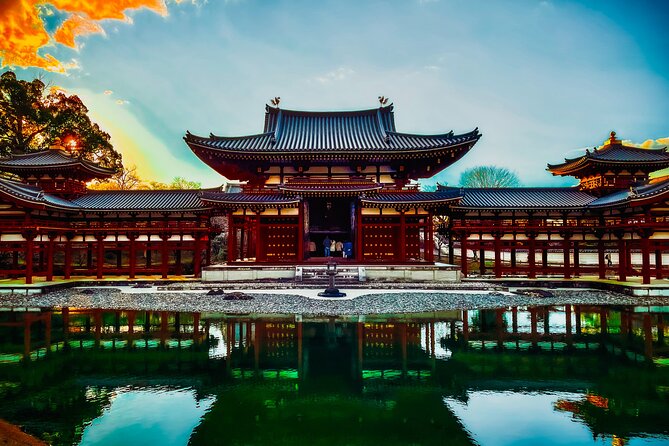
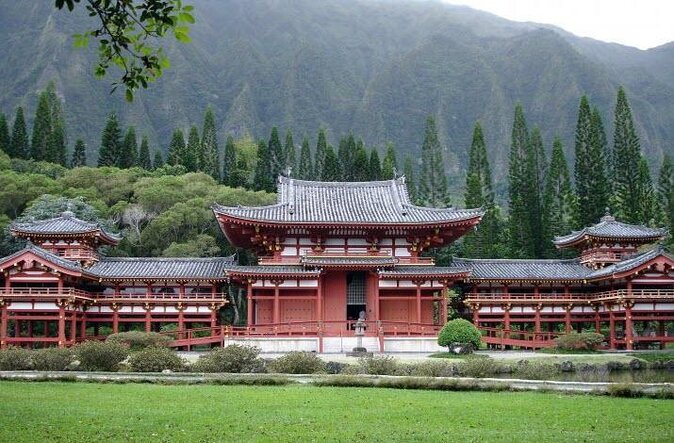
Your day begins at Byodo-in, famous for the Phoenix Hall and widely recognized as one of Japan’s most striking temple interiors and exteriors. It is also the temple pictured on Japan’s 10-yen coin, so you will see lots of familiar shapes once you arrive.
This is one of those stops where the architecture does the storytelling. The Phoenix Hall represents the Buddhist Pure Land idea of paradise on earth, and the design is meant to feel timeless, not trendy. If you like seeing how symbolism shows up in real buildings, this is a highlight.
The time here is about 2 hours, which is enough to slow down. You can look around, take your time, and still stay on schedule. Expect that the temple experience includes some walking and stairs, so wear shoes you trust.
- PERFECT KYOTO 1-Day Bus Tour★ 5.0 · 13,518 reviews
- Kyoto: Fushimi Inari, Kinkakuji, Bamboo Grove 1 Day Bus Tour★ 4.8 · 4,316 reviews
- Kyoto: Tea Ceremony in a Traditional Tea House in Kiyomizu★ 4.9 · 3,519 reviews
- Kyoto Geisha Walking Tour: Gion District & Hidden Gems★ 4.7 · 3,273 reviews
- Kyoto: Tea Ceremony Ju-An at Jotokuji Temple★ 4.9 · 3,207 reviews
Wazuka-cha cafe: tasting tea that is built for matcha lovers
After temples, you shift into the tea part of the day, a Wazuka-cha cafe stop for about 1 hour. This is where the tour becomes more than scenic sightseeing.
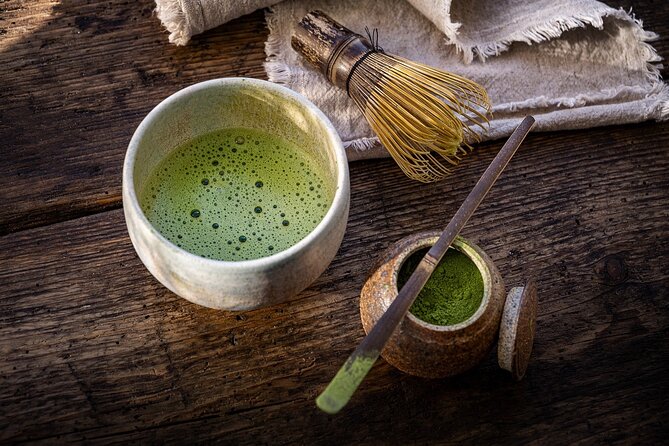
You taste green tea and matcha made from local tea leaves, and the cafe emphasizes quality that surpasses even the Uji reputation people already know. You also get matcha desserts, which can be easier to appreciate than learning tea theory from scratch. If you have ever thought you do not like matcha, this kind of tasting is exactly where your opinion might change, because the taste range can be way broader than the powdery stuff many people try elsewhere.
Another practical plus: this is not only sipping. It is also about understanding what you are buying and why. When a tea region is known for purer leaves or different cultivation, that shows up in flavor. You get to notice it, then decide what to take home.
Ishitera tea plantation: sky-high tea-field photos that actually feel quiet
Next comes a short visit to a tea plantation area at Ishitera, around 30 minutes. This is the stop that tends to thrill photographers, because the tea plants are trained into that wave-like geometry you see in famous tea-country images.
You are not just looking at green. You are standing in the middle of how tea farming shapes the land. Even when the fields look less lush than summer, the structure still reads as beautiful, almost graphic. That is why it works in winter too, the pattern holds and the views stay photogenic.
You will do a bit of walking here, and you will want to move slowly. The best photos are usually from small angles, near field edges, where you can capture depth and the way the rows recede.
If it is raining or windy, tea-country photos can still work, but the clouds can change the mood quickly. Bring a light layer and something small for weather, even if your forecast looks calm.
Ujitawara-cho: a tea-production area where you can walk into the view
Then you head to Ujitawara-cho, another key tea production area. The stop is also around 30 minutes, and it is designed for one specific goal: walk in a farm area and take that “how is this so green” photo.
This portion of the day is short, but it is not random. The time is enough to get a few angles and still stay energized. If you want to buy tea, this is a good moment to think about flavor preferences, because after tasting you know what kind of matcha style you like.
The tour frames Ujitawara-cho as a foundational region tied to green tea and matcha culture. Even if you are not chasing the full history lesson, it helps to connect what you see, the farms, with why the area matters.
Shoju-in: the heart-window moment in the south countryside

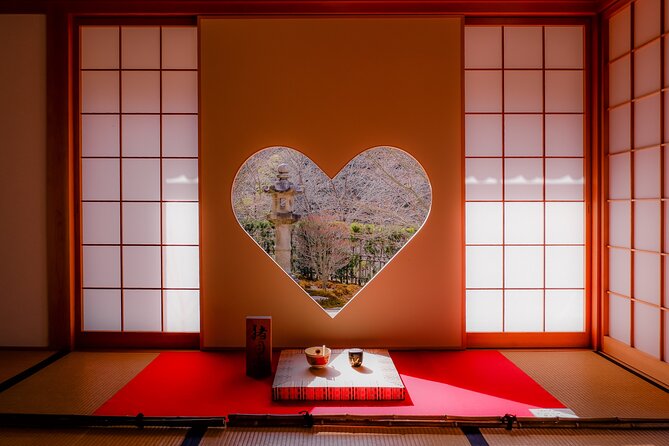
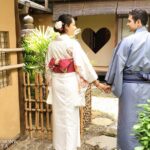
Shoju-in is the last major stop, about 1 hour 30 minutes. It is located in the south countryside area of Kyoto, and it is the kind of place that feels like it needs travel time to pay off. From the descriptions, the big signature is the famous heart-shaped window in the tea room view.
This temple stop changes the pace again. Instead of only open fields and outdoor angles, you slow down for an interior atmosphere. It is also a useful contrast after walking through the plantations, because it gives you a calmer, more contemplative end to the day.
You should plan for another round of walking and stairs. If you know your legs get tired on temple steps, pace yourself. Since it is private, you can move at a comfortable rhythm without feeling rushed by a big group.
What the private guide adds (especially for photos and tea talk)
The biggest reason this kind of half-day tour feels worth it is the guide. In this tea country setting, a guide is not just announcing stops. They help you understand what you are seeing, then they help you enjoy the day without time stress.
From real experiences shared for this tour, guides like Daiki are praised for being upbeat, patient with picture taking, and generous with context about tea culture and Japanese history. There is also a strong pattern of going a little beyond the basic route when it makes sense, including extra shrine time in the forest in some cases, with stories tied to ninja lore and local legends.
Even if you only care about the scenery, photo pacing is a real quality-of-life feature. When someone waits while you get the shot, the fields stop feeling like a checklist.
Price and value: $250.38 for up to 6, plus the tea and temple fees
This tour costs $250.38 per group for up to 6 people. That price structure is the main value driver. If you fill the vehicle, the per-person cost drops dramatically compared to paying for solo tours. Even with just two or three people, you usually end up with better value than buying individual transport plus separate tickets and guided time.
Still, there are add-ons you should plan for. Temple admissions are not included: Byodo-in is ¥600 per person, and Shoju-in is ¥1,000 per person. Coffee and/or tea fees for your own drinks are also not included, so if you want extra tastings beyond what is covered, budget accordingly.
The good news is that the tea shopping angle is built into the day. The tour highlights that you can buy premium tea for about half to a third of city prices. If you were already planning to bring back matcha as a gift or pantry staple, that can offset part of the day’s cost, especially if you compare prices in Kyoto’s center.
How long you will be on the road and what to wear
You are out for about 5 hours 30 minutes total, starting at 1:00 pm. The route includes multiple short stops, plus travel time to the countryside and back.
Wear comfortable shoes. You will do short walks and stairs across temple grounds and plantation viewing areas. Bring a light layer too, tea-country weather can feel cooler when you are near forest edges and open fields.
If you get the convertible Mini Cooper option as a solo traveler, dress for real outdoor driving. It is fun, but you feel the air more than you would in a closed van.
Who this tour suits best
This fits best if you want three things at once, scenery, tea, and cultural stops, without spending your whole day on trains or fighting bus schedules.
It is a great choice for:
- Couples who want a private Kyoto day that feels calm and not overplanned
- Families who like outdoor stops but still want a temple highlight
- Solo travelers who want the convertible experience and a guide to keep the day moving smoothly
- Anyone interested in matcha beyond just trying one brand
It may be less ideal if you:
- Are not interested in tea tastings or shopping at all
- Want a very lightweight day with no stairs
- Hate paying entrance fees separately
Should you book this Scenic Green Tea Fields of Hidden Kyoto tour?
If you are thinking about a Kyoto tea trip and you care about real flavor, real countryside views, and not wasting time on transportation logistics, this is a strong yes.
You get the best kind of balance here: temple beauty at Byodo-in and Shoju-in, plus multiple tea stops where you can actually taste and buy. The private format, with pickup and tailored drop-off, is the difference between seeing countryside for a moment and really enjoying it for a half-day.
Book it if you want photos that actually look like the tea-country images you have seen. Book it if you want matcha tastings with enough time to make sense of what you like. And if you book, bring walking shoes and plan your budget for the temple entrances so the day stays smooth.
FAQ
How long is the tour?
It runs about 5 hours 30 minutes.
Is pickup offered?
Yes. The tour includes pinpoint pickup and drop-off, and you can set different start and goal points.
Is this a private tour?
Yes. It is private, so only your group participates.
Which stops are included?
The tour includes Byodoin Temple, a Wazuka-cha cafe, Ishitera Tea Plantation, Ujitawara-cho, and Shoju-in.
Are temple entrance fees included?
No. Byodo-in and Shoju-in admission fees are not included.
Are tea and coffee included?
Coffee and/or tea fees for your own drinks are not included.
What transportation do I ride in?
If you are 2 to 6 people, you ride in an air-conditioned Nissan van. If you are 1 person, you use a Mini Cooper convertible.
Where is the start time?
The start time is 1:00 pm.
Can I cancel for a full refund?
Yes. You can cancel up to 24 hours in advance for a full refund.
Is the tour suitable if I need easier walking?
Most travelers can participate, but there is short walking and stairs needed. The meeting point is near public transportation, and service animals are allowed.
Kyoto by the Bowl
Newest Kyoto write-ups from the Loving Japan desk

Kyoto Tea Ceremonies and Matcha, side by side.
 ★ 4.9Tea Ceremony in a Traditional Tea House in KiyomizuFrom $493,519 reviews
 ★ 4.9Tea Ceremony Ju-An at Jotokuji TempleFrom $293,207 reviews
 ★ 4.345-Minute Tea Ceremony Lesson ExperienceFrom $222,378 reviews
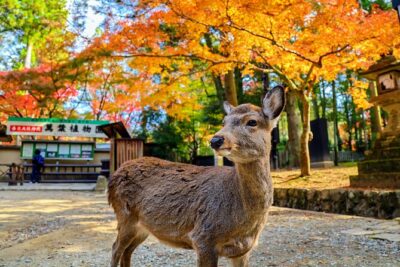 ★ 5.0World Heritage Kyoto & Nara Uji Authentic Matcha ExperienceFrom $1291,573 reviews
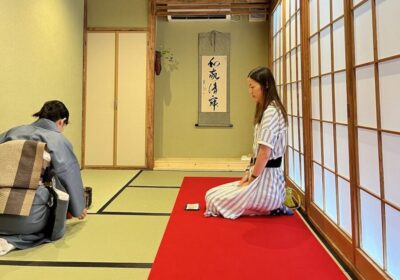 ★ 4.9Tea Ceremony ExperienceFrom $251,426 reviews
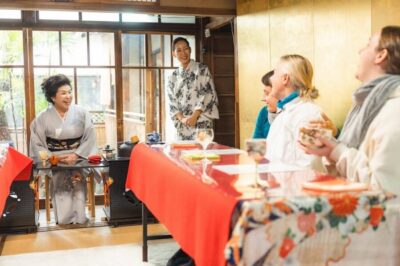 ★ 4.9Table-Style Tea Ceremony at a Kyo-MachiyaFrom $451,211 reviews
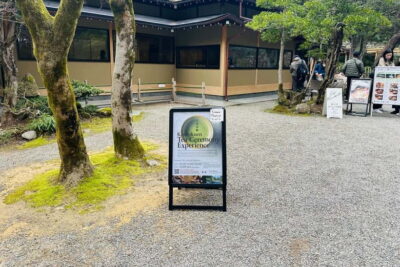 ★ 4.8Kenrokuen Tea Ceremony ExperienceFrom $351,139 reviews
 ★ 5.0Kimono Tea Ceremony at Kyoto Maikoya, NISHIKIFrom $65911 reviews
Filed on these lists too