
REVIEW · KYOTO TEA CEREMONIES AND MATCHA
Tea Ceremony in 150 Years Old Townhouse with Tables and Chairs
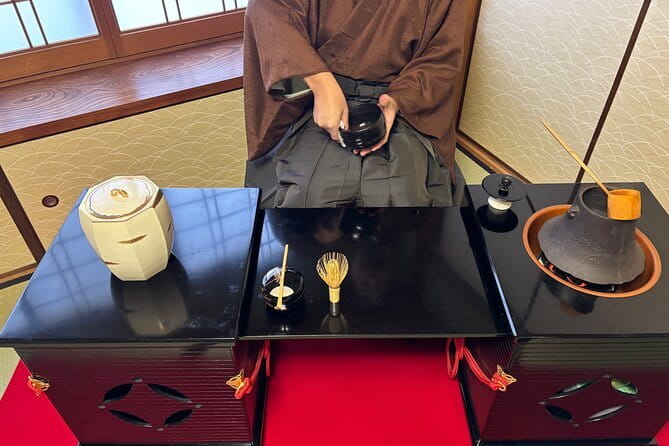
Whisking matcha teaches you patience fast. This small-group tea ceremony in Ninenzaka takes place in a 150-year-old townhouse, and a tea master guides you through the steps, tools, and manners in clear English for about 50 minutes. You get the why behind the rituals, not just the how.
I also love that you get to drink Uji, Kyoto matcha in the tasting portion, along with two different seasonal Japanese sweets. It is a practical, food-in-your-hands kind of cultural class, capped with a Q and A so you can ask the stuff that usually goes unsaid.
One thing to consider: it is not a private, one-on-one session, and strict room rules can catch you off guard (like socks and no perfume). Go in expecting a small group up to 15, and you will have a smoother time.
In This Review
- Key things I’d circle before you go
- Why Ninenzaka and a 150-Year-Old Townhouse Matter
- The Matcha Lesson: Tools, Etiquette, and How the Ritual Clicks
- Stop in Sannenzaka and Ninenzaka: The Setting That Makes Tea Feel Local
- The Tasting Part: Uji Matcha and Two Seasonal Japanese Sweets
- Room Rules That Sound Strict, Until You Understand Them
- How the 50 Minutes Actually Flow
- Optional Kimono Rental and the Matcha You Can Bring Home
- Price and Value: What $28.90 Buys You in Real Terms
- Who This Tea Ceremony Is Best For
- Should You Book This Kyoto Matcha Experience?
- FAQ
- How long is the tea ceremony experience?
- How much does it cost?
- Where does the experience start?
- Is this a small-group activity?
- What is included in the price?
- Do I need to bring socks?
- Is kimono included?
- Can I record video during the ceremony?
- Is perfume allowed?
- Is the session available for children?
Key things I’d circle before you go
- Hands-on matcha whisking with the tools provided, not just watching
- Uji matcha tasting plus two seasonal authentic Japanese sweets
- Small-group feel (maximum 15) in a traditional townhouse setting
- English instruction every day, with step-by-step guidance
- Room etiquette rules (socks, no perfume, no video during demonstration)
- Optional kimono rental (2-piece) if you want the full look
Sit down somewhere quieter. Other tea rooms we booked
- Kyoto: Tea Ceremony in a Traditional Tea House in Kiyomizu
★ 4.9 · 3,519 reviews - Kyoto: Tea Ceremony Ju-An at Jotokuji Temple
★ 4.9 · 3,207 reviews - Kyoto: 45-Minute Tea Ceremony Lesson Experience
★ 4.3 · 2,378 reviews - Kyoto: Table-Style Tea Ceremony at a Kyo-Machiya
★ 4.9 · 1,211 reviews
Why Ninenzaka and a 150-Year-Old Townhouse Matter
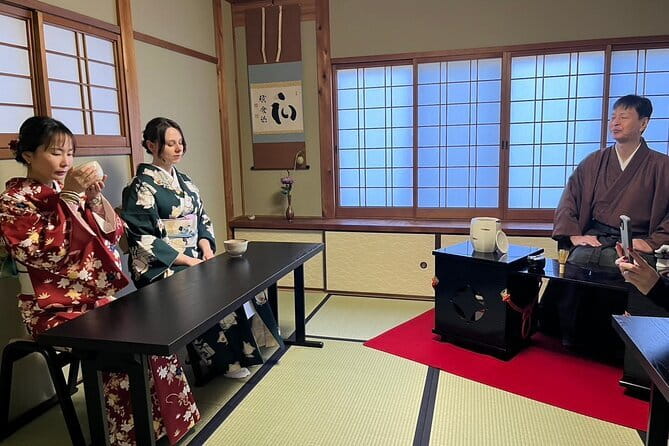
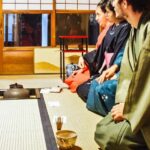
Kyoto has lots of tea experiences, but the location and setting here do real work for the experience. Ninenzaka is a historic area where the streets already feel like part of the story. Then you step into a traditional townhouse, and suddenly the ceremony is not something frozen behind glass. It feels lived-in.
The big win is that you are learning etiquette while sitting in the kind of space where etiquette makes sense. The room is designed for calm. The pace is intentionally unhurried, and the format supports that.
This matters because tea ceremony is not about fancy tricks. It is about attention. If you rush or multitask, the whole thing becomes background noise. The rules of the room (more on those next) push you in the right direction.
The Matcha Lesson: Tools, Etiquette, and How the Ritual Clicks
The core of the course is the matcha experience. You get an instructor who explains what you are doing and why it matters. That is what turns a short class into something you can actually remember and repeat.
Here is what you should expect in practical terms:
- You get introduced to the utensils used to prepare matcha.
- You learn the key rituals and etiquette that guide how the host and guests interact.
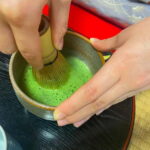
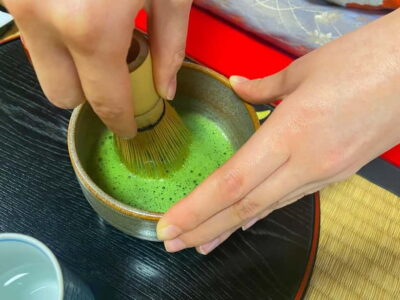
- You get a chance to prepare your own cup during the hands-on portion.
What I like about this setup is that it is both instructional and participatory. Many tea ceremonies are mostly a show, with a quick sip at the end. This one builds the meaning into the steps. When you finally whisk your own matcha, you understand the behavior, not just the motion.
English support is also a big deal. The experience is offered in English every day, and the guidance is described as detailed. In the feedback, people consistently highlight clear explanations and a tea master plus an assistant who keep things friendly.
Timing is tight, too, in a good way. At around 50 minutes, you should not feel like you got stuck in a long lecture. You will likely leave with a better sense of what you just watched, and what you should notice next time you see matcha in Kyoto.
Stop in Sannenzaka and Ninenzaka: The Setting That Makes Tea Feel Local
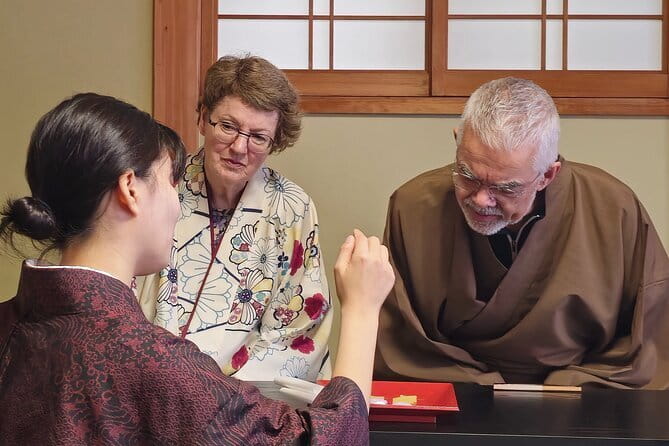
The experience is tied to the Sannenzaka and Ninenzaka area, which means you are not just going to a random building and sitting down. You are in a neighborhood that fits the theme, with streets that encourage slow walking.
This is a subtle but real value-add. If you arrive a little early, you have a chance to feel the atmosphere before the ceremony begins. That makes it easier to follow the rules once you get inside. It also helps you enjoy the short format, because you are already in the right mindset.
Since the meeting point is in that Ninenzaka area and it is near public transportation, it is also easier to fit into a day that includes other Kyoto sights. You are not paying just for tea. You are paying for a cultural moment placed in the right place.
- PERFECT KYOTO 1-Day Bus Tour★ 5.0 · 13,518 reviews
- Kyoto: Fushimi Inari, Kinkakuji, Bamboo Grove 1 Day Bus Tour★ 4.8 · 4,316 reviews
- Kyoto: Tea Ceremony in a Traditional Tea House in Kiyomizu★ 4.9 · 3,519 reviews
- Kyoto: Tea Ceremony Ju-An at Jotokuji Temple★ 4.9 · 3,207 reviews
- Kyoto: 45-Minute Tea Ceremony Lesson Experience★ 4.3 · 2,378 reviews
The Tasting Part: Uji Matcha and Two Seasonal Japanese Sweets
Tea ceremony is not complete without food. In this course, you get enough of a tasting to make the lesson stick. You are served cups of high-quality matcha made in Uji, Kyoto, and you get two different seasonal Japanese sweets.
A key point for your expectations: the sweets are described as beautiful and authentic, and they are seasonal. That means you might taste something you cannot easily recreate at home, even if you find matcha and equipment.
Another small detail that helps: the experience lists coffee and/or tea in addition to the matcha serving. So if you are not a matcha superfan on day one, the experience still gives you something to work with. The focus remains matcha, but the package signals there is some flexibility in what you are offered.
I also appreciate that the tasting is part of the ceremony rhythm. You are not thrown into a buffet. You are experiencing sweets as part of the same cultural flow, which is exactly where this kind of activity makes sense.
Room Rules That Sound Strict, Until You Understand Them
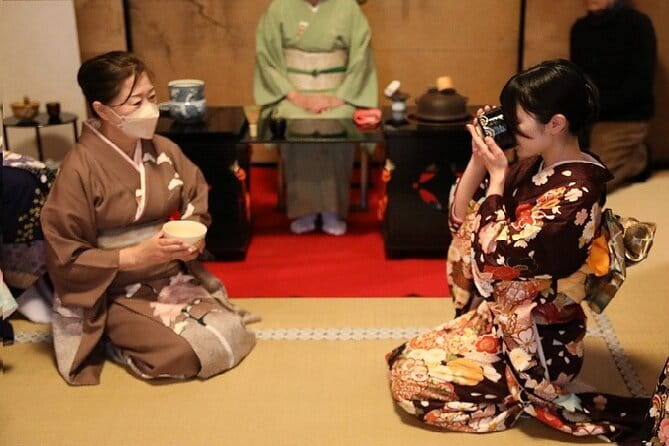
This is one of those experiences where the rules are not there to be fussy. They are there because the room is built around scent, focus, and quiet respect.
Before you go, know the big ones:
- Wear socks. If you forget, you can purchase socks.
- Wear clothing that does not expose too much skin.
- Perfume is strictly prohibited, because it can interfere with the incense and tea smell.
- Only smart phones are allowed in the tea room.
- Video recording is prohibited during the instructor’s demonstration.
If you want the smoothest experience, treat it like a small performance space. Keep scents minimal. Keep your phone use respectful and quiet. If you feel awkward, you are not alone. But the rules are clear, and the staff explanations are described as step-by-step.
One more practical note: children under 7 are not allowed. That is a hard cutoff. If you are traveling with younger kids, this course probably will not work for your family.
And if you are sensitive about timing, arrive promptly. One review note mentioned they were kept waiting when another group ran long. Even if it is rare, it is a reminder that tea ceremony does not pause for late arrivals, and the schedule is shared.
How the 50 Minutes Actually Flow
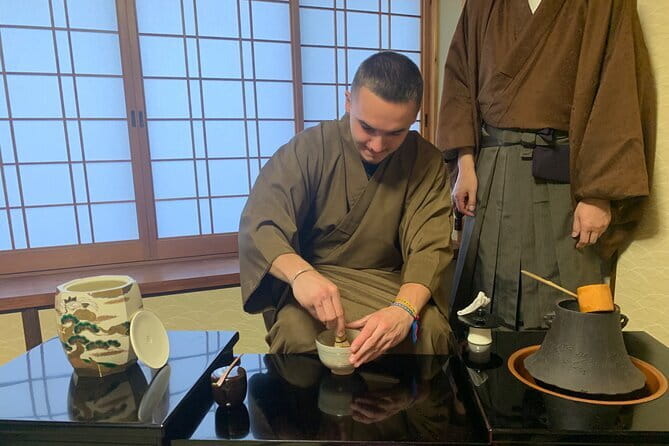
This is a short session, around 50 minutes. That is long enough to learn, but short enough that you can stay mentally fresh.
A typical flow you can expect:
- You start at the meeting point at Tea Ceremony & Cultural Experience Kangetsu Kyoto in the Higashiyama Ward area.
- You settle in and get taught the meaning behind the steps, including etiquette and utensils.
- You watch the instructor demonstrate the process.
- You participate by preparing your own matcha cup.
- You finish with sweets and tea, then a Q and A.
I like that the session ends with questions. It is where confusion becomes clarity. It is also where you can ask stuff like why certain movements happen, or what the etiquette is trying to protect.
Also, the group size cap of 15 keeps it intimate. You should still feel like you can see what is happening and hear the explanations, instead of being swallowed by a crowd.
Optional Kimono Rental and the Matcha You Can Bring Home
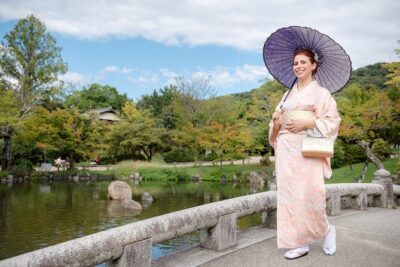
If you want a more photo-friendly, traditional look, you can rent a kimono. The kimono option is not included in the base price. It is available as a 2-piece kimono rental for 1,000 JPY.
I think this is a worthwhile add-on only if you care about style and photos. If you want to keep things simple and focus on the lesson, skip it. Either way, you will still get the same hands-on matcha experience and sweets.
One more perk that people mention: there is a shop where you can buy high-quality matcha. If you have ever tasted matcha that was flat or overly bitter, this is your chance to shop with context. After you learn how matcha is made and treated, buying a better grade makes sense, not just as a souvenir, but as a practical improvement for your next cup at home.
Price and Value: What $28.90 Buys You in Real Terms
The price listed is $28.90 per person for a session of about 50 minutes, and the value is stronger than it looks on paper.
Here is what you get that you would otherwise pay for separately:
- Tools and instruction to make your own matcha cup
- Two cups of high-quality matcha from Uji, Kyoto
- Two different seasonal Japanese sweets
- All fees and taxes included
You do not get bottled water included, and you will want socks and possibly a kimono rental if you add that. Still, the core package is doing a lot:
- You are learning etiquette, not just drinking
- You are participating, not just watching
- You are eating sweets made to fit the moment
Compared to “watch-only” tea shows, hands-on preparation is the key value driver. If you leave still wondering what you did and why, it feels like a performance. If you leave understanding the ritual and having tasted matcha in a guided way, it becomes a real skill and memory.
And the rating is high, with many people recommending the experience. The feedback pattern is consistent: people mention the warm hosting, clear instructions, and the fact that it feels authentic without being intimidating.
Who This Tea Ceremony Is Best For
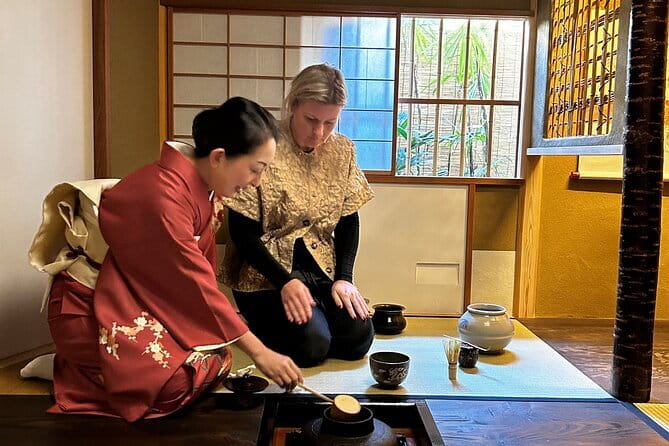
This works especially well if you:
- Want a short, structured cultural experience without a full half-day commitment
- Like learning by doing, not by listening only
- Want a calm, respectful activity in Kyoto’s historic lanes
- Appreciate English explanations and a friendly guide style
It also fits couples well. The small-group nature keeps it personal, and the tea and sweets portion feels like a shared quiet moment.
Families can enjoy it too, as long as kids meet the age rule. Children under 7 are not allowed, but older kids should be able to handle the etiquette and the hands-on element.
If you are chasing a totally private, one-to-one experience, double-check expectations. This activity is presented as a group session (even if the group stays small).
Should You Book This Kyoto Matcha Experience?
If you want a tea ceremony that is hands-on, guided, and tied to the historic Ninenzaka area, I’d book it. The package includes matcha you can taste, sweets you can eat, and instructions you can use later. It is also priced in a way that feels fair for what you receive, especially since high-quality Uji matcha is part of the tasting.
I would hold back if you:
- Need a private one-to-one setup
- Have a group conflict tolerance issue with timing, since it is a shared schedule
- Forget socks often, or you really do not want to follow scent and phone rules
If you can show up on time and treat the room with care, this is a beautiful, practical way to understand Japanese tea culture in less than an hour.
FAQ
How long is the tea ceremony experience?
It lasts about 50 minutes.
How much does it cost?
The price is $28.90 per person.
Where does the experience start?
It starts at Tea Ceremony & Cultural Experience Kangetsu Kyoto in the Ninenzaka area (349-19 Masuyachō, Higashiyama Ward, Kyoto, 605-0826, Japan). It ends back at the meeting point.
Is this a small-group activity?
Yes. The maximum group size is 15 travelers.
What is included in the price?
You get tools to make your own tea, two cups of high-quality matcha made in Uji, Kyoto, and two different types of seasonal authentic Japanese sweets. All fees and taxes are included.
Do I need to bring socks?
Yes, socks are required. If you forget, you can purchase socks.
Is kimono included?
No. Kimono rental is optional, and you can rent a 2-piece kimono for 1,000 JPY.
Can I record video during the ceremony?
Video recording during the instructor’s demonstration is prohibited.
Is perfume allowed?
No. Perfume is strictly prohibited because it can interfere with the smell of incense and tea in the tea room.
Is the session available for children?
Children under 7 years old are not allowed to participate.
Kyoto by the Bowl
Newest Kyoto write-ups from the Loving Japan desk
Kyoto Tea Ceremonies and Matcha, side by side.
 ★ 4.9Tea Ceremony in a Traditional Tea House in KiyomizuFrom $493,519 reviews
 ★ 4.9Tea Ceremony Ju-An at Jotokuji TempleFrom $293,207 reviews
 ★ 4.345-Minute Tea Ceremony Lesson ExperienceFrom $222,378 reviews
 ★ 5.0World Heritage Kyoto & Nara Uji Authentic Matcha ExperienceFrom $1291,573 reviews
 ★ 4.9Tea Ceremony ExperienceFrom $251,426 reviews
 ★ 4.9Table-Style Tea Ceremony at a Kyo-MachiyaFrom $451,211 reviews
 ★ 4.8Kenrokuen Tea Ceremony ExperienceFrom $351,139 reviews
 ★ 5.0Kimono Tea Ceremony at Kyoto Maikoya, NISHIKIFrom $65911 reviews
Filed on these lists too