
REVIEW · GION, GEISHA AND MAIKO EXPERIENCES
The Art of Geisha: Exclusive Show & Gion Walking Tour
Gion lets you see what most miss. This tour puts you face-to-face with a maiko in a small group setting, with tea, snacks, and time to talk. You also get an interactive element where you try your skill in a traditional game.
I like that it is built for close attention, not a crowd scramble. You get an English-speaking guide who helps you understand what you are seeing as you walk and settle in for the show.
One thing to consider: this is a scheduled experience with a fixed start time, and it is not designed for very young kids, since children under 6 cannot join.
In This Review
- Key Points at a Glance
- Why This Gion Geisha Show Feels Different Than Usual
- The 3:00 pm Start, Meeting Points, and How the Timing Works
- What You Actually Do in Gion: Walk, Learn, Watch
- Tea and Snacks: A Small Detail That Changes the Mood
- The Maiko Performance: What to Watch For
- Asking Questions: How to Get More From the Conversation
- The Traditional Game: Interactive, Friendly, and Actually Fun
- Price and Value: Is $124.21 Worth It?
- Who This Tour Fits Best (And Who Might Prefer Something Else)
- Quick Tips Before You Go
- Should You Book This Art of Geisha Show and Gion Walking Tour?
- FAQ
- What time does the tour start?
- How long is the tour?
- How many people are in the group?
- What is included in the price?
- Is a mobile ticket provided?
- Can children join?
- What are the meeting and end locations?
Key Points at a Glance
- Maximum six people means real conversation, not side-hugging and shouting
- Maiko performance with tea and snacks makes the evening feel personal
- Q&A time lets you ask the questions you actually have, in plain English
- A traditional game gives you an interactive moment, not just watching
- Gion walking context helps you understand the streets, not just the stage
- Mobile ticket keeps check-in simple
Evening walks through the old quarters, compared
- Kyoto Geisha Walking Tour: Gion District & Hidden Gems
★ 4.7 · 3,273 reviews - Kyoto: Gion Magical Night Walking Tour with Geisha Trivia
★ 4.9 · 2,393 reviews - Kyoto: Gion Geisha District Walking Tour – Stories of Geisha
★ 4.7 · 2,187 reviews - Best of Kyoto: Gion, Geisha, Pagodas & Cobblestones
★ 4.9 · 2,058 reviews
Why This Gion Geisha Show Feels Different Than Usual
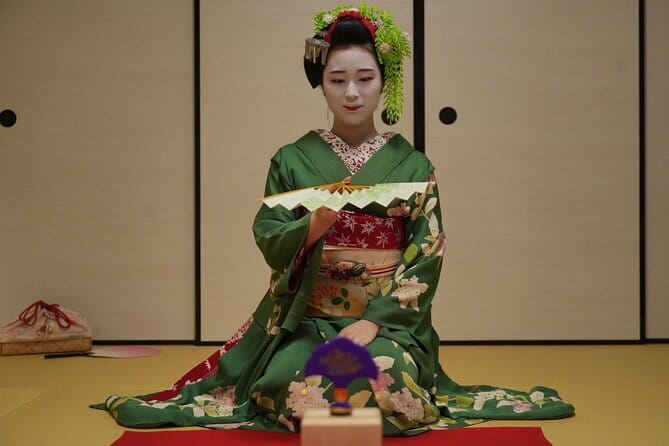
Kyoto’s Gion district is famous for geisha culture, but most visits turn into a guessing game from the sidewalk. This tour cuts through that. You do not have to chase clues or hope for a lucky street sighting. Instead, you step into a structured, respectful setting where you can watch a maiko perform and then talk with her.
I also like the way the tour is sized. With a maximum of six travelers, you are close enough to notice small details, and questions do not get lost in the shuffle. That matters, because the point of this experience is connection and understanding, not just photos.
The other big reason I think you will enjoy it is the interactive part. The experience includes a traditional Japanese game where you challenge your own skill against the maiko. That turns the tour from passive into memorable, and it gives you something to focus on beyond watching dance movements.
The 3:00 pm Start, Meeting Points, and How the Timing Works
The tour starts at 3:00 pm in Gion. That afternoon timing can be a smart choice, since Kyoto mornings can be chaotic and evenings can be packed with people chasing lantern photos. An early afternoon start also gives you daylight to walk Gion streets before you settle in for the show portion.
You will meet at the Statue of Izumo-no-Okuni at Kawabatacho in Higashiyama Ward. The tour ends at Hangesho, 535 Morishitachō, also in Higashiyama Ward. It is a walking tour style experience, so expect the end location to be different from the start. If you are pairing it with dinner plans, keep that in mind so you do not end up rushing across the district.
The tour is described as near public transportation. That is useful, because Kyoto can mean one wrong turn turns into a long walk. If you are taking trains or buses, check the route ahead of time so you feel calm when it is time to meet.
What You Actually Do in Gion: Walk, Learn, Watch
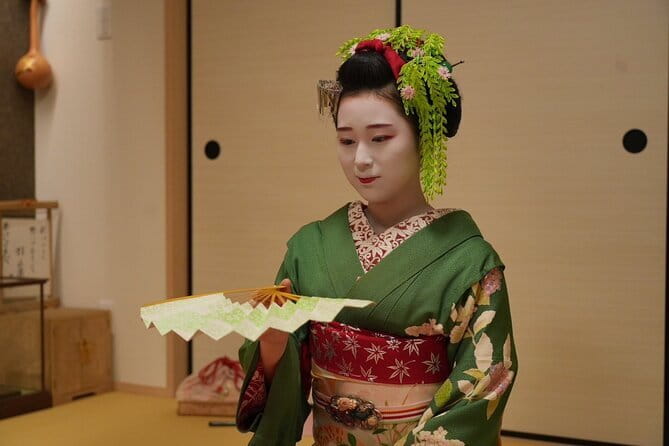
At the heart of the tour is a one-stop experience in Gion. You join your guide to learn about the district and see an apprentice geisha, a maiko, perform. Expect it to feel like a mix of walking orientation and a short, focused cultural presentation.
During this segment, you learn about geisha culture in a way that connects to what you are seeing around you. The point is not memorizing a textbook. It is getting enough context so the performance lands with meaning. When you understand terms like maiko and geiko, and you know that training and etiquette matter, the show becomes more than pretty movement.
The tour also includes time to chat with the apprentice. This is the part I would not skip if you are doing only one geisha-related activity in Kyoto. You can ask questions, and the guide helps keep it understandable. In past groups, guides such as Ai and Yoshino have shown up, and both are described as friendly and good at connecting the culture to real questions people have.
- PERFECT KYOTO 1-Day Bus Tour★ 5.0 · 13,518 reviews
- Kyoto: Fushimi Inari, Kinkakuji, Bamboo Grove 1 Day Bus Tour★ 4.8 · 4,316 reviews
- Kyoto: Tea Ceremony in a Traditional Tea House in Kiyomizu★ 4.9 · 3,519 reviews
- Kyoto Geisha Walking Tour: Gion District & Hidden Gems★ 4.7 · 3,273 reviews
- Kyoto: Tea Ceremony Ju-An at Jotokuji Temple★ 4.9 · 3,207 reviews
Tea and Snacks: A Small Detail That Changes the Mood
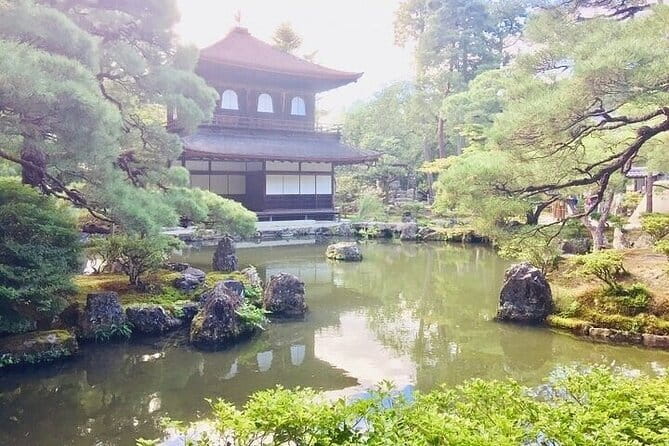
A geisha show can feel formal and distant when it is framed like a performance only. Here, the experience includes Japanese tea and snacks. That small add-on makes a big difference, because it slows everything down.
Instead of arriving, watching, leaving, you get time to settle. You are not just a customer passing through. You are part of a shared moment, with a warm drink that keeps the pacing human. Tea also gives your brain a break from crowds, signage, and decision fatigue. You get to focus on the person performing and the meaning behind the arts.
This tea-house style setup is also one reason the tour tends to land as a bucket list memory. People often come to Kyoto hoping to see geisha, but what they remember is the tone of the room, the attention, and the fact they were treated like part of the experience rather than an obstacle to manage.
The Maiko Performance: What to Watch For
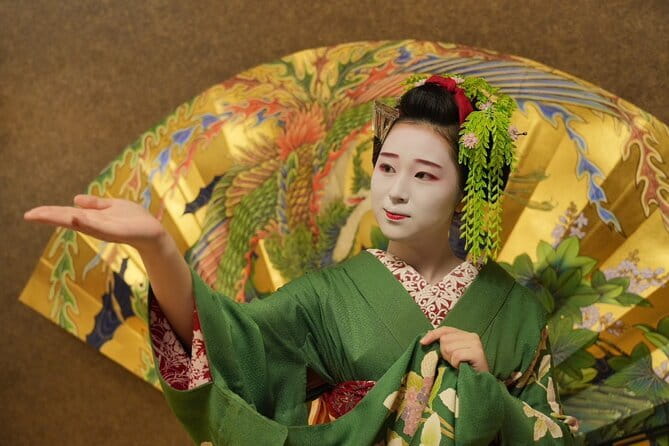
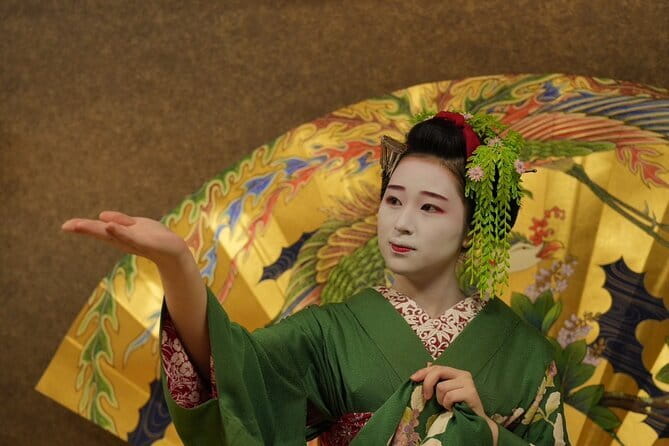
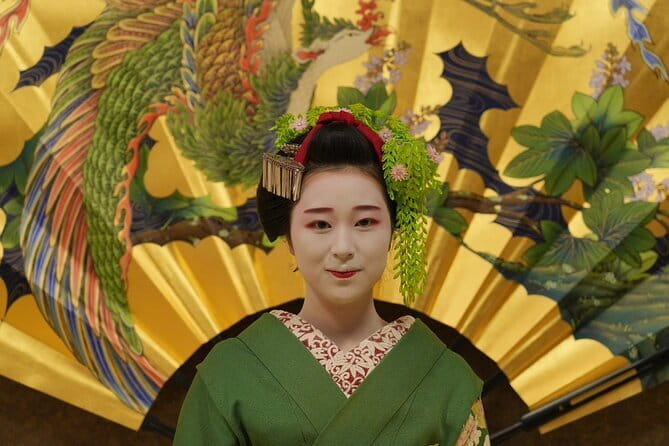
The tour centers on watching a maiko perform traditional arts. The performance itself is the core attraction, and it is followed by a chance to speak with her.
Since the tour includes an English-speaking guide, you are not left to figure everything out on your own. You can expect the guide to explain what you are looking at, and why certain elements matter in geisha culture. In the same spirit, you will learn how long training can take. Reviews and descriptions repeatedly emphasize dedication and years of practice, which is exactly what you should keep in mind while watching.
What should you look for as you sit down?
- Notice how the performance feels controlled and precise, not rushed.
- Watch how the apprentice carries herself, since the culture is tied to etiquette as much as art.
- Pay attention to how the guide frames the arts, because that context changes how you interpret the movements.
Even if you are not a dance expert, you can still read the discipline. That is why this format works well for first-timers. You do not need to know every term to appreciate the craft.
Asking Questions: How to Get More From the Conversation

The tour includes a chance to chat and ask questions. This is your moment. If you have ever wondered how a maiko transitions, what daily life might look like, or why certain traditions still matter, this is where you can ask.
A good approach is to keep questions specific and respectful. Instead of trying to cover everything at once, pick one or two topics that genuinely interest you. For example, you might ask about training, what aspects of the arts she studies most, or how she thinks about performing for others.
The best part is that you are not doing this in a noisy public place. With the small group size and the guided setting, the conversation can actually happen at a normal human pace. Some people have described getting to ask a lot of questions, and that is exactly what makes this more than a standard show ticket.
The Traditional Game: Interactive, Friendly, and Actually Fun

The experience includes a traditional Japanese game where you challenge your skill against the maiko. That sounds simple, but it is a clever way to make the culture feel participatory rather than distant.
Here is the practical takeaway for you: go in expecting a playful, structured interaction. You will not be judged like a test situation. You are there to participate, learn, and share a moment with the performer.
This game is also a great equalizer. Even if you feel awkward in formal settings, the game gives you a concrete action to focus on. It turns your nerves into energy. If you are the kind of traveler who likes hands-on cultural moments, this will likely be one of the highlights of your Kyoto trip.
Price and Value: Is $124.21 Worth It?
At $124.21 per person, this is not the cheapest Kyoto activity. But it is also not overpriced if you look at what is included and the size of the group.
You get:
- The maiko show
- Tea and snacks
- An English-speaking guide
- A small-group format with maximum six travelers
- Interactive time that includes Q&A and a traditional game
The value comes from two things: access and attention. Shows that are mostly passive often feel expensive because you are paying for seats, not for understanding. Here, you pay for guided context and a structured chance to interact. That is what makes the experience feel like a genuine cultural encounter.
If you are trying to do one high-impact geisha-related moment in Kyoto, this tends to make sense. If you are on a tight budget and plan to do street spotting only, then you might skip it. But if you want certainty and meaning, the price is easier to justify.
Who This Tour Fits Best (And Who Might Prefer Something Else)
This tour is a strong match for you if:
- You want to see a maiko perform without needing luck on the street
- You prefer small groups and real conversation
- You like cultural activities that include learning, not just watching
- You want an interactive moment, not a passive show-only outing
It may not be the best fit if:
- You hate scheduled experiences with a specific start time
- You do not enjoy guided discussions
- You are traveling with someone under 6, since children under 6 cannot join
For couples, solo travelers, and anyone who wants a focused cultural evening without the stress of crowd navigation, this is the kind of tour that can carry your Kyoto trip.
Quick Tips Before You Go
Since this is a respectful cultural setting, come ready to behave like you are in someone’s workspace and tradition, not like you are at a concert.
A few practical habits that help:
- Wear something comfortable for a short walk through Gion streets.
- Plan your timing so you can arrive calmly before the start time.
- Bring a curious mindset. The Q&A is where your effort pays off.
Also remember it is a mobile ticket. Make sure your phone battery is healthy so you are not scrambling at check-in.
Should You Book This Art of Geisha Show and Gion Walking Tour?
If you want a high-odds way to see a maiko perform, and you care about learning what you are seeing, I think this is worth booking. The small group size, the tea and snacks, and the chance to ask questions plus play a traditional game make it feel personal, not just transactional.
Skip it only if you are strictly budget-minded or you dislike structured tours with a fixed 3:00 pm start. Otherwise, this is the kind of Kyoto experience that turns curiosity into something you can actually remember.
FAQ
What time does the tour start?
The tour starts at 3:00 pm.
How long is the tour?
It runs about 1 to 2 hours.
How many people are in the group?
The group is limited to a maximum of six travelers.
What is included in the price?
The price includes the geisha show, Japanese tea and snacks, and an English-speaking tour guide.
Is a mobile ticket provided?
Yes, the tour uses a mobile ticket.
Can children join?
Children under age 6 and below cannot join.
What are the meeting and end locations?
You start at the Statue of Izumo-no-Okuni at Kawabatacho in Higashiyama Ward, Kyoto, and you end at Hangesho, 535 Morishitachō, Higashiyama Ward, Kyoto.
Evenings in the Old Quarters




Newest Kyoto write-ups from the Loving Japan desk


Gion, Geisha and Maiko Experiences, side by side.
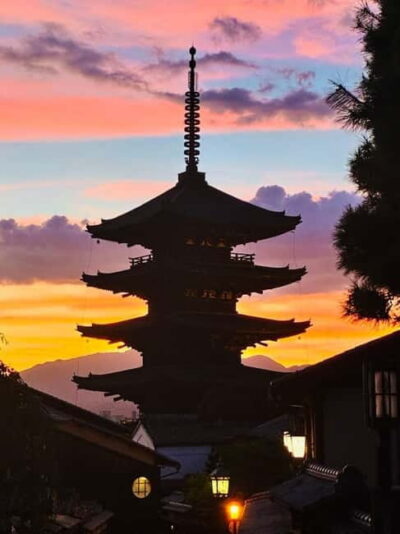 ★ 4.7Kyoto Geisha Walking Tour: Gion District & Hidden GemsFrom $253,273 reviews
 ★ 4.9Gion Magical Night Walking Tour with Geisha TriviaFrom $242,393 reviews
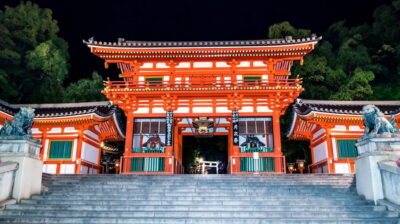 ★ 4.7Gion Geisha District Walking Tour – Stories of GeishaFrom $202,187 reviews
 ★ 4.9Best of Kyoto: Gion, Geisha, Pagodas & CobblestonesFrom $242,058 reviews
 ★ 4.5Night Walk in Gion: Kyoto’s Geisha DistrictFrom $212,003 reviews
 ★ 5.0Kyoto Night Foodie Tour in Gion (9+ dishes + 6 Sake tastings)From $1631,762 reviews
 ★ 5.0Kyoto Gion Geisha District Walking Tour – The Stories of GeishaFrom $251,441 reviews
 ★ 5.0Kyoto Gion: 2-Hour Geisha Culture & History Walking TourFrom $231,186 reviews
Filed on these lists too