
REVIEW · KYOTO TEA CEREMONIES AND MATCHA
The Art of Mindful Living: Tea Ceremony in Kyoto
Kyoto slows you down fast, especially here. This tea ceremony in a traditional old residence mixes tasting, explanation, and hands-on practice with Naomi and her team. I love how you get both the story behind the ritual and the exact way to enjoy matcha, not just a quick demo.
I also love the setting, with a peaceful garden you can enjoy before the ceremony and plenty of photo chances during your visit. One thing to consider: the address is a bit out of the downtown rush, so you’ll want to plan transit time and build in a little patience.
In This Review
- Key highlights at a glance
- A Kyoto old residence where the ritual actually makes sense
- Inside the tea ceremony: explanation, tasting, and how to drink matcha
- Why this sequence is so valuable
- Matcha, sweets, and the options that keep it inclusive
- Making matcha yourself, with chairs and a calm pace
- Garden time and photo-friendly details (umbrella included)
- Kimono upgrades: the look, the limits, and the real cost
- Location matters more than you’d think if you dress up
- Price and value: what $44.42 buys you in real terms
- Who this is best for (and who might want another plan)
- Stroller and comfort note
- Should you book the Kyoto tea ceremony?
- FAQ
- FAQ
- How long is the tea ceremony experience?
- What is included in the price?
- Can I choose vegan options or handle food allergies?
- Is there an option for children who should not drink matcha?
- Is alcohol included?
- Are kimono rentals available, and how much do they cost?
- Does the rental include hair styling or makeup?
- What is the maximum group size?
- Can I take photos during the ceremony, and what about rain?
Key highlights at a glance
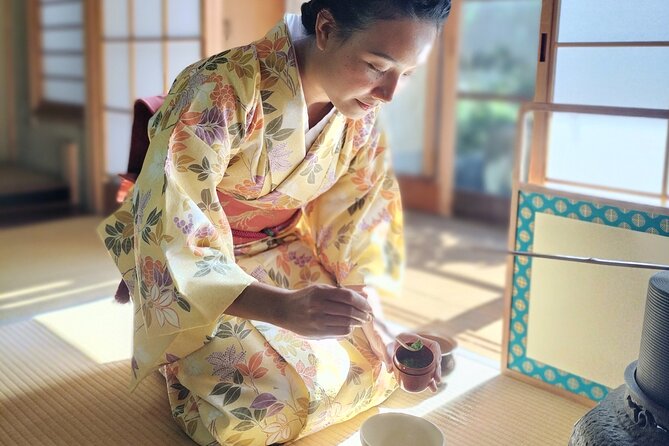
- Organic Uji matcha made in Kyoto for your tasting and practice.
- Hands-on matcha making after you watch the ceremony.
- Food allergy and vegan friendly, with options planned ahead.
- Kid-friendly option: cocoa instead of matcha.
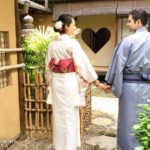
- Kimono and hakama rentals are available if you want the full look for your photos.
- Private session option is possible if you contact the provider before booking.
Sit down somewhere quieter. Other tea rooms we booked
- Kyoto: Tea Ceremony in a Traditional Tea House in Kiyomizu
★ 4.9 · 3,519 reviews - Kyoto: Tea Ceremony Ju-An at Jotokuji Temple
★ 4.9 · 3,207 reviews - Kyoto: 45-Minute Tea Ceremony Lesson Experience
★ 4.3 · 2,378 reviews - Kyoto: Table-Style Tea Ceremony at a Kyo-Machiya
★ 4.9 · 1,211 reviews
A Kyoto old residence where the ritual actually makes sense
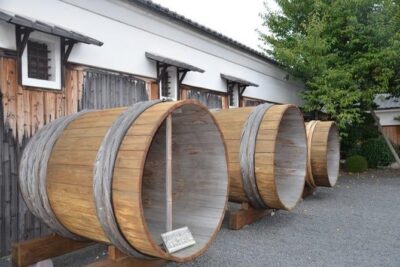
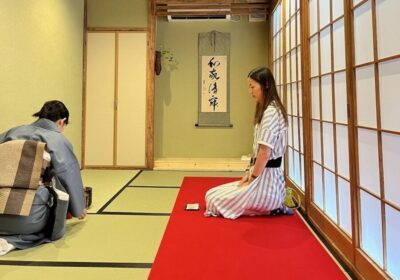
This experience takes place in a Japanese old house, not a showroom or a modern studio. That matters, because the ceremony relies on small details: space, quiet, and the slow rhythm of each step.
I like that the visit is built around learning how to do it, not just sightseeing. You’ll hear about the tea ceremony and the role matcha plays, then you’ll taste and try making your own. It’s a “watch, understand, do” format that feels practical.
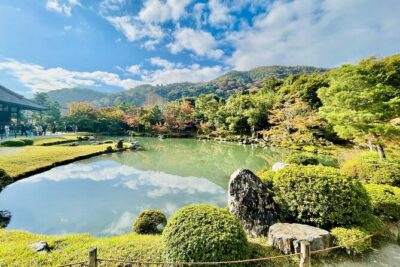
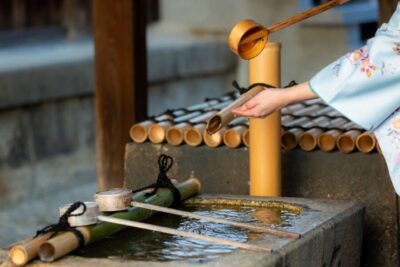
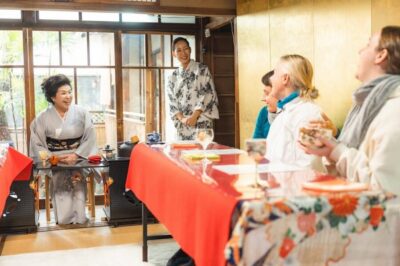
Also, you’re not trapped indoors the whole time. There’s a tea ceremony room plus a garden area where photos are part of the experience, which helps you connect the ritual to the calm mood it’s meant to create.
Inside the tea ceremony: explanation, tasting, and how to drink matcha
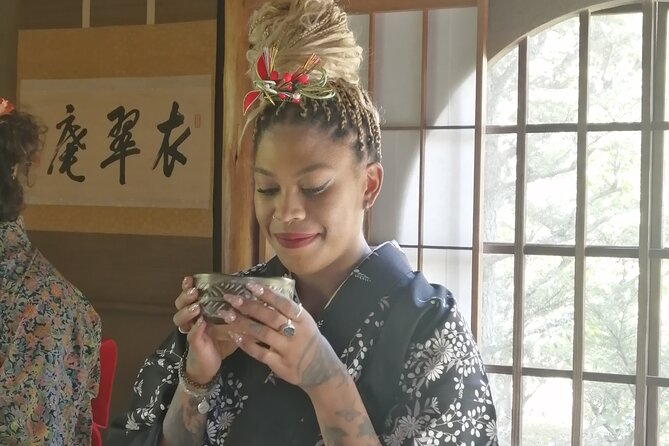
The ceremony runs about 1 hour. You’ll start with an explanation that covers a few key things: history, the effects of matcha, different types of matcha and Japanese tea, and how to drink matcha properly.
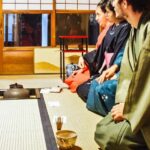
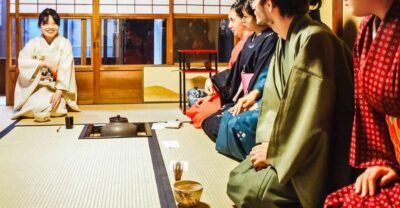
Then the experience moves into the tasting part. While the ceremony is happening, you’ll enjoy matcha and Japanese sweets in the ceremony room. The goal is for you to understand what you’re tasting and why it’s served the way it is.
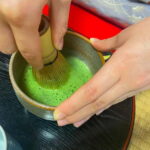
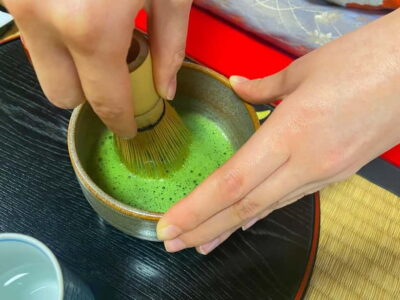
After that, you switch from observer to participant. You’ll try making your own matcha yourself, so you don’t leave with only memories, you leave with a skill you can try at home.
Why this sequence is so valuable
Many tea experiences teach culture but stop at watching. Here, the structure pushes you to connect theory to action: you learn what matters, then you practice it. That’s why it tends to land well for first-timers and people who already know a little and want it to click.
- PERFECT KYOTO 1-Day Bus Tour★ 5.0 · 13,518 reviews
- Kyoto: Fushimi Inari, Kinkakuji, Bamboo Grove 1 Day Bus Tour★ 4.8 · 4,316 reviews
- Kyoto: Tea Ceremony in a Traditional Tea House in Kiyomizu★ 4.9 · 3,519 reviews
- Kyoto: Tea Ceremony Ju-An at Jotokuji Temple★ 4.9 · 3,207 reviews
- Kyoto: 45-Minute Tea Ceremony Lesson Experience★ 4.3 · 2,378 reviews
Matcha, sweets, and the options that keep it inclusive
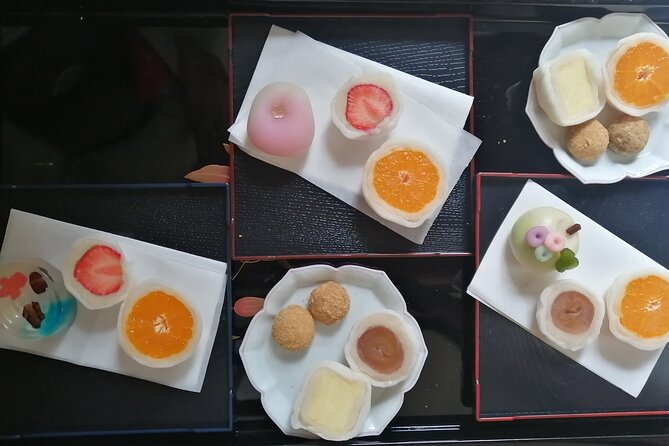
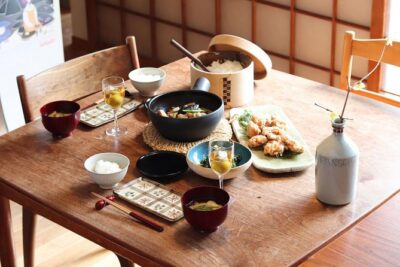
You’ll get sweets during the ceremony along with your matcha. The experience gives you a choice of traditional bean paste sweets or fresh fruit daifuku, and one sweet is included in the price.
If you want both, there’s an additional ¥500 per person fee. That’s a nice option when you’re curious how two classic styles taste alongside matcha.
Food restrictions are handled thoughtfully. The experience states it can accommodate food allergies and offers vegan options. For kids, there’s a clear plan too, since they can have cocoa instead of matcha.
Making matcha yourself, with chairs and a calm pace
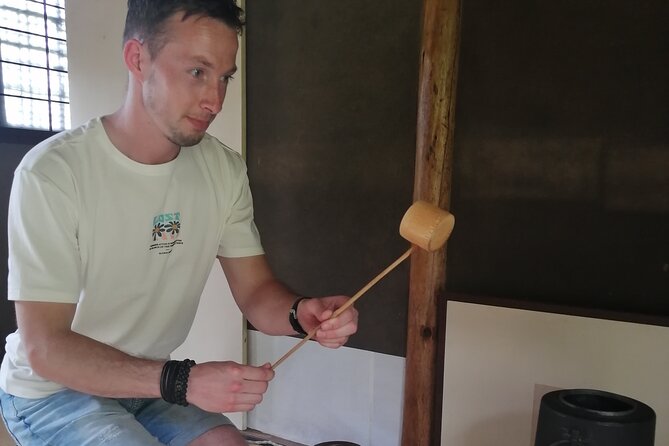
You won’t just watch someone whisk matcha and call it done. You’ll actually try making matcha by yourself, which is the part that often turns a nice cultural stop into a personal moment.
Chairs are provided, so you’re not forced into an overly intense sitting setup. That small detail makes the experience more comfortable, especially if you want to focus on the ritual rather than fighting your posture.
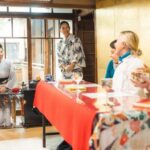
The session is also designed for smaller groups. The max is 6 travelers for group sessions, though the provider notes they can accommodate sessions with more participants than 6. A smaller group usually means more attention when you’re practicing.
Garden time and photo-friendly details (umbrella included)
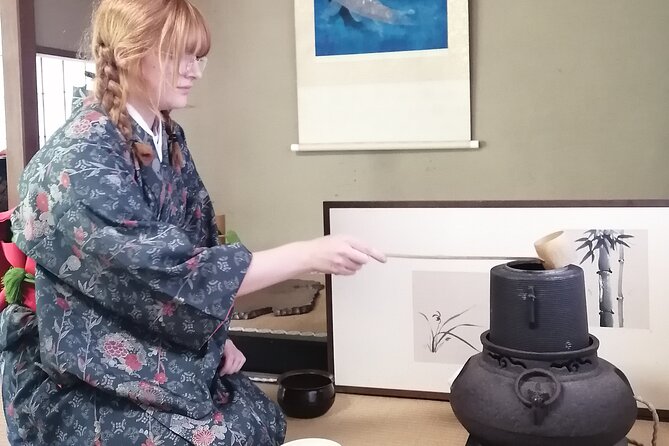
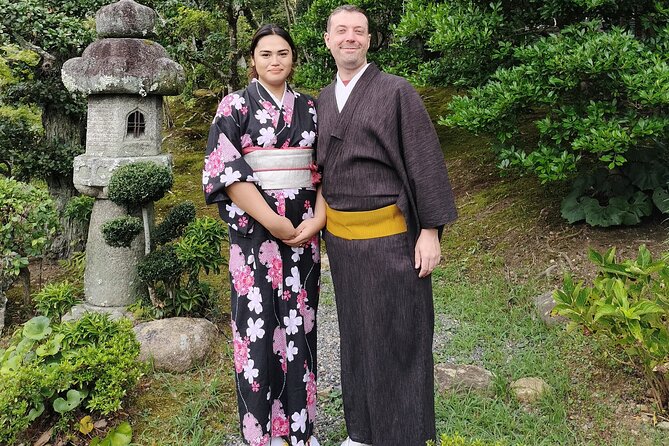
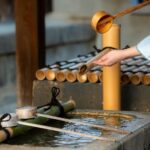
One of the best things about this format is the timing. Before the ceremony, you get time to enjoy the premises, including a beautiful garden that’s ideal for photos.
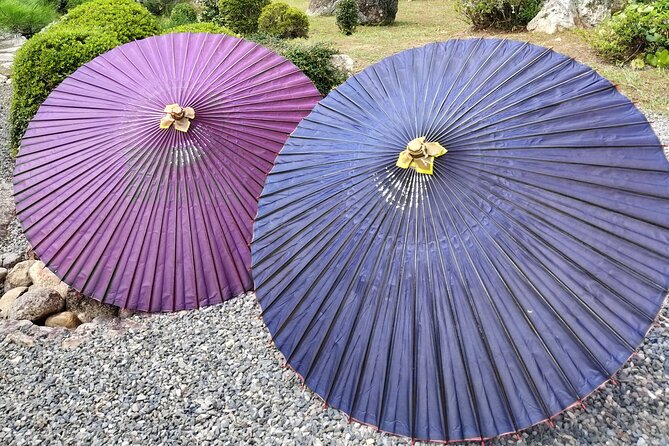
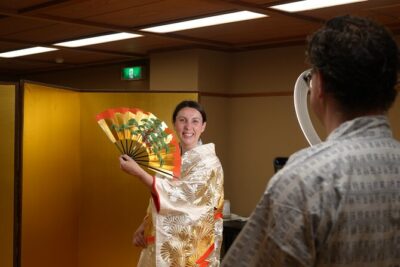
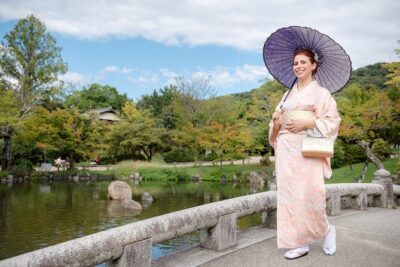
During the ceremony, photos are also allowed. The experience even includes special photo props for a fun touch: guests can use a traditional umbrella and an imitation sword, but only for taking pictures.
Weather matters for photos and kimono. The experience says that in case of rain, you should take photos while holding an umbrella. It also notes you cannot take photos while wearing a kimono without an umbrella and getting wet in the rain.
So yes, you can plan for rain just like a pro. Bring your umbrella mindset. If it’s wet, your photos will be safer and nicer.
Kimono upgrades: the look, the limits, and the real cost
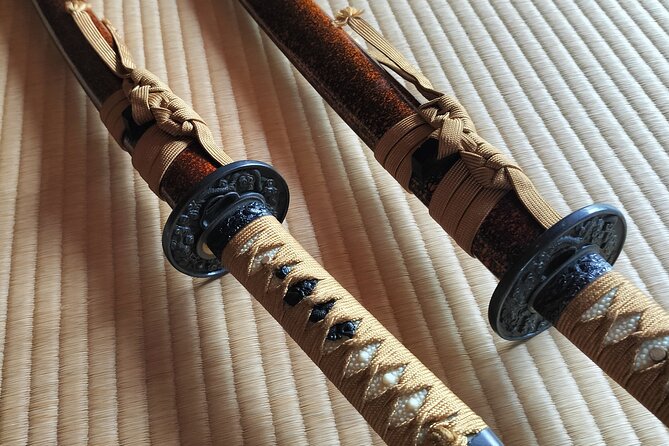
A kimono can be a great add-on in Kyoto, and here it’s optional. The rental option is listed as ¥4000 for kimono during the ceremony, and there are additional choices if you want them:
- Hakama rental: ¥8000
- Baby romper-type kimono: ¥600
- Undershirt rental: ¥200
One thing to plan around: they do not include a hair set or makeup. They will prepare hair accessories so you can use them freely with the rental.
Also note this practical detail from the experience description: if you want to photograph during rain while wearing kimono, you’ll need an umbrella, because getting wet affects what’s possible.
Location matters more than you’d think if you dress up
The provider is clear that the location is a bit away from downtown energy. The address is in Ukyo Ward and the meeting point is Kaze no Waon, 14 Utanokitanoinchō, Ukyo Ward, Kyoto (near public transportation).
If you’re wearing kimono, that travel time and any walking from a transit stop can feel longer. It’s not a deal breaker, it’s just the kind of thing that can make the experience better if you plan calmly, and worse if you rush.
Price and value: what $44.42 buys you in real terms
At $44.42 per person, you’re paying for more than a tasting. For that hour, you get:
- Matcha and Japanese sweets during the ceremony
- Snacks included
- Explanations about matcha and the ceremony
- A chance to try making matcha yourself
Alcohol is not included, so don’t budget for drinks beyond tea and sweets. And if you want kimono, hakama, or an extra sweet, that’s additional cost.
In plain terms, the value comes from the combination: you taste, you learn, and you practice. If you’ve done only “watch and sip” style experiences, this one has more active participation built in.
One more value point: the experience includes food allergy and vegan accommodation and a kid-safe cocoa option. Planning your group meal around dietary needs in Kyoto can be tricky, so having this handled ahead of time saves stress.
If you’re wondering about flexibility, the experience notes free cancellation up to 24 hours in advance, and it may offer a different date or refund if weather is poor.
Who this is best for (and who might want another plan)
This works especially well if you want a slower, more grounded Kyoto moment. It’s a good fit for:
- First-timers who want a clear explanation plus a hands-on portion
- People who like calm settings and photo time in a garden
- Families with kids, since cocoa replaces matcha
- Groups who want a smaller setting, since group size is capped
If you’re the type who wants multiple stops in the same area, you may need to think ahead because the location is a bit away from central downtown. Also, if you hate the idea of extra prep time for kimono, just skip the rental and focus on the tea part.
Stroller and comfort note
You can enter the premises with a stroller, but the experience says you cannot bring it inside the building. If you’re traveling with a stroller, this is worth keeping in mind so you aren’t surprised at check-in.
Should you book the Kyoto tea ceremony?
I’d book it if you want your Kyoto to include something quiet and practical, not only famous sights. The big reason is the structure: you learn the tea, taste it, and then try making matcha yourself, plus you get sweets and garden time for photos.
I’d think twice if your priority is maximizing distance covered each day, because this spot is a bit off the busiest downtown path. And if you plan to add kimono, give yourself extra slack for getting dressed and handling rain-proof photo moments.
FAQ
FAQ
How long is the tea ceremony experience?
The experience is about 1 hour.
What is included in the price?
The price includes snacks, and you also receive one Japanese sweet during the ceremony (either bean paste or fresh fruit daifuku).
Can I choose vegan options or handle food allergies?
Yes. The experience states that it can accommodate food allergy and vegan.
Is there an option for children who should not drink matcha?
Yes. Children can have cocoa instead of matcha.
Is alcohol included?
No. Alcoholic beverages are not included.
Are kimono rentals available, and how much do they cost?
Yes. Kimono rental is ¥4000. Hakama rental is ¥8000, baby romper-type kimono is ¥600, and an undershirt rental is ¥200.
Does the rental include hair styling or makeup?
No. They do not do hair set or make-up, but they prepare hair accessories for guests.
What is the maximum group size?
Group sessions have a maximum of 6 travelers.
Can I take photos during the ceremony, and what about rain?
Photos are allowed during the ceremony, and you can take photos in the garden before the ceremony. In rain, you should hold an umbrella for photos, and photos while wearing kimono without an umbrella and getting wet are not possible.
Kyoto by the Bowl
Newest Kyoto write-ups from the Loving Japan desk
Kyoto Tea Ceremonies and Matcha, side by side.
 ★ 4.9Tea Ceremony in a Traditional Tea House in KiyomizuFrom $493,519 reviews
 ★ 4.9Tea Ceremony Ju-An at Jotokuji TempleFrom $293,207 reviews
 ★ 4.345-Minute Tea Ceremony Lesson ExperienceFrom $222,378 reviews
 ★ 5.0World Heritage Kyoto & Nara Uji Authentic Matcha ExperienceFrom $1291,573 reviews
 ★ 4.9Tea Ceremony ExperienceFrom $251,426 reviews
 ★ 4.9Table-Style Tea Ceremony at a Kyo-MachiyaFrom $451,211 reviews
 ★ 4.8Kenrokuen Tea Ceremony ExperienceFrom $351,139 reviews
 ★ 5.0Kimono Tea Ceremony at Kyoto Maikoya, NISHIKIFrom $65911 reviews
Filed on these lists too