
REVIEW · ASAKUSA, SENSO-JI AND TOKYO SKYTREE
Tokyo: Origami Fun for Families & Beginners in Asakusa
Origami in Tokyo feels surprisingly easy. In Asakusa, this 45 minute tablet-guided folding session lets you pick from 100+ models and jump right in, with paper colors and options to customize your creations.
I especially like how the app takes you step by step from a square sheet to finished animals, flowers, and vehicles. I also like that the pace is flexible, since you can replay steps and move from beginner to intermediate style folds without getting stuck. The main drawback is practical, not artistic, you need socks and the studio has stairs only, with no ramp or lift.
If you want a calm, hands-on break in a busy tourist area, this is a smart choice. It is also not a traditional teacher-led lesson, staff support the group, but the tablet drives the instructions.
In This Review
- Key points to know before you fold
- Why Asakusa origami is a different kind of souvenir
- The 45-minute flow, from picking a model to finishing it
- 1) Pick your model on the tablet
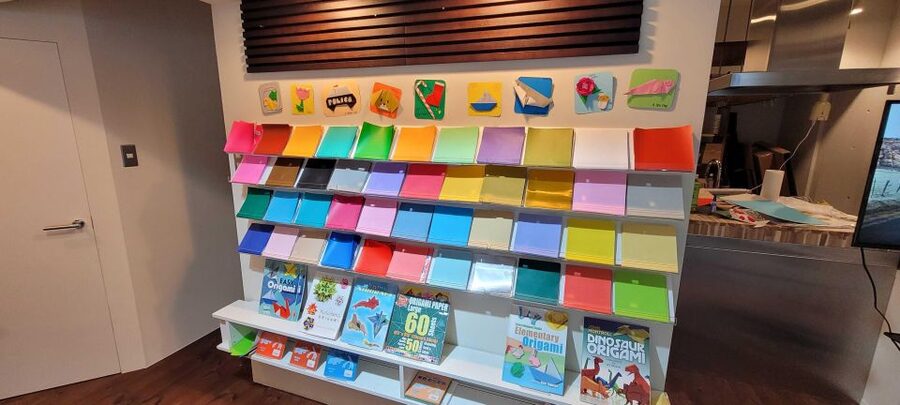
- 2) Choose your paper color at the paper wall
- 3) Press play and follow the instructions
- 4) Decorate and personalize before you call it done
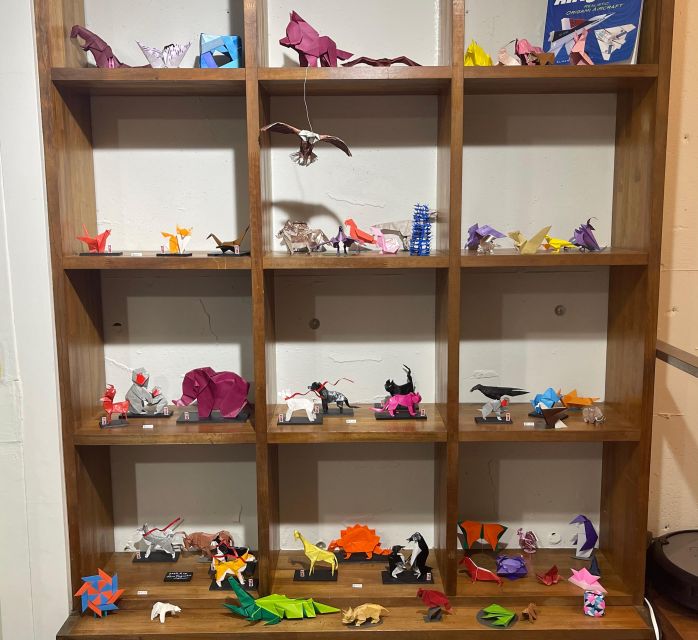
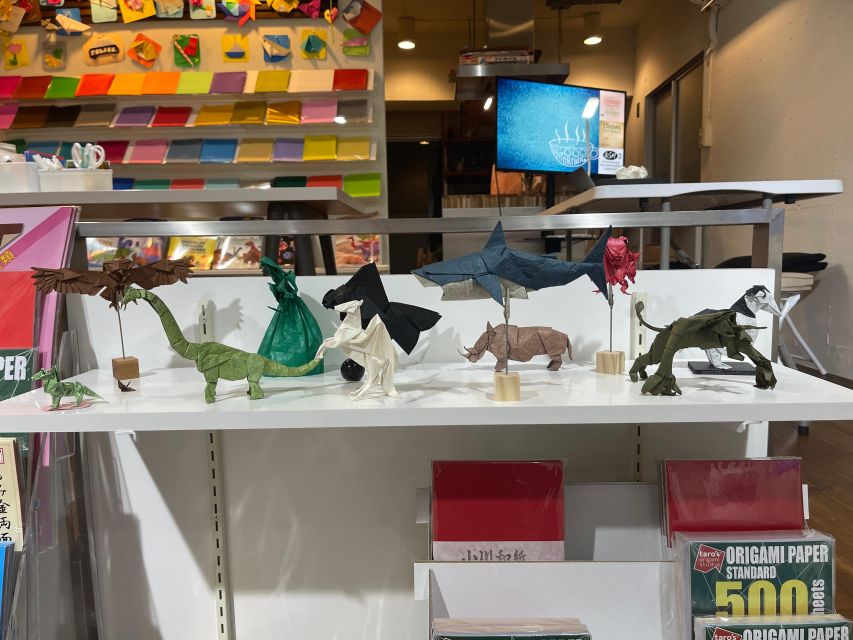
- Photos and displays are part of the experience
- What you really learn, beyond just making paper animals
- The studio vibe in Asakusa: small group, real help, calm pace
- Socks, stairs, and the practical stuff you should not skip
- Price and value: is $27 worth 45 minutes of origami?
- Who this is best for (and who should look elsewhere)
- Finding the studio and walking in ready to fold
- Should you book this origami session in Asakusa?
- FAQ
- How long is the origami experience?
- Do I need any prior origami experience?
- Is there a teacher in the room leading every step?
- What age is it recommended for?
- What should I bring?
- Is the studio wheelchair accessible?
Key points to know before you fold
- Tablet controls your pace: choose a model, press play, and replay steps if you need a reset
- Massive choice of paper and designs: pick from 50 colors and try from 100+ origami options
- Small group, hands-on support: limited to 6 participants, with staff present to help when you ask
- You build, then decorate: stickers, stamps, and markers let you personalize beyond the basic fold
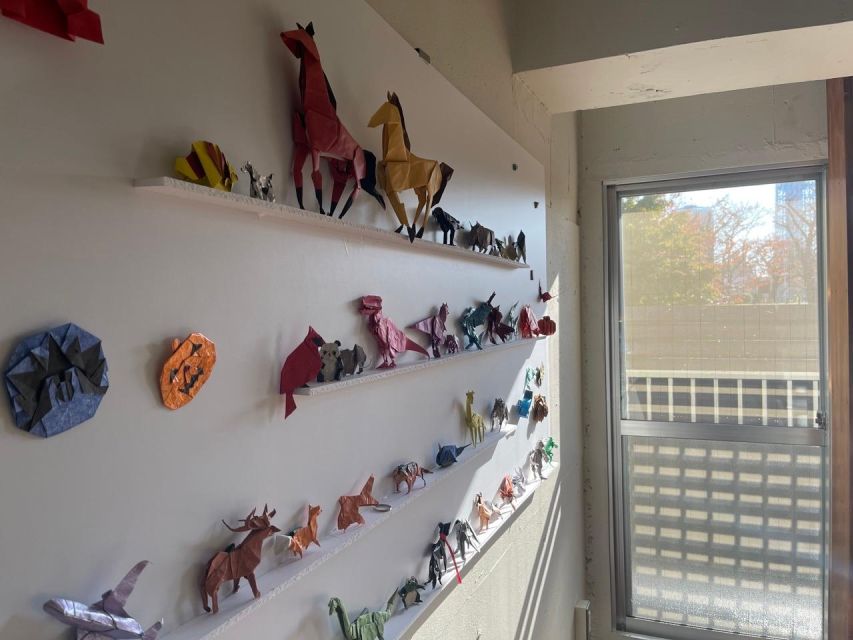
- Photos are welcome: you can take pictures during your session and enjoy displays during and after
Still on the Sumida side? A few more Asakusa options
- Tokyo: Japanese Dance Cabaret Theater Asakusa-Kaguwa Ticket
★ 4.8 · 2,270 reviews - Tokyo: Meiji Shrine, Asakusa, Skytree Bus Tour and Cruise
★ 4.7 · 1,986 reviews - Tokyo: Roll and Authentic Sushi Making Class in Asakusa
★ 4.9 · 1,957 reviews - Tokyo: Asakusa Walking Tour with Sensoji Temple Visit
★ 4.8 · 1,583 reviews
Why Asakusa origami is a different kind of souvenir
Asakusa is a place where you can easily end up buying things you already bought last trip. This activity gives you something you made yourself, in a short time window that still feels relaxing. You are surrounded by paper options, model choices, and displays, so the whole room nudges you from curiosity into action.
What makes it particularly appealing is the teaching style. It is tablet-guided, not a long talk or a strict classroom routine. Instead of waiting for a person to demonstrate every step, you select your model, choose your color at the paper wall, and follow along. You can keep going at your own speed, and if a fold is unclear, you can ask staff for help or use the app again.
One detail that matters for many families and beginners: this setup is designed so you do not need prior origami experience. The session starts from a square sheet and runs through the folding steps quickly. In the process, you end up learning how origami instructions are structured, which makes future models easier.
There is also a real mood shift built into the experience. Reviews highlight an atmosphere that feels pleasant and not rushed. That matters when you are traveling, because you do not just need something to do, you need something that feels good while you do it.
The 45-minute flow, from picking a model to finishing it
The session is designed to fit into 45 minutes, which is long enough to finish a few creations but short enough that you will not burn your whole day. That timing is one reason people seem to leave happy, even when they wish they had more time.
Here is how the flow works in practice:
1) Pick your model on the tablet
You start at a PC tablet with a touchscreen menu. You select a favorite origami model from categories. This is helpful because it turns the activity into a choice-driven experience. Instead of picking between a couple of teacher-prepared options, you choose what you actually want to fold, from animals to flowers and vehicles.
The tablet approach also means your first step is decision-making, not technique. For beginners, that lowers stress. For kids, it creates buy-in fast.
Make something to take home. Other workshops
- Tokyo Shinjuku Chopsticks Making Class★ 5.0 · 1,763 reviews
- Chopstick Making Workshop in Ginza★ 4.8 · 1,366 reviews
- Tokyo Sumo Experience: Chanko & Mochi with a Former Pro★ 4.8 · 567 reviews
- Kintsugi Experience: Art of Golden Joinery in Tokyo★ 5.0 · 467 reviews
- Tokyo Chopstick Making Workshop with Artisan★ 5.0 · 466 reviews
2) Choose your paper color at the paper wall
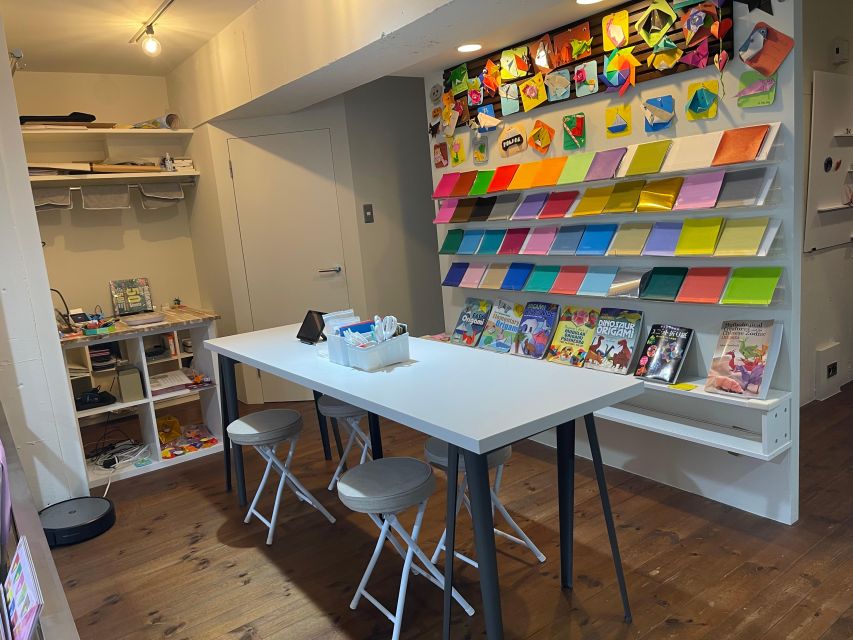
Next, you head to the origami paper wall and pick the color of the sheet(s). You are encouraged to think about what design you are making while choosing. This small suggestion can change the whole look of the finished model, especially for animals and vehicles where color cues matter.
This part also gives you a natural break between steps. You stop scrolling, you stand up, you physically pick materials, and then you return to start folding.
3) Press play and follow the instructions
Back at the tablet, you press the Play button to begin. You can replay steps or return to previous parts as needed. That means mistakes are not a dead end. You do not have to pretend you got it right and move on. You can back up, reset, and try again.
This is the biggest reason the experience works well for mixed skill levels in the same group. In a small group setting, you do not want one person stuck while another person finishes early. The tablet helps balance that.
4) Decorate and personalize before you call it done
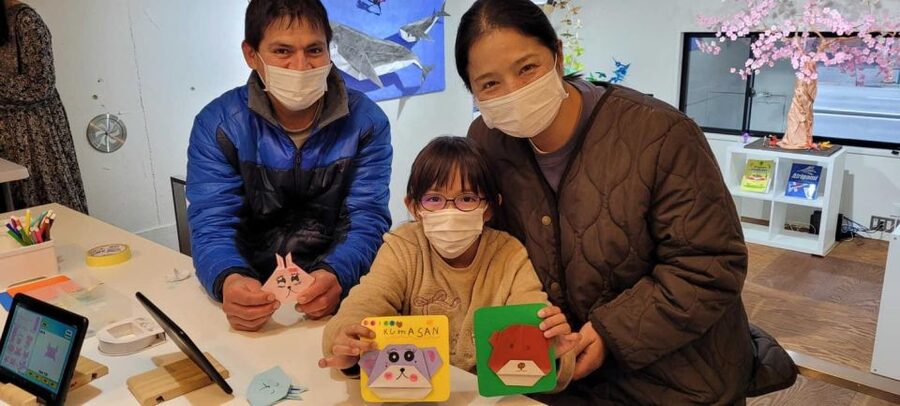
After folding, you can personalize with stickers, stamps, and markers. Even if you nailed the fold, decoration is where you make it look like yours. A lot of kids and families get their biggest smiles here because it feels like finishing, not just completing.
Staff are present to help participants with their models, but this is not teacher-led instruction where one person stands over you and guides every movement. Think of it as guided by the system, supported by people.
Photos and displays are part of the experience
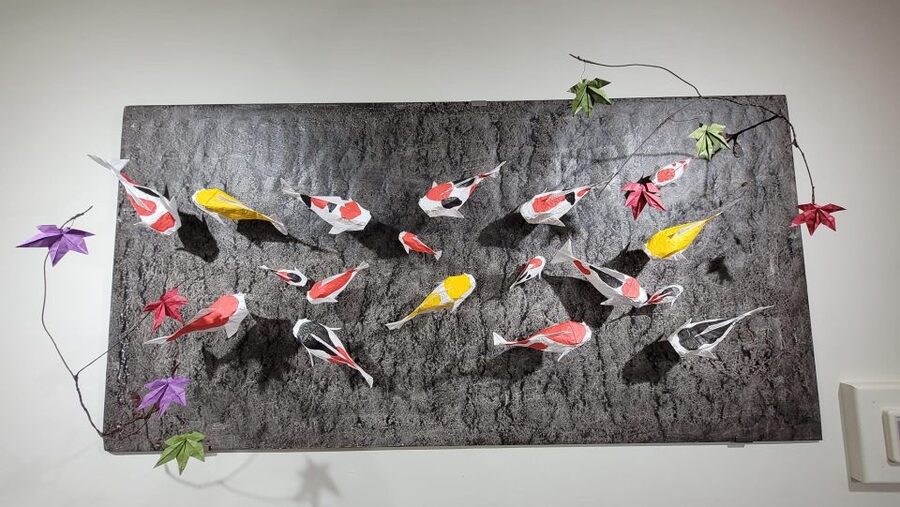
You can take photos throughout. You can also enjoy origami displays during and after your session. That gives you some visual benchmarks, so you can see how different models might look once finished.
What you really learn, beyond just making paper animals
The origami itself is fun, but the practical learning is what makes this activity worth repeating. Even if you fold only a handful of models, you pick up a useful skill: reading instructions in stages.
The tablet breaks complex folds into manageable steps. You see when to start folding a flap, when to turn the paper, and when to press or align. Over multiple models, you also start recognizing common origami actions, like creasing along edges or forming a point by folding corners inward.
That is why the difficulty range can work for both beginners and people who are not totally new. The experience can handle basic folds and intermediate-style ones, so you can stay with an easier model if you want, or push yourself if you are curious.
One review noted a helpful mix of introduction time and practice time. Another praised guidance that did not feel intrusive. That matches the structure here: staff support, while the tablet does the heavy lifting. You get the best of both worlds, help when you ask, and independence when you just want to focus.
And if you are doing this with kids, the learning can feel like play. The folding becomes a sequence of small wins, and the app helps you keep moving instead of constantly waiting for clarification.
The studio vibe in Asakusa: small group, real help, calm pace
This is limited to 6 participants, which is small enough to feel comfortable without turning into a private lesson. That size also makes the staff support more practical, because someone can notice when you are stuck and point you in the right direction.
In reviews, the group size and atmosphere were both called out. People liked that the guide watched without hovering. That is exactly the kind of support that works for beginners. If you want a hand, you can ask. If you want quiet focus, you can keep folding without feeling like you are being monitored.
One review highlighted a one-on-one experience with a guide named David. While this activity is not described as private by default, that particular review suggests that some participants did receive extra attention in their time block. If you are the type who learns best with direct feedback, it could be encouraging to know that instructors can step in when needed.
Another review mentioned an instructor making a rose for a child, which the kid loved. That kind of moment is not guaranteed based on the details provided, but it does fit the idea that staff are present to help and engage. If you are traveling with a child, small personal touches can be the difference between an okay activity and a memorable one.
Socks, stairs, and the practical stuff you should not skip
Here is the real-world friction point for this experience: you must wear socks in the studio. If you forget, you can purchase a pair beforehand, but you do not want to waste time right before your session.
The studio is also not handicap accessible. There are no ramps or lifts, only stairs. Seating does not have back support. If stairs and sitting comfort are a concern for anyone in your group, it is worth planning around that before booking.
Also note the age guidance. The session is recommended for children four and older, and it is not suitable for children under 4. Kids under 13 need adult supervision throughout the activity, especially since younger participants may not be able to fold independently.
One more practical note: it is not suitable for people with a cold. That is a simple rule, but it matters for deciding when your family can safely do it.
Price and value: is $27 worth 45 minutes of origami?
At $27 per person, this is not a free craft, but it also is not an expensive class for a big-name experience. For the money, you get more than just a table and paper.
Included in the price are origami paper and supplies, instruction, and taxes and fees. You also get access to the tablet-guided model instructions and the time to keep folding as many models as you can within the 45 minutes.
In reviews, people reported making around four items each during the allotted time, at least for some groups. That gives you a sense of output. If you leave with multiple folded pieces, plus decoration, the value feels more like a mini creative workshop than a quick demo.
The small-group limit also supports value. You are not competing with a room full of people for attention, and the staff can step in when you hit a real snag.
So the tradeoff is this: you are not paying for a long, teacher-led lesson where everything is explained out loud the whole time. You are paying for a structure where the instructions are built into the tablet, and staff provides support as needed. If you like self-paced learning, that is a good match. If you only learn through constant in-person demonstration, you might want to think twice.
Who this is best for (and who should look elsewhere)
This is clearly designed for families and beginners. If you are traveling with kids who can sit and focus for a short period, the session can be a great break. The app keeps things moving, and the decoration options help kids feel ownership of the final result.
It is also a good fit if you are brand new to origami. The session works from a square sheet and guides you through models in a structured way. That lowers the intimidation factor that keeps some people from trying crafts like this.
Here is where it may be less ideal:
- If you are relying on a fully teacher-led experience, remember staff support is present but this is not a private lesson where the instructor does every step with you.
- If someone in your group cannot handle stairs or the seating setup, the studio is not handicap accessible.
- If anyone in your group is ill with a cold, it is not suitable.
For mixed groups, this setup can actually be a plus. People can choose models that match their comfort level, and the tablet instructions help prevent one person from feeling left behind.
Finding the studio and walking in ready to fold
The studio entrance is on the main street side of the building. There is a brown sea turtle affixed to the wall below the window, plus signage on the front. If you arrive by the park side, you might be on the back of the building, and that side is not the entrance.
This matters because in Asakusa you can easily pop out of a street and end up on the wrong side of a building without noticing. Spend an extra minute aligning yourself with the main street entrance and you will avoid losing folding time once you arrive.
Should you book this origami session in Asakusa?
Book it if you want a short, structured creative activity where you can keep control of your pace. I think it is a strong choice for beginners, families with kids age 4 and up, and anyone who likes the idea of learning through step-by-step instructions instead of long lectures.
Skip it or consider alternatives if you know your group cannot do stairs, if socks are a deal breaker, or if you need a fully teacher-led lesson for everyone to understand. Also, if someone in your party has a cold, it will not fit.
If you like the sound of making multiple paper creations in just 45 minutes, picking from lots of models and paper colors, and leaving with something you can photograph and take home, this is an easy yes. The mix of tablet guidance plus real staff support seems to hit the sweet spot for first-time folders.
FAQ
How long is the origami experience?
It lasts 45 minutes. You can check availability for starting times.
Do I need any prior origami experience?
No. It is accessible for beginners, and the tablet instructions guide you from a square piece of paper through models ranging from beginner to intermediate difficulty.
Is there a teacher in the room leading every step?
There are staff members present to help with models, but this is not a private teacher-led lesson. The main instructions come from the tablet.
What age is it recommended for?
The experience is recommended for children four and older. It is not suitable for children under 4, and kids under 13 need adult supervision throughout the activity.
What should I bring?
You must bring socks to wear in the studio. Socks must be worn to participate, and you can purchase a pair beforehand if needed.
Is the studio wheelchair accessible?
No. The facility is not handicap accessible, and there are no ramps or lifts, only stairs.
Made by Hand, and Yours to Keep




Asakusa and the Skytree, Keep Going





Newest Tokyo write-ups from the Loving Japan desk




Asakusa, Senso-ji and Tokyo Skytree, side by side.
 ★ 4.5TOKYO SKYTREE® Admission ticketFrom $1311,192 reviews
 ★ 4.8Japanese Dance Cabaret Theater Asakusa-Kaguwa TicketFrom $492,270 reviews
 ★ 4.7Meiji Shrine, Asakusa, Skytree Bus Tour and CruiseFrom $1221,986 reviews
 ★ 4.9Roll and Authentic Sushi Making Class in AsakusaFrom $581,957 reviews
 ★ 4.8Asakusa Walking Tour with Sensoji Temple VisitFrom $221,583 reviews
 ★ 5.0Tokyo Asakusa Rickshaw TourFrom $421,375 reviews
 ★ 4.5Tokyo Panoramic 1 Day: Meiji Shrine, Asakusa, Odaiba and SKYTREE®From $851,222 reviews
 ★ 5.0Tokyo Go Kart: Asakusa, Skytree, and Akihabara **IDP MUST**From $99988 reviews
Filed on these lists too