
REVIEW · SAMURAI, NINJA AND SWORD EXPERIENCES
Tokyo Samurai Experience: Kyudo (Archery) and Swordsmanship
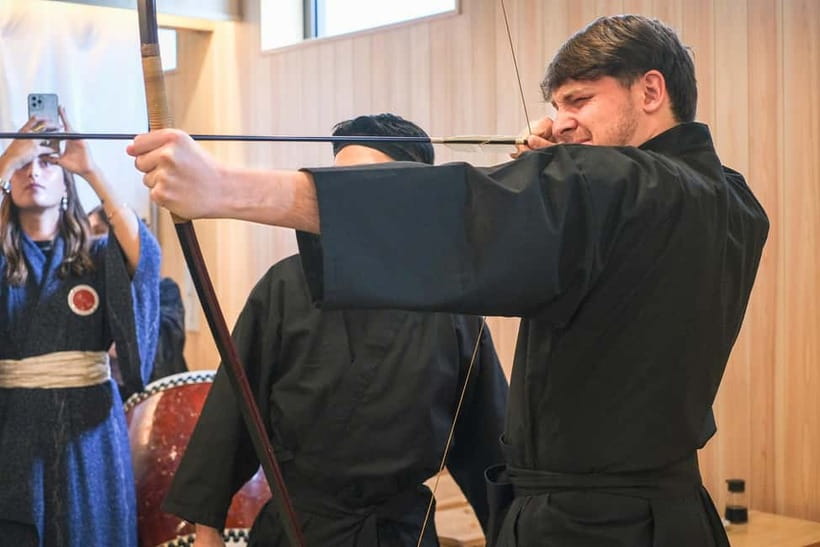
Tokyo goes warrior mode fast. In one hour in Asakusa, you switch into a samurai look and learn the rhythm of Kyudo and sword form. It is part training, part costume, part game, and it works because the staff keep it practical and easy to follow.
I especially love the hijama hakama outfit style change, since they have different heights and sizes so you do not end up swimming in fabric. I also really like that you get hands-on use of a traditional bow and katana, plus Japanese snacks and picture help so you walk away with more than just memories.
The only real drawback is the time. At 1 hour, you get solid basics, not a long practice session, so serious martial arts folks may want a longer class later.
In This Review
- Key Things You Should Notice Before You Go
- Hakama, Kyudo, and Katana, the One-Hour Flow
- Asakusa Meeting Point, the Heiwa Building Detail That Matters
- Your Samurai Outfit Setup, Hakama Fit and Quick Costume Win
- Samurai Rank Mini-Game, History With a Scoreboard
- Kyudo in Action, Why Japanese Archery Feels Different
- Katana Basics, the Pose and Grip That Make You Look Like One
- The Staff Energy, English Support, and Picture-Ready Moments
- Snacks and Small Perks, Why the Package Feels More Than $96
- Who This Samurai Experience Works For
- Price and Value in Plain Terms
- Quick Tips to Get the Best Results From Your Session
- Should You Book This Samurai Kyudo and Swordsmanship Experience?
- FAQ
- Where is the meeting point?
- How long is the experience?
- What does it cost?
- Is the instruction available in English?
- Do I need prior experience with archery or swords?
- What is included in the experience?
- What should I wear or bring?
- Is it suitable for families or kids?
- Is it wheelchair accessible?
- Can I cancel for a full refund, and is pay later available?
Key Things You Should Notice Before You Go
- Hakama fitting for different sizes so you look the part without awkward tailoring.
- A mini-game that assigns a samurai rank to set the tone and make history feel playful.
- Kyudo coaching that shows how Japanese archery differs from what most people know.
- Katana pose and grip instruction focused on safe, correct form.
- Photo and video help from staff, plus Japanese snacks included.
- Bilingual, English-first explanations that scale to your comfort level.
Blade work and stagecraft, other sessions
- Tokyo: Samurai Ninja Museum Guided tour and Experience
★ 4.6 · 1,010 reviews - Tokyo: Samurai Sword & Archery Class from Samurai Descendant
★ 5.0 · 603 reviews - Best Samurai Experience in Tokyo
★ 5.0 · 458 reviews - Ninja Experience (Family Friendly) at Samurai Ninja Museum TOKYO
★ 5.0 · 441 reviews
Hakama, Kyudo, and Katana, the One-Hour Flow
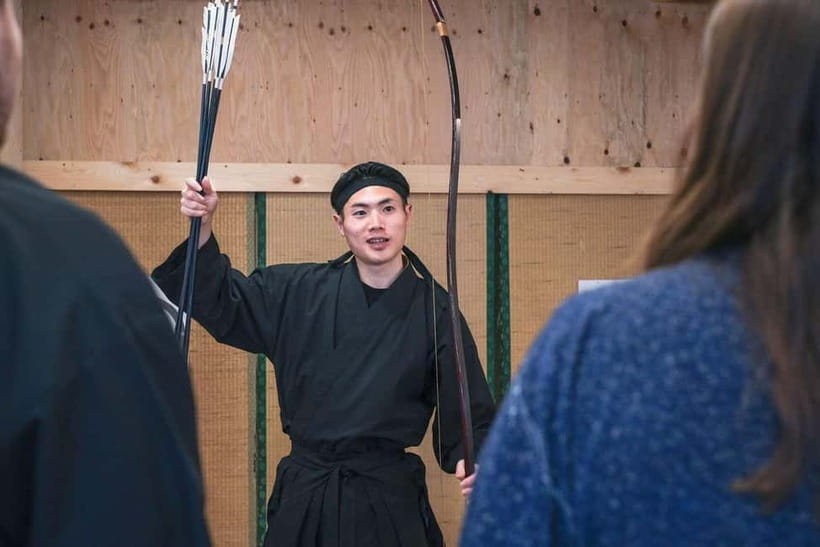
This is a compact, beginner-friendly samurai experience built around three big moments: dressing up, learning the bow, and learning the katana pose and holding method. You start off changing into a traditional hakama-set outfit, then you get brief context on samurai traditions, and finally the hands-on training begins.
The best part is that the format keeps moving. You are not stuck in a lecture. Even the history is delivered through a fun mini-game that tests what you just heard and gives you a rank theme for the next segment.
And yes, it is still real practice. You are using a traditional Japanese bow and a katana during your training, with staff guiding your posture and hand position so you get results in a short time.
Asakusa Meeting Point, the Heiwa Building Detail That Matters
You meet in Tokyo, Taito-ku, Asakusa at 2 Chome 6-11 Heiwa Building. The key detail is simple, take the elevator up to the 5th floor.
Arrive about 10 minutes early. Not because you need to wait around, but because elevators, building entrances, and groups gathering can take longer than you think when you are already trying to follow signage.
If you have never navigated Asakusa buildings before, this meeting point choice is smart because it is clear and staff can help you locate the room once you get inside.
Your Samurai Outfit Setup, Hakama Fit and Quick Costume Win
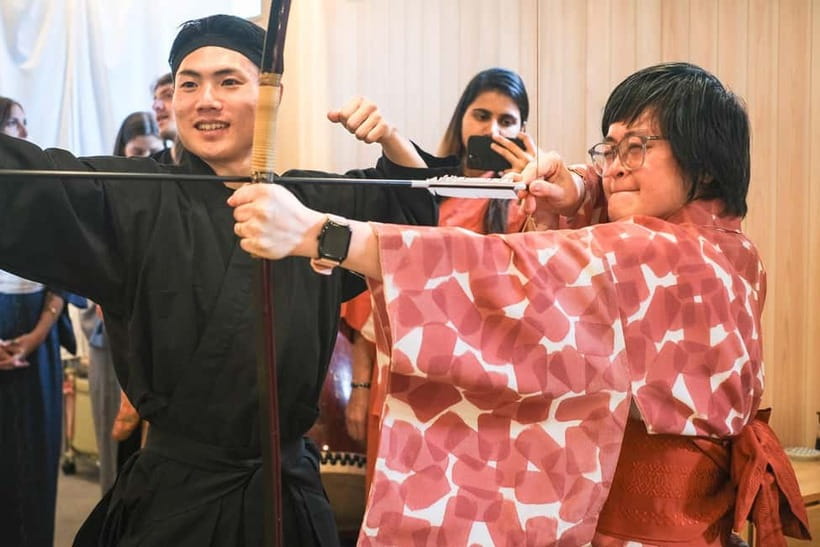
The experience starts with getting into your samurai outfit, the hakama-set. They have different sizes and accommodate a range of heights, which matters because fit changes the way your stance feels and looks.
They also help you during the change so you can get moving fast. In practical terms, it means you can focus on learning rather than spending the whole session wrestling with clothing.
Once you are dressed, you are not just wearing a costume. You are setting your body in a stance you will use again for the bow and for the sword pose. That is why the outfit is more than photo bait.
Loud rooms and quiet stages around Tokyo
- Mt Fuji & Hakone Cruise, Drum Show Bullet Train 1 Day from Tokyo★ 4.0 · 7,413 reviews
- Mt Fuji & Hakone Cruise, Drum Show Bus 1 Day from Tokyo★ 4.0 · 1,287 reviews
- Mt Fuji & Hakone Cruise, Drum Show Bus 1 Day from Tokyo Sta. Area★ 5.0 · 295 reviews
- Tokyo: KABUKI Show at Kabukiza Theatre Admission Ticket★ 4.8 · 152 reviews
- Tokyo: KABUKI, BUNRAKU, etc. presented by National Theatre★ 4.6 · 135 reviews
Samurai Rank Mini-Game, History With a Scoreboard
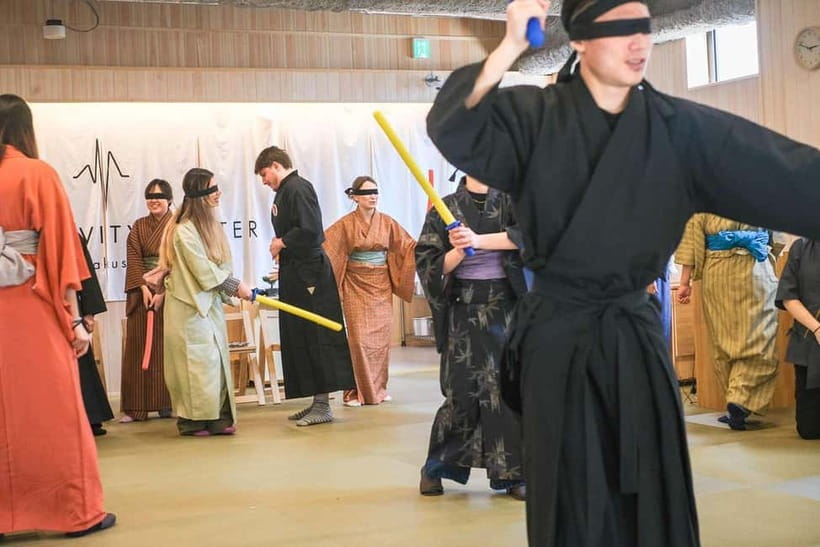
Before you start shooting and posing, you get an introduction to samurai history and traditions. Then you jump into a mini-game that determines your samurai rank.
This is a clever structure. It turns facts into something you have to remember in the moment, and it keeps energy up during the early part of the lesson when people might otherwise drift.
The game also helps explain the philosophy side of samurai culture in a way that does not feel like homework. Even if you do not score well, the training still begins right away, so the rank is more motivation than punishment.
Kyudo in Action, Why Japanese Archery Feels Different
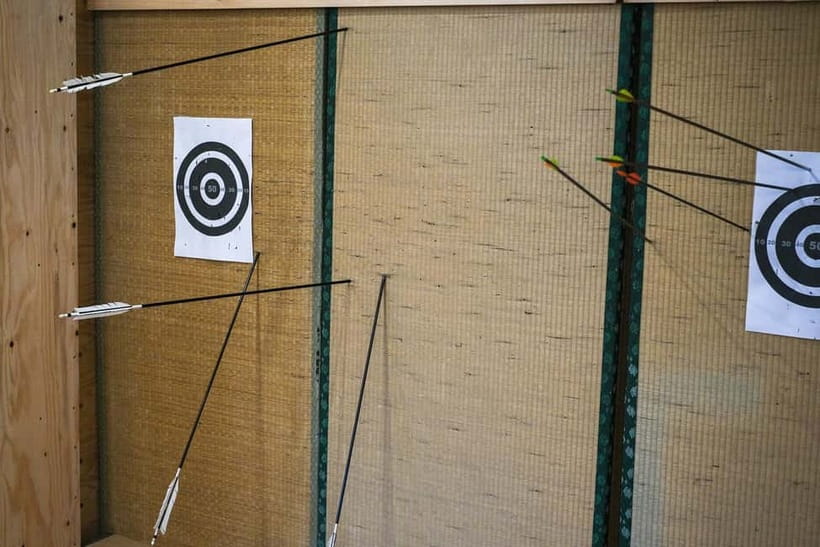
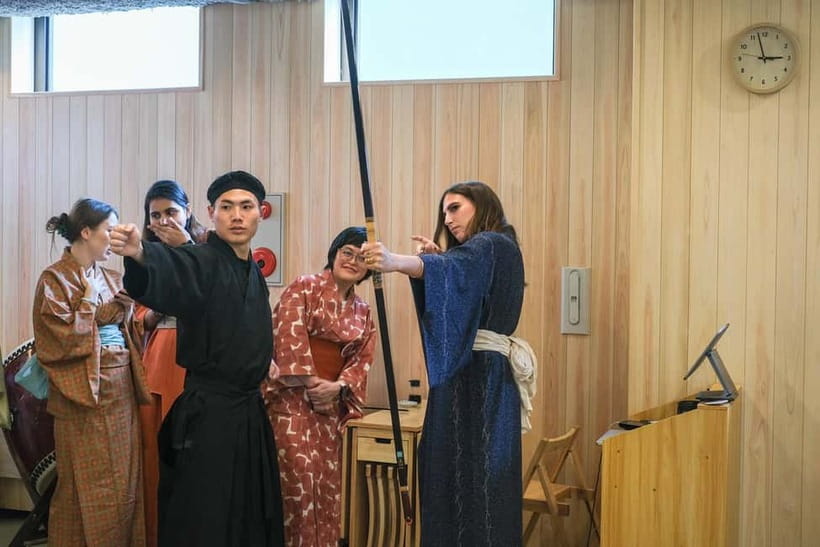
Kyudo uses a traditional Japanese bow, and you compete with your friends for a shogun position. That framing makes it light and social, but the instruction is what keeps it grounded.
Kyudo is famously different from western archery. The biggest difference you will notice is the emphasis on controlled form and the overall sequence, not just aiming for a quick shot. Even at beginner level, you feel that the process is about posture, alignment, and the smoothness of each movement.
Staff guide you through the basics using clear English and bilingual support. You learn how to hold and use the bow in a way that works with your body, then you get a chance to participate in the friendly competition.
This is also where time management matters. In a 1-hour session, you will not get endless rounds, so your best strategy is to pay attention, copy the posture they show, and focus on doing the one or two things they correct you on.
Katana Basics, the Pose and Grip That Make You Look Like One
After the bow portion, you move to the single-edged sword, katana. The focus is on two practical goals: the way you hold the katana and the pose you use to look like the strongest samurai.
This part is surprisingly rewarding because it gives you a clear visual result fast. Once you get the right stance and hand position, you look more authentic immediately, even if your sword experience is zero.
Safety and control are clearly part of how they teach, since they provide guidance for holding the sword rather than just handing it to you and hoping for the best. That is important for first-timers, especially if you are taller, shorter, or have less comfort with physical props.
You also get staff help for pictures and videos throughout. When you hear people gush about the photos, the “why” is simple: you are getting coached into a pose that reads well on camera, not just a casual hold.
In the reviews, Coach Mori is mentioned as patient, which fits this teaching style. If you get corrected, it will not feel harsh. It will feel like someone helping you get it right in real time.
The Staff Energy, English Support, and Picture-Ready Moments
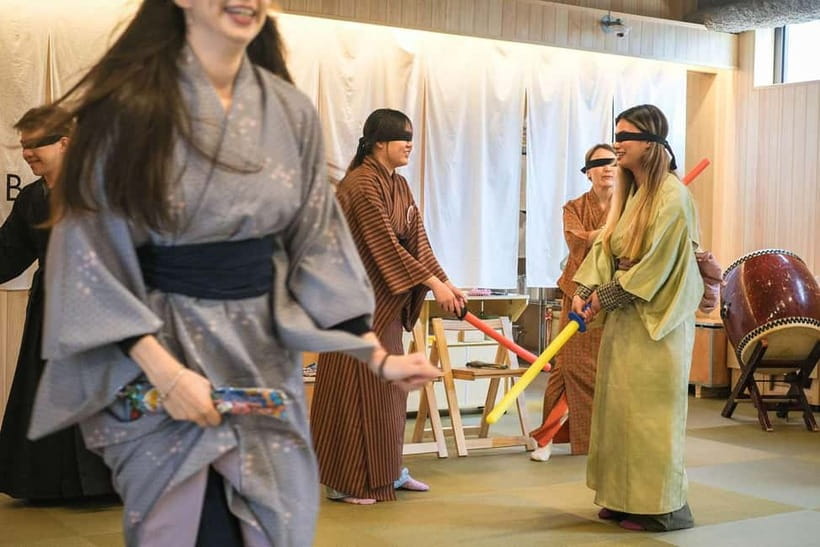
The vibe is consistently friendly and fun. English instruction is provided, and the staff are bilingual, so explanations are adapted to your level of English knowledge.
That matters more than you might think. Samurai culture can get complicated quickly, but here the history and philosophy are translated into bite-size pieces you can actually use during the activity.
You also get picture support. Staff help you take lots of photos and videos, and you are not just waiting for someone to take a single shot. That is why the end result feels complete.
Two instructor names came up in the feedback: Coach Mori is described as nice and patient, and instructor Joe is described as very friendly and instructive. Even if you do not meet those exact instructors, it is a sign of the teaching approach, warm and hands-on.
Snacks and Small Perks, Why the Package Feels More Than $96
Japanese snacks are included, which turns the session from training-only into something that feels like a full experience. In a short 1-hour format, those small touches help you settle into the moment and keep energy up between segments.
The value also comes from what is provided: traditional Japanese bow and katana use, traditional clothes, snacks, and bilingual staff support. You are not bringing gear, and you are not paying extra for a photo booth style add-on.
At $96 per person, you are paying for guided time, equipment access, and the outfit experience, all in one place in Asakusa. This is not the cheapest activity around, but it is also not a “nickel-and-dime” experience. If you want a single stop that gives you a real taste of both Kyudo and sword form, it is a fair trade for time and convenience.
Who This Samurai Experience Works For
This is a great fit if you want an action-based cultural activity without needing prior training. No prior experience is necessary, and it is family-friendly.
It is also a good choice for:
- First-time visitors to Asakusa who want a memorable hands-on activity close to the main sights
- People who like competitions and games, since the rank mini-game and shogun-style bow challenge add momentum
- Teenagers and young adults. The experience is specifically recommended for kids and young adults in the feedback, which lines up with the beginner-friendly pace
If you are a martial arts practitioner looking for deep technique, you may find it too short. But if you want form coaching, photos, and a fun introduction in 60 minutes, this delivers.
Price and Value in Plain Terms
Let’s talk about the $96. In a one-hour activity, you are essentially paying for three things at once: costuming (hakama-set), equipment access (traditional bow and katana), and staff-guided instruction in English.
You also get extras that tend to change how much you enjoy the session: Japanese snacks, lots of photos and videos, and staff support that helps you not just learn, but look good doing it.
For me, the best value sign is not the total price. It is that the package includes the gear and the help, so you are not scrambling to find rentals or instruction elsewhere. In busy Tokyo, that convenience is worth something.
The one tradeoff is the time limit. You will leave feeling you learned basics, not becoming proficient. If that is what you want, you will likely feel satisfied. If you want mastery, you will want to follow up with a longer class later.
Quick Tips to Get the Best Results From Your Session
You only need a couple things to make the day smooth.
- Wear comfortable shoes. You will stand, move, and hold poses.
- Wear comfortable clothes. Layers can help, but avoid anything too restrictive.
- Arrive 10 minutes early. You will start calmer and get fitted without stress.
- Bring your camera phone mindset. Since staff take lots of photos, be ready to pose when they ask.
Also, take the activity instructions seriously about what not to bring. Alcohol and drugs are not allowed.
Should You Book This Samurai Kyudo and Swordsmanship Experience?
If you want a high-energy, beginner-friendly way to experience samurai culture in Asakusa, I would book it. The biggest reasons are simple: you get actual hands-on time with a traditional bow and katana, you get dressed in a hakama-set that fits a wide range of body types, and you leave with photos that make it feel like a real memory, not just a lesson.
I would skip it only if you are specifically chasing advanced training or you need a longer practice format to feel satisfied. For everyone else, this one-hour package is a practical way to try Kyudo, learn basic sword handling and posing, and still enjoy the fun side of being a warrior for the day.
FAQ
Where is the meeting point?
You meet at Tokyo, Taito-ku, Asakusa, 2 Chome 6-11 Heiwa Building. Take the elevator to the 5th floor.
How long is the experience?
The duration is 1 hour.
What does it cost?
It is $96 per person.
Is the instruction available in English?
Yes. The instructor is English, and the staff are bilingual, so explanations are adapted to your English level.
Do I need prior experience with archery or swords?
No prior experience is necessary.
What is included in the experience?
Included items are use of the traditional Japanese bow and katana, traditional clothes, Japanese snacks, and bilingual staff support.
What should I wear or bring?
Bring comfortable shoes and comfortable clothes.
Is it suitable for families or kids?
Yes, it is family-friendly.
Is it wheelchair accessible?
Yes, the experience is wheelchair accessible.
Can I cancel for a full refund, and is pay later available?
Yes. You can cancel up to 24 hours in advance for a full refund, and you can reserve now and pay later.
Stages, Loud and Quiet



Blade Work and Stagecraft

Newest Tokyo write-ups from the Loving Japan desk






Samurai, Ninja and Sword Experiences, side by side.
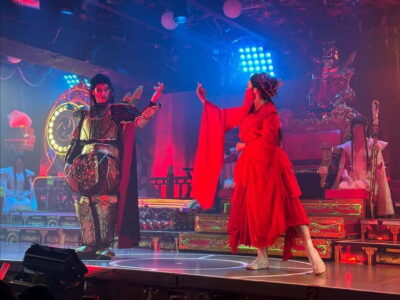 ★ 4.5Samurai Restaurant Show Ticket with 2 DrinksFrom $551,307 reviews
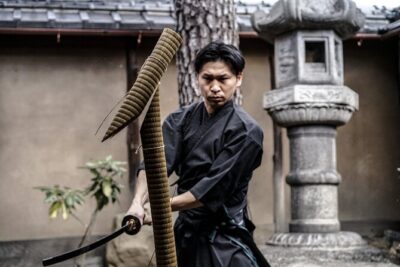 ★ 5.0Kyoto Samurai ExperienceFrom $1191,294 reviews
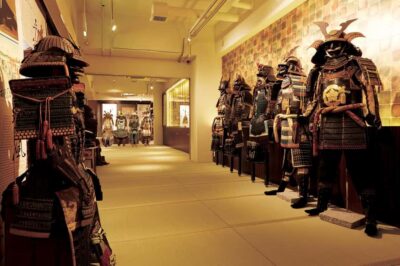 ★ 4.6Samurai Ninja Museum Guided tour and ExperienceFrom $271,010 reviews
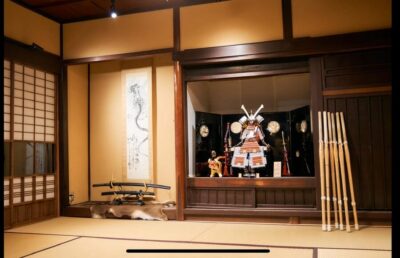 ★ 4.9Kendo and Samurai Experience with Uniform and GearFrom $103815 reviews
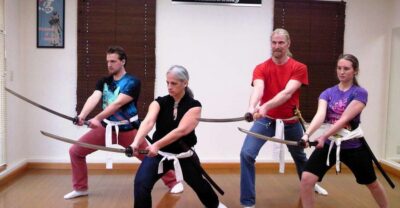 ★ 4.9Samurai Sword Class by Experts in Traditional ArtsFrom $64657 reviews
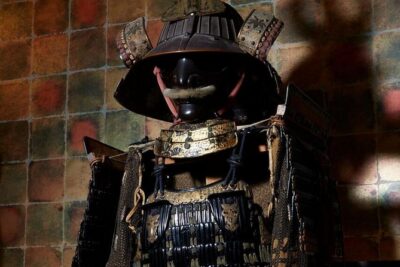 ★ 4.5Skip the lines Basic Ticket at SAMURAI NINJA MUSEUM KYOTOFrom $28632 reviews
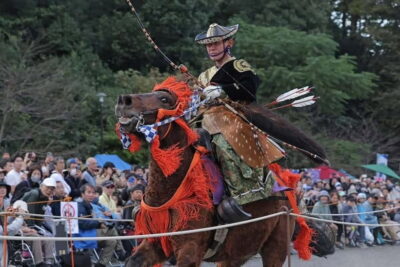 ★ 5.0Samurai Sword & Archery Class from Samurai DescendantFrom $193603 reviews
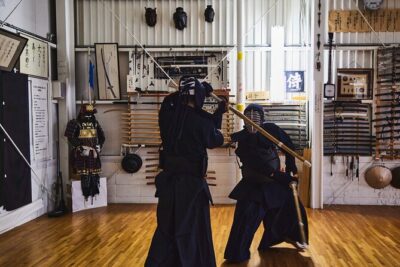 ★ 5.0Samurai Training Experience KENDO in OsakaFrom $131515 reviews
Filed on these lists too