
REVIEW · MORNING
Traditional Japanese Washi Papermaking- Kyoto morning
Paper making in Kyoto feels like time travel. In this traditional washi workshop you turn raw materials into your own sheets, then decorate them with seasonal pressed botanicals like cherry blossoms and maple leaves. You also get to choose a finished item, so you are not just making paper, you are making something you can actually use.
I like the bilingual instruction (Japanese and English) and the fact that the class stays small, with a maximum of 4 people. I also like that the session is hands-on from start to finish, with a practical end product you leave with. The main drawback is simple: transportation is on you, and the session is short enough that you will need to make quick decisions on your design.
In This Review
- Quick takeaways for your Kyoto morning
- Why this Kyoto washi workshop works so well
- Finding the meeting point near Shijo and Karasuma Oike
- The workshop flow inside the traditional house
- Making your washi sheet from raw materials
- Seasonal pressed flowers and maple-leaf style creativity
- Choosing a finished item, not just a sheet
- The teaching style: Hiro, Junko, and clear step-by-step guidance
- What you do during drying time (and why it is not just waiting)
- Leaving with a souvenir that feels worth keeping
- Is the extra hour of unlimited paper making worth it?
- Who this washi class is perfect for
- Price and value: $33.03 for a full creative souvenir
- Should you book this Kyoto washi workshop?
- FAQ
- How long is the washi papermaking class?
- Where is the meeting point?
- Is transportation included in the price?
- Do the instructors speak English?
- What can I make during the class?
- Is free cancellation available?
Quick takeaways for your Kyoto morning
- Small group, hands-on pace: Max 4 travelers, so you get real guidance instead of standing in line.
- Seasonal botanicals: Cherry blossoms, maple leaves, and cut-out details make your sheets feel distinctly Kyoto.
- Bilingual help: Instructors speak Japanese and English, including hosts like Hiro and Junko.
- Pick a usable souvenir: Options include postcards, a table mat, and paper lantern style projects, with some choices costing extra.
- Relaxing break from crowds: People consistently describe it as calm, indoor, and surprisingly engaging.
Still weighing up options in Kyoto? These are the ones our reviewers rated highest.
- PERFECT KYOTO 1-Day Bus Tour
★ 5.0 · 13,518 reviews - Kyoto: Fushimi Inari, Kinkakuji, Bamboo Grove 1 Day Bus Tour
★ 4.8 · 4,316 reviews - Kyoto: Tea Ceremony in a Traditional Tea House in Kiyomizu
★ 4.9 · 3,519 reviews - Kyoto Geisha Walking Tour: Gion District & Hidden Gems
★ 4.7 · 3,273 reviews
Why this Kyoto washi workshop works so well
Kyoto can be intense. Crowds, long walks, and nonstop temple stops add up. This workshop is a reset, because the work is slow, careful, and very tactile.
What makes it especially appealing is that the craft is traditional but the class format is modern and traveler-friendly. You get step-by-step instruction, plus tools and materials are handled for you so you can focus on the creative part. By the end, you have a take-home item made from sheets you created.
Finding the meeting point near Shijo and Karasuma Oike
The class starts at 345 Sanjōchō, Nakagyo Ward, Kyoto. Plan to arrive a few minutes early, because once you get inside the workshop, you want to be ready to begin right away.
Getting there is manageable because it is near public transit:
- It is about a 9-minute walk from Shijo Station exit #24 on the Karasuma Line, or Karasuma Station on the Hankyu Line.
- It is about a 6-minute walk from Karasuma Oike Station exit #6 on the Karasuma Line.
I suggest you map it in advance and then walk the last stretch with confidence. Kyoto streets can be confusing when you are tired, and this is not a place you want to hunt for mid-morning.
The workshop flow inside the traditional house
This is a one-stop experience in a traditional Japanese-style house at the workshop address. After you arrive, you meet the instructors, then jump into the process of making washi from raw materials.
The class structure is built around making a sheet, decorating it, and finishing your chosen project. Even though washi papermaking has a lot of steps, the session is designed so you can complete something meaningful in about 1 hour (approx.).
Here is what the rhythm feels like, step by step:
- You learn how the raw materials become a workable pulp.
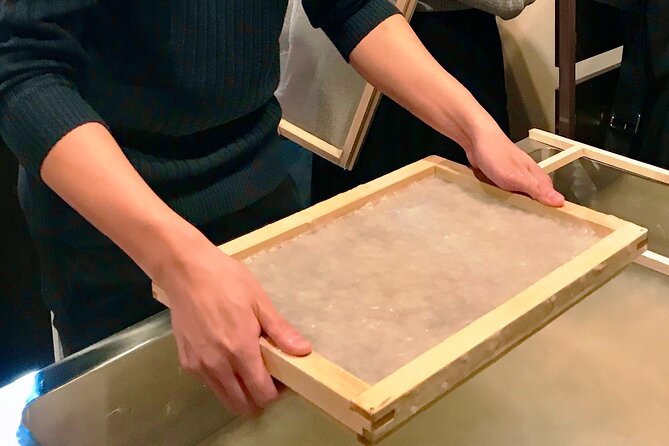
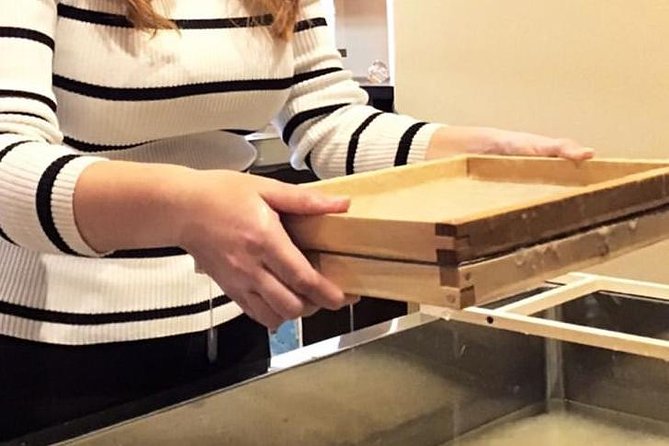
- You form the sheet and get it into the right shape.
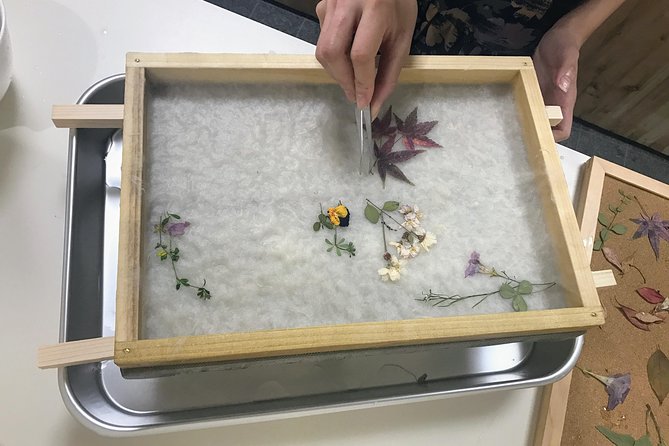
- You decorate with botanicals and cut-out pieces so the pattern is part of the paper, not just stuck on later.
- You wait during drying steps, and that is when you get extra explanation and video content about the craft process.
That drying time matters. It is not wasted, because it is paired with learning, history, and how the process actually works.
- PERFECT KYOTO 1-Day Bus Tour★ 5.0 · 13,518 reviews
- Kyoto: Fushimi Inari, Kinkakuji, Bamboo Grove 1 Day Bus Tour★ 4.8 · 4,316 reviews
- Kyoto: Tea Ceremony in a Traditional Tea House in Kiyomizu★ 4.9 · 3,519 reviews
- Kyoto Geisha Walking Tour: Gion District & Hidden Gems★ 4.7 · 3,273 reviews
- Kyoto: Tea Ceremony Ju-An at Jotokuji Temple★ 4.9 · 3,207 reviews
Making your washi sheet from raw materials
This is the core skill you are paying for. You are not just stamping paper decorations onto a finished card. You are learning the actual transformation from raw inputs into paper you can build on.
You also get to see why washi is different from standard paper. The technique is careful and craft-based, and you end up with a sheet that feels handmade, even before it becomes your finished souvenir.
If you like doing things with your hands, this part is satisfying. The guidance is slow enough to follow, but not so slow that you feel stuck or bored.
Seasonal pressed flowers and maple-leaf style creativity
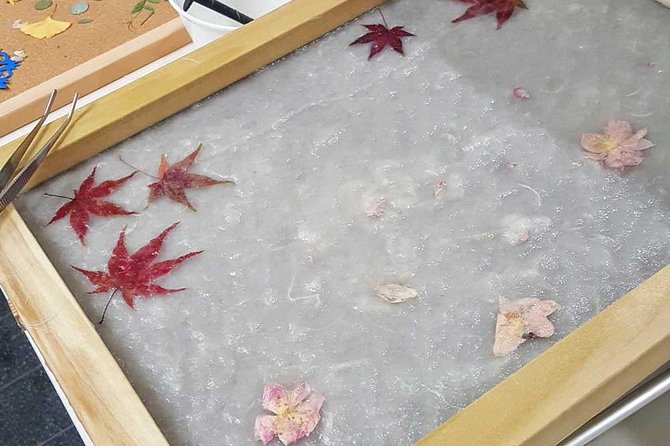
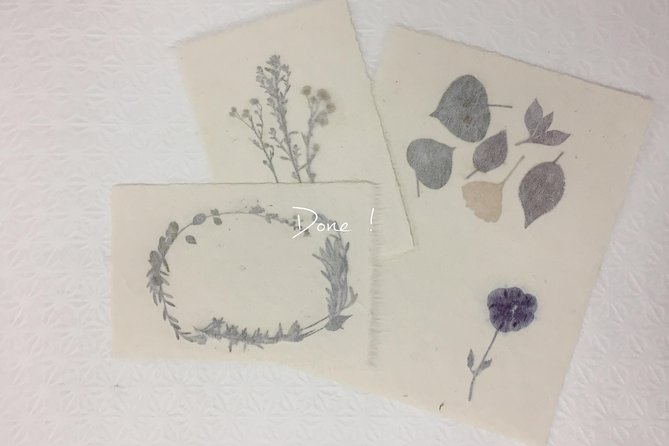
One of the best parts of this class is the decorating approach. You design your paper using seasonal pressed flowers and leaves, including cherry blossoms and maple leaves.
It is not random confetti. You are working with delicate, real botanicals, which changes how you think about placement and contrast. The cut-outs add structure, too, so your design has both organic texture and deliberate shapes.
Practical tip: think of your design like a layered silhouette. If you scatter everything evenly, it can turn busy. If you leave breathing room and place your focal elements where the light will hit, the result looks more intentional.
Choosing a finished item, not just a sheet
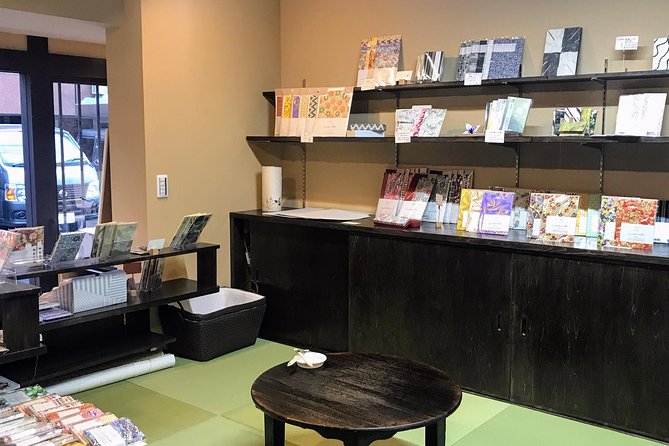
The class gives you options for what you make after your washi sheet is formed. You can create things like:
- a set of postcards
- a table mat
- a wraparound lampshade
- a tapestry-style panel option
Some lantern or lamp projects may involve a small extra fee, depending on what you choose. The general idea is that your base experience covers a standard set, and then you can upgrade if you want a bigger craft payoff.
This part is worth considering before you sit down. Ask yourself what you want to bring home:
- If you want lightweight, easy-to-pack art, go for postcards or smaller formats.
- If you want a functional item for your home, a table mat or lampshade is more satisfying.
- If you want wow factor, choose the lamp or lantern-style project, but be ready that it takes more care and attention.
The teaching style: Hiro, Junko, and clear step-by-step guidance
This workshop is run by a small team. Names that come up often include Hiro and Junko, and they teach with patience and gentle direction.
Because instructors speak both Japanese and English, you are not forced into guesswork. You can ask questions and get answers in the language you are comfortable with, which makes a big difference when you are doing something you have never done before.
A smart touch is that they may show educational videos during drying time. That means you get context, not just instructions. People also highlight that the explanations cover both how the paper is made and why the process matters.
If you like learning while doing, this format hits the sweet spot.
What you do during drying time (and why it is not just waiting)
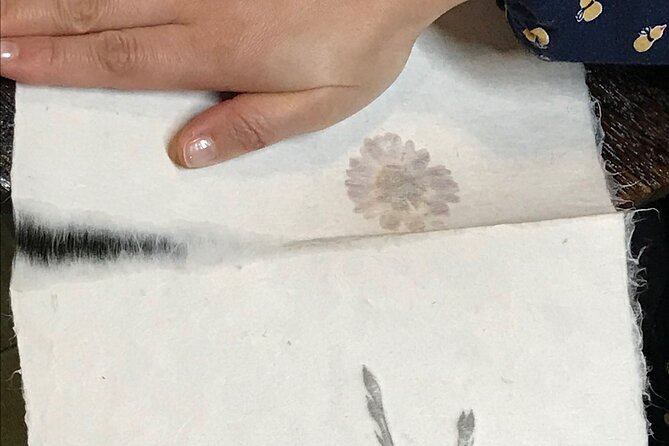
You form the paper, decorate it, then you wait for drying and finishing steps. Instead of leaving you idle, the workshop fills that time with learning.
You might watch an educational video about traditional washi papermaking and the process involved. It is short, and it ties your hands-on actions to the bigger craft story, so you walk out with a better understanding of what you made.
This is also where the class feels calming. You are not rushing through every step. You are working, watching, and reflecting for a bit.
Leaving with a souvenir that feels worth keeping
The finished product is the payoff. You leave with a unique handmade souvenir that you created yourself.
And it is not just pretty. Washi paper has that pleasing texture and slight character that makes it feel special even when it is small, like postcards. If you pick a functional item, like a table mat, it becomes something you can actually use when you get home, not something that disappears into a drawer.
You should also plan for carrying. Some designs are easy to fold or pack, while others may be more delicate. If you want to travel light, choose postcard or small-format options. If you are staying longer in Kyoto or have space, upgrade to something larger.
One more practical point: the studio sells paper goods and related creations in a small shop area. People note there is no pressure to buy. If you want gifts, it is easy to browse after your session while your souvenirs settle in.
Is the extra hour of unlimited paper making worth it?
You can add an additional hour of unlimited paper making, with the cost covered by your own expense. The base class is about one hour, so the upgrade is for people who want to take more time with the craft.
If you are the kind of person who likes options, the extra hour can be a great move. You can experiment with more designs, make extra sheets, or build a larger set of postcards or gifts.
If you are short on time, stick with the standard class. It is already structured to get you a finished souvenir. But if you have a slow morning planned and you want more hands-on time, the extra hour is a solid way to stretch the experience.
Who this washi class is perfect for
This works for a lot of travelers, including families. The only clear rule is that children must be accompanied by an adult.
That matters because craft classes can be unpredictable with kids, but this one is designed for hands-on participation. Reviews specifically mention that children enjoyed it, and instructors were accommodating.
It is also a great fit if:
- you want a break from walking between sights
- you want an activity that is calm and indoor
- you like crafts and want to bring home something genuinely handmade
- you want cultural context without a lecture-heavy museum feeling
And if you are traveling solo or as a couple, the small group size keeps it personal. You should still be able to follow along even if you are not an experienced craft person.
Price and value: $33.03 for a full creative souvenir
At about $33.03 per person for roughly an hour, the value is in three places: instruction, materials, and the fact that you leave with a finished item.
You are paying for more than a DIY craft kit. You are paying for real washi papermaking guidance, the seasonal botanicals, and the structure that turns a complex process into a completed souvenir within a short visit. For many travelers, that end product is what makes the price feel fair.
Also, the included elements matter. The listing notes that taxes and fees are included in the price, so you do not get hit with surprise add-ons at checkout.
If you compare this to buying similar paper art in a shop, the big difference is authorship. Your souvenir carries the story of you making it, not just buying it.
Should you book this Kyoto washi workshop?
If you want a meaningful Kyoto morning that does not rely on long lines or more temple steps, I would book it. This class is small, hands-on, and designed for beginners who still want to feel capable by the end.
I especially recommend it if you care about craft details, seasonal design, and taking home something that feels personal. The bilingual teaching and the calm studio vibe make it easier than many hands-on activities in Japan, where language can be a barrier.
Just be sure you can handle getting yourself there on time, and choose your finished item early in your decision-making so you get exactly what you want.
FAQ
How long is the washi papermaking class?
The class is about 1 hour.
Where is the meeting point?
The meeting point is 345 Sanjōchō, Nakagyo Ward, Kyoto, 604-8205, Japan.
Is transportation included in the price?
No. Transportation to and from the workshop is not included.
Do the instructors speak English?
Yes. The class is operated by bilingual instructors who speak Japanese and English.
What can I make during the class?
You can make traditional washi paper and then use it to create items such as postcards, a table mat, a wraparound lampshade, or a tapestry panel. Some options may require an extra fee.
Is free cancellation available?
Yes. Free cancellation is available up to 24 hours in advance for a full refund.
Newest Kyoto write-ups from the Loving Japan desk


Morning, side by side.
 ★ 5.0Kyoto Early Morning Tour with English-Speaking GuideFrom $681,427 reviews
★ 4.9Early Morning Tour with English-Speaking GuideFrom $1011,128 reviews
★ 5.0Kyoto Early Morning Tour with English-Speaking GuideFrom $681,427 reviews
★ 4.9Early Morning Tour with English-Speaking GuideFrom $1011,128 reviews
 ★ 4.9World Heritage Shirakawa-go Morning Guided TourFrom $77988 reviews
 ★ 5.0Nara Early Morning Tour (Kyoto or Osaka Departure Available)From $61676 reviews
 ★ 4.8Sumo Morning Practice Viewing TourFrom $81570 reviews
 ★ 5.0Hiroshima in a Nutshell: Morning Bike AdventureFrom $72524 reviews
 ★ 4.4Sumo Morning Training VisitFrom $77370 reviews
 ★ 4.6From Kyoto: Nara Guided Morning TourFrom $77335 reviews