
REVIEW · KYOTO TEA CEREMONIES AND MATCHA
Traditional Tea Ceremony with Matcha and Sweets in Kyoto
Kyoto’s Gion district slows everything down fast. This tea ceremony turns a classic, sometimes intimidating ritual into a friendly, chair-friendly lesson, with real hands-on matcha and sweet bites. I really like how the session explains the why behind chanoyu, not just the steps, and you get to learn up close from a tea master in a small group.
Two more things I like: you’ll sit on chairs, so you do not have to floor-sit to enjoy it, and you end with homemade matcha plus carefully chosen traditional sweets. One possible drawback is that this version is intentionally more approachable and time-friendly, so purists looking for the longest, fully traditional, floor-based format may find it a bit shorter than the ceremonial ideal.
In This Review
- Key highlights to look for
- Tea Ceremony in Gion With Matcha and Sweets: What You’ll Actually Do
- The Chair-Friendly Twist: Comfort Without Losing the Ceremony
- Learning Chanoyu in Two Acts: Watch First, Then Make Your Own Matcha
- Premium Tea Plus Traditional Sweets: What You Gain From the Pairing
- Q and A With a Tea Master: Turning Taste Into Understanding
- Price and Value in Kyoto: What $22.86 Buys You
- Where It Fits in Your Day (And Who This Is For)
- Should You Book This Kyoto Matcha Ceremony?
- FAQ
- How long is the Traditional Tea Ceremony with Matcha and Sweets in Kyoto?
- Where does the experience start?
- What does the experience include?
- Is this a small group activity?
- Do I need to sit on the floor?
- How much does it cost and what is the cancellation policy?
Key highlights to look for
- Gion setting, easy to reach: start in Kyoto’s historic Higashiyama area, near public transportation.
- Small group of up to 13: you get more attention and better chances to ask questions.
- Zen tea philosophy, explained simply: history of tea in Japan and how Zen shaped the ceremony.
- Hands-on matcha whisking: you make your own bowl with premium tea.
- Traditional sweets included: learn while you snack, not after.
- Q and A time at the end: a chance to connect the details to what you tasted.
Sit down somewhere quieter. Other tea rooms we booked
- Kyoto: Tea Ceremony in a Traditional Tea House in Kiyomizu
★ 4.9 · 3,519 reviews - Kyoto: Tea Ceremony Ju-An at Jotokuji Temple
★ 4.9 · 3,207 reviews - Kyoto: 45-Minute Tea Ceremony Lesson Experience
★ 4.3 · 2,378 reviews - Kyoto: Table-Style Tea Ceremony at a Kyo-Machiya
★ 4.9 · 1,211 reviews
Tea Ceremony in Gion With Matcha and Sweets: What You’ll Actually Do
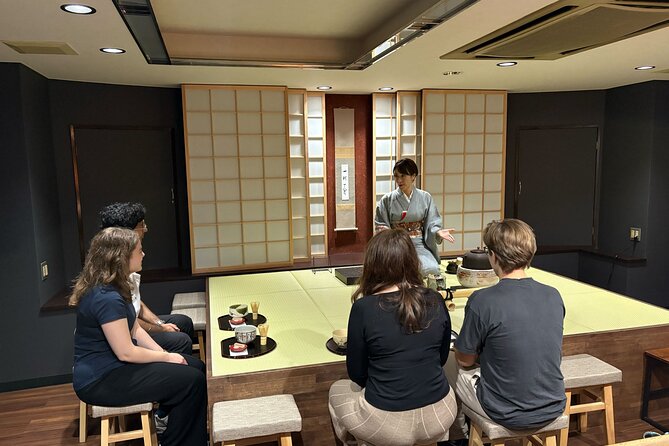
If your Kyoto plan is full of temples and photo stops, this experience gives your day a different rhythm. You begin in the Gion district, at the Yamatochō area, inside a building called 祇園田中屋ビル. The vibe is calm and focused, not performative, and the tour is designed to feel welcoming even if your Japanese is basic or you have never sat through a tea ceremony.
What makes it a smart choice is the mix of explanation and doing. You watch the key movements up close, then you recreate them yourself. And since the ceremony includes both matcha preparation and traditional sweets, you get a complete flavor-and-meaning package instead of a quick demo.
Also, this runs about an hour. That is a sweet spot for Kyoto. You can enjoy a culturally rich activity without losing half a day.
The Chair-Friendly Twist: Comfort Without Losing the Ceremony
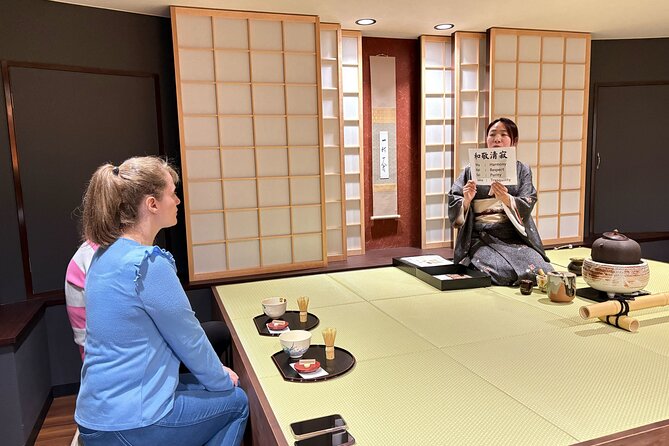
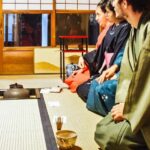
One of my favorite things about this setup is that you sit on chairs. Traditional chanoyu is often linked with floor seating, which can be a barrier if you have limited mobility or you just do not want to deal with awkward legs. Here, the experience keeps the heart of the ceremony while removing the stress that can turn a nice ritual into a survival game.
That chair format also helps you pay attention. You can focus on posture, timing, and the small gestures that the tea master demonstrates, instead of spending the whole time adjusting your body. In a class size capped at 13, you are close enough to see the tools and motions clearly, which matters when you are learning whisking technique.
If you prefer a fully traditional floor experience, you might notice this is more modern and accessible. But for most people, that is a win. You get the culture without the obstacle course.
Learning Chanoyu in Two Acts: Watch First, Then Make Your Own Matcha
The session flows in a way that makes the ritual easier to understand. In the first part, you listen and observe. You’ll learn the history of tea in Japan and how Zen philosophy shaped the thinking behind the ceremony. It is not just trivia, it is practical. Once you understand the spirit, the movements start to make sense.
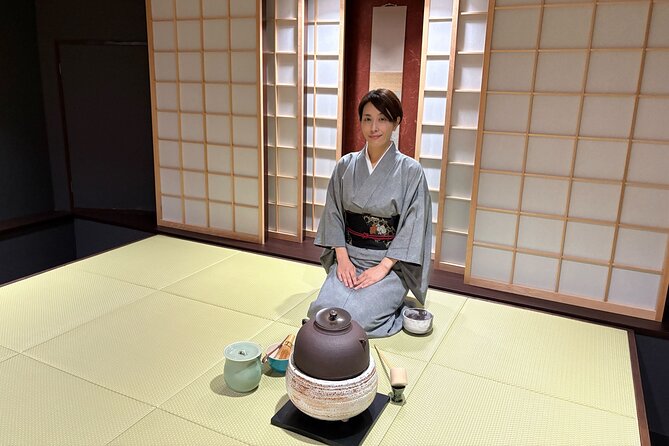
Then the tea master shows the authentic techniques up close. Watching matters here because matcha is not just a drink. It is foam control, whisk angle, water temperature, and patience. You are not guessing. You get to see what good looks like.
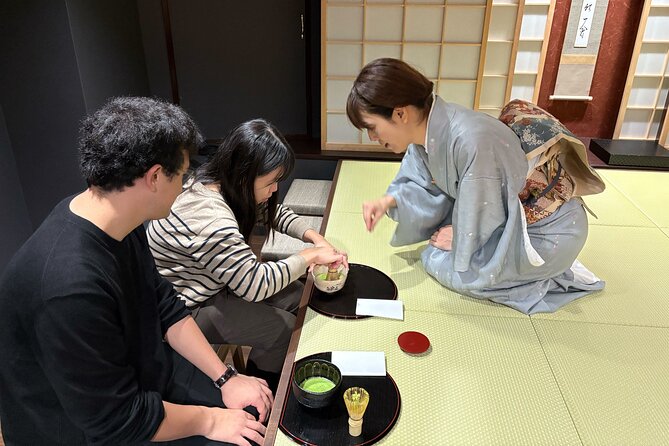
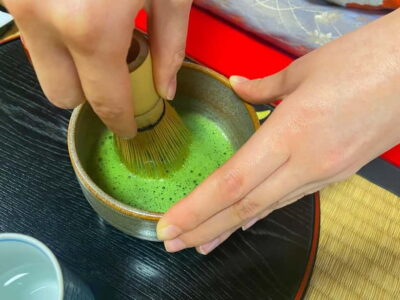
After that comes the best part: you prepare and taste your own matcha. You whisk your bowl yourself, using premium matcha sourced from a family-run farm. The fact that it is described as premium matters, because flavor differences can be subtle, and the point of the class is to help you notice those details.
Practical tip: when you whisk, aim for consistency over speed. The goal is a smooth, well-blended cup. If your first attempt is not perfect, do not panic. The format is built for learning in real time.
- PERFECT KYOTO 1-Day Bus Tour★ 5.0 · 13,518 reviews
- Kyoto: Fushimi Inari, Kinkakuji, Bamboo Grove 1 Day Bus Tour★ 4.8 · 4,316 reviews
- Kyoto: Tea Ceremony in a Traditional Tea House in Kiyomizu★ 4.9 · 3,519 reviews
- Kyoto: Tea Ceremony Ju-An at Jotokuji Temple★ 4.9 · 3,207 reviews
- Kyoto: 45-Minute Tea Ceremony Lesson Experience★ 4.3 · 2,378 reviews
Premium Tea Plus Traditional Sweets: What You Gain From the Pairing
A lot of tea experiences stop at the tea. This one keeps your palate engaged with traditional sweets from long-established artisans. The idea is that matcha and sweets talk to each other. The sweetness can round out bitterness, and the texture can make the tea taste different in a good way.
You also get a clearer sense of Japanese hospitality, known as omotenashi. That word can sound abstract, but you feel it more than you hear it. The sweets are not random snacks. They’re part of the pacing and the emotional logic of the meal, the way the ceremony expects you to slow down and appreciate the moment.
And yes, the matcha matters. Several people loved that the matcha was delicious, which is reassuring for first-timers. If you are worried you’ll spend money on an activity and end up with a weak cup, this is the right kind of setup because the tea is specifically described as premium and the lesson includes making it yourself.
Q and A With a Tea Master: Turning Taste Into Understanding
The session ends with a Q and A. That is where good tea learning becomes memorable. When you ask questions, you stop treating the ceremony like a script and start understanding it like a system.
In past sessions, the tea masters have been praised for connecting their teaching to the philosophy behind the Sado style. You may hear this emphasis from instructors such as Mitsune or Yuki. The common thread is that the explanations are not just about technique, they are about mindset.
This is the section you should use strategically. If you liked the foam, ask how to adjust your whisking. If you noticed a particular sweetness pairing, ask how sweets are chosen for the tea. If you were confused by a concept like Zen influence, ask for a simple way to remember it.
Quick mindset trick: ask one practical question plus one curiosity question. You’ll leave with something you can use back home and something you can think about later.
Price and Value in Kyoto: What $22.86 Buys You
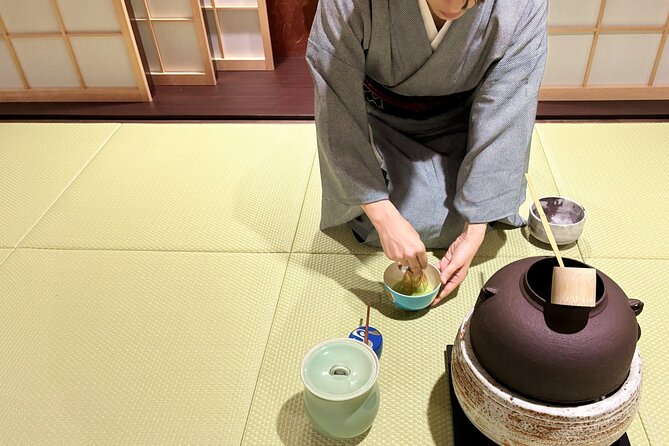
At $22.86 per person, this is fairly priced for what you get. You are paying for more than a talk. You’re paying for a live tea master, small-group attention (maximum 13 travelers), premium matcha, and included sweets. You also get hands-on practice, which is often the missing ingredient in low-cost cultural activities.
An hour might sound short, but it is long enough to watch the key steps, learn the meaning behind them, make your own bowl, taste matcha, and eat sweets. For most schedules in Kyoto, that balance is ideal.
So, is it good value? For you, it comes down to what you want from Kyoto. If you want one calm, meaningful activity that focuses on senses and detail, this price is easy to justify. If you want a full-day, deep immersion into multiple ceremonies and crafts, you might find it too brief.
Where It Fits in Your Day (And Who This Is For)
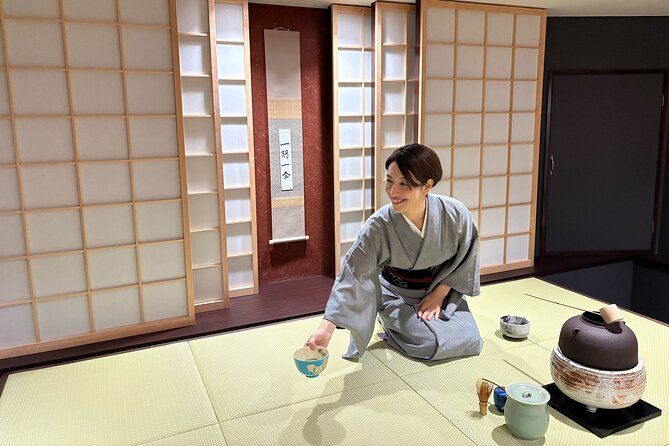
This experience is set in the Gion area, which is convenient if you want something cultural without jumping across town. It also runs about an hour, which makes it a great mid-day reset between temple visits or evening strolls.
Who it fits well:
- First-time Japan visitors who want a clear, friendly introduction to tea culture.
- Anyone who cannot or does not want floor seating, since you sit on chairs.
- People who like hands-on learning, not just watching.
- Tea curious travelers who want the philosophy explained without making it too academic.
Who might consider another option:
- If you specifically want the most traditional, long-form ceremony with intensive training and full floor etiquette, you may prefer something lengthier or more formal.
- If you hate guided activities and want total free time, you might feel the structure is too guided. This is still a class format.
Should You Book This Kyoto Matcha Ceremony?
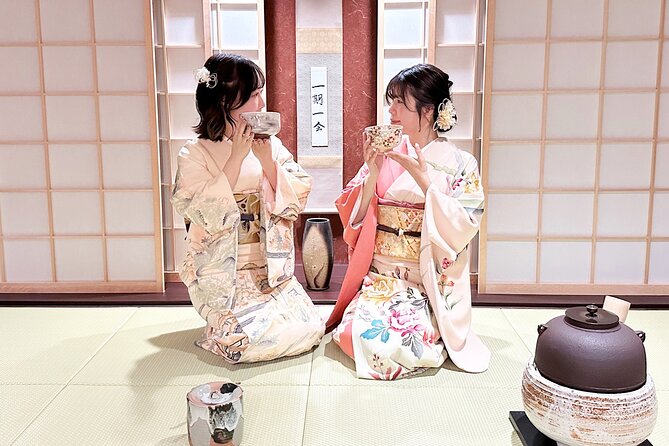
I’d book it if your Kyoto trip needs a calm, respectful activity that is easy to join and actually teaches you something. The biggest wins are the welcome and clarity, the small group feel, and the fact that you leave with a bowl you made yourself plus sweets that complete the experience. When a tea ceremony includes the learning, the tasting, and the Q and A, it tends to stick in your memory for the right reasons.
One reason not to book is simple: if you want a very long, fully traditional floor-based ceremony, this chair-friendly, time-friendly version may not match your expectations. But if you want a smart first step into Japanese tea culture, this is a strong choice.
FAQ
How long is the Traditional Tea Ceremony with Matcha and Sweets in Kyoto?
The experience lasts about 1 hour.
Where does the experience start?
The meeting point is Japan, 605-0802 Kyoto, Higashiyama Ward, Yamatochō, 1 祇園田中屋ビル. It ends back at the same meeting point.
What does the experience include?
You will learn about the history of tea in Japan and Zen philosophy, watch techniques performed by a tea master, make your own bowl of matcha, enjoy traditional sweets, and finish with a Q and A.
Is this a small group activity?
Yes. The maximum group size is 13 travelers.
Do I need to sit on the floor?
No. The experience provides seating on chairs, making it easier for people who are not comfortable with floor seating or have limited mobility.
How much does it cost and what is the cancellation policy?
The price is $22.86 per person. Free cancellation is available up to 24 hours in advance for a full refund. After that window, the amount paid is not refunded.
Kyoto by the Bowl
Newest Kyoto write-ups from the Loving Japan desk
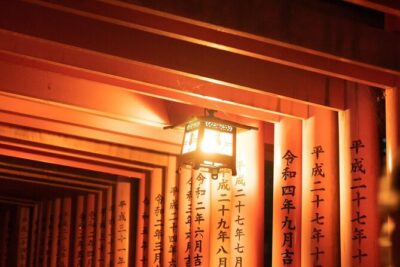
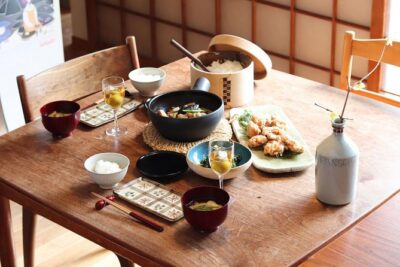
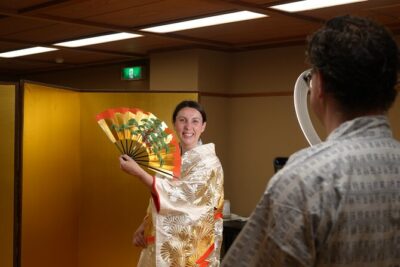
Kyoto Tea Ceremonies and Matcha, side by side.
 ★ 4.9Tea Ceremony in a Traditional Tea House in KiyomizuFrom $493,519 reviews
 ★ 4.9Tea Ceremony Ju-An at Jotokuji TempleFrom $293,207 reviews
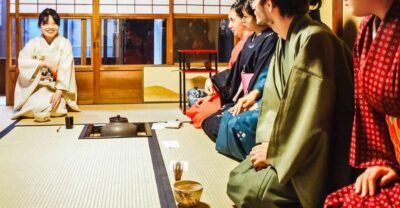 ★ 4.345-Minute Tea Ceremony Lesson ExperienceFrom $222,378 reviews
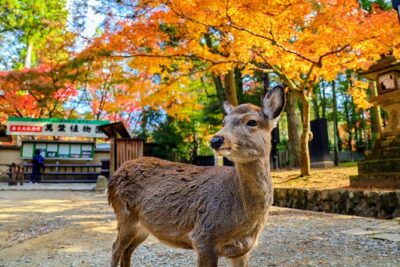 ★ 5.0World Heritage Kyoto & Nara Uji Authentic Matcha ExperienceFrom $1291,573 reviews
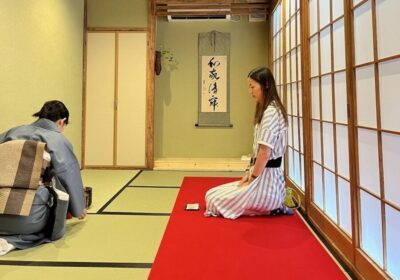 ★ 4.9Tea Ceremony ExperienceFrom $251,426 reviews
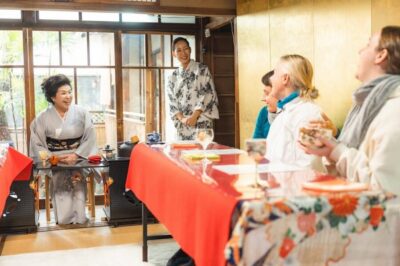 ★ 4.9Table-Style Tea Ceremony at a Kyo-MachiyaFrom $451,211 reviews
 ★ 4.8Kenrokuen Tea Ceremony ExperienceFrom $351,139 reviews
 ★ 5.0Kimono Tea Ceremony at Kyoto Maikoya, NISHIKIFrom $65911 reviews
Filed on these lists too