
REVIEW · TSUKIJI AND TOYOSU FISH MARKETS
10 kinds Sake Tasting Experience in Tsukiji with local!!
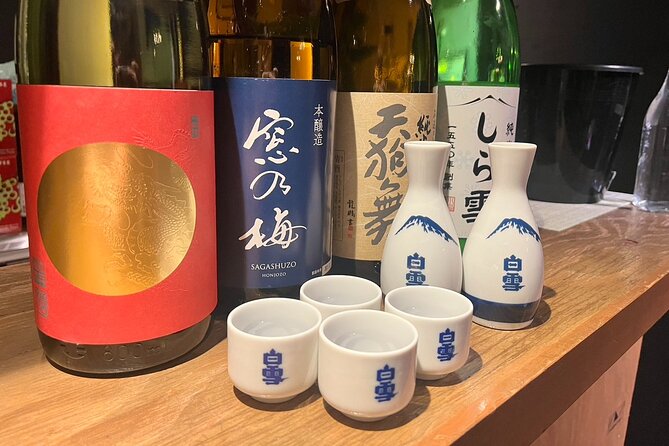
A quick sip tour teaches you Tokyo flavor fast. This private 10-sake tasting in the Tsukiji area is guided by a local enthusiast, so you do not just drink, you learn the why behind each style and region. I like the hands-on tasting approach with about 10 varieties, and you also get practical context on brewing and how to drink properly.
One thing to keep in mind: the meeting spot can be a little tricky to spot at first, so give yourself a few extra minutes and use your phone to confirm the exact storefront.
In This Review
- Key Things to Know Before You Go
- Tsukiji, But Make It Sake Class
- Meeting at Niku-no-Himalaya (Shintomi) and Getting Settled
- The 10-Sake Flight: How You Start to Taste Differences
- Junmai, Daiginjo, and the Category Labels That Actually Matter
- Etiquette and Rituals: Small Rules, Big Comfort
- Brewing Methods, Plus Real Conversation in a Private Setting
- Snacks and Pacing for a 1.5-Hour Sake Session
- Price and Value: Is $62.40 Worth It?
- What You Learn You Can Use Immediately
- Who This Tsukiji Sake Tasting Fits Best
- Should You Book This Tsukiji-Style 10-Sake Tasting?
- FAQ
- How many sake varieties will I taste?
- How long is the experience?
- Is this a private experience?
- What is the meeting point?
- Do I get any snacks?
- What if plans change and I need to cancel?
Key Things to Know Before You Go
- 10 sake samples in one session, designed to help you notice real differences
- Junmai, Daiginjo, and other categories explained in plain terms
- Local etiquette and drinking rituals so you know what is polite and why
- Private group setup, just your group, not a big crowd
- Snacks included, like nuts and soy beans, to help you pace
- Short, focused session at about 1.5 hours with a mobile ticket
Hungry earlier than that? Other market breakfasts we tried
- Tokyo Tsukiji Fish Market Food and Culture Walking Tour
★ 5.0 · 3,184 reviews - Tokyo: Tsukiji Fish Market Food and Walking tour
★ 5.0 · 1,724 reviews - Tokyo: Tsukiji Fish Market Guided Walking Tour
★ 4.9 · 1,397 reviews - Tokyo Sushi Making Class in Tsukiji with Professional Chef
★ 5.0 · 1,177 reviews
Tsukiji, But Make It Sake Class
If you only think of sake as one thing, this is a smart way to fix that fast. The format is simple: you taste around 10 different sake styles, and your guide connects each one to what makes it different, from brewing choices to category labels.
What makes it work in Tokyo is that you are not stuck with a textbook lecture. You get guidance on how to drink sake properly, then you test your senses right away. That back-and-forth is the whole point, and it makes the experience feel more like a local evening than a formal tour.
For me, the standout value is that you learn practical stuff you can actually use. You will walk away with a better sense of what Junmai, Daiginjo, and related labels mean, and you will also understand how regional character can show up in the glass.
Meeting at Niku-no-Himalaya (Shintomi) and Getting Settled
The meeting point is at Wagyu Yakiniku & Sake all-you-can-drink Niku-no-Himalaya, at nomuno2-chōme-13-2 Shintomi, Chuo City, Tokyo 104-0041. The good news is it is near public transportation, so you are not forced into long awkward walks with a full stomach and wet shoes.
This is a private session, so you and your group get your own space to talk and ask questions. That matters because sake can feel intimidating if you do not know the rules. In a larger group, you might stay quiet. In a private setup, you can ask about what you taste, and you can even slow down when something surprising hits your palate.
One small reality check: the meeting location can be hard to find at first, based on past participant comments. My advice is straightforward, use your map app, arrive a touch early, and if needed, ask staff nearby for the correct check-in spot.
The 10-Sake Flight: How You Start to Taste Differences
The session is built around tasting multiple sake styles, usually around 10 varieties. That is a good number because it is enough to train your palate, but it is not so many that you forget what you started with.
The tasting is organized to help you notice progression. In past sessions, some guides have guided the flight from lower to higher quality. You may still find that the order feels logical even if you do not focus on labels. You start to recognize patterns, like how acidity reads on the tongue, how sweetness can shift, or how aroma changes as the styles move.
Here is what you can expect your guide to cover as you taste:
- How to drink sake in a basic, practical way
- The differences between sake quality classifications like Junmai and Daiginjo
- How sake can reflect different parts of Japan
This is the kind of education that makes your next bottle buying trip easier. Instead of buying by brand name alone, you start thinking in terms of style and production choices.
Pour another. Breweries and tasting rooms nearby
- Ramen and Sushi Cooking Class with Sake Pairing Set in Tokyo★ 5.0 · 291 reviews
- Sake Tasting Masterclass in Shinjuku (8+ Varieties with a Pro)★ 5.0 · 271 reviews
- Sake Omakase in Tokyo: Guided Tasting by Certified Sommeliers★ 5.0 · 239 reviews
- Tasting All Types of Sake with Sommelier★ 5.0 · 151 reviews
- Wagyu & Sake Pairing in Shinjuku – Steak, Shabu-Shabu & More★ 5.0 · 112 reviews
Junmai, Daiginjo, and the Category Labels That Actually Matter
Sake labels can feel like code. The good part here is that the guide breaks down the key categories in a way that connects to what you are tasting.
In plain terms, you are learning the difference between styles such as:
- Junmai and Daiginjo and other commonly seen categories
- What those terms imply about production choices
- Why certain styles tend to taste a certain way
I like this approach because it does not ask you to memorize everything. You taste, you listen, then you compare. That helps categories stick.
Also, category talk is not just theory. When you pair category labels with sensory notes like aroma, mouthfeel, and finish, the labels become useful. You stop thinking of sake as a single drink and start thinking of it like a spectrum.
Etiquette and Rituals: Small Rules, Big Comfort
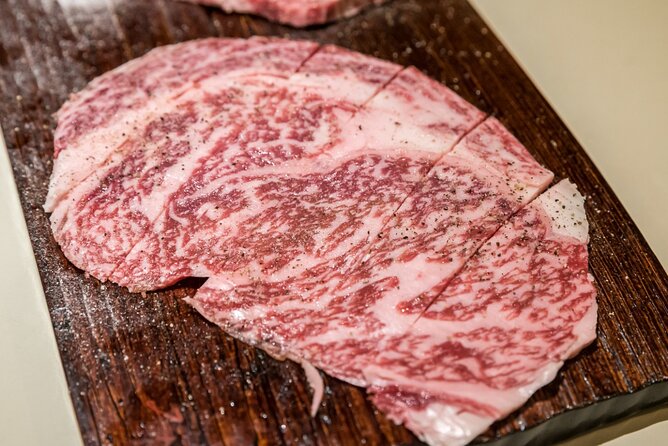
Sake drinking has etiquette. And yes, it can trip you up if you do not know the basics.
This experience includes guidance on how to drink sake properly and the basic etiquette that comes with it. That can include simple things like how you handle the drink and how you follow the moment when pouring or receiving.
Why this matters: when you know the rules, you stop worrying. Then you can focus on tasting. You also come across as more respectful, which makes the conversation with your guide feel easier.
From prior participants, a common theme is that the guide explains both the cultural context and the practical points. You get enough background to understand why people do things a certain way, without turning the night into a lecture.
Brewing Methods, Plus Real Conversation in a Private Setting
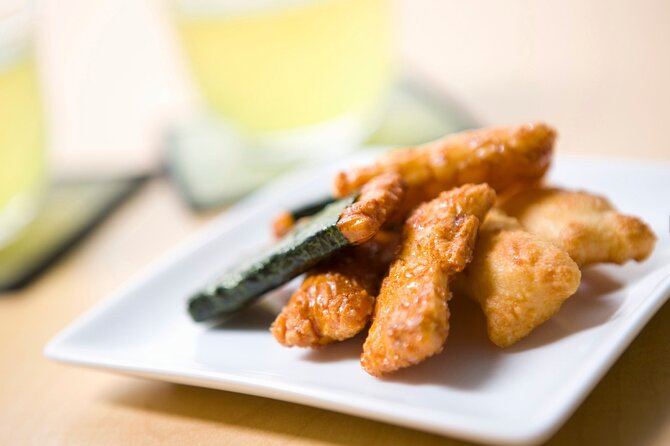
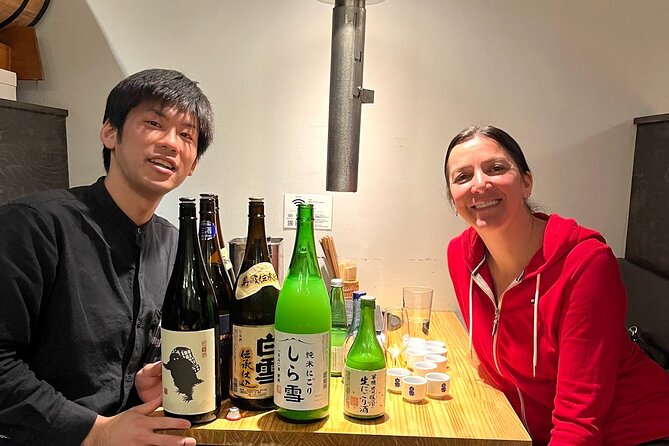
This is not just a guided tasting script. Your local host is there to talk, and the best part is that you can ask questions without feeling rushed.
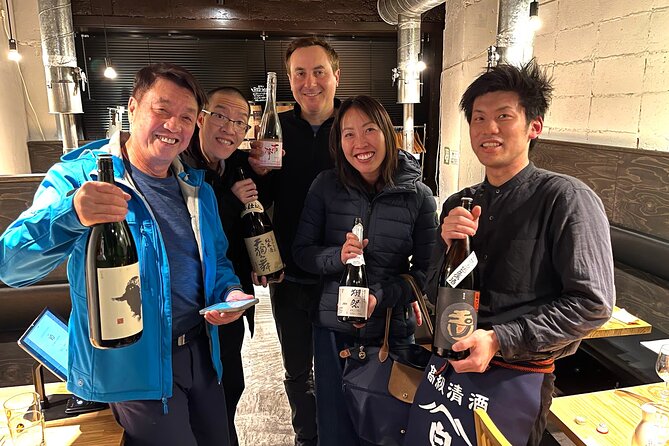
Past participants have mentioned that the guide speaks English well, and that conversations were genuinely enjoyable. One review specifically noted that the guide was Matsu and that he provided explanation sheets, plus he talked a lot about sake in general. Another comment said the guide is also a chef at Nomuno, which fits the vibe of the session, food sense meets drink sense.
Even if you are not a heavy “foodie,” you will still get something useful. If you are curious, you can ask what production choices change, how regional styles tend to show up, or how to tell a style apart after only one sip. If you are more quiet, you can just listen and enjoy the tasting.
Either way, you benefit from the private format. You are not scanning a menu while someone else is being served first. You are in a slower, more personal pace.
Snacks and Pacing for a 1.5-Hour Sake Session
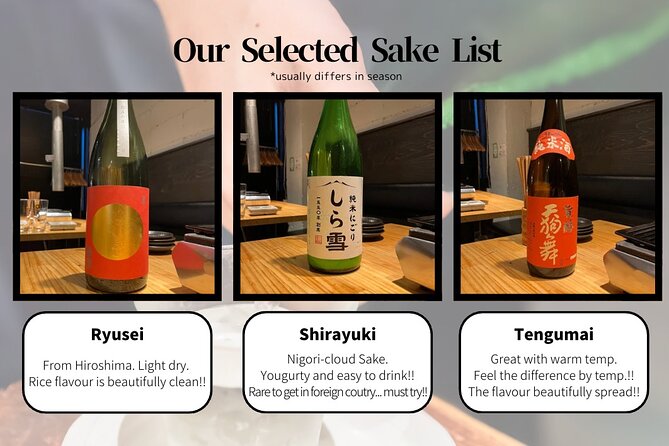
You are tasting about 10 sake varieties, and that is not a reason to panic, it is a reason to pace yourself. A couple of participants recommended taking it slowly, because it can add up quickly.
The good news is snacks are part of the session. You might see things like nuts and soy beans served in between tastings. That helps with balance, and it also keeps your palate awake so you can actually tell the difference between the styles.
My practical tip: go in neither starving nor overly full. If you arrive ravenous, the alcohol can feel sharper. If you arrive stuffed, aroma and flavor can fade. A light meal earlier in the day is usually the sweet spot.
Also, if you plan to keep walking around Tokyo afterward, consider water and take your time. This is a fun education night, not a marathon.
Price and Value: Is $62.40 Worth It?
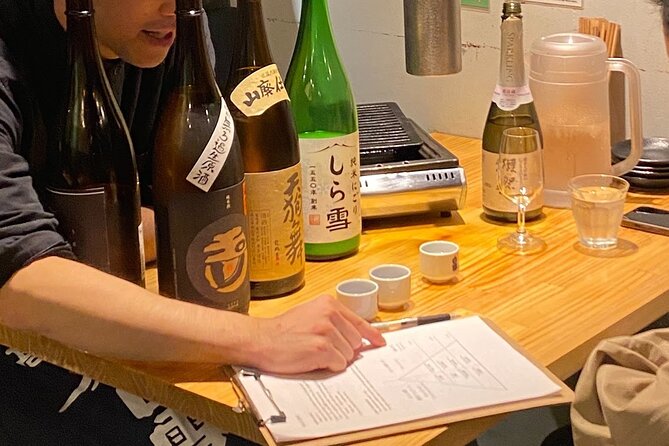
At $62.40 per person for about 1 hour 30 minutes, this is not bargain-basement drinking. But it also is not a pricey “just sit and sip” situation.
Here is what you are paying for, in concrete terms:
- A guided session with explanations tied to the tasting
- About 10 sake varieties sampled in one experience
- Learning on etiquette and category basics like Junmai and Daiginjo
- A private format where your group gets the host’s full attention
- Snacks included
Value is strongest when you want more than the drink. If your goal is simply to drink sake, you could do that on your own. If your goal is to leave knowing how to think about sake, how to interpret labels, and how to drink politely, the price makes more sense.
For solo travelers, the private setup is also a quiet win. Even if you end up as one person in the group, you still get individual attention and conversation. One participant noted this worked well even when they booked for a less busy time.
What You Learn You Can Use Immediately
Most sake tastings end when you finish the last cup. This one tries to make the lessons portable.
By the end, you should have a clearer idea of:
- How to drink sake in a basic, correct way
- How quality classifications like Junmai and Daiginjo differ
- How taste can vary by region across Japan
- What types of flavors and textures to associate with what you tasted
That means your next izakaya stop is more fun. You can order with intent. You can ask smarter questions. You can compare what you ordered to what you learned that day.
And if you are traveling with someone who likes food but is unsure about sake, this format gives both people something to talk about.
Who This Tsukiji Sake Tasting Fits Best
This is a great fit if you are:
- A first-time sake drinker who wants structure
- A food and drink lover who likes conversation, not just drinking
- Someone who wants cultural context without formal stiffness
- Traveling in a pair or small group that would enjoy a private pace
It may be less ideal if you want a very hands-off experience. You are tasting and learning, and the guide will talk. It is also a drinking-focused activity, so if you cannot handle alcohol at all, you would need to reconsider.
If you are the type who usually skips alcohol tastings because it feels confusing, this is designed to fix that feeling quickly. You get a guide, you get samples, and you get a simple map through the categories.
Should You Book This Tsukiji-Style 10-Sake Tasting?
I think this is an easy yes for anyone who wants sake education with real tasting time. The best reasons to book are the combination of 10 samples, practical etiquette guidance, and the kind of back-and-forth conversation that is easier in a private setting.
You should consider skipping or choosing another option if you hate the idea of drinking multiple small amounts in a short window, or if you are only looking for casual sightseeing. This is a focused evening.
If you do book, come with a light plan: pace yourself, try to arrive a few minutes early, and ask your guide what you noticed after each sip. That turns a good tasting into a memorable one.
FAQ
How many sake varieties will I taste?
You’ll taste around 10 different sake varieties during the session, with guidance on how they differ.
How long is the experience?
The tasting lasts about 1 hour 30 minutes.
Is this a private experience?
Yes. It is a private tour or activity, and only your group will participate.
What is the meeting point?
The start location is Wagyu Yakiniku & Sake all-you-can-drink Niku-no-Himalaya, nomuno2-chōme-13-2 Shintomi, Chuo City, Tokyo 104-0041, Japan. The activity ends back at the meeting point.
Do I get any snacks?
Yes. Snacks are included during the tasting (such as nuts and soy beans).
What if plans change and I need to cancel?
You can cancel for a full refund up to 24 hours before the experience’s start time. A mobile ticket is also provided, and confirmation is typically received within 48 hours of booking, subject to availability.
Cups, Cellars and Tasting Rooms

Market Mornings We Have Reviewed


Newest Tokyo write-ups from the Loving Japan desk






Tsukiji and Toyosu Fish Markets, side by side.
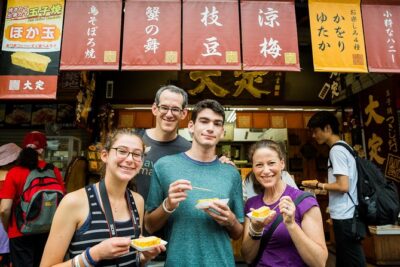 ★ 5.0Tokyo Tsukiji Fish Market Food and Culture Walking TourFrom $993,184 reviews
 ★ 5.0Tsukiji Fish Market Food and Walking tourFrom $301,724 reviews
 ★ 4.9Tsukiji Fish Market Guided Walking TourFrom $221,397 reviews
 ★ 5.0Tokyo Sushi Making Class in Tsukiji with Professional ChefFrom $491,177 reviews
 ★ 5.0Tsukiji Fish Market Guided Tour and Sushi Making with Pro ChefFrom $104775 reviews
★ 4.7Tsukiji Fish Market Food and Culture Walking TourFrom $96757 reviews
 ★ 5.0Tsukiji Fish Market: Street Food & Culture Walking TourFrom $33669 reviews
 ★ 5.0Tsukiji Fish Market Small-Group Food Walking TourFrom $87621 reviews