
REVIEW · SAMURAI, NINJA AND SWORD EXPERIENCES
Authentic Ninja Weapon Forging Experience in Kyoto
Kyoto has a lot of temples, but this is the practical kind of magic. In Atelier NIN, you forge a real ninja weapon step by step, then engrave kanji and finish it so it looks authentic. I like that it starts from zero, yet still feels hands-on and serious about safety.
Two things really win me over: you actually shape steel with the tools of working blacksmiths, and you get guided choices, like picking a shuriken style (or a kunai). One thing to keep in mind is that the format moves quickly, so the most detailed learning is best if you ask questions as you go.
In This Review
- Key Points at a Glance
- A Kyoto Workshop Where You Forge, Engrave, and Take Home Steel
- What You Actually Make in 2.5 Hours (Shuriken vs Kunai)
- From Samue Uniform to 800°C Furnace, Step by Step
- Sharpening and Symmetry: When Precision Becomes Your Souvenir
- Kanji Engraving and Blackening: Making It Look Like a Ninja Tool
- The Ninja Knowledge Session: Weapon History With a Purpose
- Souvenir Value: Box, Carrying It Home, and What to Watch
- Price and Logistics: Is It Worth $151.92?
- Getting to Studio NIN (Yasenosechō): Off the Main Loop Tip
- Who This Ninja Weapon Forge Workshop Suits Best
- My Balanced Take: The Parts That Shine and the Parts to Manage
- Should You Book Atelier NIN Ninja Weapon Forging?
- FAQ
- How long is the ninja weapon forging experience?
- Where does the experience take place?
- How much does it cost?
- What is included in the class?
- What weapon options do I get to choose?
- Do I need any experience with metalwork?
- Is transportation included?
- Is there a physical fitness requirement?
- Where do I get my ticket?
- Can I cancel and get a refund?
Key Points at a Glance
- You leave with a finished ninja weapon, not just a photo.
- No experience needed, but the staff keeps it structured and safe.
- Real steps of metalworking, including high-heat forging and sharpening.
- Kanji engraving turns your weapon into a personal souvenir.
- Small-group feel with a max of 25 travelers and lots of instructor attention.
- Location can be off the main loop, so plan your route ahead.
Blade work and stagecraft, other sessions
- Kyoto: Kendo and Samurai Experience with Uniform and Gear
★ 4.9 · 815 reviews - Kyoto: Samurai Sword Class by Experts in Traditional Arts
★ 4.9 · 657 reviews - Skip the lines Basic Ticket at SAMURAI NINJA MUSEUM KYOTO
★ 4.5 · 632 reviews - Ninja 1-hour Hands-on Lesson by Japanese master in Kyoto -Entry
★ 5.0 · 489 reviews
A Kyoto Workshop Where You Forge, Engrave, and Take Home Steel
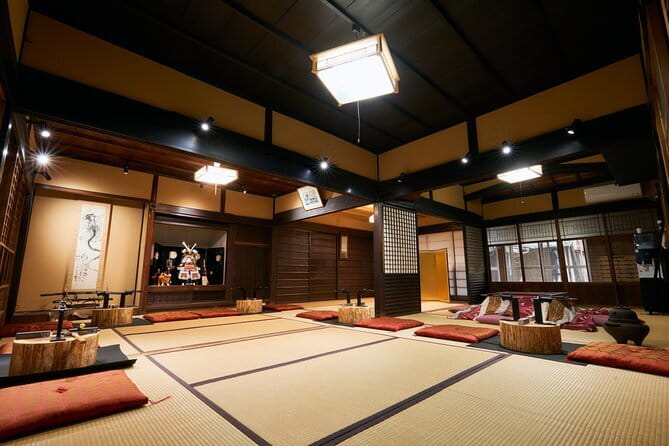
This is the kind of Kyoto activity that feels different fast. You swap sightseeing mode for workshop mode, with everyone in traditional samue and craft tools in your hands. Instead of watching ninja stories on a screen, you learn how weapons were made and what each stage changes in the metal.
The best part is that it is not just a craft demo. You are guided through the key actions that matter, heating, hammering, refining the shape, engraving, protecting the surface, and polishing the finish. By the end, you have something you can pack up and bring home in a proper box.
You should also know what this experience is and is not. It is hands-on, but it is still a class with a schedule, so you will not spend hours on one tiny detail. If you want a slow, deep metalworking course, you may find the pace a bit brisk.
What You Actually Make in 2.5 Hours (Shuriken vs Kunai)
Your weapon choice shapes the whole feel of the workshop. You pick from three shuriken styles or one kunai, and each option has its own silhouette and handling. That choice matters because you are not making a generic souvenir, you are making one specific tool.
The kunai option may cost extra. One review specifically mentioned an extra 3,000Y for the kunai, so if that is your pick, factor in possible add-on fees when comparing value. If you are trying to keep the experience close to the listed price, a shuriken selection may be the easiest route.
You also get a “ninja training” context for the weapon you choose. During the session, the staff connects the making process to the purpose of weapons, which helps your brain file what you are doing under real-world meaning. It makes the souvenir feel earned, not just purchased.
From Samue Uniform to 800°C Furnace, Step by Step
The workshop begins with the look, because it helps you switch into the mindset. You change into samue, the traditional blacksmith uniform, and wrap a tenugui around your head. Within minutes, the room feels like a craft studio and training space at the same time.
Step one is choosing your weapon style. You do not just pick an option blindly. You get guidance on what you are selecting and how it will translate into the metal you refine later. That small bit of structure helps if you are new to metalwork.
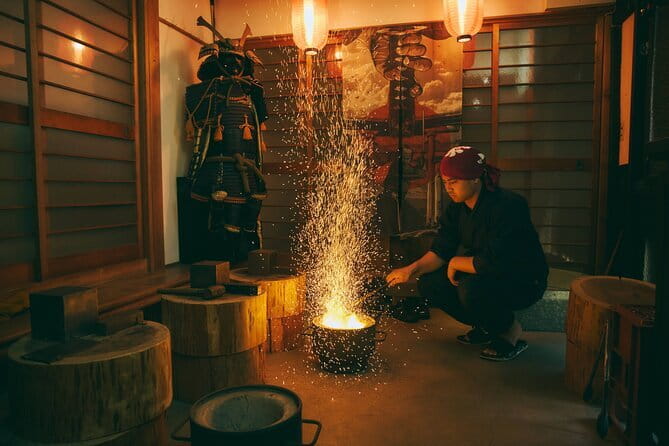
Then comes the forging heart of the experience. You heat your weapon blank in an 800°C furnace and hammer the glowing steel. This is the stage that visually grabs everyone, sparks flying, the tool taking shape in real time. Safety is part of the process too, and the staff makes sure you are doing the right movements and staying aware.
After forging, you shift into shaping and finishing. You use a professional belt sander to refine and sharpen the metal into your own handcrafted weapon. This is where the experience gets surprisingly practical, because sanding is what turns “made” into “ready.”
- PERFECT KYOTO 1-Day Bus Tour★ 5.0 · 13,518 reviews
- Kyoto: Fushimi Inari, Kinkakuji, Bamboo Grove 1 Day Bus Tour★ 4.8 · 4,316 reviews
- Kyoto: Tea Ceremony in a Traditional Tea House in Kiyomizu★ 4.9 · 3,519 reviews
- Kyoto Geisha Walking Tour: Gion District & Hidden Gems★ 4.7 · 3,273 reviews
- Kyoto: Tea Ceremony Ju-An at Jotokuji Temple★ 4.9 · 3,207 reviews
Sharpening and Symmetry: When Precision Becomes Your Souvenir
A lot of workshops say you will make something, but what you really do can be vague. Here, you get enough guidance to build your own sense of precision. You work on refining the edges and surfaces so your weapon looks intentional.
One thing I appreciate is that there is support for different comfort levels. Reviews mention easier options for sharpening that require less manual work for people with less stamina. That is helpful for mixed-age groups, or if you are not sure how your arms will handle repeated tool use.
If you care about how it looks, the staff pays attention to symmetry. A review called out help from a staff member, Taka, to make a kunai more symmetrical. That kind of personal adjustment is a big part of why the final souvenir feels like yours, not just “the class weapon with your name on it.”
Kanji Engraving and Blackening: Making It Look Like a Ninja Tool
Once the metal shape is done, you personalize it. You choose a kanji character and the staff engraves it with precision. This turns the workshop from a fun making session into a personal keepsake, and it is something you can actually show later because it is clearly part of your design.
Next comes blackening. You apply a special solution to protect the metal and give it a dark finish that reads like a traditional ninja tool. This stage is easy to overlook in a quick class, but it matters because metal without finishing can look unfinished and less “artifact-like.”
Then you polish. Final polishing brings out shine and makes the weapon look clean and presentable in its box. The combination of blackened surface and polished highlights helps your eyes see the craft you put in, not just the raw metal.
The Ninja Knowledge Session: Weapon History With a Purpose
You do not spend the whole time with tools. You also get a ninja knowledge session, with history of ninja weapons plus explanations of weapons and secret techniques. It is not just trivia, it is tied to what you are making, so it feels relevant rather than like a separate lecture.
What makes this valuable is that it adds context to each step. Forging becomes more than “heat and hammer,” and sharpening becomes more than “make it pointy.” You start to understand why a weapon’s shape matters and how makers thought about function.
In a class like this, your questions make a difference. If you want the learning to go deeper, ask the staff during the craft stages. They are high-energy and communicative, and the experience becomes more than a checklist when you engage.
Souvenir Value: Box, Carrying It Home, and What to Watch
You end with practical take-home items, including a clean box and bag prepared for your weapon. That matters more than people think. A sharp metal piece is not a casual souvenir, and having the right packaging helps you transport it without stress.
Reviews also mention putting weapons in checked baggage on the trip home. While you should still follow your airline rules, the presence of the provided storage helps you plan. You are not trying to improvise packing with a grocery bag and hope for the best.
One small note: the weapon is made as a souvenir, so treat it like a finished tool. That means keep it stored safely, and do not handle it like a toy once you are done. If you take photos, take them when you are finished with the polishing stage, so you are not mixing excitement with workflow.
Price and Logistics: Is It Worth $151.92?

At $151.92 per person, you are paying for several things at once: guided metalworking steps, staff support, tools and sharpening equipment, uniforms, and a finished personalized weapon. If you compare this to “hands-on tours” that only give you a small craft or a short demo, the value improves because you are leaving with something substantial.
That said, a fair warning is in order. A review criticized it as feeling like a more streamlined, photo-friendly flow with limited explanation, and claimed they did not truly make the weapon, only hammering a few times for pictures. Another critique mentioned directions being vague at moments, so it was easy to wonder if you were doing the right thing.
I treat that as a signal for expectation-setting. Go in ready to be active, ask questions, and follow the staff cues closely. The experience can feel very satisfying when you are engaged and when you get clear instruction, but it will feel less great if you expect an ultra-slow, instructor-by-instructor lecture.
Also consider group size. The workshop caps at 25 travelers, which should help keep attention reasonable. In a class like this, more people can mean less time per person, so arriving on time and staying focused pays off.
Getting to Studio NIN (Yasenosechō): Off the Main Loop Tip
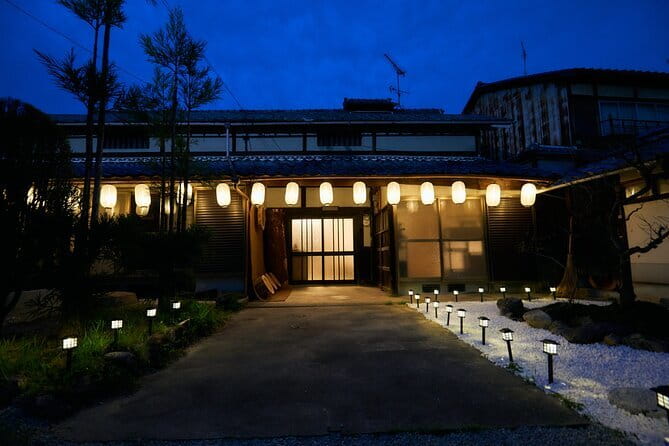
The meeting point is studio NIN, 八瀬168-1 Yasenosechō, Sakyo Ward, Kyoto, 601-1254, Japan. The activity ends back at the meeting point, so you are not dealing with an end-point transfer.
It is near public transportation, but it can still feel off the beaten path. One review advised being prepared with a taxi app, which is practical advice in Kyoto where “near” can still mean a tricky walk once you have gear and timing pressure.
I recommend you set up your route before you leave, and give yourself buffer time. When you show up early, you spend less energy worrying about logistics and more on enjoying the craft.
Who This Ninja Weapon Forge Workshop Suits Best
This fits best if you want an authentic, hands-on Kyoto experience with a clear product at the end. It is a good match for adults and teens who enjoy making things, learning by doing, or collecting meaningful souvenirs.
It is also a strong option for families, since reviews mention teenagers and younger family members taking part successfully. The key is the moderate physical fitness requirement. You will be doing tool work, so if you have mobility issues or fatigue concerns, plan accordingly.
You do not need prior experience. The instructors teach you, and they provide the rented specialized tools like files, plus hammers and sharpening supports. That lowers the barrier, and it means you can focus on learning the sequence rather than trying to figure it out alone.
My Balanced Take: The Parts That Shine and the Parts to Manage
The highest praise comes from the hands-on making, the friendly and enthusiastic staff, and the fact that you take home a real, personalized weapon. I also like that the experience includes multiple stages of craft, not just one moment with a tool. The combination of forging, shaping, engraving, blackening, and polishing creates a full arc.
The most common friction point is pacing and clarity. If you want super detailed explanations in every step, you might have moments where you need to double-check what the staff wants you to do. That is not a deal breaker, but you should be ready to pay close attention and ask for clarification.
If you keep that in mind, the experience can be exactly what you are looking for: a Kyoto activity that feels like you earned your souvenir with your own hands.
Should You Book Atelier NIN Ninja Weapon Forging?
Book it if you want a real craft project in Kyoto with a memorable take-home item, not just a photo stop. The value is strongest when you care about the process, like forging, sharpening, engraving, and finishing metal the “maker way.”
Skip it or reconsider if you want a slow, deeply instructional class with lots of downtime, or if you do not enjoy tool work. If you go in with curiosity and you ask questions, you will get far more out of it than a passive check-the-box activity.
Finally, bring your best attitude. This workshop runs on energy, and the staff is part of the experience. If you lean into it, you will leave Kyoto holding a custom ninja weapon that looks like it belongs in your story.
FAQ
How long is the ninja weapon forging experience?
The experience is about 2 hours 30 minutes.
Where does the experience take place?
It starts and ends at studio NIN, 八瀬168-1 Yasenosechō, Sakyo Ward, Kyoto, 601-1254, Japan.
How much does it cost?
The price is $151.92 per person.
What is included in the class?
Specialized tools (like files to sharpen steel) and hammers are rented for you, uniforms are provided for the craft, and a clean box and bag are included to take your weapon home.
What weapon options do I get to choose?
You can choose from three shuriken styles or one kunai.
Do I need any experience with metalwork?
No experience is required. Skilled craftsmen teach you the steps.
Is transportation included?
No private transportation is included.
Is there a physical fitness requirement?
Travelers should have a moderate physical fitness level.
Where do I get my ticket?
You receive a mobile ticket.
Can I cancel and get a refund?
Free cancellation is allowed up to 24 hours in advance for a full refund. If you cancel less than 24 hours before the start time, it is not refunded.
Blade Work and Stagecraft

Newest Kyoto write-ups from the Loving Japan desk




Samurai, Ninja and Sword Experiences, side by side.
 ★ 4.5Samurai Restaurant Show Ticket with 2 DrinksFrom $551,307 reviews
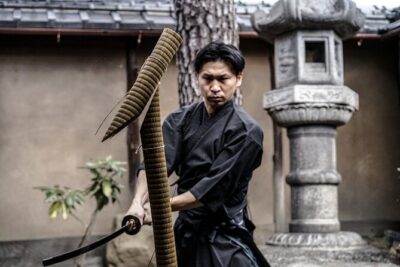 ★ 5.0Kyoto Samurai ExperienceFrom $1191,294 reviews
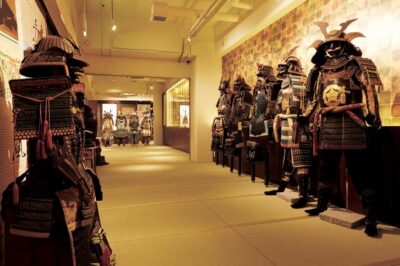 ★ 4.6Samurai Ninja Museum Guided tour and ExperienceFrom $271,010 reviews
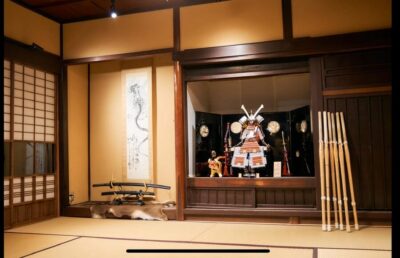 ★ 4.9Kendo and Samurai Experience with Uniform and GearFrom $103815 reviews
 ★ 4.9Samurai Sword Class by Experts in Traditional ArtsFrom $64657 reviews
 ★ 4.5Skip the lines Basic Ticket at SAMURAI NINJA MUSEUM KYOTOFrom $28632 reviews
 ★ 5.0Samurai Sword & Archery Class from Samurai DescendantFrom $193603 reviews
 ★ 5.0Samurai Training Experience KENDO in OsakaFrom $131515 reviews
Filed on these lists too