
REVIEW · HIROSHIMA PEACE MEMORIAL PARK AND MUSEUM
Hiroshima:Guided Virtual Tour/PEACE PARK TOUR VR
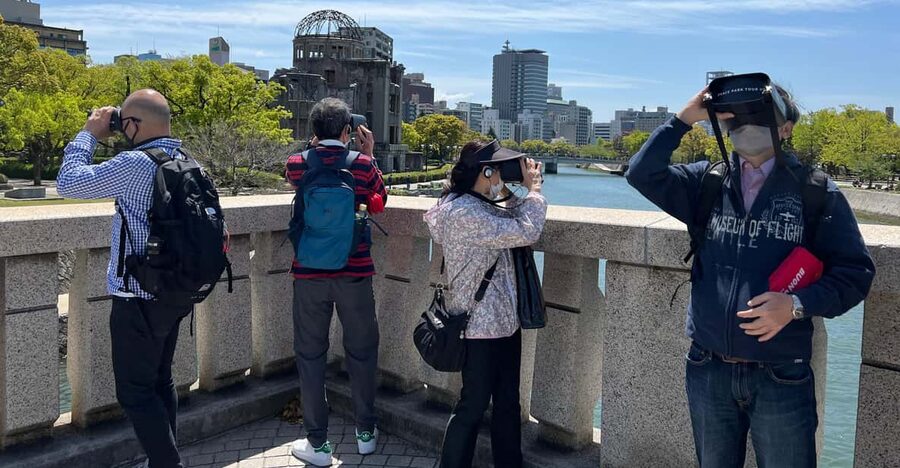
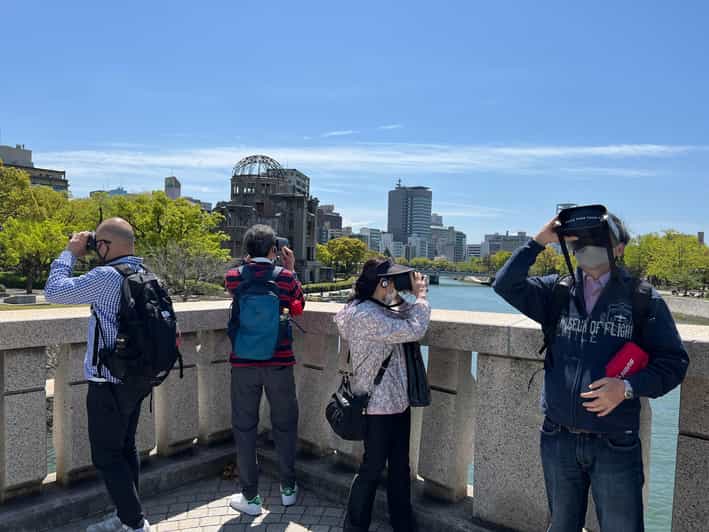
VR makes Hiroshima feel close and personal. This guided Peace Park VR tour takes you through the park, then pauses you at key spots to put on a headset and see Hiroshima before August 6, during the aftermath, and how the city rebuilt. I especially liked the way the local English-speaking guide keeps you engaged with thoughtful questions and real conversation, not just dates and photos, and I also liked how the small group size (up to 6) makes it easier to ask what you truly want to know. The main drawback is emotional weight, and the VR portion may be shortened on heavy-rain days.
What makes this experience feel unusual in a good way is its focus on connection. The tour is built around testimonies from Hibakusha, A-bomb survivors, plus period photos and VR renderings, which matters because those living testimonies are becoming rarer as nearly 80 years pass. If you go in expecting a light, sightseeing-style VR show, you might feel thrown off. But if you want a guided way to understand the human impact, this is one of the most direct formats you’ll find inside the Peace Park.
You’ll start at the Hiroshima City Peace Memorial Park Rest House, walk a short route to landmark points including the Atomic Bomb Dome and the bridges, and then come away talking with your guide and each other about what it means. It’s not a private tour, so you’ll share the experience with other people, but that can be part of the value. Just plan for a calm pace and bring your full attention.
In This Review
- Key things to know before you go
- Starting at Hiroshima City Peace Memorial Park Rest House
- Atomic Bomb Dome: where VR changes the meaning of the view
- Aioi Bridge to Motoyasu Bridge: the walk that links people and place
- What the VR recreates, and how to watch it responsibly
- Guide-led field questions and end-of-tour dialogue
- Price and logistics: is $32 good value for 80 minutes?
- Main trade-offs to consider before you book
- Who this Hiroshima Peace Park VR tour is best for
- Should you book this Hiroshima Peace Park VR tour?
Key things to know before you go
- Only VR experience in Hiroshima Peace Park, guided on site
- Headsets timed to your walk, so you connect the screen to the real place
- Stops at major memorial points, including the Dome and both bridges
- Guided dialogue and field questions, not passive watching
- Small group limit of 6 participants, for a more human feel
- VR built from survivor testimonies and historical photos, as living voices become fewer
The Peace Memorial Park and Museum, further guided visits
- Hiroshima Historical Walking Tour – Why A-Bomb was Dropped
★ 4.8 · 893 reviews - Hiroshima Peace (Heiwa) Walking Tour at World Heritage Sites
★ 5.0 · 872 reviews - Hiroshima: Miyajima Peace Memorial Icons of Peace and Beauty
★ 4.9 · 361 reviews - Hiroshima/Guided Virtual Tour of Peace Park/PEACE PARK TOUR VR
★ 5.0 · 157 reviews
Starting at Hiroshima City Peace Memorial Park Rest House
The experience begins at the Hiroshima Peace Park Rest House, at the tourist information counter on the 1st floor. That matters because the start is not rushed. You’re given your bearings, then you transition into the park with a guide who lives in Hiroshima and leads in English.
Plan to arrive early. The tour asks you to get there at least 5 minutes before your reservation time, and if you don’t arrive within 10 minutes after the start time, you won’t be able to join. This is one of those tours where being punctual helps everyone, especially because the headset moments have to line up with where you are in the park.
The rest house is also the best place to mentally shift gears. Outside, you’ll see memorial architecture, but you can still treat your first minutes like an orientation period. The guide sets a tone that is respectful and focused. It helps that the group is small, up to 6. In a larger group, quieter people often get swept along. Here, you’re more likely to hear the questions other people ask.
Atomic Bomb Dome: where VR changes the meaning of the view
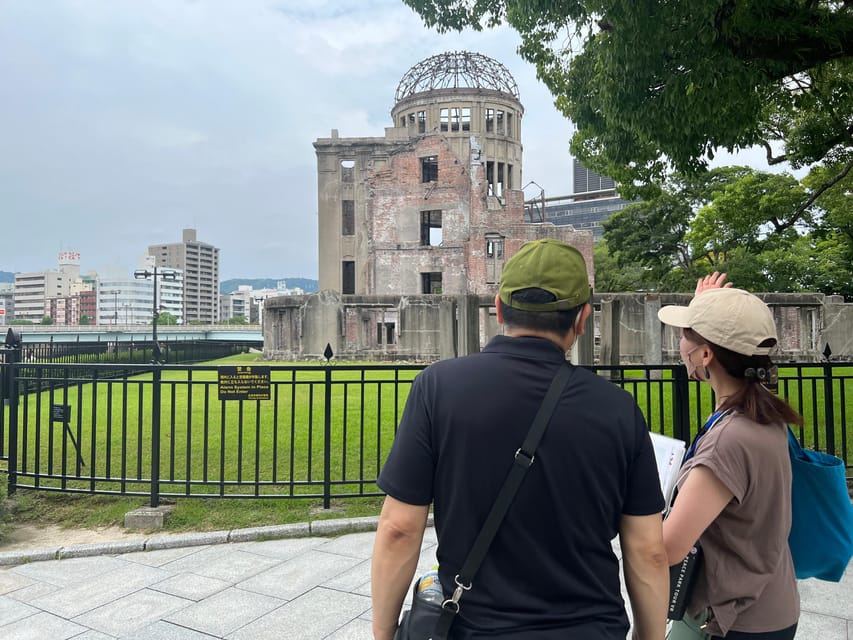
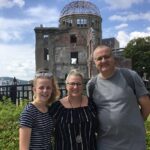
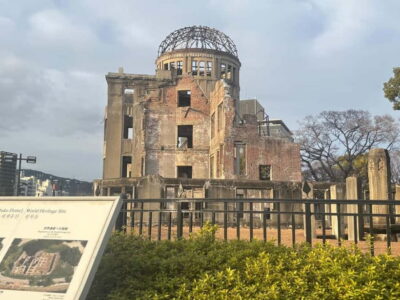
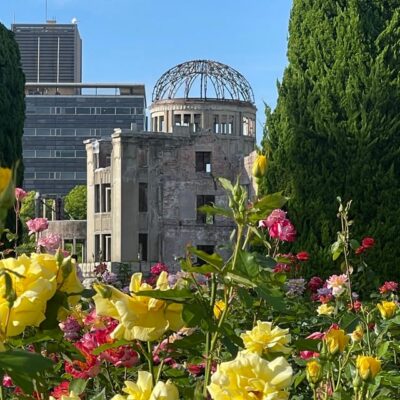
One of the first real landmark stops is the Atomic Bomb Dome area. On a normal visit, it’s easy to admire the structure as an iconic ruin. On this tour, the Dome becomes part of a time sequence.
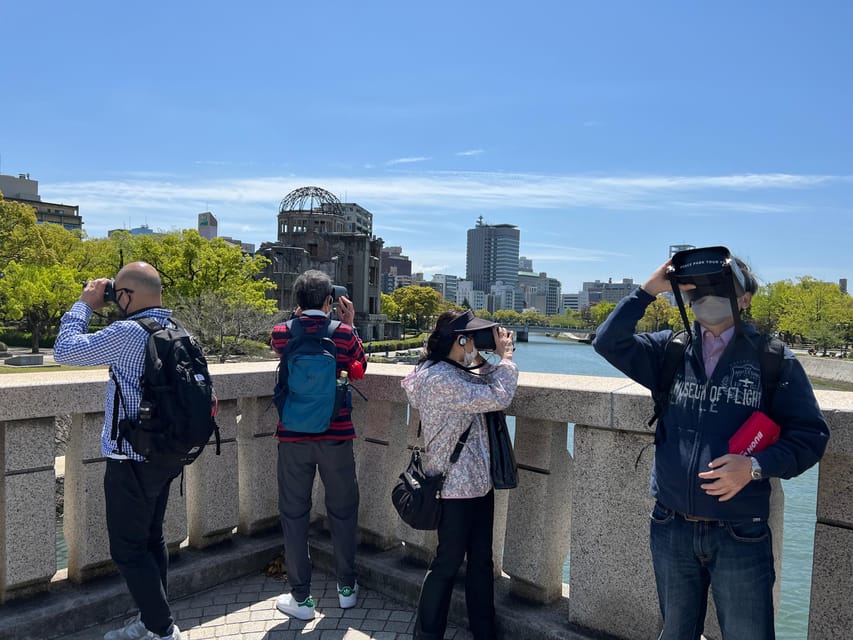
You walk from the rest house area and then the guide brings you to the Dome point with enough context to make the scene feel layered. When you pause for the headset experience, you’re not just watching something abstract. You’re standing in the cityscape and then experiencing a reconstruction based on survivor testimony and period photos.
That combination is the whole point of the format. The VR helps you understand what happened and why the place matters, without turning the Dome into a disconnected photo-op. If you’ve seen pictures of Hiroshima’s aftermath, the VR may feel like it adds motion and scale. If you’ve never seen much of the historical record, the guided pacing helps you build understanding step by step.
A practical note: do not treat the VR like a movie you can multi-task during. This tour is built for attention. The guide’s prompts work best when you’re actively watching and listening, then reflecting right after.
Aioi Bridge to Motoyasu Bridge: the walk that links people and place
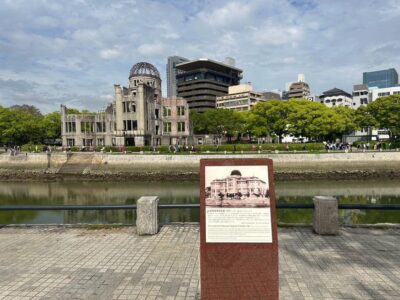
After the Dome stop, you continue along to Aioi Bridge (T-Bridge) and then Motoyasu Bridge. These bridges are not random waypoints. They’re placed to help you see how the bombing era story connects to the geography you can still walk through today.
What I like about using bridges in a memorial context is that they feel human-scale. You’re not only looking at an object like a monument. You’re moving through a space. A bridge is where people cross, where paths converge, where daily life happens. When you layer VR into that, you start to understand the impact as something that affected movement, neighborhoods, and community life, not just a single moment in time.
The guide uses the route to guide discussion, not just to move you from point to point. You’ll likely feel the tour asking you to connect what you see on foot with what the VR reconstructs on-screen. That “walking while learning” approach is more engaging than sitting with an audio headset in the museum corner.
If you have limited stamina, keep in mind the stops are guided with short walks, but this is still a park walking experience. Bring comfortable shoes, and don’t rush yourself between headset pauses and explanation moments.
Pairing the city with Miyajima. Other itineraries
- Peaceful Hiroshima & Miyajima UNESCO 1 Day Bus Tour★ 5.0 · 5,309 reviews
- Hiroshima: Hiroshima and Miyajima UNESCO Sites 1-Day Tour★ 4.9 · 2,330 reviews
- Hiroshima / Miyajima Full-day Private Tour with Government Licensed Guide★ 5.0 · 1,298 reviews
- Hiroshima in a Nutshell: Morning Bike Adventure★ 5.0 · 524 reviews
- Hiroshima City 4hr Private Walking Tour with Licensed Guide★ 5.0 · 437 reviews
What the VR recreates, and how to watch it responsibly
The VR experience is designed around testimonies from Hibakusha, A-bomb survivors, along with historical photos and VR renderings. The goal is not entertainment. It’s to help you experience Hiroshima’s cityscape before the bombing, the burnt plain of August 6, and the city’s recovery afterward.
That context matters. The tour openly acknowledges a painful reality, the number of surviving testimonies has been gradually decreasing over nearly 80 years. So the VR is doing more than filling time. It’s preserving and transmitting something that can’t be repeated in the same way by living witnesses forever.
When VR is paired with a real location, the effect can be strong. You might feel a mismatch at first, because your brain expects modern surroundings and then it gets a reconstruction. Let that tension work for you. Don’t try to “get through it.” Instead, watch, listen, and then let the guide’s prompts help you make sense of what you’re seeing.
Also, remember the tone. This isn’t a tour that laughs off uncomfortable moments. It’s built to support sober reflection and respectful dialogue.
On heavy rain days, the experience may shift. If it’s raining heavily, you’ll watch a short version of the VR for 5 minutes at the rest house after fieldwork in the Peace Park. That means your overall emotional pacing may be different, and the VR portion may feel more like an introduction than a full sequence.
Guide-led field questions and end-of-tour dialogue
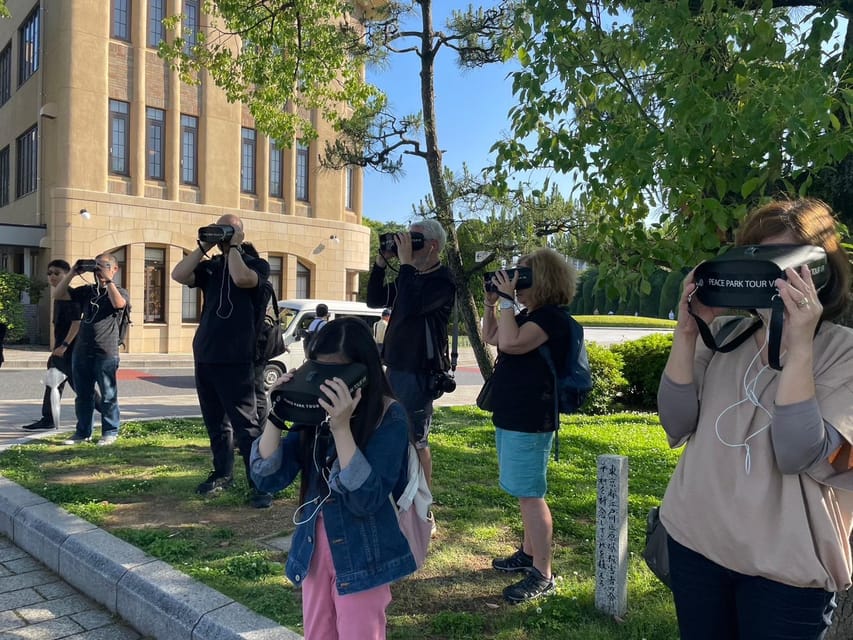
The heart of this tour is the live guide. The experience is led by local English-speaking guides from Hiroshima. In the feedback I’ve seen for this tour format, guide names like Yoko Shimada, Kazuko, and Hiroshi show up again and again. That’s a good sign, because it suggests people are consistently getting real conversation, not a script read at speed.
The guide doesn’t just provide information. They field questions and facilitate dialogue along the way. That is huge in a memorial setting, because visitors often bring different backgrounds and different questions. One person might focus on the technical historical timeline. Another might ask about community impact. Another might want help understanding the meaning of specific memorial elements.
I also like that the tour ends with a conversation about what you thought of each other. That last moment turns the experience from a one-way lecture into something shared. In a small group, that can be especially meaningful, because you have time to hear how other people process what they learned.
Small-group format, limited to 6 participants, also affects the emotional tone. You’re more likely to feel like a participant rather than a number in a crowd.
Price and logistics: is $32 good value for 80 minutes?
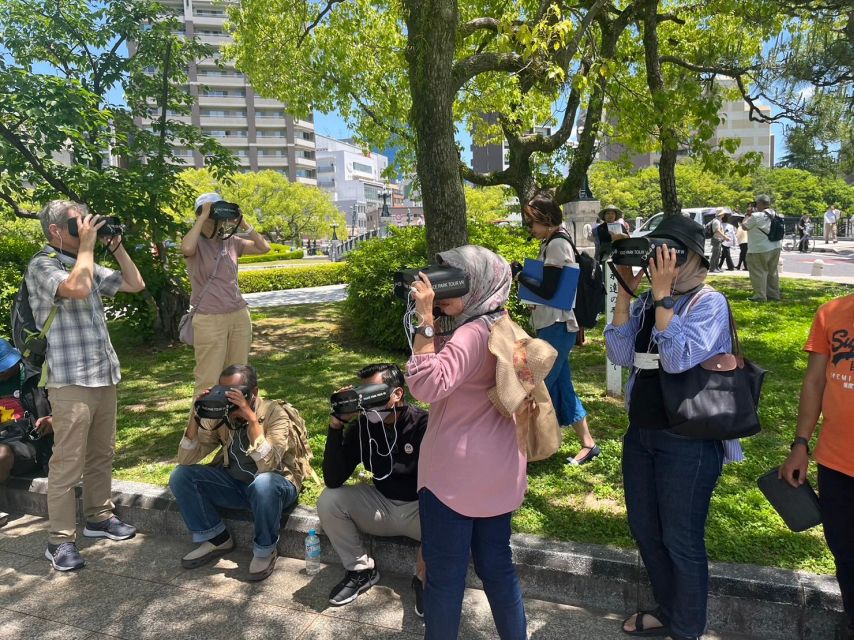
At $32 per person, this tour is priced like a mid-range guided activity. For me, the value comes from what’s included: VR goggles rental, an English-speaking guide, and an English audio guide. You’re also getting a guided walk inside the Peace Park route, with headset moments timed to major points.
Where you might decide it’s worth it depends on your priorities. If you only want a quick Peace Park look, you can probably do that cheaper on your own. But if you want structured historical context plus VR reconstructions built from survivor testimonies, $32 begins to look reasonable for the amount of guidance you get.
The 80-minute duration is another point. It’s long enough to make the route feel coherent, but short enough that you’re unlikely to burn out completely before the emotional content hits. For many visitors, that balance is ideal.
Two logistics items matter for planning: transport to the meeting place is not included, and food and drinks are not included. Also, the rest house does not allow luggage storage inside the building, so you’ll need to manage your own bags. That’s not unusual, but it can affect your day if you’re moving between train stations and hotels.
Main trade-offs to consider before you book
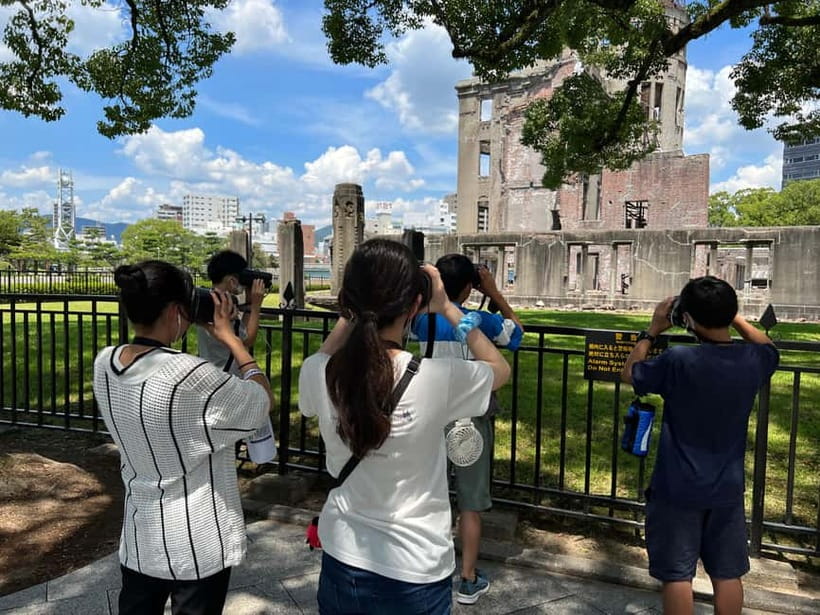
This is the part where I want you to go in with clear expectations.
First, the emotional weight is real. The VR sequence is built around the burnt plain of August 6 and the broader impact on Hiroshima’s community. Even if you’re prepared, it’s still heavy. If you’re the type of traveler who needs distance, you may find this tour harder than a typical memorial visit.
Second, it’s not private. You’ll be sharing with up to 6 participants. That’s usually a good thing for conversation, but if you prefer total quiet or personal space, you might find a group dynamic distracting.
Third, weather can change the VR delivery. On heavy rain days, you may only get a 5-minute short VR segment at the rest house after time in the park. If VR is the main reason you booked, check the day-of conditions and keep flexibility in mind.
Finally, timing matters. Arriving late can mean missing the tour, and delays could result in a shortened version. Plan buffer time so you’re not stressed minutes before the experience begins.
Who this Hiroshima Peace Park VR tour is best for
I think this tour fits best if you want guided structure inside a place where meaning matters. It’s especially good for you if:
- You’re visiting Hiroshima Peace Park for the first time and want help connecting the landmarks to the human impact.
- You want VR paired with real-world location, so the history feels attached to the actual geography.
- You prefer a small-group experience where you can ask questions and get dialogue, not just listen quietly.
- You’re sensitive to the fact that Hibakusha testimonies are decreasing, and you want a respectful way to learn from survivor testimony preserved through VR.
It’s less ideal if you’re looking for purely scenic wandering, or if you expect VR to work like casual entertainment. Here, the tech is in service of history and reflection.
Should you book this Hiroshima Peace Park VR tour?
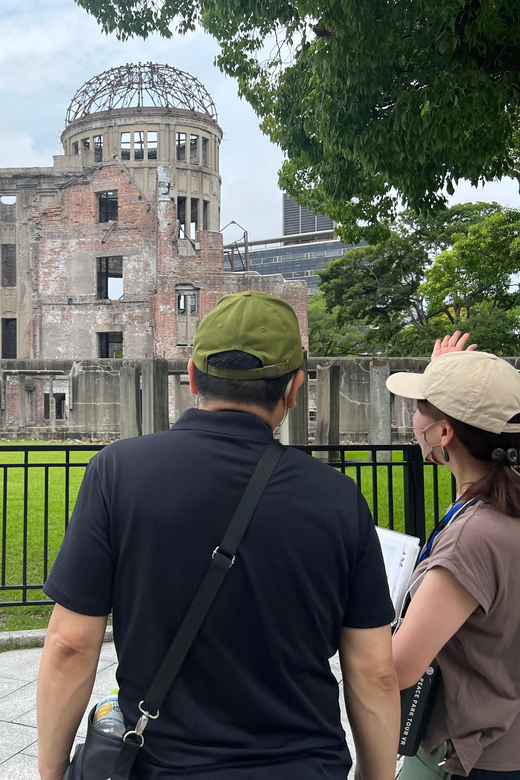
I’d tell you to book it if you want a guided Peace Park experience that uses VR for understanding, not for spectacle. The combination of a local English-speaking guide, a small group, and headset moments tied to landmark stops makes the learning feel coherent and more than just “see and move on.” The guide-led question time and end dialogue are also strong reasons to choose this over a self-guided visit, especially if you like to think out loud with your guide.
I would not book it if you’re already confident you only want to walk the park at your own pace, or if you’re worried that an emotionally heavy, testimony-based VR sequence will feel too intense. Weather-dependent VR length is also a factor, since heavy rain can shorten the headset portion.
If you’re on the fence, here’s my practical advice: treat this as a learning and reflection appointment. Dress comfortably, plan time to arrive early, and go in ready to watch closely. If you do, you’ll likely leave with a clearer sense of how the park communicates the past, and how Hiroshima’s recovery became part of the story too.
Hiroshima and Miyajima Together
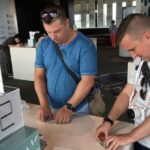
Guided Visits to the Peace Memorial Park
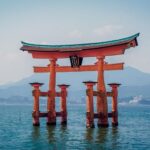

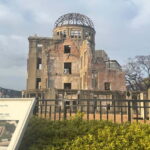
Newest Hiroshima write-ups from the Loving Japan desk
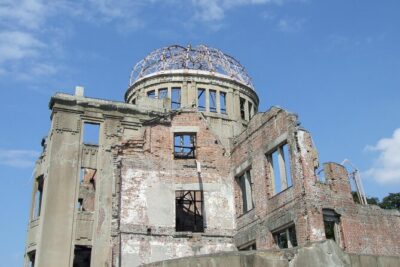
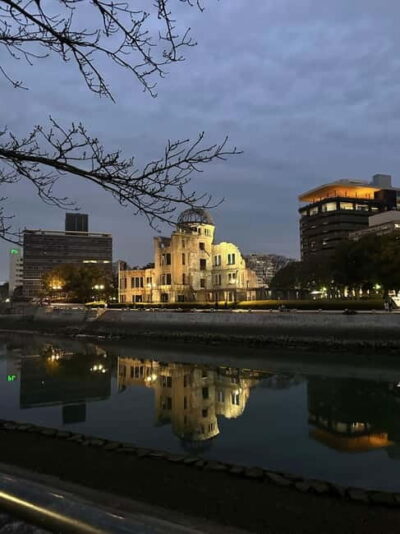
Hiroshima Peace Memorial Park and Museum, side by side.
 ★ 4.8Hiroshima Historical Walking Tour – Why A-Bomb was DroppedFrom $35893 reviews
 ★ 5.0Hiroshima Peace (Heiwa) Walking Tour at World Heritage SitesFrom $94872 reviews
 ★ 4.9Miyajima Peace Memorial Icons of Peace and BeautyFrom $163361 reviews
 ★ 5.0Hiroshima/Guided Virtual Tour of Peace Park/PEACE PARK TOUR VRFrom $33157 reviews
 ★ 4.9Peace Memorial Park and Atomic Bomb Dome TourFrom $2391 reviews
 ★ 5.0Hiroshima; Hiroshima Peace Memorial Museum and Castle TourFrom $6789 reviews
 ★ 5.0Hiroshima & Miyajima: UNESCO A-Bomb Dome & ItsukushimaFrom $17776 reviews
 ★ 5.0Hiroshima History Tour : A-Bomb Dome, Peace Memorial & CityFrom $10343 reviews
Filed on these lists too