
REVIEW · GION, GEISHA AND MAIKO EXPERIENCES
Kyoto: Kimono Tea Ceremony at Orizuruya Gion
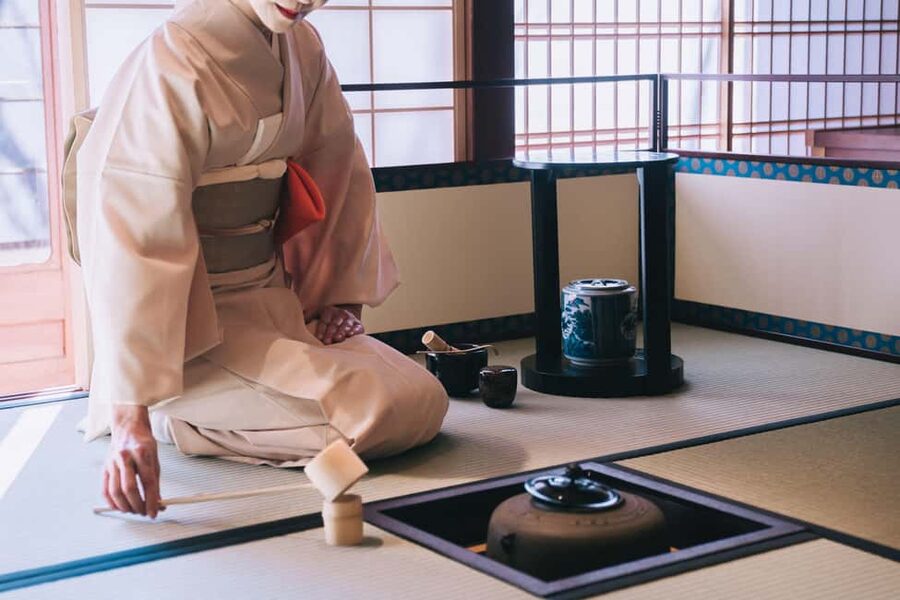
A kimono helps you slow down in Kyoto. This small-group tea ceremony in Gion is built to make the rituals feel friendly, with expert help for dressing and clear instruction for making matcha. I especially like how practical it is, so you can enjoy the ceremony without worrying about doing anything wrong.
Two things I really like: first, you get to choose from over 200 kimono designs and get dressed professionally (including simple hair styling for women). Second, you learn matcha prep hands-on, including whisking with the bamboo chasen and tasting your own bowl, paired with wagashi sweets from a long-running confectionery. One consideration is that this is a 90-minute to 2-hour time block, so you’ll want to plan the rest of your Gion wandering around it.
In This Review
- Key highlights worth knowing
- Kyoto kimono and matcha, set up so you feel comfortable
- Picking your kimono at Gion Oritsuruya, without guesswork
- The 90-minute to 2-hour flow, step by step
- 1) Dressing and getting ready
- 2) Entering the tea room
- 3) Learning matcha preparation
- 4) Tasting your matcha with Japanese sweets
- If you choose calligraphy
- Matcha practice, from chasen technique to your own bowl
- Wagashi with matcha, and why it changes the experience
- Calligraphy option, when you want one more cultural skill
- Getting good value for $49 in Gion
- Where it starts in Gion, and how to plan your walk time
- The people factor: guides, staff help, and patient teaching
- Who should book this, and who might skip it
- Should you book Orizuruya Gion kimono tea ceremony?
- FAQ
- How long is the Kyoto kimono tea ceremony experience?
- Where does the experience meet?
- How do I get to the meeting point?
- Is the instruction available in English?
- What is included in the price?
- Do I get to try making matcha, or is it only a demonstration?
- Is there an option to include Japanese calligraphy?
- Can I keep the kimono after the ceremony?
- What is the cancellation policy?
- Can I book without paying immediately?
Key highlights worth knowing
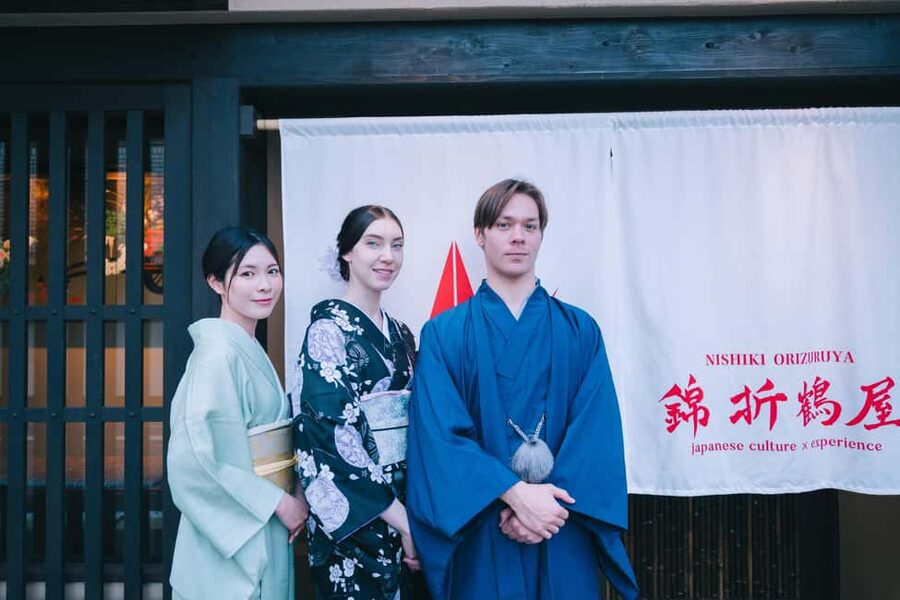
- A small group capped at 10 keeps the experience calm and gives you time for questions.
- Kimono selection from 200+ designs means you actually get to pick what you like, not just get assigned a look.
- Expert dressing plus simple hairstyling lowers the stress of figuring out how to wear everything correctly.
- Hands-on matcha making includes learning the technique, then trying it yourself.
- Wagashi and matcha tasting ties the tea ritual to the sweet tradition that comes with it.
- Optional Japanese calligraphy adds a second skill, with a rental calligraphy set included when you choose that option.
Evening walks through the old quarters, compared
- Kyoto Geisha Walking Tour: Gion District & Hidden Gems
★ 4.7 · 3,273 reviews - Kyoto: Gion Magical Night Walking Tour with Geisha Trivia
★ 4.9 · 2,393 reviews - Kyoto: Gion Geisha District Walking Tour – Stories of Geisha
★ 4.7 · 2,187 reviews - Best of Kyoto: Gion, Geisha, Pagodas & Cobblestones
★ 4.9 · 2,058 reviews
Kyoto kimono and matcha, set up so you feel comfortable
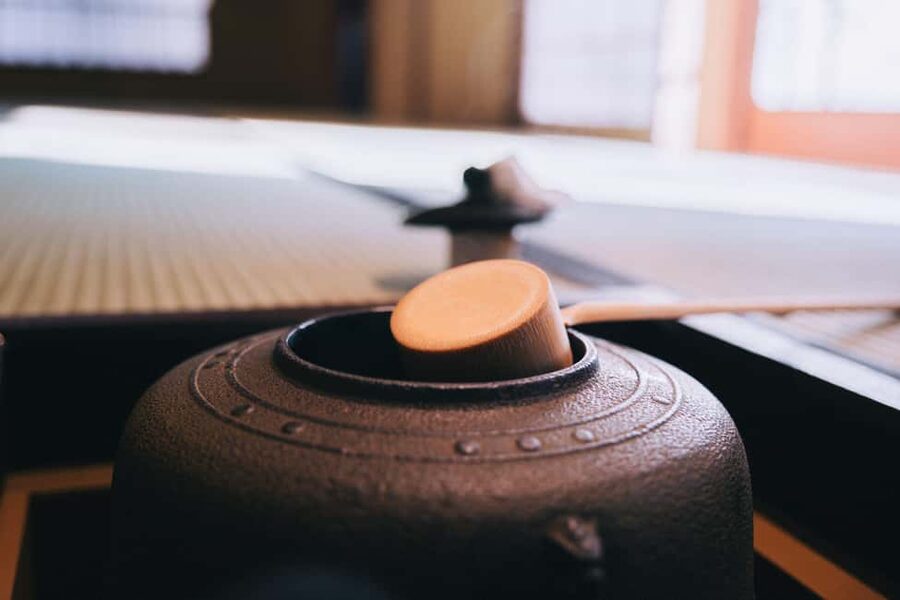
Let’s be honest, the hardest part of a Japanese tea ceremony for many first-timers is not the tea. It’s the fear of doing something wrong while everyone else seems like they’ve done this a hundred times.
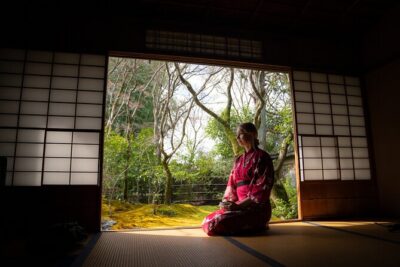
This experience is designed to remove that worry. You start with kimono help, then move into a tea room where the instructor guides you through the why behind the movements. The result is that you can focus on what matters: learning the process, tasting what you make, and feeling the quiet rhythm that tea ceremonies are known for.
And because the group is limited to 10 participants, it doesn’t turn into a fast factory tour. You get enough personal attention to straighten your posture, get your whisking steps right, and ask questions in English.
Picking your kimono at Gion Oritsuruya, without guesswork
Your experience begins at Gion Oritsuruya (572-7 Minamigawa, Gion-machi, Higashiyama-ku, Kyoto-shi, Kyoto). You’ll be close enough to walk in easily from major stations: about a 10-minute walk from Hankyu Kyoto-Kawaramachi Station, and about 7 minutes on foot from Keihan Gion-Shijo Station.
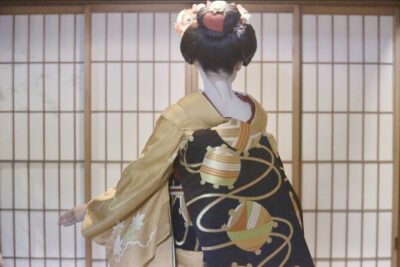
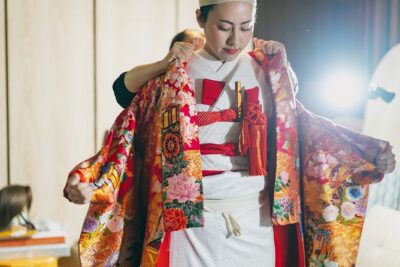
Once you’re inside, the setup is straightforward. You select your favorite kimono designs from over 200 options. Then the staff takes over. In the reviews, people repeatedly mention how professional and efficient the dressing is, and that staff are kind about getting you ready step-by-step. For women, complimentary hair styling is included to finish the look.
Practical tip: if you’re nervous about how the kimono will fit, don’t be. The dressing team handles the details. Your job is to choose the fabric pattern you like and follow instructions during dressing and adjustments.
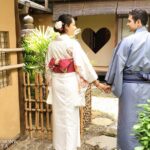
Also, this is a nice bonus for photos, but it’s not just a costume moment. Wearing a kimono changes how you move, and that helps you understand why tea ceremonies feel deliberate.
The 90-minute to 2-hour flow, step by step
Timing matters for experiences like this. A good tea ceremony is slow on purpose, so you want your schedule to match the pace. The program runs about 90 minutes to 2 hours, depending on whether you add calligraphy.
Here’s what the flow looks like:
Sit down somewhere quieter. Other tea rooms we booked
- Kyoto: Tea Ceremony Ju-An at Jotokuji Temple★ 4.9 · 3,207 reviews
- Kyoto: 45-Minute Tea Ceremony Lesson Experience★ 4.3 · 2,378 reviews
- Kyoto: Table-Style Tea Ceremony at a Kyo-Machiya★ 4.9 · 1,211 reviews
- Kimono Tea Ceremony at Kyoto Maikoya, NISHIKI★ 5.0 · 911 reviews
- Kyoto: Arashiyama Bamboo Forest, Monkeys, Matcha & Temple Tour★ 5.0 · 759 reviews
1) Dressing and getting ready
You begin by choosing your kimono from the large selection. Then you’re dressed by the staff, with simple hairstyling included for women. Expect this part to take real time, because a kimono fit needs to be comfortable and correct.
2) Entering the tea room
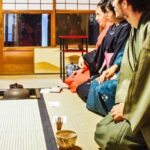
After you’re ready, you move into a serene tea room setting. This is where the instructor’s English explanations start. The goal is not memorizing rules. It’s understanding what each gesture and object represents, so you can participate calmly.
3) Learning matcha preparation
Next comes the core lesson: matcha preparation using the traditional bamboo whisk, called a chasen. You learn the technique, then you try making a bowl yourself.
4) Tasting your matcha with Japanese sweets
Tea ceremonies are about the full sensory experience. You’ll pair your matcha with wagashi (Japanese sweets), including matcha tasting as part of the snacks.
That’s the full tea ceremony experience.
If you choose calligraphy
If you select the option that includes Japanese calligraphy, you add another segment and rental calligraphy set. Reviews describe the calligraphy as a real learning moment, sometimes challenging but fun, with a patient teacher and lots of encouragement. For many people, this is the part that makes the whole experience feel more “you practiced a skill,” not just “you watched a performance.”
Matcha practice, from chasen technique to your own bowl
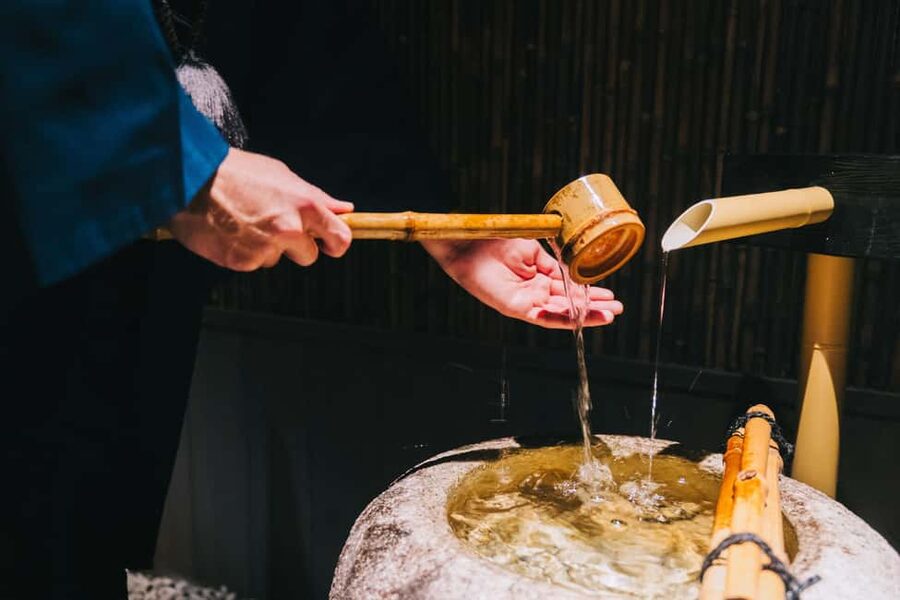
The matcha lesson is where you’ll feel the difference between a quick demo and a real class.
You’ll learn how to use the bamboo whisk (chasen) and how to prepare matcha in a way that produces a smooth, properly mixed bowl. The instructor explains the reasoning behind the ritual steps, which helps you understand why people slow down and why the whisking technique matters.
Then you do it. That hands-on moment is the point. You get to experience the coordination it takes, and you also get the best reward: tasting what you made.
Two practical takeaways:
- Your bowl will taste like your technique. If you whisk more carefully and calmly, you’ll feel the difference.
- You don’t need prior experience. The pacing is built for first-timers.
If you enjoy cooking, baking, or any craft where technique matters, this part is likely to be the highlight.
Wagashi with matcha, and why it changes the experience

Food in a tea ceremony isn’t an afterthought. The wagashi sweets are there to balance taste and prepare your palate for the bitterness and richness of matcha.
You’ll have snacks that include wagashi and matcha, and the pairing is part of the tradition. Many people love this because it gives the ceremony context beyond just whisking. It feels like a complete little ritual.
One subtle benefit: the sweetness gives you a gentle off-ramp if matcha is unfamiliar. You’re not forced to love every sip instantly. You learn, taste, and recalibrate in a calm environment.
Calligraphy option, when you want one more cultural skill
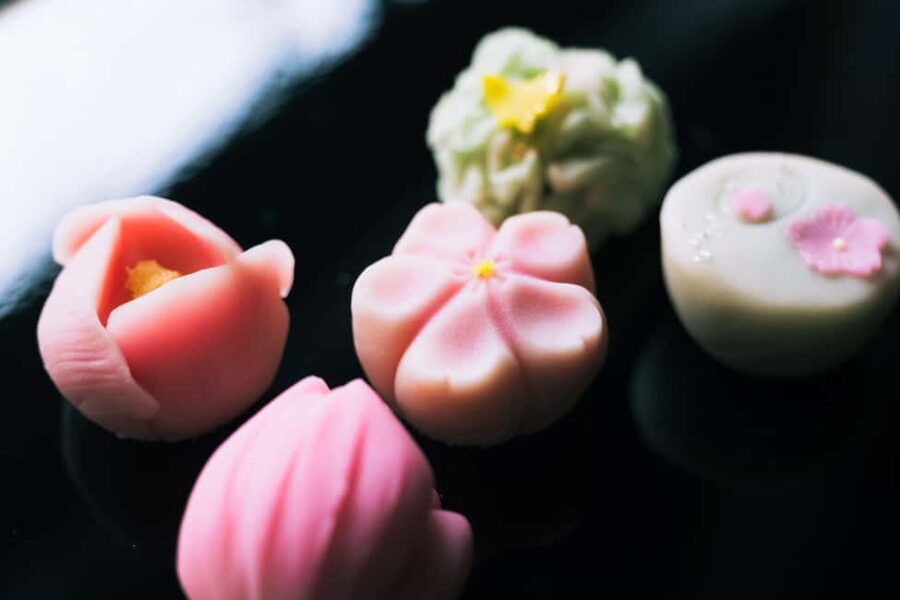
If you’re the type who likes leaving with a “new thing you can actually do,” the calligraphy option is a strong add-on.
What you can expect:
- A Japanese calligraphy session with instruction in English
- A calligraphy set rental included with the calligraphy option
- Time for guided practice, with encouragement if your strokes feel tricky
Reviews repeatedly mention the calligraphy teacher being patient, and people saying it was challenging but enjoyable. That matches the nature of calligraphy: it’s not about speed, it’s about control.
Practical note: if your schedule is tight and you’re only choosing one segment, prioritize the tea part. The tea ceremony is the foundation here. But if you can spare the time, calligraphy often turns a great cultural stop into a memorable workshop.
Getting good value for $49 in Gion
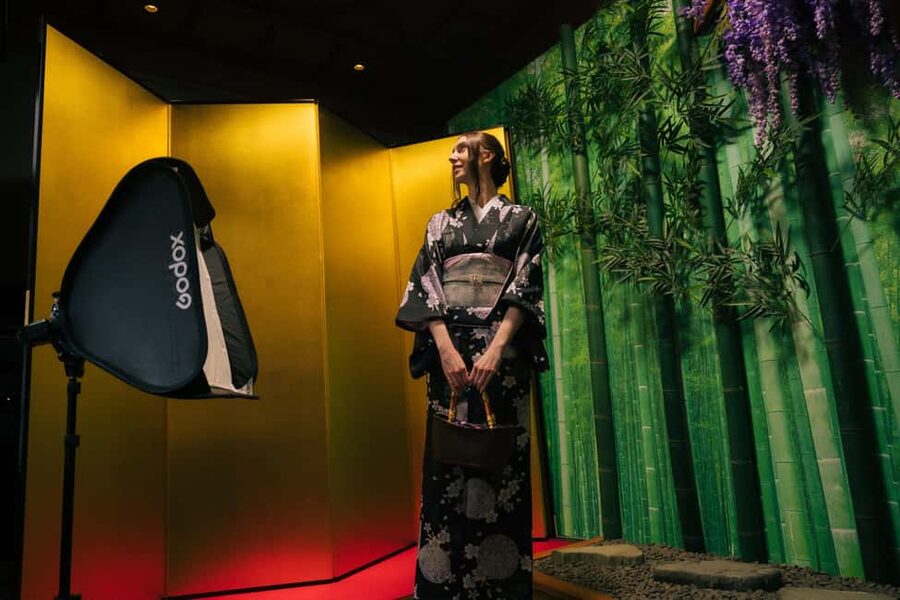
At $49 per person, you’re paying for more than “a tea ceremony.”
Here’s what’s included in the experience package:
- Snacks, including wagashi and matcha
- Kimono set rental
- Tea ceremony utensil rental
- Hairstyling (simple style)
- Licensed guide and all fees and taxes
- English instruction
- Skip the ticket line
If you add calligraphy, you also get the calligraphy set rental included for that option.
Is it expensive? It can feel like it, until you compare it to what you’d pay separately for a kimono rental, a guided cultural lesson, and the utensils. This option bundles them into one time slot, and it handles the awkward parts like dressing and coordination.
Also, the small group size adds real value. You’re not being rushed through while you’re half dressed and trying to understand what’s next.
One consideration for value: this isn’t a “see everything” excursion. It’s a focused experience. If you want broad sightseeing, you’ll pair this with Gion walks and nearby sights before or after your ceremony time.
Where it starts in Gion, and how to plan your walk time
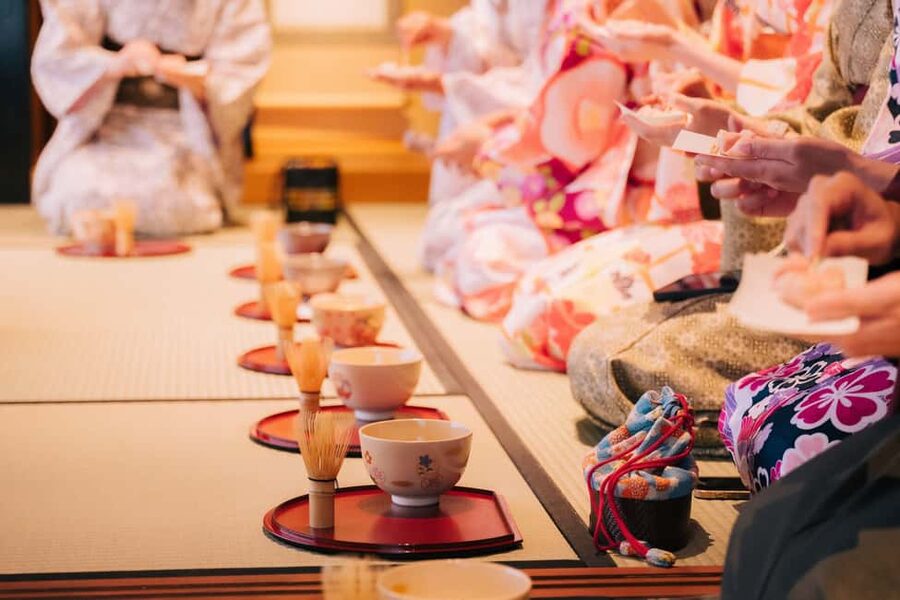
Your meeting point is Gion Oritsuruya. It’s in the heart of Gion, and that matters.
In several reviews, people mention being able to keep the kimono on for a period afterward and do a quick stroll in the area. Some specifically mention up to 5pm, and a few mention a short temple or shrine visit nearby, about a 10-minute walk.
So here’s the smart way to plan:
- Book an early or mid-morning slot if you want extra kimono time outdoors.
- Wear comfortable shoes for the moments before or after the dressing segment, since kimono can change how your feet feel walking.
- Plan your sightseeing in Gion around the time block, rather than stacking too many activities right after.
This is the type of activity where slowing down pays off. The streets of Gion feel different when you’re dressed for them.
The people factor: guides, staff help, and patient teaching
In experiences like this, staff can make or break the day.
What stands out in the feedback is how kind, polite, and supportive the team is. People mention staff taking photos, helping with questions, and treating them well from the moment they arrive. Some even mention the guide by name, including Juki, who is described as warm and knowledgeable in the tea portion and clear in explanations.
That matters because you’re not just buying tea. You’re buying comfort and clarity. When you know what you’re doing, you enjoy what you’re doing.
If you’re traveling with friends or a partner, this is also a nice shared moment. Getting dressed together, then sitting down for tea, creates a memory that doesn’t require phone screens the whole time.
Who should book this, and who might skip it
This is a great match if you:
- Want a cultural activity that’s structured, calm, and beginner-friendly
- Like learning a skill, not just watching
- Are excited by the kimono and matcha pairing
- Appreciate small-group attention and time for questions
- Want something in Kyoto that is relaxing, not exhausting
You might skip or reconsider if:
- You’re on a very tight schedule and can’t spare 90 minutes to 2 hours
- You strongly prefer outdoor sightseeing over indoor lessons
- You don’t like sitting still for a guided activity
Should you book Orizuruya Gion kimono tea ceremony?
I’d book it if you want a meaningful Kyoto moment that feels respectful and hands-on.
The biggest reasons are simple:
- Kimono dressing is handled expertly, so you can enjoy it without stress.
- You make matcha yourself, then taste it with wagashi, not just observe.
- The small-group size keeps the atmosphere gentle and the instruction understandable in English.
- If you pick the calligraphy option, you leave with a second skill that turns the day into more than a photo stop.
If your trip needs one experience that combines tradition, technique, and calm, this is an easy “yes.” Just leave enough time in Gion so the kimono and tea ritual can set the tone for the rest of your day.
FAQ
How long is the Kyoto kimono tea ceremony experience?
The experience is listed as about 90 minutes to 2 hours, depending on whether you add the Japanese calligraphy option.
Where does the experience meet?
It meets at Gion Oritsuruya, 572-7 Minamigawa, Gion-machi, Higashiyama-ku, Kyoto-shi, Kyoto.
How do I get to the meeting point?
The meeting point is about a 10-minute walk from Hankyu Kyoto-Kawaramachi Station and about a 7-minute walk from Keihan Gion-Shijo Station.
Is the instruction available in English?
Yes. The licensed guide/instructor provides instruction in English.
What is included in the price?
Included items are snacks (wagashi and matcha), kimono set rental, tea ceremony utensil rental, simple hairstyling (for women), and all fees and taxes.
Do I get to try making matcha, or is it only a demonstration?
You learn matcha preparation techniques and then try making your own bowl of matcha.
Is there an option to include Japanese calligraphy?
Yes. If you choose the Japanese calligraphy experience option, a Japanese calligraphy set rental is included.
Can I keep the kimono after the ceremony?
Many participants report being able to keep the kimono on for a walk after the ceremony, with reports up to 5pm.
What is the cancellation policy?
Free cancellation is available up to 24 hours in advance for a full refund.
Can I book without paying immediately?
Yes. There is an option to reserve now and pay later.
Kyoto by the Bowl
Evenings in the Old Quarters

Newest Kyoto write-ups from the Loving Japan desk
Gion, Geisha and Maiko Experiences, side by side.
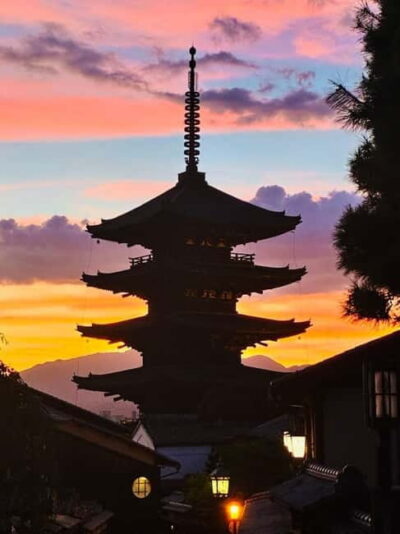 ★ 4.7Kyoto Geisha Walking Tour: Gion District & Hidden GemsFrom $253,273 reviews
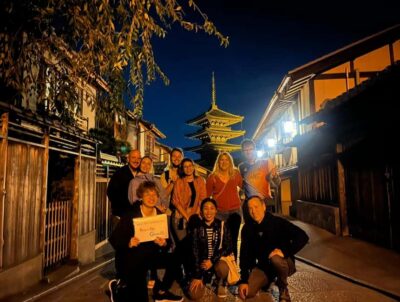 ★ 4.9Gion Magical Night Walking Tour with Geisha TriviaFrom $242,393 reviews
 ★ 4.7Gion Geisha District Walking Tour – Stories of GeishaFrom $202,187 reviews
 ★ 4.9Best of Kyoto: Gion, Geisha, Pagodas & CobblestonesFrom $242,058 reviews
 ★ 4.5Night Walk in Gion: Kyoto’s Geisha DistrictFrom $212,003 reviews
 ★ 5.0Kyoto Night Foodie Tour in Gion (9+ dishes + 6 Sake tastings)From $1631,762 reviews
 ★ 5.0Kyoto Gion Geisha District Walking Tour – The Stories of GeishaFrom $251,441 reviews
 ★ 5.0Kyoto Gion: 2-Hour Geisha Culture & History Walking TourFrom $231,186 reviews
Filed on these lists too