
REVIEW · NARA DEER PARK AND TODAI-JI
Kyoto: Nara & Traditional Matcha Experience Bus Tour
Kyoto has a way of slowing you down fast, and this day trip does it well. You start with Nara’s World Heritage temples and wild deer at Nara Park, then finish with hands-on matcha in Uji, a place locals take seriously. It is the kind of trip that gives you big sights without making you fight the logistics alone.
What I like most is the balance: you get the headline monuments plus real time to wander, take photos, and shop. The other big win is the human touch, with English-speaking guides who bring the sites to life, and who sometimes add practical Japanese tips along the way, like counting or simple phrases. Guides you may be paired with include At-chan, Rino, Mai, Nanami, and Yuta, based on the guide roster people reported.
One thing to consider first: the day includes walking up stairs and hills, and it is not suited for wheelchair users or mobility impairments. Also, the Nara deer are adorable but not toys, so plan to be alert around them.
In This Review
- Key highlights you will feel in your day
- Why this Nara and Uji combo works better than a rushed Kyoto loop
- Meeting at Kyoto Avanti, then getting on the road at 8:00
- Todaiji Temple: the Great Buddha moment that still feels huge
- Nara Park deer time: magic, photos, and the reality check
- Kasuga Taisha’s 3,000 stone lanterns and the quiet feeling
- Lunch break: a real reset between temple stops
- Byodoin Temple and Phoenix Hall: the 10 yen icon made real
- Uji matcha from scratch: what you are really learning
- Pace, audio headsets, and coach comfort that make the day easier
- Price and value: is $122 actually a good deal?
- Who should book this tour, and who should skip it
- Should you book the Kyoto Nara and Traditional Matcha experience?
- FAQ
- Where is the meeting point and what time does the tour leave?
- What World Heritage sites does the tour visit?
- What happens during the Nara Park stop?
- Is lunch included?
- Does the tour include matcha making in Uji?
- Is this tour suitable for wheelchair users or mobility impairments?
Key highlights you will feel in your day
- Todaiji’s Daibutsuden Hall and Great Buddha in a massive wooden hall
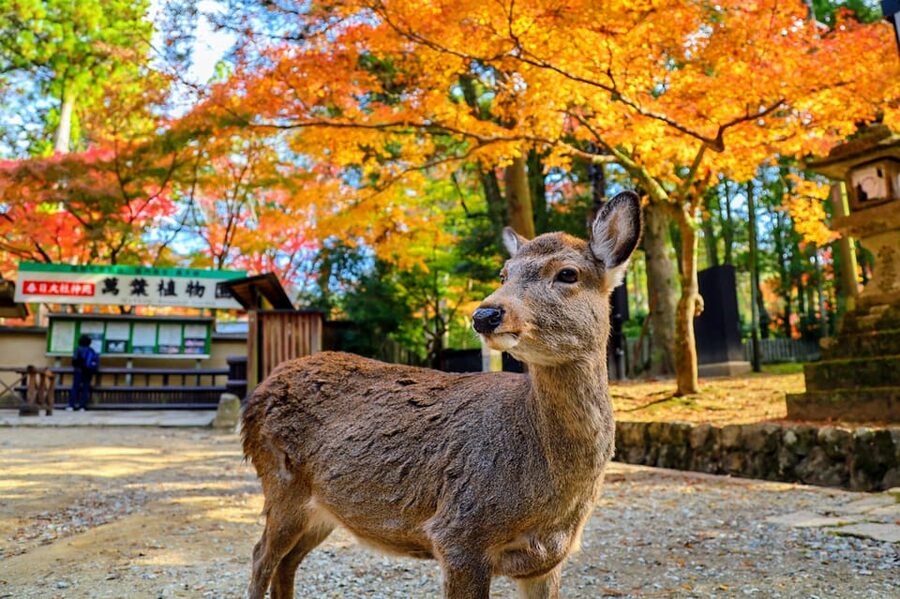
- Nara Park deer time, including the classic bow moment (and the reminder to be careful)
- Kasuga Taisha’s stone lanterns, the 3,000 lantern effect in person
- Byodoin Temple’s Phoenix Hall tied to the 10 yen coin image
- Uji matcha from scratch, plus free time to explore Uji afterward
- Comfort for a long day, with an air-conditioned coach, free Wi-Fi, and audio headsets in multiple languages
Sit down somewhere quieter. Other tea rooms we booked
- Kyoto: Tea Ceremony in a Traditional Tea House in Kiyomizu
★ 4.9 · 3,519 reviews - Kyoto: Tea Ceremony Ju-An at Jotokuji Temple
★ 4.9 · 3,207 reviews - Kyoto: 45-Minute Tea Ceremony Lesson Experience
★ 4.3 · 2,378 reviews - Kyoto: Table-Style Tea Ceremony at a Kyo-Machiya
★ 4.9 · 1,211 reviews
Why this Nara and Uji combo works better than a rushed Kyoto loop
Nara and Kyoto are close, but they feel different. Nara is more open and spacious, and it has that classic temple-and-deer scene. Uji, on the other hand, is smaller, calmer, and built around tea culture, so it is a neat contrast after temple-heavy mornings.
This tour also helps you hit UNESCO World Heritage spots without chaining together buses and trains. You will see Todaiji Temple, Kasuga Taisha Shrine, and Byodoin Temple, all tied to World Heritage listings. That means your day has a clear theme, ancient Japan, without turning into a checklist where everything blurs together.
The matcha part is not just a shop stop. You actually make matcha yourself in Uji, and the tour frames it in a way that connects to everyday Japanese sweets and cooking, not only tea ceremony.
Meeting at Kyoto Avanti, then getting on the road at 8:00
Your morning starts at the Tully’s Coffee in Kyoto Avanti. Check-in is at 7:50 AM and departure is at 8:00 AM, so arriving early helps you get settled and oriented.
Once you are on the coach, you get an easy, guided route out of Kyoto. The bus passes by Fushimi Castle and Heijokyo palace on the way to Nara, which is a nice bonus if you want context for where ancient Kyoto fits into the story. You also have live English commentary from your guide plus multilingual audio headsets, which is handy when the group is moving quickly.
For comfort, the coach is air-conditioned with free Wi-Fi. It is also described as having antibacterial coating and getting regularly ventilated, which is a small detail that matters on a long day sitting together.
Todaiji Temple: the Great Buddha moment that still feels huge
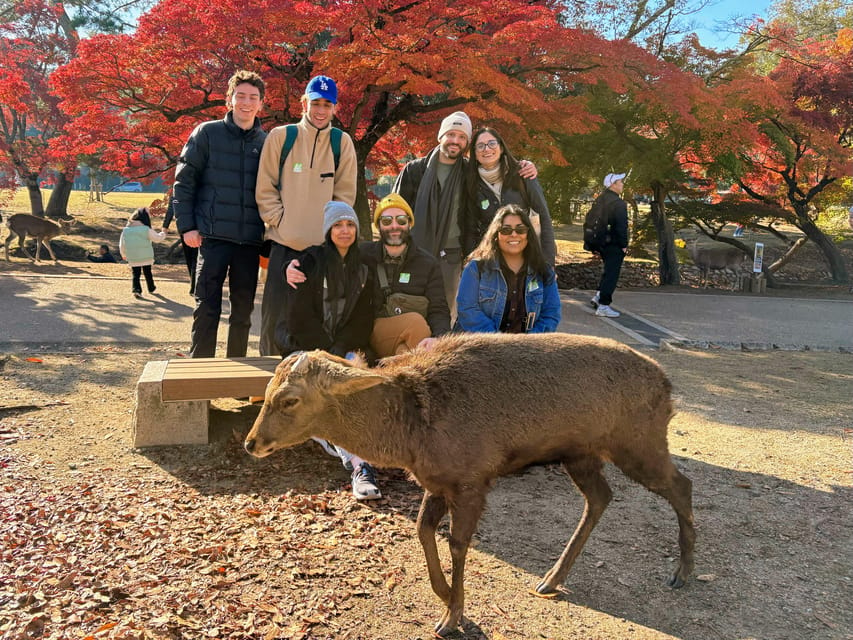
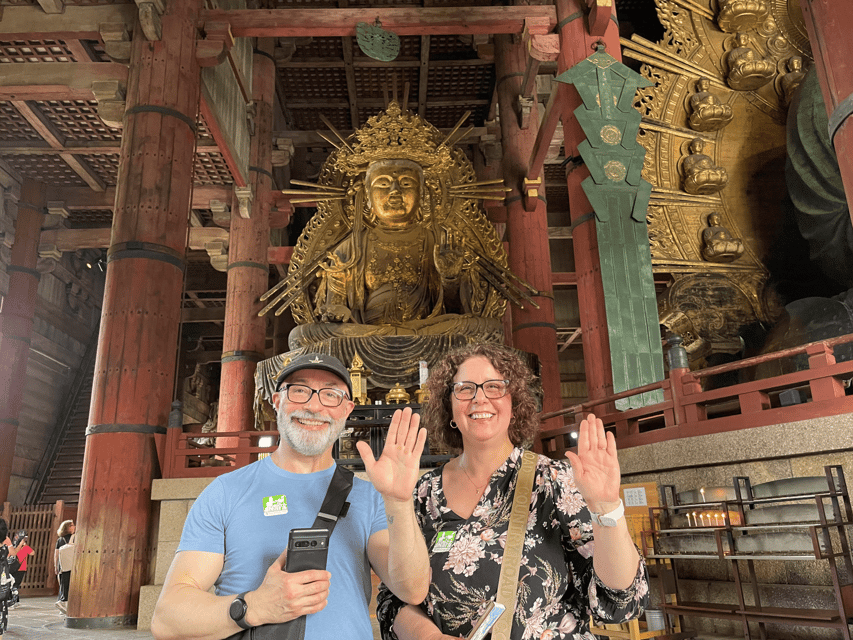
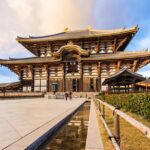
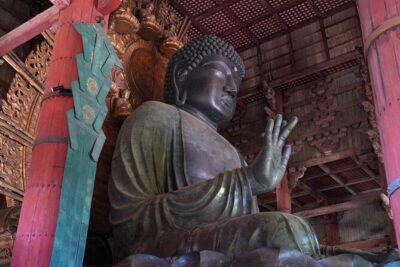
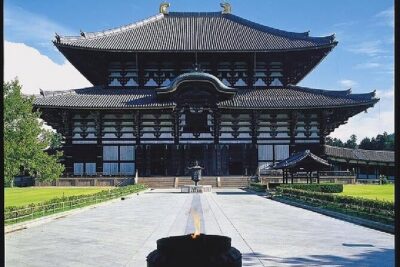
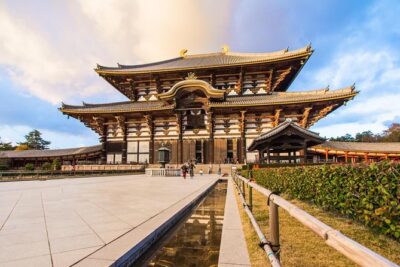
Todaiji Temple is where the day truly lands. The center of the complex is the Daibutsuden Hall, and that hall is famous for housing the Great Buddha of Nara. It is one of the largest wooden buildings in the world, so even if you have seen photos, your brain still needs a second to register scale.
You get about 50 minutes here, which is enough time to look up, walk the grounds, and not feel like you are sprinting. The best approach is simple: spend a few minutes just letting the hall size hit you, then move on to the surrounding temple areas while your photos are still fresh in your head.
A bonus to going with a guided format is that you get explanations while you are standing there, not after you leave. That is how the whole place starts making more sense, especially if you are a first-timer to Japanese temples.
A half day in Nara goes several ways
- Kyoto/Osaka: Nara, Fushimi Inari Taisha, Arashiyama Bus Tour★ 4.7 · 1,275 reviews
- Osaka/Kyoto: Arashiyama, Nara & Fushimi Inari Shrine w/Lunch★ 4.4 · 754 reviews
- Kyoto and Nara Day Trip from Kyoto★ 4.5 · 445 reviews
- Full Day Guided Tour to Kyoto and Nara from Osaka by Van★ 5.0 · 420 reviews
- Nara Afternoon Tour from Kyoto or Osaka★ 4.5 · 390 reviews
Nara Park deer time: magic, photos, and the reality check
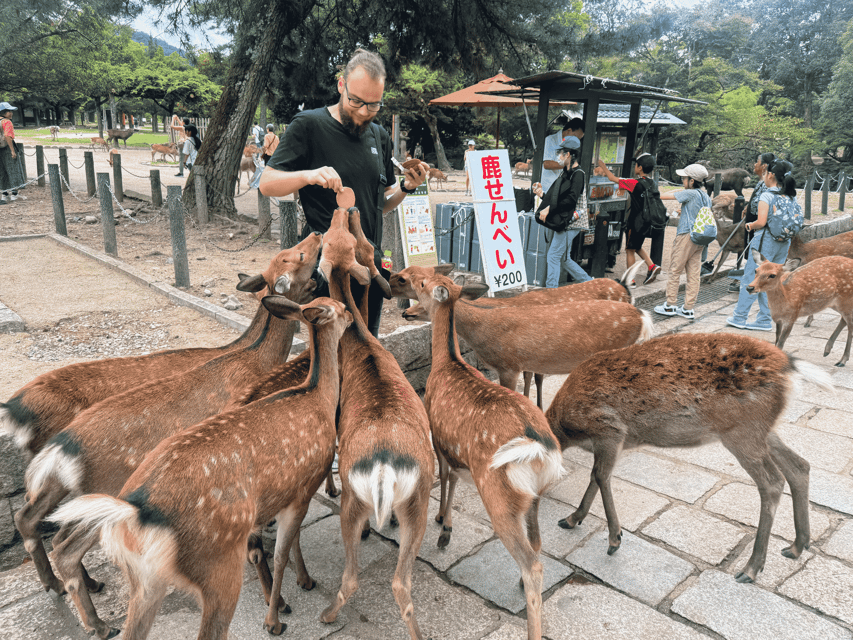
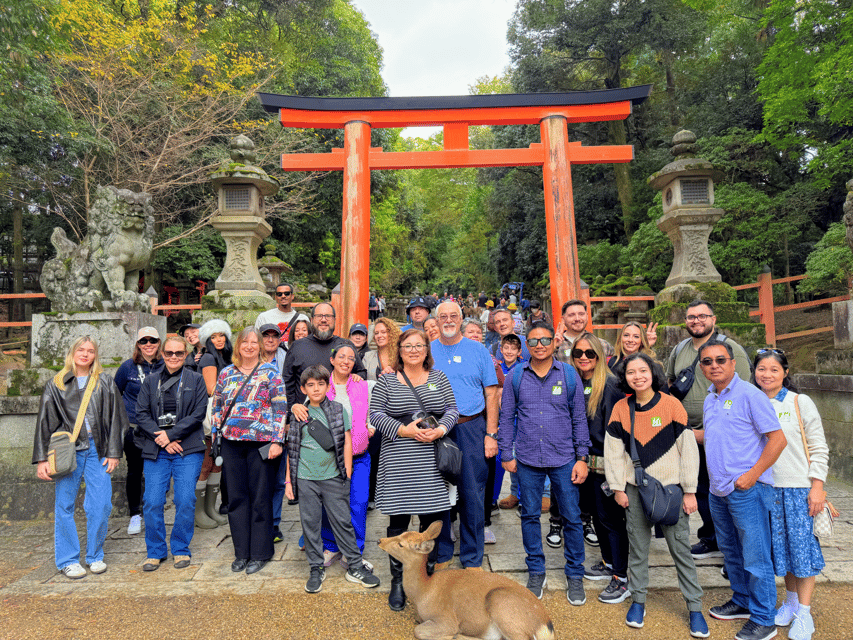
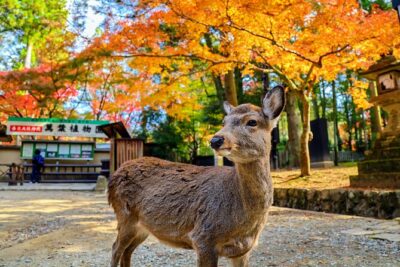
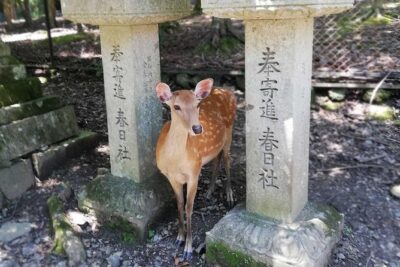
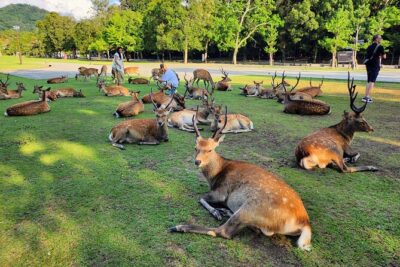
Next up is Nara Park, right next to Todaiji. This is your classic deer moment, and you are given a chance to walk through the park for about 30 minutes.
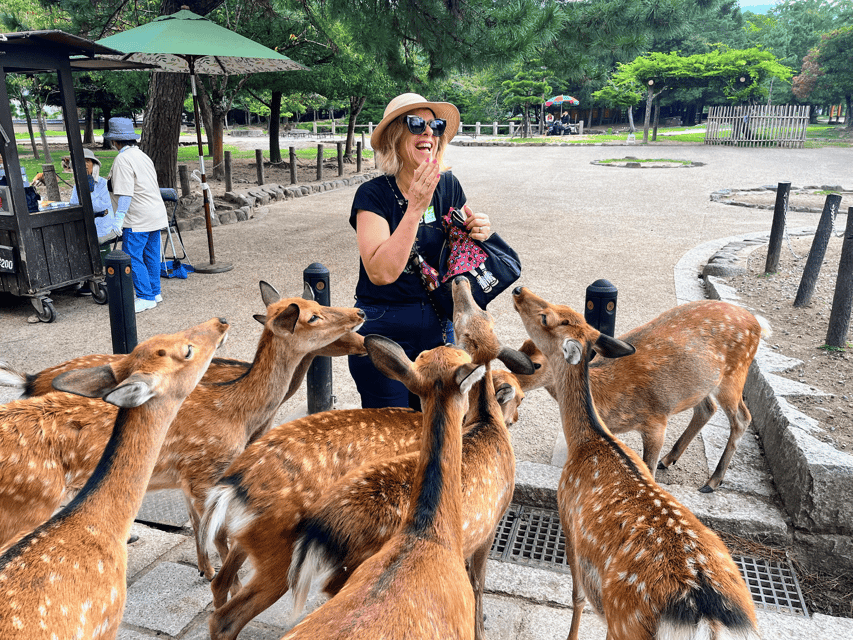
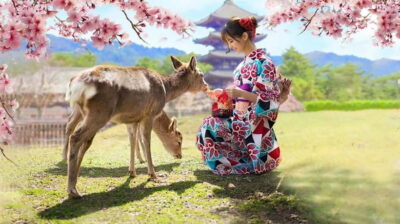
If you want the full experience, you can feed the deer with rice crackers sold at roadside stalls and on the way to shrines in the park. When you do, the deer may do that cute bow. It is charming, and it is also part of why Nara feels so different from most temple visits.
The important consideration is safety and manners. One highlight people noted was to be careful, because deer can bite. Keep that in mind and do not act like they are tame pets. If a deer approaches, stay calm, move slowly, and keep your hands and fingers away from the deer’s mouth.
This stop is short on paper, but it tends to be the most memorable part of the day. That is why this tour dedicates real time to it instead of treating it like a photo backdrop.
Kasuga Taisha’s 3,000 stone lanterns and the quiet feeling
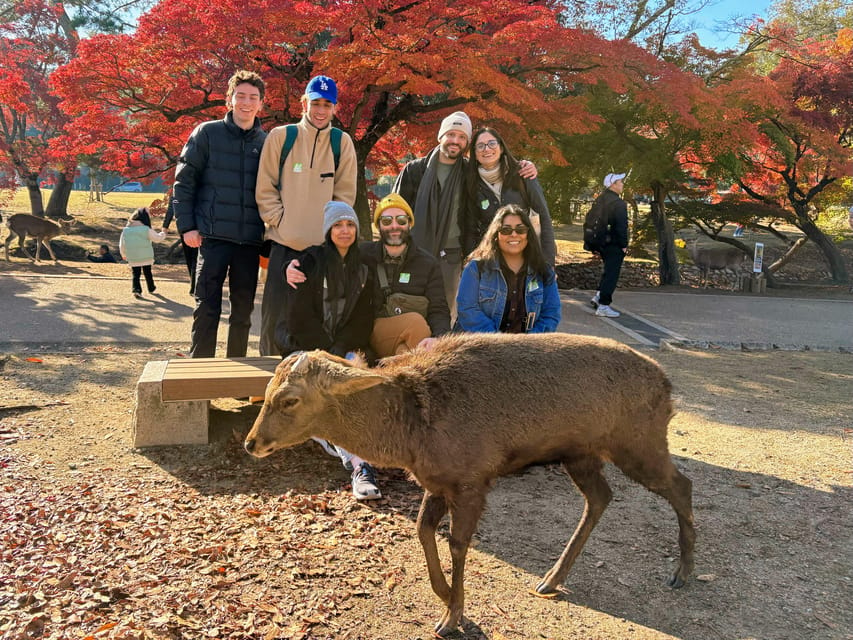
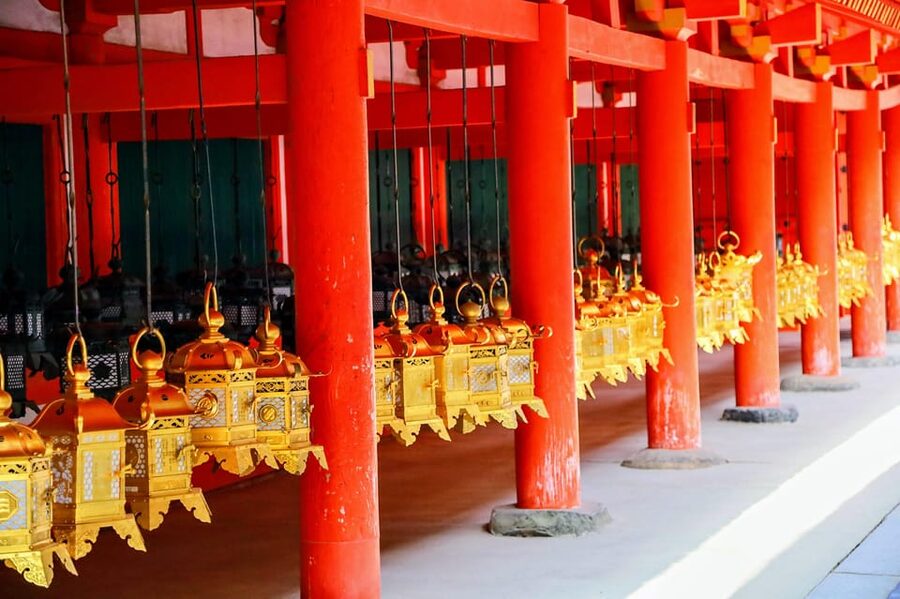
After Nara, you head to Kasuga Taisha Shrine for about 30 minutes. The headline here is the 3,000 stone lanterns. Up close, the lanterns create a pattern that feels almost architectural, like you are walking through a living corridor of light.
Kasuga Taisha is a World Heritage site as part of the Historic Monuments of Ancient Nara. The tour framing matters here, because the lanterns are not random decoration. They are part of how the shrine expresses devotion and tradition.
You will want to manage expectations on time. Thirty minutes is enough to see the lanterns and get your bearings, but not long enough to slowly absorb every side path. If you are the type who loves lingering, use the guide moment to learn what you are looking at, then use your time for slow wandering.
Lunch break: a real reset between temple stops
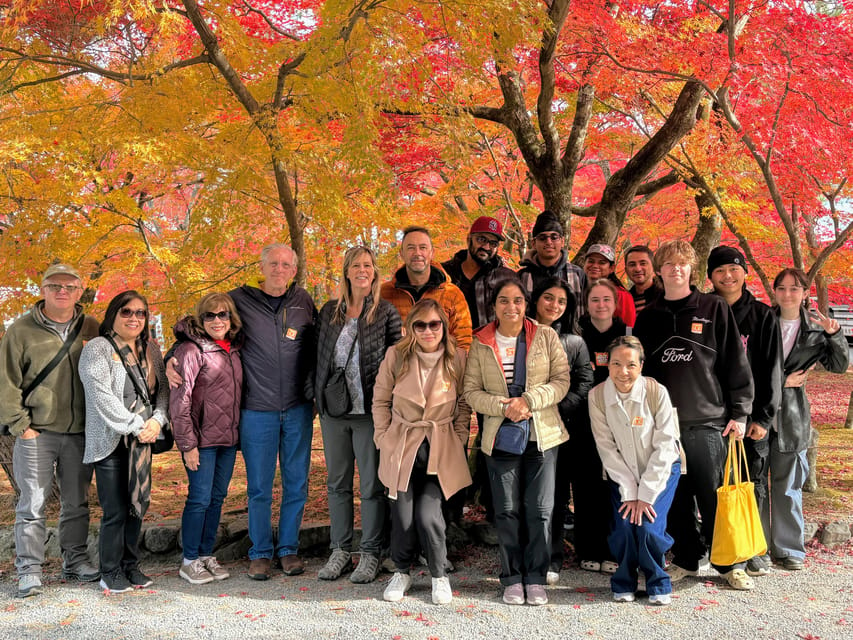
Between shrines and temples, you get a lunch stop at a local restaurant for about 50 minutes. If you booked the tour with the lunch option, you get a Japanese lunch.
This is one of those practical parts of the schedule that makes the whole day work. Temple days can drain you fast, especially if you are climbing stairs and walking uneven ground. A proper meal break gives you energy for Byodoin and the Uji tea experience later.
If you have dietary needs, the tour notes that vegetarian meal arrangements can be made up to 2 days before your date. For last-minute situations, you might receive a regular meal instead, so it helps to plan ahead if you need something specific.
Byodoin Temple and Phoenix Hall: the 10 yen icon made real
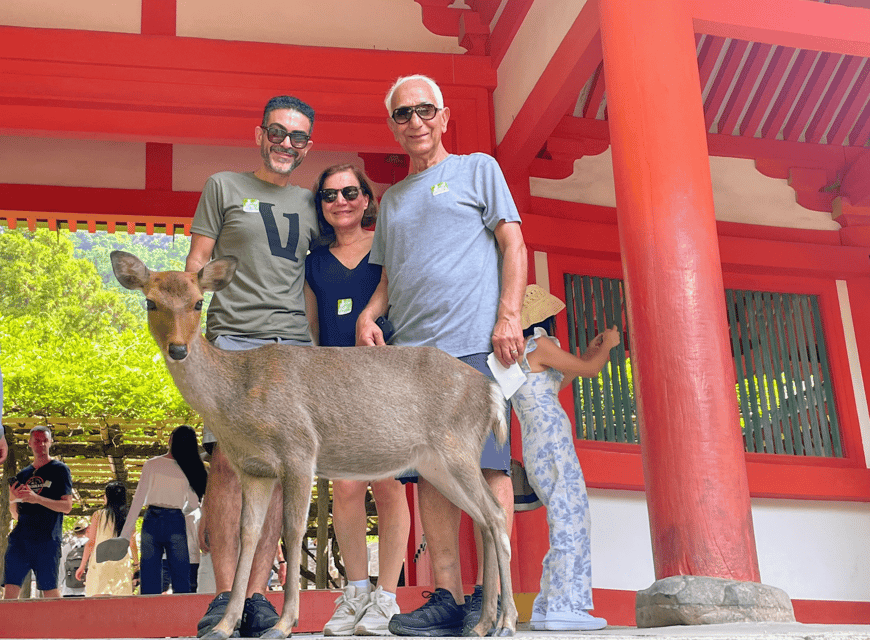
Byodoin Temple is next, with about 1 hour on site. This stop is well known for its Phoenix Hall, the building depicted on the 10 yen coin. Seeing it in person is one of those moments where a simple design suddenly feels incredibly intentional.
Byodoin is also UNESCO listed as part of the Historic Monuments of Ancient Kyoto, even though you are visiting from Kyoto via Nara that same day. That UNESCO connection is why this tour is more efficient than piecing together separate day trips.
You should give yourself a little time to find your viewing angles. One hour is a good amount here because you can look once quickly for structure, then return to linger at whatever view catches your eye. If you love photography, this is one of your best windows because the site is iconic and visually memorable.
Uji matcha from scratch: what you are really learning
After Byodoin, the tour heads to Uji. You get free time in the Uji area, plus a tea ceremony and matcha experience totaling about 70 minutes.
This is the part that makes the tour feel more like a cultural lesson than just sightseeing. The tour explains matcha as finely ground green tea leaves turned into a powdered tea. It also connects matcha to wider Japanese life, not only formal tea ceremony but also sweets and cooking.
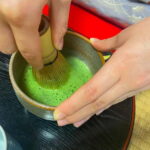
Your matcha experience fee is included, so you are not stuck trying to figure out what costs extra. You will make matcha yourself, and that matters, because taste hits differently when you feel what the process is. Even if you already love green tea, the DIY part changes your relationship to it.
Uji is also a shopping and wandering zone. Near the matcha place, there are small shops and restaurants, so you can buy souvenirs or tea after your hands-on session. This is where you can slow down, browse, and pick up something that actually fits the day you just lived.
Pace, audio headsets, and coach comfort that make the day easier
This tour runs about 510 minutes, or roughly 8.5 hours, from start to finish. That length is why the details of comfort matter.
You travel by air-conditioned coach, and you get free Wi-Fi. The coach also has an antibacterial coating and is regularly ventilated, which is not something you notice at first, but you feel it when you sit with a group for hours.
On the guidance side, you have two layers of support. You get live commentary from the English-speaking guide, and you also get audio headsets. The audio options include Spanish, French, Italian, German, Portuguese, and Ukrainian. That means even if you miss a sentence while the group is moving, you still have context.
One more small but useful detail: the tour includes admission fees for Todaiji and Byodoin, and it also includes skipping the ticket line. That is huge on busy temple days, because it turns a time sink into a short wait.
Price and value: is $122 actually a good deal?
At $122 per person, you are paying for a day that includes transport, two World Heritage area visits, entry fees, and the matcha activity. That is not cheap, but it is also not just paying for a ride and a few photos.
Here is what makes the value feel right:
- Admissions are included for Todaiji and Byodoin, so you do not add surprise costs later.
- The matcha experience fee is included, which is a common add-on on tours like this.
- The guide and audio system reduce confusion in big sites, especially if you are not fluent in Japanese.
- You get a structured day with specific time blocks for deer, lanterns, Phoenix Hall, and Uji tea time.
If you are trying to do Nara and Uji on your own, the time cost can be the real expense. You would need routing, ticket planning, and managing transitions with limited sightseeing time. This tour bundles that all into one schedule, and that is why $122 feels reasonable for most people who want a smooth day.
Who should book this tour, and who should skip it
This tour is a strong fit if you:
- Want a one-day hit of major ancient sites in Nara and Kyoto-related heritage tied to UNESCO listings
- Like the idea of matcha making, not just buying tea
- Prefer guided context in English plus audio support in multiple languages
It may not be ideal if you:
- Need wheelchair-accessible routes, because the tour requires walking up stairs and hills
- Want a totally unstructured day with long stays at just one place, because the schedule is built for covering multiple icons
- Do not like animal interactions, because deer feeding is part of the Nara experience
Should you book the Kyoto Nara and Traditional Matcha experience?
I would book it if you want a day that feels efficient but not frantic. The mix of Todaiji scale, Kasuga lantern atmosphere, and Uji tea culture gives you two different moods in one trip.
I would also feel good about the decision if you value guidance and clear timing. The coach comfort, included audio headsets, and ticket-line skipping all remove friction. And if you are someone who worries about getting lost, the fixed meeting point at Tully’s Kyoto Avanti and the 8:00 AM departure keeps you anchored.
The main reason not to book is physical comfort. If stairs and hills are an issue, this is not the right format. If you can handle moderate walking, this tour is a very logical way to see Nara and Uji without turning your day into a puzzle.
FAQ
Where is the meeting point and what time does the tour leave?
Check-in is at 7:50 AM at Tully’s Coffee Kyoto Avanti Store, in front of the store. The departure time is 8:00 AM.
What World Heritage sites does the tour visit?
The tour visits Todaiji Temple, Kasuga Taisha Shrine, and Byodoin Temple. These are listed as World Heritage Sites as part of the ancient monuments in the Nara and Kyoto area.
What happens during the Nara Park stop?
You visit Nara Park and have time to walk around with the wild deer. You can also feed the deer with rice crackers sold at roadside stalls and along the way to shrines in Nara Park.
Is lunch included?
Lunch is included only if you book the tour with the lunch option. During the lunch break at a local restaurant, you will have about 50 minutes, and the lunch is described as a Japanese meal when selected.
Does the tour include matcha making in Uji?
Yes. You will do a matcha experience in Uji, including learning about matcha and making it yourself. Tea ceremony time is included as part of the Uji activity.
Is this tour suitable for wheelchair users or mobility impairments?
No. The tour is not suitable for people with mobility impairments or wheelchair users, since you will walk up stairs and hills during the day.
Half a Day in Nara


Kyoto by the Bowl

Newest Kyoto write-ups from the Loving Japan desk

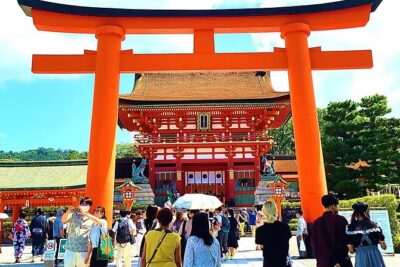
Nara Deer Park and Todai-ji, side by side.
 ★ 5.0World Heritage Kyoto & Nara Uji Authentic Matcha ExperienceFrom $1291,573 reviews
 ★ 4.7Kyoto/Osaka: Nara, Fushimi Inari Taisha, Arashiyama Bus TourFrom $521,275 reviews
 ★ 5.0Nara Half Day Trip Walking Tour (Private Option Available)From $105937 reviews
 ★ 4.4Osaka/Kyoto: Arashiyama, Nara & Fushimi Inari Shrine w/LunchFrom $61754 reviews
 ★ 5.0Nara Early Morning Tour (Kyoto or Osaka Departure Available)From $61676 reviews
 ★ 4.5Kyoto and Nara Day Trip from KyotoFrom $194445 reviews
 ★ 5.0Full Day Guided Tour to Kyoto and Nara from Osaka by VanFrom $106420 reviews
 ★ 4.5Nara Afternoon Tour from Kyoto or OsakaFrom $102390 reviews