
REVIEW · SAMURAI, NINJA AND SWORD EXPERIENCES
Kyoto: Samurai Kenbu Traditional Sword Dancing Show
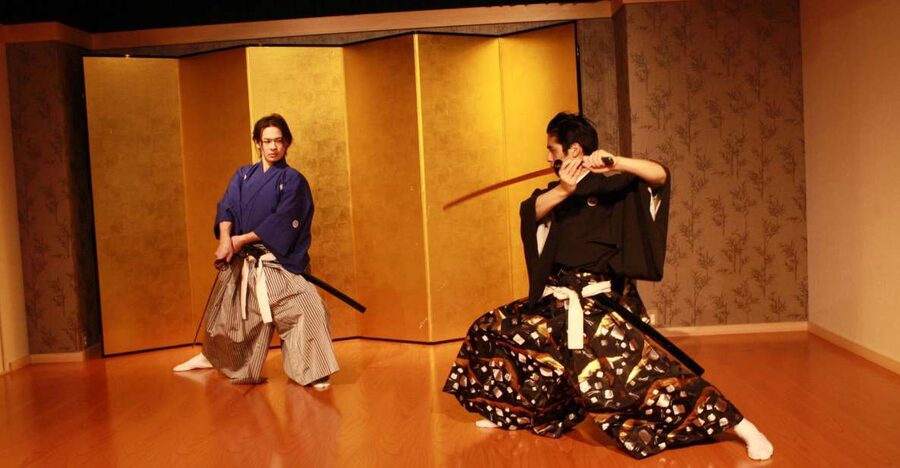
Kyoto has plenty of temples, but this is a different time machine. You get Kenbu sword dancing, story-told technique, and a short hands-on katana lesson at the Samurai Kembu Theater.
What I like most is how clearly the show connects the graceful movement to samurai purpose, not just flashy theatrics. It also uses English narration, so you are not guessing what you are watching.
Second, you get a real sequence of how kenbu is taught: poems and stance ideas, then sword handling rules like respect and responsibility. That matters because it frames the “cool sword” part with discipline and restraint.
One consideration: this is not an action fight show. If you want nonstop sparring or big choreographed battle scenes, the quieter, story and form-based style may feel slower than you hoped.
In This Review
- Key things to know before you go
- Kenbu in Kyoto: what the Samurai Kembu Theater experience feels like
- Getting there and what happens when you walk in
- The show format: history and technique in short, clear segments
- How the sword dance works: grace plus strength, with a fan too
- The mini lesson: what you do with the katana
- Photo time rules: when you can film, and how to plan it
- Price and value: is $32 for 1 hour worth it?
- Who will enjoy this most in Kyoto
- Who might want a different Kyoto activity
- Practical tips that make the hour easier
- Should you book the Kyoto Kenbu sword dancing show?
- FAQ
- How long is the Kyoto Kenbu sword dancing show?
- How much does it cost?
- Where do I meet for the Samurai Kenbu Theater show?
- Are the show and narration available in English?
- Are photos and videos allowed during the show?
- Do I get a chance to handle a sword?
- Is hotel pickup or drop-off included?
- What should I do about luggage?
- Is the venue wheelchair accessible?
- What if I need to cancel?
Key things to know before you go
- Kenbu storytelling through stage scenes, not sword brawling
- English narration plus Japanese, so you can follow the history
- Shoes off on arrival, in a theater setting with local manners
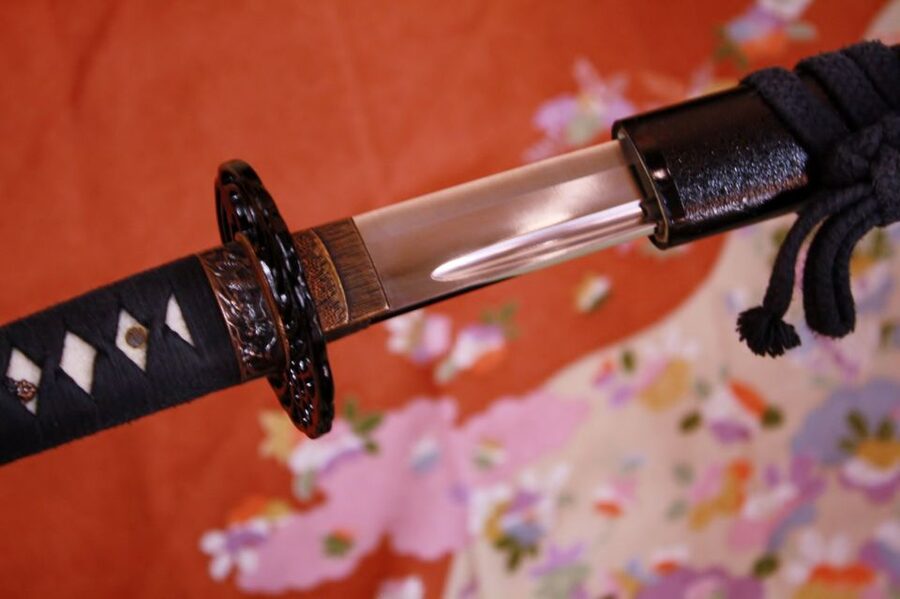
- Short sword mini lesson where you handle a katana safely
- Folding fan moments if there is time in the lesson
- No photos during the show, but picture time happens after
Blade work and stagecraft, other sessions
- Kyoto: Kendo and Samurai Experience with Uniform and Gear
★ 4.9 · 815 reviews - Kyoto: Samurai Sword Class by Experts in Traditional Arts
★ 4.9 · 657 reviews - Skip the lines Basic Ticket at SAMURAI NINJA MUSEUM KYOTO
★ 4.5 · 632 reviews - Ninja 1-hour Hands-on Lesson by Japanese master in Kyoto -Entry
★ 5.0 · 489 reviews
Kenbu in Kyoto: what the Samurai Kembu Theater experience feels like
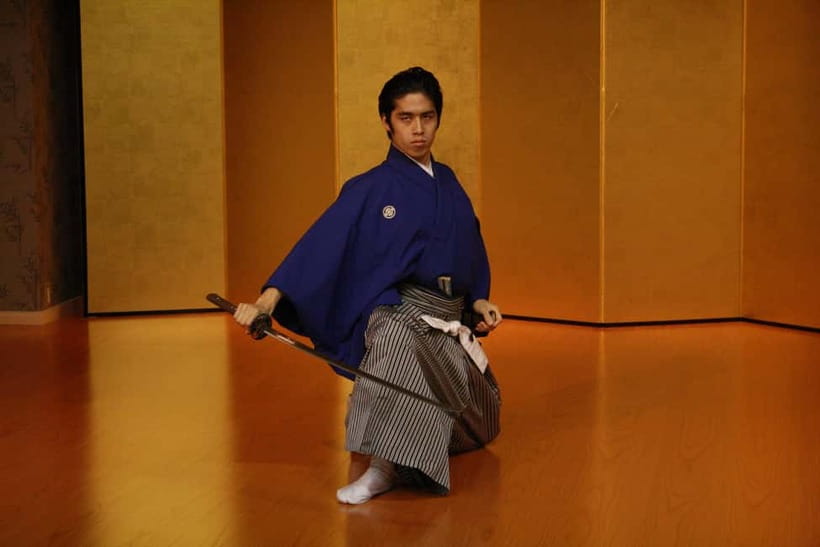
Kenbu is often described as samurai sword dancing, but what you are really seeing is a form of controlled motion with a purpose. At the Samurai Kembu Theater in Kyoto, the show translates feudal-era attitudes into something you can watch, understand, and then try in miniature.
The setting is built for close viewing. The vibe is not huge arena spectacle. It is more like you are inside the lesson, where performers can explain what each moment is doing. And because the narration is available in English and Japanese, you can follow the thread even if your Japanese is limited.
I also like the tone the theater uses. The sword lesson is not presented as a gimmick. It is framed around responsibility, what it means to carry a samurai sword, and how movement starts with discipline rather than force.
Getting there and what happens when you walk in
The meeting point is right at the Samurai Kembu Theater in Kyoto, about a 4-minute walk from Subway Sanjo Keihan Station (Kyoto City Subway), and about a 5-minute walk from Sanjo Station on the Keihan Main Line. Build in time, because you want to arrive about 5 to 15 minutes early.
You will take your shoes off when you arrive. That is a small thing, but it changes the whole feel. It signals that this is a cultural performance with manners that matter, not just a ticket and a seat.
Also plan your logistics with care. There is no waiting room, and those without an appointment cannot wait inside. If you show up late, you will likely be rushed. And there is no room for large luggage or travel bags, so keep your bag situation simple if you are hopping between Kyoto sights.
The show format: history and technique in short, clear segments
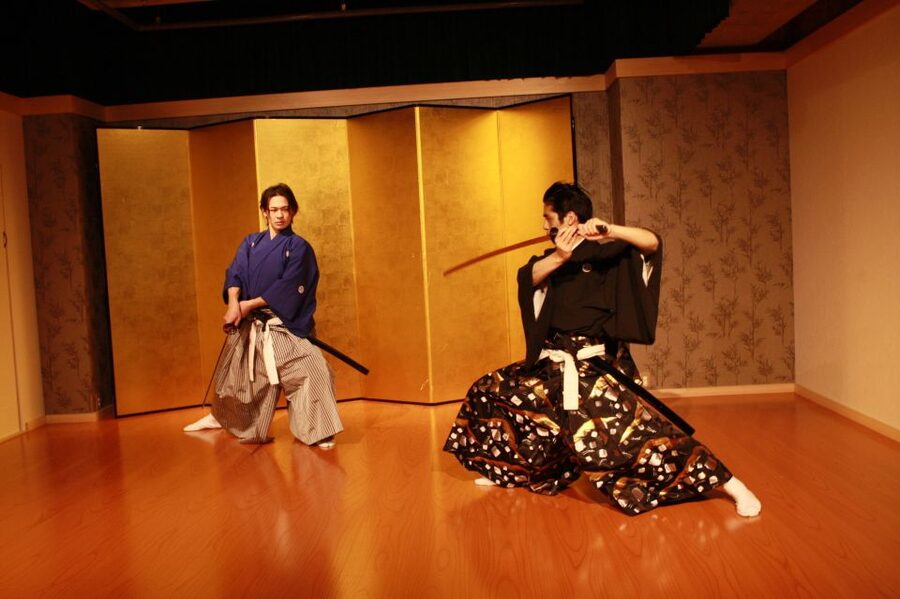
The full experience runs about 1 hour. The pacing is built around multiple demonstrations, and each one comes with a short history of samurai culture across a wide span from the 12th to the 19th centuries.
You start with an introduction from a performer, with background on Kenbu and its techniques. Then you watch a sequence of scenes, each one featuring sword movement that represents something specific, like battlefield preparation or moments of resolve. The narration ties the movement to meaning, so you are not just watching a series of swings.
One subtle detail I appreciate is how the show references poems recited by samurai before heading to the battlefield. Even if you only catch the idea, it helps you see the performance as mental training. You are watching discipline expressed as posture, timing, and control.
The show also includes both traditional and newer styles of Kenbu. That is useful if you worry that everything in a cultural demo will be frozen in time. Here, you can see how the form carries forward, not just how it looks.
- PERFECT KYOTO 1-Day Bus Tour★ 5.0 · 13,518 reviews
- Kyoto: Fushimi Inari, Kinkakuji, Bamboo Grove 1 Day Bus Tour★ 4.8 · 4,316 reviews
- Kyoto: Tea Ceremony in a Traditional Tea House in Kiyomizu★ 4.9 · 3,519 reviews
- Kyoto Geisha Walking Tour: Gion District & Hidden Gems★ 4.7 · 3,273 reviews
- Kyoto: Tea Ceremony Ju-An at Jotokuji Temple★ 4.9 · 3,207 reviews
How the sword dance works: grace plus strength, with a fan too
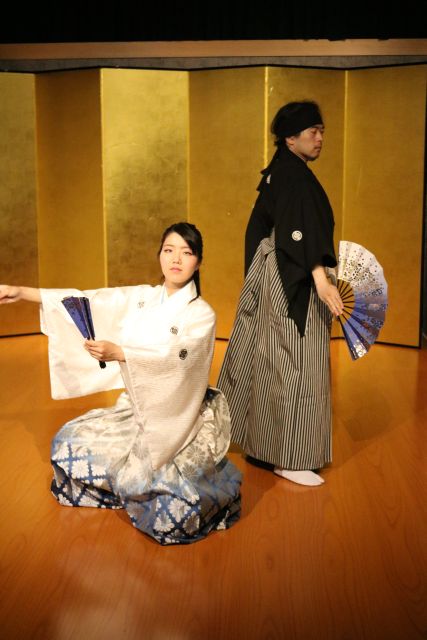
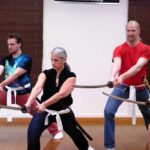
The heart of Kenbu is controlled motion. Each performer swings the sword in complex sequences that mix grace, strength, and precision. The choreography is meant to be more than pretty movement. It is intended to embody samurai principles through physical form.
You will also see techniques that involve a folding fan. In the show itself, the fan appears as part of the performance language. Then, later, you may get a chance to learn fan basics as part of the mini experience, if there is time.
For many people, the fan is what makes the performance feel distinct from standard stage sword choreography. It gives you a sense that the samurai toolkit on stage is not only about the katana. It also reflects how movement, balance, and rhythm are trained in different ways.
The mini lesson: what you do with the katana
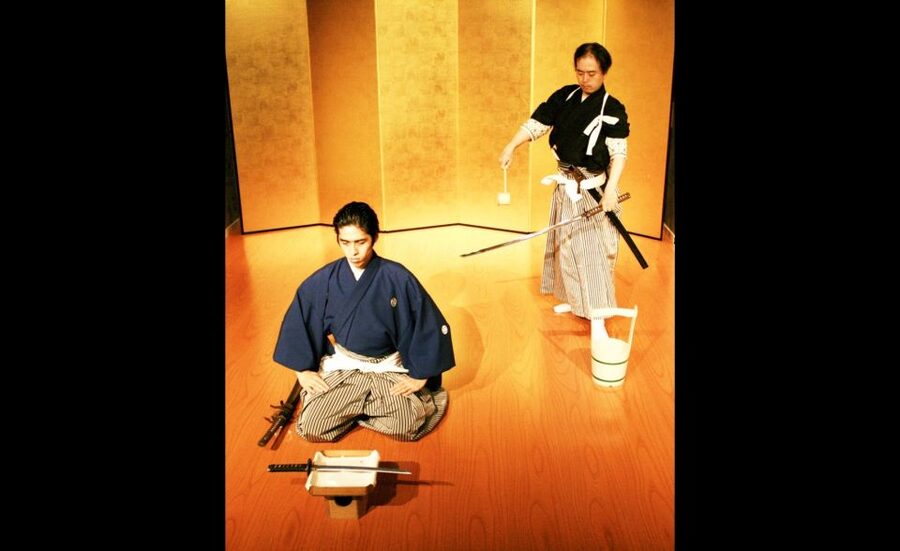
After the main demonstrations, the performers return for the mini experience. This is where the show becomes personal.
You take part in a short, supervised sword lesson. The process is slow and guided on purpose:
- You pick up the sword.
- You slowly pull out the scabbard.
- You grasp the blade.
- On the instructor’s command, you swing gently at first, then more forcefully as you are able.
This is the kind of step-by-step coaching that makes the difference between an audience activity and a real lesson. If you go in thinking you will immediately look like a martial artist, you will adjust fast. But if you go in curious and respectful, you will get something genuinely memorable.
You might even pick up a few words and commands along the way, including shouted cues that help synchronize the motions. People tend to leave talking about the moment they realize how much control is required. It is harder than it looks.
Photo time rules: when you can film, and how to plan it
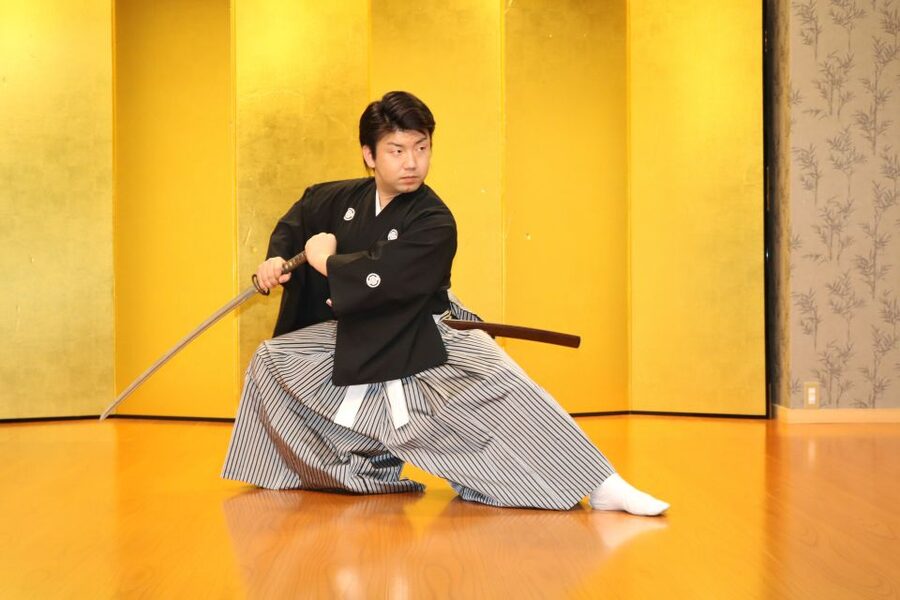
A clear rule: refrain from taking photos or videos during the show. That is a common theater request, but here it is especially important because you are in a tight performance space and the narration is part of the experience.
The good news is that picture time happens after the show. You get time to capture what you want when the performers return, and you can even get help with photos during the mini experience. That matches what you probably want most, a few solid shots with the sword or with the performers once the formal performance portion ends.
Tip: bring your camera ready, but do not crowd people. After the show, timing matters. If you wait until the last second to find your settings, you will miss the window when the instructors are ready.
Price and value: is $32 for 1 hour worth it?
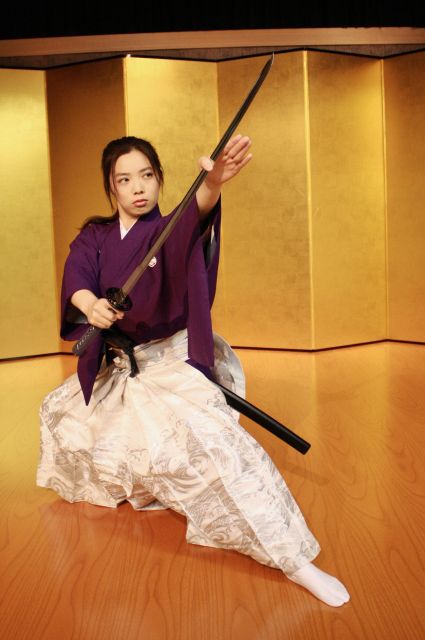
At about $32 per person for a 1-hour experience, this sits in the “worth it if you want culture, not just spectacle” category.
Here is why the value feels fair:
- You are paying for both performance and a hands-on component, not only watching.
- The narration is in English and Japanese, which makes the history accessible.
- The lesson is structured, not random. You do not just hold a sword and leave. You follow commands and practice a few basic swings.
- The show covers more than one style and connects movement to samurai culture with stage storytelling.
Is it overpriced if you want a full martial arts workout? Yes, because it is not that. Is it overpriced if you want a short, guided, respectful introduction to kenbu and samurai ideas? No. The price is basically buying a compact, guided experience plus photo time, and that combo usually lands well for the time spent.
Who will enjoy this most in Kyoto
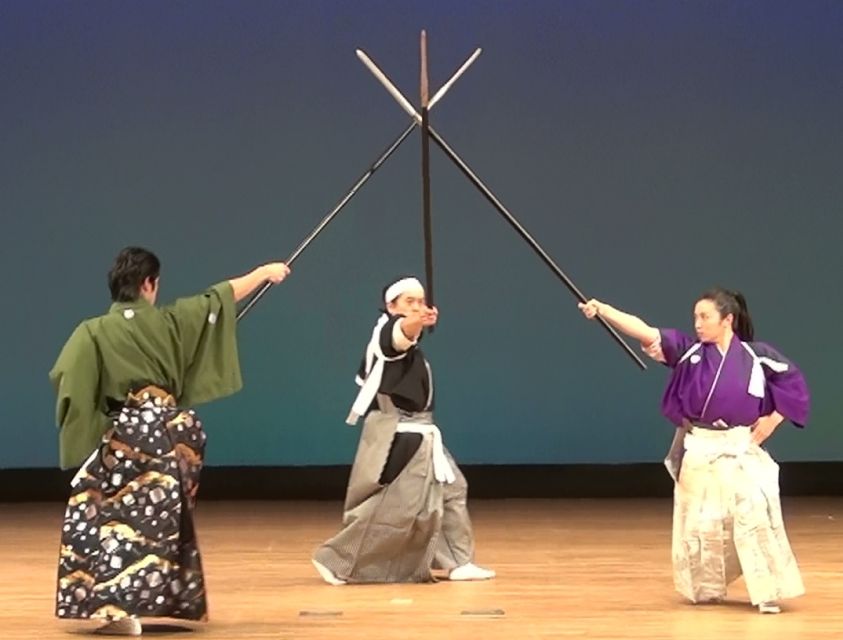
This is a great fit if you like one or more of these:
- You want samurai culture explained through performance
- You enjoy history told in scenes, with narration
- You are curious about sword ceremony and responsibility, not just action
- You want a hands-on moment without signing up for a full-day class
- You are traveling with mixed interests, like one person who wants culture and another who wants a fun activity
It also works well for families, since the show is structured like a series of story moments rather than nonstop jargon. But the shoe-off setting and the theater rules mean parents should plan to help kids follow instructions and stay respectful during the performance.
Who might want a different Kyoto activity
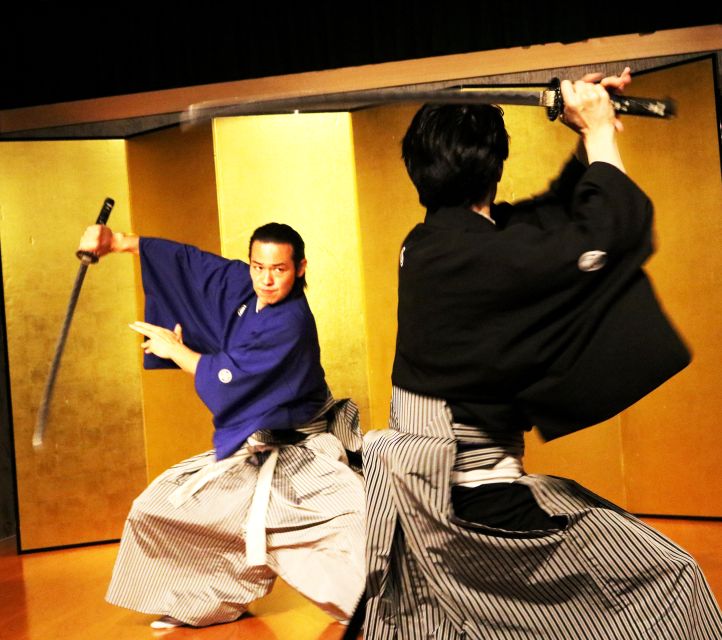
If you are expecting a large stage with elaborate battle choreography, you might feel underwhelmed. The show emphasizes elegance, form, poems, stance, and responsibility. The sword lesson is brief too, so it will not scratch the itch for a long kendo-style workout.
In other words, this is best when you want meaning plus movement. If you want big action, choose something else alongside it.
Practical tips that make the hour easier
These are the things that help the experience go smoothly in real life:
- Arrive early and do not count on a waiting room. Get through the shoe-off process and settle in.
- Keep your bag small. No large luggage or travel bags are accommodated.
- Plan for a phone-camera switch in your brain: no filming during the show, then pictures after. Your battery will last longer too.
- Be ready to listen. The English narration drives understanding, especially when the story connects to technique.
- Go in respectful. The instructions include avoiding alcohol before the activity, and the whole framing emphasizes sword responsibility.
Also, if you are sensitive to not being able to film during the show, decide ahead of time whether you will just enjoy it live. Many people end up feeling happier when they stop chasing the camera and start watching the details.
Should you book the Kyoto Kenbu sword dancing show?
Book it if you want a one-hour, Kyoto-appropriate cultural experience that teaches with storytelling and lets you handle a katana safely. The biggest reasons to go are the structured Kenbu demonstrations, the English narration support, and the short sword lesson that turns a performance into a memory you can hold.
Skip it if you only care about fight action or expect a long training session. This show is about grace, stance, and samurai responsibility, with a brief hands-on segment that stays safe and simple.
If your itinerary has time for one meaningful cultural stop that is different from temples and markets, this is a strong choice. It is the kind of experience that makes Kyoto feel less like sightseeing and more like understanding.
FAQ
How long is the Kyoto Kenbu sword dancing show?
The duration is 1 hour.
How much does it cost?
It costs $32 per person.
Where do I meet for the Samurai Kenbu Theater show?
Meet at the Samurai Kembu Theater in Kyoto. It is about a 4-minute walk from Subway Sanjo Keihan Station and about a 5-minute walk from Sanjo Station on the Keihan Main Line.
Are the show and narration available in English?
Yes. The instructor provides English and Japanese.
Are photos and videos allowed during the show?
No. You should refrain from taking photos or videos during the show.
Do I get a chance to handle a sword?
Yes. After the show, you can participate in a short sword lesson that includes picking up the sword, pulling out the scabbard slowly, and swinging gently at first, then more forcefully on command. There may also be time to learn fan basics.
Is hotel pickup or drop-off included?
No. Hotel pickup and drop-off are not included.
What should I do about luggage?
There is no room for large luggage or travel bags.
Is the venue wheelchair accessible?
Yes, the activity is wheelchair accessible.
What if I need to cancel?
You can cancel up to 24 hours in advance for a full refund.
Blade Work and Stagecraft
Newest Kyoto write-ups from the Loving Japan desk
Samurai, Ninja and Sword Experiences, side by side.
 ★ 4.5Samurai Restaurant Show Ticket with 2 DrinksFrom $551,307 reviews
 ★ 5.0Kyoto Samurai ExperienceFrom $1191,294 reviews
 ★ 4.6Samurai Ninja Museum Guided tour and ExperienceFrom $271,010 reviews
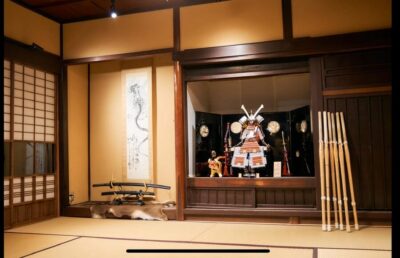 ★ 4.9Kendo and Samurai Experience with Uniform and GearFrom $103815 reviews
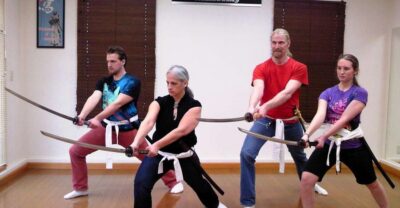 ★ 4.9Samurai Sword Class by Experts in Traditional ArtsFrom $64657 reviews
 ★ 4.5Skip the lines Basic Ticket at SAMURAI NINJA MUSEUM KYOTOFrom $28632 reviews
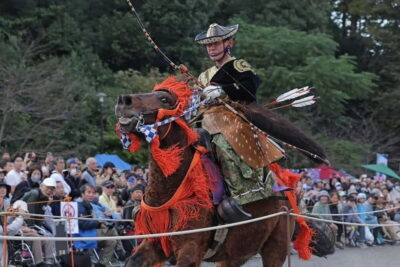 ★ 5.0Samurai Sword & Archery Class from Samurai DescendantFrom $193603 reviews
 ★ 5.0Samurai Training Experience KENDO in OsakaFrom $131515 reviews
Filed on these lists too