
REVIEW · GION, GEISHA AND MAIKO EXPERIENCES
Kyoto: Tea Ceremony with Maiko Premium
Meet a Maiko up close, sip matcha. This 90-minute premium Kyoto tea experience pairs a Maiko guided matcha lesson with a direct Q&A, then tops it off with a photo right beside her and a Senjyafuda lucky charm. I really like the personal back-and-forth, not just passive watching, and I love that you actually make matcha yourself. The main drawback to plan around is that the venue is not a classic ochaya, so the room setup can feel a bit more modern, and that can affect the vibe and some photo backgrounds.
I also like how easy it is to get to. The meeting point is about a minute on foot from Gojo Station on the Karasuma Line, Exit 1, and the entrance faces Gojo-dori. You will be in a group format in a building, so think “organized cultural program” more than “hidden Kyoto tea house.”
One more practical note: there’s no elevator. You’ll take stairs, and the event won’t wait for delays. If you want a quiet, candlelit traditional setting above all else, this may feel too structured. But if you want interaction, entertainment, and a memorable souvenir moment, it’s a strong pick for the price.
In This Review
- Key things to know before you go
- Why this Kyoto Maiko Tea Ceremony feels different
- Premium ticket value: seats, possible Geiko swap, and what you really get
- The 90-minute flow, step by step, with smart timing tips
- 1) Greeting and introductions
- 2) Matcha and tea ceremony with two sweets
- 3) Q&A session
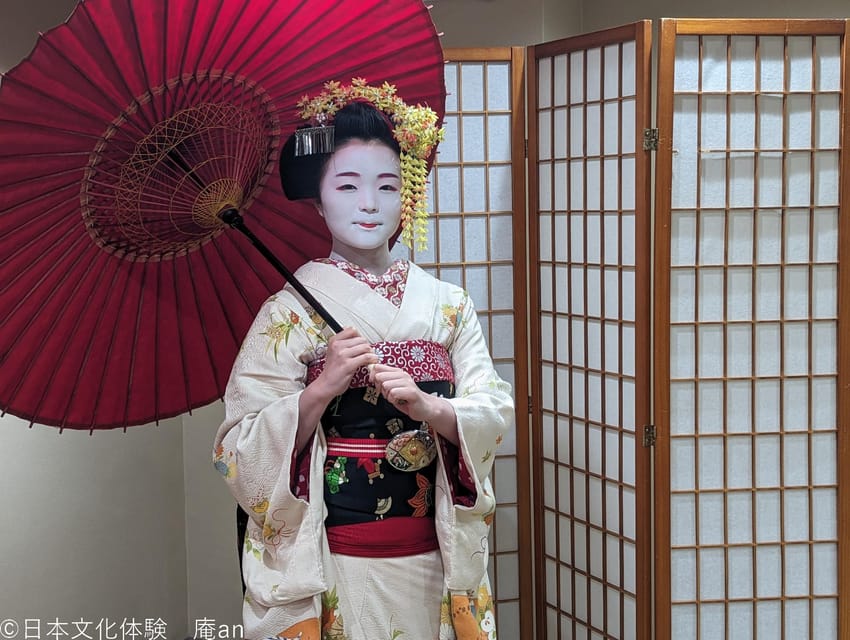
- 4) Photo opportunity beside the Maiko
- 5) Senjyafuda lucky charm gift
- 6) Dance performance, two dances
- 7) Interactive game with Maiko participation
- 8) Wrap-up and chatting time
- Matcha lesson and sweets: how the hands-on part makes it worth the money
- Q&A with a Maiko: ask better questions and get more out of it
- Dances, games, and the Senjyafuda lucky charm
- Where it happens near Gojo Station, and what that means for your photos
- Who should book this, and who might want a different Kyoto plan
- Price and logistics: making $50 feel like a win
- Should you book the Kyoto Tea Ceremony with Maiko Premium?
- FAQ
- How long is the Kyoto Tea Ceremony with Maiko Premium?
- How much does it cost?
- Where do I meet for the experience?
- What happens during the 90-minute program?
- Is matcha included?
- What else is included besides tea?
- Can I take photos?
- What if the performer is not a Maiko?
- Are there options for better seating?
- Is there an elevator, and is English provided?
- Are children under 2 free?
- FAQ
- What is the cancellation policy?
- What if I’m late?
- What are the operating hours?
Key things to know before you go
- Hands-on matcha led by a Maiko, plus two dried-type Japanese sweets
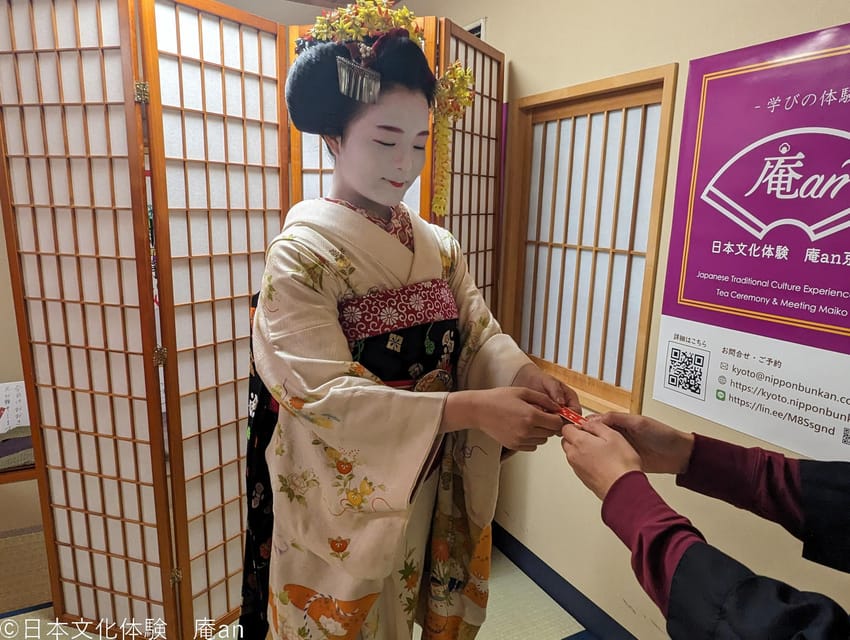
- Up-close photo right beside the performer, with a Senjyafuda gift
- Q&A time where you can ask questions directly and learn how daily life works
- Two dance performances plus an interactive game where you can clap and cheer
- Not an ochaya venue, so expect a modern room layout and possible signage in photos
- Stairs only and the schedule runs on time, no waiting for late arrivals
Evening walks through the old quarters, compared
- Kyoto Geisha Walking Tour: Gion District & Hidden Gems
★ 4.7 · 3,273 reviews - Kyoto: Gion Magical Night Walking Tour with Geisha Trivia
★ 4.9 · 2,393 reviews - Kyoto: Gion Geisha District Walking Tour – Stories of Geisha
★ 4.7 · 2,187 reviews - Best of Kyoto: Gion, Geisha, Pagodas & Cobblestones
★ 4.9 · 2,058 reviews
Why this Kyoto Maiko Tea Ceremony feels different
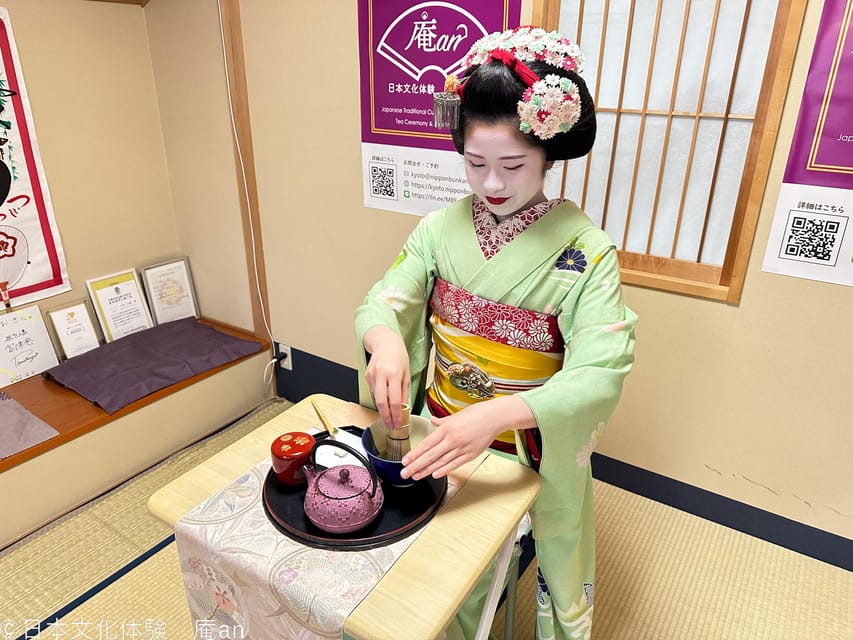
Kyoto has plenty of culture you can watch from a distance. This experience tries to move you closer to the person behind the costume. You start with a greeting, then you learn the basics of making matcha by working through it with the Maiko right there beside you. It’s not about performing the “perfect” tea ritual. It’s about understanding the flow, the small steps, and why this tradition has a real rhythm.
What makes the program interesting is the blend of “craft” and “conversation.” You get tea making, but you also get a structured Q&A where the Maiko explains her world in a way that tends to land well even if your Japanese is limited. After that, you watch dance, then you join a game. That mix keeps it lively without turning it into a generic stage show.
Premium ticket value: seats, possible Geiko swap, and what you really get
This is priced around $50 per person for a 90-minute premium experience. The value comes from the full package. You’re not only paying for the tea ceremony. You’re paying for the performer time plus the “whole evening flow,” including Q&A, photo access, dances, and the interactive game.
The “Premium” part matters because the experience is built as a sequence, not just tea tasting. You’ll make matcha, receive two Japanese sweets, and you’ll get the photo moment with a lucky charm. Then the program adds entertainment that shows off seasonal themes and storytelling through movement. Past participants often highlight the dance and interactive segments as the reason they felt it was worth the extra cost.
One thing to watch: the performer may be a Maiko, but depending on the situation, you could be invited to meet a Geiko instead. That doesn’t mean the program changes into something unrelated. It simply means the featured performer can shift. If seeing a specific title is your must-do, keep this flexibility in mind.
Seat upgrades exist too:
- SS seat (first row): 3,300 JPY
- S2 seat (second row): 2,200 JPY
- S3 seat (third row): 1,100 JPY
If you care about photos and angles, first-row is usually the easiest way to get a clean, up-close shot without squeezing around other people.
The 90-minute flow, step by step, with smart timing tips
The program is designed to start on time and move through each segment smoothly. Here’s how it typically runs, and what to pay attention to at each part.
Sit down somewhere quieter. Other tea rooms we booked
- Kyoto: Tea Ceremony Ju-An at Jotokuji Temple★ 4.9 · 3,207 reviews
- Kyoto: 45-Minute Tea Ceremony Lesson Experience★ 4.3 · 2,378 reviews
- Kyoto: Table-Style Tea Ceremony at a Kyo-Machiya★ 4.9 · 1,211 reviews
- Kimono Tea Ceremony at Kyoto Maikoya, NISHIKI★ 5.0 · 911 reviews
- Kyoto: Arashiyama Bamboo Forest, Monkeys, Matcha & Temple Tour★ 5.0 · 759 reviews
1) Greeting and introductions
You’ll start with a greeting from the performer. This is when you’ll get oriented to what happens next and when the tone sets: respectful, warm, and interactive.
2) Matcha and tea ceremony with two sweets
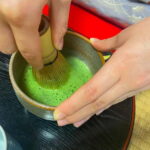
Next comes the tea ceremony. You’ll be taught how to make matcha, then you make it yourself. The sweets are included as part of the tea pairing, and they’re described as two dried-type Japanese sweets.
The best way to enjoy this is simple: don’t treat it like a demo. Watch briefly, then do. If you rush the steps, you might not taste what the teacher is trying to show you. If you take your time, you’ll come away understanding the structure.
3) Q&A session
This is a highlight for many people because it turns the experience into two-way cultural learning. You’ll be able to ask questions directly and hear answers about daily life, training, and the traditions connected to kimono, hairstyles, and routine.
If you want to ask something that actually helps, focus on practical, human questions, like:
- What is your day like?
- What part of training surprised you most?
- What do you do to keep everything looking perfect?
Some sessions also include discussion about the length of training, sometimes described as taking around five years to complete, which helps you understand why the dedication matters.
4) Photo opportunity beside the Maiko
After Q&A, you’ll get a chance to take a commemorative photo right beside the performer. This is the moment you’ve been waiting for if your goal is a close, personal memory.
For photos, arrive with your best “no-stress” posture in mind. Keep your camera ready but don’t fumble with settings at the last second. If there’s signage in the background, consider standing slightly off-angle so your face and the kimono are the focal point.
5) Senjyafuda lucky charm gift
You’ll receive a lucky charm called Senjyafuda. It’s presented as a special gift, and it’s one of the few tangible souvenirs that connects directly to the meeting moment, not just to the venue.
6) Dance performance, two dances
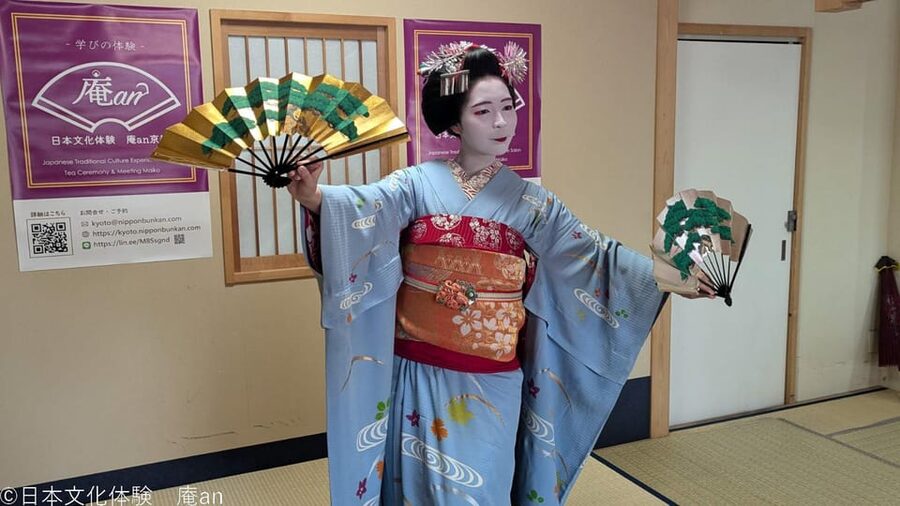
Then comes the dance. You’ll see two traditional dances that express the beauty of Japan’s seasons, stories of love, or everyday life themes. This is where you slow down and just watch the movement.
If you’re the type who notices details, focus on hands, posture, and transitions. The dances are short compared to a full stage performance, but they’re designed to be clear and expressive even in a room setting.
7) Interactive game with Maiko participation
Finally, there’s an interactive game. Guests can volunteer, but even if you’re watching, the energy matters. Clap and cheer, because the game is part hospitality and part fun.
I like this segment because it breaks the formality. Tea ceremony is calm. Dance is elegant. The game adds personality.
8) Wrap-up and chatting time
You’ll end around the 90-minute mark, with the performer leaving the room and a bit of time for chatting. This is the moment to ask one last question if you didn’t get time earlier.
Matcha lesson and sweets: how the hands-on part makes it worth the money
The matcha portion is not just a taste. You learn how to prepare it, and then you do it. That matters because matcha takes coordination. You don’t just drink a flavor. You practice the technique, then you understand why the texture and foam matter.
You’re also given two Japanese sweets with the tea. Since they’re described as dried-type, they’re likely meant to pair easily and stay stable in the program flow. This keeps the experience moving without turning it into a long food break.
If you’re coming from a busy Kyoto day, the tea and sweets are a good reset. And because it’s hands-on, you’re not only relying on your memory later. You leave with a physical memory, the same way you would after a cooking class.
Q&A with a Maiko: ask better questions and get more out of it
The Q&A is what transforms the program from “pretty and interesting” into “I learned something I can repeat at dinner.”
The performer’s explanations center on dedication to a traditional lifestyle that still continues. You’ll hear how kimono and hairstyling connect to identity and training, and you’ll get insight into daily routines and the world behind the role.
A practical trick: ask questions that can’t be answered by a quick Google search. Instead of asking what Maiko is, ask what you do that takes the most time, or what a normal day actually looks like. Those answers tend to be the ones you remember later because they feel personal.
Also, keep your questions short if there’s a translator or group discussion flow. Even in English-supported sessions, the best experience comes from letting everyone share time.
Dances, games, and the Senjyafuda lucky charm
This program has two main performance beats: dance and participation.
The dance set gives you a window into seasonality and storytelling. Even if you don’t know the traditional references, the movement communicates mood. People often talk about getting goosebumps from the dances because the choreography has that “serious elegance,” not just stage entertainment.
Then comes the game. It’s simple but it changes the tone quickly. Instead of sitting and watching, you’re clapping and reacting, and you might even join in. That makes the overall 90 minutes feel like a full event rather than a single activity.
The Senjyafuda gift ties the whole thing together. It’s small, but it functions like a bookmark for the memory. You’ll have something you can hold while you explain later why Kyoto still has living traditions.
Where it happens near Gojo Station, and what that means for your photos
Logistics are mostly convenient. The meeting point is one minute from Exit 1 of Subway Karasuma Line Gojo Station. The store entrance faces Gojo-dori, which makes it easier to spot when you arrive.
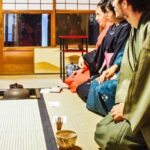
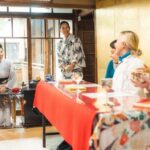
The bigger question is the venue feel. This program is not in a traditional ochaya or a tatami room. It takes place in a building with a room layout that is more modern, with tables and stools rather than a full traditional house atmosphere. That doesn’t ruin the experience, but it does affect “immersion.”
Photos can also be tricky. Some people found that background signage or advertising can show up in the frame. If you want the cleanest images:
- take at least one photo early in the photo segment when your positioning is best
- stand in a way that keeps you and the performer against the plainest background
- consider cropping afterward, especially if you’re using a phone camera
And one more practical reality: there’s no elevator. Plan your route up stairs without rushing, especially if you’re traveling with a parent or kids.
Who should book this, and who might want a different Kyoto plan
This is a strong fit if you:
- want a hands-on cultural activity, not only sightseeing
- care about a close meeting and a photo moment
- like performances but also want Q&A and interaction
- want something organized that works even when your Japanese is limited
It might not be your best pick if you:
- want a fully traditional tatami ochaya atmosphere above everything else
- are very sensitive to modern signage in the background of photos
- need a perfectly quiet, private experience, because this is still a group program
For families, this can be a good option too, since the game and Q&A tend to keep kids engaged. Just be aware you’ll be in a seated format and the full flow is about 90 minutes.
Price and logistics: making $50 feel like a win
At roughly $50 per person, you’re paying for access. The performer time, the matcha lesson, the sweets, the Q&A, the dances, the interactive game, the photo, and the Senjyafuda gift all roll into one scheduled session.
The reason it can feel like good value is that you’re not only buying a product. You’re buying participation and direct human explanation. A simple matcha tasting alone wouldn’t justify the full price, but the program is designed as a mini event with multiple segments and a tangible souvenir moment.
Two money tips:
- If photos matter, consider the SS or S2 seating upgrade to improve your angles.
- If you’re traveling on a tight schedule, don’t gamble on being late. The program won’t be able to hold the event for delays.
Should you book the Kyoto Tea Ceremony with Maiko Premium?
Book this if you want Kyoto culture with real interaction. The hands-on matcha lesson plus the Q&A, then the dances and games, makes it feel like more than a single activity. If you’re hoping for a close memory with a Maiko or potentially a Geiko, the photo moment and Senjyafuda gift are exactly the kind of “I will remember this for years” payoff you want on a trip.
Skip it if your top priority is a fully traditional ochaya setting, quiet, and zero modern visual distractions. The venue is more like a program room in a building, and that can show up in photos and in the atmosphere.
FAQ
How long is the Kyoto Tea Ceremony with Maiko Premium?
The experience lasts 90 minutes.
How much does it cost?
It’s listed at about $50 per person.
Where do I meet for the experience?
Meet about 1 minute walk from Exit 1 of Subway Karasuma Line Gojo Station. The entrance faces Gojo-dori.
What happens during the 90-minute program?
It includes a greeting, a tea ceremony with Maiko including matcha and two dried-type Japanese sweets, a Q&A session, a photo opportunity, receiving a Senjyafuda charm, a dance performance, and an interactive game. There is also a short chatting time at the end.
Is matcha included?
Yes. You’ll learn how to make matcha with the Maiko and then make your own.
What else is included besides tea?
Two dried-type Japanese sweets, plus free snacks and a drink.
Can I take photos?
Yes. You get a chance to take a commemorative photo right beside the Maiko.
What if the performer is not a Maiko?
Depending on the situation, the program may invite Geiko instead of Maiko.
Are there options for better seating?
Yes. SS seat (first row) is an additional 3,300 JPY, S2 (second row) is 2,200 JPY, and S3 (third row) is 1,100 JPY.
Is there an elevator, and is English provided?
There is no elevator, so you’ll need to take stairs. The experience is conducted in Japanese, and English translation is provided as much as possible.
Are children under 2 free?
Children under 2 are free if they sit on their parent’s laps. If a seat or meal is required, the child is charged the same as one person.
FAQ
What is the cancellation policy?
You can cancel up to 8 days in advance for a full refund.
What if I’m late?
The event cannot be held to accommodate delays.
What are the operating hours?
Operation hours are from 10:00 to 17:00. Reservations received after 17:00 are processed next day.
Kyoto by the Bowl
Evenings in the Old Quarters



Newest Kyoto write-ups from the Loving Japan desk
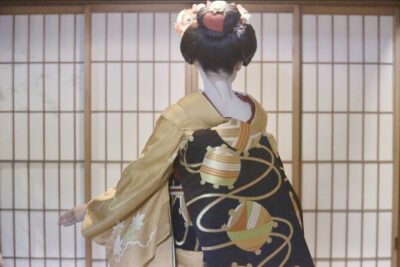
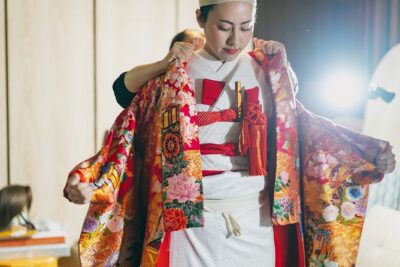
Gion, Geisha and Maiko Experiences, side by side.
 ★ 4.7Kyoto Geisha Walking Tour: Gion District & Hidden GemsFrom $253,273 reviews
 ★ 4.9Gion Magical Night Walking Tour with Geisha TriviaFrom $242,393 reviews
 ★ 4.7Gion Geisha District Walking Tour – Stories of GeishaFrom $202,187 reviews
 ★ 4.9Best of Kyoto: Gion, Geisha, Pagodas & CobblestonesFrom $242,058 reviews
 ★ 4.5Night Walk in Gion: Kyoto’s Geisha DistrictFrom $212,003 reviews
 ★ 5.0Kyoto Night Foodie Tour in Gion (9+ dishes + 6 Sake tastings)From $1631,762 reviews
 ★ 5.0Kyoto Gion Geisha District Walking Tour – The Stories of GeishaFrom $251,441 reviews
 ★ 5.0Kyoto Gion: 2-Hour Geisha Culture & History Walking TourFrom $231,186 reviews
Filed on these lists too