
REVIEW · NARA DEER PARK AND TODAI-JI
Nara Todaiji Kasuga Taisha Private Full Day Tour From Kyoto
Deer and lanterns make Nara a quick win. This private full-day tour strings together Nara Park, the UNESCO magic of Todaiji, and the thousands of hanging lanterns at Kasuga Taisha, with an English-speaking guide who helps you understand what you are actually seeing. I particularly love the deer time in Nara Park, and I love how the guide turns major sights into clear, human stories, like the kind of fluent, native-level English led by guides such as Katsuhiko Ishida, Gustavo, Yochee, Richard, and Yossi.
One drawback to plan for: you handle most of the transit and lunch yourself, since transportation is not included and the Kotoya traditional lunch is extra.
In This Review
- Key highlights to look for
- Why Nara feels like the best day-trip from Kyoto
- Meeting point at Kyoto Station, then you are on Nara time
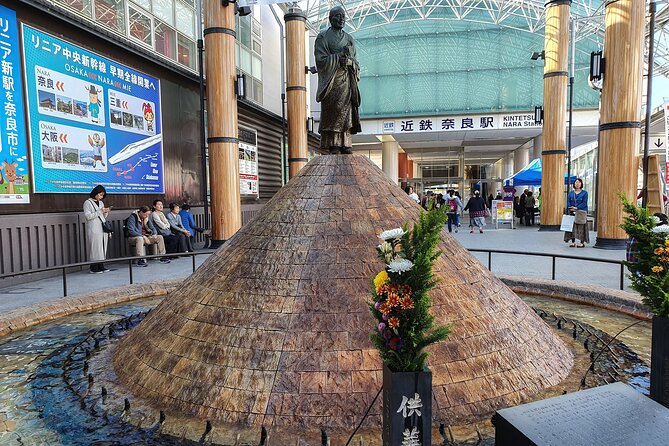
- The express train start and a quick stop at the Gyoki Statue
- Nara Park and the sika deer: plan for the closest experience
- Todaiji and the Great Buddha Hall, UNESCO level scale
- Lunch at Kotoya: tasty but not included
- Kasugataisha shrine lanterns and a stroll into Naramachi
- Kofuku-ji and the Heijo-kyo capital context
- What the guide does for your day (and why it matters)
- Price and value: what you actually get for $195
- Timing and stamina: the day is long, but manageable
- Who this tour fits best
- Should you book this Nara day tour from Kyoto?
- FAQ
- Where is the meeting point?
- How long is the tour?
- Is this a private tour?
- Are the entrance fees included?
- Is lunch included?
- Is transportation included?
- Does the tour include an English-speaking guide?
- What is provided during the tour besides the guide?
- Can I cancel and get a full refund?
Key highlights to look for
- Private group pacing so you are not stuck with a crowd rhythm
- Todaiji and Kasuga Taisha entrance fees included
- Nara Park deer encounters with sacred sika deer right in the open park
- English-guided context that helps you connect the dots across temples and shrines
- Naramachi streets and shops for preserved merchant-house lanes and retro stops
- Mobile ticket convenience for smoother entries
A half day in Nara goes several ways
- Kyoto/Osaka: Nara, Fushimi Inari Taisha, Arashiyama Bus Tour
★ 4.7 · 1,275 reviews - Osaka/Kyoto: Arashiyama, Nara & Fushimi Inari Shrine w/Lunch
★ 4.4 · 754 reviews - Kyoto and Nara Day Trip from Kyoto
★ 4.5 · 445 reviews - Full Day Guided Tour to Kyoto and Nara from Osaka by Van
★ 5.0 · 420 reviews
Why Nara feels like the best day-trip from Kyoto
Nara is close enough to feel easy, but different enough that you do not feel like you are just repeating Kyoto. In one long day, you get major religious landmarks, a classic park scene with free-roaming deer, and old-school street life in Naramachi. It is the kind of mix that works well if you want variety without spending hours planning routes.
Also, Nara has a way of making you slow down. The deer roam where you are walking, Todaiji and Kasuga Taisha reward standing still and looking up, and Naramachi gives you smaller, human-scale details like narrow lanes and well-preserved merchant houses. A guided day is a good fit here because a guide helps you decide where to pause, what to notice first, and how each stop connects to the bigger story of the city.
Meeting point at Kyoto Station, then you are on Nara time
The tour starts at the 7-Eleven Heart-In at JR Kyoto Station, Central Entrance Store (Higashishiokojicho, Shimogyo Ward). It ends back at the same spot, which is handy because you do not need to think about where you will finish.
You meet your English-speaking guide and then head out by express train to Nara. Because this is a private tour, it is just your group, not a large shared bus situation. That matters in real life, because you can move at a reasonable pace through sights that are usually crowded.
One more practical note: there is a mobile ticket, so you are not juggling paper tickets at entry. That makes a difference when you are working between temples, shrines, and city streets in the same day.
The express train start and a quick stop at the Gyoki Statue
Early in the day, you board an express train and begin the Nara adventure. Along the way, you pass by the Gyoki Statue with a fountain, which gives the tour a local flavor before you even reach the big park zone.
This is not the headline moment, but I like these small waypoints because they set expectations. You are not only going from one famous building to the next. You are also getting little reminders that Nara has layers, and that the city has long been a religious and cultural crossroads.
- PERFECT KYOTO 1-Day Bus Tour★ 5.0 · 13,518 reviews
- Kyoto: Fushimi Inari, Kinkakuji, Bamboo Grove 1 Day Bus Tour★ 4.8 · 4,316 reviews
- Kyoto: Tea Ceremony in a Traditional Tea House in Kiyomizu★ 4.9 · 3,519 reviews
- Kyoto: Tea Ceremony Ju-An at Jotokuji Temple★ 4.9 · 3,207 reviews
- Kyoto: 45-Minute Tea Ceremony Lesson Experience★ 4.3 · 2,378 reviews
Nara Park and the sika deer: plan for the closest experience
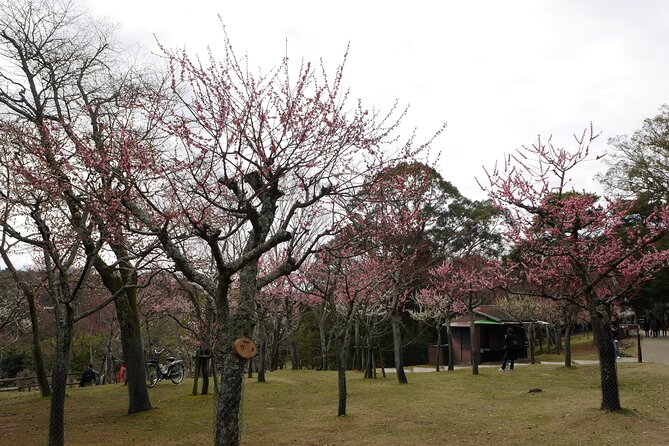
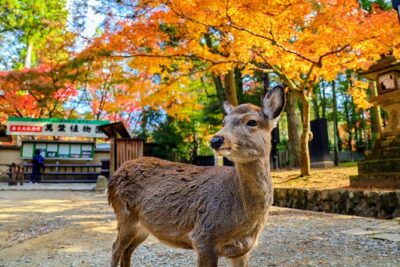
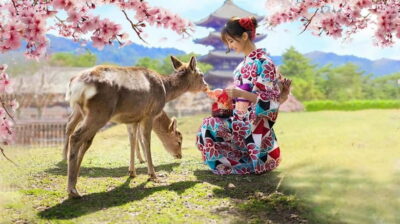
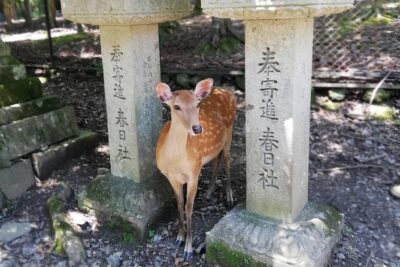
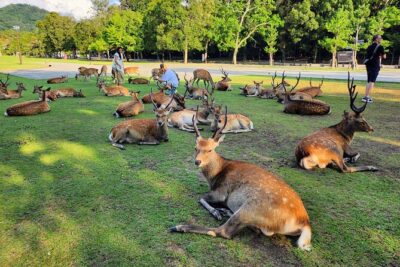
Nara Park is the heart of the day for many people, mainly because of the deer. You will see the sika deer, which are considered sacred messengers in Shinto tradition, and they are a symbol of Nara. The park feels wide open, with lush greenery and space to wander, but the deer are always part of the motion.
The best part is how normal it feels. This is not a zoo scene. The deer are just there, right where people walk and pause. In the reviews, the deer experience gets called out as a must, and feeding them comes up as a highlight too. So if you are hoping for that classic Nara moment where the deer behave like part of the scenery, this stop delivers.
A smart way to handle deer time is to treat it like street-level sightseeing, not a formal attraction. Keep your hands ready for photos, but also keep things sensible. If you are carrying snacks, keep them secure and use a moment to enjoy the interaction without rushing every second.
Todaiji and the Great Buddha Hall, UNESCO level scale
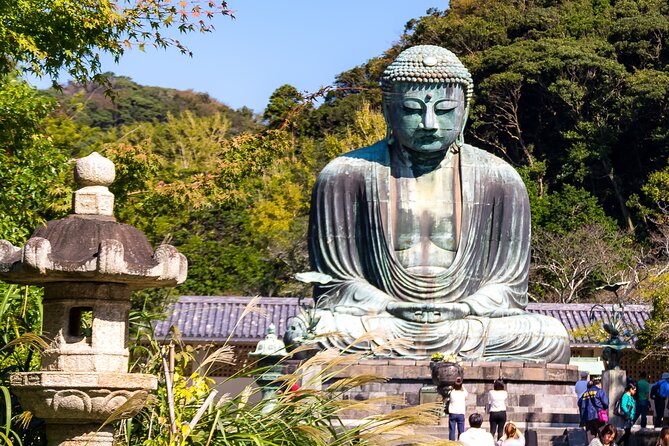
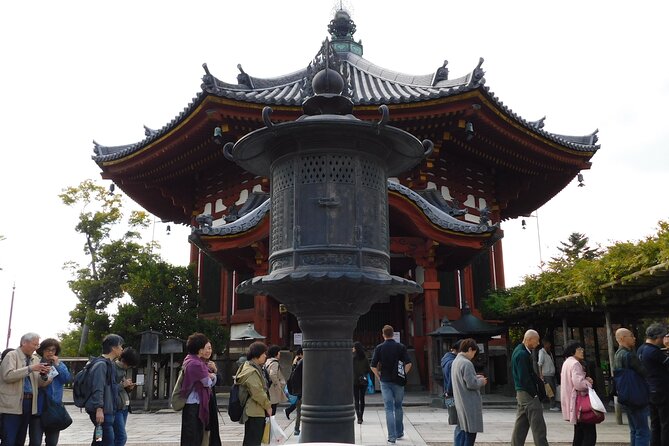
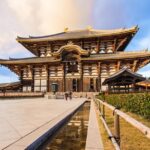
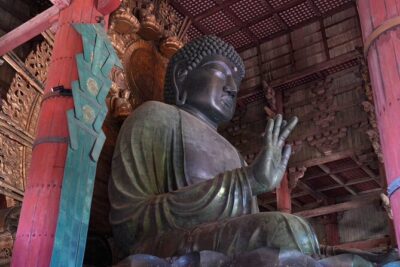
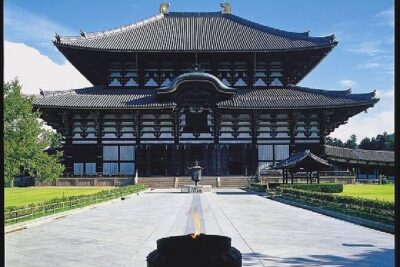
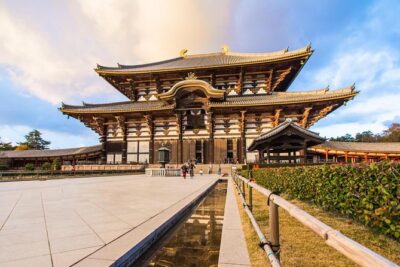
Todaiji is the big-ticket sight, and it earns the hype because of scale. This UNESCO World Heritage Site houses the Great Buddha (Daibutsu) in the Daibutsuden, and it is described as one of the largest bronze statues of Buddha in Japan.
Here is what a guide helps with: you are not just looking at something huge. You are also learning what you are looking at, and why the Great Buddha matters in a city where religion is woven into daily life. The guide’s job is to keep the stop from feeling like a checklist. When the story clicks, the hall feels more meaningful, even if you have seen other famous temples in Japan.
Entrance fees for Todaiji are included, so you can focus on the experience instead of adding another step to your budget math. Afterward, the day flows naturally toward lunch, with time built in to reset before the next shrine section.
Lunch at Kotoya: tasty but not included
Right after Todaiji, you get a traditional lunch option at Kotoya Restaurant. It is not included in the tour price, and the amount listed is around JPY 2500.
If you want to keep costs predictable, decide in advance whether you will eat there. If you are already food-motivated for the day, plan for that lunch as part of your total day budget. If you prefer flexibility, you can treat lunch as an add-on rather than a requirement.
Kasugataisha shrine lanterns and a stroll into Naramachi
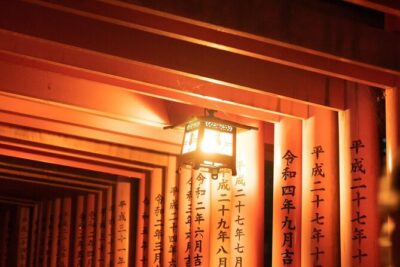
Kasuga Taisha is where the tour shifts from big Buddha awe to a very different mood. The shrine is known for thousands of hanging lanterns, and the effect is visual right away. It is not just decorative either. It gives you a sense of ongoing devotion and long-standing ritual culture.
Entrance fees for Kasuga Taisha are included, so you just show up and enjoy. What I like here is the balance: Todaiji makes you look outward and upward at monumental scale, while Kasuga Taisha trains you to notice light, texture, and the shrine atmosphere.
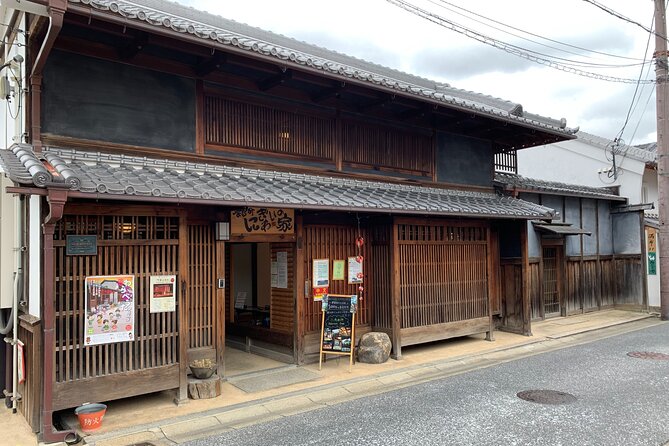
Then you head into Naramachi. This is where the day becomes more like wandering. Naramachi has narrow lanes lined with well-preserved traditional merchant houses, often tied to the Edo period vibe. You can also browse specialty shops and retro museums, so you get both street architecture and small-stop browsing.
The time at Naramachi is shorter, so it helps to pick a direction early. Focus on one or two areas you want to experience rather than trying to see everything. If you like souvenir shopping, crafts, or small museum detours, this is the part that can turn into the most personal memory.
Kofuku-ji and the Heijo-kyo capital context
After the shrine and Naramachi streets, you explore Kofuku-ji temple grounds. This stop is tied to the history of the Heijo-kyo imperial capital, giving the day a historical bridge beyond just religious landmarks.
The value here is perspective. When you are in Nara, it is easy to think of temples as standalone places. Kofuku-ji helps connect the dots to Nara’s past as an imperial center. It is a useful counterweight to the deer-and-lantern energy, and it gives your day-trip a clearer sense of why these places exist where they do.
What the guide does for your day (and why it matters)
This is one of those tours where the guide quality can change everything. Multiple guides mentioned in the reviews stand out for fluent English and for knowing where to go for the best experience. Katsuhiko Ishida, Gustavo, Yochee, Richard, and Yossi are all named examples in the feedback, and the common thread is that they help you not only move through places, but understand them.
One review theme I really agree with: early starts can help you beat crowds at the most popular areas. If you are the type who gets cranky when you are stuck behind slow-moving groups, this kind of planning helps. The walk can be long, but having a guide to point out key viewpoints and route choices makes the day feel intentional instead of tiring.
So, when you book, do not think only about sights. Think about how you want to experience them. If you want your Nara day to feel organized, guided, and easier to interpret, a strong English guide is a big part of the value.
Price and value: what you actually get for $195
At $195 per person, this is not the cheapest way to do Nara. But it can be a very efficient way to do Nara because several important costs and hassles are already handled.
Included:
- English-speaking tour guide
- Entrance fees for Todaiji Temple and Kasuga Taisha Shrine
- Snacks
Not included:
- Hotel pickup and drop off
- Transportation (JR Pass can be used, listed as JPY 1280 one way)
- Lunch at Kotoya (around JPY 2500)
- Personal expenses
So the pricing math is mostly about what you would otherwise spend on entry tickets plus the cost of a guided day that runs about 8 hours. Since entrance fees for two of the most important sights are included, you are reducing the part of travel spending that feels annoying: paying for tickets while also trying to follow a route.
It also helps that the tour is private. If you are going as a group, private access can make the price feel more reasonable. Even when you go solo or as a couple, the guide can save time and reduce decision fatigue, which is worth something on a day-trip.
One more thing: the tour averages about 47 days in advance. That suggests it has steady demand, so if your dates are flexible but you still want the best shot at availability, booking earlier is smart.
Timing and stamina: the day is long, but manageable
This is an 8-hour full-day program. That means you will be walking, moving between sights, and spending time standing in indoor and outdoor spaces. Some people love this format, because it feels like you got the complete Nara story. Others may find it a lot.
If you want to make the day easier on your feet, wear comfortable shoes and plan a calm lunch block. The tour has snack support, but it is still a long stretch between meals if you skip lunch or delay it.
Also, because you are dealing with deer areas and popular temple zones, the day can have slower moments. A guide helps keep those moments from derailing your timing, especially when you want to see the key sights without spending the whole day in lines.
Who this tour fits best
I think this is a strong match for you if:
- You want to hit the top Nara sights in one day from Kyoto
- You care about understanding what you see, not just taking photos
- You prefer a private experience where your group moves as one unit
- You like the idea of deer in the park plus lantern-lit shrine atmosphere plus preserved old streets
It may not be the best fit if:
- Your goal is to keep costs as low as possible
- You prefer self-guided wandering with no organized plan
- You do not like long walking days
The tour says most travelers can participate, so it is broadly accessible in terms of participation level. Still, the day format is active enough that comfort and pacing matter.
Should you book this Nara day tour from Kyoto?
If you want a straightforward, guided Nara day where the major sights are linked together logically, this tour is worth serious consideration. The combination of Nara Park deer time, Todaiji’s Great Buddha Hall, and Kasuga Taisha’s lanterns is the kind of trio that can be hard to stitch together well on your own in a single day without getting lost in planning.
The other selling point is the guide. When the English is strong and the route is smart, the day feels smoother and your photos are not just pretty, they make sense. I also like that entrance fees for the two central stops are included, which helps you feel in control of your budget.
Book it when you want convenience plus meaning. Skip it if you are chasing the lowest price and you are confident handling transportation, ticketing, and timing on your own.
FAQ
Where is the meeting point?
Meet at the 7-Eleven Heart-In at JR Kyoto Station Central Entrance Store (烏丸通塩小路下ル Higashishiokojicho, Shimogyo Ward, Kyoto).
How long is the tour?
The tour runs about 8 hours.
Is this a private tour?
Yes. Only your group participates.
Are the entrance fees included?
Entrance fees are included for Todaiji Temple (Todaiji Daibutsuden) and Kasuga Taisha shrine.
Is lunch included?
No. Lunch at Kotoya Restaurant is not included, and it is listed as about JPY 2500.
Is transportation included?
No. Transportation is not included, and the JR Pass can be used. The listed one-way cost is JPY 1280.
Does the tour include an English-speaking guide?
Yes. An English-speaking guide is included.
What is provided during the tour besides the guide?
Snacks are included, and you also receive entrance tickets where noted.
Can I cancel and get a full refund?
Yes, free cancellation is available up to 24 hours in advance for a full refund.
Half a Day in Nara

Newest Kyoto write-ups from the Loving Japan desk
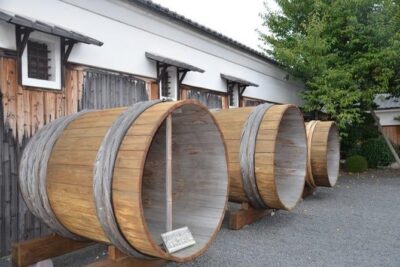
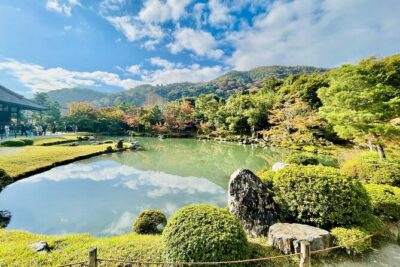
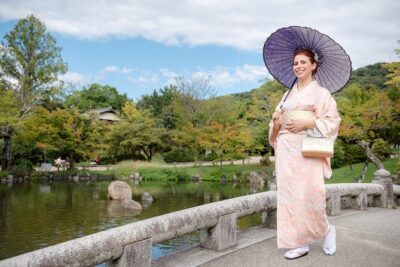
Nara Deer Park and Todai-ji, side by side.
 ★ 5.0World Heritage Kyoto & Nara Uji Authentic Matcha ExperienceFrom $1291,573 reviews
 ★ 4.7Kyoto/Osaka: Nara, Fushimi Inari Taisha, Arashiyama Bus TourFrom $521,275 reviews
 ★ 5.0Nara Half Day Trip Walking Tour (Private Option Available)From $105937 reviews
 ★ 4.4Osaka/Kyoto: Arashiyama, Nara & Fushimi Inari Shrine w/LunchFrom $61754 reviews
 ★ 5.0Nara Early Morning Tour (Kyoto or Osaka Departure Available)From $61676 reviews
 ★ 4.5Kyoto and Nara Day Trip from KyotoFrom $194445 reviews
 ★ 5.0Full Day Guided Tour to Kyoto and Nara from Osaka by VanFrom $106420 reviews
 ★ 4.5Nara Afternoon Tour from Kyoto or OsakaFrom $102390 reviews
Filed on these lists too