
REVIEW · NARA DEER PARK AND TODAI-JI
Osaka & Kyoto & Nara Top Hightlights English Speaking Tour
One day can feel like three eras. You’ll go from Kyoto temple lanes to Fushimi Inari’s Senbon Torii and end with Nara’s deer park energy, all in one tightly run English-speaking outing. Expect a real mix of guided moments and time to wander on your own.
What I like most is the pacing. You get proper breathing room at each major stop, including about 2.5 hours around Kiyomizu-dera (with lunchtime built in) and about 70 minutes at Fushimi Inari. I also like how many guides lean into practical Japan tips, and you’ll often hear that from upbeat hosts such as Kou Ran (Kosa), Ana, Lou, Yang, and Anna, whose style shows up again and again in the feedback.
One consideration: the tour finishes in Osaka, not back in Kyoto. You’ll be dropped near Shinsaibashi (Osaka Nihonbashi Exit 2 in the Namba area), so plan your Kyoto return separately.
In This Review
- Key Highlights You Should Not Miss
- Why This Kyoto and Nara Tour Starts in Osaka (And How That Affects Your Day)
- Price and What’s Actually Worth Paying For
- The 9-Hour Plan: How the Time Feels in Real Life
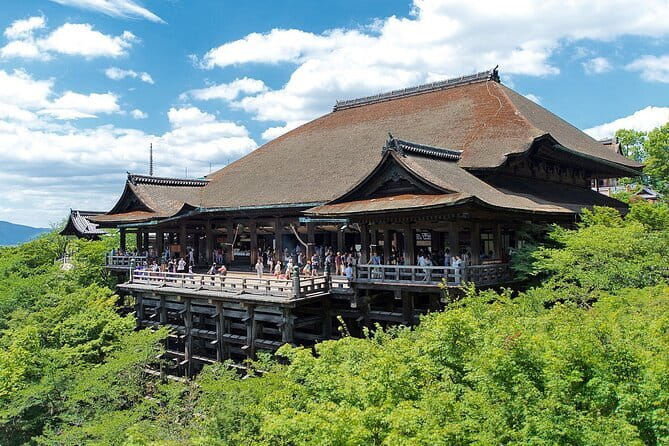
- Kiyomizu-dera Temple and the Street-Walk That Turns It Into a Story
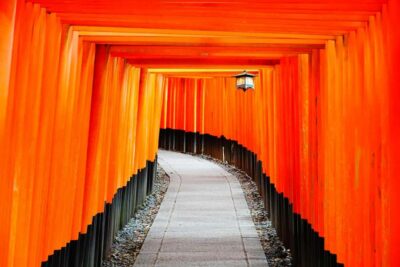
- Fushimi Inari’s Senbon Torii: Freedom With a Clear Anchor
- Nara Park Deer Time, Plus What to Expect Around Todaiji
- Shinsaibashi Finish: Why Your Day Ends in Osaka (And What to Do With That Hour)
- Guides, English Support, and the Difference Between Drop-Off and Coaching
- Optional Kimono Experience: A Nice Add-On, Not a Sure Thing
- Practical Tips That Save Stress on a Packed Walking Day
- Who This Tour Suits Best (And Who Might Want to DIY)
- Should You Book This Osaka to Kyoto and Nara Highlights Tour?
Key Highlights You Should Not Miss
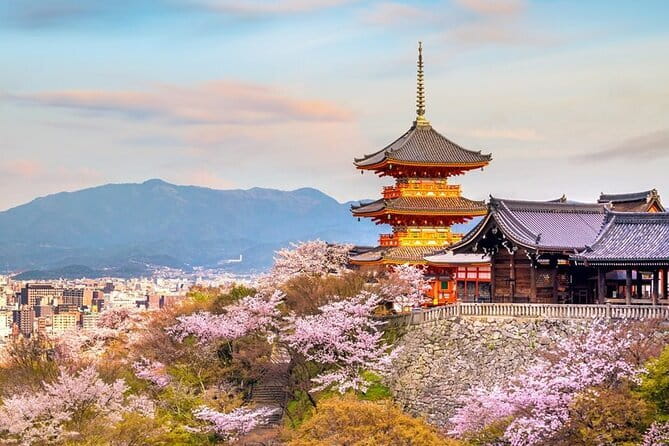
- Old-street walk around Kiyomizu-dera through Nineizaka and Sannenzaka and on toward Yasaka Shrine
- Senbon Torii free wandering at Fushimi Inari, with admission included
- Nara Park time for deer encounters plus an easy, fun pace for photos
- Todai-ji visit is short but meaningful, about 20 minutes on the schedule
- Finish in Shinsaibashi area, so your day ends in Osaka even if you started thinking Kyoto
A half day in Nara goes several ways
- Ancient Capital Tour: Kyoto and Nara Highlights from Kyoto/Osaka
★ 4.5 · 332 reviews - Kyoto and Nara Day Trip from Osaka
★ 4.0 · 175 reviews - Discover Himeji, Kobe and Nara from Osaka
★ 5.0 · 101 reviews - Kyoto & Nara Private customized tour with English speaking Guide
★ 4.5 · 99 reviews
Why This Kyoto and Nara Tour Starts in Osaka (And How That Affects Your Day)
This is built for people staying in Osaka who want a serious taste of Kyoto and Nara without managing transit all day. The tour uses a vehicle service and a local driver, which matters because Kyoto and Nara are spread out, and you do not want to be constantly timing trains and buses between temples.
The flip side is simple: you end in Osaka. Even if you start from a Kyoto-side meeting point, the day closes in the Osaka Namba area. That can be totally fine, but it changes the way you plan dinner and the way you get back to your hotel.
Also note the day is designed to fit Japanese driving limits. You may feel the schedule is a bit hurried at some points, especially during peak traffic. That’s not a dealbreaker, but it is worth knowing before you assume you’ll linger like a slow independent traveler.
Price and What’s Actually Worth Paying For
At $54 per person for a roughly 9-hour day, the value is mostly in logistics: transport, driver time, and the tour guide service. You are paying to remove the hassle of getting between Kyoto and Nara in one go.
What you do need to budget for separately is admission and food. Fushimi Inari’s admission is included, while Kiyomizu-dera and Todai-ji are listed as not included. Lunch and drinks are also not included, so you’ll want to either bring cash or plan quick purchases near the sights.
Think of the price like this: you are buying convenience plus structure, then mixing in your own choices for meals and entrances that are not covered.
The 9-Hour Plan: How the Time Feels in Real Life
The day is arranged as a chain of stops with travel time and built-in lunch time. You will likely spend a lot of the day walking, especially around Kiyomizu-dera and in the Nara area near Todaiji.
Here is the schedule rhythm you should expect:
- Kiyomizu-dera: about 2.5 hours total, with time for the temple area and lunch
- Fushimi Inari: about 70 minutes, mostly free time for your own Senbon Torii route
- Nara Park: about 1.5 hours of free time for the deer area and surrounding views
- Todai-ji: about 20 minutes on the timetable
- Shinsaibashi: about 1 hour to roam before your day ends
This setup works well if you want “highlights with breathing room.” If you want deep, slow temple study, you’ll feel the limits at Todai-ji and during the transition days when crowds and walking distance slow everyone down.
- Osaka Go Karting Tour with Funny Costume★ 5.0 · 2,658 reviews
- Osaka Castle: Museum and Tower Entry Ticket★ 4.5 · 2,380 reviews
- Osaka: Shinsekai Food Tour with 13-15 Dishes at 5 Eateries★ 4.8 · 2,204 reviews
- Osaka Food Tour: 13 Dishes at 5 Local Eateries★ 5.0 · 2,149 reviews
- Hungry Osaka Street Food Tour:15 Tastings & 3 Drinks with a Local★ 5.0 · 1,727 reviews
Kiyomizu-dera Temple and the Street-Walk That Turns It Into a Story

Kiyomizu-dera is the Kyoto anchor on this trip, and the route is one reason the day feels more than just a checklist. Around this stop, you also get the classic walk through Nineizaka and Sannenzaka, plus Ishibei-koji Alley and Hanamikoji Street before moving on toward Yasaka Shrine.
That matters because Kiyomizu-dera is not only the temple. The approach is part of the experience. The lanes and old-street vibe help you understand why people get emotionally hooked on Kyoto in the first place, even if you only have a few hours.
The main drawback is also tied to this stop: it’s a walking day. The schedule expects you to cover ground on your own feet. Wear comfortable shoes and plan your photo stops without over-optimizing every turn.
Admission for Kiyomizu-dera is not included, so keep that in mind when you budget the day.
Fushimi Inari’s Senbon Torii: Freedom With a Clear Anchor
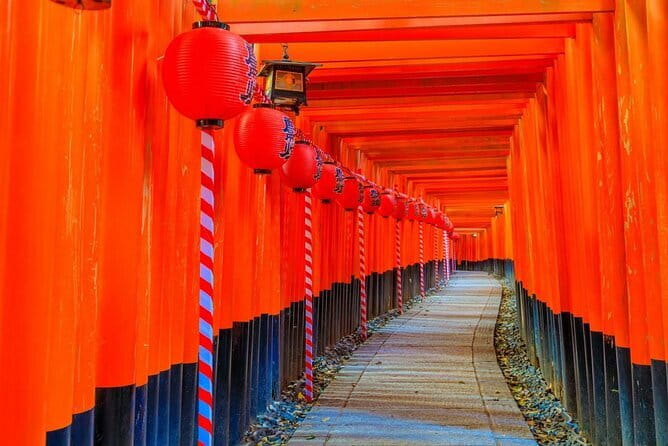
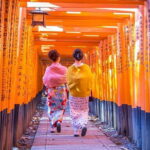
Fushimi Inari-taisha is where you get the iconic “Senbon Torii” experience, and the timing is friendly. You get about 70 minutes, and that’s long enough to do your own route without feeling like you are stuck in a single view.
Admission is included here, which is a nice bonus because it removes one on-site decision. You can focus on what you came for: stepping among the torii gates and enjoying the atmosphere as the path climbs and curves.
A practical tip for this stop: plan your return pace. Torii gates and steps can slow you down, and you still need to be back on time for the bus.
If you love photography, you’ll likely want to time your visit around crowd flow. If you care less about perfect angles, use the extra minutes to just walk and breathe in the moment.
Nara Park Deer Time, Plus What to Expect Around Todaiji
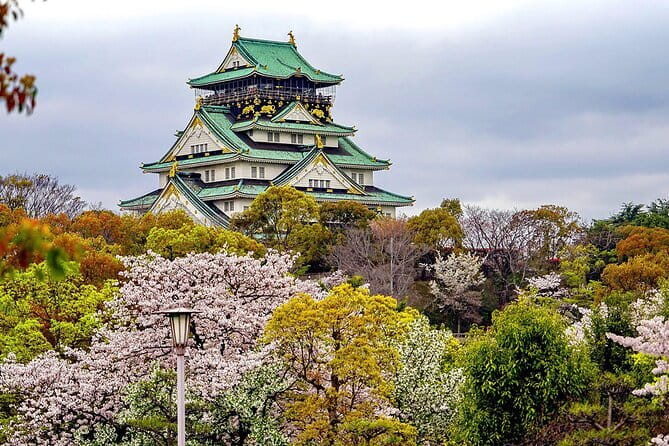
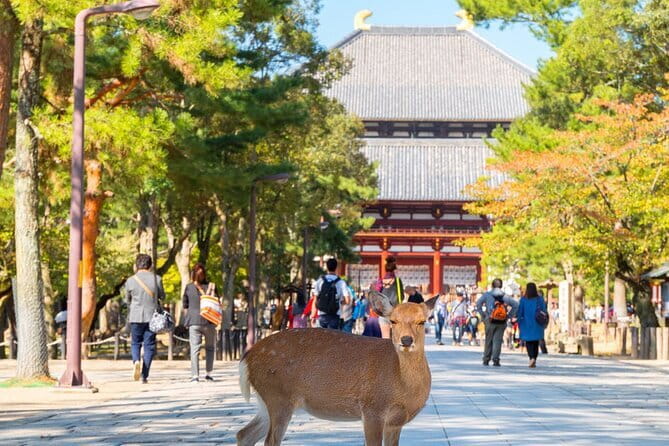
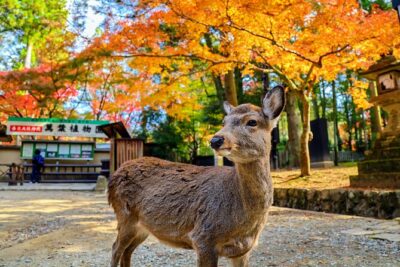
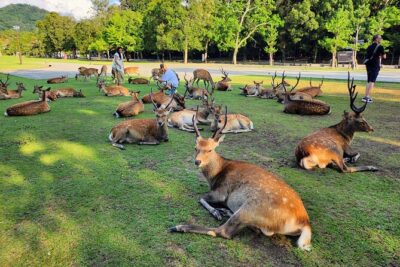
Nara Park is one of those places that feels instantly fun. You get about 1.5 hours of free time, which is exactly what you want for the deer encounter and for wandering near the area’s major sights.
This stop tends to be a favorite because it is interactive. You’re not only looking at old stone and painted roofs, you’re dealing with quirky wildlife energy, fast photo moments, and the kind of close-up attention that makes Nara memorable fast.
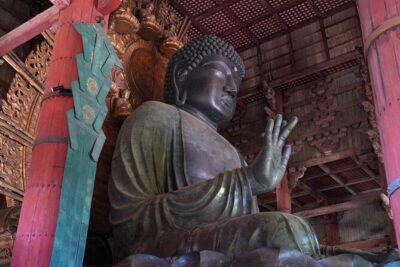
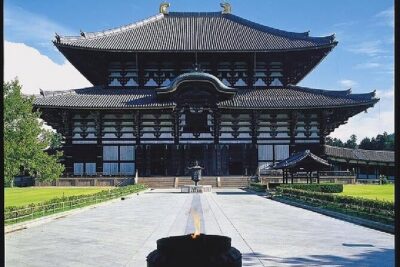
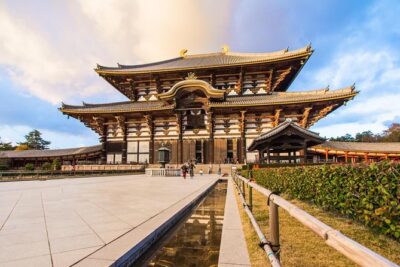
Todai-ji comes next, but it’s intentionally short, about 20 minutes. That can feel satisfying if you treat it like a “must-see glance” with key photos and highlights. It can feel tight if you want to soak in every detail or if you lose time to distance from where the bus parks.
One thing I would watch for: parking distance. Some schedules leave you walking a bit to reach Todaiji, which can cut into your effective time. If you want less rushing, bring water, move steadily, and aim to keep your group moving.
Admission for Todai-ji is not included, so budget for that entrance separately.
Shinsaibashi Finish: Why Your Day Ends in Osaka (And What to Do With That Hour)
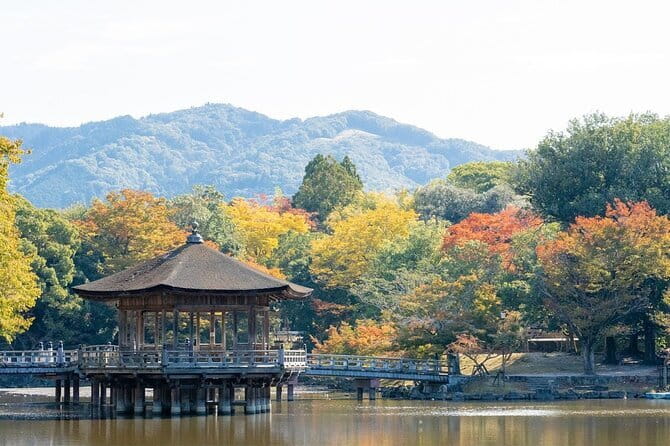
Your last stop is Shinsaibashi, with about 1 hour to roam. This is a smart way to close out a long day because Shinsaibashi is easy to navigate compared to some smaller neighborhoods, and it gives you time for snacks or late shopping if you want it.
The tour officially ends in Osaka and does not return to Kyoto. You are dropped near Osaka Nihonbashi Exit 2 in the Shinsaibashi area, so you should plan dinner and your onward transit from that side of the city.
If you are heading back to Kyoto after the tour, you will likely be doing it by your own means. Build that into your timing so you do not feel rushed at the end of the day.
Guides, English Support, and the Difference Between Drop-Off and Coaching

The tour is only as good as the guide style, and the feedback pattern here is clear. When the guide is proactive, the day feels smooth, with pacing tips, history context, and clear instructions about where to meet and when.
Names that show up positively include Kou Ran (Kosa), Ana, Lou, Yang, Anna, Amy Ono, Jason, Eigai, and Liu. While each person has their own voice, the common strength in the strong reviews is time management and keeping people pointed in the right direction.
That said, a few reviews flag that in some cases the experience can feel more like being dropped at each location than truly guided. The practical fix for you is to treat the guide as your navigation tool. When instructions are given, write down key meeting points in your own words, not just what you assume.
Also pay attention to language support. The tour description and feedback indicate translation in multiple languages can be available, which helps if you do not read Japanese.
Optional Kimono Experience: A Nice Add-On, Not a Sure Thing
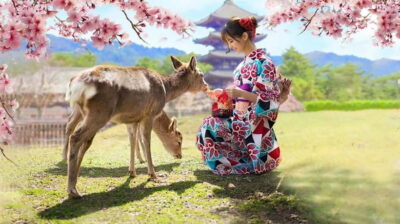
A kimono experience is offered as an optional add-on, with reservations needed in advance. If you want the full “Kyoto look” for photos, this can be a fun way to make your temple lane walking feel more immersive.
Keep expectations realistic: adding a costume experience usually means more preparation time and more walking coordination. If you are trying to maximize your photo time at Kiyomizu-dera, confirm timing details before you commit.
Practical Tips That Save Stress on a Packed Walking Day
This tour is structured, but you still want to move like a pro.
- Confirm where you meet and double-check the exact pick-up spot before the day starts. Some people reported meeting point confusion when GPS routes sent them to the wrong place.
- The night before, you should receive a departure reminder email with your pick-up time, the vehicle registration number, and guide contact information. Guides do not initiate contact, so plan around the email.
- Bring passport and keep valuables secure. You are responsible for your own items if anything goes missing.
- Pack light. The tour is not ideal for heavy luggage, and only one luggage piece per person is allowed. If you bring more than one or fail to note luggage, an extra charge may apply.
- If you are using a stroller, a foldable one can be carried, but you must inform customer service in advance. Otherwise, the driver can refuse boarding.
Finally, remember that traffic can slow everything down on weekends and red days. If you want the smoothest flow, consider avoiding the busiest travel days.
Who This Tour Suits Best (And Who Might Want to DIY)
This is a strong fit if you:
- want a one-day highlights route that mixes Kyoto temple streets with Nara deer energy
- prefer having transport handled and meeting points clearly defined
- like a balance of guided info plus free time to wander
It may be less ideal if you:
- want to return to Kyoto by the end of the day. The tour ends in Osaka.
- want long, slow temple exploration. Todai-ji is only about 20 minutes, and the whole day can feel rushed when crowds and road conditions bite.
- are sensitive to comfort issues. There was a report of weak bus air conditioning during hot weather, so keep that in mind if you travel in summer.
If you truly love Kyoto and want depth, you might prefer a more flexible plan. But for most first-timers, this style hits the sweet spot.
Should You Book This Osaka to Kyoto and Nara Highlights Tour?
If you’re short on time and you want a practical day that hits Kiyomizu-dera, Fushimi Inari, and Nara Park without wrestling transit, I think this is book-worthy. The price is low for the amount of ground you cover, and the free time at key stops is what makes it enjoyable instead of exhausting.
Book it especially if you value a guide who keeps things moving and gives you the right context at the right moments, as seen in the best runs led by guides like Ana, Lou, Yang, Anna, Amy Ono, and others.
Skip or choose carefully if ending in Osaka will be a hassle for you, or if you need lots of time at Todai-ji. In that case, treat it as a highlights sampler, not a deep-dive temple day.
Bottom line: this tour is for people who want their Kyoto and Nara highlights with minimal planning, just realistic expectations about the single-day time limits.
Half a Day in Nara

Newest Osaka write-ups from the Loving Japan desk



Nara Deer Park and Todai-ji, side by side.
 ★ 5.0World Heritage Kyoto & Nara Uji Authentic Matcha ExperienceFrom $1291,573 reviews
 ★ 4.7Kyoto/Osaka: Nara, Fushimi Inari Taisha, Arashiyama Bus TourFrom $521,275 reviews
 ★ 5.0Nara Half Day Trip Walking Tour (Private Option Available)From $105937 reviews
 ★ 4.4Osaka/Kyoto: Arashiyama, Nara & Fushimi Inari Shrine w/LunchFrom $61754 reviews
 ★ 5.0Nara Early Morning Tour (Kyoto or Osaka Departure Available)From $61676 reviews
 ★ 4.5Kyoto and Nara Day Trip from KyotoFrom $194445 reviews
 ★ 5.0Full Day Guided Tour to Kyoto and Nara from Osaka by VanFrom $106420 reviews
 ★ 4.5Nara Afternoon Tour from Kyoto or OsakaFrom $102390 reviews
Filed on these lists too