
REVIEW · TOKYO TOWER, GINZA AND THE IMPERIAL PALACE
Popular Sushi Making Class near Tokyo Tower
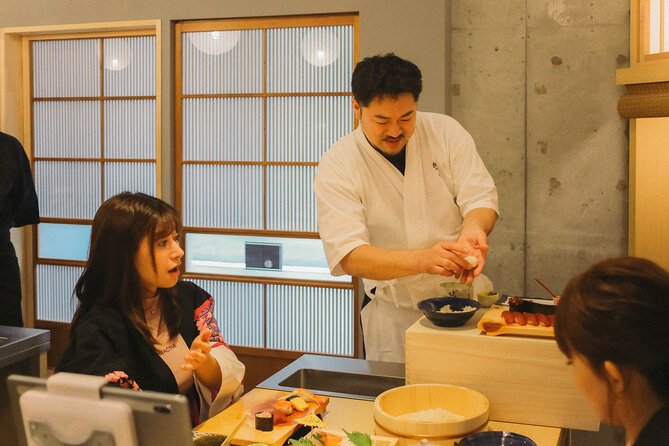
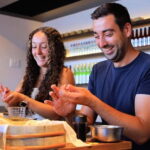
Tokyo Tower and sushi class, in one. In Higashiazabu, you learn sushi-making from a Japanese chef in English, then eat your own salmon and tuna sushi. I love the hands-on sushi technique that teaches rice and assembly, so you understand what to order later. I also love the kimono-and-photo setup, with dress-up items and staff who snap photos of your finished pieces. The only heads-up is the timing, it moves pretty fast in about 90 minutes, so it is not a long, lingering meal.
What you’re really paying for at $87.55 is instruction plus food, not just a plate of sushi. With a maximum of 14 people, the space stays clean and organized, and instructors like Keiko, Yuki, and Mickie are known for clear step-by-step guidance in English. If you have dietary needs or allergies, message them in advance, because that part depends on planning.
In This Review
- Key points at a glance
- Higashiazabu Basecamp, Easy Tokyo Tower Access
- The Real Heart of the Class, Rice to Sushi Assembly
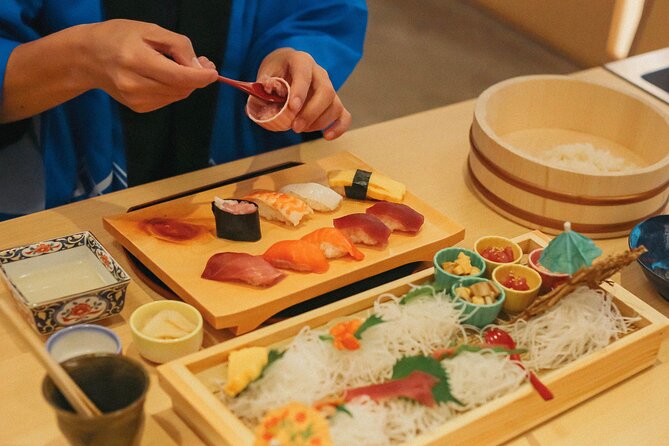
- What You Make and Eat, Salmon and Tuna Plus More
- English-Friendly Teaching, and Why Names Matter Here
- Dress-Up Fun, Photo Moments, and the Chef-Hosted Experience
- Your Minato Day Plan, Tokyo Tower Through Roppongi
- Price and Value, Why $87.55 Adds Up
- Dietary Needs, Allergies, and the Stuff You Should Ask Early
- Who This Sushi Workshop Is Best For
- Practical Tips to Make It Go Smoothly
- Should You Book This Sushi Making Class Near Tokyo Tower?
- FAQ
- How long is the sushi making experience?
- Where is the meeting point?
- Do I get to eat the sushi I make?
- Are vegetarian, vegan, or gluten free options available?
- What if I have allergies?
- Is this class suitable for kids?
- How many people are in the group?
Key points at a glance
- Learn rice and sushi assembly step by step with English teaching and a seat video
- Eat what you make right after (often around 10 to 12 pieces)
- Costumes, props, and photo moments including kimono dress-up and picture taking
- Dietary options are possible if planned early (vegetarian, vegan, gluten free)
- Small group setting, up to 14 people for a more guided experience
The central Tokyo landmarks, reviewed one by one
- Flagship 2-Hours Official Street Go-Kart Tour – Tokyo Bay Shop
★ 5.0 · 4,974 reviews - Tokyo: Imperial Palace and Shogun Historical Walking Tour
★ 5.0 · 2,251 reviews - Tokyo: Meiji Shrine, Asakusa, Skytree Bus Tour and Cruise
★ 4.7 · 1,986 reviews - Tokyo Panoramic 1 Day: Meiji Shrine, Asakusa, Odaiba and SKYTREE®
★ 4.5 · 1,222 reviews
Higashiazabu Basecamp, Easy Tokyo Tower Access
This experience is based in Higashiazabu near Tokyo Tower, which is a smart area if you want both culture and a little city energy. The meeting point is listed at 1-chōme-6-8 Higashiazabu, Minato City, Tokyo, and you’re close to public transportation.
The big practical win here is that Tokyo Tower is not some far-off detour. You can build your day so sushi happens first, then you can do the Tower area at night if you want the classic view. The class ends back at the meeting point, so you are not stuck with a complicated route or a long walk after you eat.
The Real Heart of the Class, Rice to Sushi Assembly
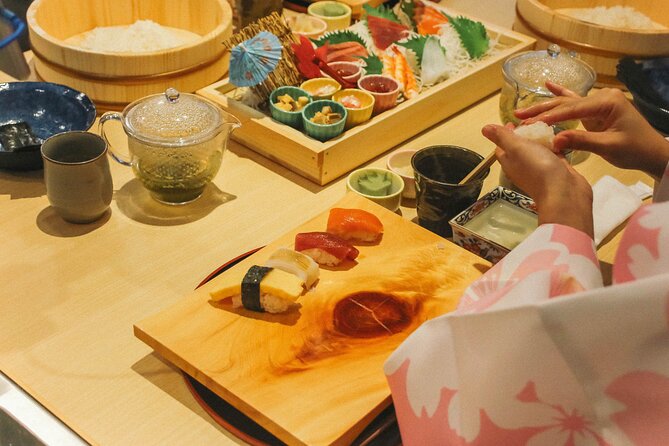
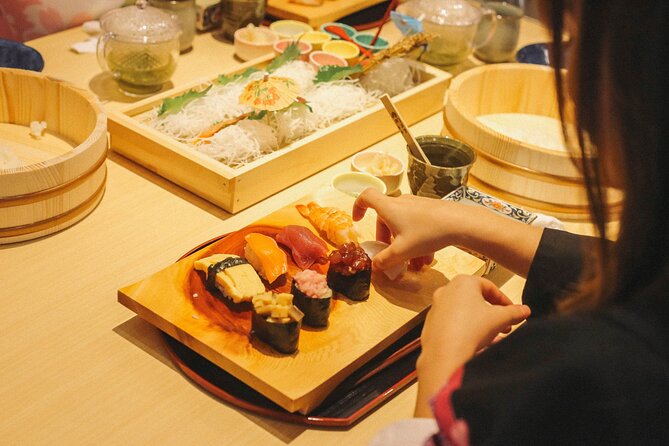
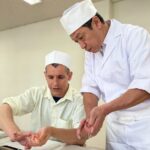
This is a hands-on sushi workshop that runs for about 1 hour 30 minutes, and you actually get to make the sushi, not just watch. A Japanese sushi chef demonstrates the process, and you follow along using instructions in English. There is also a video instruction you can watch beside your seat, which helps when you want to review what hand motion goes with what step.
The lesson focus tends to be two things: rice preparation and the exact assembly technique. Multiple people highlighted that you learn how to handle and shape the rice properly, and that assembling each piece is where the art really is. It is the kind of skill that is hard to pick up from a restaurant menu, but easier once you have had your hands on the method.
You can also expect the chef to work with the group style used in small workshops, where you are positioned for visibility and practical participation. Depending on how busy the venue is, you may sit with other customers. That usually works fine because the class setup is designed for guided practice, not a lecture hall vibe.
What You Make and Eat, Salmon and Tuna Plus More
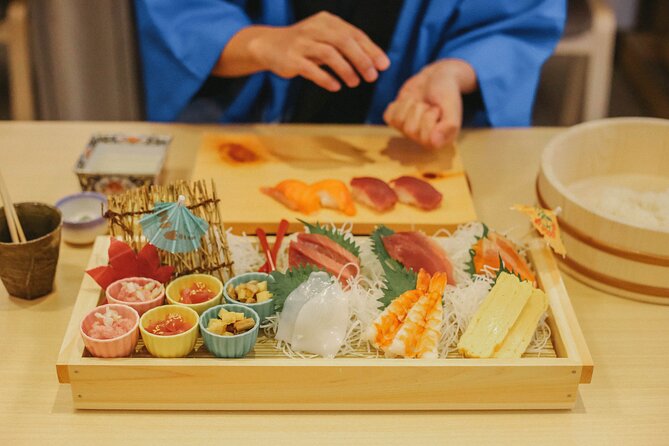
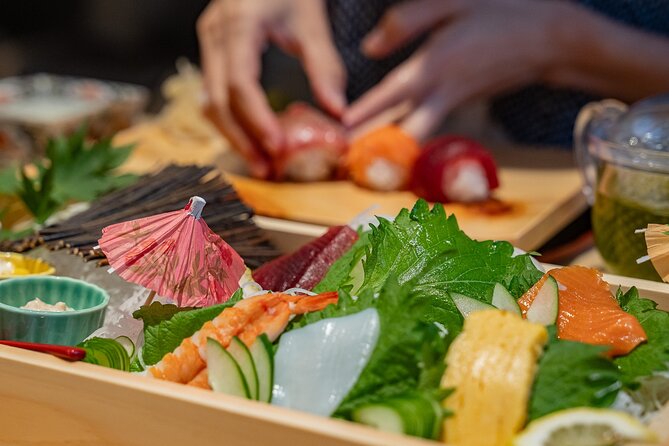
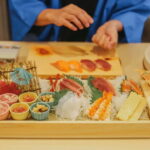
You typically work with salmon, tuna, and other ingredients. The highlight of the whole thing is simple: you eat your hand-made sushi after you’ve crafted it. That matters because sushi-making is half technique and half timing, and you only truly understand that when you eat your result right away.
In terms of quantity, you should expect a real portion, often described as around 10 to 12 pieces. A nice practical detail is that people mention the chance to ask for more rice, which helps if you are hungry or you end up being more careful and slower on the first try.
For ingredient confidence, a lot of the praise centers on freshness. In particular, people mention fish that tastes fresh and ingredients that feel high quality. One note for your expectations: if you are very picky about fish flavor or texture, it can feel subjective, because the class is still a shared format with set portions and a time limit.
Cook it yourself instead. Other kitchens in Tokyo
- Sushi Making Tokyo Roll and Authentic Japanese Sushi Class★ 5.0 · 3,971 reviews
- Tokyo: Sushi Making Class in a Happi Coat near a Famous Spot★ 4.9 · 1,377 reviews
- Tokyo Sushi Making Class in Tsukiji with Professional Chef★ 5.0 · 1,177 reviews
- Ramen & Gyoza Cooking Class in Tokyo with Local Supermarket Visit★ 5.0 · 823 reviews
- Tsukiji Fish Market Guided Tour and Sushi Making with Pro Chef★ 5.0 · 775 reviews
English-Friendly Teaching, and Why Names Matter Here
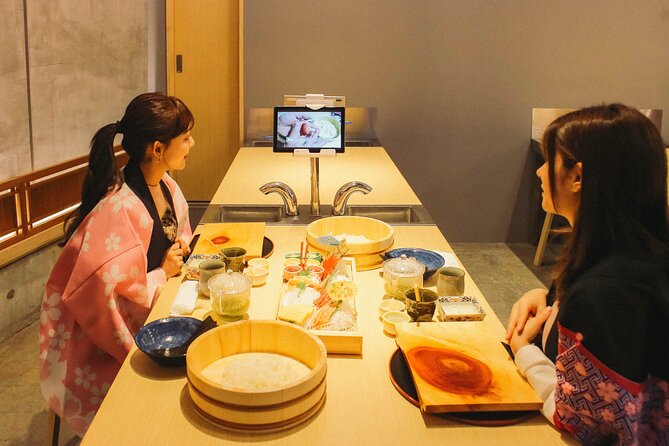
If you worry about language, this class is designed for English speakers. The chef teaches in English, and instructors are often praised for being patient and encouraging while you work. People specifically call out staff members such as Keiko, Yuki, and Mickie, which signals the experience has a real teaching team, not a rotating demo-only setup.
The teaching style is practical. You are guided step by step while you assemble, and you can ask questions as you go. That is especially helpful for first timers, because sushi rice can be tricky at home if you do not know how the texture should feel and how much pressure to use when shaping.
There’s also a “visual memory” layer. You may watch a short instruction video during the class, and you’ll have the hands-on repetition to make the steps stick. If you learn best by doing, this format is a strong match.
Dress-Up Fun, Photo Moments, and the Chef-Hosted Experience
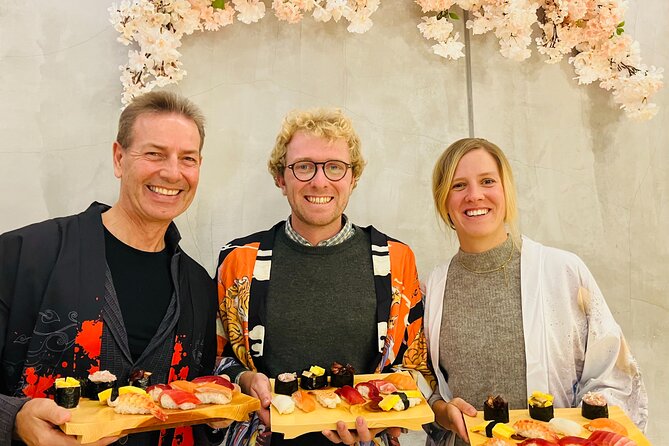
This class is not all business. You can wear sushi chef costume items and even dress up in kimonos, plus use fun props. Several people mention the staff giving items to dress up, take pictures with your finished sushi, and even create a video. Some also mention a ring light setup for photos, which makes your group shots look way better than the usual Tokyo blur.
That might sound like extra, but it actually adds value. Sushi-making can feel slightly awkward when you are new at it. The costumes and photo moments help the experience feel like a real event, not just a cooking lesson where you disappear behind your cutting board.
One detail that comes up often is how warm the welcome feels. People mention a friendly, first-class treatment and a space that feels clean and pleasant to work in. When the staff is calm and supportive, you relax, and your sushi comes out better.
Your Minato Day Plan, Tokyo Tower Through Roppongi
This experience is paired with a Minato area outing that hits a set of major stops around Tokyo Tower and beyond. You go through the area on a structured walk, and each stop gives you a different kind of Tokyo contrast.
Tokyo Tower is your anchor point. It is a great first stop because it is instantly recognizable and easy to build your bearings around. If you time it right, you can also plan to see it at night later, which many people love.
Zojo-ji adds a traditional element close to the Tower area. It is a simple change of pace from modern city views. The main consideration here is that you will likely want your camera ready, because temple and city side-by-side shots are the kind of thing you remember.
Azabujuban gives you that neighborhood feeling between tourist landmarks. It is a good place for walking breaks and atmosphere, especially when you want something more local than a checklist stop.
Shiba Park is where the day gets a calmer feel. Even if it is not a long stay, it works as a reset for your legs and your eyes before the more structured indoor experiences.
teamLab Borderless Tokyo at Azabudai Hills is a big highlight for people who love visual experiences. You get to swap the hands-on sushi focus for light-and-digital art. If you hate crowds or are sensitive to bright environments, plan mentally for the fact that this is a popular stop.
Azabudai Hills is modern Tokyo at full volume. It pairs well after teamLab because you can keep the momentum and move from art to city space. The drawback is that it can feel busy, so give yourself enough patience for crowds and lines.
Hamarikyu Wharf is a change toward water and calmer scenery. It is a nice contrast in the middle of a day that is otherwise packed with urban stops. You will likely appreciate it most if you like photo breaks and slower sightseeing moments.
Tokyo City View Observation Deck (Roppongihills) brings you the skyline view angle. A viewpoint is a classic way to make Tokyo feel real, because the scale hits differently when you look out over the city. The main practical issue is planning around when you want the light, since views can shift dramatically through the day.
The National Art Center, Tokyo gives you an art stop during the walk route. If your group is split on what to see, an art center is often the compromise that works for more people than another generic street photo stop.
Roppongi rounds it out with city energy. It is a fitting end area because it is central and lively, so you can keep exploring after the outing if you feel like it.
Price and Value, Why $87.55 Adds Up
At $87.55 per person, this is not a bargain class, and that is fair. But the value comes from what is included: a full 90-minute sushi workshop, English instruction, sushi materials, and the chance to eat what you make. In other words, you are paying for technique, plus a meal, plus a whole experience format.
The small group size, max 14 travelers, matters too. In a kitchen setting, you want enough personal attention to correct your rice handling and assembly. When the class is smaller, you tend to get more of that coaching energy, even if it is still a shared workshop.
Add in the extra touches like kimono dress-up, props, staff photos, and sometimes a video, and it becomes a more complete package than a basic cooking demo. One person did flag it as slightly overpriced, but they also said it was still super fun and made for a good lunch stop. That lines up with the overall pricing logic: you are not just buying sushi, you are buying a hands-on Tokyo moment.
Dietary Needs, Allergies, and the Stuff You Should Ask Early
This class is built to accommodate certain dietary needs, but only if you plan ahead. Vegetarian, vegan, and gluten free options are available if you message in advance. If you tell them on the day, they may not be able to accommodate your request.
Allergies are handled similarly. The information says you should let them know about food allergies in advance by message. That is the right move in any food experience, especially when fish is involved as part of the standard menu.
For kids, there is a fee from age 4, and it notes that you will charge for over 4 years old. If you have a child under 4, you are asked to share a dish. If you are traveling with family, that is helpful because it clarifies how portions and pricing are likely to work.
Who This Sushi Workshop Is Best For
This is a strong pick for first timers. Multiple people mention it as a must for lovers of Japanese cuisine and as a fun way to learn what to pick at a restaurant. Once you understand sushi rice and assembly, ordering feels less like guessing and more like knowing.
It is also a great choice for home cooks. People specifically mention that the class feels simple enough to replicate at home, with tips and techniques that make you more confident doing sushi rolls later. Even if you never become a sushi machine at home, you still learn the key concept of texture and structure.
Families fit well too. People mention kids enjoyed the experience, including ages 7 to 15, and there are helpers that can support kids while adults focus on their own sushi. Couples also enjoy it because it is hands-on, fun, and not too serious.
If you are the type who wants only sightseeing, you might feel this is too structured. If you hate fish, you’ll want to confirm what options are truly available for your specific needs, and you should message ahead.
Practical Tips to Make It Go Smoothly
Plan to be hungry. You are making multiple pieces and eating them at the end, so show up ready to work and ready to taste. Wear comfortable clothes and expect to move your hands a lot. Also, bring a flexible mindset, because you are learning, not performing.
If you want the photo moments, lean into them. Dress-up and staff photos are part of the experience, so plan to take a few minutes after you finish assembling your sushi to get the best shots.
For dietary needs, message early. Vegetarian, vegan, and gluten free are possible if arranged in advance, and allergies need advance notice too. That is the difference between a stress-free class and a last-minute scramble.
Finally, consider timing with nearby sights. Since the class area is near Tokyo Tower, you can pair it with evening sightseeing for a two-for-one Tokyo day.
Should You Book This Sushi Making Class Near Tokyo Tower?
I think you should book this if you want a real skill, not just a meal. The best part is the mix of step-by-step English instruction and a sushi result you can eat immediately, plus the fun costume and photo elements that make it feel like an event.
You might skip it if you want a long sit-down dining experience or you expect a super flexible menu on the fly. The workshop runs about 90 minutes and can feel time-tight, and dietary accommodations depend on advance messaging.
If your goal is to leave with a deeper understanding of sushi and a memorable Tokyo afternoon, this one fits the bill nicely, especially because it is so close to Tokyo Tower that you can build the rest of your day around it.
FAQ
How long is the sushi making experience?
It lasts about 1 hour 30 minutes.
Where is the meeting point?
The meeting point is listed as 1-chōme-6-8 Higashiazabu, Minato City, Tokyo 106-0044, Japan, and the activity ends back at the same location.
Do I get to eat the sushi I make?
Yes. You eat your hand-made sushi after you’ve crafted it.
Are vegetarian, vegan, or gluten free options available?
Yes, vegetarian, vegan, and gluten free options are available, but you need to request them in advance by message. Requests on the day may not be accommodated.
What if I have allergies?
You should let the provider know about any food allergies in advance by message.
Is this class suitable for kids?
Fees apply from 4 years old. For children under 4, the guidance is to share a dish.
How many people are in the group?
There is a maximum of 14 travelers.
Kitchens You Can Book Into


Central Tokyo Landmarks



Newest Tokyo write-ups from the Loving Japan desk


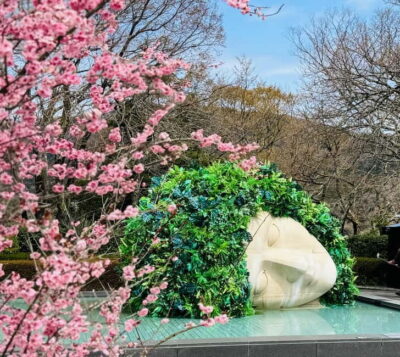
Tokyo Tower, Ginza and the Imperial Palace, side by side.
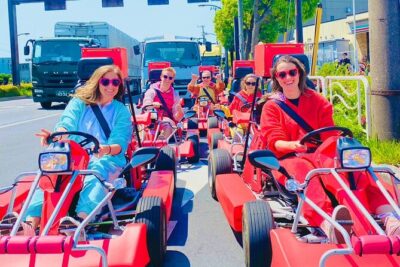 ★ 5.0Flagship 2-Hours Official Street Go-Kart Tour – Tokyo Bay ShopFrom $644,974 reviews
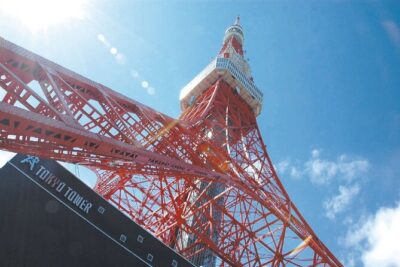
 ★ 4.6Tokyo Tower: Admission TicketFrom $93,661 reviews
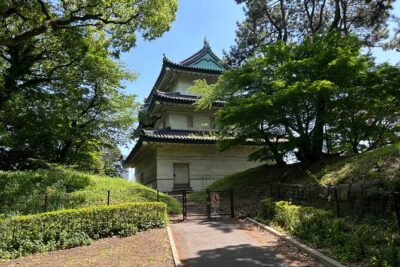 ★ 5.0Imperial Palace and Shogun Historical Walking TourFrom $222,251 reviews
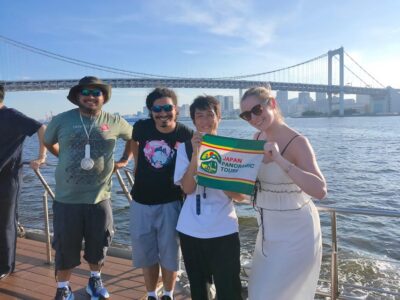 ★ 4.7Meiji Shrine, Asakusa, Skytree Bus Tour and CruiseFrom $1221,986 reviews
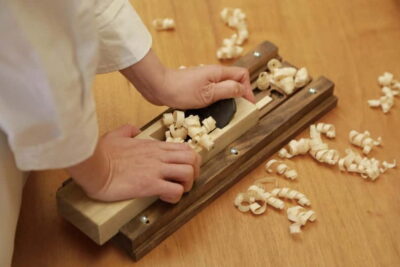 ★ 4.8Chopstick Making Workshop in GinzaFrom $251,366 reviews
 ★ 4.5Tokyo Panoramic 1 Day: Meiji Shrine, Asakusa, Odaiba and SKYTREE®From $851,222 reviews
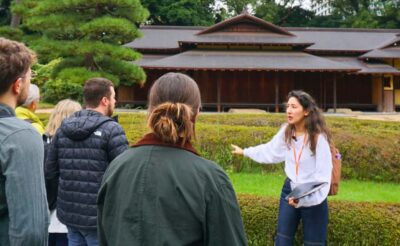 ★ 4.9Imperial Palace Japanese History Walking TourFrom $32987 reviews
 ★ 4.9Imperial Palace and Shogun Walking TourFrom $16935 reviews