
REVIEW · JAPANESE COOKING CLASSES
Ramen and Gyoza Cooking Class in Tokyo
Ramen tastes better when you make it. This class in Yanaka pairs hands-on cooking with a quick history of ramen and gyoza, so you come away with skills you can use all over Japan. You will also learn how Japanese people treat ingredients like a serious craft, not just comfort food.
My favorite part was the mix of hands-on recipes and clear instruction. I also like that Sioji keeps things friendly and practical, with a translator when needed, so the experience stays smooth even if your Japanese is rusty. You still need to know one possible drawback, the menu is focused: you are making miso ramen and three set types of fried dumplings, not experimenting with other ramen styles in this session.
In This Review
- Key points to know before you cook ramen in Tokyo
- Yanaka meeting point: a calmer part of Tokyo for food focus
- What you actually cook: miso ramen plus three gyoza styles
- Miso ramen broth lessons you can use when ordering in Japan
- Gyoza practice: why three fillings feels like a win
- The mini history lecture that makes ramen and gyoza feel connected
- Diet care, communication, and the class pace
- Price and value: what $91.76 buys you in Tokyo
- Should you book this ramen and gyoza class?
- FAQ
- Is this class available for vegans?
- What dishes will I make during the class?
- Where is the meeting point in Tokyo?
- Is this a private tour?
- How long is the experience, and when does it start?
- Can I cancel for a full refund?
Key points to know before you cook ramen in Tokyo
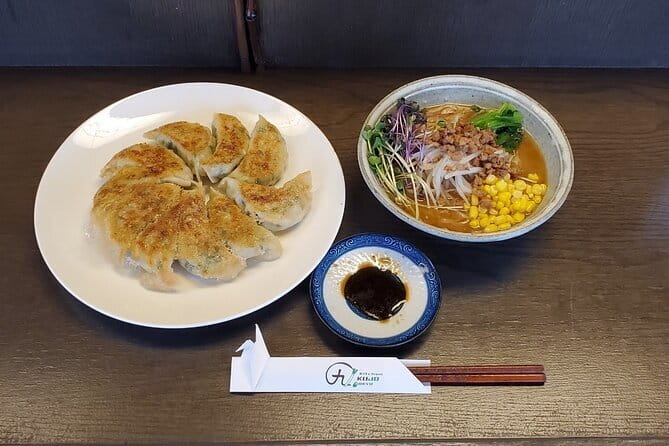
- Miso ramen is the centerpiece, with broth built from kelp plus chicken or scallops, or kelp plus vegetables for vegans
- You make gyoza three ways: regular fried dumplings, cheese dumplings, and kimchi dumplings
- A mini history lesson ties the food to how ramen and gyoza evolved in Japan
- Private setup for your group, and it runs as a relaxed Japanese-style house experience
- Personal diet care is part of the deal, including vegan options
- Yanaka location is close to Ueno Station or Nippori, which helps if you are sightseeing before or after
Cook it yourself instead. Other kitchens in Tokyo
- Tokyo: Roll and Authentic Sushi Making Class in Asakusa
★ 4.9 · 1,957 reviews - Tokyo: Sushi Making Class in a Happi Coat near a Famous Spot
★ 4.9 · 1,377 reviews - Tokyo Sushi Making Class in Tsukiji with Professional Chef
★ 5.0 · 1,177 reviews - Ramen & Gyoza Cooking Class in Tokyo with Local Supermarket Visit
★ 5.0 · 823 reviews
Yanaka meeting point: a calmer part of Tokyo for food focus
The class meets in Yanaka, in Taito City, near Ueno Station or Nippori. The exact address is 110-0001 Tokyo, Taito City, Yanaka, 1-chōme210 谷中スペース, and the activity starts at 11:00 am. You should be able to reach it easily with public transportation, and the neighborhood setting helps the session feel less rushed than the center of Tokyo can.
This is a private tour/activity, meaning only your group participates. If you like learning in a smaller setting where you can ask questions without shouting over a crowd, that matters. Also, confirmation comes within 48 hours of booking, depending on availability, so plan to book with enough time to lock your date.
What you actually cook: miso ramen plus three gyoza styles
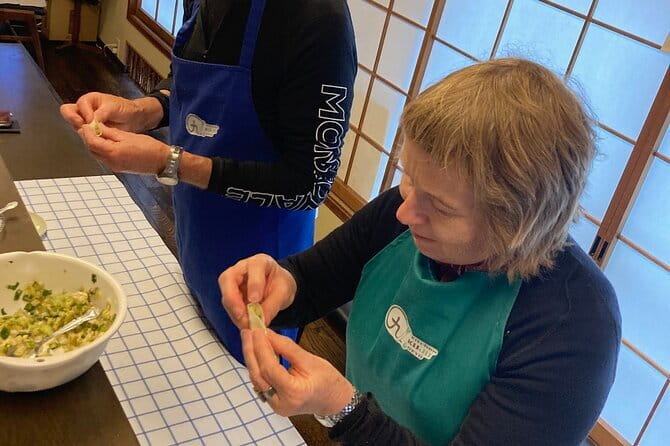
This class is built around one core idea: once you understand the pieces of ramen, you can read Japanese menus like a pro. You will make miso ramen and you will learn what makes it different from other ramen you might see around Japan, like noodle and broth differences. Then you will make gyoza and get hands-on practice with fillings and shaping.
For the ramen, you make an original miso soup using broth made from kelp plus chicken or kelp plus scallops. Vegans get a different version, miso ramen with broth made from kelp and vegetables. That split is not just a substitution, it is part of the lesson, so you see how the base flavors change.
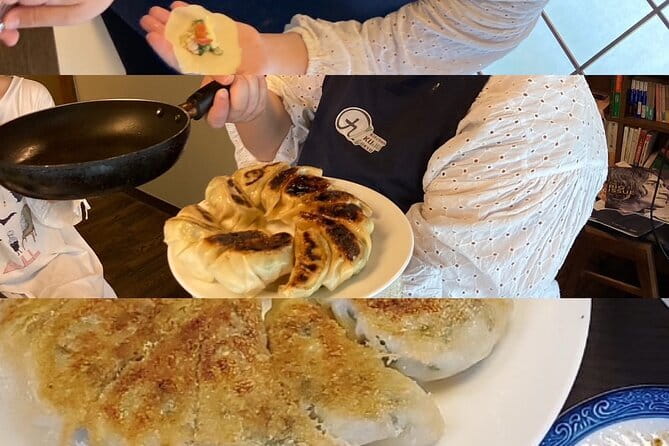
For dumplings, you make three types: regular fried dumplings, cheese dumplings, and kimchi dumplings. If you like variety, this is a smart way to spend 1 hour 30 minutes, because you are not stuck with one gyoza version you may or may not love.
Miso ramen broth lessons you can use when ordering in Japan
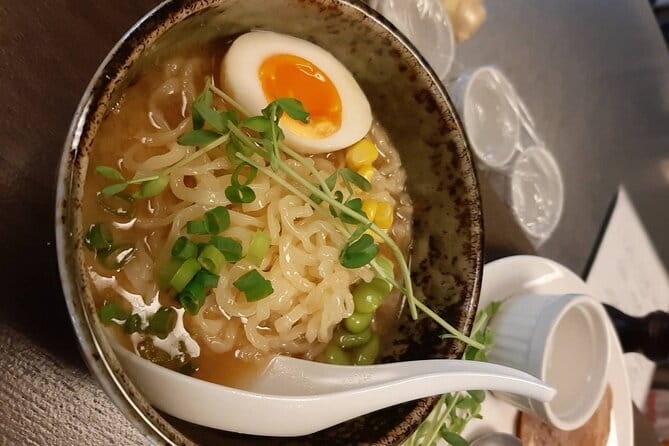
The ramen part starts with broth logic. The class focuses on the basic ingredients behind Japanese soup, especially kelp plus either chicken or scallops. Kelp brings a deep, savory foundation, then the animal-based ingredient adds its own character, which is exactly the kind of difference you will notice when you later eat in different neighborhoods.
You also learn how miso works in the bigger ramen picture. Since you are making the soup used for the final bowl, you get a direct feel for how the flavors come together, rather than relying on guesswork. I like that this is presented as a ramen guide you can carry into real eating, because it helps you order with intention instead of scanning menus and crossing your fingers.
If you travel around Japan and keep tasting ramen, this class gives you a framework. Japanese food culture can feel extremely particular, and ramen is one of the clearest examples. The better you understand noodles, broth, and toppings as separate building blocks, the easier it is to appreciate each shop on its own terms.
A bowl somewhere else in Tokyo
- Eat and Drink Like a Local: Tokyo Ueno Food Tour-Taverns&Ramen★ 5.0 · 957 reviews
- Ramen & Gyoza Cooking Class in Tokyo with Local Supermarket Visit★ 5.0 · 823 reviews
- Tokyo: Ramen Tasting Tour with 6 Mini Bowls of Ramen★ 4.9 · 432 reviews
- Tokyo: Easy Ramen Cooking Experience in Kabukicho, Shinjuku★ 4.6 · 321 reviews
- Ramen and Sushi Cooking Class with Sake Pairing Set in Tokyo★ 5.0 · 291 reviews
Gyoza practice: why three fillings feels like a win

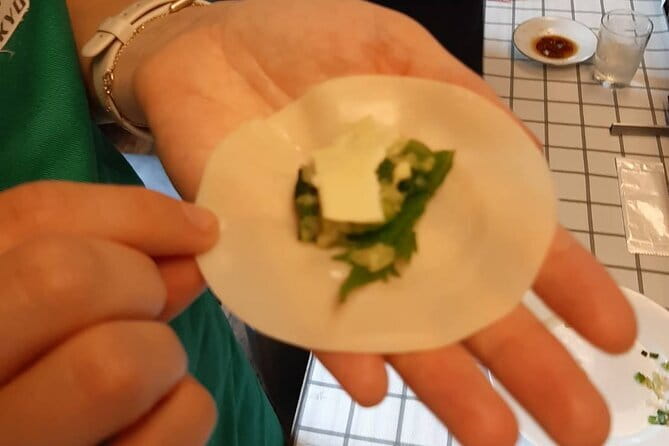
Gyoza is where the class turns from information into muscle memory. You are not just watching, you are making dumplings, which is the fastest way to learn what works. The three styles are a practical choice, because regular fried dumplings give you the baseline technique, while cheese dumplings and kimchi dumplings force you to think about filling flavor and balance.
Cheese can feel like a playful twist on a traditionally savory dumpling, and kimchi brings tang plus heat. That combination of flavors means you get a broader understanding of how gyoza can go beyond plain pork and cabbage ideas that some people expect. One of the best parts is that the class is designed so the recipes are simple enough that you can realistically try again later.
From the way the host teaches, the goal is not just to finish a plate, it is to leave you feeling confident. In reviews, people mention getting to the point where they can recreate the ramen and gyoza at home, and that is usually what makes cooking classes worth paying for. If your goal is edible souvenirs, you can buy those in Tokyo. If your goal is real repeatable cooking, this is the stronger direction.
The mini history lecture that makes ramen and gyoza feel connected

You will also get a short history lecture about ramen and gyoza, focusing on how they developed in Japan over time. Ramen and fried dumplings are both widely seen as Japanese foods now, so it can surprise people that their roots and forms changed as they landed in Japanese culture. The lesson helps you see food as a story, not just a dish.
This part is more than trivia. It gives meaning to what you are doing while you cook. When you are handling noodles or shaping dumplings, it is easier to pay attention if you know why this food took on the version you see today. You also pick up language that helps you recognize differences later, which is useful when you travel beyond Tokyo.
If you like connecting food to culture, this class offers a neat balance. You are learning while you cook, not sitting through a lecture before you eat. In a tight trip schedule, that pacing is a big deal.
Diet care, communication, and the class pace

The class is described as vegan-friendly, with a specific vegan broth option for miso ramen. That matters because many cooking experiences say vegan is possible, then the food ends up being a compromise. Here, vegans get their own kelp-and-vegetable broth version, which makes the ramen part still feel like ramen.
The pace is about 1 hour 30 minutes. That is long enough to learn something real, but not so long that you feel exhausted. Reviews also highlight that the hosts are patient and friendly, and that communication support is available through a translator if needed. When you feel comfortable asking questions, you learn faster and you stress less.
Another practical point, this is a private experience with a minimum of 2 people. If you are traveling solo, you may need to coordinate with another traveler or confirm that your booking still works for the requirement. Once that is handled, the private setup should make the class feel more personal, especially for families and mixed-age groups.
Price and value: what $91.76 buys you in Tokyo
At $91.76 per person, you are paying for more than dinner. You are paying for ingredients, a guided cooking setup, hands-on practice with both ramen and gyoza, and a mini lecture that turns into useful context later. In Tokyo, you can always find a meal for less than a cooking class, but you would not get the skill transfer.
The value gets stronger if you plan to cook after your trip. Reviews mention people feeling confident they can make ramen and dumplings at home, and that is the big payoff. You are also getting three gyoza varieties, which increases the learning and eating payoff compared to classes that only cover one type.
The timing also helps. With a 11:00 am start and a relatively short duration, it can fit around other sightseeing. If you are doing Ueno or Nippori area exploring, the location in Yanaka keeps your day logical.
Should you book this ramen and gyoza class?
Book it if you want a Tokyo food experience that teaches you how ramen works, not just what it tastes like. I would especially recommend it if you care about veg-friendly options, you like hands-on cooking, or you want a reusable ramen guide you can use when ordering later in Japan.
You might skip it if you are hoping to cover multiple ramen styles beyond miso, or if you only want a quick snack rather than a true cooking lesson. Also check the minimum of 2 people if you are traveling alone.
FAQ
Is this class available for vegans?
Yes. You can make vegan miso ramen with broth made from kelp and vegetables.
What dishes will I make during the class?
You will make miso ramen and gyoza. The dumplings include regular fried dumplings, cheese dumplings, and kimchi dumplings.
Where is the meeting point in Tokyo?
The meeting point is in Yanaka, Taito City, Tokyo, at 谷中スペース (1-chōme210 Yanaka). It is near Ueno Station or Nippori.
Is this a private tour?
Yes. It is listed as a private tour/activity, and only your group participates.
How long is the experience, and when does it start?
The class runs for about 1 hour 30 minutes, and the start time is 11:00 am.
Can I cancel for a full refund?
Yes. You can cancel up to 24 hours in advance for a full refund.
One More Bowl



Kitchens You Can Book Into

Newest Tokyo write-ups from the Loving Japan desk






Japanese Cooking Classes, side by side.
 ★ 5.0Sushi Making Tokyo Roll and Authentic Japanese Sushi ClassFrom $593,971 reviews
 ★ 4.9Roll and Authentic Sushi Making Class in AsakusaFrom $581,957 reviews
 ★ 5.0Ramen Cooking Class at Ramen Factory in KyotoFrom $1311,937 reviews
 ★ 4.9Sushi Making Class in a Happi Coat near a Famous SpotFrom $421,377 reviews
 ★ 5.0Sushi Making Osaka Roll and Authentic Japanese Sushi ClassFrom $311,220 reviews
 ★ 5.0Tokyo Sushi Making Class in Tsukiji with Professional ChefFrom $491,177 reviews
 ★ 5.0Ramen & Gyoza Cooking Class in Tokyo with Local Supermarket VisitFrom $122823 reviews
 ★ 5.0Tsukiji Fish Market Guided Tour and Sushi Making with Pro ChefFrom $104775 reviews
Filed on these lists too