
REVIEW · SAMURAI, NINJA AND SWORD EXPERIENCES
Samurai School in Kyoto: Samurai for a Day
Try bowing like a samurai.
This Kyoto workshop is a hands-on class where you learn basic kenbu movements, including how to bow and how to draw and return a sword safely, then wrap it up with a costume photo moment. I love that it is practical (you actually handle the sword), and I also like that you leave with a completion certificate plus a small traditional souvenir towel. One thing to consider: the session can start with a film and a performance, and some people find the lead-in timing longer than expected before the sword work begins.
Small group energy is a big part of the appeal, since the class caps at 10 participants and you get clear English guidance from the instructor. You also get structured costume changes, and that is a fun way to slow down and learn the posture and etiquette along with the technique. The only real drawback I’d flag is planning for photo time, because the official photo setup may feel rushed at certain moments.
In This Review
- Key things to know before you go
- Samurai School in Kyoto, where kenbu training meets costume photos
- Getting to the dojo and what the meeting point means
- What you actually do in the 1.5-hour class
- The short film and the start performance
- Suiting up: belt, socks, and the samurai outfit
- Bowing and sword draw basics
- Striking and controlled movement
- Photos, certificate, and the tenugui towel you bring home
- A practical photo tip
- Optional upgrade: longer kenbu practice and stage choreography
- Safety and what you should expect physically
- Value for money: does $66.32 make sense in Kyoto?
- Who this experience is best for
- When it might not fit your style
- Should you book Samurai School in Kyoto for a samurai-for-a-day experience?
- FAQ
- What is the duration of Samurai School in Kyoto
- Where does the experience take place and where do I meet
- Is the class offered in English
- What is included in the price
- What should I wear for costume changes
- Is hotel pickup included
- Is there a minimum fitness level or mobility requirement
- Can I cancel for a refund
Key things to know before you go
- Swords first, not just talking: you learn the bow, sword draw, and basic strike concepts during the training.
- Costume photos are built in: you get dressed in a samurai outfit for a quick photo shoot, plus a certificate and tenugui towel.
- Timing may feel longer at the start: there is a short 3-minute film, and a show can extend the wait before hands-on sword work.
- Optional longer practice adds stage choreography: the upgrade can include fan work, walking patterns, and sword choreography performed on stage with music and a poem.
- Designed for modest fitness: you should be comfortable moving and following safety instructions closely.
- Easy to miss if you arrive late: you need to show up early, and the meeting point is on the first basement floor at the GOZAN building.
Blade work and stagecraft, other sessions
- Kyoto: Kendo and Samurai Experience with Uniform and Gear
★ 4.9 · 815 reviews - Kyoto: Samurai Sword Class by Experts in Traditional Arts
★ 4.9 · 657 reviews - Skip the lines Basic Ticket at SAMURAI NINJA MUSEUM KYOTO
★ 4.5 · 632 reviews - Ninja 1-hour Hands-on Lesson by Japanese master in Kyoto -Entry
★ 5.0 · 489 reviews
Samurai School in Kyoto, where kenbu training meets costume photos
If you want Kyoto in one hour that feels different from temples and train rides, this is it. You start in a dojo space and move step by step through what samurai performance arts look like in practice, not just in movies. The class focuses on kenbu, a stylized samurai performing art, and you’ll learn choreography-style movement that connects posture, etiquette, and sword handling.
This is not an all-day historical lecture. It is a workshop with a clear structure: a short intro, putting on gear, hands-on basics with a sword, then photos and a stage performance. If you’re the type who learns by doing, you’ll understand quickly why this keeps ranking so high.
Getting to the dojo and what the meeting point means
You’ll meet at Sanchōme in Higashiyama Ward, at the GOZAN building. The key detail is how to get inside: on the day of the event, you go to the first basement floor, using the stairs on the right side of the building.
The timing matters. The instruction is to arrive between 10 minutes and 3 minutes before your start time. That range is there because costume changes and safety prep take time, and the class is run on a tight schedule. If you show up late, you can easily disrupt your own flow, and that can make photos and training feel rushed.
Good news: it’s near public transportation, and you won’t need a long taxi plan or hotel pickup. You also get a mobile ticket, which is usually the easiest way to avoid paper problems.
What you actually do in the 1.5-hour class
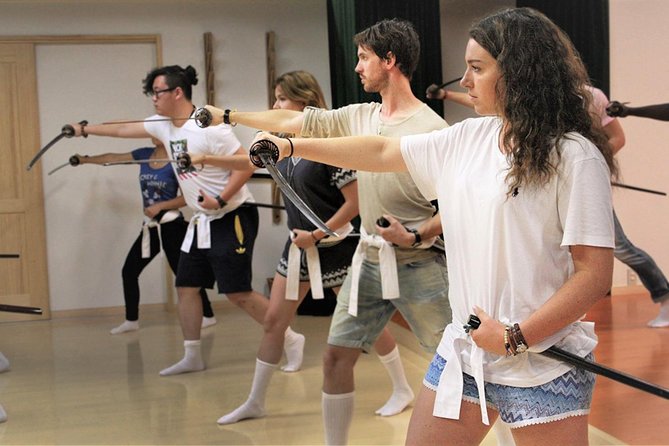
Even though the full experience is about 1 hour 30 minutes on the standard option, what makes it feel satisfying is the mix of activities. You’re not stuck watching. You’re learning, repeating, and adjusting your posture.
- PERFECT KYOTO 1-Day Bus Tour★ 5.0 · 13,518 reviews
- Kyoto: Fushimi Inari, Kinkakuji, Bamboo Grove 1 Day Bus Tour★ 4.8 · 4,316 reviews
- Kyoto: Tea Ceremony in a Traditional Tea House in Kiyomizu★ 4.9 · 3,519 reviews
- Kyoto Geisha Walking Tour: Gion District & Hidden Gems★ 4.7 · 3,273 reviews
- Kyoto: Tea Ceremony Ju-An at Jotokuji Temple★ 4.9 · 3,207 reviews
The short film and the start performance
The class begins with a short 3-minute film that covers basic samurai practices. After that, you get moving into the lesson flow. One practical heads-up: some reviews mention that the early show or lead-in can run long, so plan your expectations around training time, not just the hands-on part.
If you’re traveling with limited patience for waiting, bring a little buffer in your schedule. If you’re coming from an earlier activity, try not to book anything right after class ends until you see how your session runs.
Suiting up: belt, socks, and the samurai outfit
Then you get dressed. You’ll wear a samurai uniform setup that includes a white belt and Japanese-style socks, plus the sword for the training segments. The outfit and the gear are part of the learning because they enforce posture and movement.
Here’s a clothing tip that matters more than you’d think. Wear exercise-friendly clothes that are easy to move in and also work for costume changes. Single hoodie or tights are called out as not suitable for dressing changes. That means plan for something more flexible, like layers you can remove and put back on without wrestling fabric for 15 minutes.
Bowing and sword draw basics
The first skill you practice is bowing, with instruction on proper form and respect. After that comes the core: drawing the sword and putting it back into the protective scabbard.
This is harder than it sounds, and that is why it feels rewarding. The motion needs timing, control, and the right angle. You’ll also practice replacing the sword safely, which is the part that turns this into a real training moment rather than a quick demo.
Striking and controlled movement
Once you have the draw concept, you test methods of striking and thrusting, still within the structured safety rules of the dojo. You are working against the idea of an opponent, but it’s done as part of choreographed, disciplined movement.
This is where kenbu really shows its value. Kenbu is not just sword tricks. It’s the stylized movement of a warrior arts system. You’ll notice that the choreography connects your feet and arms with your posture and breath. Even in a short class, that connection is taught directly.
Photos, certificate, and the tenugui towel you bring home
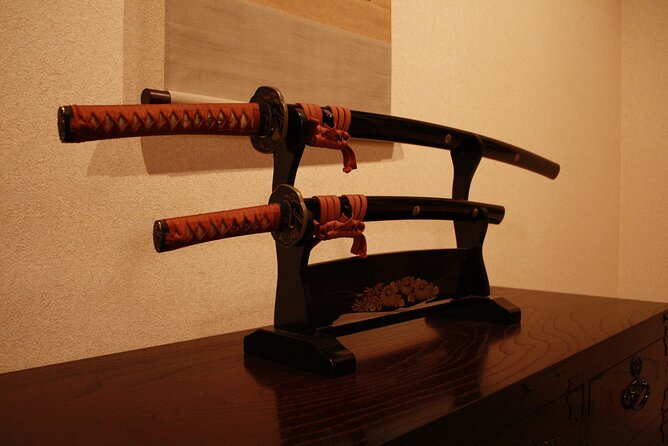
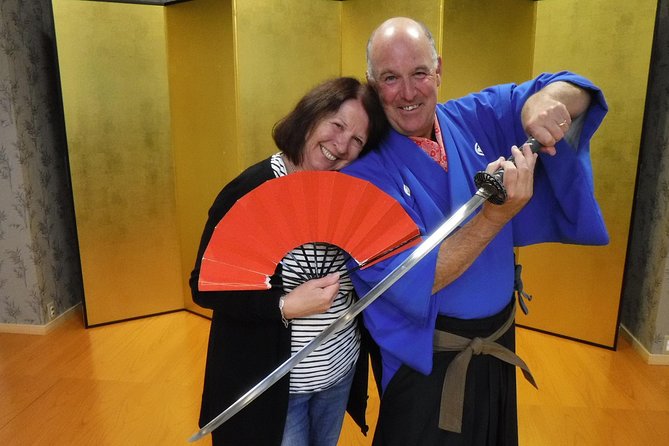
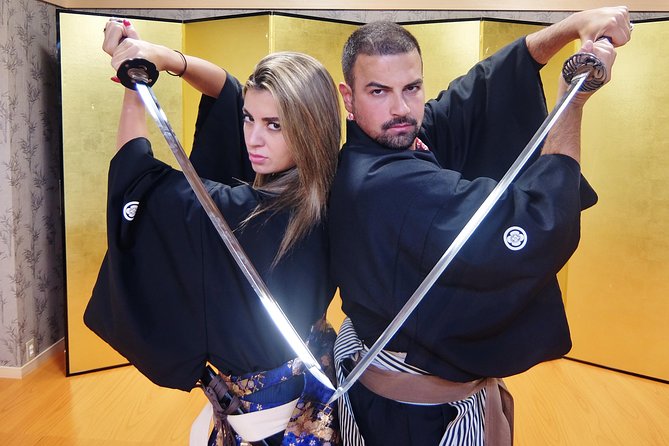
A big part of the experience is the photo moment, because it turns training into a memory you can actually share. After you learn the initial sword skills, you dress in traditional samurai costume for a short photo session.
You also receive a lesson completion certificate and a souvenir tenugui towel. These small items matter for value because they make the experience feel complete. It’s not just fun while you’re inside, you also leave with something tangible.
A practical photo tip
If you bring your own camera, be ready for limited time. Some people report that the photo shoot with personal devices can feel rushed depending on how the class schedule runs. The official photos and structured photo moment are part of the offering, but your best results come from being ready quickly, with your gear set up and your costume fitting done.
Optional upgrade: longer kenbu practice and stage choreography
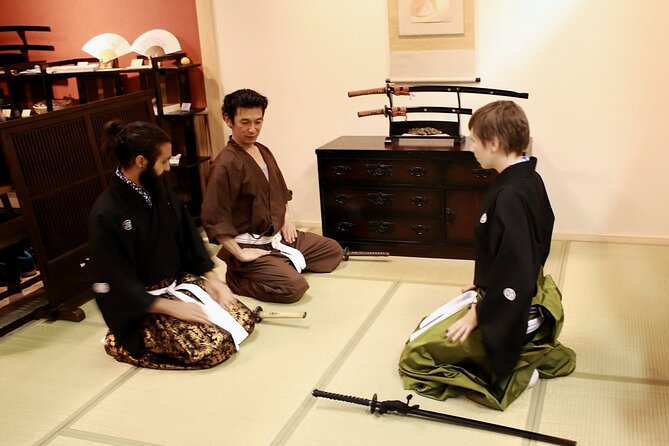
If you choose the longer practice session, you don’t just repeat basics. You go deeper into more stylized movement and performance elements.
The upgrade can include:
- How to walk in the samurai performing style
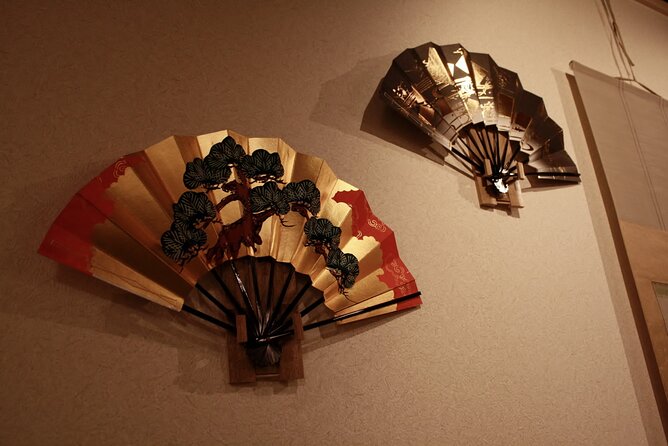
- How to use a folding fan as part of the choreography
- More challenging kenbu choreography with sword work
You also perform on stage as part of the session, with accompaniment that includes a poem and music. That stage ending is a major reason this gets high ratings. It makes the class feel like you are joining a tradition rather than just trying a skill once.
If you’re deciding between standard and upgrade, here’s the simple logic. Choose the standard option if you want a compact, hands-on intro plus photos. Choose the longer option if you want a more complete sense of how the movements build into a performance.
Safety and what you should expect physically
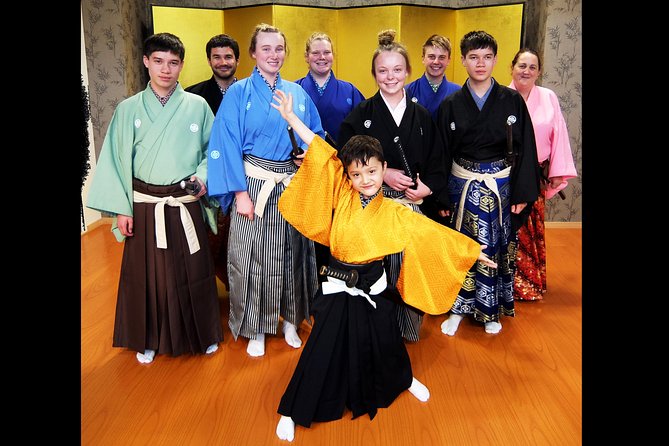
This is a workout with a controlled pace. You should have a moderate physical fitness level, mainly because you’ll be moving with the outfit and practicing controlled stances and motions.
Most importantly, for safety reasons you need to follow the instructor’s instructions on the day. The sword draw and handling requires attention, so don’t treat it like a casual posing session.
Also consider the age guideline. If participants are between ages 5 and 11, it is preferable that they attend some kind of class or martial arts school. That suggests the instructors may have higher expectations for focus and movement discipline with younger kids.
Value for money: does $66.32 make sense in Kyoto?
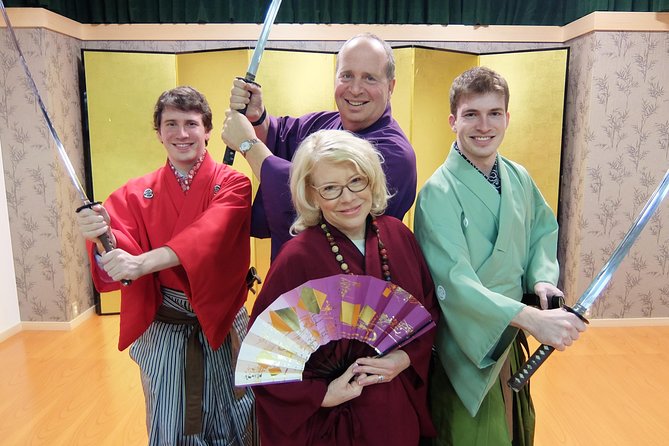
At $66.32 per person, the real question is what you get besides the novelty. Here’s the practical breakdown.
You receive:
- English-speaking local guide or instructor
- Photo shoot
- Tenugui towel
- Lesson completion certificate
- A hands-on class teaching bowing, sword draw and safe scabbard return, plus strikes and thrust concepts
- A stage performance at the end of the experience
For Kyoto, where many experiences are either museum-like or sightseeing-only, this is one of the more active cultural options. You’re paying for instruction, structured safety, and the costume and photo component. You are also paying for time with a professional dojo setting, not DIY cosplay.
It’s also a small-group activity with a maximum of 10 participants, so you’re less likely to feel lost in a crowd. The combination of sword training basics plus photos plus a certificate is why it feels like good value rather than a short gimmick.
Who this experience is best for
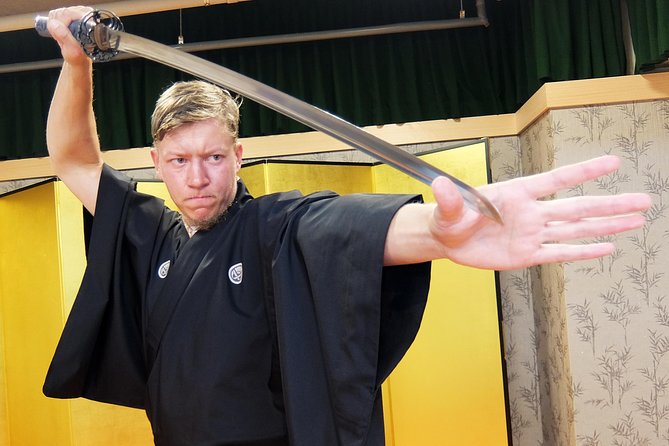
This workshop is a strong match if you fall into one of these categories.
- You want a hands-on experience, not just watching history from the sidelines.
- You like martial arts culture, choreography, or performance traditions.
- You want a rainy day plan that still feels active, since the session takes place indoors in a dojo.
- You like taking home a souvenir that connects to the activity, not just a generic store purchase.
It’s also great for couples and families in mixed ages, because the workshop format is designed to keep things moving: suit up, practice, photo moment, then a performance.
When it might not fit your style
This may not be your best choice if you only want raw sword time. Some of the session can include film and performance segments, and people note that the start can take longer than you expect before you’re actively wielding the sword.
It also isn’t ideal if your schedule is razor-thin. Even though the standard duration is about 1 hour 30 minutes, the pacing can run over slightly depending on your selected option and how the session flows.
Finally, if you’re expecting a deep, multi-hour history course, this is not that. It’s a technique and performance lesson with historical context woven into what you do.
Should you book Samurai School in Kyoto for a samurai-for-a-day experience?
I think you should book it if you want an authentic-feeling taste of samurai performing arts, with your hands on the sword and a costume photo memory to match. The fact that the class is structured, English-guided, small-group, and ends with a stage performance makes it feel complete for the price.
Book the longer upgrade if you like the idea of building into choreography, including fan work and stage elements. That option makes the experience feel more like participation in a show.
Skip it, or at least reconsider your expectations, if you hate waiting at the start or you need uninterrupted hands-on sword practice from minute one. Plan for some performance lead-in, then enjoy the hands-on portion once it arrives.
If you time it well, this is one of those Kyoto activities that gives you a story you can tell, because you’ll have the photos and the certificate to back it up.
FAQ
What is the duration of Samurai School in Kyoto
The standard experience is about 1 hour 30 minutes. The class time can vary depending on the length and option you select, including the optional longer practice session.
Where does the experience take place and where do I meet
You meet at Japan, 605-0005 Kyoto, Higashiyama Ward, Sanchōme, 35. On the day of the event, you go to the first basement floor from the stairs on the right side of the GOZAN building. The tour ends back at the meeting point.
Is the class offered in English
Yes. It includes an English-speaking local guide or instructor.
What is included in the price
The experience includes a photo shoot, a tenugui towel (Japanese traditional towel), and a lesson completion certificate, along with the guided training.
What should I wear for costume changes
Wear clothes suited for exercise and moving around. A single hoodie or tights is not suitable for costume changes. Dress in a way that makes it easy to change into the samurai attire.
Is hotel pickup included
No. Hotel pickup and drop-off are not included.
Is there a minimum fitness level or mobility requirement
Travelers should have a moderate physical fitness level, and you should be comfortable moving while following the instructor’s safety instructions.
Can I cancel for a refund
You can cancel for free up to 24 hours in advance of the experience start time for a full refund. If you cancel less than 24 hours before, the amount paid will not be refunded.
Blade Work and Stagecraft
Newest Kyoto write-ups from the Loving Japan desk
Samurai, Ninja and Sword Experiences, side by side.
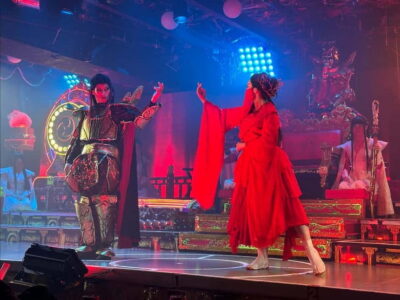 ★ 4.5Samurai Restaurant Show Ticket with 2 DrinksFrom $551,307 reviews
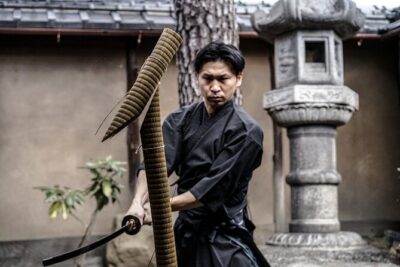 ★ 5.0Kyoto Samurai ExperienceFrom $1191,294 reviews
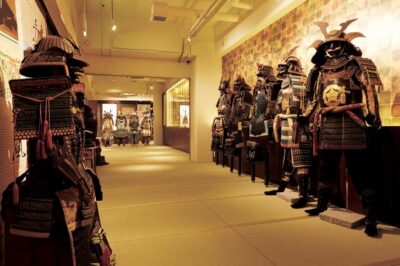 ★ 4.6Samurai Ninja Museum Guided tour and ExperienceFrom $271,010 reviews
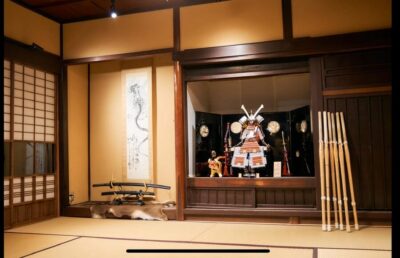 ★ 4.9Kendo and Samurai Experience with Uniform and GearFrom $103815 reviews
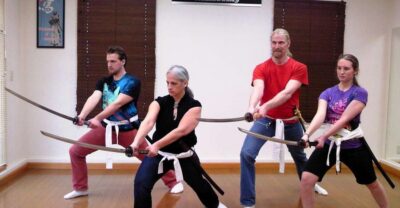 ★ 4.9Samurai Sword Class by Experts in Traditional ArtsFrom $64657 reviews
 ★ 4.5Skip the lines Basic Ticket at SAMURAI NINJA MUSEUM KYOTOFrom $28632 reviews
 ★ 5.0Samurai Sword & Archery Class from Samurai DescendantFrom $193603 reviews
 ★ 5.0Samurai Training Experience KENDO in OsakaFrom $131515 reviews
Filed on these lists too