
REVIEW · SAMURAI, NINJA AND SWORD EXPERIENCES
Samurai Training with Modern day Musashi in Kyoto
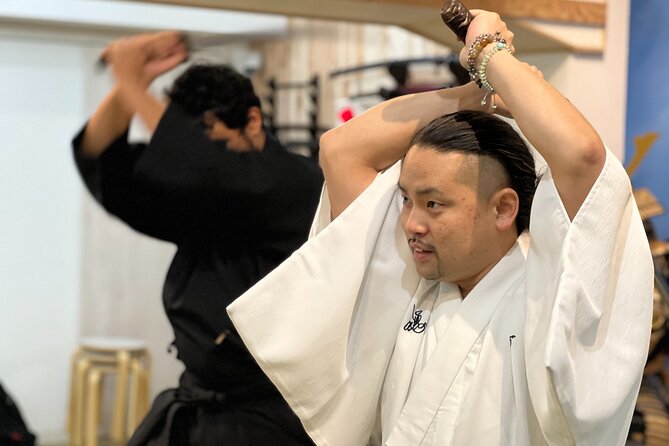
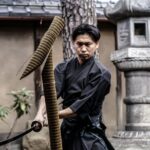
Kyoto sword practice is more than a show. In a real dojo setup in central Kyoto, you work with Musashi’s team and a master instructor, and I especially like that you dress in proper samurai training gear before you touch the basics of katana handling. I also like the focus on technique and etiquette, not just flashy moves, plus the chance to see a rare two-katana performance.
One thing to know up front: mat cutting with a real katana is not currently offered. That means you should come for form, safety, and culture, not for a guaranteed cutting spectacle.
This class runs about 1 hour 45 minutes (up to around 2 hours), with a maximum group size that keeps it personal. It’s built for ages 12+, and you’ll use a mobile ticket for entry, with confirmation typically sent within 48 hours of booking.
In This Review
- Key Things That Make This Samurai Training Special
- Why This Kyoto Dojo Training Beats Typical Samurai Tourist Stops
- Finding the Dojo Near Matsugaechō, and What the Start Feels Like
- Getting Dressed in Dōgi, Obi, and Hakama, and Why It Matters
- What You Actually Learn: Drawing, Sheathing, and Sword Handling Basics
- Learning an Actual Katana Kata Form, Without Feeling Rushed
- Watching the Master’s Sword Work: Two-Katana Performance and Demonstrations
- Time, Group Size, Physical Fitness, and Who This Fits Best
- Price and Logistics: Is $132.65 a Good Value?
- Who Should Book Samurai Training With Modern-Day Musashi?
- Should You Book This Samurai Training? My Decision Guide
- FAQ
- What is the duration of Samurai Training with Modern-Day Musashi in Kyoto?
- Where does the experience start?
- How large are the groups?
- Do you do mat cutting with a real katana?
- How old do you need to be to participate?
- What fitness level do you need?
- Is there a mobile ticket and how soon will I get confirmation?
Key Things That Make This Samurai Training Special
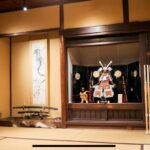
Real dojo atmosphere in a training center setting, not a stage show
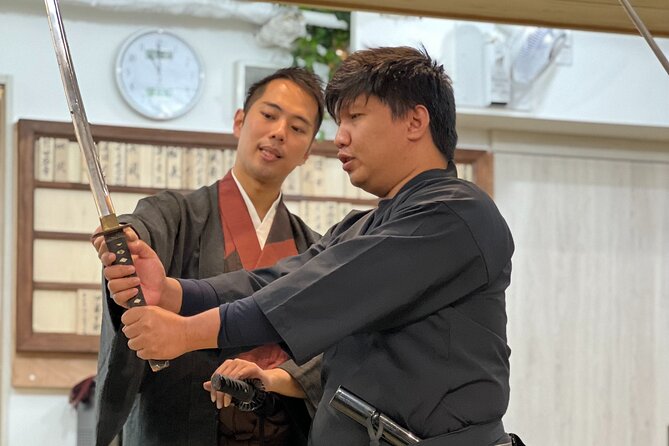
Hands-on kata basics including draw, sheath, and a real form routine
Safety-first sword handling with instruction that keeps you controlled and confident
Two-katana performance from the master, a highlight you won’t see often
Family-friendly structure with small groups and attentive corrections
Blade work and stagecraft, other sessions
- Kyoto: Kendo and Samurai Experience with Uniform and Gear
★ 4.9 · 815 reviews - Kyoto: Samurai Sword Class by Experts in Traditional Arts
★ 4.9 · 657 reviews - Skip the lines Basic Ticket at SAMURAI NINJA MUSEUM KYOTO
★ 4.5 · 632 reviews - Ninja 1-hour Hands-on Lesson by Japanese master in Kyoto -Entry
★ 5.0 · 489 reviews
Why This Kyoto Dojo Training Beats Typical Samurai Tourist Stops
This experience works because it feels like you’re joining actual practice, not watching a scripted performance from the back of a room. You learn in a dojo environment, and the instruction has that “do it correctly, then do it again” energy.
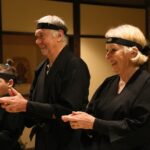
Two moments usually stick with people: the dressing ritual and the kata practice. Putting on the dōgi, obi, and hakama changes how you move. It also helps you understand that samurai arts are as much discipline and posture as they are sword technique.
The second reason this holds up is that you train in a small group. When the class is tight, the instructor can correct your draw and sheath, not just wave you through.
The only drawback is also the most important one: don’t build your expectations around mat cutting with a real katana. The session is designed around safe practice and forms, and the cutting component is handled through demonstrations instead.
Finding the Dojo Near Matsugaechō, and What the Start Feels Like
The meeting point is 452-4 Matsugaechō, Nakagyo Ward, Kyoto, 604-8034. It’s a good sign that it’s near public transportation, because you can plan this around other Kyoto stops without turning your day into a taxi marathon.
One practical detail I’d plan for: the dojo is reported as being in a basement level of a central Kyoto complex. That’s not a problem, but it does mean you should arrive a few minutes early and look closely for the correct entrance.
Expect a calm, organized start. They’ll get you into training mode, walk you through what you’re about to do, and set the rules before you handle anything sword-related. That’s a big deal if you’ve never trained with this kind of equipment.
Also, the instructors work in a way that’s easy to follow if your Japanese is basic. In this setup, you should be comfortable if you speak English, and you may hear some Japanese too.
Getting Dressed in Dōgi, Obi, and Hakama, and Why It Matters
The first step is changing into samurai training gear: dōgi, obi, and hakama. This isn’t a costume for photos. It’s practical training clothing that shapes your movement and your posture.
Here’s what you gain from this part as a visitor: you stop thinking of the sword as a novelty object and start treating it like a tool you must handle correctly. The hakama in particular encourages a grounded stance, and that makes kata practice easier to understand once the instructor starts cueing your form.
It also sets the tone fast. When you dress the same way as the people teaching, you’re signaling that you’re there to learn the system, not just collect a souvenir moment.
If you’re planning this for kids or teens, this clothing change is often the biggest “wow” factor. It turns shy first-timers into active participants.
- PERFECT KYOTO 1-Day Bus Tour★ 5.0 · 13,518 reviews
- Kyoto: Fushimi Inari, Kinkakuji, Bamboo Grove 1 Day Bus Tour★ 4.8 · 4,316 reviews
- Kyoto: Tea Ceremony in a Traditional Tea House in Kiyomizu★ 4.9 · 3,519 reviews
- Kyoto Geisha Walking Tour: Gion District & Hidden Gems★ 4.7 · 3,273 reviews
- Kyoto: Tea Ceremony Ju-An at Jotokuji Temple★ 4.9 · 3,207 reviews
What You Actually Learn: Drawing, Sheathing, and Sword Handling Basics
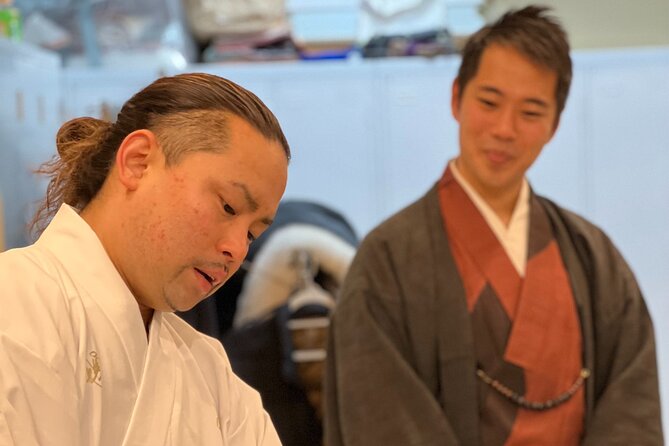
After you’re dressed, you get lessons about samurai culture and swordsmanship. The goal is to give you the essentials that make everything else safe and understandable.
Then you practice the core actions:
- how to draw
- how to sheath
- how to wield in a controlled way
Even if you’re excited for the kata, I’d treat these basics as the main event. They’re where most beginners get the most value. A well-instructed draw and sheath is the difference between feeling steady and feeling awkward.
Safety matters here. People highlight that they learn the safe way to handle a samurai sword, and that instruction is not just a one-minute lecture. You get correction, and you learn what to do and what not to do while moving with the sword.
A key practical note: this style of training commonly uses iaito for practice. That’s the safer, practice-focused sword type that lets you practice form without the same sharpness risks as a fully sharpened blade. You may also see genuine sword components and real swords during explanation and demonstration, which helps you connect the training to what existed historically.
Learning an Actual Katana Kata Form, Without Feeling Rushed
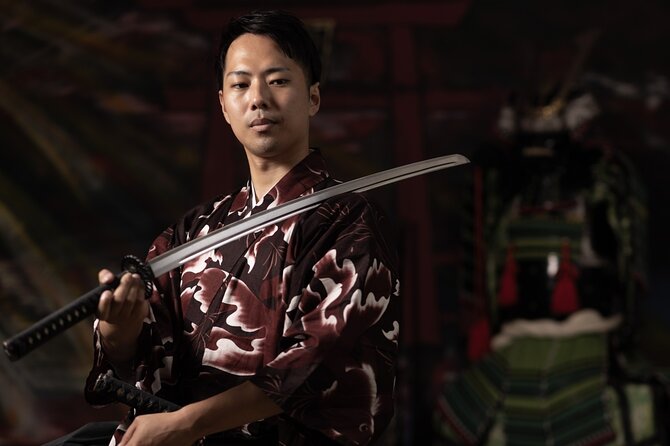
Once the basics click, you move into an actual katana kata, meaning a set form routine you practice as a pattern. This is where the experience stops being “try a move” and starts becoming structured training.
What I like about this approach is that kata gives your brain something to hold onto. Instead of random motions, you learn a sequence that builds timing, posture, and control. Over the short class time, that structure makes your progress feel real.
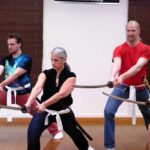
In a good group setup, you’re not just watching the instructor go through the pattern. You’re practicing and getting feedback. People mention that instructors took time to correct forms and answer questions, even in a short session.
One more practical point: the total session runs about 1.5 to 2 hours depending on group size. If you’re the type who hates feeling rushed, this time range is actually good, because it gives room for explanation and practice rather than only a quick demo and off you go.
Watching the Master’s Sword Work: Two-Katana Performance and Demonstrations
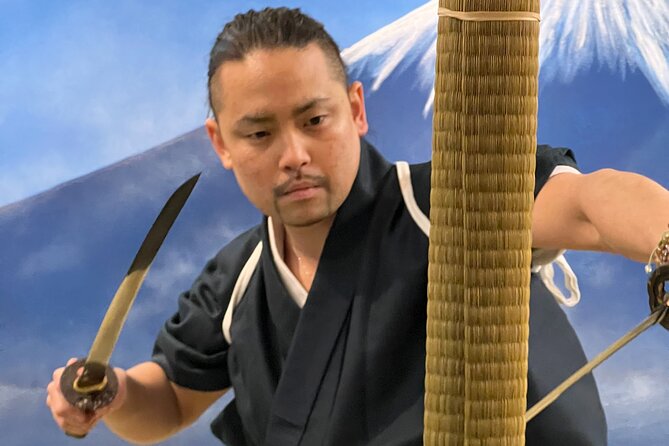
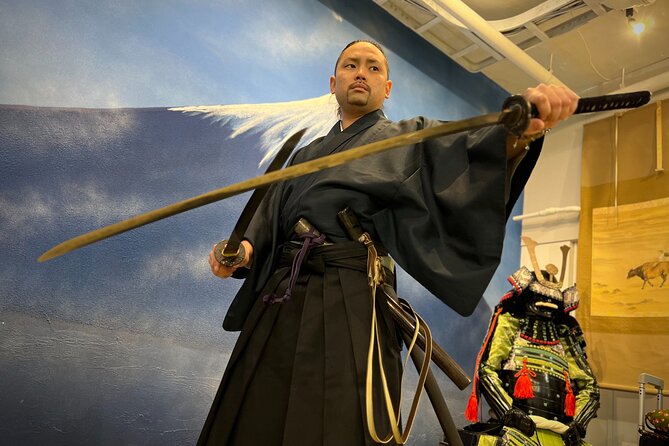
The standout show moment is the master’s katana performance, including a powerful two-katana presentation. This is specifically called out as something you won’t see elsewhere, and that makes sense. Sword technique at that level is visual, but it’s also about timing and discipline, and watching it helps you “read” what your instructor wants from your form.
What you do not want to plan around is mat cutting with a real katana. The program notes that mat cutting is not currently offered. Even so, you can still get a real sense of cutting mechanics through demonstrations.
You may also learn about parts of the sword and how they’re made. In other words, you’re not just watching motions. You’re being taught the objects behind the art, and that turns the performance into education.
If you enjoy getting photos and video, it seems the instructors make space for it during the kata learning parts. That said, follow directions in the moment. If they say focus on the form, focus on the form.
Time, Group Size, Physical Fitness, and Who This Fits Best
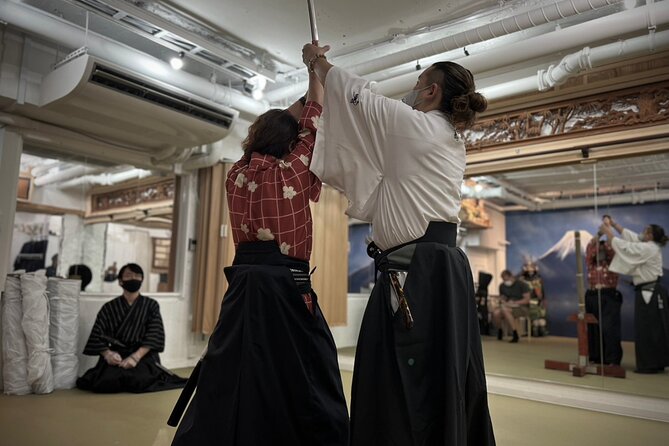
This experience is small-group by design. The promise is only 6 participants per class, with the note that there may be more if there are only a small number of parties. The hard maximum is 9 travelers.
That small size helps for two reasons:
1) you get more corrections
2) the instructor can move the class at your group’s pace
Physical demand is listed as moderate fitness. You’re moving in stances and doing controlled sword motions. If you can walk a few times a day and you’re generally comfortable with light activity, you’re likely fine.
There’s also an age requirement: you must be 12 years or older. That matters for family planning. Many families treat this as a Kyoto highlight because it’s hands-on and structured, not just a museum stop.
Price and Logistics: Is $132.65 a Good Value?
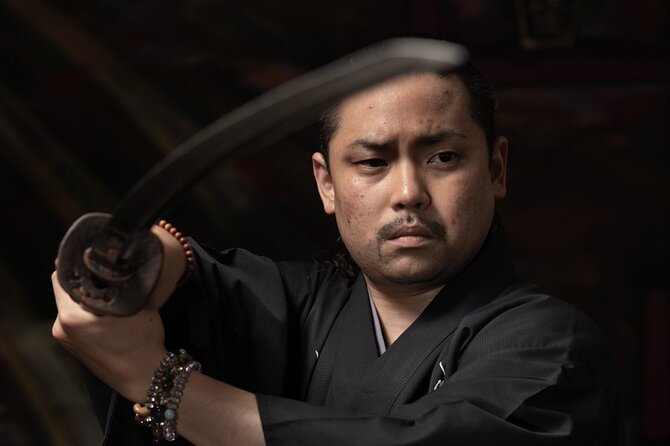
At $132.65 per person for roughly 1 hour 45 minutes, the value comes from three things that are hard to fake:
- Instruction from a master-level dojo setting
- Real training structure (gear, safety, draw and sheath basics, kata practice)
- A rare performance element, especially the two-katana part
If you compare this kind of experience to the typical “short show” style, the difference is that you actually practice. Your time isn’t spent only watching. You’re in the dojo, dressed for the role, doing the forms.
Also, the price includes the equipment training setup and the guided cultural context, so you’re not cobbling together lessons across multiple stops.
The main reason someone might feel it’s not a match is the mat cutting expectation. If your fantasy is hands-on cutting, the program currently does not offer it. If your fantasy is learning controlled katana basics, kata, and dojo etiquette, this price starts to look very fair.
Who Should Book Samurai Training With Modern-Day Musashi?
This is a great fit if you:
- want an authentic dojo experience in Kyoto, not a quick photo op
- like hands-on learning, especially structured practice like kata
- want a cultural angle on samurai life, not only sword technique
- are traveling with teens who enjoy learning by doing
It’s also a smart pick on a hot day. People mention it as a nice break from summer heat, because the training setup can feel like a focused indoor rhythm rather than another long outdoor walking day.
If you’re extremely injury-avoidant and hate any prop-based training, you should feel good about the safety emphasis and the practice sword approach. Still, treat it as physical movement with rules. Go in ready to listen and move with care.
Should You Book This Samurai Training? My Decision Guide
Book it if you want the dojo feeling. The small group size, the gear ritual, the safety-first instruction, and the chance to practice a real katana kata make this a memorable class even without guaranteed mat cutting.
Skip it or adjust expectations if your main goal is literal cutting with a sharp real katana. The program does not currently offer mat cutting, and that’s the biggest mismatch point to be aware of.
If you’re deciding between a generic samurai show and a training session with form practice, pick training. This one gives you a sequence to learn, rules to follow, and a master’s performance to interpret after you’ve practiced the basics.
FAQ
What is the duration of Samurai Training with Modern-Day Musashi in Kyoto?
The class is about 1 hour 45 minutes, approximately. It can take 1.5 to 2 hours depending on the number of participants.
Where does the experience start?
The meeting point is 452-4 Matsugaechō, Nakagyo Ward, Kyoto, 604-8034, Japan. The activity ends back at the meeting point.
How large are the groups?
The class is designed for small groups, with 6 participants per class noted as the standard. The maximum is up to 9 travelers, and the actual number may be higher if there are only a small number of parties.
Do you do mat cutting with a real katana?
No. Mat cutting with a real katana is not currently offered. You can expect lessons, kata practice, and katana performance/demonstrations.
How old do you need to be to participate?
You must be 12 years or older.
What fitness level do you need?
A moderate physical fitness level is recommended, since you’ll be moving while wearing training gear and practicing techniques.
Is there a mobile ticket and how soon will I get confirmation?
Yes, it uses a mobile ticket. Confirmation is received within 48 hours of booking, subject to availability.
Blade Work and Stagecraft

Newest Kyoto write-ups from the Loving Japan desk


Samurai, Ninja and Sword Experiences, side by side.
 ★ 4.5Samurai Restaurant Show Ticket with 2 DrinksFrom $551,307 reviews
 ★ 5.0Kyoto Samurai ExperienceFrom $1191,294 reviews
 ★ 4.6Samurai Ninja Museum Guided tour and ExperienceFrom $271,010 reviews
 ★ 4.9Kendo and Samurai Experience with Uniform and GearFrom $103815 reviews
 ★ 4.9Samurai Sword Class by Experts in Traditional ArtsFrom $64657 reviews
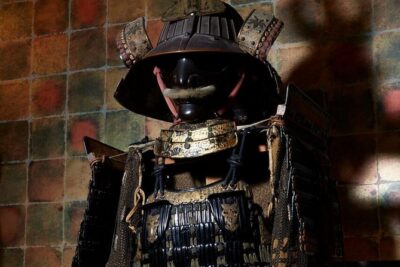 ★ 4.5Skip the lines Basic Ticket at SAMURAI NINJA MUSEUM KYOTOFrom $28632 reviews
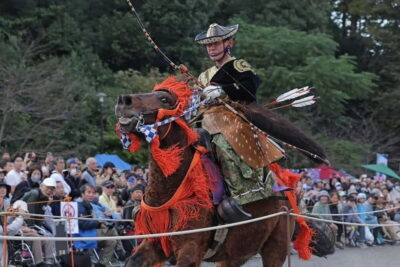 ★ 5.0Samurai Sword & Archery Class from Samurai DescendantFrom $193603 reviews
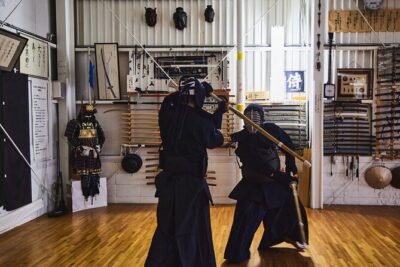 ★ 5.0Samurai Training Experience KENDO in OsakaFrom $131515 reviews
Filed on these lists too