
REVIEW · TAIKO DRUMMING AND TRADITIONAL PERFORMING ARTS
Shamisen Experience in Kyoto 【Private】
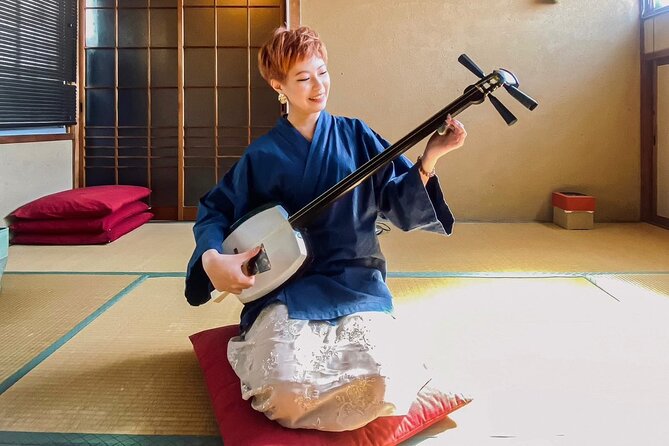
One lesson can change how you hear Kyoto. This private shamisen class swaps sightseeing time for real hands-on music learning, in English, with a friendly pro like Jack-san, plus a tea break and a jam session. I especially like how beginner-focused the teaching is, and how you get one-to-one attention instead of watching from the sidelines. The main drawback: 1 hour 30 minutes is just enough to get started and play a traditional song, not enough to master everything.
If you’re curious but worried about having no experience, this works well. You’ll learn basic setup like tuning, seating, and posture, then build into playing melodies with guidance. There’s also a lefty shamisen available, which is a thoughtful detail you do not see every day.
In This Review
- Key things that make this Kyoto shamisen lesson worth your time
- A 90-Minute Shamisen Lesson With English Guidance
- Meeting Jack-San at the Murasakino Dojo Area (Kita Ward)
- Tuning, Seating, and Posture: The Basics That Make Playing Possible
- The Tea Break Moment, and Why It Actually Helps You Learn
- Learning a Traditional Song, Then Playing What You Just Practiced
- The Jam Session With Traditional Japanese Scales
- What You Take Home: Souvenir Gift and Personal Progress
- Price and Value: Is $99.10 Worth It?
- Who This Shamisen Experience Suits Best
- Booking Smart: How to Pair It With Your Kyoto Day
- Should You Book the Shamisen Experience in Kyoto?
- FAQ
- Is the shamisen lesson private?
- Do I need any previous music or shamisen experience?
- Is the lesson taught in English?
- Does the experience include a tea break?
- Are left-handed visitors accommodated?
- How long is the lesson?
- Can I cancel for a full refund?
Key things that make this Kyoto shamisen lesson worth your time

- Private, English-led instruction so you can ask questions and move at your pace
- Tea break included, which makes the lesson feel human, not rushed
- Jam session with traditional scales, where you get to play along and not just copy
- Beginner-friendly curriculum, including tuning and posture basics
- Left-handed shamisen available, so you are not forced to adapt
Loud rooms and quiet stages around Kyoto
- Kyoto: Nishiki Market Tea Ceremony with Koto Performance
★ 4.8 · 294 reviews - Kyoto: Japanese Archery Workshop with Experienced Instructor
★ 4.9 · 132 reviews - Shamisen Experience in Kyoto 【Private】
★ 5.0 · 82 reviews - Kyoto: Japanese Koto & Shamisen Concert and Koto Class
★ 4.9 · 31 reviews
A 90-Minute Shamisen Lesson With English Guidance
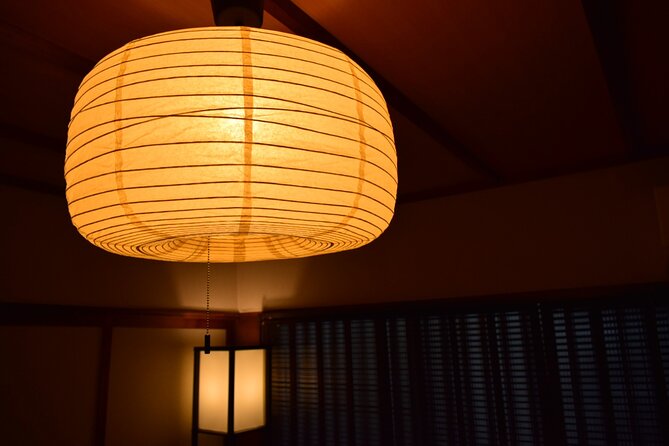
This is a short class by design, about 1 hour 30 minutes. That matters because shamisen learning is physical and musical at the same time. In a compact session, you get enough time to learn the essentials, then use them right away instead of forgetting them by the next day.
The standout advantage is that the lesson is taught in English. In Kyoto, that’s not automatically guaranteed for every traditional activity. Here, you can understand the technique, the rhythm, and the what-to-do-next steps without guessing. You also get to have relaxed conversation during the tea break, so the lesson feels like meeting a teacher, not just taking a workshop.
Because it is private, you are the focus. That means you can get corrections quickly, whether it’s your hand position, how you seat yourself, or how you aim your picking motion. For many visitors, that one-to-one attention is the difference between feeling awkward and feeling capable.
Meeting Jack-San at the Murasakino Dojo Area (Kita Ward)
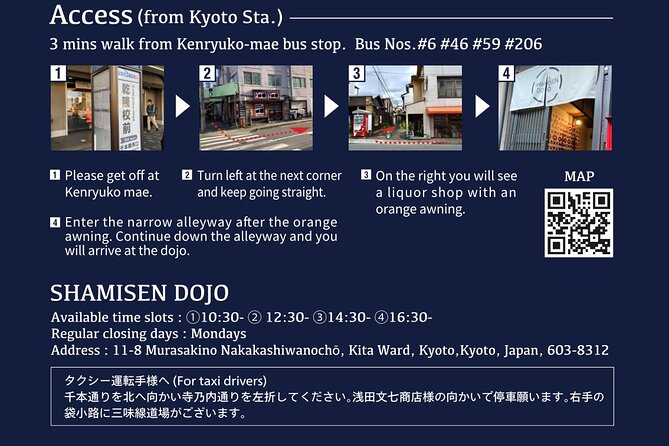
The lesson starts and ends back at the meeting point at Murasakino Nakakashiwanocho, Kita Ward, Kyoto, 603-8312, Japan. The location is listed as near public transportation, which is a big deal when you want a smooth day plan in Kyoto. You can pair this with other sightseeing without spending extra time fighting transit.
Since it is a private activity, only your group participates. That also affects the vibe. You do not have to wait your turn or listen to generic instructions for people who already know the instrument basics. The teacher can tailor pacing to you.
One practical note for planning: because the session ends where it starts, you avoid the hassle of coordinating a second pickup or transit from a different location. That makes it easier to slot into a tight itinerary, especially if your other plans run long.
Tuning, Seating, and Posture: The Basics That Make Playing Possible
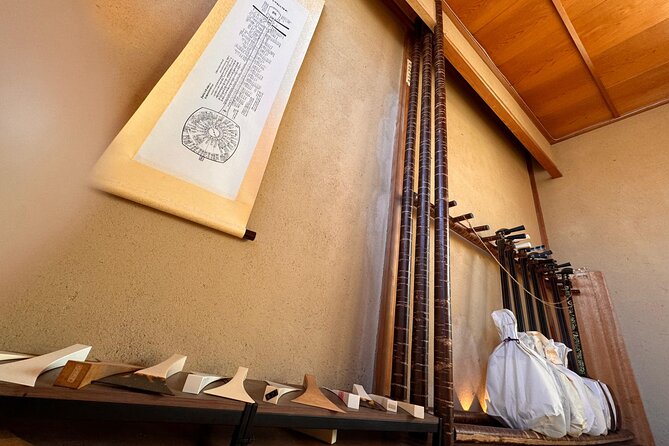
When you first touch the shamisen, you quickly realize it is not just about music theory. It’s about mechanics: how you sit, how you hold your body, and how your hands move together. The lesson is built to get you there in a beginner-friendly way, even if you have never played anything like this before.
You can expect guidance on practical fundamentals such as:
- tuning and getting the instrument set correctly
- seating and posture for comfortable control
- basic playing movements so you can produce a stable tone
I like that the teaching goes straight to the parts that stop beginners from progressing. A lot of music experiences assume you already know what to do with your body. Here, you get the physical setup first, then the music.
And if you are left-handed, there is a lefty shamisen available. That matters because adapting technique mid-lesson can be frustrating. It is a small detail that makes the whole session feel more welcoming.
- PERFECT KYOTO 1-Day Bus Tour★ 5.0 · 13,518 reviews
- Kyoto: Fushimi Inari, Kinkakuji, Bamboo Grove 1 Day Bus Tour★ 4.8 · 4,316 reviews
- Kyoto: Tea Ceremony in a Traditional Tea House in Kiyomizu★ 4.9 · 3,519 reviews
- Kyoto Geisha Walking Tour: Gion District & Hidden Gems★ 4.7 · 3,273 reviews
- Kyoto: Tea Ceremony Ju-An at Jotokuji Temple★ 4.9 · 3,207 reviews
The Tea Break Moment, and Why It Actually Helps You Learn
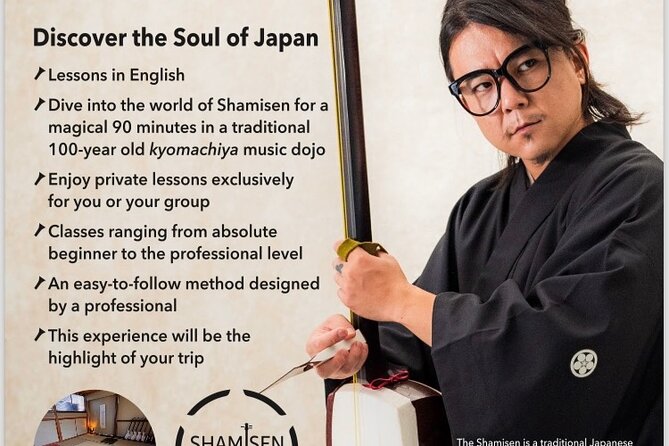
The lesson includes Japanese tea as part of the session. That sounds like a nice perk, but it also works as a reset. In 1 hour 30 minutes, your focus can get overloaded. The tea break gives you a calmer rhythm so you can absorb the technique you just learned.
It also creates room for relaxed conversation with the owner, who is also a professional shamisen player. That combination is valuable. When you can ask questions in plain English and talk about the instrument and music feel, you stop treating the shamisen lesson like a test. You start treating it like an interactive cultural exchange.
From a learning perspective, those small pauses help your brain connect the movement to the sound. It’s easier to make corrections when you feel comfortable, not when you are rushing to catch up.
Learning a Traditional Song, Then Playing What You Just Practiced
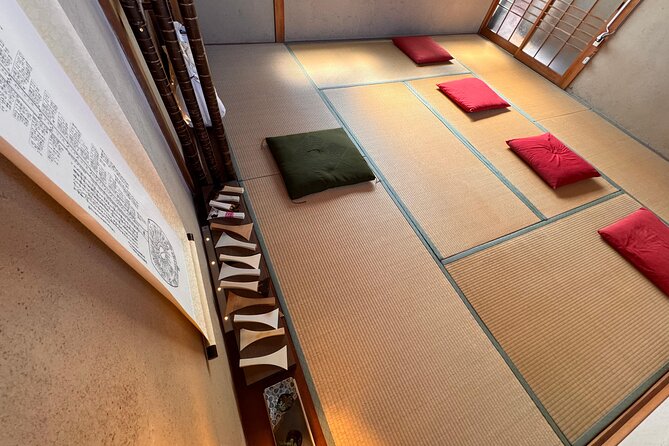
The highlight of the curriculum is that you learn to play a traditional Japanese song with guidance. For many people, this is the “wait, I can do this” moment.
What makes this format work is the order of operations:
1) you learn setup and basic playing motions
2) you practice the melody with expert tips
3) you bring it together for the traditional song
Because the class is private, the teacher can adjust instruction based on what you are actually doing in real time. If your fingers need a different angle, you get corrected on the spot. If your tempo is drifting, you get quick feedback instead of generic advice.
You are not just watching someone perform. You are actively producing sound, then improving it as you go. That is why people walk away feeling like they gained a skill, not only a story.
The Jam Session With Traditional Japanese Scales
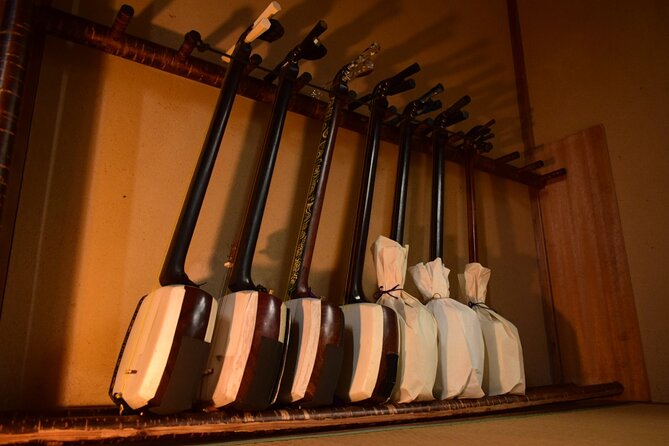
The jam session is where the experience becomes lively. Instead of staying locked to a single lesson pattern, you play along with the owner using traditional Japanese scales. The professional player accompanies you, and you get encouragement to play melodies freely and express yourself.
This matters because beginners often worry they are supposed to play perfectly. In a jam-style moment, the emphasis shifts to participation. You learn how the shamisen fits into a musical framework rather than treating each note as isolated information.
If you care about technique, you still get it. The accompaniment helps you hear how your part should feel. If you care more about culture and fun, this segment gives you that too, because it’s the point where the instrument stops being a classroom object and starts being music in motion.
One more thoughtful detail: the teacher uses traditional scales during the jam session, so you’re not just repeating a single memorized fragment. You get a taste of how shamisen music connects to broader musical rules and motion.
What You Take Home: Souvenir Gift and Personal Progress
Part of the experience includes a special gift, a souvenir to remember your time with the shamisen lesson. Even if it is a small item, it is a useful souvenir because it ties directly to the skill you practiced. It’s not the kind of generic trinket that belongs to every store stop.
You also leave with something harder to measure: muscle memory and confidence. You learn practical basics like tuning and posture, and that helps if you later want to play your own shamisen. At minimum, you will understand what you are hearing when you encounter shamisen music elsewhere in Japan.
And because this is a private class, your progress feels personal. The teacher can answer your questions as they come up, rather than saving everything for the end.
Price and Value: Is $99.10 Worth It?

At $99.10 per person for a 1 hour 30 minute private lesson, the price looks straightforward, but the value comes from the parts that are easy to overlook.
Here’s why it can feel worth it:
- Private instruction means the time is not shared among multiple people
- English teaching lowers the friction and helps you actually understand what you’re doing
- Tea break and a souvenir gift are included, so it is not only the lesson cost
- Beginner coverage includes fundamentals like tuning and posture, not just “try this”
- Left-handed option means you are not forced into a less natural setup
If you compare this to group cultural classes, the one-to-one attention is usually the deciding factor. This experience isn’t trying to give you a long, show-and-tell performance. It is trying to get your hands moving, correctly, in a way you can replicate later.
One small consideration: if you are already an advanced musician and expect a deep, long technical progression, this class may feel short. But if you want a strong start and a real musical experience in Kyoto, the timeframe is actually an advantage.
Who This Shamisen Experience Suits Best
This is a great fit if you:
- want a hands-on cultural activity instead of another photo stop
- feel nervous about starting something new and want beginner guidance
- prefer learning in English and asking questions directly
- like music, even if you do not play any instrument yet
- would enjoy a rainy day activity, because the session is focused and indoors
It may be less ideal if you:
- want a multi-hour, advanced conservatory-style training program
- are looking for a large-group performance experience
The class is designed for “I’m here for a short time, and I want something real.” That’s the sweet spot.
Booking Smart: How to Pair It With Your Kyoto Day
Because it ends back at the meeting point, you can plan your day around it like a local appointment. Pick a time when you can stay present. You will do better if you show up rested enough to take in instructions and practice right away.
Also, it is listed as mobile-ticket friendly, and confirmation is received at booking. So you can usually keep it simple on your phone, which helps when you are walking between neighborhoods.
Finally, since this is on the shorter side, don’t schedule it as your last stop right before you need to rush to the station. Build in a little buffer. Shamisen learning includes adjustments, and you want that calm feeling, not a clock-stress situation.
Should You Book the Shamisen Experience in Kyoto?
I recommend booking this if you want a meaningful, hands-on cultural activity with real instruction. The private setup, English teaching, included tea break, and jam session are a strong combination. You are not just listening, you are making music, with guidance that corrects what needs correcting.
Book it sooner rather than later if you can. The average booking timing is about 35 days in advance, which suggests this is a popular slot for people who want something different from typical temple-and-market days.
If your goal is simply a quick souvenir photo, you might feel it is too hands-on. But if your goal is to learn how a shamisen works, how it sounds, and how it feels to play a traditional song, this is a smart use of time in Kyoto.
FAQ
Is the shamisen lesson private?
Yes. It is a private tour or activity, so only your group participates.
Do I need any previous music or shamisen experience?
No experience is required. The lesson is designed to be beginner-friendly.
Is the lesson taught in English?
Yes. The lesson is taught in English.
Does the experience include a tea break?
Yes. Japanese tea is included during the lesson.
Are left-handed visitors accommodated?
Yes. There is a lefty shamisen available.
How long is the lesson?
The duration is about 1 hour 30 minutes.
Can I cancel for a full refund?
Yes, you can cancel for free up to 24 hours in advance for a full refund. If you cancel less than 24 hours before the start time, the amount paid is not refunded.
Stages, Loud and Quiet

Newest Kyoto write-ups from the Loving Japan desk


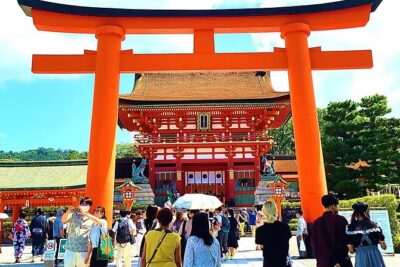

Taiko Drumming and Traditional Performing Arts, side by side.
 ★ 4.0Mt Fuji & Hakone Cruise, Drum Show Bullet Train 1 Day from TokyoFrom $1497,413 reviews
 ★ 4.0Mt Fuji & Hakone Cruise, Drum Show Bus 1 Day from TokyoFrom $1221,287 reviews
 ★ 5.0Samurai Sword & Archery Class from Samurai DescendantFrom $193603 reviews
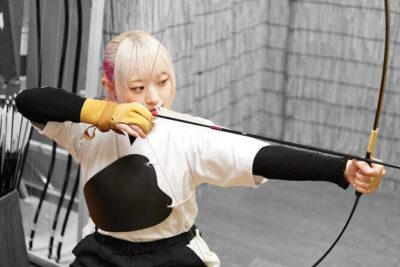 ★ 5.0Japanesel Archery Experience HIROSHIMA CASTLE SHARAKUFrom $43387 reviews
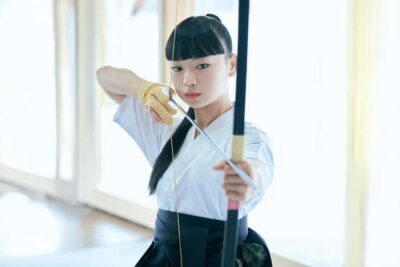 ★ 4.8Traditional Japanese Archery ExperienceFrom $41351 reviews
 ★ 5.0Mt Fuji & Hakone Cruise, Drum Show Bus 1 Day from Tokyo Sta. AreaFrom $123295 reviews
 ★ 4.8Nishiki Market Tea Ceremony with Koto PerformanceFrom $56294 reviews
 ★ 4.8Open-air theater “Tao- no-Oka” Drum TAO Live performanceFrom $30191 reviews
Filed on these lists too