
REVIEW · TAIKO DRUMMING AND TRADITIONAL PERFORMING ARTS
Tokyo’s Authentic and Finest Taiko Drumming Workshop
Taiko feels like it should be reserved for concerts, then this workshop proves otherwise. You will learn the basics of rhythm and play real traditional and contemporary-style pieces with a world-class drummer, in a small-group setting in Tokyo. Eva Kestner’s teaching focuses on getting you playing quickly, with clear, patient guidance in English, and you also get a personalized video of your performance.
Two things I especially like: you do not need to bring gear, because the studio provides the taiko drums and sticks, and you get lots of personal attention thanks to the max 15 travelers group size. One practical consideration: it is a physical activity, and the class can be loud, so comfy clothing and a little preparation for sore hands go a long way.
In This Review
- Key takeaways before you book
- Taiko 101 in 90 minutes: what you will actually learn
- Meet Eva Kestner and how her background shows in the teaching
- Your first drum hits: equipment included, setup handled
- The rhythm drills: how the lesson builds to group performance
- Traditional plus contemporary: what the pieces teach you
- The video keepsake: why it is more than a souvenir
- Where it happens in Shibuya, and how to fit it into your day
- Price and value: $120 for a skill you can feel
- Who this suits best, and who might reconsider
- Practical tips so you enjoy the full hour and a half
- Should you book this taiko workshop?
- FAQ
- How long is the taiko drumming workshop?
- What does the price include?
- Do I need prior taiko experience?
- Will the instruction be in English?
- How many people are in the group?
- Where does the workshop take place?
- Do I receive anything after the class?
- Is the activity physically demanding?
- Can I get a full refund if I cancel?
Key takeaways before you book
- A true hands-on taiko lesson: you learn foundations, then perform a traditional or contemporary piece during the session.
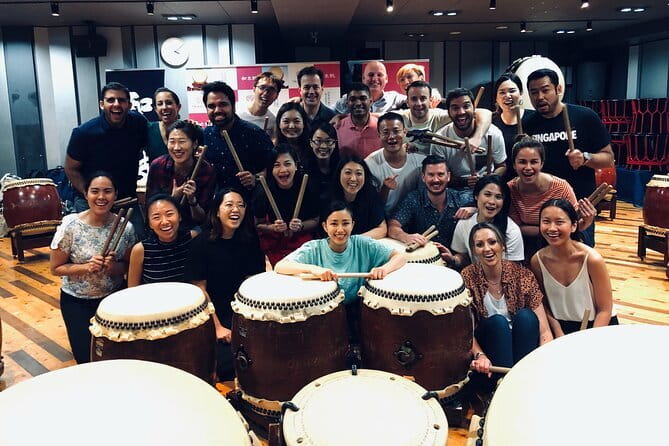
- Small group attention: max 15 participants means you get corrections and guidance when you need it.
- Equipment included: drums and sticks are provided, so you can travel light.
- You leave with proof: you receive a personalized video of you playing.
- It is not just hands, it is body: expect it to feel like a workout, especially in your legs.
- Centered location after class: the session ends back at the meeting point, so you can keep exploring Tokyo nearby.
Make something to take home. Other workshops
- Tokyo Shinjuku Chopsticks Making Class
★ 5.0 · 1,763 reviews - Chopstick Making Workshop in Ginza
★ 4.8 · 1,366 reviews - Tokyo Sumo Experience: Chanko & Mochi with a Former Pro
★ 4.8 · 567 reviews - Kintsugi Experience: Art of Golden Joinery in Tokyo
★ 5.0 · 467 reviews
Taiko 101 in 90 minutes: what you will actually learn
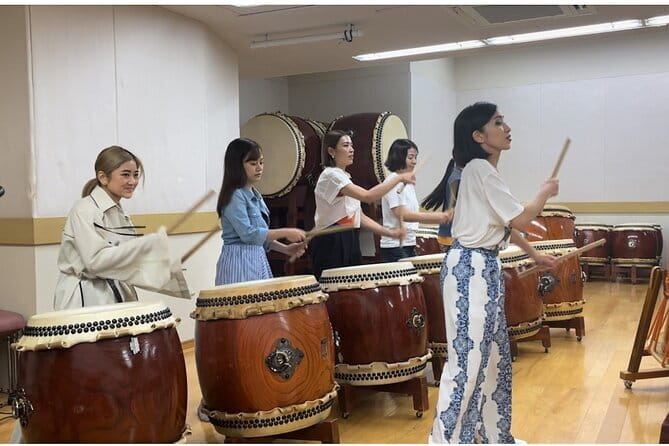
This workshop is built for people who have never played taiko, plus those who have tried a few hits elsewhere and want the real technique. In about 1 hour 30 minutes, you will move through foundation training, rhythm training, and then you will learn a specific piece to perform. The pace is designed so you start drumming early, not after a long lecture.
What makes it feel approachable is the structure. You are not just copying random arm movements. You learn the idea behind the beats, how to coordinate your timing, and how the rhythm connects to what the group is doing. One of the best parts is that the instructor demonstrates, so you can see the full motion and sound first, then try it yourself.
I also like that the class blends tradition with something more current. You will practice a traditional or contemporary piece, so you understand taiko as living music, not just museum culture. You will probably leave thinking, I get it now, because you actually played it, not just watched it.
Meet Eva Kestner and how her background shows in the teaching

The instructor for this experience is Eva Kestner, a professional taiko drummer and instructor and the founder and first musical director of Cornell University’s taiko drumming group. She has also received an excellency award from the Tokyo University of Arts New Artists Competition, and her original music is published by Harper Collins and Cambridge International Curriculum.
That matters because it translates into a teaching style that is both technical and friendly. The class is taught in English, and there is also English and Japanese support, which helps if you want to ask questions or you are more comfortable mixing languages. You will feel a lot of attention in the way corrections are given, especially when you are new and trying to coordinate timing, posture, and stick control.
From the feedback I see reflected in how people describe the session, Eva’s strengths are patience and energy. Beginners often struggle with focus at first, because taiko requires concentration, not just enthusiasm. This workshop helps you lock in by breaking the learning into manageable steps and repeating what works until it clicks.
And yes, the instruction is supportive for different bodies and preferences. If you are left-handed, you will still be guided through the technique. The goal is the same for everyone: make your rhythm accurate and your sound strong.
Your first drum hits: equipment included, setup handled
The studio provides everything you need, so you can show up without hunting for gear. You will use the taiko drums and taiko drumming sticks provided by the academy. That is a big value point for Tokyo, where small add-on activities can nickel-and-dime you for equipment.
The physical reality matters, too. Taiko is not quiet. Reviews describe it as a workout, with many people noticing it hits the legs more than they expected. In practice, that means you will likely do stable stances, powerful hits, and controlled movement while staying balanced. Plan on it being moderately demanding.
To make it comfortable, wear breathable clothing and shoes that let you move. Bring water. One good tip if you are worried about your hands: the class can be tough on your skin at first, and a few people mention getting small blisters. Band-Aids can be a simple, low-effort insurance policy.
Also, keep in mind this is a performance-style music activity, so the room may feel loud. If you are sensitive to sound, it is worth thinking about whether you want to wear ear protection. The activity description does not specify anything, so you would need to bring your own if you choose.
Loud rooms and quiet stages around Tokyo
- Mt Fuji & Hakone Cruise, Drum Show Bullet Train 1 Day from Tokyo★ 4.0 · 7,413 reviews
- Mt Fuji & Hakone Cruise, Drum Show Bus 1 Day from Tokyo★ 4.0 · 1,287 reviews
- Mt Fuji & Hakone Cruise, Drum Show Bus 1 Day from Tokyo Sta. Area★ 5.0 · 295 reviews
- Tokyo: KABUKI Show at Kabukiza Theatre Admission Ticket★ 4.8 · 152 reviews
- Tokyo: KABUKI, BUNRAKU, etc. presented by National Theatre★ 4.6 · 135 reviews
The rhythm drills: how the lesson builds to group performance
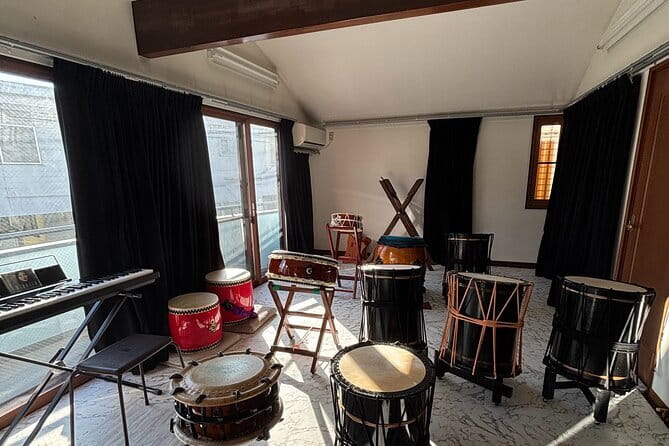
The workshop does not just have you hit the drum randomly and hope for the best. It moves through rhythm training in a way that helps you understand timing and coordination. You typically start with foundation training, then practice rhythms you can control. After that, you learn a traditional or contemporary taiko piece.
A detail that stands out from participant descriptions is the use of recorded rhythm numbers. You practice with one set, then you play another set that fits the traditional piece. That is smart pedagogy. A recording gives consistency, so you can focus on your own timing and technique without waiting for someone else to start or stop.
Another useful thing: you are not left to figure out movements alone. You learn technique in stages, and the instructor performs so you can copy what you see. The class also includes a brief explanation of taiko drum history, so while your hands are learning, your brain is building context.
In a world where many cultural experiences are passive, this one is active. You get the satisfaction of turning a beat into a sound, and then turning that sound into a group rhythm. That is the moment where taiko stops feeling intimidating.
Traditional plus contemporary: what the pieces teach you
Taiko is often described as a dramatic expression, but the real lesson is how rhythm carries meaning. In this workshop, you will learn either a traditional or a contemporary piece, and you will perform as part of the class. That gives you a taste of how taiko can sound rooted and also modern.
Traditional pieces are valuable because they teach you control and discipline. They often emphasize structure, consistent timing, and clean dynamics. Contemporary pieces are valuable because they show you that taiko can expand beyond strict forms and still keep the core power of the drum.
You also get a demonstration performance during the class. Even if you are a complete beginner, seeing the instructor play helps you hear what the technique is supposed to produce. Then when you hit the drum yourself, you can compare your sound to a real model, not just an imagined idea.
The video keepsake: why it is more than a souvenir
A lot of activities end with a quick photo and you forget what you learned. This one gives you a personalized video of you playing taiko drums. That is a practical reward, because you can actually review your posture, your timing, and your stick control.
From a value perspective, it helps you remember the rhythm and movements after the workshop. Taiko is hard to describe, especially to friends. But once you see yourself doing it, the memory becomes concrete. It also makes the lesson feel real, not just a fun hour and a half.
The personalized part is important. You are not watching a group clip that may include you in passing. Your own footage becomes a training tool, and it makes it easier to keep practicing at home if you want to.
Where it happens in Shibuya, and how to fit it into your day
The meeting point is in Shibuya, Uguisudanichō, with the address listed as 111 太洋レジデンス代官山. The activity is near public transportation, so you should be able to reach it without a car or complicated logistics.
After the class, it ends back at the meeting point. That makes planning easier. You can schedule it as an anchor activity in your day, then continue exploring nearby areas without long dead time traveling cross-town.
One note for larger groups: if you are booking a group larger than 20 people, there is a large group slot, and the location is about 20 minutes from Shibuya. If you are traveling with a bigger group, check that you are in the right session type so you are not surprised by the meeting area.
Price and value: $120 for a skill you can feel
At $120 per person, this workshop sits in the middle of the pricing range for hands-on cultural activities in Tokyo. The question is whether you get your money’s worth.
Here is what you get for that price, based on the experience details:
- All equipment provided, so you do not pay extra or carry gear.
- A professional instructor, with teaching experience and a track record in both performance and education.
- A structured 90-minute session with foundation training, rhythm training, and a piece you learn and perform.
- Small-group size, max 15, which directly improves feedback and confidence.
- A personalized video of you playing.
When you add those together, it is not just entertainment. You are paying for instruction plus a performance outcome. That is why it rates so high with people who want something genuinely interactive rather than a short show.
Booked on average about 31 days in advance, the scheduling also suggests this workshop has steady demand. If you want a specific date, earlier booking helps.
Who this suits best, and who might reconsider
This is a great fit if you want a short, intense cultural activity that also gives you a new skill. It suits:
- Beginners who want guidance from the first beat
- People who like physical activities and do not mind getting a little sweaty
- Families with kids and teens who can handle noise and movement (the teaching is described as working well across age groups)
- Anyone who wants a compact Tokyo experience with minimal logistics, since you start and end at the same meeting point
It may be less ideal if:
- You have a strong sensitivity to loud sound and you are not planning ahead with protection
- You are looking for something gentle and seated. This is described as physically demanding, and you should wear comfortable clothing and bring water
If you have moderate physical fitness, you should be fine. The key is to treat it like a workout with cultural context, not like a museum-style activity.
Practical tips so you enjoy the full hour and a half
You will have the best time if you prepare for the realities of taiko:
- Wear breathable, comfortable clothing. People mention the movement and heat.
- Bring water. It can feel like a workout.
- Think about your hands. If you bruise easily or get blisters, band-aids can help.
- Show up ready to focus. Concentration is part of the fun, not just a requirement.
- If directions feel confusing, use the address on the map. The location is real and specific, but it can be a little tricky to find from a generic pin.
Most importantly, go with an open mind. Taiko looks simple for a second, then you realize timing, power, and coordination all matter. The class is set up so you can learn that step by step, but you will still need to give it attention.
Should you book this taiko workshop?
If you want an authentic Tokyo experience that is hands-on, energetic, and genuinely instructive, this is an easy yes. The combination of small-group teaching, equipment provided, and the personalized video makes it feel like more than a one-time activity.
Book it if your idea of fun includes rhythm work, you are okay with noise, and you want to leave with a skill you can practice again. Skip it if you want something quiet, slow, or purely observational.
Overall, this workshop is one of those rare cultural activities where the payoff is physical as well as cultural. You do not just learn about taiko. You hit the drum, you join the rhythm, and you walk away with something you can replay in your memory.
FAQ
How long is the taiko drumming workshop?
The workshop lasts about 90 minutes.
What does the price include?
You get taiko drums and taiko drum sticks provided, English and Japanese support, and a personalized video of you playing. Accessibility support is also included.
Do I need prior taiko experience?
No. The workshop is designed so you can learn the basics and play even if you are a complete beginner.
Will the instruction be in English?
Yes. The workshop is taught in English, and there is also English and Japanese support available.
How many people are in the group?
The experience has a maximum of 15 travelers.
Where does the workshop take place?
It meets at the Japan, Tokyo, Shibuya area at Uguisudanichō (address listed as 111 太洋レジデンス代官山), and it ends back at the same meeting point.
Do I receive anything after the class?
Yes. You will receive a personalized video of you playing taiko drums.
Is the activity physically demanding?
It calls for a moderate physical fitness level, and it can feel like a workout due to the drumming movements.
Can I get a full refund if I cancel?
Yes, it offers free cancellation. You can cancel up to 24 hours in advance for a full refund. If you cancel less than 24 hours before the experience starts, you are not refunded.
Stages, Loud and Quiet



Made by Hand, and Yours to Keep


Newest Tokyo write-ups from the Loving Japan desk






Taiko Drumming and Traditional Performing Arts, side by side.
 ★ 4.0Mt Fuji & Hakone Cruise, Drum Show Bullet Train 1 Day from TokyoFrom $1497,413 reviews
 ★ 4.0Mt Fuji & Hakone Cruise, Drum Show Bus 1 Day from TokyoFrom $1221,287 reviews
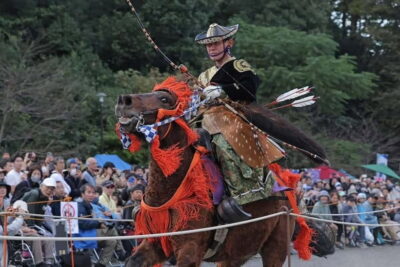 ★ 5.0Samurai Sword & Archery Class from Samurai DescendantFrom $193603 reviews
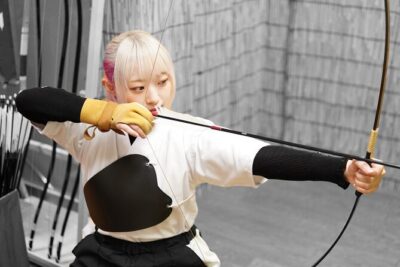 ★ 5.0Japanesel Archery Experience HIROSHIMA CASTLE SHARAKUFrom $43387 reviews
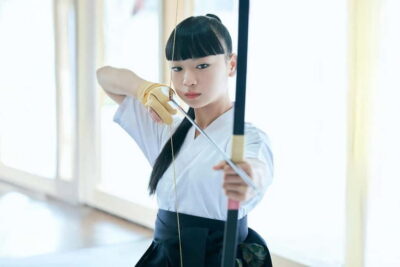 ★ 4.8Traditional Japanese Archery ExperienceFrom $41351 reviews
 ★ 5.0Mt Fuji & Hakone Cruise, Drum Show Bus 1 Day from Tokyo Sta. AreaFrom $123295 reviews
 ★ 4.8Nishiki Market Tea Ceremony with Koto PerformanceFrom $56294 reviews
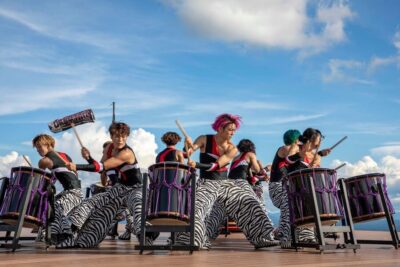 ★ 4.8Open-air theater “Tao- no-Oka” Drum TAO Live performanceFrom $30191 reviews