
REVIEW · SHOW
Traditional Japanese Music show & Experience Tour in Kyoto
Traditional instruments feel different up close. This Kyoto experience pairs a short live performance with a guided chance to try the instruments yourself, in a small group setting. It is not just watching, it is learning how Japanese music is made, even if you have zero background.
I especially like the hands-on playing time and the way the session stays personal thanks to the small maximum group size. You also get a clear structure, so you always know what is happening next. One consideration: the program content can vary by day, so the exact instruments you get to try depend on what is scheduled that day.
In This Review
- Key Highlights at a Glance
- Where You Start in Kyoto, and How the Hour Flows
- The 25-Minute Concert: Hearing the Instruments the Way You Should
- Hands-On Instrument Time: Shamisen, Koto, Wadaiko, and More
- What to Expect While You Play (And How to Get More Out of It)
- Photo Time: Turning the Session Into a Real Memory
- Price and Value: What $46.24 Buys You in Kyoto
- Best Fit: Who This Tour Is For (and Who Might Skip It)
- A Few Small Logistics That Make the Experience Smoother
- Should You Book This Traditional Music Experience in Kyoto?
- FAQ
- How long is the Traditional Japanese Music show and experience tour?
- Which traditional Japanese instruments can I try?
- Do I need any musical experience before I join?
- What days and times does the tour run in Kyoto?
- How big is the group?
- What is included in the price?
- Where do I meet, and does it end nearby?
- Can I cancel for a full refund?
Key Highlights at a Glance
- A 25-minute live concert that shows the instruments in action first
- 25 minutes of guided instrument practice with no prior experience needed
- Shamisen, koto, and wadaiko are commonly offered, plus more depending on the day
- Small group size (max 12) for more direct help while you play
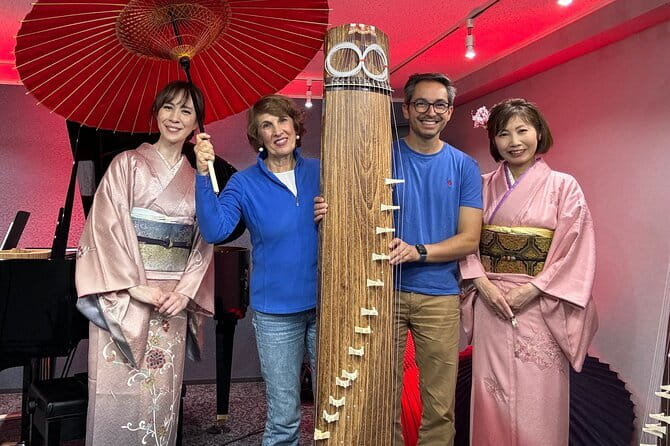
- 10 minutes for photos holding the instruments with performers
- A tight 60-minute format that fits easily into a Kyoto day
Still weighing up options in Kyoto? These are the ones our reviewers rated highest.
- PERFECT KYOTO 1-Day Bus Tour
★ 5.0 · 13,518 reviews - Kyoto: Fushimi Inari, Kinkakuji, Bamboo Grove 1 Day Bus Tour
★ 4.8 · 4,316 reviews - Kyoto: Tea Ceremony in a Traditional Tea House in Kiyomizu
★ 4.9 · 3,519 reviews - Kyoto Geisha Walking Tour: Gion District & Hidden Gems
★ 4.7 · 3,273 reviews
Where You Start in Kyoto, and How the Hour Flows
This experience is designed to be easy to fit into your day. It runs about 60 minutes total, and it always ends back at the meeting point. You start at 11:00 am on Monday, Tuesday, Thursday, and Friday, so you can plan around it without scrambling.
Your meeting point is listed as 5F, 306 Higashidaimonjichō, Nakagyo Ward, Kyoto, 604-8043. It is near public transportation, and you will receive a mobile ticket, which makes check-in straightforward. Since there is a photo moment at the end, I recommend arriving a little early, so you are settled before the music starts.
The flow is simple and time-boxed:
- 25 minutes: authentic Japanese music concert
- 25 minutes: hands-on playing experience
- 10 minutes: photos with the instruments and performers
That structure matters. When you know you will get both watching and doing, you feel less like you are stuck in a passive show and more like you are learning a real skill in a short time.
The 25-Minute Concert: Hearing the Instruments the Way You Should
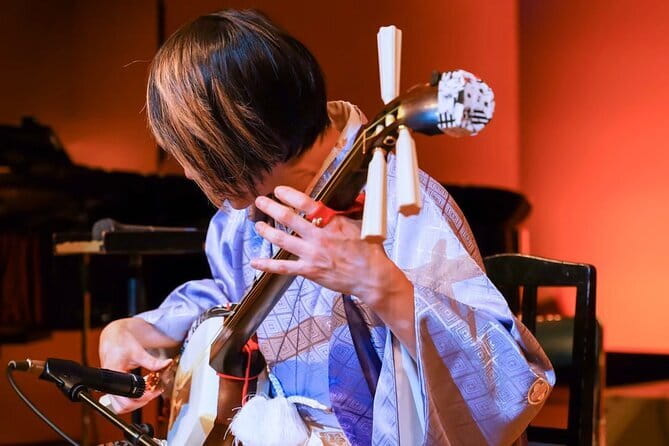
The first half is a compact concert, and it sets the tone for everything that comes after. Watching performers play traditional instruments right there in front of you helps your brain connect the sound to the technique. You are not just hearing music, you are seeing how hands, posture, and timing create the tone.
This is also where the experience can become surprisingly memorable. In past sessions, performers have included moments that feel more interactive than a typical concert, including singing and parts where you get pulled into what is happening musically. Even if the exact program changes by day, the goal stays the same: you get the real sound first.
One smart part of this format is that the concert acts like a live “instruction demo.” When you later sit with an instrument, you already have a mental picture of what it should sound like. That reduces the frustration of trying something new, especially if you are not a musician.
If you are the type who worries, I get it. Sitting for a show can feel like time you could spend walking around Kyoto. Here, the concert is not filler. It is the foundation for the hands-on section, so you are building something, not just passing time.
Hands-On Instrument Time: Shamisen, Koto, Wadaiko, and More
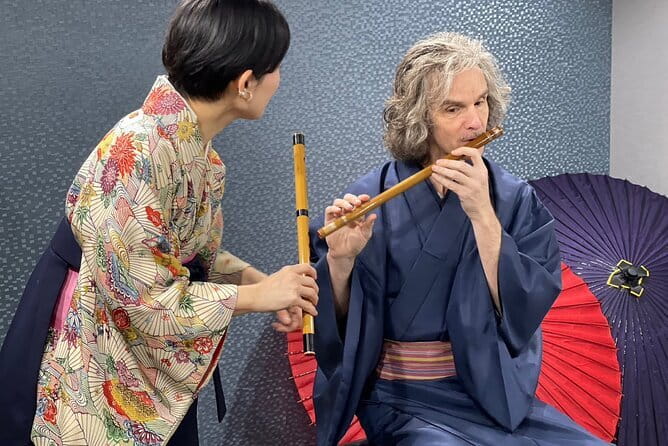
The heart of this tour is the 25 minutes where you actually try playing. There is expert guidance, and importantly, no prior experience is needed. You get the kind of coaching that makes a big difference in a short session, because you only have so much time to translate curiosity into sound.
A key detail: you typically can experience multiple instrument styles, including:
- Shamisen (Japanese lute)
- Koto (Japanese harp)
- Wadaiko (Japanese drum)
- and additional instruments depending on the day
How you choose can be part of the fun. If you are drawn to string instruments, lean toward the shamisen or koto. If you want rhythm first, the wadaiko option can feel energizing because drums are physical and immediate.
Why this matters for value: playing time is usually what separates a memorable cultural moment from a forgettable show. At around $46.24 for a one-hour experience, you are paying for more than seats and sound. You are paying for the chance to hold an instrument and get corrections from the people performing it.
Also, the small-group setup is not just a comfort perk. With a maximum of 12 participants, you are more likely to get personal attention when your technique needs a nudge. That shows up in how confident you feel. Even if your first notes are wobbly, you are not stuck figuring it out alone.
- PERFECT KYOTO 1-Day Bus Tour★ 5.0 · 13,518 reviews
- Kyoto: Fushimi Inari, Kinkakuji, Bamboo Grove 1 Day Bus Tour★ 4.8 · 4,316 reviews
- Kyoto: Tea Ceremony in a Traditional Tea House in Kiyomizu★ 4.9 · 3,519 reviews
- Kyoto Geisha Walking Tour: Gion District & Hidden Gems★ 4.7 · 3,273 reviews
- Kyoto: Tea Ceremony Ju-An at Jotokuji Temple★ 4.9 · 3,207 reviews
What to Expect While You Play (And How to Get More Out of It)
In a hands-on session like this, your biggest challenge is not learning “music,” it is learning the mechanics fast. You might be asked to focus on a few core moves, like hand position, timing, or how you set your grip and posture. That is normal, and it is exactly why the guides exist.
Here are practical ways to make your 25 minutes count:
- Ask quick questions while guidance is offered. If you wait until the end, time slips away.
- Watch the performers’ hands even when it is not your turn. You learn a lot from the motion patterns.
- Aim for progress, not perfection. Japanese instruments often have specific techniques that take longer than a single trial session, so any improvement is a win.
I also like that the experience includes a photos-and-instruments moment right after. That means you can remember what you tried, and you have a natural reason to slow down and look at your instrument close up. It turns the playing into a small personal memory, not just a burst of sound and then it is gone.
Photo Time: Turning the Session Into a Real Memory
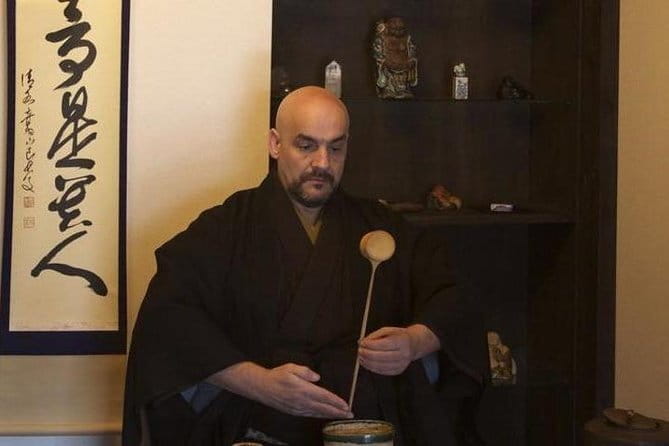
The last stretch, about 10 minutes, is for photos with the instruments and performers. This is simple but meaningful. It helps you capture the moment in a way that feels connected to what you did, not just something you watched from the sidelines.
When a tour includes photos with the instruments, it usually signals a key intent: they want you to feel ownership of the experience. You are not just consuming culture, you are participating in it in a physical way. That lines up with what makes this tour different from a standard concert.
Practical tip: if you care about photos, bring your phone fully charged and ready. You might be holding or positioning with instruments, so you will want both hands to be free when the moment comes.
Price and Value: What $46.24 Buys You in Kyoto
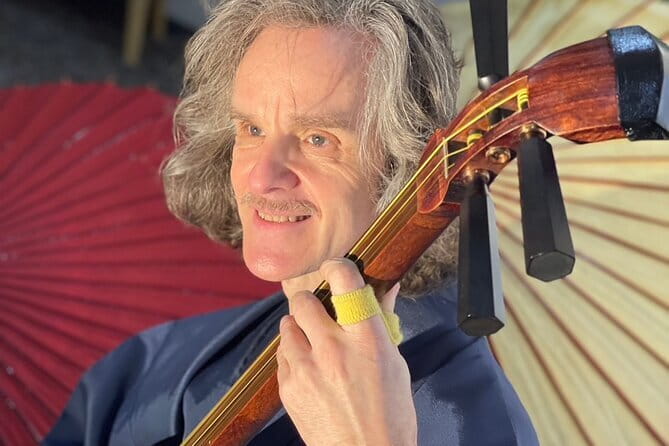
At about $46.24 per person for roughly one hour, the price can sound like a lot until you look at what is actually included. You get:
- an authentic live performance
- hands-on instrument time with guidance
- an instrument experience item provided during the session
- and a photos segment
In other words, you are not paying just for entry. You are paying for instruction and time with real instruments, in a small group setting. If you love music, that hands-on piece is often what you remember later. If you just want cultural atmosphere, the concert portion still gives you something solid.
Compared with paying for a show only, this is more cost-efficient for “doing,” even though it is still not a long class. It is a good value point for travelers who want a skill moment without committing half a day.
One note to consider: the experience depends on a minimum of 2 participants. If the group requirement is not met, the activity could be canceled and you would be offered a different date or a refund. That is worth keeping in mind if you have a very tight schedule.
Best Fit: Who This Tour Is For (and Who Might Skip It)
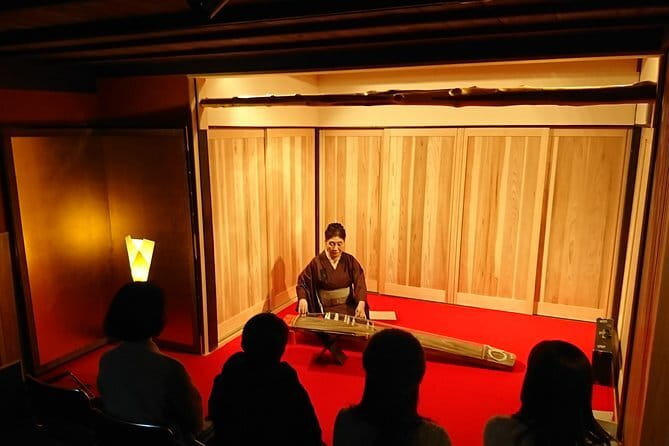
This is a great match if you want a structured cultural stop that does not eat your whole day. You get a compact concert, then a chance to play multiple instrument types like shamisen, koto, and wadaiko. The small group size also makes it a good pick if you dislike crowded group tours.
I also think it works well for first-timers. The experience explicitly says you can participate without prior musical experience, and the guidance is there to help you make sound, not just admire instruments from a distance.
You might consider passing if you are mainly chasing quiet sightseeing time or you prefer deep-dive lessons. This is an hour, so you will not become a player in that time. But you will get real contact with traditional instruments and the confidence of having tried them with coaching.
If you are a “one smart activity” person, this fits that style well. It is not just entertainment. It is cultural practice in a short, friendly package.
A Few Small Logistics That Make the Experience Smoother
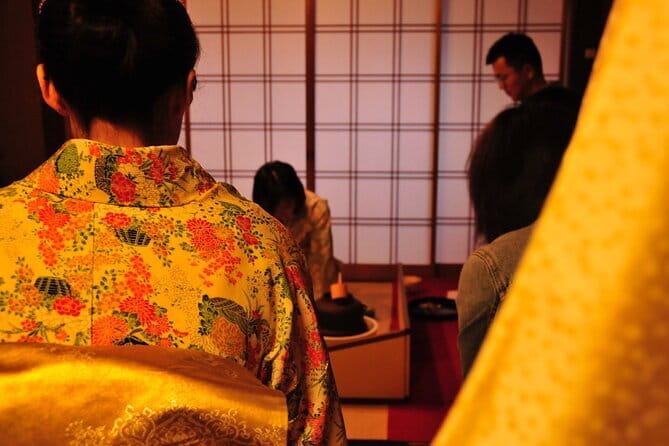
Because the experience is about 1 hour and runs at 11:00 am on set weekdays, planning is simple. Still, I recommend building in extra buffer time to reduce stress. You are meeting in a specific Kyoto address at a set time, and the session likely moves quickly from concert to playing to photos.
Also, private transportation is not included, so you will need your own route to get there. The listing notes it is near public transportation, which is good news. Use that to your advantage, especially in central Kyoto where parking can be annoying.
If you prefer bringing nothing extra, you will be fine. The main thing is to be ready to participate, since the instrument experience is included. Comfortable clothing also helps because playing can require posture shifts.
Should You Book This Traditional Music Experience in Kyoto?
Yes, I would book it if you want a Kyoto activity that is more than passive sightseeing. The biggest reason is the combination: a short authentic performance followed by guided hands-on playing with commonly offered instruments like shamisen, koto, and wadaiko. For the time length and price, it is a strong “try it yourself” value.
Book it especially if you learn by doing. This tour is built for first-timers, it keeps the group small, and it gives you a clear path through the hour. Even if your first notes are imperfect, you will leave with a real sense of how traditional Japanese music is shaped by technique, not just tradition.
FAQ
How long is the Traditional Japanese Music show and experience tour?
It lasts about 60 minutes total, with 25 minutes for the concert, 25 minutes for hands-on instrument playing, and 10 minutes for photos with the instruments and performers.
Which traditional Japanese instruments can I try?
The experience commonly includes shamisen, koto, and wadaiko, and it may include more instruments depending on the day.
Do I need any musical experience before I join?
No. You can participate with no prior experience, and expert guidance is provided during the instrument-playing portion.
What days and times does the tour run in Kyoto?
It starts at 11:00 am on Monday, Tuesday, Thursday, and Friday.
How big is the group?
The activity has a maximum of 12 travelers, which helps keep the experience more personalized.
What is included in the price?
The price includes an instrument for the experience.
Where do I meet, and does it end nearby?
You meet at 5F, 306 Higashidaimonjichō, Nakagyo Ward, Kyoto, 604-8043, Japan, and the activity ends back at the same meeting point.
Can I cancel for a full refund?
Yes, you can cancel up to 24 hours in advance for a full refund.
Newest Kyoto write-ups from the Loving Japan desk


Show, side by side.
 ★ 4.0Mt Fuji & Hakone Cruise, Drum Show Bullet Train 1 Day from TokyoFrom $1497,413 reviews
 ★ 4.8Sumo Show Experience with Chicken Hot Pot and a PhotoFrom $1036,678 reviews
 ★ 4.8Sumo Show and Dining ExperienceFrom $792,742 reviews
 ★ 5.0the SUMO showFrom $891,960 reviews
 ★ 5.0Tokyo Shinjuku Sumo Show & Experience with PhotoFrom $791,750 reviews
 ★ 4.5Samurai Restaurant Show Ticket with 2 DrinksFrom $551,307 reviews
 ★ 4.0Mt Fuji & Hakone Cruise, Drum Show Bus 1 Day from TokyoFrom $1221,287 reviews
 ★ 4.8Sumo Show and Experience in ShinjukuFrom $691,001 reviews