
REVIEW · JAPANESE COOKING CLASSES
Eat Osaka: Street Food Cooking in an Authentic Kitchen!
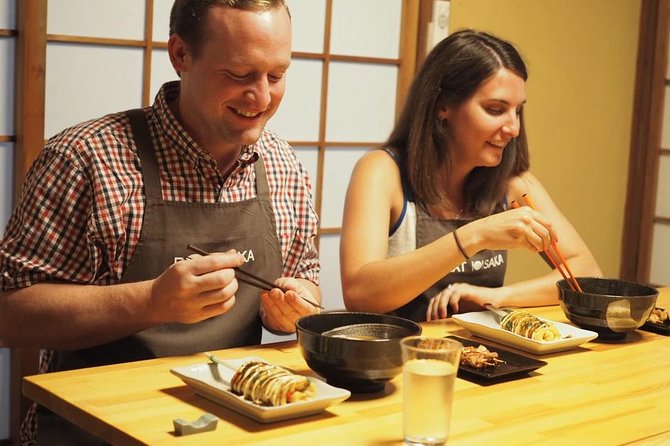
Cooking in Osaka should be loud, hands-on, and delicious. This class turns street food into a learnable skill in an old Japanese kitchen. You get guidance, tools, ingredients, and then you sit down to eat what you make.
What I especially like here is the focus on the big Osaka hits, not just assembling things from a box. You’ll tackle okonomiyaki from scratch and also make hand-made udon noodles, which is the kind of detail you normally don’t get on a quick food tour.
One thing to consider: this is an active cooking class. If you hate cutting, stirring, and standing for a couple hours, you might feel a bit rushed by the pacing.
In This Review
- Key things that make Eat Osaka worth your time
- Osaka street food, taught like a craft
- What you actually cook, and why each dish matters
- Okonomiyaki: Osaka-style pancake, built from scratch
- Hand-made udon noodles: the chewy skill
- Pickled cucumber: the palate reset
- Yakitori skewers with signature sauce
- Sweet mochi dessert: the finish that makes sense
- The cooking space and pacing: less chaos, more help
- Drinks included: why it’s more than a free upgrade
- Location near public transport, in the Higashinari area
- Price and value: what $79.28 buys you here
- Who this cooking class fits best
- Practical tips so you enjoy it from start to finish
- Should you book Eat Osaka?
- FAQ
- What dishes will I learn to make?
- How long is the Eat Osaka cooking class?
- How big is the group?
- What is included in the price?
- Is there a mobile ticket?
- Where do I meet the group?
- Is it near public transportation?
- What is the cancellation policy?
- If the class is canceled due to minimum travelers, what happens?
Key things that make Eat Osaka worth your time
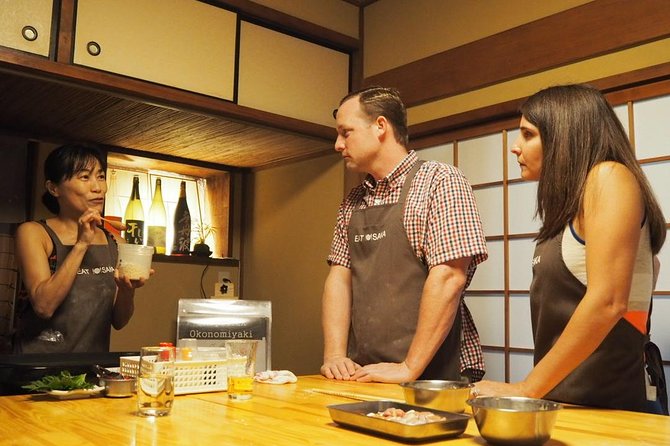
- Old-house setting: You cook in a traditional-style space that feels like Osaka, not a hotel kitchen.
- Small group, max 8: More time with the chef, better help when your batter or dough goes off-script.
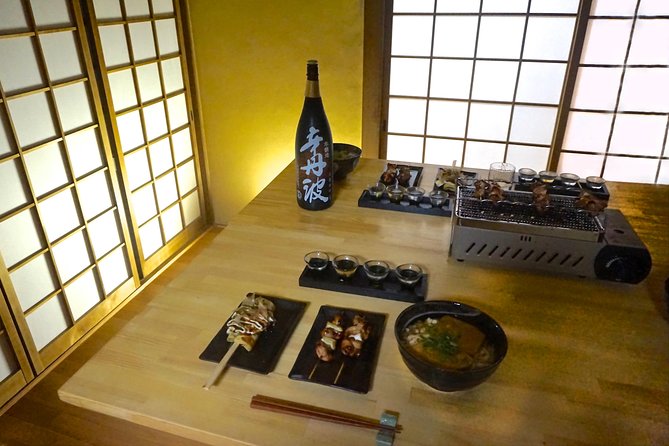
- From-scratch street food menu: Okonomiyaki, hand-made udon, yakitori, pickled cucumber, and mochi dessert.
- Professional tools and ingredients: You learn with the real stuff, not plastic replicas.
- Beer, sake, or green tea included: You’re not just “done eating,” you’re matching flavors with a drink.
Cook it yourself instead. Other kitchens in Osaka
- Sushi Making Osaka Roll and Authentic Japanese Sushi Class
★ 5.0 · 1,220 reviews - Osaka Sushi Making Experience
★ 5.0 · 400 reviews - Osaka: Ramen and Gyoza Cooking Class in Dotonbori
★ 5.0 · 378 reviews - Osaka: Sumo Stage Show with Bento or Snack + Fight & Photo
★ 4.3 · 364 reviews
Osaka street food, taught like a craft
Osaka street food has a reputation for being fun first, fancy later. That is exactly why a cooking class fits so well here. Instead of just sampling items, you learn how the flavors come together, and you leave with the mental map for what makes the dish Osaka-style.
This class runs about 2 hours 30 minutes and keeps things compact for a reason. The dishes are multiple, so the timing needs to stay tight. The upside is you’re not stuck in an endless demo while everyone else watches. You’re doing the work, with a bilingual local chef guiding you step by step.
And yes, the kitchen matters. This is described as a purpose-built cooking studio in an old Japanese house. That means you get the vibe people look for in Osaka, while still having the space to cook without feeling cramped.
What you actually cook, and why each dish matters
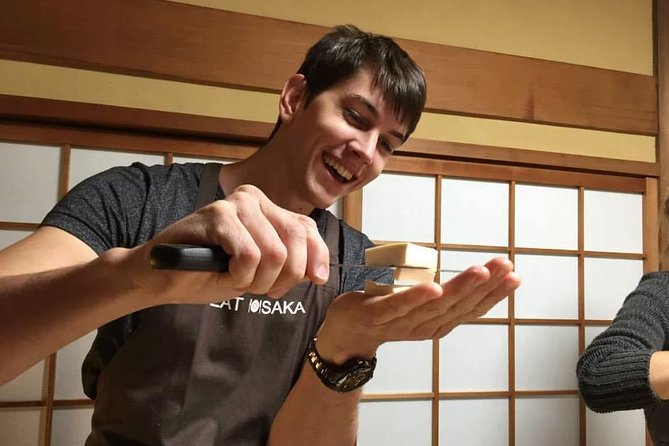
The menu hits the core of Osaka comfort food. You are not just learning one thing. You are building a small parade of textures, from savory pancakes to chewy noodles and grilled skewers. Here’s what you can expect, and what to pay attention to while cooking.
Okonomiyaki: Osaka-style pancake, built from scratch
Okonomiyaki is the dish most people think of when they imagine Osaka street food. The key word here is from scratch. You’re not assembling a half-prepared mix. You’ll learn how to work the batter, manage the cook, and layer the components in a way that produces that satisfying balance of crisp edges and a tender inside.
In Osaka, okonomiyaki is also about the rhythm of cooking it. If your heat is off, the surface either won’t set or it over-darkens before the inside is ready. This class is valuable because someone is there to help you correct what you see in real time.
- Osaka Go Karting Tour with Funny Costume★ 5.0 · 2,658 reviews
- Osaka Castle: Museum and Tower Entry Ticket★ 4.5 · 2,380 reviews
- Osaka: Shinsekai Food Tour with 13-15 Dishes at 5 Eateries★ 4.8 · 2,204 reviews
- Osaka Food Tour: 13 Dishes at 5 Local Eateries★ 5.0 · 2,149 reviews
- Hungry Osaka Street Food Tour:15 Tastings & 3 Drinks with a Local★ 5.0 · 1,727 reviews
Hand-made udon noodles: the chewy skill
Hand-made udon is where this class quietly goes from fun to useful. Store-bought noodles are fine. Hand-made udon tells you what “right” actually feels like. You’ll work the dough and shape noodles under guidance, and that changes your understanding of texture.
If you’ve ever had udon that feels too soft, or too firm, this is the lesson that connects the dots. Udon should have a bouncy chew. Making it helps you understand why resting, thickness, and cutting matter.
Even if you don’t plan to cook udon back home, you’ll be able to tell good udon from mediocre in a way that a simple tasting can’t teach.
Pickled cucumber: the palate reset
Pickled cucumber is small on the plate, but it has a big job. It cuts through the richness of fried and grilled flavors. You’ll see how the class menu is paced, too. After you work with savory components, something crisp and tangy keeps the whole meal from feeling heavy.
This is the kind of detail that makes street food meals work in real life. It’s not just about stuffing your face. It’s about keeping the next bite exciting.
Yakitori skewers with signature sauce
Yakitori is Japan’s comfort food for fire and glaze. Skewers sound simple until you care about doneness and the way sauce clings. In a class setting, you’ll get guidance on how to handle heat and timing so the chicken cooks properly while the flavor builds.
The sauce is described as signature. That matters because yakitori sauce is not one-size-fits-all. The sweetness, salt, and thickness are what make it taste like the street stalls you want to find. Getting a hand in this step teaches you why those sauces feel addictive.
Sweet mochi dessert: the finish that makes sense
You end with a sweet mochi dessert. Mochi is chewy, not cake-like. It changes the whole mood at the end, taking you from savory cooking mode to a light, satisfying finish.
Dessert inclusion might sound like a small perk, but it’s actually practical. A cooking class that ends with one last sweet bite feels complete. You also get to use up the time while the kitchen is still active, which keeps the experience feeling like a full meal rather than a “snack and go” event.
The cooking space and pacing: less chaos, more help
The class has a maximum of 8 travelers. That small-group size is one of the biggest reasons this experience consistently earns top marks. With a bigger group, you get a slower teacher. Here, the setup allows you to ask questions and get real answers while your hands are doing the work.
It’s also clear from the comments that the guide’s role goes beyond instructions. People talk about feeling welcomed, and they mention the chef explaining not only the steps but the reasoning. That is important. If you understand why the chef wants a certain texture or timing, you can fix mistakes fast instead of guessing.
In past classes, guides named Miki and Nathalie have led groups. If either of them is on the schedule when you book, you can expect a friendly, organized approach that makes it easier to relax and focus.
Drinks included: why it’s more than a free upgrade
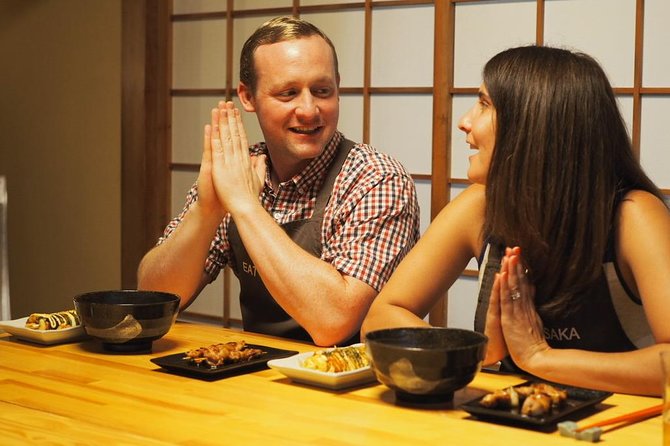
You get welcome drinks and then you also sit down with your creations alongside beer, sake, or green tea. That’s not just a perk for people who like alcohol.
Pairing matters in Japanese food. Green tea can cool heat and reset your palate. Beer and sake also fit the salty-sweet balance that happens when you glaze skewers and toppings. Even if you pick green tea, you still get that food-and-drink pacing that makes the meal feel like part of the culture, not just a “reward.”
Location near public transport, in the Higashinari area
The meeting point is listed at Eat Osaka, Higashinari 1-chome-2-10, Higashinari, Osaka (537-0021). It’s also described as near public transportation, which matters in Osaka where you may hop lines and walk between neighborhoods.
You’ll also finish back at the meeting point. That’s convenient for planning. You do not need to guess how to get across town right after cooking and eating.
One practical note: since you’ll be moving around and cooking, wear shoes that can handle a few steps and a bit of standing. The kitchen experience is short, but it’s not a sit-and-watch workshop.
Price and value: what $79.28 buys you here
At $79.28 per person, this is not a budget street-food snack crawl. But it’s also not paying for just one dish.
You’re getting:
- multiple dishes you actively make, including okonomiyaki and hand-made udon
- ingredients and instructions included
- a set of drinks, including beer, sake, or green tea
- use of professional tools
If you price the meal alone in Osaka, you can easily spend similar money across multiple stops. The difference is that here you also pay for the kitchen lesson. You leave with skills you can actually use when you eat okonomiyaki or udon later, and you’ll know what to look for.
So the “value” is not only the food quantity. It’s the learning plus the meal together.
Who this cooking class fits best
This is a strong fit if:
- you want a hands-on Osaka food experience, not a lecture
- you like guided cooking, especially if you’ve never made noodles or okonomiyaki
- you enjoy small-group settings where you can ask questions
- you want a fun activity that still feels grounded and local, in an old Japanese house kitchen
It can also work well for families, since one review mentioned cooking together and finding it engaging. One guest also said vegetarian needs were accommodated. If you have dietary limits, your best move is to mention it when you book so the chef can plan.
Practical tips so you enjoy it from start to finish
A few things will help you get the most out of the time:
- Ask questions while you’re cooking, not after the last bite. The chef can fix technique while it still matters.
- Watch heat and timing cues carefully. Even if you get overwhelmed, the visual signals help.
- Pace yourself with drinks. You want to keep energy for the hands-on parts, especially the udon stage.
- Come hungry. You are making several dishes, then eating them. This class is a meal.
And if you’re the type who likes collecting restaurant “secrets,” you’ll get some here. Not magic. Small technique choices that explain why the final bite tastes right.
Should you book Eat Osaka?
If you’re in Osaka and you want more than eating, book it. The big wins are the from-scratch street food menu and the small group size that makes the chef’s attention feel real. You’ll also appreciate that you are not only cooking, you’re eating with drinks included, so the experience lands like a complete meal.
Skip it only if you hate hands-on cooking or you want something passive. Otherwise, this is a smart way to spend a half-afternoon learning Osaka through the dishes people actually talk about.
FAQ
What dishes will I learn to make?
You’ll learn to make Osaka-style okonomiyaki from scratch, hand-made udon noodles, pickled cucumber, yakitori skewers with a signature sauce, and a sweet mochi dessert.
How long is the Eat Osaka cooking class?
The class lasts about 2 hours 30 minutes.
How big is the group?
The tour has a maximum of 8 travelers.
What is included in the price?
All ingredients and instruction are included, along with welcome drinks and drinks to enjoy your meal (beer, sake, or green tea).
Is there a mobile ticket?
Yes, the experience features a mobile ticket.
Where do I meet the group?
The start point is Eat Osaka, Higashinari 1-chome-2-10, Higashinari, Osaka, 537-0021, Japan.
Is it near public transportation?
Yes, it is described as near public transportation.
What is the cancellation policy?
Free cancellation is available. You can cancel up to 24 hours in advance for a full refund. Changes inside 24 hours are not accepted, and refunds are not offered for cancellations within 24 hours of the start time.
If the class is canceled due to minimum travelers, what happens?
If it’s canceled because the minimum number of travelers isn’t met, you’ll be offered a different date or experience, or you’ll receive a full refund.
Kitchens You Can Book Into

Newest Osaka write-ups from the Loving Japan desk



Japanese Cooking Classes, side by side.
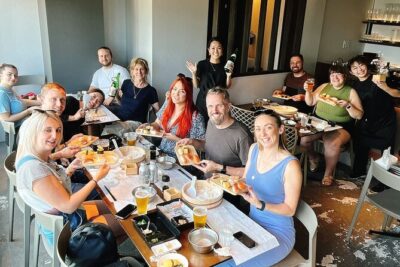 ★ 5.0Sushi Making Tokyo Roll and Authentic Japanese Sushi ClassFrom $593,971 reviews
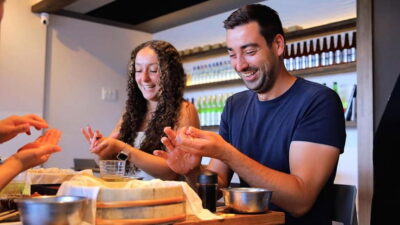 ★ 4.9Roll and Authentic Sushi Making Class in AsakusaFrom $581,957 reviews
 ★ 5.0Ramen Cooking Class at Ramen Factory in KyotoFrom $1311,937 reviews
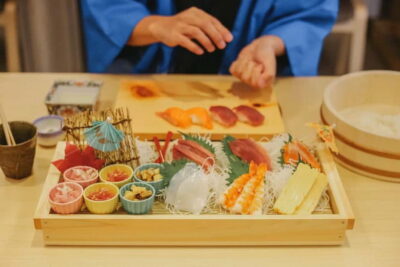 ★ 4.9Sushi Making Class in a Happi Coat near a Famous SpotFrom $421,377 reviews
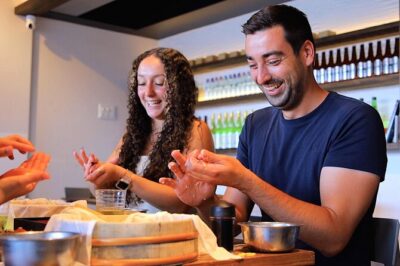 ★ 5.0Sushi Making Osaka Roll and Authentic Japanese Sushi ClassFrom $311,220 reviews
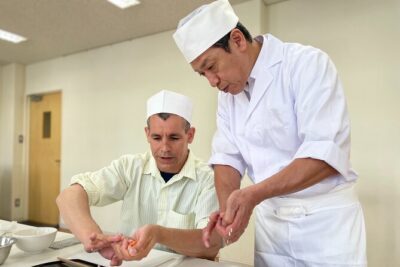 ★ 5.0Tokyo Sushi Making Class in Tsukiji with Professional ChefFrom $491,177 reviews
 ★ 5.0Ramen & Gyoza Cooking Class in Tokyo with Local Supermarket VisitFrom $122823 reviews
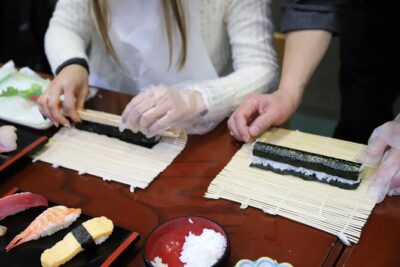 ★ 5.0Tsukiji Fish Market Guided Tour and Sushi Making with Pro ChefFrom $104775 reviews
Filed on these lists too