
REVIEW · WORKSHOPS
Hanakoushi cotton Scarf Class
A scarf you dye yourself in Kyoto is a smart souvenir. I like the hands-on shibori process and the fact you leave with a scarf you made, not a generic gift. One catch: it is a short class, so if you want hours of complicated tying, you may feel it is a bit too guided.
This class is based at the Kyoto Shibori Museum, a place built around the craft. The overall experience earns a strong 4.8/5 average rating (18 entries) and a 94% recommendation score, which usually means people leave happy with both the workshop and what they do in the museum after.
You get a private session for your group, taught with clear steps, and you spend part of the time letting your fabric dry while exploring the museum’s displays and shop. It is a great fit when you want something calm and cultural, not another sprint between temples.
In This Review
- Key highlights to know before you go
- Kyoto Shibori Museum: a craft stop with real atmosphere
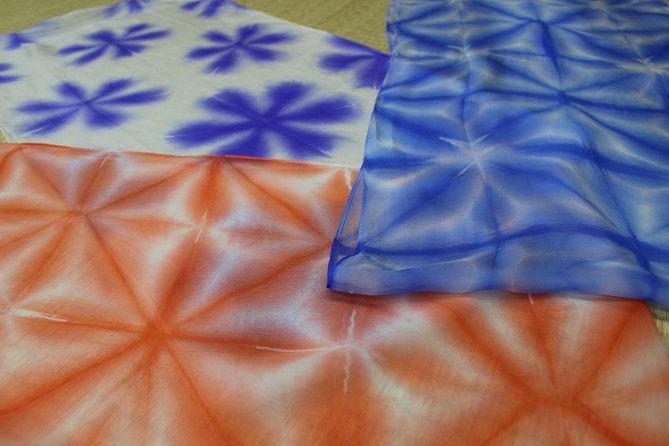
- What you dye and what you take home: the hanakoushi cotton scarf
- The class steps: color choice, folding, dyeing, and results
- While it dries: museum browsing that actually adds value
- Private class perks: personalized pace and a calmer experience
- Price and value in Kyoto terms: is $43.35 worth it?
- Logistics that matter less than you think (but still help)
- Who should book this, and who might prefer something else?
- Should you book the Hanakoushi cotton scarf class?
- FAQ
- How long does the Hanakoushi cotton scarf class take?
- What scarf do I make in the class?
- Is this experience private?
- Where do I meet, and where do I end?
- Do I get a ticket on my phone?
- What is the cancellation policy?
Key highlights to know before you go
- Private class format means your instructions can match your pace
- Learn the hanakoushi shibori method for dyeing a cotton scarf in Kyoto
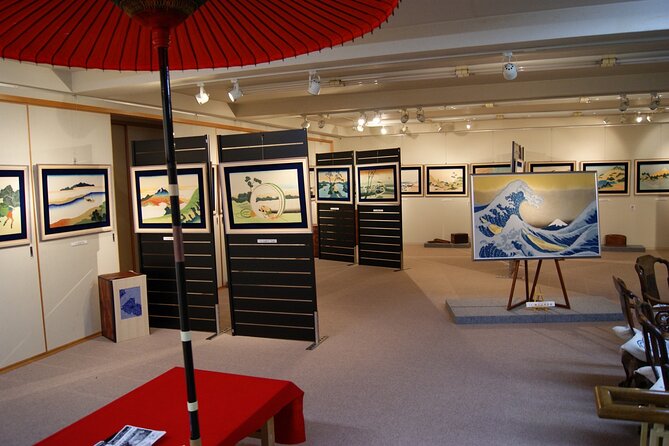
- Your session includes time to browse shibori art, tools, and samples while the fabric dries
- You leave with a real take-home scarf you made as a Kyoto souvenir
- The museum shop offers lots of shibori-related purchases, including fabrics and small items
Still weighing up options in Kyoto? These are the ones our reviewers rated highest.
- PERFECT KYOTO 1-Day Bus Tour
★ 5.0 · 13,518 reviews - Kyoto: Fushimi Inari, Kinkakuji, Bamboo Grove 1 Day Bus Tour
★ 4.8 · 4,316 reviews - Kyoto: Tea Ceremony in a Traditional Tea House in Kiyomizu
★ 4.9 · 3,519 reviews - Kyoto Geisha Walking Tour: Gion District & Hidden Gems
★ 4.7 · 3,273 reviews
Kyoto Shibori Museum: a craft stop with real atmosphere
This workshop is centered on the Kyoto Shibori Museum, in Nakagyo Ward, and it feels like a place that exists for one purpose: shibori. You start at the museum address, 135-5 Shikiamichō, Nakagyo Ward, and the activity ends back at the same spot, so you can slot this into your day without complicated routing.
I like that the format is simple and focused. You are not juggling multiple activities or crisscrossing town. Instead, you get a compact class and then time to wander inside the museum and shop.
The museum also matters because it turns your class into something you can understand, not just something you do. While your scarf dries, you are able to look at finished pieces, tools, and samples. That visual context helps you notice what makes shibori special: the patterns come from the way fabric is folded and bound before dye ever touches it.
One more practical point: classes run around 30 minutes on the schedule, and the museum notes that workshops are usually 30 to 60 minutes per class. In other words, you are planning for something short enough to fit between sightseeing blocks, but long enough that you actually finish the dyeing and go home with your scarf.
What you dye and what you take home: the hanakoushi cotton scarf
Here is the core promise: you dye a long cotton scarf, and you take it home. The class description specifies a scarf size of 70-inch x 17-inch (175cm x 50cm), using the hanakoushi shibori method.
There is also mention of the sekka shibori approach in the overall class overview. In practice, the point for you is the same: you learn traditional folding and dyeing steps that create a patterned resist, then you end with a finished textile that looks like Kyoto craftwork, not a mass-made souvenir.
This matters for value. A scarf is not just “something pretty to buy.” If you pick colors you like, follow the folding steps, and watch the pattern form through dye, you get an item with a story that is easy to remember. People often underestimate how much they will like a wearable souvenir once it is actually their own work.
Also, cotton changes the feel of the souvenir. Silk is often what people imagine for shibori, but this class is oriented toward cotton. That can be a big plus if you want something you can actually wear and use without babying it too much.
The workshop output is your souvenir gift from Kyoto, plain and simple. If you are shopping for one memorable handmade thing, this is the rare class that delivers that without making you commit to a half-day.
The class steps: color choice, folding, dyeing, and results
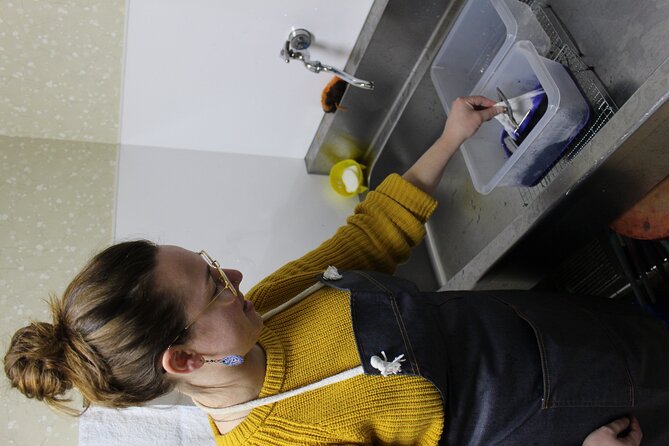
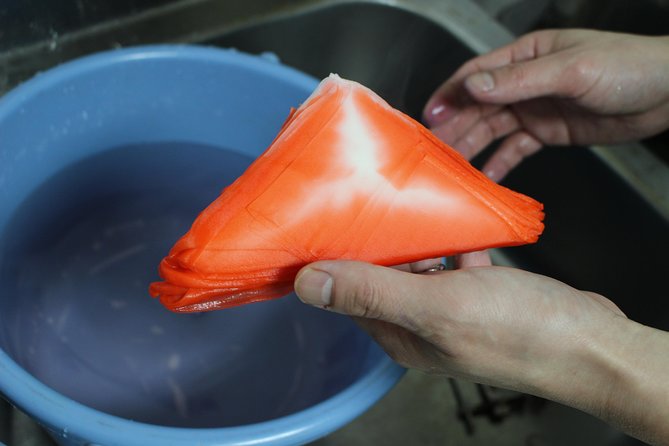
At the start, you choose a color and learn how to fold your fabric using the hanakoushi shibori technique. Think of it like the blueprint stage. The pattern you get later is the result of what you do before dye, so this part is the most important.
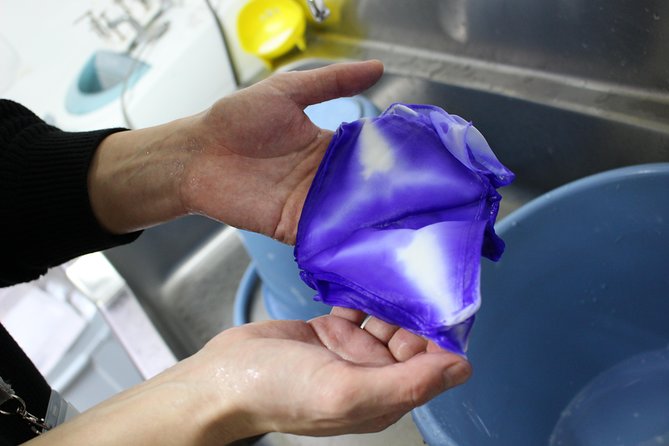
Then comes dye. You dye your scarf using the selected approach, and at that point you are essentially letting the chemistry and time do the work.
The timeline is also part of the appeal. The class is designed so you can finish the dyeing and then wait while it dries. The drying period is about 30 minutes, which keeps the whole session from dragging.
This is also where the class style shows up. Some people say the process has been modernized or simplified for tourists, meaning you are not stuck tying tiny bits of fabric for hours. That is a positive for many visitors because it keeps the session approachable. It can be a downside only if you were hoping for a super intricate, slow, highly technical ritual.
Still, you are not just watching either. You are making choices (like your color) and handling the fabric through the folding and dye steps. Even with a streamlined approach, it stays hands-on enough to feel personal.
- PERFECT KYOTO 1-Day Bus Tour★ 5.0 · 13,518 reviews
- Kyoto: Fushimi Inari, Kinkakuji, Bamboo Grove 1 Day Bus Tour★ 4.8 · 4,316 reviews
- Kyoto: Tea Ceremony in a Traditional Tea House in Kiyomizu★ 4.9 · 3,519 reviews
- Kyoto: Tea Ceremony Ju-An at Jotokuji Temple★ 4.9 · 3,207 reviews
- Kyoto: 45-Minute Tea Ceremony Lesson Experience★ 4.3 · 2,378 reviews
While it dries: museum browsing that actually adds value
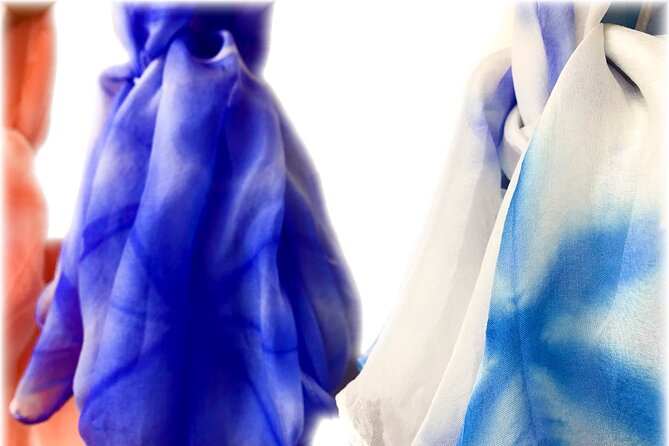
This is one of the smarter parts of the experience. After dyeing, you do not just sit and wait in silence. You spend time browsing shibori art, tools, and samples displayed in the museum.
That is where you start to connect what you made to what shibori looks like at different scales. You can see finished patterns, how fabrics respond, and the variety of materials and projects that exist inside the shibori world.
If you enjoy craft museums, this time is genuinely useful. One reason people rate this workshop so highly is that they get more than the craft activity. They get the explanation, the context, and a chance to appreciate what the artisans are aiming for.
And yes, there is a shop. The museum shop sells shibori items, souvenirs, fabrics, and more. It is the natural follow-up because once you understand what folding and dyeing do, you are better at appreciating what you are buying.
In one story, a visitor used the museum time to pick up additional gifts, like a purse for a parent and samue for another family member. Even if you do not plan to shop, browsing helps you leave with a more informed eye.
Private class perks: personalized pace and a calmer experience
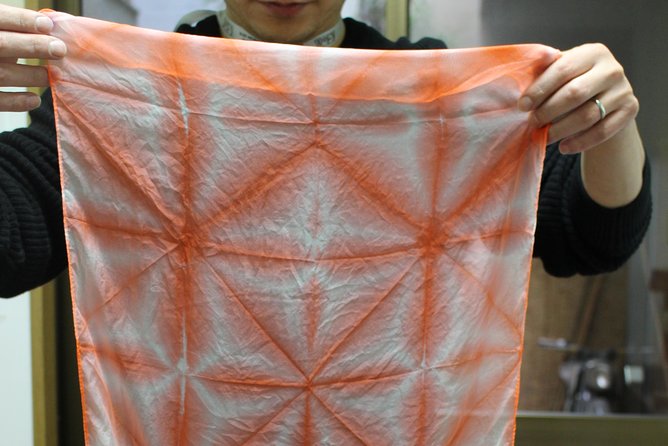
This activity is private for your party, which makes a difference in how the class feels. In a small, private setting, you can ask questions without interrupting other schedules, and the instructor can move at a speed that fits your comfort.
From the way the class is described, the museum team guides you through the process step by step. People also note that instructors can speak solid English in some sessions, which is a big comfort when you are trying to learn a tactile technique with lots of small visual steps.
Also, private does not just mean comfort. It often means you are more likely to walk out with a scarf that matches your effort. When you are doing something hands-on, having a guide close by makes the difference between a souvenir and something you truly like owning.
If you are visiting Kyoto with a partner, family, or friends and want one scheduled activity that feels meaningful, this private class is a great match. It is not a group-bus tour. It is a craft lesson in the place where craft matters.
Price and value in Kyoto terms: is $43.35 worth it?
The price is $43.35 per person, and that number needs a bit of context.
You are paying for:
- a private or semi-private lesson format for your group (the class is explicitly private for your party),
- access to the museum,
- instruction on traditional folding and dyeing,
- materials and the process needed to make a finished scarf,
- and the souvenir you take home.
For a Kyoto day, $43.35 is not just “a class fee.” You are walking away with something you made, large enough to actually use as a scarf. That makes it more like paying for a handmade item plus the lesson, rather than paying for entertainment.
Also, the session is short. That matters for value because you are not paying extra time costs or committing to an all-day block. If you are doing other paid attractions that run half-day, this one is easier to fit without breaking your schedule budget.
The only time I would hesitate is if you are looking for long, intensive studio-level training. This is a workshop, not a multi-day apprenticeship. It is best as an introduction that ends with a wearable result.
Logistics that matter less than you think (but still help)
This is near public transportation, and the meeting point is clearly listed at the Kyoto Shibori Museum address. You also get a mobile ticket, which is convenient in Kyoto where paper tickets can feel like extra friction.
The activity ends back at the meeting point, so you do not need to plan a complicated second stop. You can plan around this as a contained block, then move on to your next neighborhood walk.
One practical tip: arrive with enough time to check in and settle. The class time is short, and you do not want to feel rushed when you are trying to follow folding steps.
Who should book this, and who might prefer something else?
I think this class fits best if you want a Kyoto souvenir with a story and you like making things with your hands. It is also a good “palette cleanser” from busy sightseeing. The museum setting and the drying break make it feel paced, not chaotic.
It is especially suited for:
- couples and families who want one memorable activity together,
- visitors who like craft museums and want context for what they are doing,
- anyone who wants a take-home textile that is actually personal.
It might not be for you if:
- you want a longer, more complex technical session with lots of tiny binding steps,
- you hate waiting around (there is a drying period, though it is paired with museum time),
- you expect a big museum experience. Some people note the museum is small, so if you love huge galleries, you might wish you had more time elsewhere.
A good way to think about it: you are buying a compact workshop plus a tidy museum break. That is the sweet spot.
Should you book the Hanakoushi cotton scarf class?
Yes, I would book it if you want a meaningful, manageable Kyoto craft day. The strongest reason is the combination: a private class that leads to a real take-home scarf, plus time in a shibori-focused museum that helps you appreciate the art beyond your own dyeing.
If you are on the fence, ask yourself one question. Do you want to wear something you made in Kyoto, or do you mainly want a quick look at shibori as art? If you want to make, this is the right kind of workshop. If you just want a museum visit, you might still enjoy the shop and displays, but you would want to be comfortable with the limited scale and short duration.
FAQ
How long does the Hanakoushi cotton scarf class take?
The experience is scheduled for about 30 minutes. The museum also notes classes are usually individual and take 30 to 60 minutes per class.
What scarf do I make in the class?
You dye a 70-inch x 17-inch (175cm x 50cm) cotton scarf using the hanakoushi shibori method.
Is this experience private?
Yes. It is a private tour/activity, and only your group participates.
Where do I meet, and where do I end?
You meet at Kyoto Shibori Museum, 135-5 Shikiamichō, Nakagyo Ward, Kyoto 604-8261, Japan. The experience ends back at the meeting point.
Do I get a ticket on my phone?
Yes. The class uses a mobile ticket.
What is the cancellation policy?
You can cancel for a full refund if you cancel up to 24 hours in advance. If you cancel less than 24 hours before the start time, the amount paid is not refunded.
Newest Kyoto write-ups from the Loving Japan desk

Workshops, side by side.
 ★ 5.0Sushi Making Tokyo Roll and Authentic Japanese Sushi ClassFrom $593,971 reviews
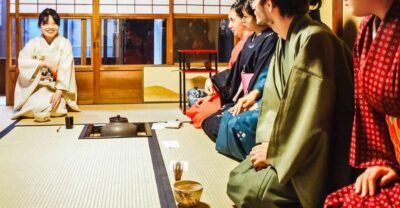 ★ 4.345-Minute Tea Ceremony Lesson ExperienceFrom $222,378 reviews
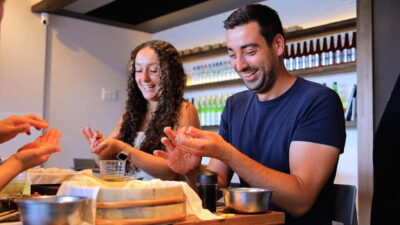 ★ 4.9Roll and Authentic Sushi Making Class in AsakusaFrom $581,957 reviews
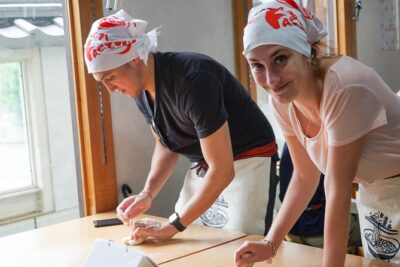 ★ 5.0Ramen Cooking Class at Ramen Factory in KyotoFrom $1311,937 reviews
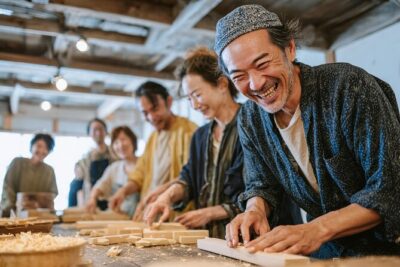 ★ 5.0Tokyo Shinjuku Chopsticks Making ClassFrom $201,763 reviews
 ★ 4.9Sushi Making Class in a Happi Coat near a Famous SpotFrom $421,377 reviews
 ★ 4.8Chopstick Making Workshop in GinzaFrom $251,366 reviews
 ★ 5.0Sushi Making Osaka Roll and Authentic Japanese Sushi ClassFrom $311,220 reviews
Filed on these lists too