
REVIEW · WORKSHOPS
Itajime Shibori Scarf Class
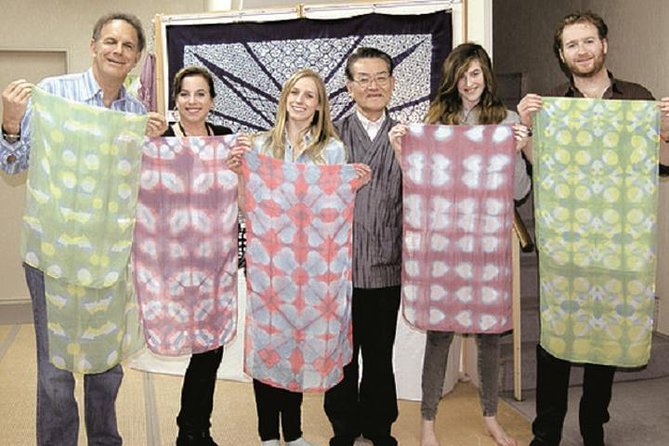
Scarf dyeing in Kyoto beats museum fatigue. This 30 to 60 minute itajime shibori scarf-making class at the Kyoto Shibori Museum mixes hands-on making with museum time, so you get craft skill and cultural context in one stop. I also like that the session stays small (max 10) and you get to choose Japanese fabrics, then walk out with a scarf you truly made.
The main thing to watch is finding the classroom, since it’s on the 2F and some signage from the street isn’t super clear. Once you’re inside, the pace feels calm, guided, and very practical.
In This Review
- Key things to know before you go
- Kyoto Shibori Museum: A practical craft break with real Kyoto flavor
- 30 to 60 minute Itajime shibori class: what you actually do
- Kyoto Shibori Museum upstairs: exhibits that make the dyeing click
- Value and price: why $43.60 can make sense in Kyoto
- Logistics you should plan for, especially the 2F classroom
- Who this Kyoto shibori scarf class fits best
- The staff experience: clear teaching and patient support
- Should you book the Itajime shibori scarf class in Kyoto?
- FAQ
- How long is the itajime shibori scarf-making class?
- What is included in the experience?
- Where does the class take place?
- What is the minimum age to join?
- Is it easy to reach using public transportation?
- What is the cancellation policy?
Key things to know before you go
- Small group, big attention: Up to 10 people means you’re not lost in the shuffle.
- 30 to 60 minutes of making time: Short enough to fit into a Kyoto day without stressing.
- Pick from Japanese fabrics: You start by choosing materials before you dye.
- Museum time while your scarf dries: The upstairs exhibits and display are a smart way to use the wait.
- Take-home souvenir: You leave with your finished scarf, ready to bring to friends and family.
- Minimum age 6: Adult pricing applies to all ages, so plan accordingly for kids.
Still weighing up options in Kyoto? These are the ones our reviewers rated highest.
- PERFECT KYOTO 1-Day Bus Tour
★ 5.0 · 13,518 reviews - Kyoto: Fushimi Inari, Kinkakuji, Bamboo Grove 1 Day Bus Tour
★ 4.8 · 4,316 reviews - Kyoto: Tea Ceremony in a Traditional Tea House in Kiyomizu
★ 4.9 · 3,519 reviews - Kyoto Geisha Walking Tour: Gion District & Hidden Gems
★ 4.7 · 3,273 reviews
Kyoto Shibori Museum: A practical craft break with real Kyoto flavor
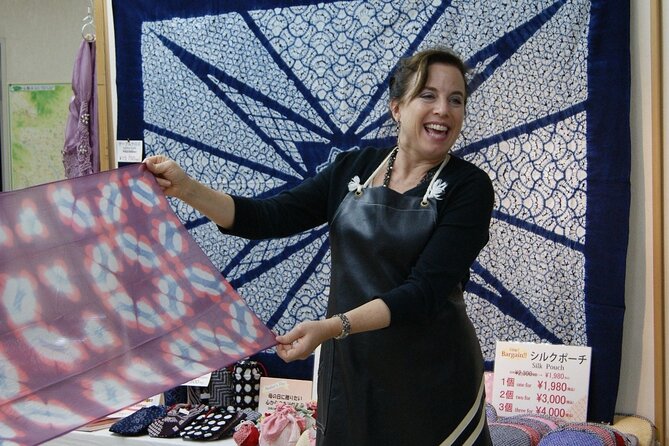
Kyoto can feel like a nonstop checklist, so I love workshops that slow you down on purpose. This one is built around shibori, a Japanese dyeing craft described here as the oldest dyeing method in Japan. Instead of just looking at art, you participate in the process and then get to see the results and masterpieces up close in the museum.
What makes this class feel like a good value is the way it pairs two experiences that usually don’t go together well. You get hands-on time with traditional tools and fabrics, and you also get museum admission included. That means your hour does not turn into stand-still waiting or rushed souvenir shopping. You’re making something, then learning why it matters.
I also like the “in a good way, not fancy” vibe. Reviews highlight kind staff, clear instructions, and an atmosphere that feels relaxed even though you’re doing something technical. One person noted a relaxing, almost serene feel, and that’s a big plus in a city that can be crowded.
One more smart detail: the class is short. At 30 minutes to about 1 hour, it works as a buffer activity. If your temple route runs late, you still have a realistic window to fit dyeing in.
30 to 60 minute Itajime shibori class: what you actually do
The core of the experience is straightforward. You sit down with a teacher, choose fabric options, and make your own shibori scarf using traditional tools. The goal is not to overwhelm you with chemistry or math. The goal is to help you understand what you’re doing, then help you do it.
Here’s what you can expect in plain terms:
- You begin by choosing from Japanese fabrics, based on what’s available for the class.
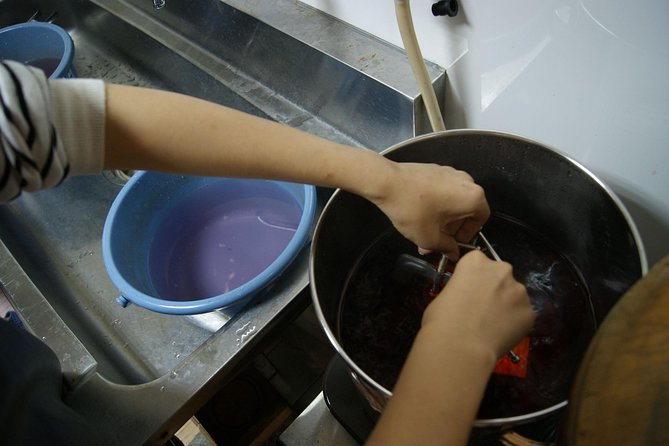
- The staff guide you through the dyeing steps, with clear direction and hands-on support.
- Your scarf is finished by the end of your active making session, and then drying time becomes part of the experience.
- You leave with your scarf as a take-home souvenir.
What really pops in the feedback is how hands-on it is. People repeatedly mention clear instructions and a very interactive class. Several reviews emphasize that even if you don’t consider yourself artistic, the process is doable because the teaching is patient and step-by-step.
There are also some “small but meaningful” end touches. One review mentioned a certificate made for a child after finishing. Another noted finishing steps at the end where the scarf is handled, prepared, and packaged. Those little details turn the scarf from something you made into something you can proudly give.
Kyoto Shibori Museum upstairs: exhibits that make the dyeing click

The class is tied to the Kyoto Shibori Museum, and the museum part is not just extra. It helps you connect the hands-on activity to the craft as an art form.
You get admission included for about 1 hour, and that gives you time to look around while your scarf dries. Reviews specifically call out the upstairs area and the display of shibori masterpieces. One person described the upstairs museum as an unexpected highlight, especially while waiting for their scarf to dry.
A few practical things to keep in mind:
- Plan to spend at least part of your visit on the exhibits before you head out.
- If your scarf needs drying time, don’t treat that wait as lost time. Use it to watch videos and read about techniques and history that are shown in the museum space.
- The museum experience is described as a good way to deepen appreciation for Japanese hand crafts.
Several reviews also mention a movie or video about the shibori process. That matters because it gives you a mental model for what you’re doing. When you understand how the method is used and why the craft is valued, your scarf becomes more than a souvenir. It becomes proof that you learned the basics of a technique that has long been part of Japan’s textile culture.
Also, the museum setting is mentioned as intimate and personable, with staff willing to answer questions. If you like asking why something works, this is the kind of place where people will actually respond.
- PERFECT KYOTO 1-Day Bus Tour★ 5.0 · 13,518 reviews
- Kyoto: Fushimi Inari, Kinkakuji, Bamboo Grove 1 Day Bus Tour★ 4.8 · 4,316 reviews
- Kyoto: Tea Ceremony in a Traditional Tea House in Kiyomizu★ 4.9 · 3,519 reviews
- Kyoto Geisha Walking Tour: Gion District & Hidden Gems★ 4.7 · 3,273 reviews
- Kyoto: Tea Ceremony Ju-An at Jotokuji Temple★ 4.9 · 3,207 reviews
Value and price: why $43.60 can make sense in Kyoto

At $43.60 per person, this is not the cheapest activity in Kyoto. But it’s also not trying to be a generic ticket. You’re paying for three things at once:
- A real workshop in shibori scarf making
- Guidance during the dyeing process
- Museum admission included, plus a chance to explore displays while your scarf dries
When you compare that to doing a standard museum ticket plus buying a scarf in a shop, you’re getting the experience component. In other words, you’re not only buying an object. You’re buying the time with a teacher, the cultural context, and the satisfaction of leaving with something you made.
The small group size also supports the value. Maximum 10 travelers means the staff can give more attention than you’d get in bigger group crafts. Reviews back this up with comments about personalized attention and dedicated facilitation.
If you’re traveling with kids, the value argument gets even stronger. Reviews mention a parent-child group having a great time, plus a child certificate as a nice extra. Even if you don’t need the certificate, it’s a signal that they’re thinking about young visitors, not only adults.
Logistics you should plan for, especially the 2F classroom
This class is near public transportation, which helps because Kyoto is easier when you don’t depend on taxis all day. There’s also parking for two cars and bicycle parking spaces, which is useful if you’re biking or renting a car and need a spot nearby.
The only clear downside that comes up is finding the classroom. One review noted it’s on the 2F and not well marked from the street. That’s not a dealbreaker, but it is the kind of detail that saves time if you prepare.
My practical suggestion:
- Before you go, save the museum name and address in your map app.
- If you arrive early, ask inside for directions up to the 2F class room rather than wandering for a long time outside.
Also, remember your scarf will be drying during museum time. That means you should plan for the full flow of the session rather than treating the workshop as a quick “make and leave” stop.
Who this Kyoto shibori scarf class fits best
This is a strong fit if you want a cultural activity that feels hands-on without being physically demanding. Most travelers can participate, and the minimum age is 6. Adult pricing applies to all ages, so it’s a straightforward program for families budgeting per person.
I think it’s especially good for:
- Travelers who want a Kyoto souvenir with a story attached
- People who enjoy crafts, textile arts, or Japanese cultural demonstrations
- Couples and small groups who want an activity with low stress and good staff attention
- Solo travelers who like structured experiences, since the small group setting helps you feel guided rather than thrown in
It also works well on a schedule where you want variety. You can pair it with nearby sights because it’s positioned in Kyoto close to major landmarks. One review mentioned it’s a two minute walk from the castle area, so it can pair neatly with a short sightseeing loop.
The staff experience: clear teaching and patient support

One of the biggest reasons people give this activity top marks is the human element. Reviews describe staff as kind, fun, and focused on sharing their craft. Many people highlight clear instructions and a hands-on approach.
Names that come through in the feedback include Kenji and an instructor named June. June is specifically mentioned as patient and kind. Kenji is also mentioned as wonderful, along with the rest of the staff. Whether your instructor is Kenji, June, or someone else, the pattern is consistent: they explain what you’re doing, answer questions, and make the experience feel welcoming.
That matters because scarf dyeing is repetitive and detail-driven. If a teacher is rushed, you end up guessing. If the teacher is patient, you finish with a scarf you’re happy with.
Reviews also mention the “grand reveal” moment at the end. That’s more than a cute phrase. It’s the payoff of learning the method and seeing the pattern effect after dyeing and drying.
Should you book the Itajime shibori scarf class in Kyoto?

Book it if you want a Kyoto activity that delivers a real cultural craft, a hands-on session, and a take-home item in about an hour. The small group size, the clear teaching, and the included museum time while your scarf dries are the big reasons it feels like good value rather than a quick tourist stop.
Skip it or consider alternatives if:
- You hate any activity with waiting time (your scarf needs drying, so you’ll spend part of the session browsing the museum).
- You really need ultra-easy wayfinding, since the class room is on the 2F and signage from the street may not be obvious.
If you’re planning your Kyoto day, I’d place this earlier in the day or right after a nearby landmark so you can enjoy both without racing. Then you’ll get the best of both worlds: the calm craft time and the museum exhibits that make your scarf make sense.
FAQ
How long is the itajime shibori scarf-making class?
The class runs about 30 minutes to 1 hour (approx.).
What is included in the experience?
Admission to the Kyoto Shibori Museum is included, along with the scarf-making class. The experience includes choosing fabrics and creating a scarf you take home.
Where does the class take place?
The class is held at the Kyoto Shibori Museum in Kyoto, Japan.
What is the minimum age to join?
The minimum age is 6 years. Adult pricing applies to all ages.
Is it easy to reach using public transportation?
Yes, it is near public transportation.
What is the cancellation policy?
Free cancellation is available. You can cancel up to 24 hours in advance for a full refund. If you cancel less than 24 hours before the experience starts, the amount paid is not refunded.
Newest Kyoto write-ups from the Loving Japan desk



Workshops, side by side.
 ★ 5.0Sushi Making Tokyo Roll and Authentic Japanese Sushi ClassFrom $593,971 reviews
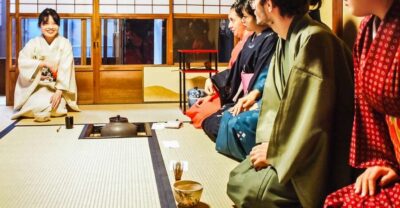 ★ 4.345-Minute Tea Ceremony Lesson ExperienceFrom $222,378 reviews
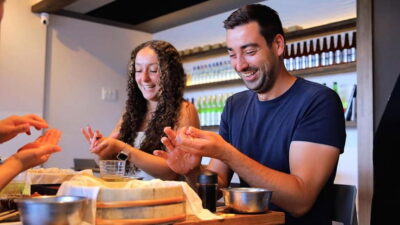 ★ 4.9Roll and Authentic Sushi Making Class in AsakusaFrom $581,957 reviews
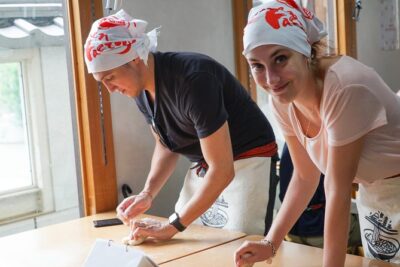 ★ 5.0Ramen Cooking Class at Ramen Factory in KyotoFrom $1311,937 reviews
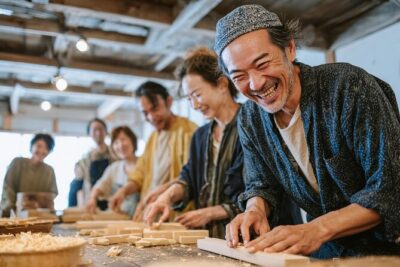 ★ 5.0Tokyo Shinjuku Chopsticks Making ClassFrom $201,763 reviews
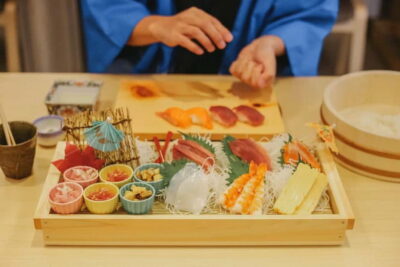 ★ 4.9Sushi Making Class in a Happi Coat near a Famous SpotFrom $421,377 reviews
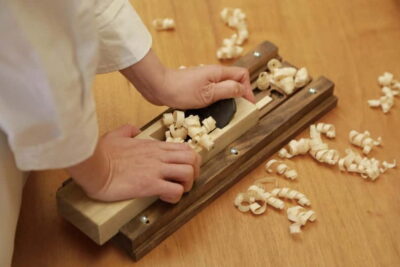 ★ 4.8Chopstick Making Workshop in GinzaFrom $251,366 reviews
 ★ 5.0Sushi Making Osaka Roll and Authentic Japanese Sushi ClassFrom $311,220 reviews
Filed on these lists too