
REVIEW · JAPANESE COOKING CLASSES
Izakaya Style Cooking Class
Cooking izakaya beats another sushi meal. In Kyoto, I love how this class turns Japanese seasoning and dashi into practical skills you can use the very next time you cook at home. You also get the cultural story behind izakaya, the casual Japanese tradition built for sharing good food with sake.
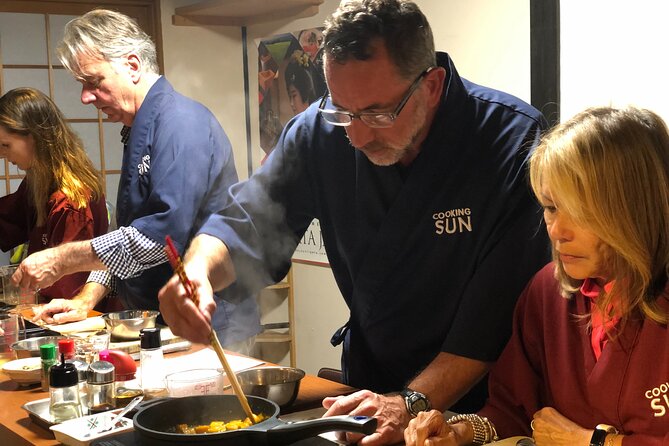
Two things I especially like: it is hands-on from start to finish, and the teaching stays very supportive even if your Japanese kitchen skills are basic. You cook several dishes, then sit down together to eat what you made, which makes the time feel worth every minute.
One consideration: the menu can shift with seasonal ingredients, so your dish line-up may not match a specific craving you have. Also, drinks are not included unless specified, and one guest mentioned a sake charge per glass, so ask first if you are offered alcohol.
In This Review
- Key Takeaways Before You Go
- A Kyoto Izakaya Cooking Class That Teaches Skills, Not Just Meals
- Cooking Sun Kyoto: The Wooden-House Setting and How the Class Runs
- Izakaya Origins and the Food Philosophy You’ll Actually Use
- Dashi and Japanese Seasoning: The Backbone Lessons
- Hands-On Cooking in a Small Group, With Real Support
- What You’ll Cook: Izakaya Favorites and Menu Variation
- The Cooking Flow: From Knife Work to Plating for Dinner
- Dinner Like an Izakaya: Eating Your Work Together
- Taking the Recipes Home (So It Is Not Just a One-Time Meal)
- Price and Value for $71.63: What You Get in 3 Hours
- Who Should Book This Cooking Class in Kyoto
- Should You Book Cooking Sun’s Izakaya Cooking Class?
- FAQ
- How long is the izakaya style cooking class in Kyoto?
- What time does the class start?
- What is included in the $71.63 price?
- How big is the group?
- Do I need to speak Japanese?
- Can I get a full refund if I change my plans?
Key Takeaways Before You Go
- Small group format (up to 8) means more attention while you cook.
- Dashi and seasoning are taught as techniques, not just recipes.
- Dinner is included, so you get the full izakaya experience at the end.
- Recipes go home with you, making it easier to repeat what you learned.
- Menu changes by season, so expect variety more than a guaranteed set of dishes.
- English-speaking instructor helps you move fast and cook confidently.
Cook it yourself instead. Other kitchens in Kyoto
- Sushi Making in Kyoto! Same-day bookings welcome!
★ 5.0 · 713 reviews - Kyoto: Ramen Cooking Class at a Ramen Factory with Souvenir
★ 4.9 · 532 reviews - Kyoto: Ramen, Gyoza, and Onigiri Cooking Class
★ 5.0 · 445 reviews - The Original Small-Group Sushi Making Class in Kyoto
★ 5.0 · 436 reviews
A Kyoto Izakaya Cooking Class That Teaches Skills, Not Just Meals
Kyoto already has more food temptations than you can fit into one trip. What I like about this class is that it does not just hand you dinner. It teaches you how to build the flavors that make izakaya food work, then lets you eat your results.
You start with the idea of izakaya as casual dining, kind of like tapas culture in Japan. Historically, izakaya is linked to sake drinking and small party energy, with sake shops serving food alongside bottles as a way to draw people in. That context matters because it explains why the menu style is flexible, snacky, and meant for sharing.
Cooking Sun Kyoto: The Wooden-House Setting and How the Class Runs
The cooking experience is hosted at Cooking Sun, at 679 Funayachō, Shimogyo Ward, Kyoto (you get the exact studio details at booking). The venue is described as a traditional wood house, which instantly makes it feel more local than a studio that could be anywhere.
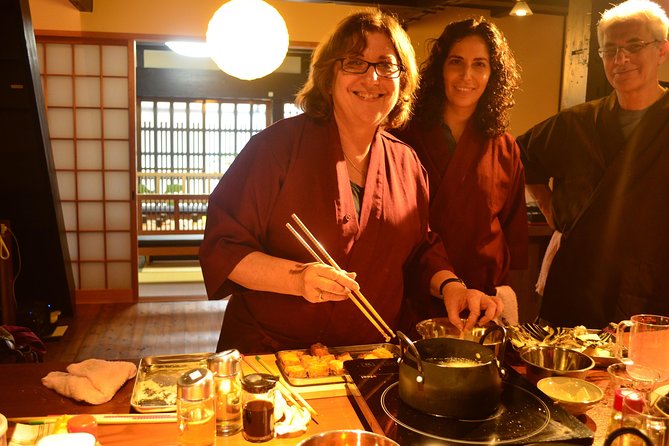
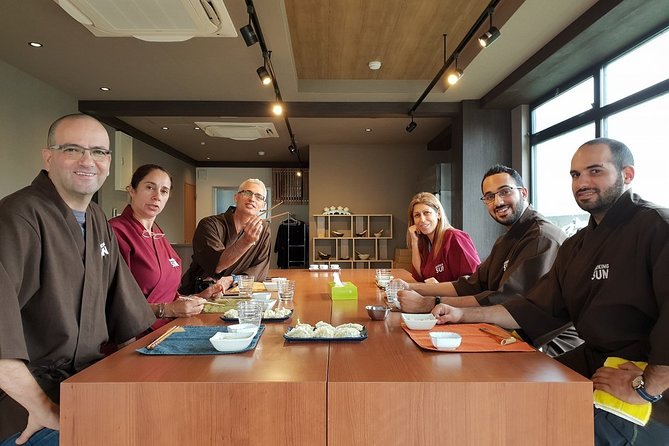
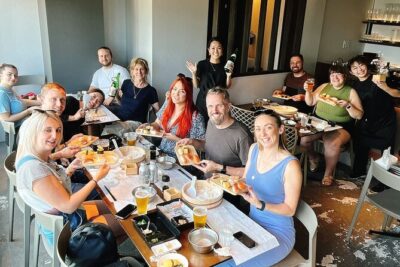
This is not a big factory class. It is capped at a maximum of 8 people per booking, and that small size shows in how things move. Ingredients get staged, workstations keep flowing, and instruction is paced so everyone can chop, cook, and plate without feeling lost.
You also get a few practical touches that make the afternoon easier:
- An apron is included.
- You eat the dinner you cook.
- You follow an English-speaking instructor’s directions and demo steps.
And yes, you will want to arrive ready to cook, not just watch. One of the best parts of this setup is that the class structure is tight enough that you can make multiple dishes within about 3 hours.
Izakaya Origins and the Food Philosophy You’ll Actually Use
Before you turn on the heat, you get an introduction to what izakaya is and where it came from. The class covers the idea that izakaya developed around everyday affordability and social drinking, not formal dining. It also touches on the historical angle of sake and food culture, which helps you understand why a typical izakaya spread includes small plates and bold, simple flavors.
This matters because izakaya cooking is not about complicated showpieces. It is about getting seasoning right. That is where dashi and Japanese flavor building come in.
If you have ever tried to copy Japanese food at home and ended up with something that tasted close but not quite right, this is the fix. You learn the backbone flavors first, then you apply them across dishes.
The red lanterns stay lit later. More Kyoto crawls
- Kyoto: Izakaya Bars Guided Walking Tour★ 4.9 · 815 reviews
- Kyoto Bar Hopping Night Tour★ 5.0 · 613 reviews
- Kyoto Local Bar Crawl in Kawaramachi Area★ 5.0 · 378 reviews
- Kyoto: Afternoon Japanese Izakaya Cooking Class★ 4.9 · 241 reviews
Dashi and Japanese Seasoning: The Backbone Lessons
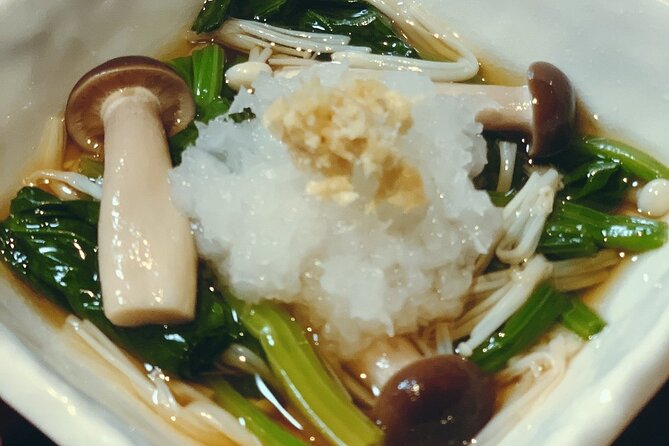
Dashi is the Japanese soup stock used to build flavor in tons of dishes. In this class, you learn how to prepare dashi, not just what it is. You also learn Japanese seasoning techniques, which is what turns an ingredient into izakaya food.
Think of it like learning the difference between mixing ingredients and learning flavor ratios. Dashi gives you the base, and seasoning techniques help you balance saltiness, depth, and sweetness without overdoing any one note.
What I like is that the instruction focuses on methods you can repeat. Instead of memorizing one outcome, you learn how to approach seasoning so your next home cook session does not depend on luck.
This is also the part where having an instructor matters. The best results usually come from small adjustments, like how you combine sauce and toppings or when you finish a dish. The class structure is designed so you can ask questions while you cook.
Hands-On Cooking in a Small Group, With Real Support
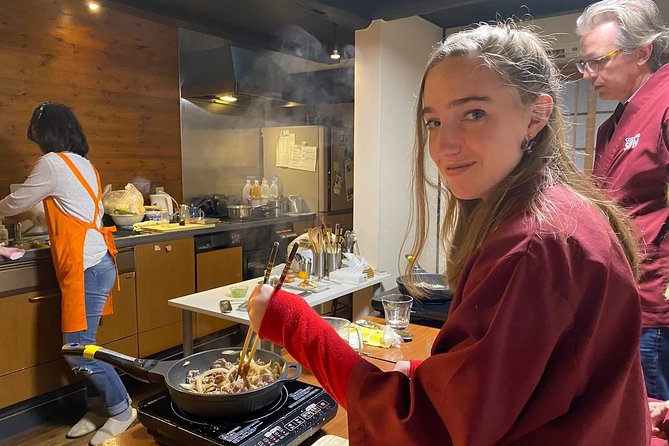
Once cooking starts, the flow is straightforward:
- The instructor demonstrates.
- You follow along at your station.
- You cook, plate, and adjust.
- The team helps keep things moving.
Because the group size is small, you are not stuck waiting for attention. You get personal guidance from the class leader, and the teaching team works together to keep the kitchen running smoothly.
That teamwork shows in the pacing too. Ingredients and prep steps are set up so you can spend your time doing the cooking. More than once, you get the sense that the class is designed to maximize hands-on time rather than slow you down with constant waiting.
If you are traveling with kids, this kind of structure is a big deal. It gives everyone enough responsibility to feel involved, while still keeping things manageable.
What You’ll Cook: Izakaya Favorites and Menu Variation
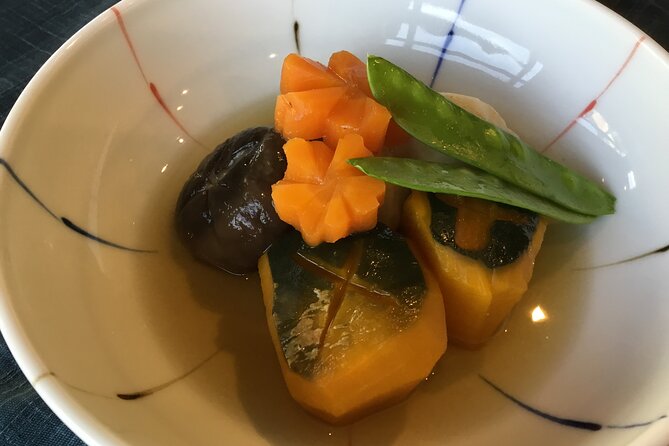
You will make a selection of izakaya-style dishes, and the exact menu can vary based on seasonal ingredient availability. The class is designed so you can still learn the core techniques even when the dishes change.
Some examples of what you might see include:
- Spinach with sesame sauce
- Teriyaki yellowtail
- Vegetable chowder
- Mushroom tempura
- Rice with vegetables
Some past menus at this kind of cooking session also include things like cucumber salad, pumpkin soup, and mochi dessert. That mix is a good sign: you are not only learning savory mains. You get variety across snack-style plates, soup, and a sweet ending.
Here is the practical angle to remember. Even if the exact dishes are different on your date, the pattern stays useful. You will still practice:
- How seasoning fits into sauces and condiments
- How dashi supports soups and savory flavors
- How tempura-style dishes rely on timing and technique
So you leave with more than a list of names. You leave with a cooking approach.
The Cooking Flow: From Knife Work to Plating for Dinner
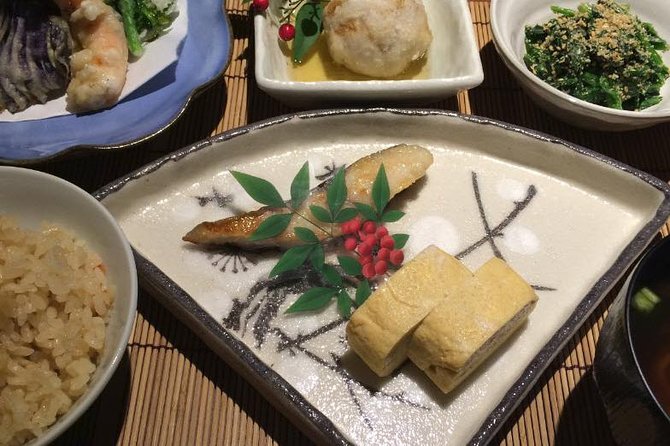
Over the class window, you will likely make multiple dishes, sometimes around half a dozen items depending on what is on the day’s menu. The pace is fast enough that you get variety, but organized enough that you still feel guided.
You start cooking with ingredients set out for you. Then you work through different dishes that rely on different techniques. That variety is part of the value. If every dish relied on the same sauce, the class would get repetitive. Instead, you practice multiple flavor paths, from sesame-based seasoning to dashi-forward soup and tempura-style cooking.
A key detail: the class ends with you eating what you made. That means you get immediate feedback from taste. If something is not balanced on the first bite, you learn what to adjust for the second. It makes the lesson stick.
Dinner Like an Izakaya: Eating Your Work Together
At the end of your cooking session, you sit down with the other participants to enjoy your dishes for dinner. This is not just an extra. It is part of the teaching.
When you eat right after cooking, you start noticing the structure of izakaya food:
- Small plates that balance salty and savory
- Soup or hot dishes that round out the meal
- Simple finishes that make flavors pop
Also, because you cook multiple dishes, you may find you are eating more than you expected. Come hungry. You will do the work, then you will get the reward.
Taking the Recipes Home (So It Is Not Just a One-Time Meal)
The class includes taking recipes home. That is where this experience becomes more than a fun afternoon. If you save the recipes and keep notes on how the sauces were explained, you can recreate the dishes for friends and family with less stress.
My best advice for using your take-home recipes is to treat them like a template. Japanese cooking often depends on technique and timing as much as exact amounts. So when you cook again, focus on the method you learned:
- How the dashi base is made
- How seasoning is applied
- How toppings and sauces are layered
Also, this class is designed so you can ask for tips and recommendations for after the tour ends. If there is a seasoning step you found tricky, write down your question. It will make your repeat cooking easier.
Price and Value for $71.63: What You Get in 3 Hours
At $71.63 per person, you are paying for more than dinner. You are paying for:
- Dinner included
- All ingredients for cooking
- An English-speaking cooking instructor
- An apron
- A small-group, hands-on format
For a cooking class, the biggest value driver is usually how much you actually cook. Here, the structure pushes you toward active participation rather than passive watching. That means your money supports instruction and a workable result you can repeat at home.
You also get recipes to take home, which turns the class into a souvenir you will actually use. If you are the kind of traveler who likes to bring back skills instead of extra photos, this is a strong fit.
Who Should Book This Cooking Class in Kyoto
This class suits a wide range of skill levels. It is a beginner-friendly way to learn Japanese home cooking techniques, but it can also appeal to avid cooks because seasoning logic and cooking flow are taught in a usable way.
It is especially good if you want something beyond the standard Kyoto food tour. You are not hunting for the next bowl of noodles. You are learning how to make the kind of dishes that show up in Japanese casual dining.
One warning on fit: because menus change with seasonal ingredients, you should not assume you will get a very specific dish every time. If you have your heart set on one item, you might want to ask what is typical for your date window when you book.
Should You Book Cooking Sun’s Izakaya Cooking Class?
I think you should book this if you want practical Japanese cooking skills in a small group, and you care about learning seasoning and dashi rather than only eating a meal. The included dinner makes it feel complete, not like you are just preparing food that someone else will eat.
Skip it only if you are seeking a highly specialized, one-topic workshop, like an entire deep session focused on one single dish type. This class is broad by design, and that is usually the point.
If you want an afternoon in Kyoto that feels hands-on, social, and genuinely repeatable at home, this is one of the more solid choices.
FAQ
How long is the izakaya style cooking class in Kyoto?
It runs for about 3 hours.
What time does the class start?
The start time is 2:00 pm.
What is included in the $71.63 price?
Dinner is included, along with all ingredients for cooking, an English-speaking cooking instructor, and an apron.
How big is the group?
There is a maximum of 8 people per booking.
Do I need to speak Japanese?
No. The class is taught with an English-speaking cooking instructor.
Can I get a full refund if I change my plans?
Yes. Free cancellation is available, and you can cancel up to 24 hours in advance for a full refund.
Lantern Light and Late Counters



Kitchens You Can Book Into
Newest Kyoto write-ups from the Loving Japan desk


Japanese Cooking Classes, side by side.
 ★ 5.0Sushi Making Tokyo Roll and Authentic Japanese Sushi ClassFrom $593,971 reviews
 ★ 4.9Roll and Authentic Sushi Making Class in AsakusaFrom $581,957 reviews
 ★ 5.0Ramen Cooking Class at Ramen Factory in KyotoFrom $1311,937 reviews
 ★ 4.9Sushi Making Class in a Happi Coat near a Famous SpotFrom $421,377 reviews
 ★ 5.0Sushi Making Osaka Roll and Authentic Japanese Sushi ClassFrom $311,220 reviews
 ★ 5.0Tokyo Sushi Making Class in Tsukiji with Professional ChefFrom $491,177 reviews
 ★ 5.0Ramen & Gyoza Cooking Class in Tokyo with Local Supermarket VisitFrom $122823 reviews
 ★ 5.0Tsukiji Fish Market Guided Tour and Sushi Making with Pro ChefFrom $104775 reviews