

REVIEW · WORKSHOPS
Kyo-arashi Shibori Scarf Class
Silk, string, and real Kyoto craft. This class is a hands-on kyo-arashi shibori lesson that turns a flat strip of silk into a patterned scarf you will actually wear. I love that you get step-by-step guidance, and you finish with an elegant, personalized souvenir from Kyoto. The only real drawback to consider is time, since the class runs about 30 minutes to 1 hour, so you will need to stay focused and follow instructions to get the best result.
You also get good “wait time” built in. While your scarf dries, you can browse the museum displays and try on a kimono, which breaks up the workshop nicely. My one caution: if you want hours of textile theory or casual sightseeing, this is more workshop than museum deep-dive, so you may wish you had planned extra time in Kyoto separately.
In This Review
- Key Things to Know Before You Go
- Kyo-arashi Shibori at Kyoto Shibori Museum: What You’re Really Doing
- The Silk Scarf Workshop: Folding, Wrapping, Dye, and the Reveal
- Waiting Time That Actually Helps: Museum Browsing and Kimono Try-On
- Schedule, Location, and the Private-Group Advantage
- Price and Value: Is $50.30 Worth It in Kyoto?
- Who Should Book This Scarf Class (and Who Might Skip It)
- Tips to Get the Best Outcome From Your Class
- Should You Book the Kyo-arashi Shibori Scarf Class?
- FAQ
- Where does the Kyo-arashi Shibori Scarf Class take place?
- How long is the class?
- What will I make during the class?
- What is included in the price?
- Can I choose the color for my scarf?
- Is it a private experience?
- What is the minimum age?
- Do I get a mobile ticket?
- What is the cancellation policy?
Key Things to Know Before You Go

- A supervised kyo-arashi folding and dye process right at the Kyoto Shibori Museum
- Your scarf comes out wearable and personalized, not just a sample
- Museum time plus kimono try-on while your fabric sets
- Multiple start times so you can fit it into your day
- Private group format, meaning you are not shared with strangers
- Mobile ticket for easier day-of arrival
Still weighing up options in Kyoto? These are the ones our reviewers rated highest.
- PERFECT KYOTO 1-Day Bus Tour
★ 5.0 · 13,518 reviews - Kyoto: Fushimi Inari, Kinkakuji, Bamboo Grove 1 Day Bus Tour
★ 4.8 · 4,316 reviews - Kyoto: Tea Ceremony in a Traditional Tea House in Kiyomizu
★ 4.9 · 3,519 reviews - Kyoto Geisha Walking Tour: Gion District & Hidden Gems
★ 4.7 · 3,273 reviews
Kyo-arashi Shibori at Kyoto Shibori Museum: What You’re Really Doing

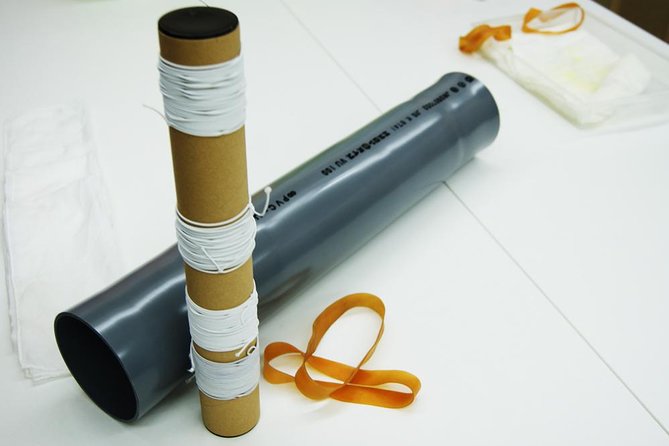
This is a short, focused craft class with a clear goal: dye a long silk scarf using the kyo-arashi shibori method. At the Kyoto Shibori Museum, the experience is built around technique, not just watching. You fold fabric in a specific way, wrap it with a pipe, and use string to shape the pattern before dyeing.
The museum part matters too. Even though the main event is the class, the setting helps you see shibori as a real Japanese craft, not a one-off souvenir stop. You are also there for the practical payoff: a finished scarf you can take home, wear, or gift.
You will get a guided process that feels doable even if you have never done anything like this. One reason people love it is that the instructors are patient and attentive, and English support is specifically mentioned in the feedback (including an instructor named Nina).
The Silk Scarf Workshop: Folding, Wrapping, Dye, and the Reveal
Your finished project is a silk scarf sized 70-inch x 17-inch (180cm x 44cm). The class structure follows the logic of shibori: create the shape first, then dye around it, then undo and press to reveal the final pattern.
Here is the practical flow you can expect:
- Fold and wrap the fabric in the method’s specific arrangement.
- Wrap a pipe in the fabric to guide how the pattern forms.
- Wind string around the pipe, then squish or compact the fabric down to the bottom of the pipe.
- Dye with your chosen color. The dye step is where your personalization comes in.
- Unwind the string and roll the fabric with a towel, then press it.
- Unfold to see results once the process is complete.
That reveal moment is the payoff. You are not just learning a craft, you are watching a design emerge from a method that looks slightly chaotic at first. If you like hands-on tasks, it is genuinely satisfying.
One more detail that matters: your scarf needs time to set while drying. The good news is you are not stuck staring at your own work. You have museum access while you wait.
Waiting Time That Actually Helps: Museum Browsing and Kimono Try-On
A clever part of the schedule is what happens after dyeing, when the silk is drying. Instead of turning “wait time” into wasted time, you get to do two things that make Kyoto feel Kyoto.
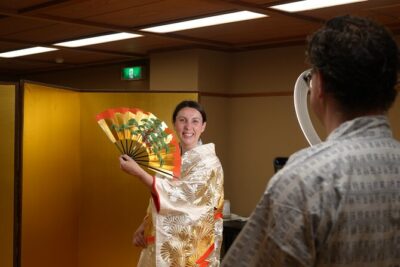
First, you can browse the museum displays. The museum context makes the technique easier to understand, because you can see shibori as both an art form and a process. Second, you can try on a kimono, which adds a fun cultural layer without requiring extra planning.
There is also mention of a gift shop experience, and it makes sense. Once you are holding dyed silk, you will probably want to see what else the museum offers. It is a low-pressure way to turn this class into a fuller stop, even though the workshop itself is short.
- PERFECT KYOTO 1-Day Bus Tour★ 5.0 · 13,518 reviews
- Kyoto: Fushimi Inari, Kinkakuji, Bamboo Grove 1 Day Bus Tour★ 4.8 · 4,316 reviews
- Kyoto: Tea Ceremony in a Traditional Tea House in Kiyomizu★ 4.9 · 3,519 reviews
- Kyoto: Tea Ceremony Ju-An at Jotokuji Temple★ 4.9 · 3,207 reviews
- Kyoto: 45-Minute Tea Ceremony Lesson Experience★ 4.3 · 2,378 reviews
Schedule, Location, and the Private-Group Advantage
The class meets at the Kyoto Shibori Museum, 135-5 Shikiamichō, Nakagyo Ward, Kyoto 604-8261. The location is described as near public transportation, which is important in Kyoto where routing can make or break your day.
You can choose from multiple start times, which is a big deal when you are planning around buses, trains, and other timed reservations. Since the class runs about 30 minutes to 1 hour, you can usually slot it between sightseeing blocks.
Another strong value point is that it is a private tour/activity. That means it is just your group, not a mixed crowd rotating through. For a hands-on process like this, smaller and quieter often equals less waiting and more attention from the instructor.
Parking exists too, with two car parking and bicycle parking spaces mentioned. So if you are using a car or bike for part of your trip, you have a practical option.
Price and Value: Is $50.30 Worth It in Kyoto?
At $50.30 per person, this class sits in the “reasonable craft experience” category for Kyoto. The value comes from three things that tend to be expensive or hard to replicate yourself.
- You pay for supervision and technique. The folding, pipe wrapping, and string compacting are the hard parts. Even with videos, shibori is one of those crafts where a coach helps you get it right.
- You take home a large silk scarf. The project is not a tiny swatch. The scarf size is substantial enough to wear, not just display.
- The class includes museum admission and kimono try-on. That turns it from a single-purpose workshop into a small cultural outing.
The other “value” piece is time. This is not a half-day commitment, so you can do it without sacrificing your whole schedule. In Kyoto, that matters. You want activities that fit your day, not ones that swallow it.
One practical way to decide: if you want a souvenir that is personally made and not mass-produced, this is a strong match. If you mainly want photos and museum browsing, you might prefer to spend your budget on more museum time instead.
Who Should Book This Scarf Class (and Who Might Skip It)

I think this class is a great fit if you like doing, not just watching. The guided shibori process is hands-on and structured, and the end result is something you can use.
It also looks family-friendly in practice. The class sets a minimum age of 12, and feedback highlights that families with children enjoyed making their scarves. That suggests the pacing is manageable and the staff is good with different ages.
You may want to consider skipping or pairing differently if:
- You dislike crafts where you have to follow steps closely.
- You only have a tiny window and are worried about timing.
- You are looking for a long museum experience, since the workshop is relatively short.
On the flip side, if you are the kind of person who enjoys textile work, Japanese craftsmanship, or maker-style activities, this feels like a very “worth it” Kyoto stop. It is practical, you learn a recognizable technique, and you leave with proof.
Tips to Get the Best Outcome From Your Class

Since this is a technique-based workshop, your success mostly comes down to attention during the key steps. Here are the most practical ways to set yourself up.
- Watch the instructor closely during folding and pipe wrapping. The pattern depends on how the fabric is shaped before dyeing.
- Take your time with the string step. Compactness affects the final look, and the instructor guidance matters here.
- Choose a color you will love wearing. You are customizing based on your preferences, so think about what you already wear at home.
- Use the drying time well. Browse the museum displays and try the kimono. It helps you slow down and enjoy the whole experience.
- Plan for a clean, calm pace. This class runs roughly 30 minutes to 1 hour, so the best results come when you stay present.
Also, since the class is described as supervised by professionals and with English support mentioned in the feedback, do not be shy about asking questions at the right moments. The process is specific, so clarification helps.
Should You Book the Kyo-arashi Shibori Scarf Class?

If you want one Kyoto activity that feels personal and results in a finished souvenir, I would book this. The strongest reasons are straightforward: you learn a real kyo-arashi shibori method step by step, you leave with a full-size silk scarf, and you get extra cultural value from museum time and a kimono try-on while your fabric dries.
I would only hesitate if you are not interested in craft at all, or if you are the type who prefers long sightseeing over shorter guided workshops. For most people, this is a smart use of time and money, especially when you compare it to buying an unknown souvenir.
If your schedule can handle a 30 minute to 1 hour class, this is the kind of experience that gives you something tangible, Kyoto-specific, and genuinely made by your own hands.
FAQ
Where does the Kyo-arashi Shibori Scarf Class take place?
The class meets at Kyoto Shibori Museum, 135-5 Shikiamichō, Nakagyo Ward, Kyoto 604-8261, Japan.
How long is the class?
Classes typically take about 30 minutes to 1 hour per session.
What will I make during the class?
You will dye and create a silk shibori scarf using the kyo-arashi shibori method. The scarf size is 70-inch x 17-inch (180cm x 44cm).
What is included in the price?
The experience includes admission to the museum. It also includes the opportunity to try on a kimono.
Can I choose the color for my scarf?
Yes, you can choose your color preferences for the dye.
Is it a private experience?
Yes, it is described as a private tour or activity, meaning only your group participates.
What is the minimum age?
The minimum age is 12 years, and adult pricing applies to all ages.
Do I get a mobile ticket?
Yes. The experience uses a mobile ticket.
What is the cancellation policy?
You can cancel for free up to 24 hours in advance of the experience start time for a full refund. If you cancel less than 24 hours before, the amount paid is not refunded.
Newest Kyoto write-ups from the Loving Japan desk


Workshops, side by side.
 ★ 5.0Sushi Making Tokyo Roll and Authentic Japanese Sushi ClassFrom $593,971 reviews
 ★ 4.345-Minute Tea Ceremony Lesson ExperienceFrom $222,378 reviews
 ★ 4.9Roll and Authentic Sushi Making Class in AsakusaFrom $581,957 reviews
 ★ 5.0Ramen Cooking Class at Ramen Factory in KyotoFrom $1311,937 reviews
 ★ 5.0Tokyo Shinjuku Chopsticks Making ClassFrom $201,763 reviews
 ★ 4.9Sushi Making Class in a Happi Coat near a Famous SpotFrom $421,377 reviews
 ★ 4.8Chopstick Making Workshop in GinzaFrom $251,366 reviews
 ★ 5.0Sushi Making Osaka Roll and Authentic Japanese Sushi ClassFrom $311,220 reviews
Filed on these lists too