
REVIEW · NARA DEER PARK AND TODAI-JI
Kyoto and Nara Private Car Tour with a Local English Guide Driver
Kyoto feels big until you stop worrying about buses. This private car tour layers major sights with a local English guide and the comfort of hotel pickup, plus Wi-Fi for the in-between minutes. I like the way the guides can connect the dots across temples and neighborhoods, and I especially like the idea of choosing your car for your group size.
One thing to think about is the pace, it is a 10-hour day with lots of stops, so most locations are short visits.
In This Review
- Key highlights
- Private Car Comfort in Kyoto and Nara, Without the Transport Stress
- Price and Value: $459.81 Per Group for a Long, Packed Day
- Driver and Guide Setup: Choosing Your Car and Relying on a Green-Number License
- How the Schedule Works: About 15 Minutes Per Stop
- Kyoto Stop Sequence: Fushimi Inari to Gion Without the Maze
- Arashiyama Bamboo Forest and Tenryu-ji: The Most Photogenic Part of the Day
- Optional Add-Ons Within Arashiyama: The Train and the Monkeys
- Kinkaku-ji to Kiyomizu-dera: Classic Kyoto Stops, Quick Reads Included
- Nijo Castle and Chion-in: When Kyoto Gets More Formal
- Amanohashidate and Ine no Funaya: A Scenic Detour That Changes the Mood
- Into Nara: Deer, Todai-ji, Lanterns, and a Five-Story Pagoda
- What to Wear and Bring for a 15-Minute-At-a-Time Temple Day
- Who This Tour Fits Best (and Who Might Want to Rethink the Pace)
- So, Should You Book This Kyoto and Nara Private Car Tour?
- FAQ
- Are entrance fees included on this Kyoto and Nara tour?
- How long is the tour?
- Is hotel pickup and drop-off included?
- Is this tour private, or will I share with other groups?
- What vehicle and driver details should I expect?
- What extra costs might I need to pay during the tour day?
- Does the tour offer language support beyond the guide?
Key highlights
- A licensed, green-number driver plus a Japanese guide team built for safety and reliability
- Hotel pickup and drop-off that saves you from station chaos and time sinks
- Quick, well-chosen stops with about 15 minutes at each site, so you cover more ground
- Arashiyama and Gion in the same run, not as separate half-day trips
- Nara classics at full volume, including Todai-ji and Kasuga Taisha
- Fast detours for big views, like Amanohashidate and Ine no Funaya, if they fit your day
A half day in Nara goes several ways
- Kyoto/Osaka: Nara, Fushimi Inari Taisha, Arashiyama Bus Tour
★ 4.7 · 1,275 reviews - Osaka/Kyoto: Arashiyama, Nara & Fushimi Inari Shrine w/Lunch
★ 4.4 · 754 reviews - Kyoto and Nara Day Trip from Kyoto
★ 4.5 · 445 reviews - Full Day Guided Tour to Kyoto and Nara from Osaka by Van
★ 5.0 · 420 reviews
Private Car Comfort in Kyoto and Nara, Without the Transport Stress
If your brain hates changing lines, this format helps a lot. A private vehicle means you are not timing trains, decoding signage, or negotiating taxi lines after a long temple walk. You get a driver who handles the driving and route decisions, while your guide handles context and the small stuff that can slow you down.
The other big win is flow. Kyoto and Nara have clusters of sights, but they also sprawl. When you roll by car, you can group stops that would otherwise be separated by long commutes. That matters if you are traveling with kids, older relatives, or anyone who tires easily.
Price and Value: $459.81 Per Group for a Long, Packed Day
At $459.81 per group (up to 13), the cost is not about paying per person like a standard ticket. It is about renting time and local expertise. The “value math” depends on your headcount:
- If you have 2 people, it is roughly $230 each for a full day with private transport and guide support.
- If you have 6 people, it is about $77 each.
- If you max out near 13 people, it can drop to about $35 each.
So the best deals tend to be families, small friend groups, and anyone traveling in a cluster who wants one vehicle and one plan. Even if you are only a couple, it can still feel worth it when you compare the hidden cost of time lost on transit and the hassle of arranging multiple local transfers.
Do not forget what is not included: entrance fees, meals, and a cash payment for gas, parking, and highway tolls on the day of the tour (¥10,000 per booking). That is normal for private car days, but I like to budget for it early.
Driver and Guide Setup: Choosing Your Car and Relying on a Green-Number License
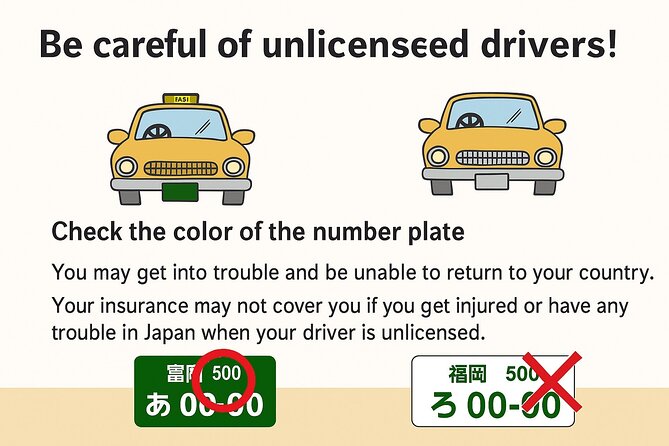
This is not just a sightseeing ride. The core value is the pairing of a local English and Japanese-speaking guide with a professional licensed driver. The driver is described as green-number, which is a standard used for commercial licensing in Japan, and it gives you a practical safety layer.
I also like that you are not locked into one fixed itinerary style. The tour is described as fully customizable based on preferences, and you can choose the car you want. In plain terms, that means less compromise, whether you care most about iconic shrines or you want more time for shopping and street food.
One more detail worth noting: the company mentions free Japanese language support for emergencies. That kind of backup matters in a country where everyone is polite, but your ability to communicate can still make a difference fast.
In the guide names that show up in recent bookings, Yama is one of the English-speaking guides mentioned, and Hibiki is another name that comes up. Either way, the pattern is the same, clear English plus local understanding.
- PERFECT KYOTO 1-Day Bus Tour★ 5.0 · 13,518 reviews
- Kyoto: Fushimi Inari, Kinkakuji, Bamboo Grove 1 Day Bus Tour★ 4.8 · 4,316 reviews
- Kyoto: Tea Ceremony in a Traditional Tea House in Kiyomizu★ 4.9 · 3,519 reviews
- Kyoto: Tea Ceremony Ju-An at Jotokuji Temple★ 4.9 · 3,207 reviews
- Kyoto: 45-Minute Tea Ceremony Lesson Experience★ 4.3 · 2,378 reviews
How the Schedule Works: About 15 Minutes Per Stop
The itinerary is packed, and the “clock” is visible in the way each stop is listed at around 15 minutes. That is enough time to see the main feature, take photos, and absorb the basics from your guide. It is not enough time to linger for hours, especially at large temple complexes.
My advice: use those minutes like a checklist.
- Know your must-see in each place before you arrive.
- Wear shoes you can move in quickly.
- Treat shopping streets like you are speed-running, pick a few targets, then move on.
If you want more time at fewer places, the customization promise matters. You can often trade breadth for depth.
Kyoto Stop Sequence: Fushimi Inari to Gion Without the Maze

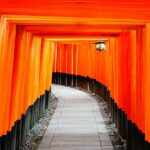
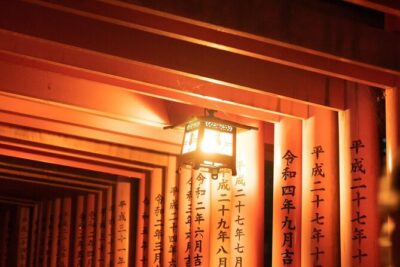
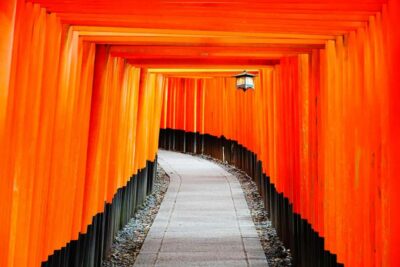
Your day starts with Fushimi Inari-taisha Shrine, famous for its Senbon Torii, those bright red torii gates stacking into tunnel-like paths. The gates are free, so you do not need to plan budget around admission here. What you do need to plan is crowd flow. Even in a short visit, the guide helps you pick the best area to step into so you get the full effect without spending your whole time tracing back and forth.
Then you slide toward Gion, Kyoto’s best-known traditional district. Think walking, watching, and catching the quieter rhythm of old streets. Gion is also one of the best places to feel Kyoto’s “tempo” rather than just its “landmarks.” This is where you can slow down for a moment, even inside a short stop, because the streets themselves do the entertaining.
Arashiyama Bamboo Forest and Tenryu-ji: The Most Photogenic Part of the Day
Arashiyama is the part of Kyoto that many people picture before they come. You get the big trio in a tight sequence: Arashiyama as a district, then the Bamboo Forest, then Tenryu-ji Temple.
The bamboo forest is one of those sights where a short time still works because the visual is immediate. The trick is momentum. If you arrive when the light and crowd pattern are right, you get the “towering stalk” feeling fast. If not, you can still get great angles, but you might need to shift positions. With a guide, you can skip the guesswork.
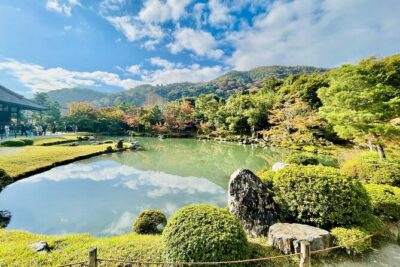
Tenryu-ji is UNESCO World Heritage and not listed as free, so entrance fees are on you here. Still, even with a brief visit, the guide can point out what to look for in the gardens and traditional layout so you do not just wander. I find temple visits work best when someone tells you where the “reading points” are, what was designed to be seen from certain spots.
You also get nearby stops like Togetsukyo Bridge, plus the Arashiyama Kimono Forest installation near Arashiyama Station. That modern photo stop is especially handy on a quick schedule, because it is visually strong and easy to enjoy within minutes.
Optional Add-Ons Within Arashiyama: The Train and the Monkeys

Two stops are listed without admission included, and they act like optional thrills:
- Sagano Romantic Train (Sagano Torokko Train) rides through the Hozugawa gorge area. It is a scenic break that can help break up a long temple-heavy route. Since it is not included, you have to be ready to pay for it separately.
- Monkey Park Iwatayama involves a short mountain trail to see Japanese macaques and panoramic views.
Here is the practical consideration. If you book this kind of route with kids or anyone who does not handle stairs well, the monkey park is the one to evaluate carefully. It is not listed as impossible, but the climb changes the difficulty level.
Kinkaku-ji to Kiyomizu-dera: Classic Kyoto Stops, Quick Reads Included

Next comes the “greatest hits” zone. You hit Kinkaku-ji (Golden Pavilion) and later Kiyomizu-dera, both major UNESCO-listed temple experiences.
Kinkaku-ji is instantly recognizable. What makes it worth your time is seeing how the whole scene is framed and why people call it iconic. With only about 15 minutes, I would focus your attention on the pavilion itself and the immediate viewpoints your guide directs you toward.
Kiyomizu-dera is different. It has that famous wooden stage area and the feel of a temple built into dramatic topography. In a short visit, you want to aim for the best viewpoint first, then walk the surrounding areas briefly. Let the guide help you prioritize so you do not lose time hunting for the main view.
Between those big names, you also get Ginkaku-ji (Silver Pavilion), the Nishiki Market Shopping District, Yasaka Shrine, and Sanjusangendo. Each is a different type of Kyoto experience:
- Nishiki Market is food and shopping concentrated into a short walk. Great if you want Kyoto snacks without planning an entire separate outing.
- Yasaka Shrine is lively and especially memorable in festival-season atmosphere, with lanterns mentioned as part of its charm.
- Sanjusangendo stands out for the long hall and the famous count of 1,001 life-size statues, where the scale does the talking.
Nijo Castle and Chion-in: When Kyoto Gets More Formal
You also include Nijo Castle, a UNESCO World Heritage site tied to the Kyoto residence of shogun Tokugawa Ieyasu. Nijo Castle is a reminder that Kyoto’s story is not just about streets and temples. It is also about power, architecture, and how ruling families lived.
Then you get Chion-in Temple, described as one of Kyoto’s grand Jodo sect head temples, with a massive Sanmon gate called the largest wooden gate in Japan. Even if your time is short, the size cues you into why this place matters.
In a packed itinerary, these stops are valuable because they diversify your day. You move from shrine colors and bamboo photos to formal gates and palace-scale design.
Amanohashidate and Ine no Funaya: A Scenic Detour That Changes the Mood
This is the curveball that makes the day feel like more than just Kyoto plus Nara. You are also routed to Amanohashidate and Ine no Funaya, with an extra viewpoint stop listed.
Amanohashidate is one of Japan’s Three Scenic Views, described as a 3.6-kilometer sandbar with pine-lined views and the name Bridge to Heaven. In short time, the trick is to pick a viewpoint spot quickly and let your guide show you what angle gives the best “feel” for the sandbar shape.
Ine no Funaya is a fishing village known for funaya, traditional boathouses built directly over the water. This is a different kind of beauty. It is not just scenery, it is a way of life made visible. Even when you do not spend long, it can reset your brain because the environment shifts from urban temples to coastal architecture.
If you are the type who wants only the most famous city highlights, this part can feel like a lot. If you like variety and big views, it is one of the most memorable sections of the day.
Into Nara: Deer, Todai-ji, Lanterns, and a Five-Story Pagoda
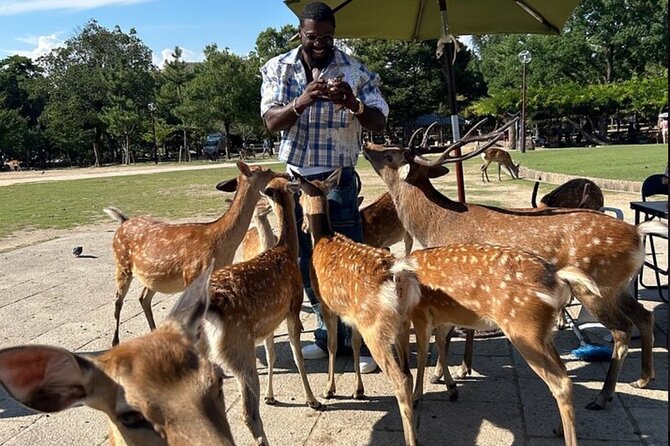
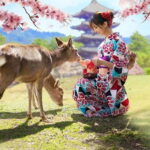
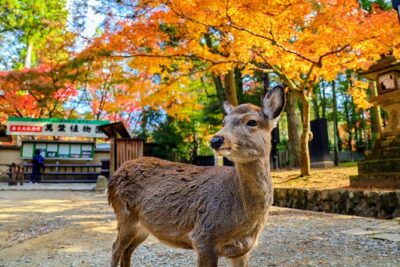
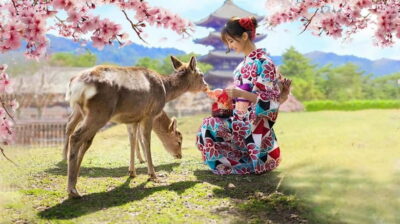
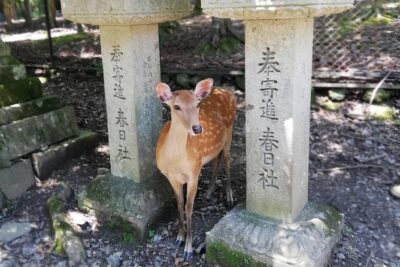
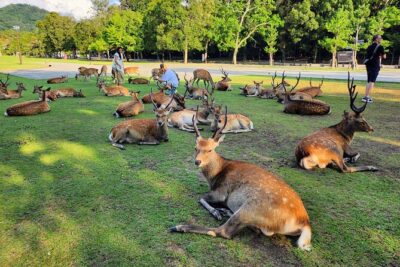
Once you reach Nara Park, the vibe changes fast. The park is free and known for friendly deer roaming in the area. Even in a brief visit, the deer are a character in the scene, not just background. Your guide can help you navigate the space politely, because deer encounters are fun until they turn chaotic.
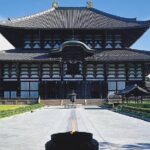
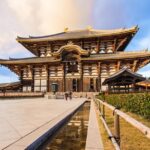
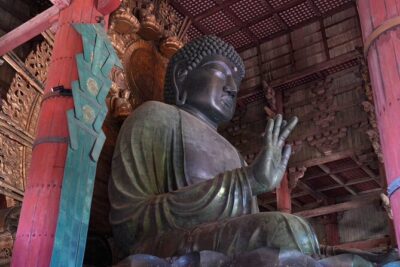
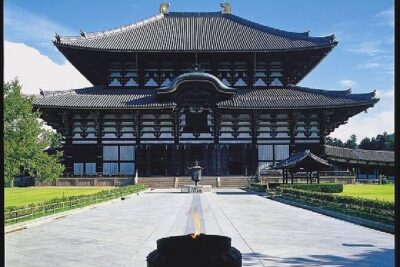
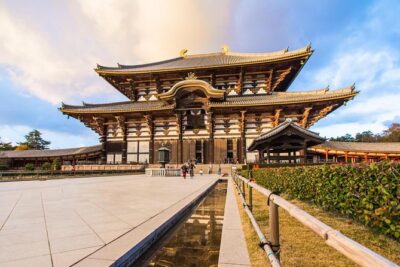
Then you go to Todai-ji Temple, UNESCO World Heritage and famous for the Great Buddha Hall (Daibutsuden) housing a massive bronze Buddha. In a short stop, prioritize the main hall experience first. The scale is hard to grasp unless you see it directly, so get your eyes there early.
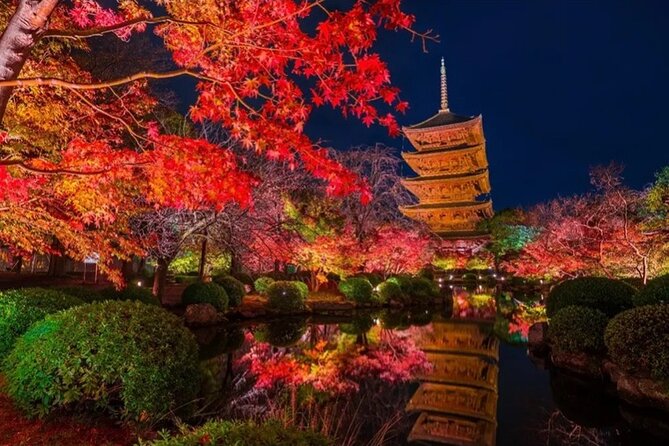
After that, you hit Kasuga Grand Shrine, also UNESCO-listed, known for hundreds of bronze and stone lanterns. This is where Nara earns its reputation for mood. Even without a long stroll, the lighting, arrangement, and sense of sacred order can hit hard.
Finally, Kofuku-ji Temple Five Stories Pagoda ties the day together with a famous pagoda silhouette. It is listed as part of the tour, so you get the postcard moment without having to plan another route day.
What to Wear and Bring for a 15-Minute-At-a-Time Temple Day
This kind of day rewards practical packing.
- Wear comfortable shoes that grip well, especially if you end up walking temple grounds and uneven paths.
- Bring a small layer, temple areas can feel cooler in shade.
- If you have dietary needs, plan for meals outside the tour because meals are not included.
- Bring cash for the ¥10,000 per booking payment for gas, parking, and highway fees, since the tour data specifies it as cash on tour day.
For photos, I suggest you treat each stop like a mini mission. At iconic places like Fushimi Inari and Kinkaku-ji, you can often get the best shots near the main viewpoints quickly, then spend the remaining minutes wandering where your guide points.
Who This Tour Fits Best (and Who Might Want to Rethink the Pace)
This is a strong match for:
- Families who want fewer transfers and fewer arguments about where to go next
- Couples or friends who want big highlights in one day
- Anyone who values the guidance element, not just checklists
It might feel less ideal if:
- You prefer slow travel and long temple sittings
- Your group wants deep shopping time at Nishiki Market or long walks in Arashiyama
- Anyone in your party has limited mobility and you might be tempted by Monkey Park Iwatayama
Because the itinerary includes a lot of top-tier sights across Kyoto, Nara, and even a coastal detour, the tour works best when you embrace the idea of breadth.
So, Should You Book This Kyoto and Nara Private Car Tour?
If your priority is to see a lot, in one day, with minimal logistics stress, this tour makes sense. You are paying for private transport, an experienced guide team, Wi-Fi on board, and hotel pickup and drop-off, which collectively remove many of the time thieves that normally slow Kyoto down.
My decision rule: if you are okay with short visits and want someone to handle the route and interpretation, book it. If you want fewer stops and longer stays, consider asking for a more focused version through the customization promise, because the tour is built to cover major hits fast.
FAQ
Are entrance fees included on this Kyoto and Nara tour?
Entrance fees are not included. The tour notes that entrance fee costs are separate.
How long is the tour?
The duration is approximately 10 hours.
Is hotel pickup and drop-off included?
Yes, hotel pick-up and drop-off are included.
Is this tour private, or will I share with other groups?
This is a private tour, only your group will participate.
What vehicle and driver details should I expect?
You get a private vehicle with a professional licensed driver (green number). There is also Wi-Fi on board, and you can choose the car you want.
What extra costs might I need to pay during the tour day?
Meals are not included, and there is a cash payment for gas, parking, and highway fees in Japanese yen: ¥10,000 per booking.
Does the tour offer language support beyond the guide?
The tour information says there is free Japanese language support in case of emergencies.
Half a Day in Nara

Newest Kyoto write-ups from the Loving Japan desk
Nara Deer Park and Todai-ji, side by side.
 ★ 5.0World Heritage Kyoto & Nara Uji Authentic Matcha ExperienceFrom $1291,573 reviews
 ★ 4.7Kyoto/Osaka: Nara, Fushimi Inari Taisha, Arashiyama Bus TourFrom $521,275 reviews
 ★ 5.0Nara Half Day Trip Walking Tour (Private Option Available)From $105937 reviews
 ★ 4.4Osaka/Kyoto: Arashiyama, Nara & Fushimi Inari Shrine w/LunchFrom $61754 reviews
 ★ 5.0Nara Early Morning Tour (Kyoto or Osaka Departure Available)From $61676 reviews
 ★ 4.5Kyoto and Nara Day Trip from KyotoFrom $194445 reviews
 ★ 5.0Full Day Guided Tour to Kyoto and Nara from Osaka by VanFrom $106420 reviews
 ★ 4.5Nara Afternoon Tour from Kyoto or OsakaFrom $102390 reviews
Filed on these lists too