
REVIEW · KYOTO TEA CEREMONIES AND MATCHA
Kyoto: Kimono and Tea Ceremony Experience at Cultural Asset
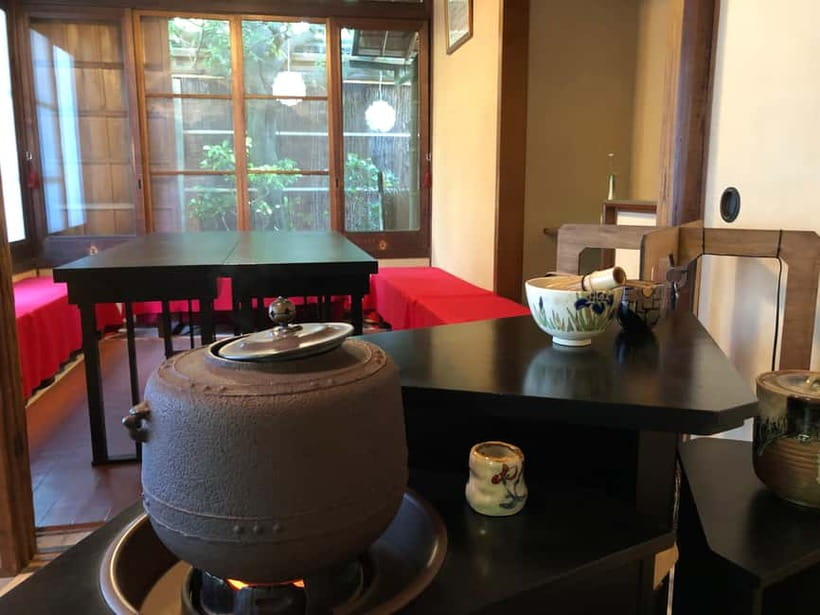
Kyoto’s old-town details can feel surprisingly real here. At Tondaya, you’ll enter a 140-year-old machiya that’s recognized as a cultural landmark, then step into a tea ceremony performed in traditional rooms. I especially like how the experience blends costume and ritual, not just sightseeing, and you get real time to take photos in the house and garden settings.
The kimono part is fast and hands-on, and the tea ceremony is treated like something calm and precise, not a rushed demo. One thing to consider: if you choose the standard group option, you may share the space with others, so quiet, slow pacing can depend on the crowd and timing.
In This Review
- Key highlights to know before you go
- Tondaya: why this 140-year-old machiya makes the whole experience work
- Kimono dressing in minutes, plus the clothing rules that actually matter
- The tea ceremony: calm ritual, clear explanation, and etiquette that helps everyone
- House tour and photo time: where the “Kyoto feeling” comes from
- Group vs private: how crowding changes the vibe
- Price and value: is $222 per person fair for what you get?
- Who this Kyoto kimono and tea ceremony suits best
- Should you book Tondaya’s kimono and tea ceremony?
Key highlights to know before you go
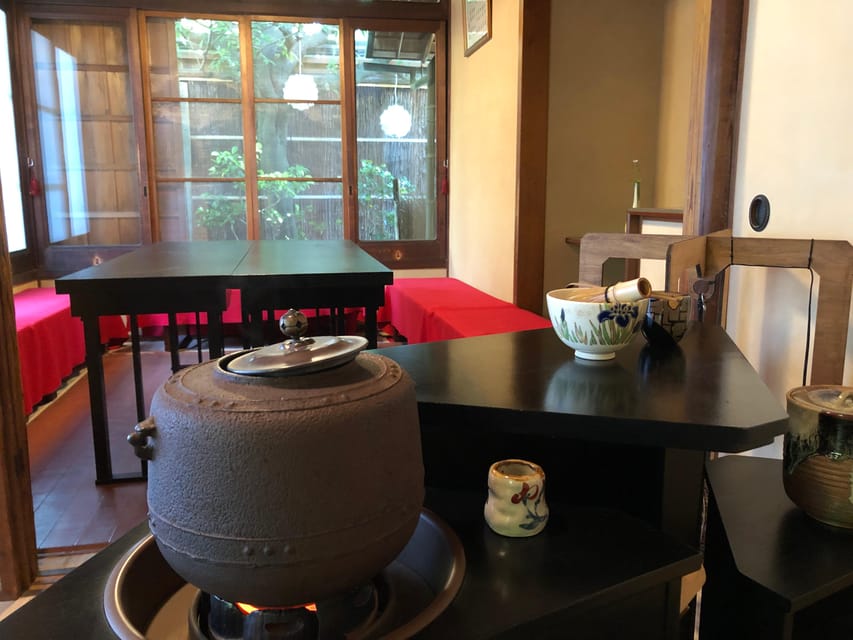
- 140-year-old nationally registered machiya: a townhouse setting that makes the ceremony feel period-correct.
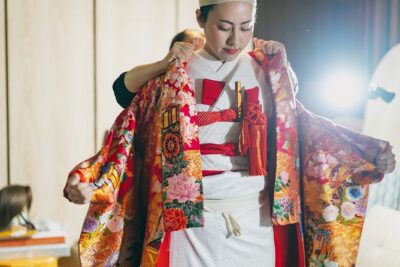
- Silk kimono dressing included: staff help you get in the right look quickly.
- Traditional tea ceremony with a tea master: learn what is happening and why, not just watch.
- Photo time in the townhouse and gardens: you get chances for your own photos, with a few rules.
- Socks required, bare feet not allowed: bring socks so your feet can stay comfortable and in compliance.
Sit down somewhere quieter. Other tea rooms we booked
- Kyoto: Tea Ceremony in a Traditional Tea House in Kiyomizu
★ 4.9 · 3,519 reviews - Kyoto: Tea Ceremony Ju-An at Jotokuji Temple
★ 4.9 · 3,207 reviews - Kyoto: 45-Minute Tea Ceremony Lesson Experience
★ 4.3 · 2,378 reviews - Kyoto: Table-Style Tea Ceremony at a Kyo-Machiya
★ 4.9 · 1,211 reviews
Tondaya: why this 140-year-old machiya makes the whole experience work
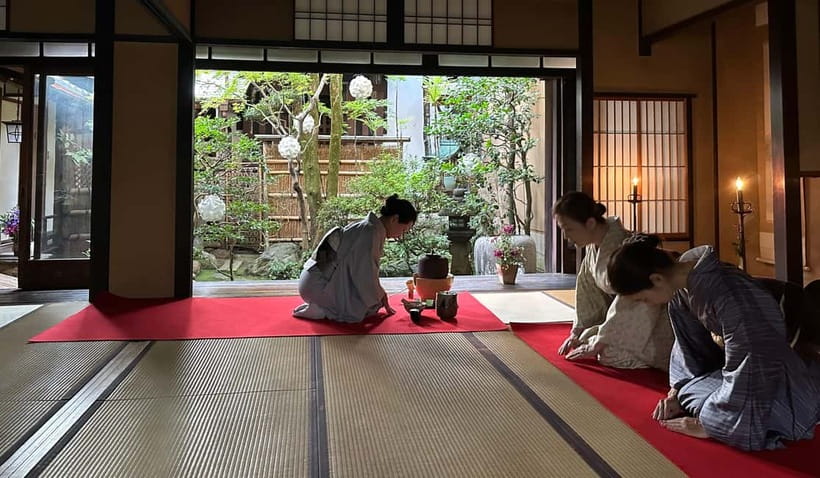
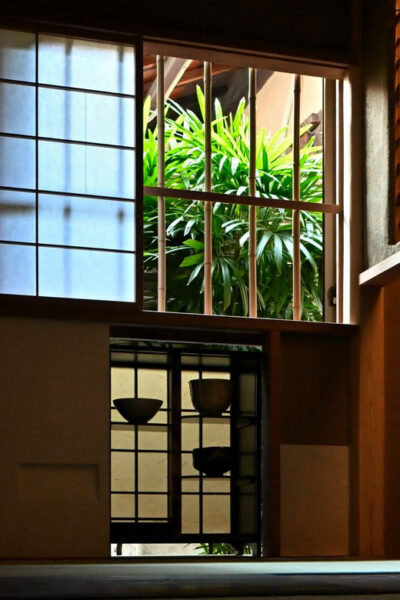
The big reason this experience feels worth it is the setting. Tondaya is a traditional Japanese townhouse, a machiya, and it’s officially recognized as a cultural property. When you step inside, you’re not looking at a staged showroom. You’re in the kind of wooden, room-to-room architecture that Kyoto is known for, with details that make the tea ceremony feel like it belongs there.
You’ll want to arrive at the meeting point on time, at Tondaya – Nishijin Japanese Cultural Experience Museum in Kamigyo Ward. Even if you don’t know Kyoto well yet, this kind of venue helps you connect the dots between what you’ve seen outside and how daily life worked in older neighborhoods.
If you enjoy photos, you’ll likely appreciate what the space offers. Several rooms and garden views give you variety without needing to walk far, and the mood stays consistently traditional. That matters because in Kyoto, you can burn a lot of time hopping between spots. Here, you compress the experience.
Kimono dressing in minutes, plus the clothing rules that actually matter
The kimono dressing is one of the most fun parts because it happens in real time, with staff helping you get into the outfit. Your dressing starts in the kimono room, and the fitting process is quick, often around 5 minutes for the initial dressing step. That speed is great because you’re not standing around waiting, and you get straight into the house tour and ceremony flow.
But the practical rules are also the difference between smooth and stressful. Here’s what you need to plan for:
- Bring socks and expect socks to be required. Bare feet are not allowed, and you should avoid stockings.
- Wear clothes that are not too tight around the neck so your kimono layer can sit correctly.
- If your T-shirt is wet, they may not be able to help you put on the kimono. Bring a dry change if weather or sweat is an issue.
A small detail that comes up from real experiences: kimono sizes can affect the final look. If you’re tall, you might receive a larger kimono and in some cases it may be simpler in color rather than matching the more patterned options you see on other people. That doesn’t mean it looks bad, but it’s worth knowing so you set expectations and don’t feel surprised when photos show different styles on different bodies.
Also, hair styling and makeup are not included. If you want your hair to stay perfect under the kimono style, plan a quick do-it-yourself approach before you arrive. The staff focus on getting the kimono right, not a full salon finish.
The tea ceremony: calm ritual, clear explanation, and etiquette that helps everyone
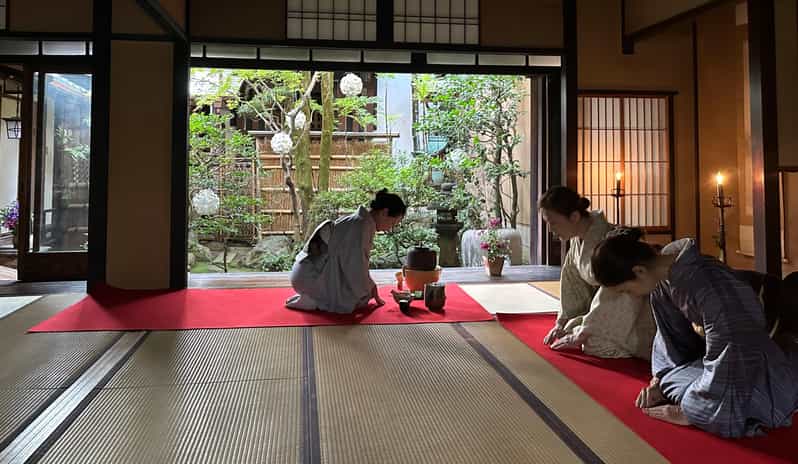
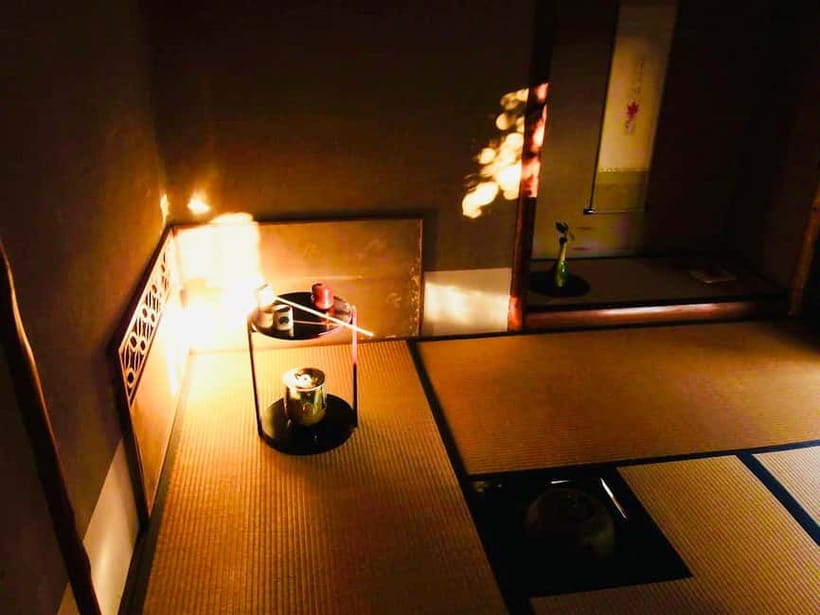
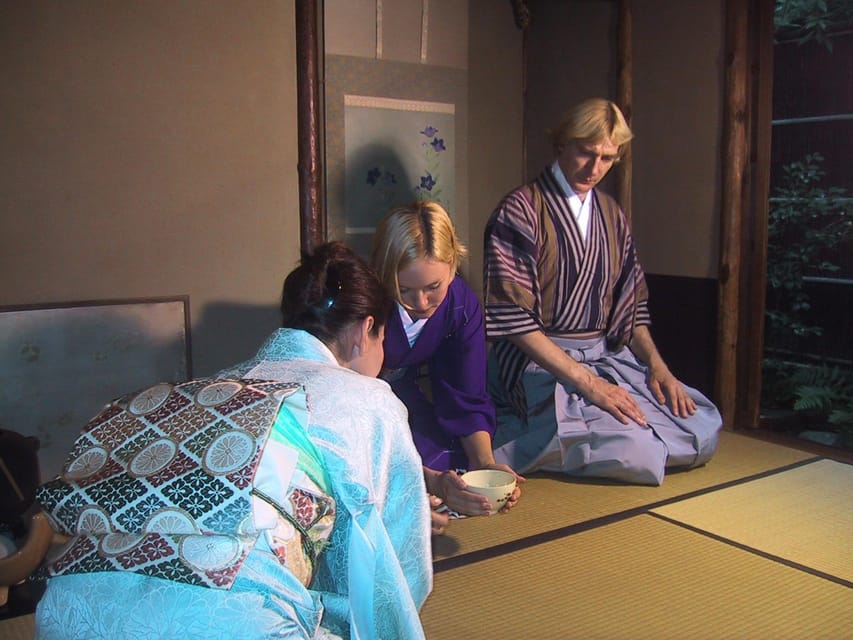
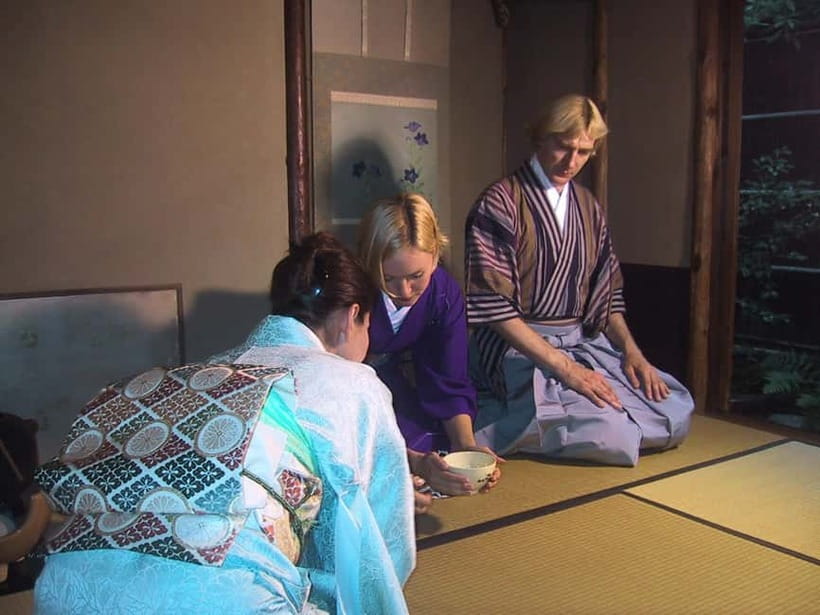
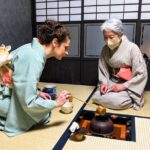
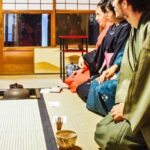
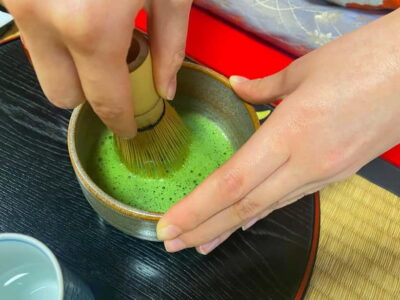
The tea ceremony is the centerpiece, and it’s performed in traditional rooms within the machiya. You’ll watch and participate during a ceremony led by a seasoned tea master. What I like about this setup is that the team tends to explain the process, so you’re not just following steps without context.
You can expect the ceremony to be more than a silent performance. Many people report that the guide clearly explains what’s happening and why, and the pacing often feels thoughtful rather than showy. If language is a concern, know that instruction is offered in English and Japanese, and a translation device may be used when needed.
One etiquette note matters a lot: this is meant to be mindful and quiet. Some participants have had distracting moments because phones were raised too often or groups acted loudly. Your best move is simple: keep your phone down during the most ritual-heavy moments, and save recording for the transitions when it makes sense.
Seating also affects your view. Depending on timing and how your group is placed, you might sit on the floor, with a few chairs available. That means your ability to see the tea master can vary, so if you care about that angle, arrive early, follow staff guidance, and don’t be shy about asking where to sit within the room layout.
Finally, tea ceremonies aren’t all the same. Some people wish they had more hands-on time, like mixing the tea. If that’s a priority for you, focus on choosing the format that gives you the most interaction, and be ready for the reality that some ceremonies are more observational than workshop-style.
Rental shops we have actually walked into
- Kimono Tea Ceremony at Kyoto Maikoya, NISHIKI★ 5.0 · 911 reviews
- Kyoto: Kimono Rental with Hairstyling and Accessories★ 4.8 · 653 reviews
- Kyoto: Kimono Tea Ceremony at Orizuruya Gion★ 4.9 · 618 reviews
- KYOTO Tea Ceremony with kimono near by Imamiya Jinjya Shrine★ 5.0 · 343 reviews
- Kyoto: Kimono and Tea Ceremony Experience at Cultural Asset★ 4.3 · 306 reviews
House tour and photo time: where the “Kyoto feeling” comes from
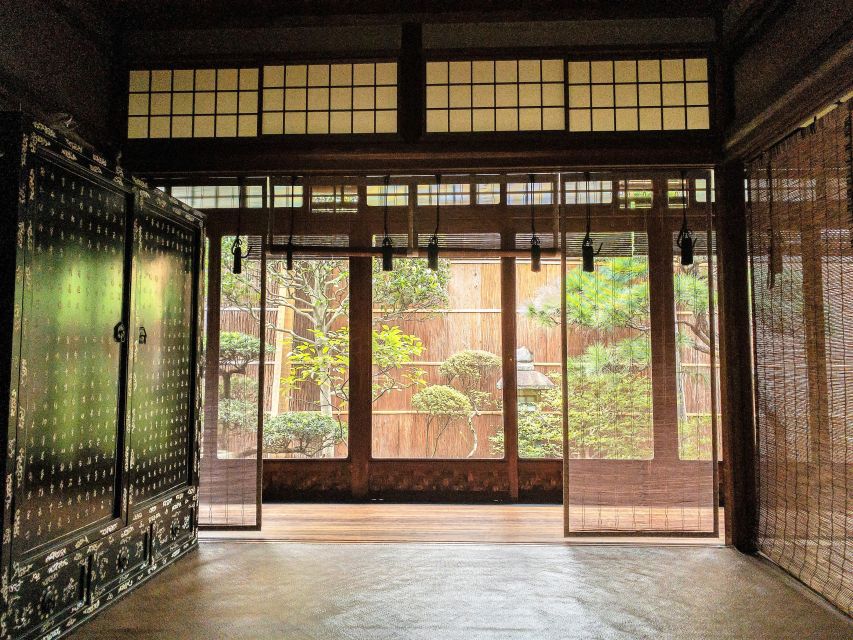
Before or alongside the ceremony, you’ll be guided through Tondaya. This is not a long, museum-style lecture. It’s more like a guided stroll through rooms where you can actually see the building’s character.
People often love the wooden details and the atmosphere created by a historic townhouse. You’ll also get multiple opportunities to take your own photos, including in garden-adjacent areas that help your pictures feel Kyoto-real rather than touristy.
That said, photo timing is not completely free-for-all. One practical rule you should remember: pictures are not allowed during kimono dressing and while taking the kimono off. After that, photography time tends to open up more.
To get the best photos, plan your pace. If you rush, you’ll feel like you’re skipping parts. If you slow down and let yourself look up at the woodwork, then down at the kimono details, your photos come out better because you’re photographing with intention, not just snapping.
Also, think about timing for taxis. This area can be slightly harder for easy pickup. One person mentioned Uber being tricky to manage from the location. The fix is simple: treat this as a start-to-finish event. Plan your next stop with a bit of buffer, and consider pairing it with other nearby sightseeing rather than racing across town immediately.
Group vs private: how crowding changes the vibe
This experience can be offered as group or private. The difference isn’t just price in your head. It changes the feeling in the room.
In a group setting, you may have to wait at times, and the ceremony space can get crowded depending on how many people are booked for that slot. When groups are larger, the room transitions can feel busier, and the quiet ritual can be harder to maintain. Some people have described things as crowded or even chaotic. That’s not necessarily the fault of the hosts. It’s a reality of a small historic townhouse being shared by multiple schedules.
On the flip side, many people still report the experience as calm and very special even in group format. Usually, it comes down to two things: whether your group follows etiquette and whether your session has enough space for movement.
If you want a smoother, slower flow with fewer distractions, choose the private option. One experience noted that it felt like being treated more like a house visitor, with more space for questions and pictures. If that sounds like your style, private is a good bet.
For best results in any format, do one thing that sounds boring but works: arrive on time. Rushing makes everything feel tighter, and a historic townhouse is not built for last-minute chaos.
Price and value: is $222 per person fair for what you get?
At $222 per person, this is not a budget add-on. You should judge it as a package that includes two expensive, labor-intensive parts: kimono dressing and a guided tea ceremony in a historic cultural property.
Here’s the value math that makes sense:
- You are paying for staff time to dress you in a quality kimono and manage fit.
- You are paying for a ceremony led by a tea master, plus interpretation in English and Japanese support.
- You are paying for access to a protected machiya and guidance through the rooms.
You are also paying for something intangible but real: the feeling of being inside an authentic townhouse while doing an actual ritual. Kyoto has plenty of photo opportunities. Fewer experiences deliver a costume, a ceremony, and a meaningful setting in one go.
The main reason people debate value is the difference between what you want and what the format provides. If you want deep education about garment origins and significance, some people wished for more garment-focused explanation. If you want more hands-on tea mixing, some also wish for more participation. If you want zero crowding, group formats can feel less private.
If you match the experience to your priorities, the price can feel more reasonable. Think of it as buying time in a historic house plus an artisan-led ritual, not just renting a costume for photos.
Who this Kyoto kimono and tea ceremony suits best
This experience is a great fit if you want a Kyoto day that feels traditional without requiring you to plan every step. The structure is clear: kimono dressing, a house walk-through, and then the tea ceremony in the townhouse setting.
You’ll probably love it if:
- You want photos in a traditional interior, not just in a street backdrop.
- You like cultural rituals that come with explanation, not only performance.
- You enjoy dressing up, and you’re okay with the practical rules like socks and neck-fit clothing.
You might not love it if:
- You want a quiet room with zero distractions and no waiting. Crowding is a real factor in group sessions.
- You want a long, deep lecture on kimono history and every garment detail. The garment instruction can feel lighter than some people expect.
- You want maximum hands-on tea participation. Some formats are more observational, depending on seating and flow.
Also, if you’re sensitive to respectful behavior in shared spaces, go in expecting others to have phones, and prepare yourself to set the tone. Your best experience comes when you treat the ceremony like it deserves your focus for a few minutes.
Should you book Tondaya’s kimono and tea ceremony?
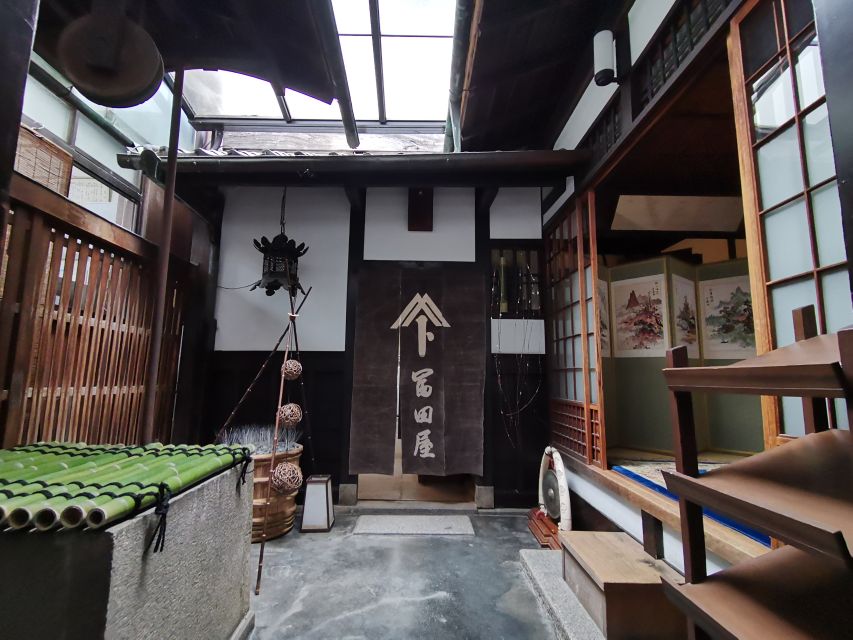
Book it if you want a single, well-framed Kyoto cultural experience that combines kimono dressing with a real tea ceremony inside a 140-year-old machiya. It’s especially smart for first-time Kyoto visitors who want authenticity without turning it into a multi-stop scavenger hunt.
Skip or choose private if you hate crowds, are very picky about photo rules, or you need lots of English-heavy explanation at a museum level. In those cases, private tends to reduce waiting and makes the whole flow feel more personal.
If your goal is to see and feel old Kyoto in your photos and your schedule, this is a strong choice. Bring socks, plan for a little stair and room movement, and treat the tea ceremony as the main event.
Rental Counters, Compared
Kyoto by the Bowl
Newest Kyoto write-ups from the Loving Japan desk

Kyoto Tea Ceremonies and Matcha, side by side.
 ★ 4.9Tea Ceremony in a Traditional Tea House in KiyomizuFrom $493,519 reviews
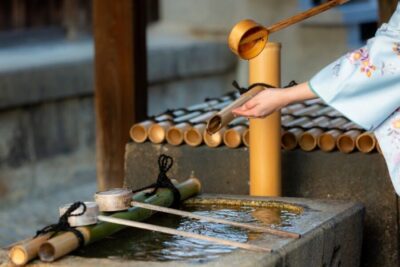 ★ 4.9Tea Ceremony Ju-An at Jotokuji TempleFrom $293,207 reviews
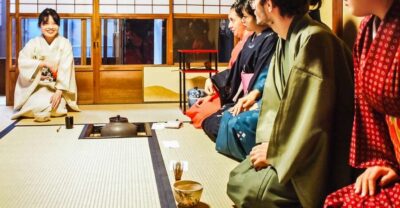 ★ 4.345-Minute Tea Ceremony Lesson ExperienceFrom $222,378 reviews
 ★ 5.0World Heritage Kyoto & Nara Uji Authentic Matcha ExperienceFrom $1291,573 reviews
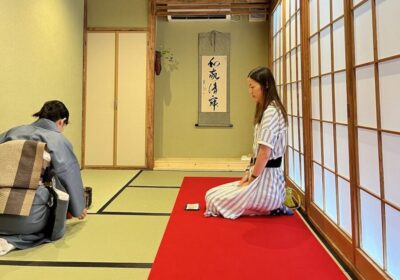 ★ 4.9Tea Ceremony ExperienceFrom $251,426 reviews
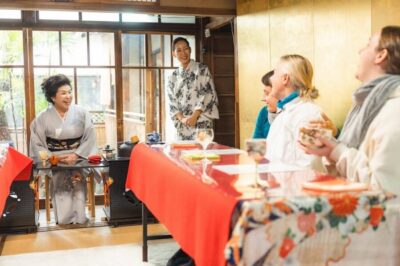 ★ 4.9Table-Style Tea Ceremony at a Kyo-MachiyaFrom $451,211 reviews
 ★ 4.8Kenrokuen Tea Ceremony ExperienceFrom $351,139 reviews
 ★ 5.0Kimono Tea Ceremony at Kyoto Maikoya, NISHIKIFrom $65911 reviews
Filed on these lists too