
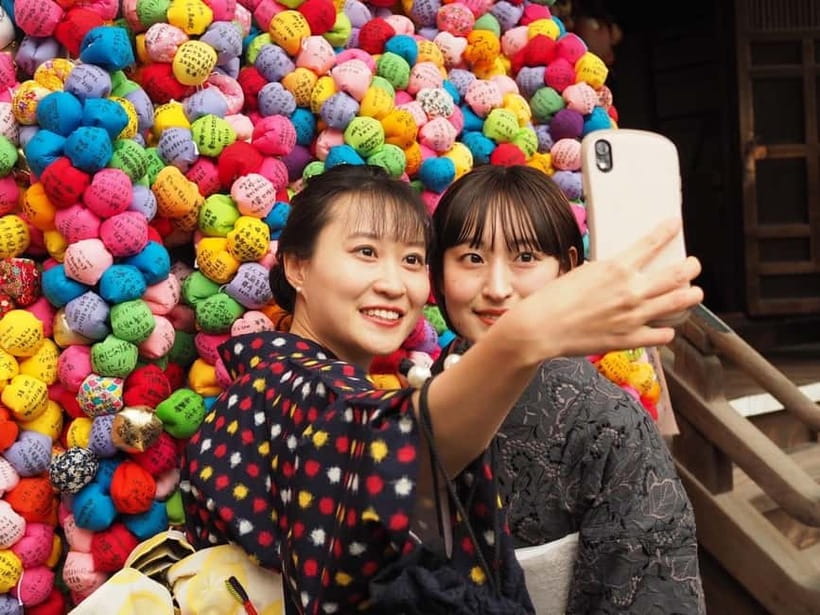
REVIEW · KYOTO TEA CEREMONIES AND MATCHA
Kyoto: Kimono Rental and Matcha Experience
Kimono and matcha, right by Kyoto Station. I love the English-speaking staff who keep things smooth for first-timers, and I love that the kimono set comes with everything you need to look right fast, even if you have zero clothing experience. It’s a simple plan with a big payoff: traditional tea, then time on the streets near Kiyomizu-dera in a real kimono look.
Timing can be the one snag. You’ll want to keep an eye on the rental window, since you must return by 5:30 pm the same day (next-day returns cost extra), and the included taxi is one-way, so think about how you’ll head back after photos.
In This Review
- Key points worth knowing
- From Kyoto Station to Kimono Fast: Hachijo Exit Convenience
- What’s Included in the Kyoto Kimono Set (So You Don’t Panic)
- The Calligraphy Start: Quiet Skill, Big Kyoto Feeling
- The Private Taxi Leg: Getting to Ichinenzaka Without the Hassle
- Tatami Tea Ceremony at Ichinenzaka 362 Café
- Strolling the Kiyomizu-dera Streets in Kimono: Photos That Feel Real
- Return Window and Next-Day Fees: How to Keep Your Day Flowing
- Price and Value: Is $50 a Fair Deal for Kyoto Kimono and Matcha?
- Who This Suits Best (And Who Should Skip It)
- Should You Book the Kyoto Kimono Rental and Matcha Experience?
Key points worth knowing
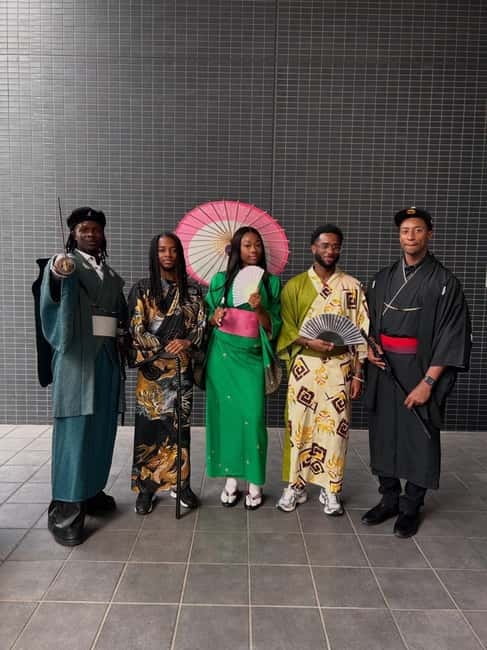
- Kyoto Station Hachijo exit meet-up makes the whole day easy to start
- Tatami tea ceremony plus hands-on matcha whisking in a renovated townhouse
- Kimono set includes the small stuff like socks, shoes, bag, and innerwear
- Men’s winter layer is included with a haori jacket for warmth
- You get photo time in the Kiyomizu area right after the tea experience
Sit down somewhere quieter. Other tea rooms we booked
- Kyoto: Tea Ceremony in a Traditional Tea House in Kiyomizu
★ 4.9 · 3,519 reviews - Kyoto: Tea Ceremony Ju-An at Jotokuji Temple
★ 4.9 · 3,207 reviews - Kyoto: 45-Minute Tea Ceremony Lesson Experience
★ 4.3 · 2,378 reviews - Kyoto: Table-Style Tea Ceremony at a Kyo-Machiya
★ 4.9 · 1,211 reviews
From Kyoto Station to Kimono Fast: Hachijo Exit Convenience
The biggest win here is location. Your kimono rental shop is in the Kyoto Station area, right in front of the Hachijo exit. That matters because Kyoto can feel like a maze when you’re carrying bags and jet lag hits. Starting within a minute of Kyoto Station helps you get into “Kyoto mode” quickly.
I also like that you do not have to guess the process. English-speaking staff are available, and they guide you through getting dressed and preparing for the next leg of the experience. If you’re worried about standing awkwardly in a fitting room while everyone waits, this kind of structure is exactly what you need.
One more practical detail that saves stress: free luggage storage. You won’t need to lug your suitcase around while you’re in kimono and hunting for the best photo angles.
Then there’s the next smart piece. After you’re ready, you take a private taxi to the Kiyomizu area, specifically to Ichinenzaka 362 Café near Kodaiji Temple. This keeps you from mixing kimono walking with Kyoto traffic and crowded train transfers.
What’s Included in the Kyoto Kimono Set (So You Don’t Panic)
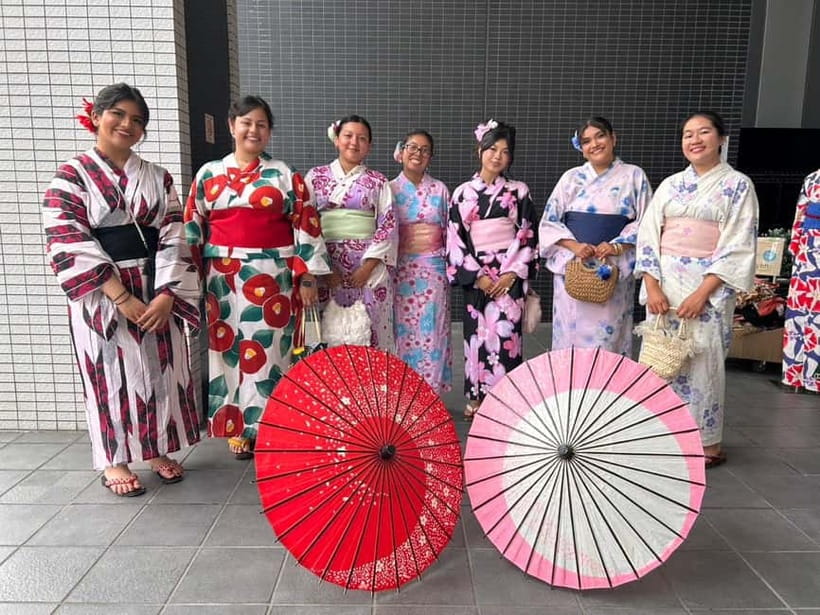
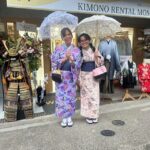
The kimono package is built to be complete, not “rental-adjacent.” You get a full set including the kimono (or yukata in summer), an obi belt, socks, shoes, a bag, and innerwear. In other words, you’re not stuck improvising under layers, and you’re not left to wonder what you’re supposed to wear under a kimono.
For winter, men also receive a haori jacket. That’s a helpful inclusion because Kyoto evenings can turn chilly, and wearing the right outer layer is part of staying comfortable during a photo stroll.
You’ll also want to think about fit and movement. Kimono fabric looks dramatic, but it can feel different from normal clothes when you walk and pose. When staff help you with the basic setup, you spend your energy on enjoying the day instead of constantly fixing the wrap.
And because your time matters, the included items help you stay on schedule. This experience has a clear arc: dressing, taxi, tea ceremony, then time in the historic streets.
The Calligraphy Start: Quiet Skill, Big Kyoto Feeling
Your day begins with a calligraphy class at the starting location. Even if you’ve never held a brush before, calligraphy is one of those Kyoto activities that instantly feels authentic. It’s simple, hands-on, and you end up with a small piece of “I was here” that fits naturally with the kimono theme.
The schedule also gives you about an hour for a calligraphy-related visit component. That time buffer is useful because kimono days can take longer than expected when you want pictures and want to make sure everything is comfortable.
Here’s the practical mindset I’d use: treat calligraphy as your warm-up. Once your hands get used to the brush, you’re more relaxed when you switch to matcha whisking later. It also helps you slow down. Kyoto experiences often move too fast, and this gives you a calmer pace at the start.
One small consideration: calligraphy involves close hand work, and sleeves can get in the way. You may find it easier if staff help you adjust your sleeves for movement during the class.
Rental shops we have actually walked into
- Kimono Tea Ceremony at Kyoto Maikoya, NISHIKI★ 5.0 · 911 reviews
- Kyoto: Kimono Rental with Hairstyling and Accessories★ 4.8 · 653 reviews
- Kyoto: Kimono Tea Ceremony at Orizuruya Gion★ 4.9 · 618 reviews
- KYOTO Tea Ceremony with kimono near by Imamiya Jinjya Shrine★ 5.0 · 343 reviews
- Kyoto: Kimono and Tea Ceremony Experience at Cultural Asset★ 4.3 · 306 reviews
The Private Taxi Leg: Getting to Ichinenzaka Without the Hassle
After you’re dressed, you take a private taxi from Kyoto Station to the Kiyomizu area. The taxi ride is included in the price as a one-way transfer, and the drive is about 20 minutes.
This is a key value point. It means you’re not relying on trains while wearing a kimono, which can be awkward in crowded stations and on busy platforms. It also cuts down the friction of navigating from the modern station area to the older streets around Kiyomizu-dera.
The destination is Ichinenzaka 362 Café, near Kodaiji Temple. That neighborhood sits in the older Kyoto zone where streets and storefronts start to look exactly like the kind of photos you came for. By the time you arrive, your kimono look feels more “placed,” not just worn for fun.
Tatami Tea Ceremony at Ichinenzaka 362 Café
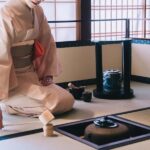
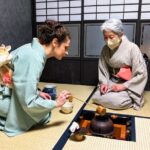
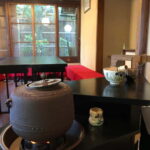
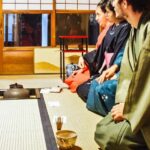
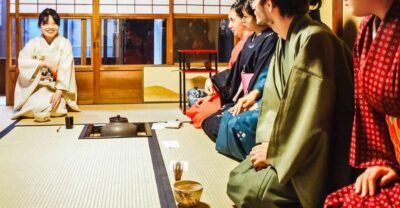
The matcha portion happens at Ichinenzaka 362 Café in a tatami room inside a renovated townhouse. This setting helps your matcha experience feel grounded in place. You’re not just making tea, you’re doing it in a Kyoto-style room designed for quiet attention.
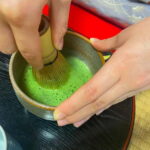
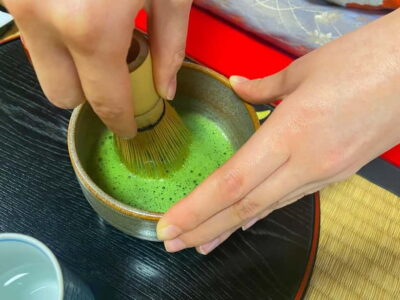
You’ll watch a short tea ceremony first. Then you get to whisk your own matcha yourself and enjoy your very own bowl. That hands-on part is what turns a typical tea demonstration into a memory you’ll actually use later when you explain what you did in Kyoto.
English-speaking staff guide you throughout. That’s important because matcha isn’t complicated, but it does have a rhythm. When someone walks you through the steps, you don’t have to worry about messing it up or misunderstanding instructions.
Here’s how to make this part work for you:
- Plan to be present during the short ceremony segment. That’s where you learn what the motions mean.
- When it’s your turn, slow down and focus on the whisking. Even if your technique isn’t perfect, you’ll still come away with the feeling of doing it yourself.
- If you care about photos, ask when you’ll have the most natural light. The room is scenic, but tea etiquette often favors a calm pace.
It’s also worth noting the café hours: 10:00 am to 6:00 pm, with last order at 5:30 pm. If you start late in the day, you can run into a too-tight window for both kimono and matcha.
Strolling the Kiyomizu-dera Streets in Kimono: Photos That Feel Real
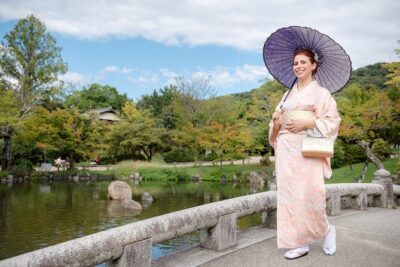
After the tea, you stroll through the traditional streets near Kiyomizu-dera while wearing your kimono. This is the payoff stretch of the day, and it’s where kimono rental becomes more than a costume.
The area around Kiyomizu-dera is known for traditional shops and wooden houses. When you walk through those lanes in kimono, the photos look like part of the street scene instead of pasted-on “outfit shots.” That matters, because Kyoto looks best when you match the setting, not just the clothing.
If you want better results, here are my practical photo tips:
- Go slow. Kyoto streets look small, but you’ll cover a lot of ground in kimono.
- Watch your step. Shoes are provided, but uneven stone and curbs are still a thing.
- Think about your pose before you stop. Sleeves and obi styling can change as you move, so it helps to pause, get set, then take the shot.
- Keep your bag close. You’re carrying the day with you, and open bags tend to collect dust or snacks on longer strolls.
Also, remember you can change and return your kimono at the same location where you enjoyed the matcha. That reduces friction versus dragging your outfit back to the station immediately.
Return Window and Next-Day Fees: How to Keep Your Day Flowing
Kyoto kimono rentals work on tight windows, and this one does too. Kimono rental hours are 9:00 am to 6:00 pm. Last check-in is 3:00 pm, and you must return by 5:30 pm the same day.
If you want to extend into the next day, next-day returns are available with fees:
- 9:00 am to 10:00 am: +1,100 yen
- 10:00 am to 6:00 pm: +2,200 yen
That matters when you’re planning your Kyoto itinerary. If you have dinner reservations far away, or you want to continue exploring beyond the Kiyomizu area, you’ll need to think about whether you’ll be done in time for the rental return window.
One-way taxi is included, but transportation after the experience is not included. So your ending plan should be practical. You can return the kimono at the matcha location, or you can go back to Kyoto Station to change there, but the extra transportation costs for getting back are not included.
My suggestion: decide where you want your day to end before you start. If your legs are tired, returning at the matcha location can be a relief. If you want to keep things simple with transit near Kyoto Station, plan your route accordingly.
Price and Value: Is $50 a Fair Deal for Kyoto Kimono and Matcha?
At $50 per person, the value comes from what’s bundled together. You’re not only renting a kimono set. You’re also getting a matcha experience that includes both a short tea ceremony segment and hands-on whisking of matcha. On top of that, you have a one-way private taxi transfer from Kyoto Station to the Kiyomizu area included.
If you were to assemble this yourself, you’d likely pay separately for kimono rental, pay for a guided tea moment, and pay transport to get from the station zone to Kiyomizu. The package reduces that admin work and lowers the chance of your day unraveling due to timing or getting lost.
For me, the best “value” feature is the English support. A kimono rental that explains what’s happening, helps with dressing, and guides you through matcha is worth more than a cheaper option where you’re left to figure things out on your own.
The one thing to watch is that transportation after the experience is not included. So the true total depends on where you plan to go next after Kiyomizu.
Still, for a one-day Kyoto experience that blends traditional clothing, tea culture, and time on the historic streets, $50 feels reasonable when you look at the whole flow.
Who This Suits Best (And Who Should Skip It)
This experience fits best if you want a structured Kyoto day without too many moving parts. The English-speaking guidance makes it friendly for first-time visitors. The private group format also helps if you want a calmer pace.
It’s a great option if you:
- Love photos but want them to look authentic on Kyoto streets
- Care about tea culture and want hands-on matcha whisking
- Want a kimono experience that includes the basics, not just the garment
A few limits matter. Pets are not allowed. Alcohol and drugs are not allowed. It also isn’t suitable for pregnant women or people over 95 years old.
Kimono days require walking and getting comfortable in fitted clothing. Even with staff support, you should be prepared for a bit of effort. If you have mobility limitations, you might want to think carefully about the walking portion near Kiyomizu-dera.
Should You Book the Kyoto Kimono Rental and Matcha Experience?
If your goal is a full, photo-ready kimono day paired with a real matcha moment, I’d say yes. The combination of Kyoto Station convenience, English-speaking guidance, a tatami-room tea ceremony, and the chance to stroll near Kiyomizu-dera is exactly the kind of Kyoto plan that feels both easy and special.
Book it if you like experiences that are guided but not stiff, traditional but not complicated, and designed to keep you moving through the day without constant logistics headaches.
Consider alternatives if you know you want to stay out late and you hate rental deadlines. The return by 5:30 pm rule means you’ll need to structure your evening, or you’ll pay next-day fees.
If you want, tell me your travel dates and whether you’re visiting in summer or winter. I can help you decide how to schedule your day around the rental and matcha café hours.
Rental Counters, Compared
Kyoto by the Bowl
Newest Kyoto write-ups from the Loving Japan desk
Kyoto Tea Ceremonies and Matcha, side by side.
 ★ 4.9Tea Ceremony in a Traditional Tea House in KiyomizuFrom $493,519 reviews
 ★ 4.9Tea Ceremony Ju-An at Jotokuji TempleFrom $293,207 reviews
 ★ 4.345-Minute Tea Ceremony Lesson ExperienceFrom $222,378 reviews
 ★ 5.0World Heritage Kyoto & Nara Uji Authentic Matcha ExperienceFrom $1291,573 reviews
 ★ 4.9Tea Ceremony ExperienceFrom $251,426 reviews
 ★ 4.9Table-Style Tea Ceremony at a Kyo-MachiyaFrom $451,211 reviews
 ★ 4.8Kenrokuen Tea Ceremony ExperienceFrom $351,139 reviews
 ★ 5.0Kimono Tea Ceremony at Kyoto Maikoya, NISHIKIFrom $65911 reviews
Filed on these lists too