
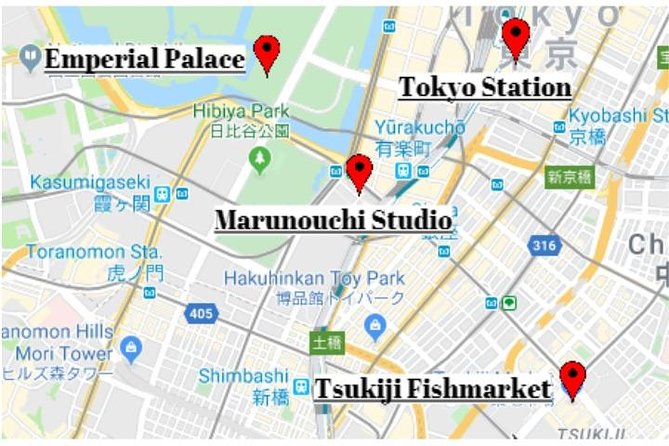
REVIEW · TSUKIJI AND TOYOSU FISH MARKETS
Tokyo Tsukiji Fish Market Tour and Sushi Making Lesson
Seafood chaos, then sushi class. I love this combo because the English-speaking guide makes Tsukiji make sense fast, and the small group keeps the lesson personal. One heads-up though, the cooking time is designed for a tight set of recipes, so if you already make sushi at home, you may want more depth than what this format allows.
You start near the famous Tsukiji Hongwanji Temple, do a short outer-market circuit with tastings, then head to ABC Cooking Travel for a hands-on washoku meal. The payoff is practical, not just photos: you leave with the skills to repeat what you made for lunch, plus a drink choice like wine or plum sake (or soft drinks).
In This Review
- Key things that make this tour worth your time
- Start at Tsukiji Hongwanji Temple, then move fast
- Tsukiji Outer Fish Market: samples, sights, and how to enjoy the chaos
- What you will see
- What you will taste
- The one caution in this market segment
- The move to ABC Cooking Travel: why the studio matters
- What the cooking school setup does for you
- The washoku cooking lesson: sushi roll plus tamagoyaki and sides
- Sushi roll: what you should focus on
- Tamagoyaki: the skill that makes this class pay off
- Side dishes: the bonus that rounds out the meal
- A practical note about ingredients
- Lunch with your creations, plus a drink choice
- How to replicate this at home
- Price and value: is $99.49 really fair?
- Where value can feel uneven
- Practical tips for enjoying it smoothly
- Who should book this Tsukiji and sushi making lesson?
- Should you book this Tsukiji and Sushi Making Lesson?
- FAQ
- How long is the Tsukiji Fish Market Tour and Sushi Making Lesson?
- What is the price per person?
- Where do we meet for the tour?
- Is the tour in English?
- What do you do in the cooking class?
- What is included in the tour?
- Is tuna auction watching included?
- How many people are in the group?
- Can kids join?
- Does the menu ever change?
Key things that make this tour worth your time
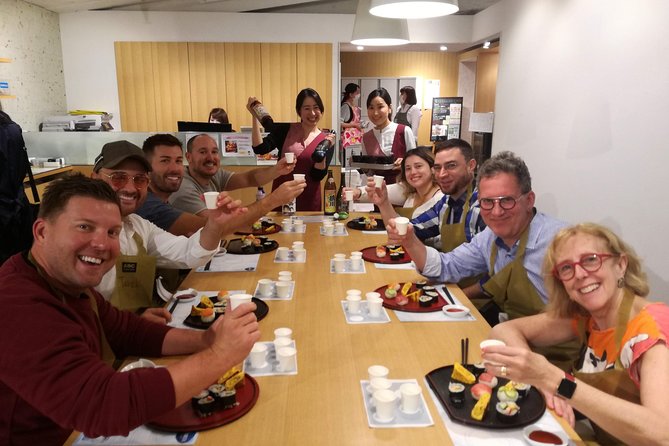
- English help in the market, so you can ask what matters and taste with confidence
- Tsukiji Outer Market sampling, not just a walk past stalls
- ABC Cooking Travel studio instruction, in a clean, organized school setting
- You make two washoku recipes, typically a sushi roll plus tamagoyaki and side dishes
- Small group format, so questions do not get lost in a big crowd
Hungry earlier than that? Other market breakfasts we tried
- Tokyo Tsukiji Fish Market Food and Culture Walking Tour
★ 5.0 · 3,184 reviews - Tokyo: Tsukiji Fish Market Food and Walking tour
★ 5.0 · 1,724 reviews - Tokyo: Tsukiji Fish Market Guided Walking Tour
★ 4.9 · 1,397 reviews - Tokyo Sushi Making Class in Tsukiji with Professional Chef
★ 5.0 · 1,177 reviews
Start at Tsukiji Hongwanji Temple, then move fast
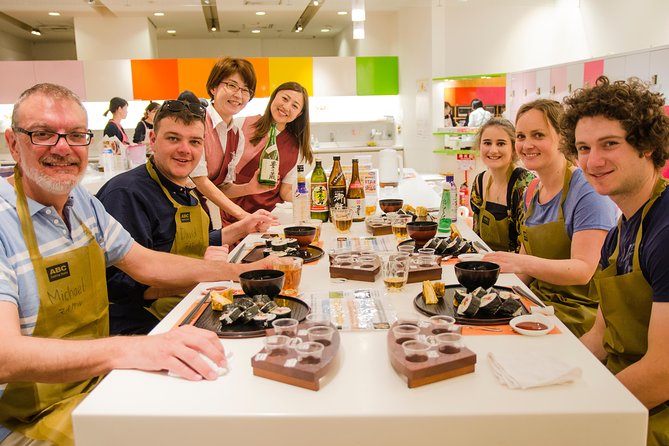
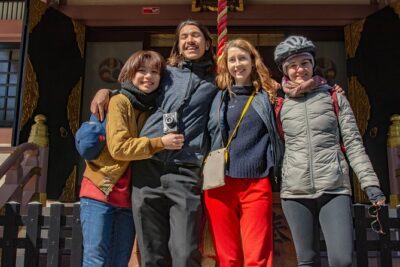
The tour begins right outside Tsukiji Hongwanji Temple. It is a quick stop, but it sets the tone. You get a glimpse of the temple architecture before you step into the seafood world, where everything looks like it is happening at once.
This is a smart way to start your morning in Tokyo. You are not just rushing straight into market noise. You get your bearings, then your guide leads you into the outer market with purpose.
I also like that the schedule keeps moving. The whole experience runs about 3 hours, so you are not committing a whole day just to chase down fish smells and instructions.
Tsukiji Outer Fish Market: samples, sights, and how to enjoy the chaos
Tsukiji Outer Fish Market is the part you can actually visit as a normal person. Think dense aisles, serious seafood, and people who know exactly what they want. With an English-speaking guide, you get a real advantage: you are not guessing what you are looking at, or what you should sample.
What you will see
Expect plenty of dramatic seafood displays. You will likely spot big whole fish, sea urchin, octopus, and other ingredients lined up for sale. The point is not to “shop like a pro,” it is to learn how Japanese cuisine starts with ingredient quality.
Cook it yourself instead. Other kitchens in Tokyo
- Sushi Making Tokyo Roll and Authentic Japanese Sushi Class★ 5.0 · 3,971 reviews
- Tokyo: Sushi Making Class in a Happi Coat near a Famous Spot★ 4.9 · 1,377 reviews
- Tokyo Sushi Making Class in Tsukiji with Professional Chef★ 5.0 · 1,177 reviews
- Ramen & Gyoza Cooking Class in Tokyo with Local Supermarket Visit★ 5.0 · 823 reviews
- Tsukiji Fish Market Guided Tour and Sushi Making with Pro Chef★ 5.0 · 775 reviews
What you will taste
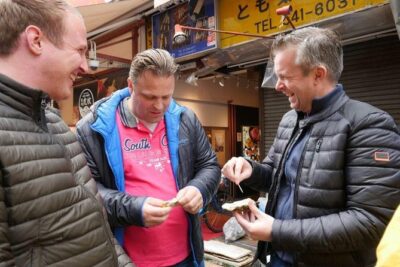
Tastings are a big part of the value here. You should plan to arrive hungry, because the market portion includes sampling opportunities. In past groups, examples of what people tried include tamagoyaki-style items on skewers, red bean mochi with strawberries, dried scallops, and little dried seafood snacks.
Do not stress if you cannot eat everything. The goal is variety, so you can connect what you see to what you eat, before the cooking class locks in the skills.
The one caution in this market segment
Tsukiji can be overwhelming on your own. But even with a guide, your time is limited, so you will not cover every vendor. If you have a specific ingredient mission, bring it up early. Your guide can steer you toward what fits the cooking lesson and what is easy to sample quickly.
The move to ABC Cooking Travel: why the studio matters
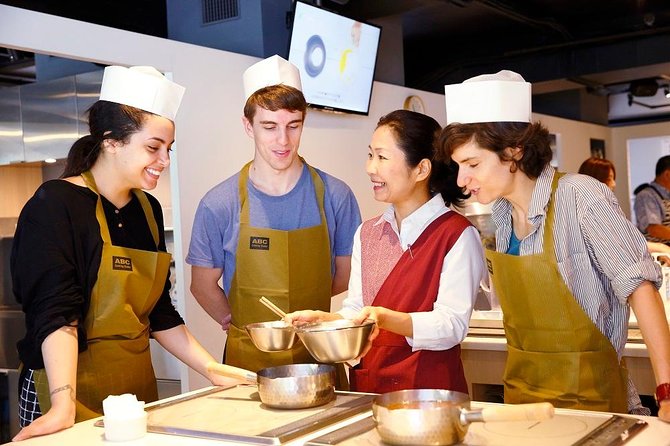
After the market, you travel to ABC Cooking Travel, one of Japan’s biggest cooking-school operations. The studio is clean, organized, and built for teaching, which is a major plus when you are learning a technique you will repeat later.
Transportation between the market and the cooking studio is included. In practice, you should expect a short ride, and it takes some time, which helps explain why the lesson is structured. You are trading some “extra market time” for guaranteed instruction time.
What the cooking school setup does for you
A good cooking school setup reduces the usual travel friction. Tools are ready. Steps are planned. You do not waste time hunting for supplies or figuring out where to stand. If you have ever tried to learn sushi watching random videos, you know how much this matters.
Also, ABC Cooking Travel has many studios across the region, so this is a repeatable, standard format. That consistency shows up in the cooking lesson pace and the way food is handled.
The washoku cooking lesson: sushi roll plus tamagoyaki and sides
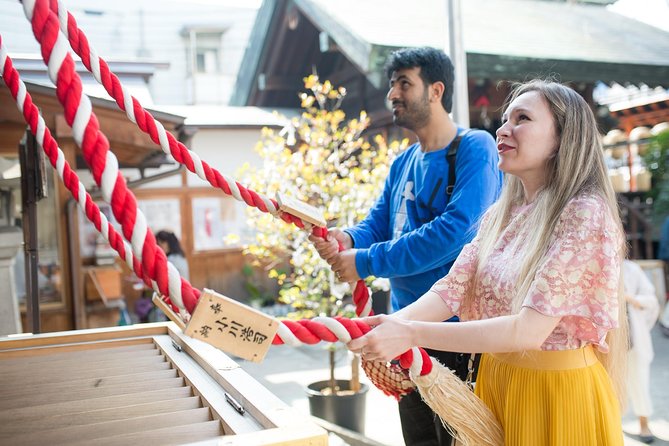
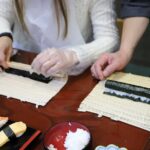
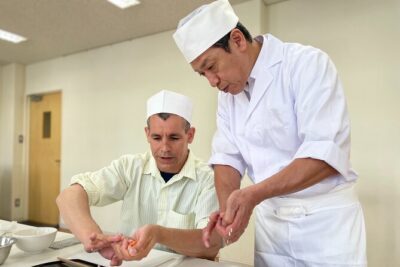
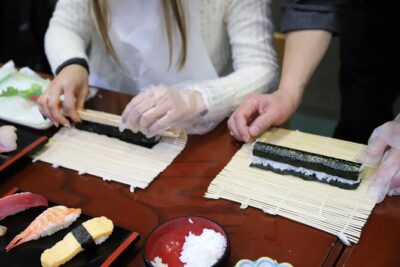
This is the heart of the experience. You learn two washoku recipes, typically including a sushi roll and Japanese-style omelet, tamagoyaki, along with side dishes. Your cooking teacher leads the process step by step, and your guide is there to help with language gaps.
This approach is great for first-timers. You get technique plus context: not just “do this,” but also how the dishes fit into Japanese home cooking.
Sushi roll: what you should focus on
Even if you have rolled sushi before, pay attention to how the class breaks things down. Sushi is a mix of precision and calm. Your instructor helps you keep the process controlled, so you can finish something you can actually eat with pride.
Tamagoyaki: the skill that makes this class pay off
Tamagoyaki is the confidence-builder. It is simple on paper, but it teaches the mechanics of rolling and layering without turning it into a stressful mess. People often say they come home wanting to recreate tamagoyaki, partly because it feels doable once someone shows you the flow.
Side dishes: the bonus that rounds out the meal
Side dishes are included as part of the washoku plan. This matters because it changes the lesson from “one craft skill” into “one Japanese meal.” You do not just practice sushi, you practice how it gets served and supported.
A practical note about ingredients
Ingredients can differ from what you see in advertisements, and seasonal changes can affect the exact foods used. You can ask about alternate ingredients if needed. Either way, your class is built around washoku technique, not a single mythical perfect ingredient.
Lunch with your creations, plus a drink choice
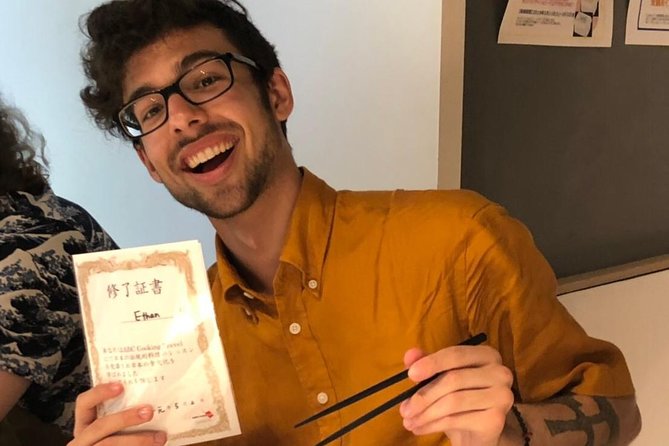
After cooking, you eat what you made for lunch. That is not always true on food tours, and it is a big reason this one works. You get the immediate reward of tasting your own sushi and the dishes you practiced.
You also get a choice of wine, plum sake, or soft drinks. This turns the class into a proper meal, not just a snack session.
How to replicate this at home
The most useful souvenir is not the recipe card you might or might not keep. It is the muscle memory from doing the steps. If you want to recreate it, focus on the techniques you can repeat: rolling consistency for tamagoyaki, and the way the sushi roll comes together from assembly to final cut.
And yes, you will be tempted to buy more ingredients when you taste everything. Try to save your “shopping experiments” for your next trip to a Japanese market once you know what you actually like.
Price and value: is $99.49 really fair?
At $99.49 per person for about 3 hours, this is not a budget street-food crawl. You are paying for three things: a guided market experience, a transportation transfer, and a hands-on cooking class at a professional studio.
Here is where the value usually shines:
- You get English support in a place that can feel chaotic.
- You get tastings in the market, not just a look.
- You get instruction in a structured cooking environment.
- You get to eat the dishes you make.
Where value can feel uneven
One possible downside is that the class is tightly planned. Some people want more market shopping time or more hands-on cooking variety. If you expect to buy the ingredients you later cook, note that the process here is more about learning and eating than doing a full ingredient shopping haul.
Also, if you already know sushi well, you may find the lesson basic. It is aimed at most skill levels, but the time is limited by design.
My take: if you want a guided, low-stress way to combine Tsukiji food tasting with a real cooking skill, this price can make sense. If you want freeform market shopping and deep sushi theory, this format may feel too structured.
Practical tips for enjoying it smoothly
A few small choices can make the day much easier.
Wear comfortable shoes. Tsukiji is walk-heavy, with dense areas and lots of standing. If you carry a bag, keep it minimal. Strollers and luggage are not allowed, so plan to travel light.
Go in expecting change. The cooking ingredients can vary by season and availability, so focus on the technique more than the exact item.
Bring a basic appetite plan. You will taste foods at the market, then eat a full lunch. If you show up starving, great. If you already ate a huge breakfast, you might feel full before the cooking portion ends.
Finally, keep weather in mind. This experience requires good weather. If conditions are poor, you will be offered a different date or a full refund.
Who should book this Tsukiji and sushi making lesson?
This tour fits you well if you want:
- a guided way to experience Tsukiji Outer Market without language stress
- hands-on cooking you can repeat later, especially tamagoyaki and sushi rolling
- a small-group setup where questions get answered
It is also a strong family option. The minimum age is 9, and the format is designed so kids can participate with proper supervision and comfort level around seafood smells and market crowds.
You might want to skip this and do Tsukiji on your own if:
- you want maximum time shopping each stall
- you already cook sushi and want advanced instruction
- you strongly prefer a class built around ingredients you personally buy
Should you book this Tsukiji and Sushi Making Lesson?
If you want a fun, structured food day with an English-speaking guide and a real chance to cook and eat, I say book it. The combination is efficient: market context first, then technique, then lunch you made yourself.
If you are hoping for a super long market wander or a very advanced sushi deep class, you may feel a little boxed in. But for most people, the tight format is the point. You leave with both memories and a skill you can use again at home.
FAQ
How long is the Tsukiji Fish Market Tour and Sushi Making Lesson?
It runs about 3 hours.
What is the price per person?
The price is $99.49 per person.
Where do we meet for the tour?
Meet just outside Tsukiji Hongan-ji Temple at 3-chōme-15-1 Tsukiji, Chuo City, Tokyo 104-8435, Japan.
Is the tour in English?
Yes. The tour includes an English-speaking guide to help you through the market and the experience.
What do you do in the cooking class?
You learn to prepare two washoku recipes. This typically includes a sushi roll and tamagoyaki, plus side dishes.
What is included in the tour?
Included items are an English-speaking guide, transportation between the market and cooking studio, use of an apron, and drinking water at the cooking studio. Your lunch is also included after the class.
Is tuna auction watching included?
No. Tuna auction watching is not included.
How many people are in the group?
The tour has a maximum of 6 travelers.
Can kids join?
The minimum age is 9 years old, and the minimum height is 4.2 ft (130 cm).
Does the menu ever change?
Yes. Cooking ingredients may differ depending on season, ingredient arrival status, and availability. You can ask for alternate ingredients.
Kitchens You Can Book Into

Market Mornings We Have Reviewed

Newest Tokyo write-ups from the Loving Japan desk


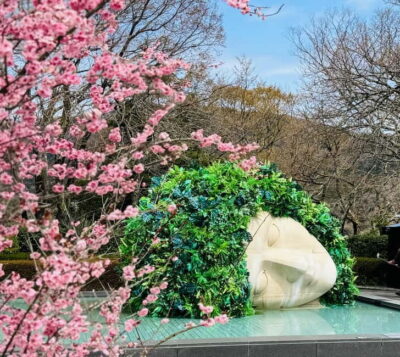
Tsukiji and Toyosu Fish Markets, side by side.
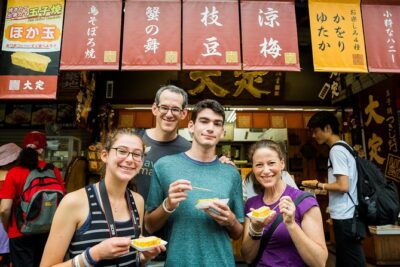 ★ 5.0Tokyo Tsukiji Fish Market Food and Culture Walking TourFrom $993,184 reviews
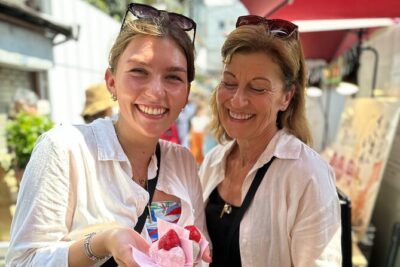 ★ 5.0Tsukiji Fish Market Food and Walking tourFrom $301,724 reviews
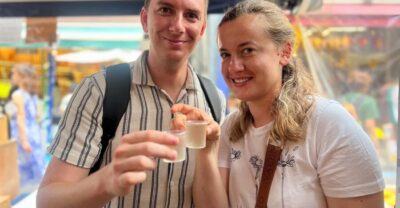 ★ 4.9Tsukiji Fish Market Guided Walking TourFrom $221,397 reviews
 ★ 5.0Tokyo Sushi Making Class in Tsukiji with Professional ChefFrom $491,177 reviews
 ★ 5.0Tsukiji Fish Market Guided Tour and Sushi Making with Pro ChefFrom $104775 reviews
★ 4.7Tsukiji Fish Market Food and Culture Walking TourFrom $96757 reviews
★ 5.0Tsukiji Fish Market Guided Tour and Sushi Making with Pro ChefFrom $104775 reviews
★ 4.7Tsukiji Fish Market Food and Culture Walking TourFrom $96757 reviews
 ★ 5.0Tsukiji Fish Market: Street Food & Culture Walking TourFrom $33669 reviews
 ★ 5.0Tsukiji Fish Market Small-Group Food Walking TourFrom $87621 reviews