
REVIEW · TSUKIJI AND TOYOSU FISH MARKETS
Tokyo Tsukiji Food & Culture 4hr Private Tour with Licensed Guide
A fish market tour is never just shopping. This private 4 hour Tokyo food and culture outing connects Toyosu and Tsukiji with Asakusa street flavor and kitchenware shopping, led by a licensed guide who helps you keep moving and ordering confidently. What I like most is the private pacing and the customizable choice of 2 to 3 stops, so you can match your appetite and mobility. One drawback to consider is that if your visit hits closed days or later market hours, some stalls and the full auction energy may be limited.
Pickup is offered, but you still meet the guide in the city and walk between areas, so comfortable shoes really matter. Guides are also known for helping you get oriented fast, including practical advice for using trains and metros so you do not waste time figuring it out.
In This Review
- Key things that make this tour worth your time
- A 4-hour plan that keeps Tokyo from eating your day
- Price and value: is $109.01 per person reasonable?
- How the customization works when you only have 4 hours
- Toyosu Market: what to expect and when your timing matters
- Tsukiji Fish Market: free entry, high energy, and lots to sample
- Asakusa basics: Senso-ji and Nakamise as the perfect contrast
- Ameyoko and Ueno: shopping streets for deals and food vibes
- Kappabashi Dogugai: the kitchenware street that turns snacks into memories
- Tsukishima Monjya Street and Yanaka Ginza: choose your Tokyo mood
- Walking, transit, and staying on schedule like a pro
- Who this tour suits best, and who might want a different approach
- Should you book this Tokyo Tsukiji Food and Culture private tour?
- FAQ
- Is this tour a private experience?
- How long is the tour?
- Does the tour include hotel pickup?
- How many places will we visit?
- Are there admission tickets included?
- Are transportation fees included?
- Is lunch included?
- What happens if Toyosu Market is closed?
- Can I get a full refund if I cancel?
Key things that make this tour worth your time
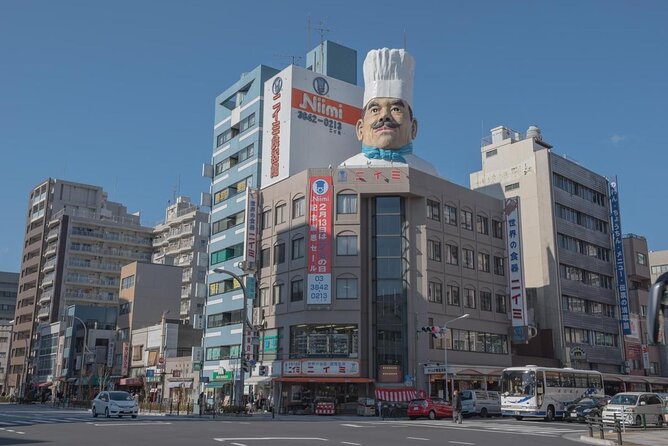
- Licensed local English speaking guide who can tailor the day to your interests, not just follow a script
- 2 to 3 sites in 4 hours, which is the sweet spot for markets plus shopping without turning your legs into soup
- Toyosu and Tsukiji coverage plus Asakusa and food shopping streets, so you see more than just fish
- Asakusa street icons like Senso-ji and Nakamise, with easy context for what you are looking at
- Kappabashi kitchenware street time, great for edible souvenirs that are actually useful back home
- Walking first, transit second, which keeps the day flexible, but rewards good footwear
Hungry earlier than that? Other market breakfasts we tried
- Tokyo Tsukiji Fish Market Food and Culture Walking Tour
★ 5.0 · 3,184 reviews - Tokyo: Tsukiji Fish Market Food and Walking tour
★ 5.0 · 1,724 reviews - Tokyo: Tsukiji Fish Market Guided Walking Tour
★ 4.9 · 1,397 reviews - Tokyo Sushi Making Class in Tsukiji with Professional Chef
★ 5.0 · 1,177 reviews
A 4-hour plan that keeps Tokyo from eating your day
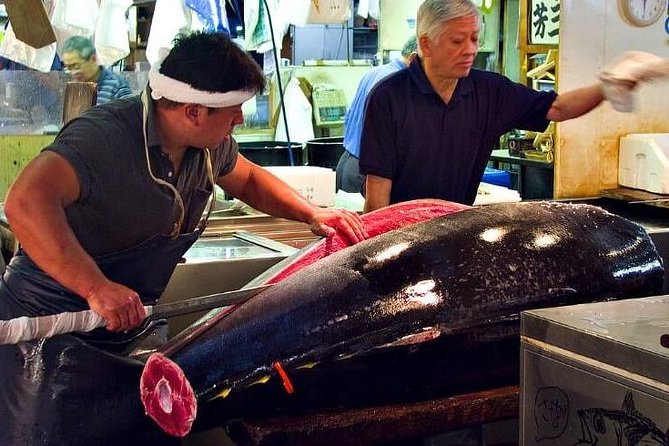
Tokyo can chew up time fast. One wrong turn, one slow train connection, and suddenly your market visit feels like a bus ride, not a food day. This tour is designed around a clear time window: about 4 hours. The format stays focused, with you choosing 2 to 3 stops from the menu of food and culture areas, then letting the guide steer based on what you want most.
That is the value. You are not paying to be taken to a long list of “highlights” you barely see. You are paying for a guided route where the guide handles the flow, you handle the fun. You also get the private setup, meaning your group can move at your pace, linger at a stall you like, and skip what does not interest you.
The private angle shows up in small ways too. On a market day, the difference between “walking past food” and “knowing what to try” is huge, and a guide can explain what you are seeing and what to look for when you decide what to buy.
Price and value: is $109.01 per person reasonable?
At $109.01 per person for an approximately 4 hour private tour, you are paying for three things: a licensed guide, customization, and a route that includes multiple high-demand neighborhoods. If you were to self-guide, you would save money, but you would likely spend more time figuring out where to go and how to plan around market timing.
You also need to be honest about what you get financially. Entrance fees and lunch are not included. Transportation costs are not included either. So your real total depends on what you choose to eat and whether you need paid entry at a stop that charges.
That said, the markets and shopping areas here are the kind where guidance pays off quickly. Toyosu and Tsukiji can feel like a maze, especially if you do not know what is open, what is worth lingering over, and what foods match your comfort level. A good guide can help you avoid “panic shopping,” where you buy something random just to buy something.
My practical take: this tour is worth it if you want a food-first plan without the stress, and you plan to actually sample treats along the way. If your goal is only photos and shopping, you might prefer a cheaper self-walk route.
How the customization works when you only have 4 hours
The tour is built around choosing 2 to 3 sites from the available list. That matters because markets and streets like Asakusa and Ueno involve real walking, plus the time needed to snack, browse, and ask questions.
In practice, customization works best when you make a quick decision at the start:
- If you want maximum tasting, pick more market-oriented stops.
- If you want “souvenirs you can use,” lean into Kappabashi (kitchenware) and Nakamise (snacks and traditional goods).
- If you want a mix, pair a market stop with a temple and shopping street.
One real consideration: some guests felt the day ended up feeling like fewer stops than expected when the pace slipped or travel time took longer than planned. That is not unusual in Tokyo. Transfers can be quick, but they can also add up. Your best move is to tell your guide early what you care about most, and ask for a simple timeline, like what the final stop will be if you stay on schedule.
Also note the pace is walking. Even with pickup offered, this is not a “sit in a vehicle and get delivered” tour. If your legs get tired easily, prioritize fewer stops, and plan for breaks.
Licensed guides working the same ground
- Tokyo 6hr Private Tour with Government-Licensed Guide★ 5.0 · 3,902 reviews
- Tsukiji Food and Toyosu Market with Government-Licensed Guide★ 5.0 · 158 reviews
- Toyosu Market Morning Tuna Auction and Tsukiji Food Tour with Licensed Guide★ 4.5 · 146 reviews
- Tokyo 8hr Private Tour with Government-Licensed Guide★ 5.0 · 121 reviews
- Private Tokyo Tour with Licensed Guide & Vehicle (Max 15 persons)★ 5.0 · 107 reviews
Toyosu Market: what to expect and when your timing matters
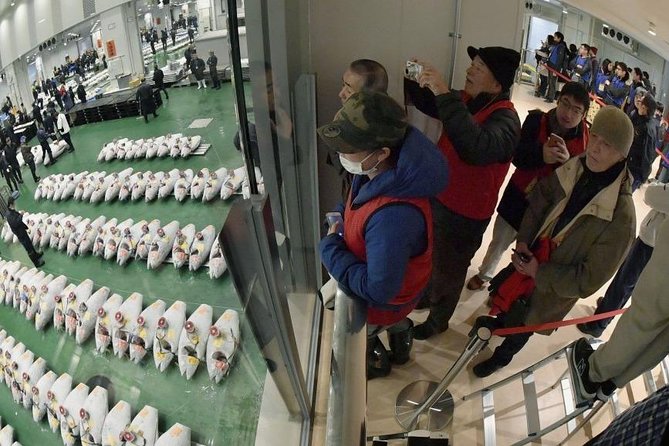
Toyosu Market is one of the headliners, but it comes with a big scheduling reality: it is closed on Wednesdays and Sundays, and occasionally on other irregular days. The ripple effect can matter too. When Toyosu is closed, many shops in Tsukiji are also closed.
So what does “Toyosu Market” mean on a practical level for your tour day?
- Expect a market environment where you can see how Japanese food culture moves from suppliers to food service.
- Admission is not included, so if entry is required, you will pay that separately.
- Your 30 minute block there is tight, which is exactly why having a guide helps. They can point out what is worth your time and what you can skip.
If your travel dates line up with a closure day, do not assume the tour will feel the same. You might still see parts of the food streets, but the “market full mode” experience could be reduced. This is where customization becomes your safety net. Ask your guide what they recommend based on what is actually open that day.
Tsukiji Fish Market: free entry, high energy, and lots to sample
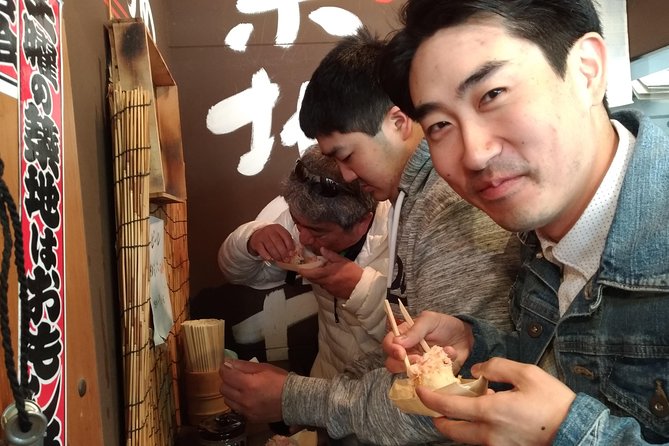
Tsukiji Fish Market (the older, classic market name) is listed as free admission in this tour format. That is a plus, because it lowers your out of pocket cost while still delivering on atmosphere.
What you should expect in Tsukiji during your allotted time:
- You will see a dense cluster of stalls and ready-to-eat options.
- The space rewards curiosity. If you like seafood, you can usually find something that matches your comfort level.
- It is a place where a guide can help you order smarter, like choosing items that represent different fish and preparation styles.
A common pattern in the praised experiences is sampling with guidance. Guides often suggest several stalls in sequence, which helps you avoid the guesswork of reading menus and deciding what is a good first bite. If you are the type who enjoys trying multiple small things, Tsukiji is a strong choice as one of your 2 to 3 stops.
One practical note: when markets are operating normally, it can feel like a lot at once. If you are easily overwhelmed, pick Tsukiji as your “food tasting anchor” and keep the rest of your day more structured with shopping streets.
Asakusa basics: Senso-ji and Nakamise as the perfect contrast
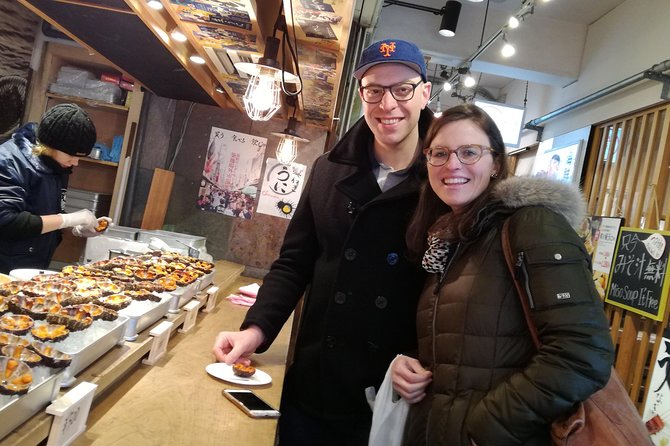
After fish and food stalls, the day needs a reset. This itinerary uses Asakusa to do that, and it works well.
Senso-ji Temple is one of Tokyo’s best known temples, with a history stretching back about 1,300 years. It is famous for Kaminarimon, the Thunder Gate, marked by a large red lantern. This stop is listed as free admission, and it gives you a strong cultural landmark to pair with the food theme.
Then you move to Nakamise Shopping Street, the 250 meter approach lined with shops selling traditional souvenirs, snacks, and street goods aimed at the temple crowd. It is the kind of place where you can buy small edible gifts, snack for later, and pick up the “I was here” items without committing to big purchases.
Why this pairing makes sense: it breaks the market intensity. Markets can be chaotic in a good way, but Asakusa gives you breathing space and a clear visual story. If you are traveling with mixed interests, like one person who wants food and one person who wants scenery, Asakusa helps balance the day.
Ameyoko and Ueno: shopping streets for deals and food vibes
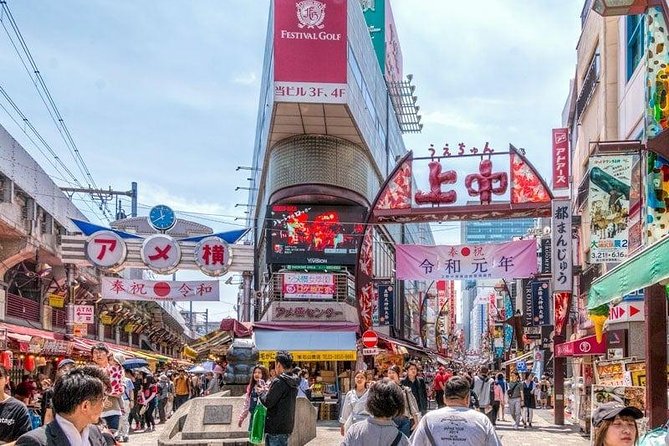
Ameyoko Shopping Street is another free stop and a favorite target for browsing. It sits in the broader Ueno area, which also makes it a convenient tie-in with Kappabashi later.
Ameyoko is a good match if you like:
- browsing before you buy
- comparing snack options and small gifts
- moving between stalls without a heavy plan
This is also a smart place to pick up practical items, like small kitchen-related goods or food snacks you can pack. If you prefer your day to feel more like exploring than “stopping and staring,” this neighborhood delivers.
Kappabashi Dogugai: the kitchenware street that turns snacks into memories
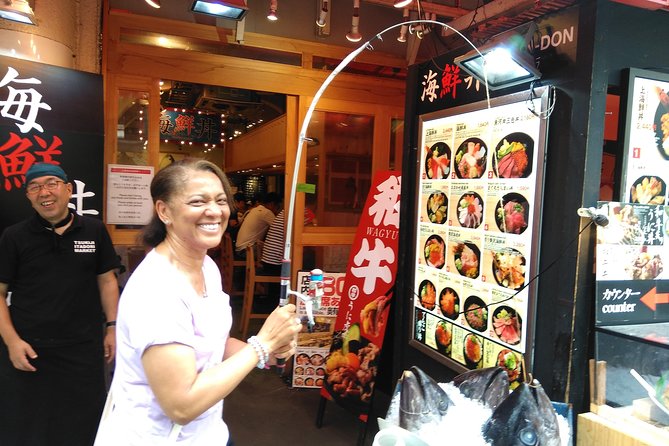
If you want souvenirs that are not just paper bags, Kappabashi is where you go. Kappabashi Street (Kappabashi Dogugai) is a shopping street between Ueno and Asakusa, with dozens of stores selling tools needed by restaurant operators.
This is a powerful stop because it connects directly to the food theme. You can buy chopsticks, knives, kitchen accessories, and other items that make your Tokyo food experience feel tangible at home. You are not guessing how something will work in your kitchen later, because the shops are built around people who use these tools every day.
In a 4 hour tour with only 2 to 3 stops, Kappabashi is best if you:
- like cooking or want to host guests with Japanese meals
- want gifts that feel specific, not generic
- enjoy shopping but want it to match your interests
It also tends to be a low-stress stop compared to markets, because you can browse at a comfortable rhythm. If you are shopping tired, you can still find something small that fits your budget.
Tsukishima Monjya Street and Yanaka Ginza: choose your Tokyo mood
The tour list includes two more street experiences that can change the personality of your day.
Tsukishima Monjya Street is tied to monjayaki, a liquid-y, hot dish. It is described as unattractive at first glance, but once you accept the look, the taste does the talking. The batter is made from flour and dashi (Japanese stock). This is for people who want a more adventurous food moment and are comfortable with something messy and informal.
Yanaka Ginza Shopping Street leans the other direction. It is known for the older neighborhood Shitamachi atmosphere and a calmer feel. It is a great option if you want to end the tour with nostalgia instead of more market intensity.
How to choose between them:
- Pick Tsukishima if you want food curiosity and a chance at a unique street dish.
- Pick Yanaka Ginza if you want gentler strolling and traditional Tokyo charm.
If you are unsure, choose based on how you feel halfway through the day. After markets and temple areas, you might be ready for calmer streets.
Walking, transit, and staying on schedule like a pro
This is a walking tour. Pick up is on foot, and you meet the guide within a designated area. That is good news if you like flexibility, but it means you should plan around walking time.
The strongest tour experiences tend to include guides who help with navigation, especially metro routes. In multiple praised examples, guides were described as patient and able to explain train ticket use and metro directions. That is not just convenience. It means you are less likely to miss a portion of your 4 hours due to getting lost.
A small but important planning trick: build your expectations around the 30 minute time blocks, not the total time. Even if each stop is listed as about 30 minutes, walking and transitioning between areas can add time. So decide early what you will do if you feel behind schedule, like which stop is your “must see” and which is your “nice if we have time.”
Also keep in mind that the main market days can have complicated operating schedules. Toyosu has closure days, and when that happens, Tsukiji shops may also close. So your plan may need a smart pivot, and the guide is meant to help with that pivot.
Who this tour suits best, and who might want a different approach
This tour is a great fit if you are:
- a food lover who wants to sample with context
- a first time visitor who wants structure without strict group pacing
- shopping for Japanese kitchen goods or food souvenirs
- traveling as a group that wants privacy, not a large bus-style tour
It can be especially good for families and mixed groups because it combines food tasting areas with landmarks like Senso-ji and shopping streets where everyone can find something.
You might consider a different plan if:
- you expect auction style viewing at early morning hours and your schedule is later
- you want lots of stops beyond 2 or 3
- you are not interested in walking and shopping streets, since that is a core part of the experience
One more practical note based on real feedback: the market experience depends heavily on what is open and what timing you have. If you are booking close to a closure schedule, ask your guide how the itinerary will shift so you are not paying for a day that feels partially shut down.
Should you book this Tokyo Tsukiji Food and Culture private tour?
Yes, I think you should book it if you want a guided, food-first half-day with enough flexibility to focus on your favorite type of Tokyo. The private setup plus licensed English speaking guide makes the day feel simpler, and the stop choices (Toyosu, Tsukiji, Asakusa, Ameyoko, Kappabashi) cover food culture from several angles.
Book it especially if:
- you want more than just photos, you want to snack with confidence
- you care about kitchenware souvenirs, not only edible ones
- you like the idea of choosing 2 to 3 stops so the day stays realistic
Skip or consider an alternative if your dates land on Toyosu closure days or you strongly want the earliest market auction experience, because timing and operating hours can change the feel of the day.
If you do book, send a message to your guide before you meet, with your top two priorities. That single step helps ensure your 4 hours stays focused and satisfying.
FAQ
Is this tour a private experience?
Yes. It is a private tour/activity, and only your group participates.
How long is the tour?
The duration is about 4 hours.
Does the tour include hotel pickup?
Pickup is offered, but the tour is a walking tour, with pick up on foot. You will meet the guide within a designated area of Tokyo.
How many places will we visit?
You can customize your itinerary with your guide’s help and explore at your own pace, choosing 2 to 3 sites from the available options.
Are there admission tickets included?
For Toyosu Market, admission ticket is not included. Tsukiji Fish Market is listed as free. Other entrance costs are not included unless specified by the tour.
Are transportation fees included?
No. Transportation fees are not included.
Is lunch included?
No. Lunch is not included.
What happens if Toyosu Market is closed?
Toyosu Market is closed on Wednesdays, Sundays, and occasionally on other irregular days, and many shops in Tsukiji are also closed when Toyosu is closed.
Can I get a full refund if I cancel?
Free cancellation is available. You can cancel up to 24 hours in advance of the experience start time for a full refund.
Licensed Guides on the Same Ground
Market Mornings We Have Reviewed

Newest Tokyo write-ups from the Loving Japan desk


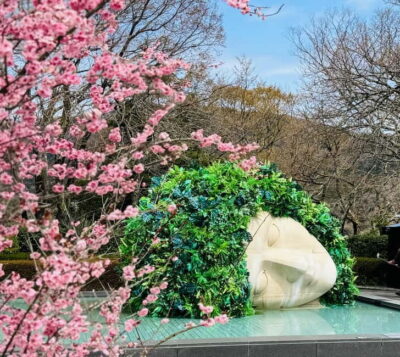
Tsukiji and Toyosu Fish Markets, side by side.
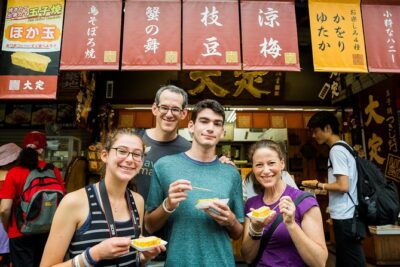 ★ 5.0Tokyo Tsukiji Fish Market Food and Culture Walking TourFrom $993,184 reviews
 ★ 5.0Tsukiji Fish Market Food and Walking tourFrom $301,724 reviews
 ★ 4.9Tsukiji Fish Market Guided Walking TourFrom $221,397 reviews
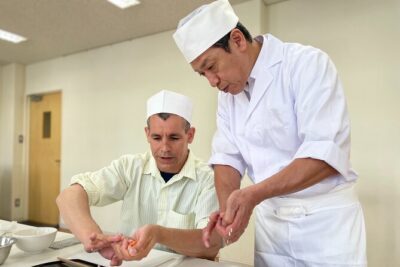 ★ 5.0Tokyo Sushi Making Class in Tsukiji with Professional ChefFrom $491,177 reviews
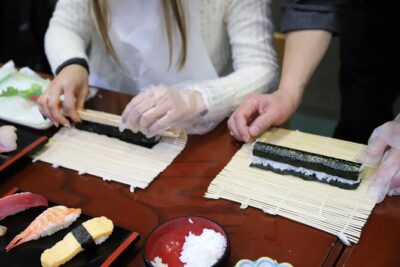 ★ 5.0Tsukiji Fish Market Guided Tour and Sushi Making with Pro ChefFrom $104775 reviews
★ 4.7Tsukiji Fish Market Food and Culture Walking TourFrom $96757 reviews
★ 5.0Tsukiji Fish Market Guided Tour and Sushi Making with Pro ChefFrom $104775 reviews
★ 4.7Tsukiji Fish Market Food and Culture Walking TourFrom $96757 reviews
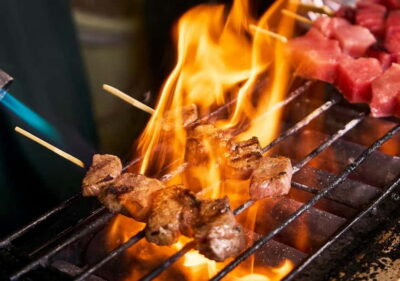 ★ 5.0Tsukiji Fish Market: Street Food & Culture Walking TourFrom $33669 reviews
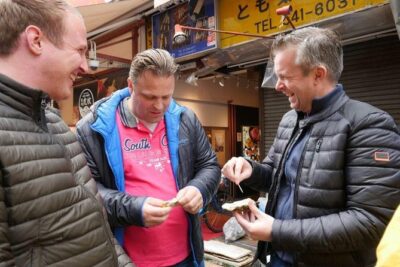 ★ 5.0Tsukiji Fish Market Small-Group Food Walking TourFrom $87621 reviews
Filed on these lists too