
REVIEW · TSUKIJI AND TOYOSU FISH MARKETS
Tokyo Tsukiji Food & Culture 6hr Private Tour with Licensed Guide
Markets, temples, and snacks, all in one walk. This Tokyo private food tour stitches together morning market energy and classic Asakusa culture, with a licensed guide steering you through crowds and making the day fit your pace. It is built around Tsukiji and the surrounding neighborhoods, with options like Ameyoko, Kappabashi, and Senso-ji.
I like two things a lot: first, the licensed local English-speaking guide keeps the story straight while you move from place to place. Second, I like that the itinerary is customizable so you are not locked into a one-size route, even though the tour is structured around 3 to 4 selected stops.
One possible drawback to plan for: it is a walking tour, and some attractions require tickets or add-ons that are not included, plus lunch and transport are on you.
In This Review
- Key highlights you will actually feel on the ground
- Why Tsukiji and Asakusa work so well for a food-and-culture day
- Price and value: is $154.84 per person fair for a 6-hour private tour?
- The walking logistics you should plan for
- Stop-by-stop: how each area fits your food-and-culture checklist
- Stop 1: Toyosu Market (2 hours, ticket not included)
- Stop 2: Tsukiji Fish Market (1 hour, free admission)
- Stop 3: Ameyoko Shopping Street (30 minutes, free admission)
- Stop 4: Senso-ji Temple (30 minutes, free admission)
- Stop 5: Nakamise Shopping Street (Kaminarimon) (30 minutes, free admission)
- Stop 6: Kappabashi Street (Kappabashi Dogugai) (30 minutes, free admission)
- Stop 7: Tsukishima Monjya Street (30 minutes, ticket not included)
- Stop 8: Yanaka Ginza Shopping Street (30 minutes, free admission)
- Customizing your day: picking 3 to 4 stops that match your travel style
- The guide factor: why “licensed” and English-speaking matters here
- Food and shopping pacing: how to not leave hungry or overwhelmed
- Who this private Tsukiji and Asakusa tour is best for
- Should you book this tour?
- FAQ
- How long is the Tokyo Tsukiji Food and Culture private tour?
- How much does it cost per person?
- Is this a private tour?
- How many stops can I choose?
- Is pickup included?
- Do I pay entrance tickets during the tour?
- Is lunch included?
- What is included in the price?
- What is the cancellation policy?
Key highlights you will actually feel on the ground
- Toyosu + Tsukiji in one day: start at Toyosu (2 hours) and then hit Tsukiji for the seafood maze (1 hour).
- Smart meet-up point: Tsukiji Fish Market meets at Tsukiji Honganji Temple, just outside the main gate area.
- Asakusa classics without map stress: Senso-ji and Nakamise Shopping Street are paired so you get the temple experience and the souvenir-snack lane.
- Ameyoko for street shopping energy: quick but fun stop (30 minutes) for bargains and local-style browsing.
- Kappabashi for kitchen gear shopping: a practical stop if you like cookware, tableware, and the tools behind Japanese meals.
- Flex stops for food you can pick: Tsukishima Monjya Street can be swapped in if you want the monjayaki flavor route.
Hungry earlier than that? Other market breakfasts we tried
- Tokyo Tsukiji Fish Market Food and Culture Walking Tour
★ 5.0 · 3,184 reviews - Tokyo: Tsukiji Fish Market Food and Walking tour
★ 5.0 · 1,724 reviews - Tokyo: Tsukiji Fish Market Guided Walking Tour
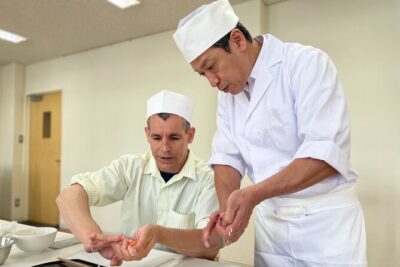
★ 4.9 · 1,397 reviews - Tokyo Sushi Making Class in Tsukiji with Professional Chef
★ 5.0 · 1,177 reviews
Why Tsukiji and Asakusa work so well for a food-and-culture day
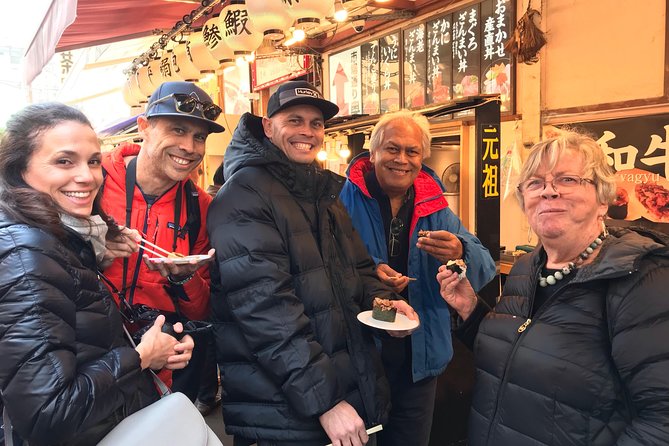
Tokyo has a lot of neighborhoods, but Tsukiji plus Asakusa is a shortcut to a full slice of how people eat and shop here. Tsukiji is where seafood moves fast, and Asakusa is where daily-life shopping meets a major old-school temple corridor.
The big win with this tour format is that you do not have to solve navigation while you are trying to decide what to taste. A private guide gives you a simple flow, and you can spend your attention on food, stalls, and small details instead of screen time and rerouting.
Also, the tour is set up as a “choose-your-own highlights” day. From the available stops, you pick 3 to 4, and the guide builds the route around that. So you can go heavier on markets and street snacks, or lean more cultural with temple time and shopping streets.
Price and value: is $154.84 per person fair for a 6-hour private tour?
At $154.84 per person for about 6 hours, you are paying for three main things: a licensed English-speaking guide, a private pacing advantage, and a route that focuses on several high-interest areas in one block of time.
If you tried to do this on your own, you could absolutely walk between some of these places. The catch is the “tribal knowledge” part. Markets are not like a museum, where you just read placards. You need help with what is meaningful, what is worth looking at, and how to move through without losing time.
This tour also includes pickup offered on foot within a designated area, which helps your start. What you still pay separately is normal for this kind of day: transportation fees, entrance fees where they apply, and lunch. Toyosu has a ticket requirement listed as not included, and Tsukishima Monjya Street has “not included” for its entry. That means your final spending depends on which food and attractions you choose to add.
Bottom line: the price feels fair if you want guidance and you plan to sample more than one bite across the day. If your plan is mostly “walk, take photos, one snack,” you might find a shorter or self-guided approach cheaper. But if you want a structured food day with smart timing, this is the right range.
The walking logistics you should plan for
This is a walking tour, and the pace is built around neighborhoods that are walkable but not effortless. Think: market surfaces, crowded lanes, and changing conditions depending on the day.
The meeting and pickup are on foot within a designated area, and the tour is near public transportation. That helps you connect easily to the start, but it also means you should wear comfortable shoes and expect some steady walking.
You also will want to carry small cash or a payment method for snack purchases, because lunch is not included and some items are pay-as-you-go. If you have a tight schedule for the rest of the day, leaving room after the tour is smart, since street shopping can turn into “just one more stop.”
Licensed guides working the same ground
- Tokyo 6hr Private Tour with Government-Licensed Guide★ 5.0 · 3,902 reviews
- Tsukiji Food and Toyosu Market with Government-Licensed Guide★ 5.0 · 158 reviews
- Toyosu Market Morning Tuna Auction and Tsukiji Food Tour with Licensed Guide★ 4.5 · 146 reviews
- Tokyo 8hr Private Tour with Government-Licensed Guide★ 5.0 · 121 reviews
- Private Tokyo Tour with Licensed Guide & Vehicle (Max 15 persons)★ 5.0 · 107 reviews
Stop-by-stop: how each area fits your food-and-culture checklist
Stop 1: Toyosu Market (2 hours, ticket not included)
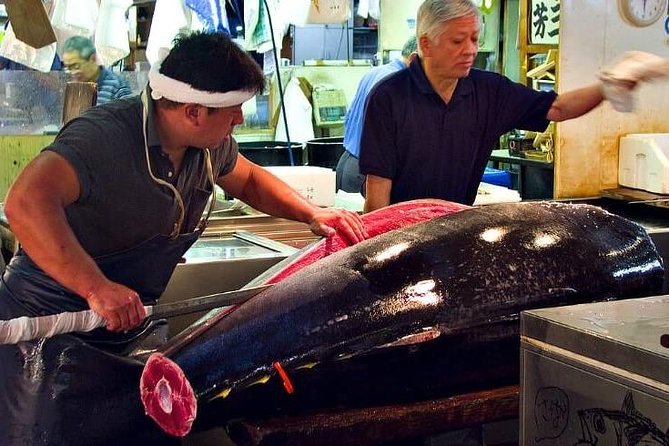
Toyosu Market is a modern wholesale hub that took over the wholesale function from the older Tsukiji operation. What that means for you is the vibe: it is built for scale and efficiency, more contemporary than the older imagery people expect.
Two hours gives you time to walk, observe how seafood and related products are handled, and get grounded before the next step. If you are a fish-lover, this is a helpful warm-up. If you are more shopping-focused, you can still use the time to look for what type of products and food styles are being showcased.
One note: the listed admission ticket is not included. So budget for it if your chosen route includes Toyosu. If you would rather spend that time elsewhere, you can choose different stops when customizing your route.
Stop 2: Tsukiji Fish Market (1 hour, free admission)
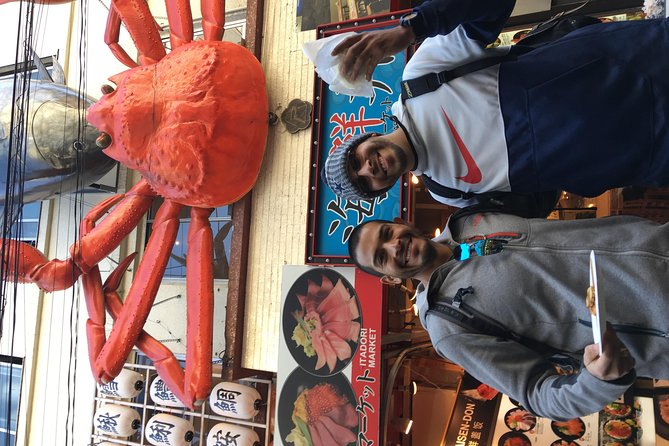
This is the heart of the classic seafood day. You meet your guide at Tsukiji Honganji Temple, just outside the market’s main gate area. Having a clear meet-up point matters here because the market zone can feel like a living maze.
During your hour inside, your guide helps you make sense of what you see and where to focus. Markets reward curiosity, but they also punish wandering without a plan. With a guide, you can prioritize the meaningful lanes and avoid wasting time on dead-end routes.
Admission is listed as free here, which is a nice plus. Your costs will likely come from tasting and shopping, not from entry.
Stop 3: Ameyoko Shopping Street (30 minutes, free admission)
Ameyoko is a short hit of street shopping energy. It is a great contrast after the structured flow of market areas. This is where you browse, compare, and pick up small souvenirs, snacks, or bargains.
Because this stop is only 30 minutes, it works best if you already know what you want, or you have the guide help you decide quickly. If you want a slower shopping day, you might consider selecting more time-consuming shopping stops instead of squeezing everything in.
Stop 4: Senso-ji Temple (30 minutes, free admission)
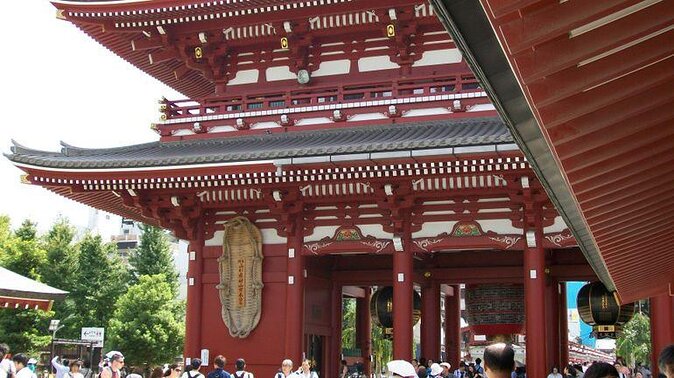
Senso-ji is one of Tokyo’s best-known temples, with history that stretches back around 1,300 years. You are not just ticking off a famous landmark. The temple area is also a cultural reset from the food frenzy.
You will see the big landmark feature at the entrance called Kaminarimon, topped by a large red lantern. That lantern is one of the fastest ways to orient yourself in Asakusa, and the area around it is where the rest of your shopping street funnels in.
This stop is free and keeps the tour balanced. It gives your legs a breather too, since you are spending time in a calmer pedestrian zone.
Stop 5: Nakamise Shopping Street (Kaminarimon) (30 minutes, free admission)
Nakamise is the main approach shopping street running toward Senso-ji, about 250 meters. It is packed with shops selling traditional souvenirs and snack items.
This is where you convert sightseeing into edible memories. Many people think of Nakamise as postcards and trinkets, but it is also practical for snacks you can take in bites while you walk.
If you like culture but do not want a museum pace, Nakamise is a good middle ground. It is close to the temple, and the whole stretch is built for browsing in a single flow.
Stop 6: Kappabashi Street (Kappabashi Dogugai) (30 minutes, free admission)
Kappabashi is one of the most practical shopping streets in Tokyo. It is known for kitchenware and tableware stores, with lots of items aimed at restaurant operators and serious home cooks.
If you like Japanese food culture, this stop makes the “food” part feel tangible. You can look at tools you would never think to buy in your home country, like specialized utensils and serving items. Even if you do not buy anything, it is fun to browse because the stores are so focused.
This one is free to visit, so any spending is optional and tied to what you want to bring home.
Stop 7: Tsukishima Monjya Street (30 minutes, ticket not included)
Monjayaki is a dish known for being hot and liquid-like, and it can look unusual at first glance. But the point of this stop is the curiosity factor. If you want a different Tokyo flavor that is not the usual sushi-and-ramen loop, Tsukishima fits.
Your entry is listed as not included, so again, your costs depend on what you do there. Because it is only 30 minutes, you should decide in advance whether you want to treat this as a food tasting stop or more of a look-around lane.
Stop 8: Yanaka Ginza Shopping Street (30 minutes, free admission)
Yanaka Ginza is a different kind of Tokyo street. It has the older Shitamachi neighborhood atmosphere, quieter and more old-town feeling compared to the market crowds and major temple zone.
If you want a breather before you end the day, this is a good choice. It is also a solid place for casual browsing, walking photos, and simple snacks.
Because it is free and short, it is easy to pair with a heavier market or temple schedule. It adds texture without eating up your full tour time.
Customizing your day: picking 3 to 4 stops that match your travel style
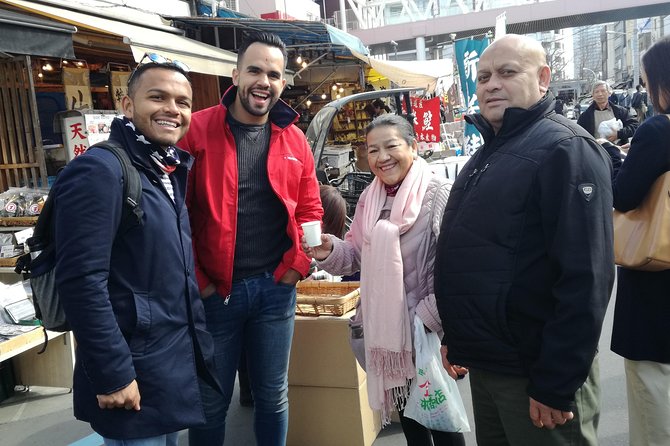
The tour lets you choose 3 to 4 sites from the list. That makes the planning less scary because you are not trying to do everything, which is also how you avoid turning the day into a blur.
Here are a few practical combos I think make sense:
- Classic seafood plus Asakusa culture: Toyosu, Tsukiji, Senso-ji, Nakamise
- Food street variety: Tsukiji, Ameyoko, Nakamise, Tsukishima Monjya Street
- Shopping-forward day: Tsukiji, Ameyoko, Kappabashi, Yanaka Ginza
- Temple and snacks focus: Tsukiji, Senso-ji, Nakamise, Yanaka Ginza
If you are undecided, think about your “must-have.” If it is temple and souvenirs, prioritize Senso-ji plus Nakamise. If it is cooking and kitchen goods, pick Kappabashi. If it is a seafood-first morning, keep Toyosu and Tsukiji together.
The guide factor: why “licensed” and English-speaking matters here
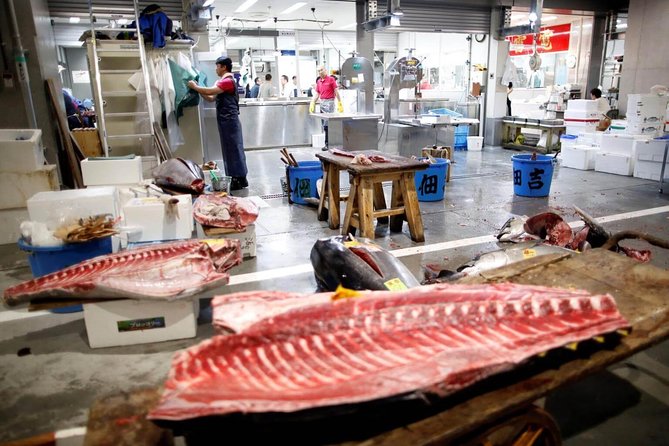
This is not just someone walking you from A to B. You are getting a licensed local English-speaking guide. That matters because Tokyo markets and shopping streets have lots of unwritten rules.
One standout detail from a guide named Taka was how seriously the tour supported learning-by-doing. In a chopstick-practice moment at Asakusa Nakamise Street, a beginner could buy multiple sets and keep practicing, and the guide helped the experience stay positive until it clicked. That kind of small support is exactly what you want on a food tour, where your biggest friction point is often confidence.
Also, the guide can steer you toward what fits the day. If you have an interest in sushi, street food, or shopping for specific items, the route can flex while staying inside the tour’s stop list.
Food and shopping pacing: how to not leave hungry or overwhelmed
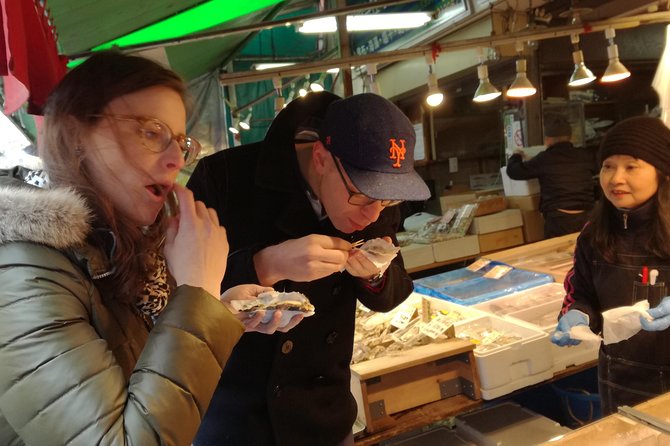
The structure is spread across seafood, temple time, and shopping lanes. That is good, because it stops you from getting stuck in one type of excitement for too long.
My practical advice: do not plan to eat a huge meal before the tour and then try to “save room.” Markets are not built for one big meal and call it a day. Instead, treat each stop like a chance to taste one or two things, then switch gears.
If you end up doing Tsukishima Monjya Street, go in mentally ready for the texture difference. If you hit Kappabashi, decide ahead what you actually want to buy, like a practical utensil versus an expensive decorative item.
For shopping, the tour time is capped. That is a blessing. You get a focused window instead of a full day turning into decision fatigue.
Who this private Tsukiji and Asakusa tour is best for
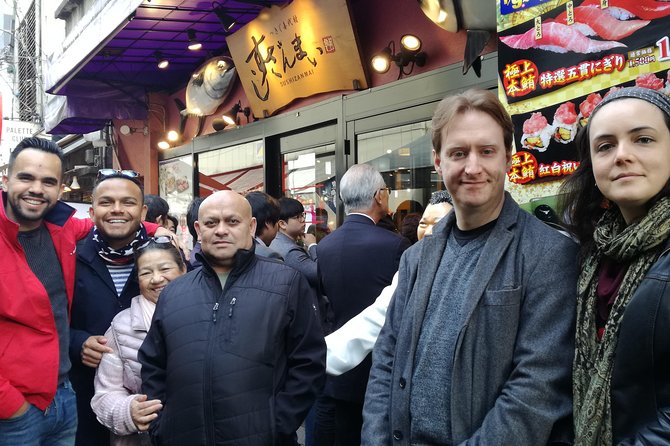
This tour is a strong match if you:
- Want a private guide and hate playing map detective in crowded areas
- Plan to do a morning market and you care about what you are seeing
- Like the mix of food plus cultural stops, not just one or the other
- Want to shop, but prefer having someone help you prioritize
It may be less ideal if you:
- Are trying to minimize walking
- Want only one or two quick bites and a few photos
- Do not want to pay anything extra for tickets where listed as not included
Should you book this tour?
Book it if you want a guided, efficient way to cover Tokyo food culture highlights in one half-day, and you like the idea of choosing your exact mix of markets, temples, and shopping streets. The licensed guide factor and the customizable 3 to 4 stop format are the main reasons this works well, especially if it is your first time in this part of Tokyo.
Skip it or rethink it if you are comfortable wandering Tsukiji and Asakusa on your own and you would rather spend the money on food at your own pace. Also, if you are the type who hates walking and standing in crowds, choose your footwear carefully, because the tour is designed as a walking day.
If you want, tell me what time of year you are going and which 3 to 4 stops you are considering. I can help you pick a route that avoids overlap and matches your food interests.
FAQ
How long is the Tokyo Tsukiji Food and Culture private tour?
The tour is about 6 hours.
How much does it cost per person?
The price is listed as $154.84 per person.
Is this a private tour?
Yes. It is a private tour/activity, with only your group participating.
How many stops can I choose?
You can customize the day with 3 to 4 sites chosen from the itinerary list.
Is pickup included?
Pickup is offered, and the tour starts with a meet up on foot within a designated area of Tokyo.
Do I pay entrance tickets during the tour?
Transportation fees and entrance fees are not included. Toyosu Market and Tsukishima Monjya Street are listed as ticket not included, while Tsukiji Fish Market and the other named streets and temple stops are listed as free admission.
Is lunch included?
No, lunch is not included.
What is included in the price?
A licensed local English-speaking guide is included, along with the customizable tour of 3 to 4 selected sites. A mobile ticket is also mentioned.
What is the cancellation policy?
You can cancel for a full refund up to 24 hours in advance of the experience start time.
Licensed Guides on the Same Ground
Market Mornings We Have Reviewed

Newest Tokyo write-ups from the Loving Japan desk






Tsukiji and Toyosu Fish Markets, side by side.
 ★ 5.0Tokyo Tsukiji Fish Market Food and Culture Walking TourFrom $993,184 reviews
 ★ 5.0Tsukiji Fish Market Food and Walking tourFrom $301,724 reviews
 ★ 4.9Tsukiji Fish Market Guided Walking TourFrom $221,397 reviews
 ★ 5.0Tokyo Sushi Making Class in Tsukiji with Professional ChefFrom $491,177 reviews
 ★ 5.0Tsukiji Fish Market Guided Tour and Sushi Making with Pro ChefFrom $104775 reviews
★ 4.7Tsukiji Fish Market Food and Culture Walking TourFrom $96757 reviews
 ★ 5.0Tsukiji Fish Market: Street Food & Culture Walking TourFrom $33669 reviews
 ★ 5.0Tsukiji Fish Market Small-Group Food Walking TourFrom $87621 reviews
Filed on these lists too