
REVIEW · JAPANESE COOKING CLASSES
Authentic SUSHI Course Cooking Class
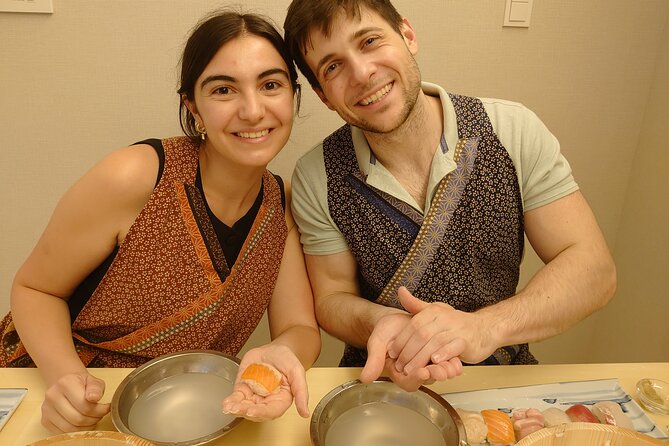
Sushi starts with rice, and you do it. This Osaka small-group sushi course lets you make a full menu, not just one roll, and then sit down to eat what you built. I especially liked learning in a maximum 14-person setup (with some classes listed even smaller), and I loved how much you do yourself, from sushi rice to sushi shaping. One possible drawback: one diner felt the end-of-class recipe was a bit light and the steps were not fully spelled out.
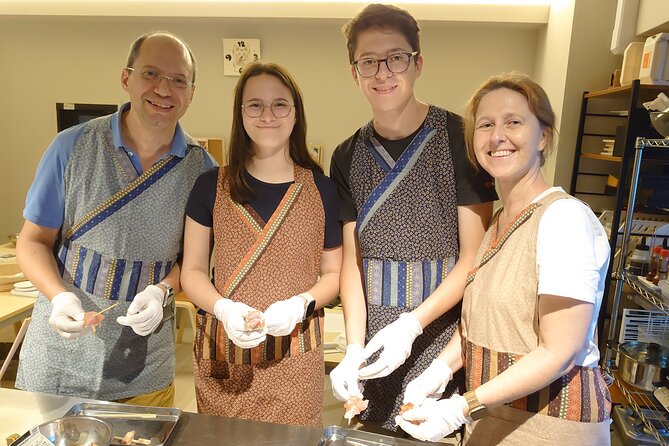
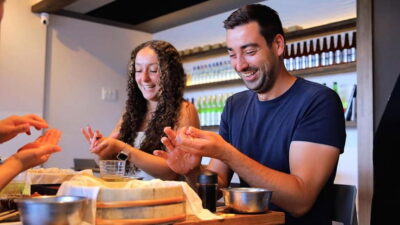
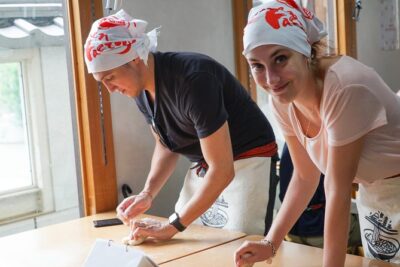
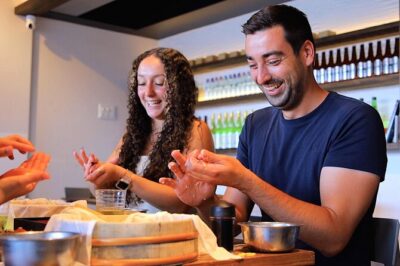
From the first minute, you are not watching from a distance. You start by wearing an apron and making sushi rice in a personal wooden tub, then you move through dashi and miso soup, plus rolled egg sushi and yakitori chicken. I also liked that the teaching includes more than technique, instructors like Fumi or Sakura (in past sessions) often explain flavor ideas like umami, which helps the food make sense.
This is a satisfying 2.5-hour class that ends back at the same meeting point in Kitahorie, Nishi Ward. You get the ingredients, chopsticks at the table, and a complimentary seasonal dessert afterward. Plan for an evening meal pace, because you will be eating your own sushi and sides when you are done.
In This Review
- Key things I’d bet on
- Why This Osaka Sushi Course Feels Like Skill, Not Just Entertainment
- Getting There: Banix Kitahorie, 5:30 pm Start, Mobile Ticket
- Your First Assignment: Sushi Rice in a Wooden Tub
- Rolled Egg Sushi: Tamagoyaki-Style With a Rectangle Pan
- Dashi and Miso Soup: The Umami Foundation
- Your Sushi Course Menu: Nigiri, Gunkan-Maki, and a Rolled Piece
- Yakitori Chicken Skewers While You Cook
- The Meal Moment: Itadakimasu, Chopsticks, and Seasonal Dessert
- Price and Value: What $99.08 Buys You in Osaka
- Who This Class Suits Best (And Who Might Skip It)
- Tips to Get the Most From Your Sushi Course
- Should You Book This Osaka Sushi Course Cooking Class?
Key things I’d bet on
- Small-group format keeps you actively working, not just standing around
- Make your own sushi rice in a wooden tub and paddle, one portion at a time
- Learn dashi then miso soup with tofu and attractively shaped vegetables
- Build a full sushi course: nigiri, gunkan-maki, plus a rolled sushi piece
- Add yakitori chicken skewers so the meal feels complete, not one-note
- Eat together at the end with seasonal dessert included
Cook it yourself instead. Other kitchens in Osaka
- Sushi Making Osaka Roll and Authentic Japanese Sushi Class
★ 5.0 · 1,220 reviews - Osaka Sushi Making Experience
★ 5.0 · 400 reviews - Osaka: Ramen and Gyoza Cooking Class in Dotonbori
★ 5.0 · 378 reviews - Osaka: Sumo Stage Show with Bento or Snack + Fight & Photo
★ 4.3 · 364 reviews
Why This Osaka Sushi Course Feels Like Skill, Not Just Entertainment
If you love sushi, you probably know the usual problem. Watching a video is easy. Repeating the steps at home is where things fall apart, especially sushi rice seasoning and shaping.
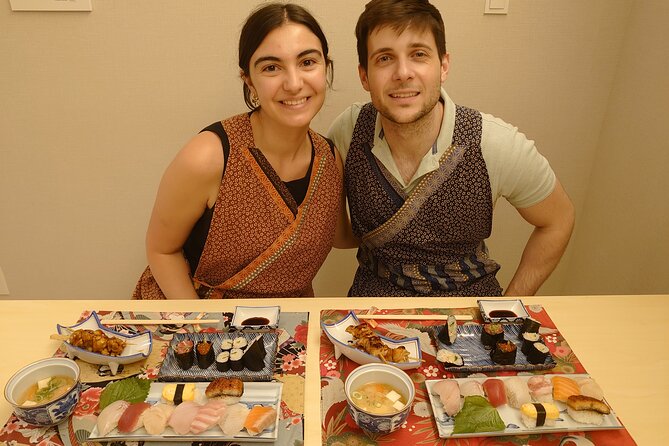
This class is built to fix that. You work through sushi rice, rolled eggs, dashi, miso soup, multiple sushi styles, and yakitori chicken, all in one sitting. That means you leave with a real mental map of how a Japanese meal comes together, not just how to copy one roll.
The small-group cap is not a marketing flourish here. With a group of around a dozen, you get enough attention to correct hand position, rice texture, and rolling technique. And because you will be eating your own work at the end, every step stays focused.
Getting There: Banix Kitahorie, 5:30 pm Start, Mobile Ticket
The meeting point is Banix北堀江 Japan, in Nishi Ward, Kitahorie, at 3-chōme62 システマギャラリー. The activity ends back at the same spot, so you do not need a second plan after dinner.
The class you are describing starts at 5:30 pm and runs about 2 hours 30 minutes. The schedule also offers a choice of a lunch or dinner class, but the provided start time is for the dinner-style session. Either way, you will want to treat this as your meal anchor for the evening.
You also get a mobile ticket, and the meeting point is noted as near public transportation. That matters in Osaka, where hopping between neighborhoods can be quick, but late-night trains are not where you want to be when your appetite is already building.
Your First Assignment: Sushi Rice in a Wooden Tub
The class begins with the part that separates good sushi from okay sushi: the rice. You will make it yourself at the start, and you will do it separately from the group using a wooden tub and paddle provided for each participant.
This is the kind of detail that sounds small until you try it. Sushi rice needs the right warmth, the right seasoning mix, and the right handling so it stays glossy, not gummy. Having your own station means you learn the rhythm of mixing and spreading, not just the theory.
I also like that this setup helps you avoid the most common tourist mistake, trying to rush rice steps while copying from someone else’s bowl. You are practicing the real sequence with your own tools.
Counters and courses we sat at around Osaka
- Osaka: Roll and Authentic Sushi Making Class in Dotonbori★ 4.9 · 239 reviews
- Osaka: Sushi Class in Dotonbori★ 4.9 · 160 reviews
- Osaka Dotonbori: Sushi Making Experience★ 4.9 · 122 reviews
- Osaka: Sushi Making in Spacious Studio (SAME-DAY OK!)★ 5.0 · 75 reviews
- Sushi and Japnese foods cooking class in Osaka★ 5.0 · 51 reviews
Rolled Egg Sushi: Tamagoyaki-Style With a Rectangle Pan
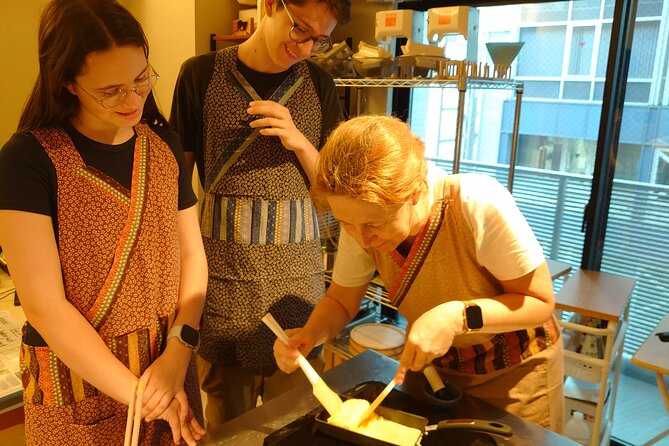
After you get comfortable with rice, the class moves to rolled eggs for egg sushi. You make the egg component using a rectangle-shaped frying pan designed to help form even layers.
That pan shape is not random. It makes tamagoyaki-style rolling more consistent, especially when you are learning and still figuring out how fast to spread and roll without tearing.
Once you finish the egg, you connect it back to sushi assembly, which is where the class becomes more than cooking. You begin to see how each piece plays a role in a bite, rice texture plus egg sweetness plus the right portioning.
Dashi and Miso Soup: The Umami Foundation
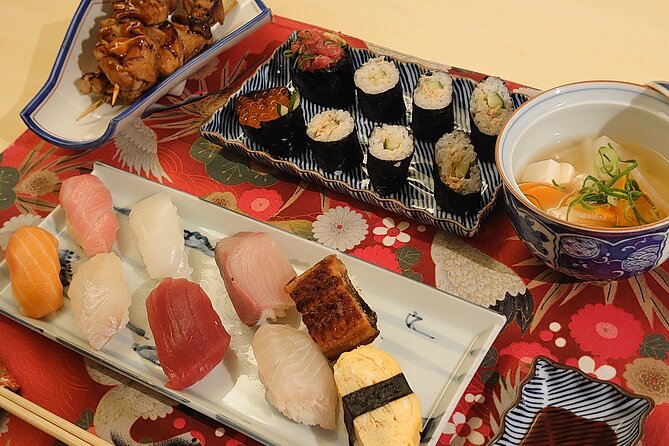
Next comes dashi, then miso soup. You will make the broth and then create miso soup using tofu and vegetables prepared in an attractive, shaped style.
Even if you think you already know miso soup, this step is usually where people feel they leveled up. Dashi is the base flavor, so if the broth balance is off, everything follows. Learning it hands-on helps you understand why restaurants can make soup taste so clean and deep at the same time.
From the teaching perspective, instructors like Fumi or Sakura have been praised for explaining flavor concepts such as umami and bonito notes. That kind of guidance matters because it turns a recipe into a repeatable flavor strategy. Instead of memorizing, you understand what to aim for.
Your Sushi Course Menu: Nigiri, Gunkan-Maki, and a Rolled Piece
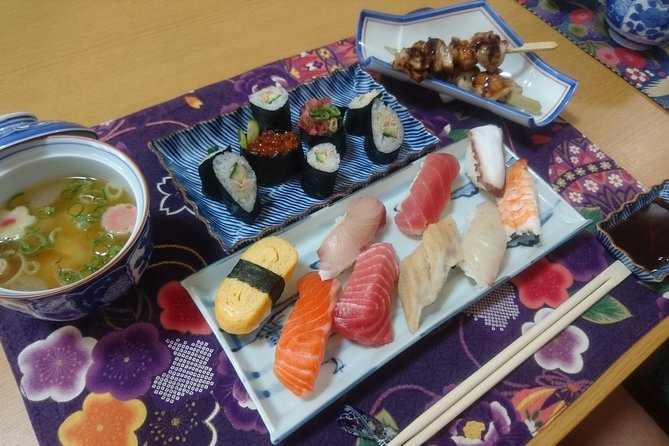
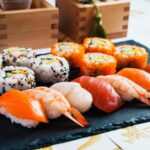
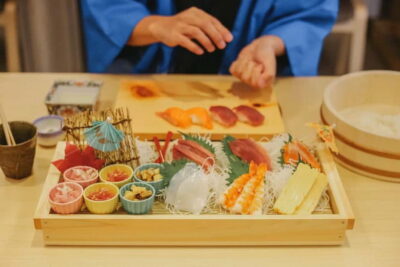
This is the big payoff portion of the class. You make three kinds of sushi, with clear quantities listed for the course experience.
You will make:
- 9 nigiri-sushi
- 2 gunkan-maki
- 1 rolled-sushi
That breakdown is useful because it forces you to practice different assembly methods. Nigiri asks for rice pressure and topping balance. Gunkan-maki asks you to manage a seaweed collar style and keep the topping intact. Rolled sushi demands patience, edge alignment, and a clean finish.
What I like about this menu choice is that it is not just variety for variety’s sake. These are classic categories that teach how sushi changes when you change structure, not just ingredients. You end up learning the logic of each form, which helps if you later want to improvise at home.
Yakitori Chicken Skewers While You Cook
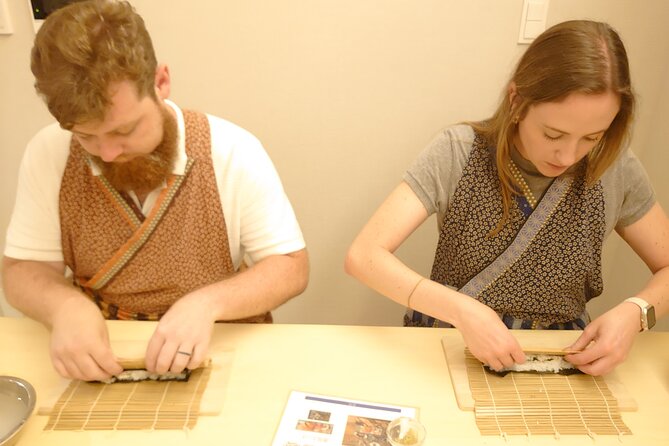
In the same class, you also skewer and make yakitori chicken. You work through the steps needed to grill skewers so the chicken comes out properly seasoned.
Yakitori is a great add-on here because it gives you savory, grilled contrast to the more delicate sushi flavors. It also teaches another core skill set, skewering and grilling timing, without turning the evening into a separate cooking class.
Some sessions in this format include instruction on marinating before skewering, and that helps explain why restaurant yakitori tastes more layered than pan-fried chicken. Either way, you are going to finish the meal feeling like you cooked a complete set, not just one course.
The Meal Moment: Itadakimasu, Chopsticks, and Seasonal Dessert
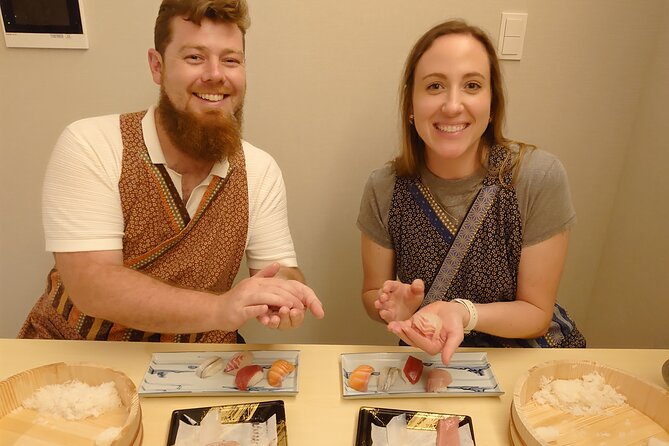
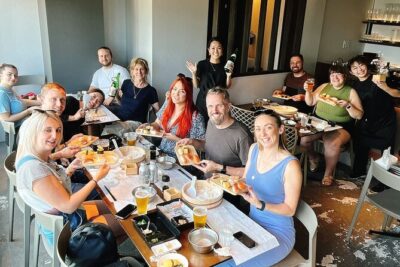
When the cooking is done, you plate everything and get ready to eat. The class includes chopsticks, and you will say itadakimasu together as you dig into the meal you made.
You are also served a complimentary seasonal dessert. That matters for value because you are not just paying for training, you are paying for a full dinner that uses your own work.
One small but real benefit: because the meal happens right after cooking, you remember what you did. That makes it easier to replicate later, especially rice handling, rolling pressure, and how the miso soup flavor lands with the rest of the menu.
Price and Value: What $99.08 Buys You in Osaka
At $99.08 per person for about 2 hours 30 minutes, you are paying for three things at once: instruction, ingredients, and a meal.
Most cooking classes charge for the lesson. This one also includes the ingredients for the items you make, plus the dessert. If you tried to buy everything at a market and then paid for cooking space and chef guidance, your cost would almost certainly rise quickly.
You also get the structure that makes sushi learning easier. With one station per person for rice, plus step-by-step guidance through multiple dishes, you are not stuck guessing. That is where the money goes.
That said, there is one practical consideration from a participant who felt the recipe pack at the end was a little light and steps were not fully listed. If you rely on written instructions later, ask what format the recipes come in and how detailed they are.
Who This Class Suits Best (And Who Might Skip It)
This class is a strong match if you want:
- a hands-on sushi foundation you can repeat at home
- a small-group evening where you are actively making food
- a full menu, sushi plus miso soup plus yakitori, so the meal feels satisfying
It is also a good solo choice. One past participant noted they went alone and still had a great experience, with the instructor making it comfortable and engaging.
Families can work well too, because the class format is hands-on and shared at the end. The only important rule is that children must be accompanied by an adult.
I would suggest you might skip it only if you are already a confident sushi maker and you want a deeper advanced course. With this menu, the focus is building fundamentals and giving you a successful, complete meal.
Tips to Get the Most From Your Sushi Course
You will learn faster if you treat the class like practice, not like dinner out. Here are a few simple ways to make it click.
- Keep your hands relaxed during rice work, and listen for cues on texture and warmth.
- When rolling sushi or shaping nigiri, slow down for the first few pieces, speed comes later.
- Pay attention to the flavor logic in dashi and miso soup, it will help everything else taste more balanced.
- If you have dietary needs, advise the team at booking, so they can plan appropriately.
Also, since this ends back at the meeting point, I like planning no other big commitments immediately afterward. You will be full, and you will want time to digest and reflect on what you cooked.
Should You Book This Osaka Sushi Course Cooking Class?
Yes, if you want a high-activity night with real sushi practice, clear dish variety, and the comfort of a small group. The most praised parts line up with what you should be looking for: attentive instruction, patient coaching, and learning how to make miso soup and multiple sushi styles, then eating it all right away.
Book it if your goal is skills you can repeat at home, not just a photo-filled activity. The format works especially well for couples, families, and solo diners who want a structured, friendly cooking evening in Osaka.
If you are very recipe-dependent for future cooking, consider asking about how detailed the written instructions are. And if you are only interested in one sushi item, the broader menu may feel like extra, but it is also the point, you leave with a full course understanding.
Counters and Courses


Kitchens You Can Book Into
Newest Osaka write-ups from the Loving Japan desk

Japanese Cooking Classes, side by side.
 ★ 5.0Sushi Making Tokyo Roll and Authentic Japanese Sushi ClassFrom $593,971 reviews
 ★ 4.9Roll and Authentic Sushi Making Class in AsakusaFrom $581,957 reviews
 ★ 5.0Ramen Cooking Class at Ramen Factory in KyotoFrom $1311,937 reviews
 ★ 4.9Sushi Making Class in a Happi Coat near a Famous SpotFrom $421,377 reviews
 ★ 5.0Sushi Making Osaka Roll and Authentic Japanese Sushi ClassFrom $311,220 reviews
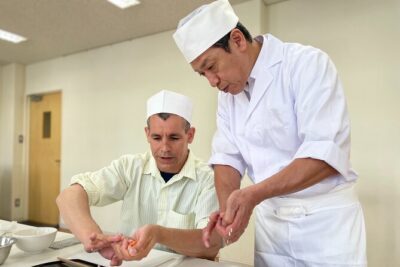 ★ 5.0Tokyo Sushi Making Class in Tsukiji with Professional ChefFrom $491,177 reviews
 ★ 5.0Ramen & Gyoza Cooking Class in Tokyo with Local Supermarket VisitFrom $122823 reviews
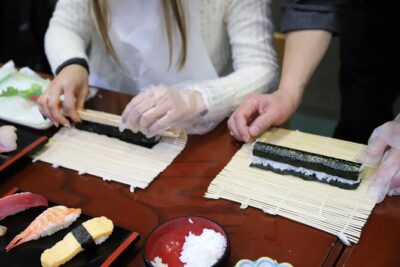 ★ 5.0Tsukiji Fish Market Guided Tour and Sushi Making with Pro ChefFrom $104775 reviews
Filed on these lists too