
REVIEW · KAMAKURA, THE GREAT BUDDHA AND ENOSHIMA
Nara: Great Buddha, Kasuga Shrine & Deer Park Tour
Deer, lanterns, and a giant Buddha in one walk. I love the easy, guided chance to feed Nara’s sacred deer, and I love the hushed walk through Kasuga Taisha’s lantern-lined grounds. The only real downside is the route can mean a good amount of walking and steps, so plan for a solid pace.
This small-group style tour, run by DeepExperience, Inc., layers Shinto and Buddhist sights into one efficient afternoon. You’ll get a professional English-speaking guide (also Japanese), included admission for Todai-ji, plus the special inner area at Kasuga Taisha, and deer crackers to feed the park deer.
In This Review
- Key points worth knowing
- A 3-hour Nara plan that actually fits
- Meeting at Himuro Shrine, then straight into Nara Park
- Nara Park deer feeding: the part kids and adults remember
- Kasuga Taisha: the lantern forest that slows your mind
- Todai-ji and the Great Buddha Hall, UNESCO scale in real life
- How the guide changes everything, from Teppei to Eri
- Walking pace and what to plan for
- Value check: $77 for guide time plus real admissions
- Who should book this Nara Park, Kasuga Taisha, Todai-ji tour
- Should you book? My practical call
- FAQ
- How long is the Nara: Great Buddha, Kasuga Shrine & Deer Park Tour?
- How much does the tour cost?
- Where do I meet the guide?
- What stops are included on the tour?
- What’s included in the price?
- What is not included?
- Are there language options for the guide?
- Is cancellation free?
- Is pay later available?
Key points worth knowing
- Nara Park deer feeding with shika senbei makes the famous scenery interactive, not just photo stops
- Kasuga Taisha lantern paths feel calmer than most temple areas because of the preserved forest setting
- Todai-ji’s Great Buddha Hall (Daibutsuden) is UNESCO scale, with a construction story your guide can explain in plain terms
- Admission fees are included for Todai-ji and the Kasuga Taisha inner shrine area, so you can focus on the visit
- Guides like Teppei, Takashi, Eri, and Yayoi are repeatedly praised for patience, clear answering, and helpful extras
A half day in Nara goes several ways
- World Heritage Kyoto & Nara Uji Authentic Matcha Experience
★ 5.0 · 1,573 reviews - Nara Half Day Trip Walking Tour (Private Option Available)
★ 5.0 · 937 reviews - Nara Early Morning Tour (Kyoto or Osaka Departure Available)
★ 5.0 · 676 reviews - Osaka: Nara and Uji Day Trip with Deer Park and Hot Spring
★ 4.4 · 302 reviews
A 3-hour Nara plan that actually fits
Nara is one of those cities where you can easily burn a half day just figuring out directions and timing. This tour is built to keep you moving through the core highlights in about 3 hours, without turning it into a checklist sprint.
I like the structure because each stop supports the next one. Deer in Nara Park connect to Shinto beliefs tied to Kasuga Taisha, Kasuga Taisha explains the lantern worship tradition, and then Todai-ji shows the major Buddhist side of Nara’s spiritual life. Even if you’re not a “temple person,” it helps you understand why Nara is special, not just what to photograph.
One more value point: you’re not paying extra for the main entries. Todai-ji admission and Kasuga Taisha special inner shrine admission are included, so the $77 price feels more like “guide + access” than “guide + ticket headache.”
Meeting at Himuro Shrine, then straight into Nara Park
Your tour starts at 氷室神社 (Himuro Shrine), specifically in front of a Torii gate. The guide holds a yellow sign with the DeepExperience logo, so you can spot them without guesswork.
This matters more than it sounds. Nara’s big sights are spread out enough that a clean meeting point reduces stress, especially if you’re arriving by train and want to get right into the walking.
Also, the tour runs in small groups or private formats. That usually means your guide can answer questions without rushing you, which is a big deal at shrines and temples where people naturally wonder about etiquette, rituals, and what you’re actually looking at.
Nara Park deer feeding: the part kids and adults remember
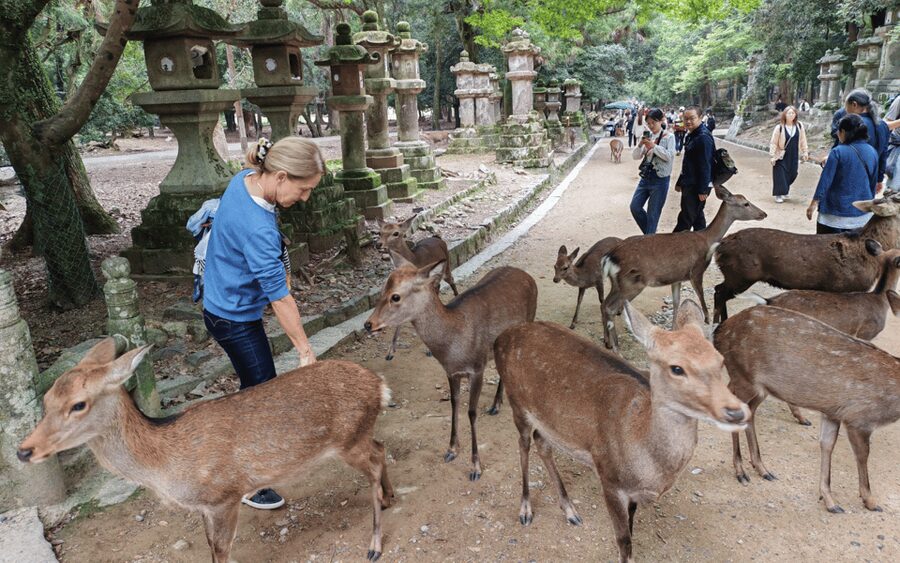
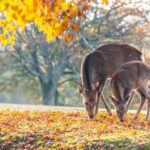
The first real “wow” moment is Nara Park. This is where you meet the sacred deer that roam freely through the grounds, and where the tour makes the experience hands-on.
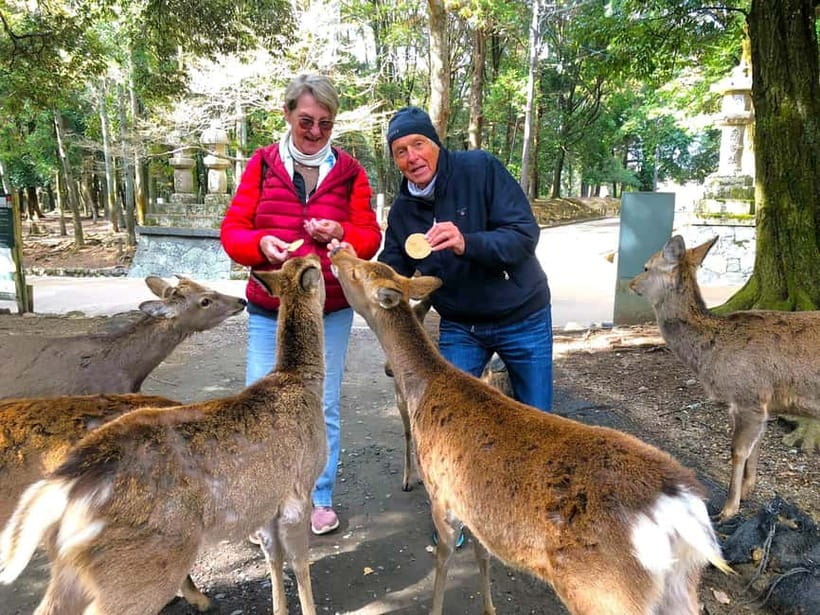
You’ll be given deer crackers (shika senbei) and have the chance to feed the deer while your guide explains why they’re treated as sacred messengers in Shinto belief, especially in connection with Kasuga Taisha Shrine. That context turns the moment from a cute animal encounter into something you can actually place in Nara’s religious world.
Two practical things to keep in mind. First, you should expect the area to be active and photogenic, which means you’ll want to keep your focus on the guide’s cues so you don’t get tangled in the crowd. Second, you’ll likely do some standing and moving around the park grounds, so comfortable shoes matter.
From what I’ve seen praised again and again, guides also tend to help with the “how to enjoy it” part, not just the facts. Some guides are described as gentle and patient with deer, and there are accounts of guides providing extra treats such as cookies for the deer, which makes the whole moment feel cared for instead of rushed.
- Kyoto/Osaka: Kinkakuji, Bamboo Forest, and Nara Deer Park★ 4.4 · 265 reviews
- Nara 6hr Private Tour with Government-Licensed Guide★ 5.0 · 219 reviews
- E-Bike Nara Highlights – Todaiji, Knives, Deer, Shrine★ 4.8 · 186 reviews
- Nara Early Bird Tour (Kyoto Departure Option Available)★ 4.9 · 142 reviews
- Nara:Authentic Tea Ceremony(Max 5 ppl) -Master Matcha Making★ 5.0 · 119 reviews
Kasuga Taisha: the lantern forest that slows your mind
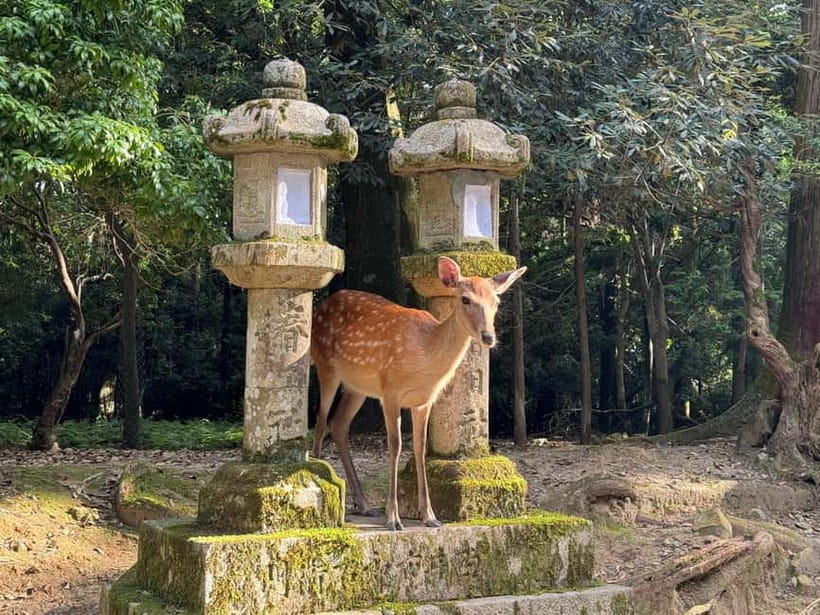
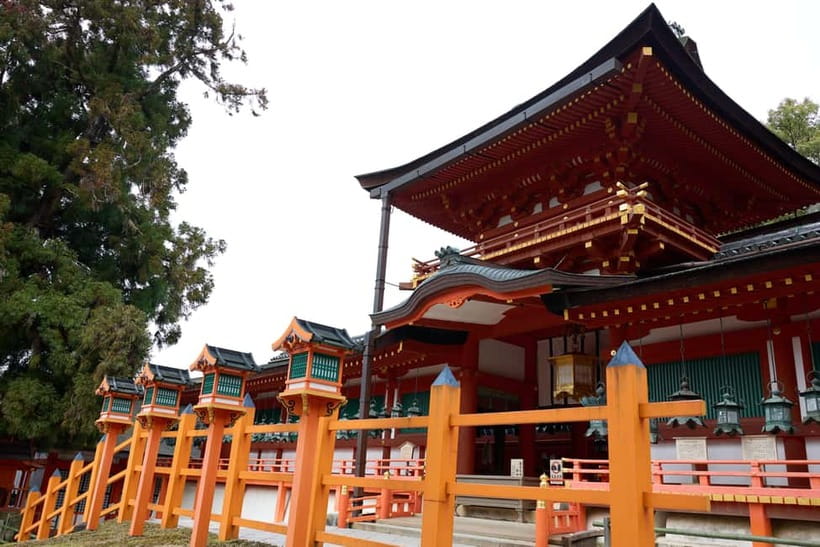
Kasuga Taisha is one of the most important Shinto shrines in Nara, and it’s a very specific kind of visit. The shrine is surrounded by a primeval forest that’s been preserved for over a thousand years, so the air feels different from more urban shrine settings.
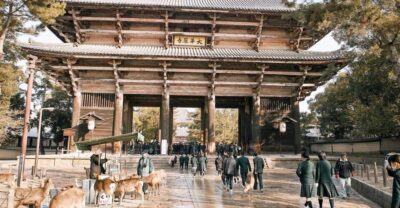
You’ll explore the grounds with a guide who explains Shinto beliefs and practical purification ideas, plus architectural elements that are distinct to Japan’s native religion. The highlight here is the famous lantern tradition. Kasuga Taisha is known for thousands of bronze and stone lanterns that were donated across generations, creating a path-like visual rhythm that pulls you deeper into the site.
It helps that Kasuga Taisha isn’t presented as “just lanterns.” The tour connects the shrine’s long association with the Fujiwara clan and its founding in 768 to why this place became a center of ritual worship. It’s also where many first-time visitors start to grasp how Shinto and Buddhism can exist side by side in Nara.
A big value detail: the tour includes admission to Kasuga Taisha’s special inner shrine area. That means you’re not stuck on the outer edges. If you care about seeing more than the most obvious sights, this is the kind of inclusion that makes the price feel fair.
Todai-ji and the Great Buddha Hall, UNESCO scale in real life
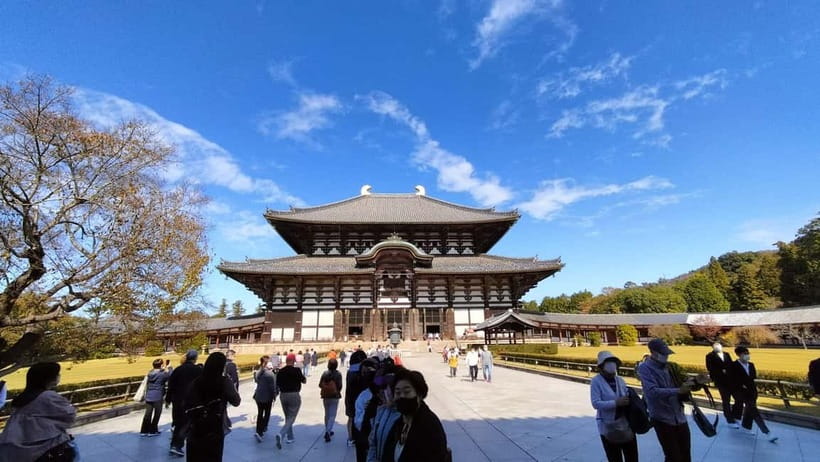
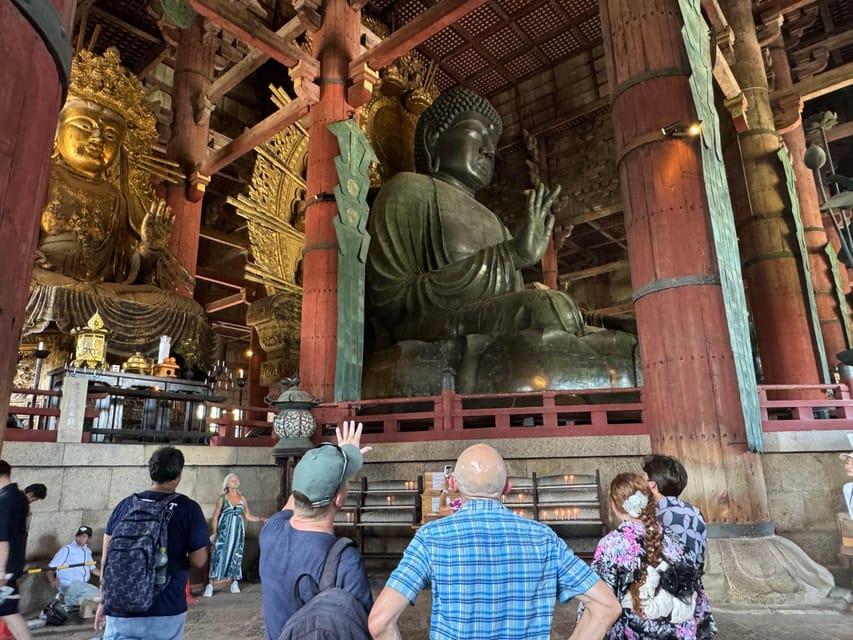
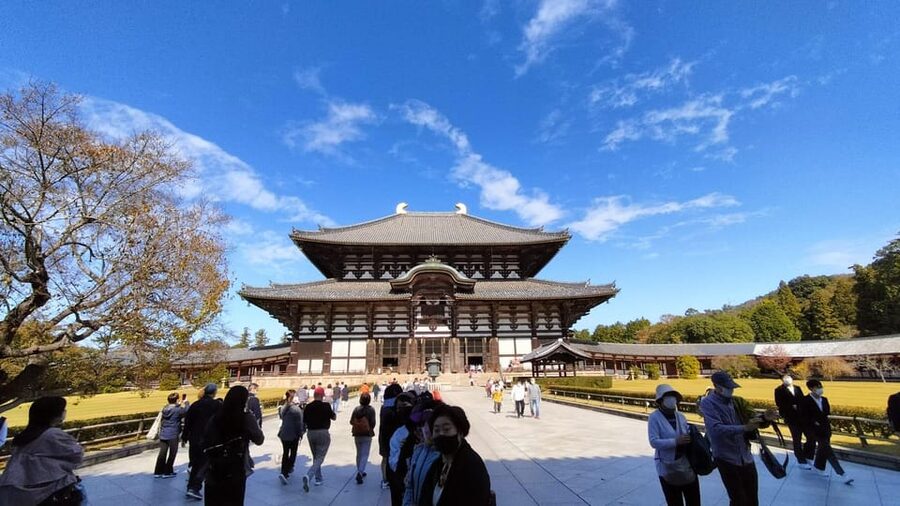
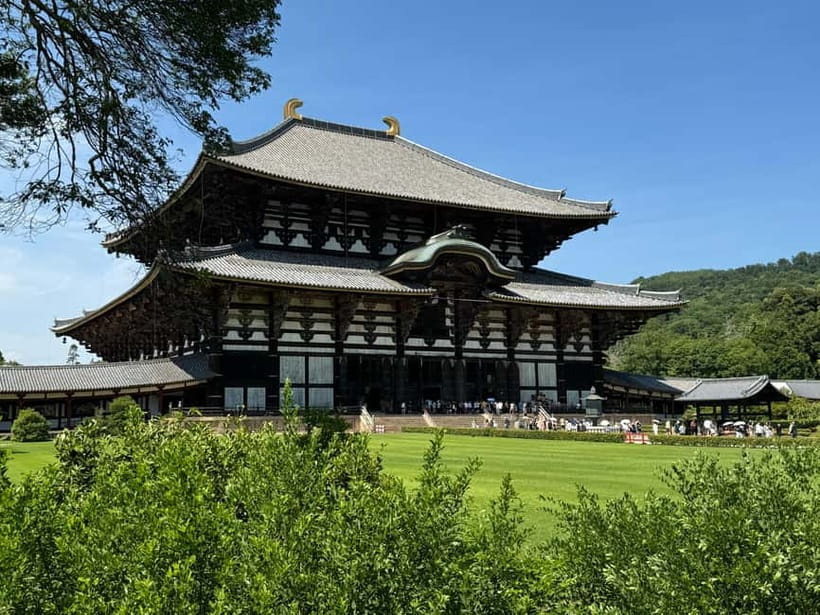
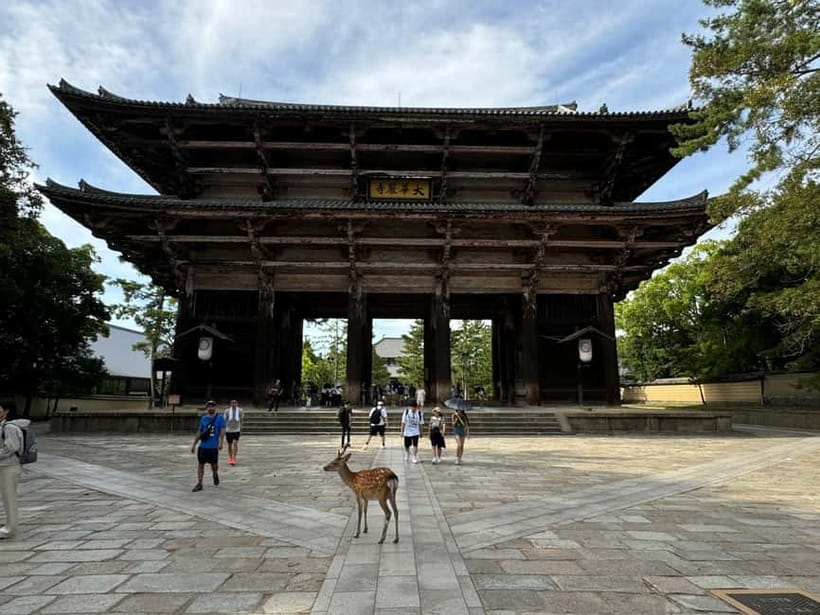
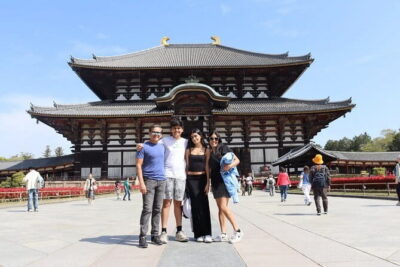
Then you reach Todai-ji, one of Japan’s most significant Buddhist monuments and a UNESCO World Heritage site. This stop is all about scale and stillness.
Your guide will take you into the vast Daibutsuden, the Great Buddha Hall, among the largest wooden structures in the world. Inside, you stand before the colossal bronze Great Buddha (Daibutsu), which was cast in the 8th century. Your guide can explain the statue as Vairocana Buddha and also connect it to the political ambition and spiritual vision behind early Japan.
What makes this part work is that the Great Buddha isn’t treated like a random statue you stare at and then move on from. The tour includes the story of how much effort it took to build such a monumental hall and statue. That turns your first glance into a deeper understanding of what the builders were trying to do, and why the hall feels so commanding even when you’re not “feeling spiritual.”
The pacing is important too. It’s guided, so you’re not wandering around trying to figure out where the “best viewpoint” is. You arrive, you get context, and you’re given enough time to actually look.
Also, Todai-ji admission is included, so you avoid the frustrating moment where you have to stop your momentum to handle tickets.
How the guide changes everything, from Teppei to Eri
The sights are major. What makes the experience consistently praised is the human factor: the guides are described as kind, patient, and deeply engaged, and they answer questions without making you feel like you’re slowing things down.
Names that pop up in the guide credits include Teppei, Takashi, Eri, Yayoi, Nobu, Nobu’s warm helpfulness, and Hana. Even when the exact personality differs, the pattern is the same: your guide explains what you’re seeing and helps you connect it to everyday Japanese culture.
That’s especially useful at Kasuga Taisha and Todai-ji, where visitors can sometimes feel like they’re looking at beautiful objects with no “translation layer.” A good guide bridges that gap. For example, you’ll hear about Shinto purification practices, Shinto lantern worship traditions, and how Nara’s role as Japan’s first permanent capital in the 8th century shaped the growth of these religious sites.
If you’re the type who likes to ask “why” questions, this format supports it. People in past bookings have specifically mentioned that guides happily took time for conversation and questions about lifestyle and culture, not just dates and names.
And some guides even add small practical touches. In hot conditions, for example, some guests describe receiving neck coolers. Others mention being helped with food recommendations or walking to the train station afterward, and in one case, assistance purchasing an express train to Kyoto. You should not assume all extras happen every time, but it’s a good sign that the guides know how to be helpful beyond script.
Walking pace and what to plan for
This is a highlights tour, so expect movement. There are repeated comments that it involves lots of walking and steps, which is totally normal for Nara’s shrine and temple terrain. If you’re sensitive to stairs or long distances, wear supportive shoes and plan for a steady pace.
The good news is that the tour is tight and structured. You’ll cover Nara Park, Kasuga Taisha, and Todai-ji within the set time, and you won’t lose half an afternoon in transit between sites.
Another practical consideration is meeting and ending points. You start at Himuro Shrine’s Torii, and you’re dropped off at 二之鳥居 (second Torii) near 春日大社二之鳥居 (Kasuga Taisha’s second Torii area). That can be convenient if you want to continue exploring around the shrine grounds, but it’s something to keep in mind if you’re trying to catch a specific onward ride immediately after.
Finally, remember what’s included and what isn’t. Transportation to and from the meeting point is not included, and you’ll want to budget for your own food or drinks during the tour window if needed.
Value check: $77 for guide time plus real admissions
At $77 per person, this tour costs more than a DIY day, but it’s also not a “pay for nothing” deal. You’re paying for three things that add up quickly in Nara:
- a professional guide (with English and Japanese language support)
- included entry for Todai-ji
- included Kasuga Taisha special inner shrine admission
Then there’s the deer feeding component. The tour supplies deer crackers, which makes the deer encounter smooth and prevents the common problem of arriving unsure how the feeding works.
For first-time visitors with limited time, this is often what you want. You get a coherent route, not just separate landmarks. And you get explanations that help you recognize what you’re looking at, instead of leaving Nara impressed but confused.
If you already know the Nara basics and prefer total freedom, a self-guided visit might work. But if you want your time to feel “maxed out” without sprinting, the guided structure is the point.
Who should book this Nara Park, Kasuga Taisha, Todai-ji tour
Book this tour if you:
- want a short, focused Nara day that still covers the main spiritual landmarks
- enjoy learning the “why” behind shrines and temples, not just the “where”
- like animal moments that are explained in cultural context, not just a photo prop
- appreciate a guide who answers questions and keeps the mood relaxed and patient
It’s also a strong fit if you travel with someone who might not want to read guidebooks for hours. The guide does the heavy lifting, and you just follow the story from park to shrine to Great Buddha.
If you’re sensitive to crowds, or you dislike the idea of free-roaming deer near people, you might find Nara Park less comfortable. The tour does include deer crackers for feeding, so the deer element is part of the experience, not optional.
Should you book? My practical call
Yes, I’d book it if you want a high-impact Nara day without logistical friction. The best reasons are the included admissions, the guided context that links Shinto and Buddhism, and the memorable deer feeding moment.
I’d skip it only if your priority is total freedom, or if you know you struggle with stair-heavy walking. Otherwise, this is the kind of 3-hour tour that helps you leave Nara feeling like you understood something, not just saw something.
And if you can, aim to go with the attitude of: ask questions, look slowly at the lanterns and the hall, and let the guide connect the dots. That’s when the tour turns from sightseeing into real comprehension.
FAQ
How long is the Nara: Great Buddha, Kasuga Shrine & Deer Park Tour?
The tour lasts 3 hours.
How much does the tour cost?
The price is $77 per person.
Where do I meet the guide?
Meet in front of the Torii gate of Himuro Shrine. The guide will be holding a yellow sign with the DeepExperience logo.
What stops are included on the tour?
You visit Nara Park, Kasuga Taisha Shrine, and Todai-ji Temple.
What’s included in the price?
A professional English-speaking guide, guided tours of Nara Park, Kasuga Taisha, and Todai-ji, Todai-ji admission fee, Kasuga Taisha special inner shrine admission, and deer crackers (shika senbei) for feeding.
What is not included?
Transportation to and from the meeting point, additional food or drinks, and personal expenses.
Are there language options for the guide?
The tour is available with English and Japanese.
Is cancellation free?
Yes. You can cancel up to 24 hours in advance for a full refund.
Is pay later available?
Yes. There is a reserve now and pay later option.
Half a Day in Nara
Newest Nara write-ups from the Loving Japan desk


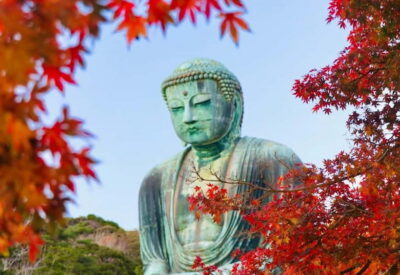
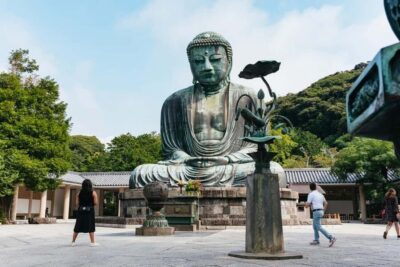
Kamakura, the Great Buddha and Enoshima, side by side.
 ★ 4.5Kamakura & Enoshima Day Trip including Temple TicketsFrom $581,375 reviews
 ★ 4.5Mt. Fuji, Kamakura, Big Buddha, & Lake Ashi Day TripFrom $49867 reviews
 ★ 4.5From Tokyo: Kamakura & Enoshima 1-Day Bus TourFrom $66189 reviews
 ★ 5.0Kamakura Historical Walking Tour with the Great BuddhaFrom $98129 reviews
 ★ 5.0Kamakura Private Tour: Temples, Nature, and the Great BuddhaFrom $98121 reviews
 ★ 5.0Kamakura Walking Tour – The City of ShogunFrom $35100 reviews
 ★ 4.9Sea of Mount Fuji, Hakone Ropeway, Ōwakudani, EnoshimaFrom $5084 reviews
 ★ 5.0Kamakura 8 hr Private Walking Tour with Licensed Guide from TokyoFrom $20180 reviews
Filed on these lists too