
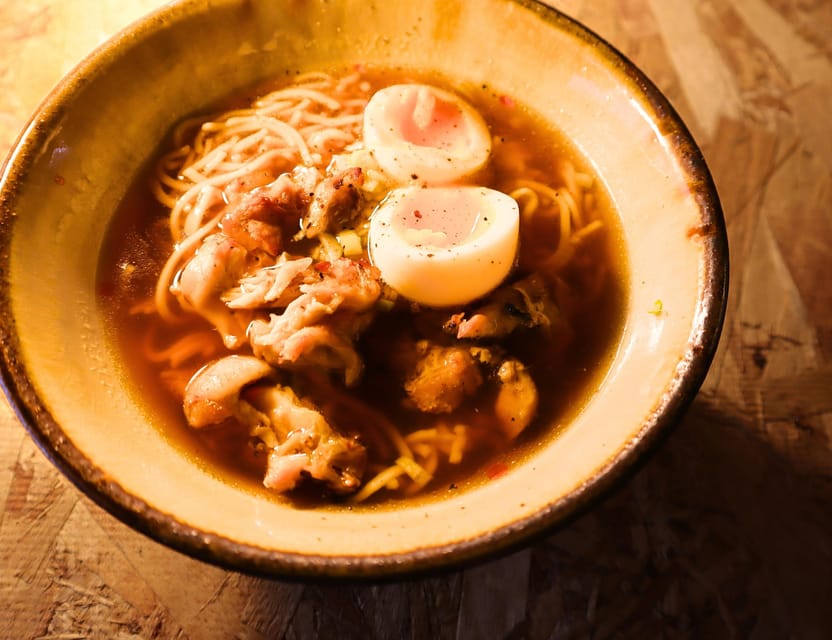
REVIEW · JAPANESE COOKING CLASSES
Osaka: Gluten-Free Ramen and Gyoza Cooking Class
Four people, one home kitchen, and noodles. This Osaka class is built around a simple idea: you learn gluten-free ramen noodles and gyoza wrappers from scratch, then eat what you make. It’s hands-on, English instruction is offered, and the small group size (up to 4) keeps things calm and personal.
I especially like two parts: the noodle-making process, where you aim for that chewy texture without wheat, and the gyoza folding plus pan-fry technique that targets crisp, golden dumplings. One consideration is that this is truly a cooking class, so you’ll spend most of the 3 hours at your station, not just watching from the sidelines.
In This Review
- Key things I’d circle before you go
- A Small-Group Osaka Home Kitchen for Rice-Flour Ramen and Gyoza
- Finding 4-19 Nukata-cho, and What to Wear
- Making Gluten-Free Ramen Noodles From Rice Flour
- Two Broths, One Classic: Soy Sauce Ramen and Tomato Ramen
- Rice-Flour Gyoza Wrappers, Folding, and Crisp-Center Target
- Sake Pairing: Junmai, Junmai Ginjo, and a Warm Pour
- Your Hands-On Meal, Recipes, and Skills for Recreating at Home
- Price and Value: Is $103 Worth It for a 3-Hour Class?
- Should You Book This Gluten-Free Ramen and Gyoza Class?
- FAQ
- How long is the Osaka gluten-free ramen and gyoza cooking class?
- How many people are in the group?
- What language is the instruction?
- What will I make during the class?
- Is the meal included?
- Where do I meet the instructor?
- What should I bring, and do I need cooking experience?
Key things I’d circle before you go
- Rice-flour ramen noodles from scratch, taught step by step for a chewy gluten-free bite
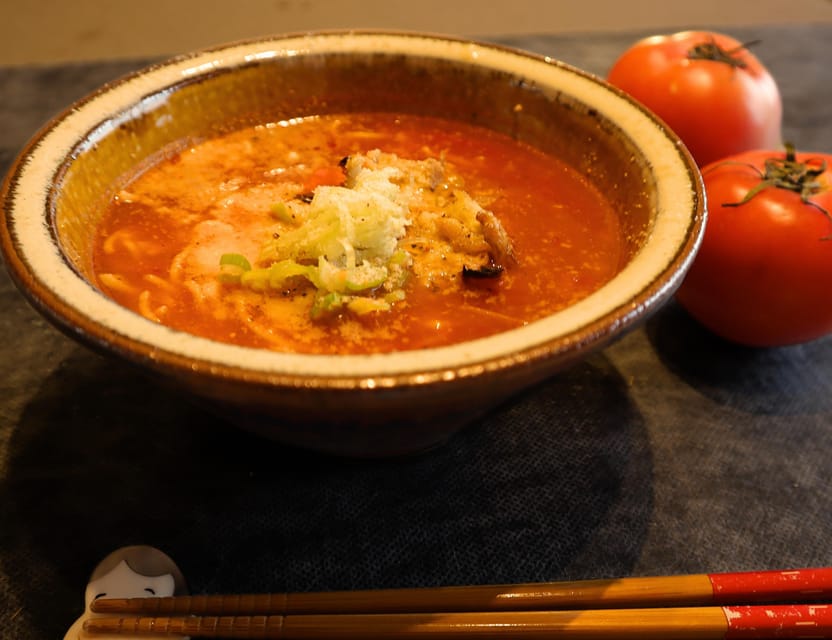
- Soy sauce ramen plus tomato ramen, including how the broth flavors come together
- Gluten-free gyoza wrappers made from rice flour, not store-bought
- Gyoza folding practice for crispy results, with guidance along the way
- Optional sake pairing with three 45 ml servings, including Junmai Ginjo and a warm Junmai
- Small group of 4, with Yuki as the sole instructor for close attention
Cook it yourself instead. Other kitchens in Osaka
- Sushi Making Osaka Roll and Authentic Japanese Sushi Class
★ 5.0 · 1,220 reviews - Osaka Sushi Making Experience
★ 5.0 · 400 reviews - Osaka: Ramen and Gyoza Cooking Class in Dotonbori
★ 5.0 · 378 reviews - Osaka: Sumo Stage Show with Bento or Snack + Fight & Photo
★ 4.3 · 364 reviews
A Small-Group Osaka Home Kitchen for Rice-Flour Ramen and Gyoza
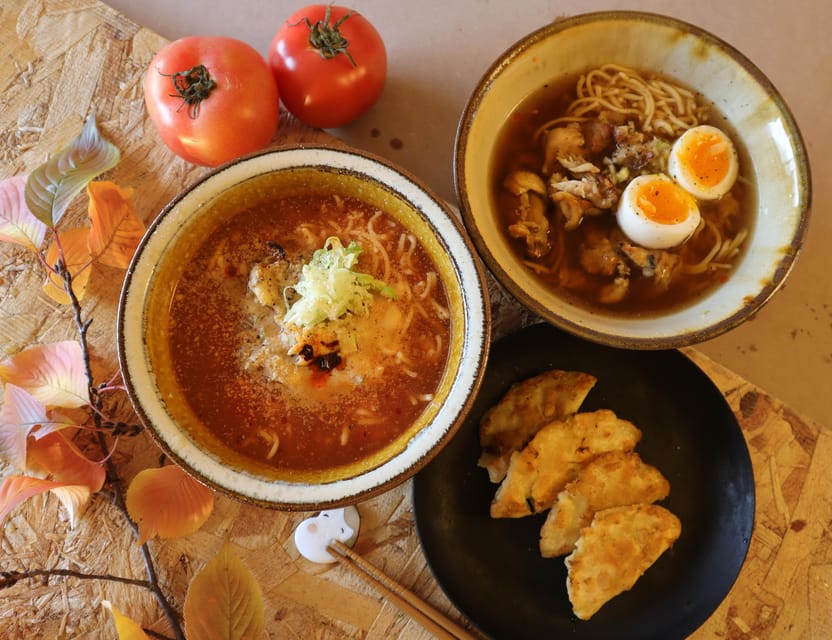
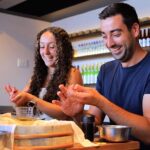
If you want Osaka in a hurry, this isn’t that kind of activity. You’re stepping into a cozy Japanese-style home, not a busy restaurant kitchen. The payoff is control. You get time to do the work yourself: making dough, shaping dumplings, cooking on the stove, and then eating together in the dining area.
The biggest reason this class feels special is the scale. With a group limited to 4 participants, Yuki can slow down when something doesn’t click. That matters with gluten-free Japanese cooking, because rice flour behaves differently than wheat. You’re not just swapping ingredients, you’re learning how texture and handling change.
Also, you’re not only cooking one dish. You build a full meal arc. Ramen noodles first, then broth variations, then gyoza wrappers and filling, and finally the pan-fry finish. That flow is practical. By the end, you understand not only what to make, but why each piece needs different care.
Finding 4-19 Nukata-cho, and What to Wear
The meeting point is 4-19 Nukata-cho, Osaka, a short 5-minute walk from Nukata Station. The area is quiet, residential, and the venue is marked with a welcoming sign at the entrance. After booking, you’ll receive detailed directions so you can find it comfortably.
This location detail isn’t minor. Cooking classes can feel stressful when you’re lost and rushing. Here, you’re given clear guidance after you book, and the meeting point is easy to reach on foot from the station. If you’re the type who likes to arrive early, do it. A few extra minutes means you can settle in, wash up if needed, and get your hands ready.
For what to wear, the rule is simple: bring comfortable clothes. You’ll be active at your work station. Also, come hungry for knowledge and food. This is the kind of class where you learn better when you’re already thinking about tasting what you’re making.
Making Gluten-Free Ramen Noodles From Rice Flour
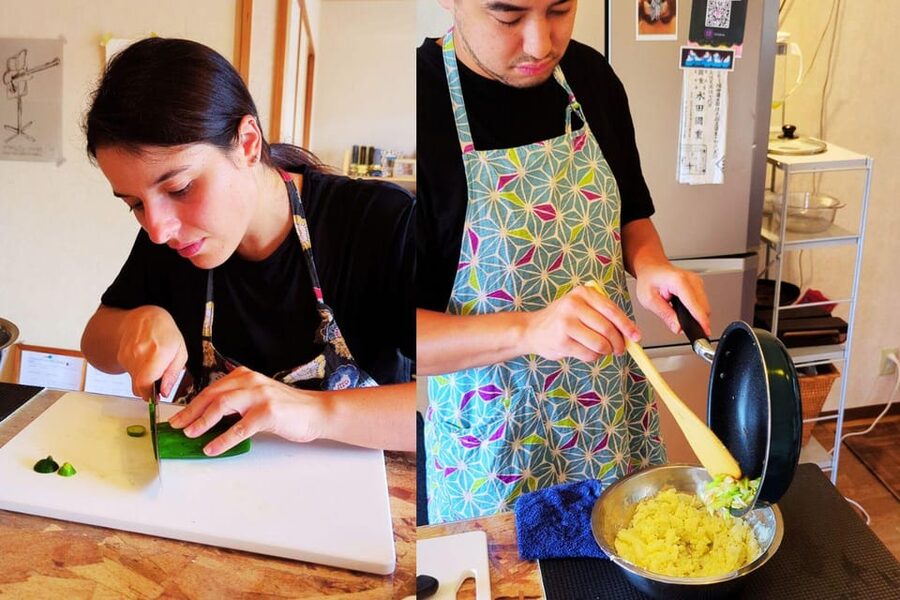
The ramen part starts with rice flour, and that’s your first real lesson. Traditional ramen noodles typically rely on wheat, and wheat gives elasticity. Gluten-free noodles do not behave the same way, so you’re taught techniques aimed at achieving a chewy texture anyway.
In a hands-on setting, you learn more than ingredients. You learn feel. The class walks you through noodle-making step by step, so even if you’re new to cooking, you’re not stuck guessing. You’ll also get tips on Japanese cooking techniques and on how these recipes were developed specifically for gluten-free needs.
What I like about this approach is how it teaches you to think in outcomes, not rules. Instead of memorizing a method you can’t judge, you’re working toward texture you can see and taste. That’s how you can actually recreate it later.
And yes, the goal isn’t just to make something edible. You’re aiming for noodles that hold up to broth. That’s why learning the noodle texture early is so valuable. If the noodles aren’t right, everything after it tastes off.
A bowl somewhere else in Osaka
- Osaka: Five Must-See Highlights Walking Tour & Ramen Lunch★ 4.7 · 411 reviews
- Ramen and Gyoza Cooking Class in Osaka★ 5.0 · 202 reviews
- Walking Tour of Osaka’s 5 Must-See Sights, with Ramen for Lunch★ 5.0 · 158 reviews
- Cooking Ramen&Gyoza/KatsuCurry/Bento/Okonomiyaki+Store Tour@Osaka★ 5.0 · 138 reviews
- Three Types of Ramen Cooking Class in Osaka★ 5.0 · 119 reviews
Two Broths, One Classic: Soy Sauce Ramen and Tomato Ramen
Once your noodles are underway, the class shifts to broth flavor, and this is where Japanese technique meets personal preference. First up is soy sauce ramen, a classic direction that grounds the meal in familiar umami. You learn how to make a rich, savory soy-based broth to pair with your handmade noodles.
Then comes a modern twist: tomato ramen. The class prepares a tangy tomato variation that’s still rare in Japan. The key here is balance. Tomato introduces acidity and a different depth, so the broth process teaches you how to keep it tasty without fighting the noodles.
Why this pairing of flavors works for you: it shows range. You learn a traditional baseline (soy sauce) and then you get to compare it directly to a creative variation (tomato). That comparison is useful when you take the recipes home and start adjusting for your own kitchen pantry.
Also, since you’ll be eating the results immediately, you’ll understand what each broth choice changes. It’s not just theoretical. You’ll taste how the soy broth supports a wheat-style richness feel, while tomato brings brightness and a lighter finish.
Rice-Flour Gyoza Wrappers, Folding, and Crisp-Center Target
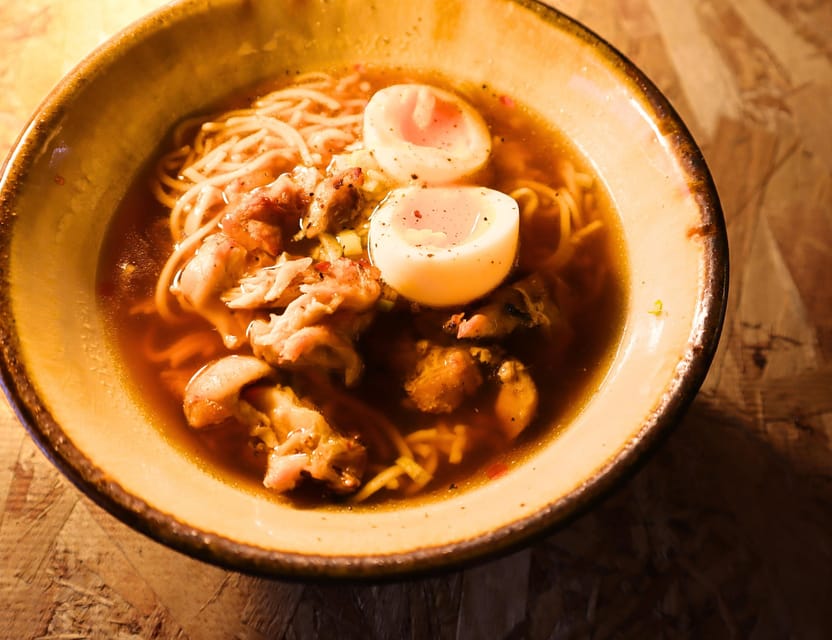
After ramen, you move into gyoza, and this is the hands-on highlight for many people because you create the wrappers too. You make gluten-free gyoza wrappers from rice flour, again from scratch. That means you get practice with dough handling and sheet forming, and you learn the practical reality that gluten-free dough often needs extra care to stay workable.
Next is filling and folding. You’re guided through making a savory filling and then learning the folding technique that shapes the dumplings. The goal is not just pretty folds. The class teaches you how the fold supports cooking, especially the crisp side you want from pan-frying.
Then you pan-fry. You learn the timing and technique to get golden perfection, aiming for crisp on the outside and tender inside. This is one of those skills that sounds simple until you do it. When the dumplings come out right, you get that satisfying contrast that makes gyoza so popular.
Also, you’re not doing this in a loud classroom. The setting is described as intimate and cozy, which means you can ask questions without feeling rushed. Yuki, as the sole instructor, keeps the pace friendly, and she’s patient about different skill levels.
Sake Pairing: Junmai, Junmai Ginjo, and a Warm Pour
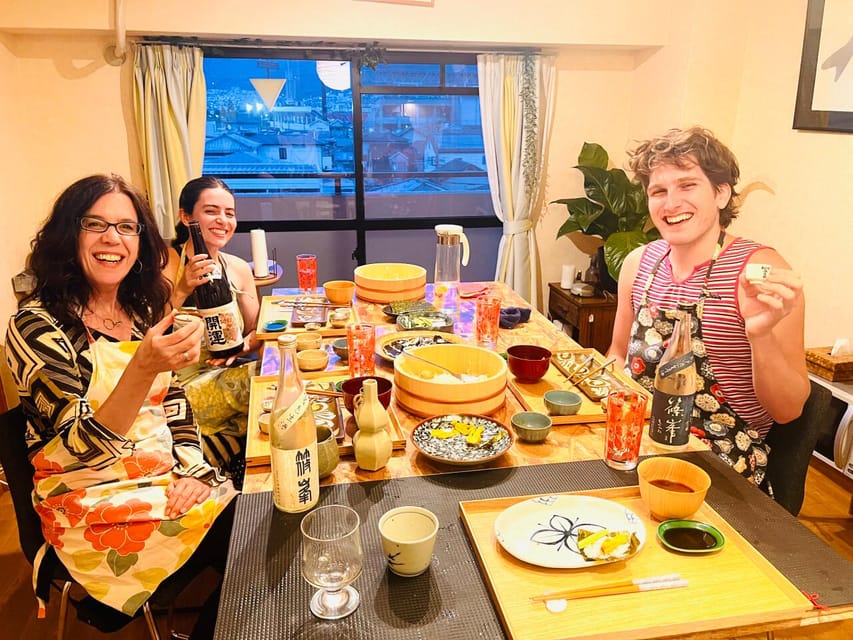
If you choose the optional sake pairing, you’ll taste three 45 ml servings designed to complement what you cooked. The lineup is two chilled sakes: Junmai and Junmai Ginjo, plus one warm Junmai.
This part matters because it trains your palate. You’re eating ramen and gyoza, both savory and textural, and then you’re tasting how different sake styles respond to salt, broth, and fried crispness. A chilled Junmai tends to feel clean and straightforward, while Junmai Ginjo usually brings a more aromatic profile. The warm Junmai shifts the overall impression and can feel cozier with hot broth.
You don’t have to do this pairing to enjoy the class. But if you like learning through taste, it adds a layer that turns dinner into a mini lesson in pairing.
And because the class is in a home setting, the pacing for tasting tends to feel natural, not like a rushed airport pour.
Your Hands-On Meal, Recipes, and Skills for Recreating at Home
Once everything is cooked, you gather in the cozy dining area and enjoy the fruits of your labor. The meal is the direct reward for the work, and it’s also where the class clicks for first-timers. When you taste the noodles you made and the gyoza you folded, the techniques stop feeling abstract.
A big part of the value is that you don’t just leave with full stomachs. You receive recipes and tips. That matters because home cooking success usually comes down to guidance you can reference later, especially with gluten-free ingredients.
The class is designed for different experience levels, and you don’t need prior cooking experience. That’s a rare pairing, because gluten-free cooking can scare people who assume they need advanced baking skills. Here, instruction is structured, and Yuki provides guidance in English, with support also described as available in Japanese.
One practical tip for you: take your notes during the class, even if you plan to rely on the recipes later. Pay attention to texture changes as you go. Rice flour noodles and rice flour wrappers can look subtle in the moment, and your senses are your best tool.
Price and Value: Is $103 Worth It for a 3-Hour Class?
At $103 per person for a 3-hour class, the question isn’t just cost. It’s what you’re buying: time, instruction, and a full meal built from scratch.
Here’s the value logic that makes the price make sense. You’re not only learning how to cook, you’re learning how to do it gluten-free, using rice flour for both noodles and wrappers. That is labor-intensive and skill-dependent, and it’s hard to replicate without coaching. You also get a small group size, limited to 4, so the teaching attention per person is higher than in larger classes.
You also eat the full meal you made, including ramen and gyoza, plus the chance to add optional sake pairing. That’s not a snack. It’s a real dinner experience, and you’re paying for the ingredients, the instruction, and the guided cooking time.
One more value point: recipes and tips are included. If you cook at home even once or twice after your trip, that follow-up pays dividends. You’re effectively converting part of your Osaka visit into reusable cooking skills.
If you’re looking for a quick food stop, this isn’t the ticket. But if you want a hands-on Osaka experience that changes how you cook after you get home, it’s strong value.
Should You Book This Gluten-Free Ramen and Gyoza Class?
Book it if you want two things at once: an authentic Japanese home-kitchen feel and a gluten-free cooking skill set you can actually use later. This class is a great choice for couples or solo travelers who like small groups and clear guidance. It’s also a smart pick if you’re gluten-free and want a meal that doesn’t feel like a compromise.
You might skip it if you strongly prefer watching over cooking. Since the class is hands-on for 3 hours, you’ll be doing the shaping, folding, and pan-frying. It’s also not suitable for people over 95 years, so plan accordingly.
My practical decision rule: if you can spend a few hours cooking without stress, you’ll have a memorable night. If you want a broad variety of Osaka food but not the kitchen work, you’ll probably prefer a walking food experience.
FAQ
How long is the Osaka gluten-free ramen and gyoza cooking class?
The class runs for 3 hours.
How many people are in the group?
It’s a small group, limited to 4 participants.
What language is the instruction?
Instruction is in English.
What will I make during the class?
You’ll learn to make gluten-free ramen noodles and soy sauce ramen, prepare tomato ramen, and make gluten-free gyoza wrappers. You’ll also make the gyoza filling, fold the dumplings, and pan-fry them.
Is the meal included?
Yes. You’ll enjoy a full meal of what you cook during the class.
Where do I meet the instructor?
The meeting point is 4-19 Nukata-cho, Osaka, a short 5-minute walk from Nukata Station. Detailed directions are provided after booking.
What should I bring, and do I need cooking experience?
Wear comfortable clothes suitable for cooking. No prior cooking experience is required.
One More Bowl
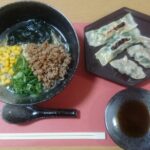


Kitchens You Can Book Into


Newest Osaka write-ups from the Loving Japan desk




Japanese Cooking Classes, side by side.
 ★ 5.0Sushi Making Tokyo Roll and Authentic Japanese Sushi ClassFrom $593,971 reviews
 ★ 4.9Roll and Authentic Sushi Making Class in AsakusaFrom $581,957 reviews
 ★ 5.0Ramen Cooking Class at Ramen Factory in KyotoFrom $1311,937 reviews
 ★ 4.9Sushi Making Class in a Happi Coat near a Famous SpotFrom $421,377 reviews
 ★ 5.0Sushi Making Osaka Roll and Authentic Japanese Sushi ClassFrom $311,220 reviews
 ★ 5.0Tokyo Sushi Making Class in Tsukiji with Professional ChefFrom $491,177 reviews
 ★ 5.0Ramen & Gyoza Cooking Class in Tokyo with Local Supermarket VisitFrom $122823 reviews
 ★ 5.0Tsukiji Fish Market Guided Tour and Sushi Making with Pro ChefFrom $104775 reviews
Filed on these lists too