
REVIEW · JAPANESE COOKING CLASSES
Three Types of Ramen Cooking Class in Osaka
Ramen starts with flour, not a packet. This Osaka ramen cooking class has you making noodles from scratch, then turning them into three different styles of ramen in one 2.5-hour session. I especially like the small group vibe (limited to eight, with a max of twelve), because you get clear guidance without feeling rushed.
I also love that the class is not just cooking, it ends with a meal you made yourself, plus dessert and green tea. A possible drawback is logistics, there is no hotel pickup or drop-off, so you’ll need to get yourself to the meeting point in Kitahorie.
In This Review
- Key Highlights You’ll Actually Feel
- Finding Banix Kitahorie and Getting Set Up Fast
- Handmade Ramen Noodles, 100g at a Time
- Salt Ramen: Sweet Pork, Seaweed, and the Light Base
- Soy Sauce Ramen: Cabbage, Sweet Corn, and Green Vegetables
- Miso Ramen: Spicy Chicken, Eggs, and Green Onion
- The Best Part: Cooking, Then Saying Itadakimasu
- Instructors, Group Size, and English-Friendly Clarity
- What You Really Get for $79.28 in Osaka
- What to Bring, Who Should Go, and How to Enjoy It
- Should You Book This Ramen Class in Osaka?
- FAQ
- How long is the ramen cooking class?
- How many people are in the class?
- What types of ramen will I make?
- Do I need to bring ingredients or kitchen tools?
- What is included with the meal?
- Is free cancellation available?
Key Highlights You’ll Actually Feel
- Handmade noodles from scratch, not just mixing sauce and toppings
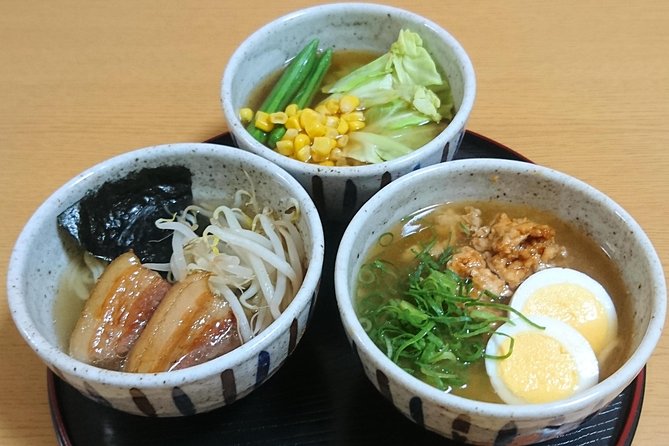
- Three ramen bases in one class: salt, soy sauce, and miso
- Real toppings and seasonings, including sweet pork, bean sprouts, seaweed, cabbage, corn, and spicy chicken
- Eat immediately after cooking with dessert and green tea included
- Take-home recipe + seasonal fruits, so you can repeat it at home
Cook it yourself instead. Other kitchens in Osaka
- Sushi Making Osaka Roll and Authentic Japanese Sushi Class
★ 5.0 · 1,220 reviews - Osaka Sushi Making Experience
★ 5.0 · 400 reviews - Osaka: Ramen and Gyoza Cooking Class in Dotonbori
★ 5.0 · 378 reviews - Osaka: Sumo Stage Show with Bento or Snack + Fight & Photo
★ 4.3 · 364 reviews
Finding Banix Kitahorie and Getting Set Up Fast
The class meets at Banix 北堀江 Japan in Kitahorie, Nishi Ward, Osaka. It is close to public transportation, and you get there on your own, since there is no hotel pickup. You’ll also get a mobile ticket, which is one less thing to manage on the day.
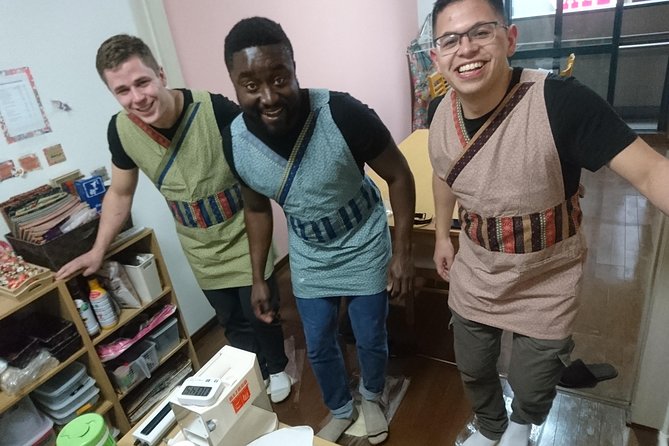
Once you arrive, you’re guided into the kitchen setup and you’ll put on an apron before you start. Expect a comfortable, kitchen-focused pace, not a lecture that drags on. The whole point is getting you hands-on quickly, including the noodle-making part.
Handmade Ramen Noodles, 100g at a Time
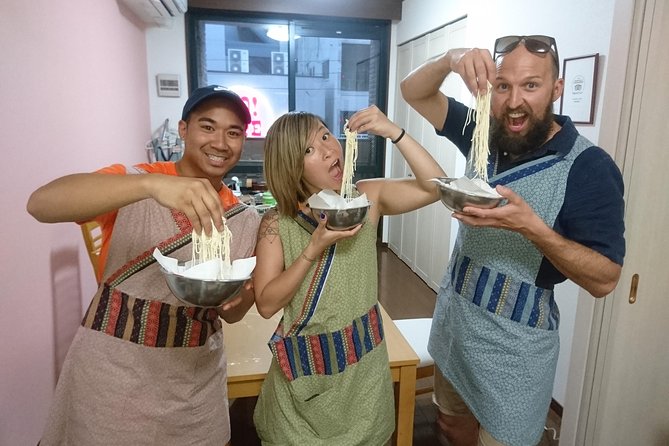
This is the section ramen fans tend to love most: you make the noodles from scratch. You are not just learning a flavor recipe, you’re learning the process that makes ramen feel like ramen.
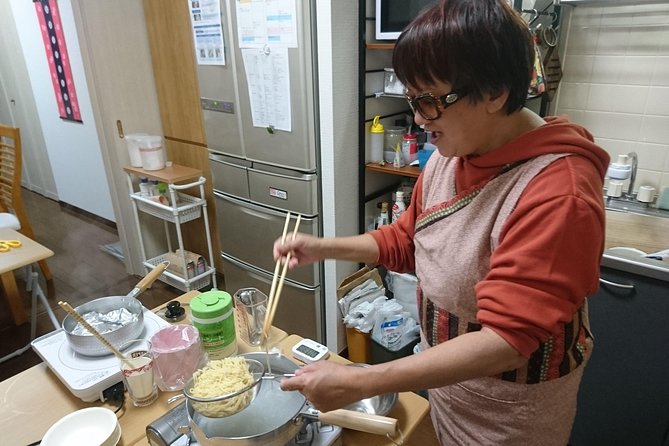
The class uses a total noodle amount of 100g. That matters because it tells you what to expect on the plate, and why the meal portion feels complete but not giant. After you learn how to shape and handle the noodles, you move into cooking the broths and assembling toppings for each style.
Why this is valuable for you: store-bought noodles hide a lot of the skill. When you learn the noodle process yourself, you understand why certain ramen textures work and why small steps change the final bite.
Salt Ramen: Sweet Pork, Seaweed, and the Light Base
You’ll make three ramen types during the same class, starting with salt ramen. This one leans on a clean, savory seasoning profile, and the toppings help you taste how salt changes the overall feel.
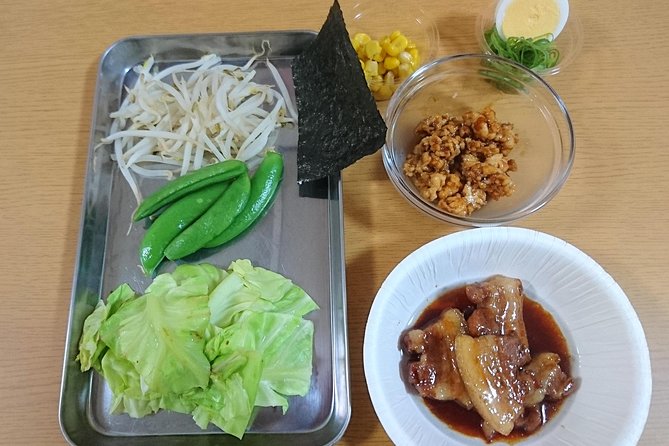
Your salt ramen topping lineup includes sweet pork, bean sprouts, and seaweed. These are classic elements because they bring contrast: the pork adds comfort and depth, while bean sprouts and seaweed give freshness and chew.
As you cook, don’t rush the seasoning moments. The instructor-led guidance is where you learn how to treat the broth like a flavor system, not just a liquid to heat.
A bowl somewhere else in Osaka
- Osaka: Five Must-See Highlights Walking Tour & Ramen Lunch★ 4.7 · 411 reviews
- Ramen and Gyoza Cooking Class in Osaka★ 5.0 · 202 reviews
- Walking Tour of Osaka’s 5 Must-See Sights, with Ramen for Lunch★ 5.0 · 158 reviews
- Cooking Ramen&Gyoza/KatsuCurry/Bento/Okonomiyaki+Store Tour@Osaka★ 5.0 · 138 reviews
- Three Types of Ramen Cooking Class in Osaka★ 5.0 · 119 reviews
Soy Sauce Ramen: Cabbage, Sweet Corn, and Green Vegetables
Next up is soy sauce ramen, where the broth tastes deeper and rounder. If salt ramen feels tidy and bright, soy sauce tends to feel more savory and cozy, and the toppings support that mood.
For your soy sauce bowl, you’ll use steamed cabbage, green vegetables, and sweet corn. Cabbage brings softness and slight sweetness when it warms, while corn adds a gentle pop that makes the broth taste even more harmonious.
This is also where you start to learn the practical ramen mindset: broths are built from seasoning plus structure. You’re seeing how each base pairs with vegetables and toppings so everything tastes intentional.
Miso Ramen: Spicy Chicken, Eggs, and Green Onion
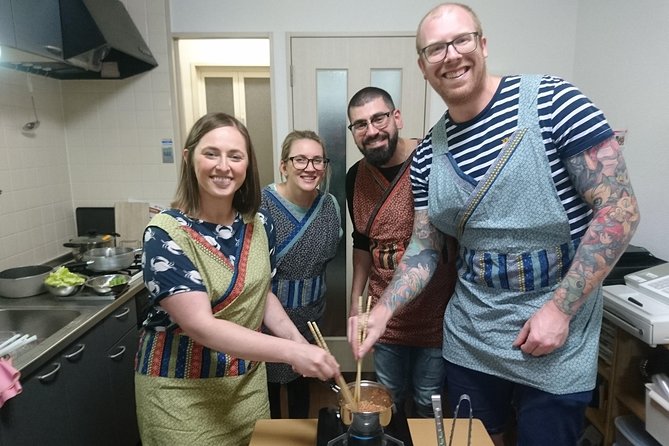
Then you’ll tackle miso ramen, which is typically the most punchy and satisfying of the three. Miso adds that warm, savory depth, and the toppings help you balance richness with bright finish notes.
Your miso ramen includes spicy chicken, boiled eggs, and green onion. Eggs are a texture trick, they add silkiness and make the bowl feel richer. Green onion keeps miso from becoming too heavy.
One practical tip from what people remember most: chili oil can be intense if you go heavy at the end. If you like heat, add gradually. If you’re not sure, start small so the flavors stay fun instead of overpowering.
The Best Part: Cooking, Then Saying Itadakimasu
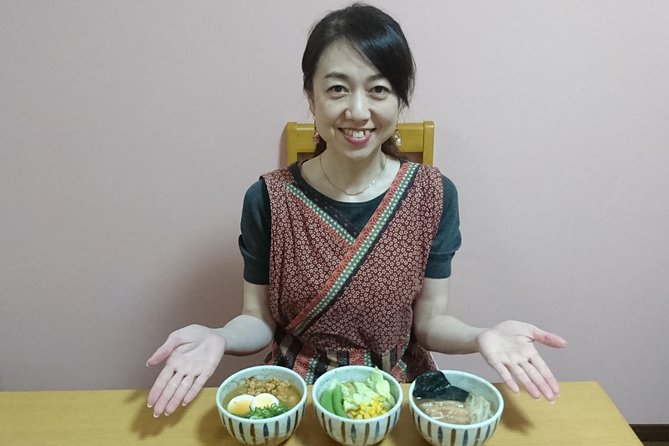
The class doesn’t end with tasting one spoonful. You finish by eating the ramen you cooked, using chopsticks like a proper ramen party.
Your meal setup includes dessert and green tea after the ramen. You also get seasonal fruits as part of what’s included, which is a nice, lighter finish after the carbs and savory broth. Several people specifically point out that the pacing is well done, and that you’re fed in a satisfying way without feeling stuffed before dessert.
There’s also a bit of ceremony to it. You place your dishes at the end and enjoy them together, with the whole class focused on the reward: your three bowls.
Instructors, Group Size, and English-Friendly Clarity
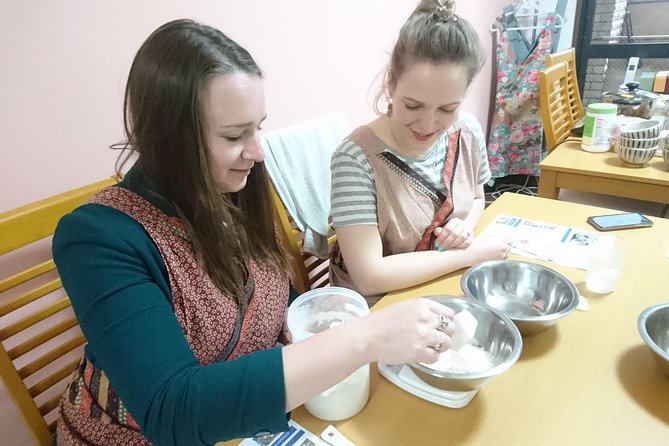
This is one of those experiences where small-group cooking actually matters. The class is limited to eight people for a more personalized experience, and it runs with a max of twelve travelers. In practice, that means you get attention when you need it, especially during noodle-making.
The instructors are often described as friendly and helpful, with good English. In the reviews, names like Fumi and Tomiko come up, and instructors like Keigo/Keiyo are mentioned as well. That tells you the teaching style is likely structured for non-Japanese speakers, which is a huge advantage in a hands-on class where you cannot guess your way through technique.
You’ll also notice family-friendly energy. People mention that kids can follow along, even at a young age. If you are traveling with teenagers or younger kids who want something more interactive than sightseeing, this can be a standout choice.
One more point worth knowing: at least one class was adapted for a vegetarian diet, including attention to the broth being free of animal products. If that matters to you, you should ask when booking, because it appears to be handled case-by-case rather than treated like a vague option.
What You Really Get for $79.28 in Osaka
Let’s talk value, because $79.28 can sound either cheap or steep depending on what’s included.
Here, you are paying for a full cooking workshop with ingredients, utensils, and equipment all provided. On top of that, you get a printed recipe to take home, seasonal fruits, and the full eating portion, which includes ramen, dessert, and green tea. So the price is not just “a cooking class,” it’s also a meal plan.
Duration helps too: about 2 hours 30 minutes is long enough to make noodles, cook broths, assemble toppings, and still sit down to eat. You’re effectively getting three ramen builds out of one lesson, with practice you can repeat.
For me, the best financial logic is this: you can pay for ramen in Osaka all day, but you only get this kind of skill once. When you leave with a recipe and hands-on understanding, the cost becomes easier to justify.
What to Bring, Who Should Go, and How to Enjoy It
You do not need to bring utensils or ingredients. The class provides what you need, and you get an apron at the start. All you really need is comfort: wear clothes you can move in and that won’t mind kitchen heat and minor mess.
Who this suits best:
- Ramen lovers who want more than taste-testing
- Beginner cooks who want step-by-step direction
- Couples and small families who like hands-on activities
- Anyone who wants a memorable Osaka experience that ends with a real meal
If you’re short on time and want a pure sightseeing day, this might not be your best fit. It’s a cooking-focused experience, so you trade walking around town for learning a skill. But if you want a take-home story and something you can make again at home, it’s a strong match.
Should You Book This Ramen Class in Osaka?
Yes, I think you should book it if you want a practical, hands-on Osaka food experience. The biggest reasons are simple: you make noodles from scratch, you learn three ramen bases in one session, and you finish by eating what you made with dessert and green tea. That combination is hard to beat for value, especially when the class stays small.
Only consider skipping if you know you hate structured food prep or you strongly prefer to spend your time elsewhere in the city. Also, plan to handle your own route to the meeting point in Kitahorie, because there’s no hotel pickup.
FAQ
How long is the ramen cooking class?
The class lasts about 2 hours 30 minutes.
How many people are in the class?
It is limited to eight people for a more personalized experience, and it has a maximum of twelve travelers.
What types of ramen will I make?
You’ll make three types of ramen: salt ramen, soy sauce ramen, and miso ramen.
Do I need to bring ingredients or kitchen tools?
No. All utensils and ingredients are provided, and you’ll also receive a printed recipe to take home.
What is included with the meal?
The class includes the ramen meal, dessert, green tea, seasonal fruits, plus ingredients and kitchen tools used in the class.
Is free cancellation available?
Yes. You can cancel for a full refund up to 24 hours in advance of the experience start time.
One More Bowl


Kitchens You Can Book Into


Newest Osaka write-ups from the Loving Japan desk






Japanese Cooking Classes, side by side.
 ★ 5.0Sushi Making Tokyo Roll and Authentic Japanese Sushi ClassFrom $593,971 reviews
 ★ 4.9Roll and Authentic Sushi Making Class in AsakusaFrom $581,957 reviews
 ★ 5.0Ramen Cooking Class at Ramen Factory in KyotoFrom $1311,937 reviews
 ★ 4.9Sushi Making Class in a Happi Coat near a Famous SpotFrom $421,377 reviews
 ★ 5.0Sushi Making Osaka Roll and Authentic Japanese Sushi ClassFrom $311,220 reviews
 ★ 5.0Tokyo Sushi Making Class in Tsukiji with Professional ChefFrom $491,177 reviews
 ★ 5.0Ramen & Gyoza Cooking Class in Tokyo with Local Supermarket VisitFrom $122823 reviews
 ★ 5.0Tsukiji Fish Market Guided Tour and Sushi Making with Pro ChefFrom $104775 reviews
Filed on these lists too