
REVIEW · SAMURAI, NINJA AND SWORD EXPERIENCES
Osaka: Kendo Workshop Experience
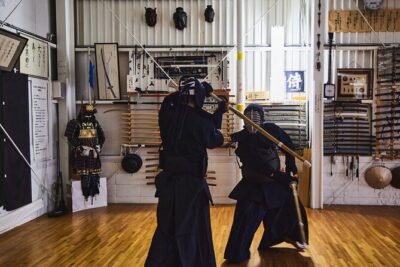
This is kendo training, not a costume stop. The dojo etiquette is part of the lesson, and the class walks you from ritual to controlled strikes with real teaching. What I like most is that you get small-group attention and you practice the full flow, not just one move.
One drawback to plan around: this is hands-on martial arts training, so it is not suitable for everyone, including kids under 9 and people with mobility impairments or wheelchair users.
In This Review
- Key things to know before you go
- Why this Osaka dojo session feels real
- The 2-hour flow, from etiquette to a match-style mini-game
- Meeting point at 鴫野会館, and how to plan your arrival
- Gear and safety: what’s included and why it matters
- Learning the movements: ritual, stance, and hitting drills
- The culture break: history and manner, not just fighting
- Practice with men: when it clicks
- National-level demos, etiquette wrap-up, and the photo moment
- Value in Osaka: is $116 worth it for two hours?
- Who should book this and who should skip it
- After class: an izakaya night and a Samurai meal idea
- Should you book this Osaka kendo workshop?
- FAQ
- How long is the Osaka kendo workshop?
- Where do I meet for the workshop?
- Is equipment provided?
- What language is instruction offered in?
- Is the workshop suitable for absolute beginners?
- Is food included?
- Who is the workshop not suitable for?
Key things to know before you go
- Small group (up to 2 participants) means you get coaching instead of watching from the sidelines.
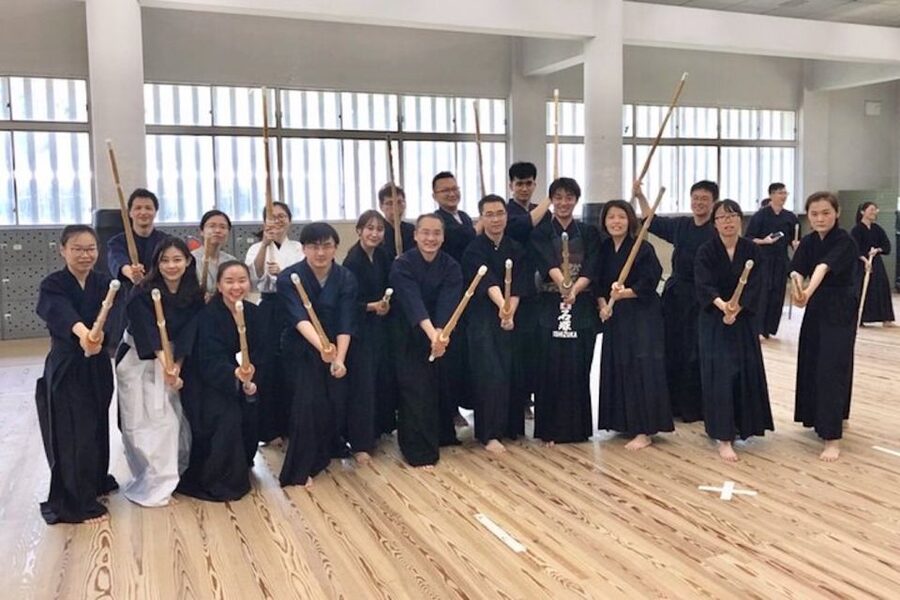
- Complete workshop structure covers etiquette, basic lecture, hitting drills, then a match-style mini-game.
- Rental kendo armor and equipment are included, so you only bring yourself.
- English and Japanese instructors help you follow along even if you are brand new.
- National-level demonstrations show techniques up close right after your practice.
- You finish with etiquette and photography plus a special kendo towel.
Blade work and stagecraft, other sessions
- Samurai Training Experience KENDO in Osaka
★ 5.0 · 515 reviews - OSAKA NIGHT FUSION Japanese Taiko Kabuki Samurai Dance Show
★ 4.8 · 155 reviews - Osaka: Samurai Training Experience KENDO in Osaka
★ 5.0 · 111 reviews - Osaka: A Modern Samurai, Kabuki, Taiko, & Dance Show
★ 4.5 · 66 reviews
Why this Osaka dojo session feels real
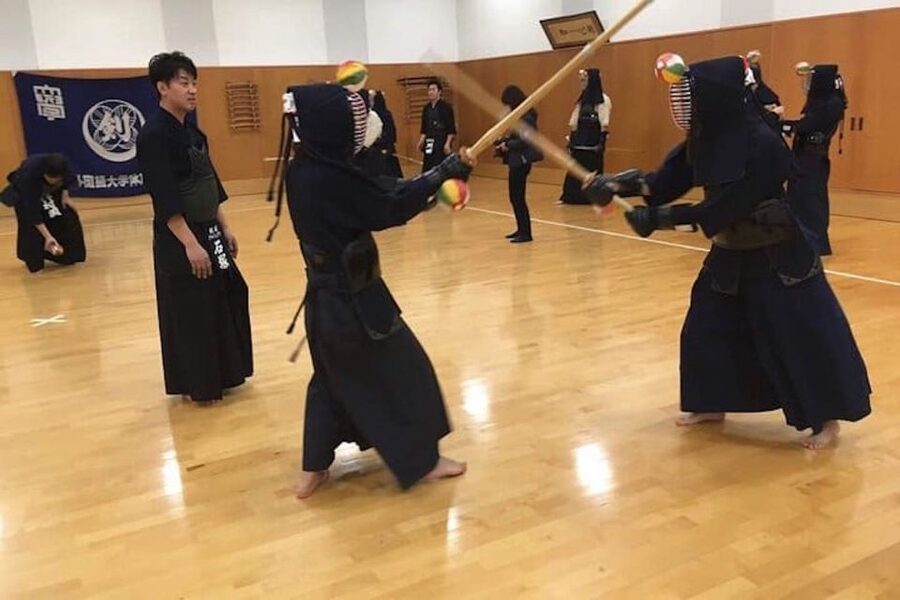
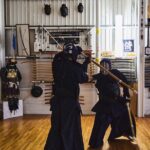
Osaka has plenty of tourist-friendly “samurai experiences,” but this one is built like training. You start inside a calm dojo environment where etiquette matters as much as technique. That matters, because kendo is not only about hitting. It is about posture, timing, controlled power, and respect in how you move.
What I like is the way the session communicates kendo’s purpose from the beginning. You are not just thrown a bamboo sword and told to swing. You learn manners and the mindset behind the practice, then you apply it in drills. The sound is also part of the experience. Those bamboo swords colliding, the steady voices calling out form, and the quiet focus in the room make it feel serious in the best way.
Still, it is a physical class. You should expect to stand, move, and wear protective gear for part of the workshop. If you are looking for something purely observational, this may feel too active.
The 2-hour flow, from etiquette to a match-style mini-game
The workshop runs for about 2 hours, and it follows a clear rhythm. You do not have to guess what comes next, which helps a lot when you are new to kendo.
First, you change clothes for the session. Then you get a basic etiquette briefing and a lecture-style introduction that sets expectations for how to practice safely and respectfully. After that, you begin hitting drills with bamboo swords, and you also practice hitting with guidance from the teacher.
At an interval, you switch gears into a culture-focused portion. This is where the class expands beyond techniques. You get the chance to learn about kendo’s history and martial-art manner, so the session connects to meaning, not just motion.
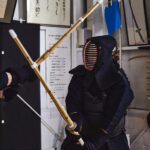
Then the action ramps up with protective gear. You put on the men face protector (the helmet-like face piece), and you return to hitting drills with the teacher. The big finale is a match-style mini-game. It is not a full tournament, but it gives you that “this is what it feels like to engage” moment, where you apply what you learned under simple, controlled conditions.
Near the end, you watch demonstrations by national-level instructors. You see techniques up close and get a sense of what good kendo looks like when it is performed with precision and control. Then you wrap with etiquette and photography, and the session ends after you change clothes.
Meeting point at 鴫野会館, and how to plan your arrival
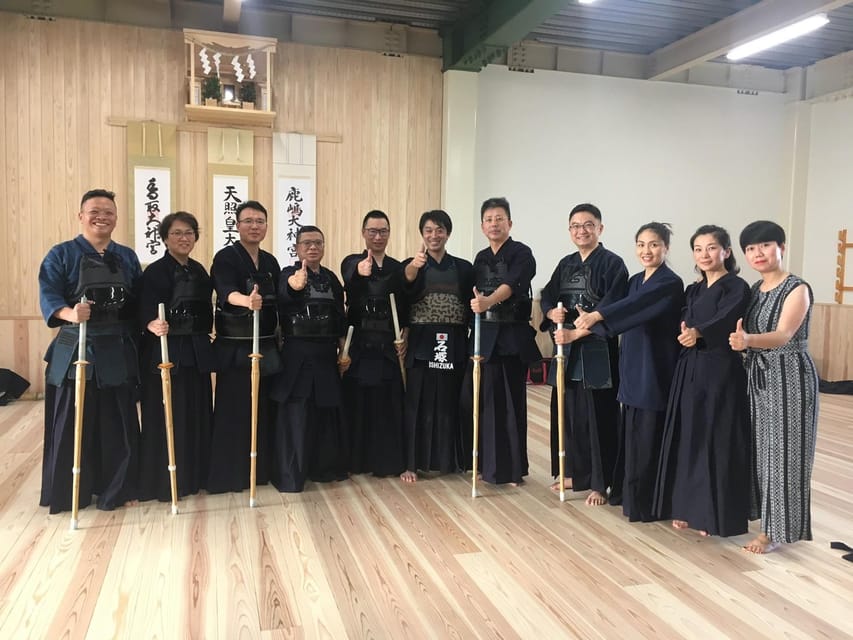
Your meeting point is 鴫野会館 / Shigino Kaikan hall. Because this is a focused training class, I suggest arriving a few minutes early. Even if you have only a little Japanese, the structured flow helps, and being on time keeps things smooth for you and the instructors.
Also note the group size is small, limited to 2 participants. That is great for attention, but it means the instructor time is tight. If you run late, it can throw off the pacing.
The workshop includes free mineral water, so you can focus on training without worrying about buying drinks right away. Still, keep in mind you will be moving in full sessions, so it is smart to drink enough before you arrive.
Make something to take home. Other workshops
- Osaka: Traditional Mochi Pounding Experience with Tasting★ 4.9 · 306 reviews
- 【For adult】Traditional Mochi Pounding Experience with Tasting★ 5.0 · 67 reviews
- Osaka: Private Japanese Calligraphy Experience★ 5.0 · 66 reviews
- From Osaka: Sakai Knife Maker or Blacksmith Walking Tour★ 4.9 · 64 reviews
- Calligraphy Workshop in Namba, Dotonbori★ 5.0 · 57 reviews
Gear and safety: what’s included and why it matters
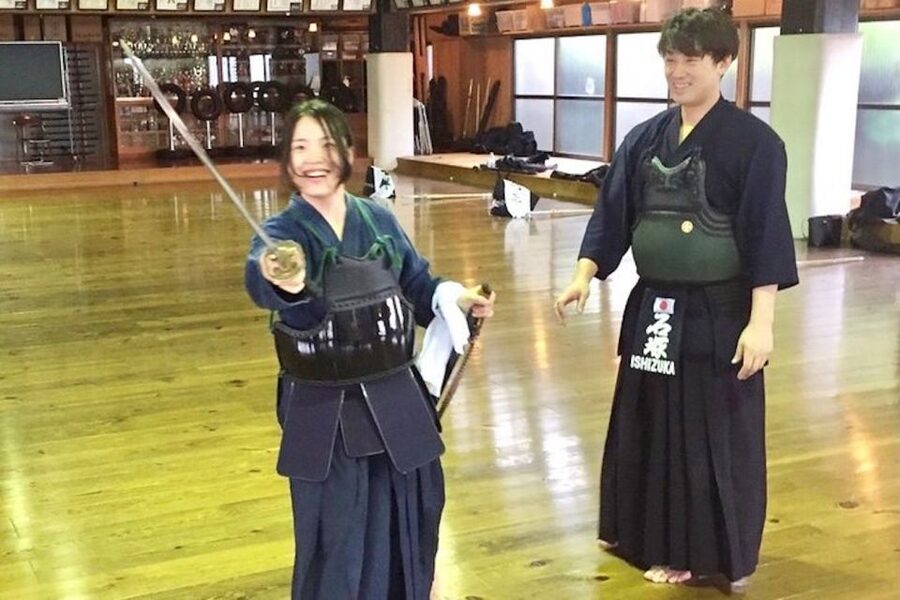
You do not need to bring kendo equipment. Rental of kendo armor and equipment is included, along with a free Japanese hand towel. That is a big value point, because protective gear can be expensive and hard to source while you are on the road.
The workshop also emphasizes safety and the right teaching pace. The class is designed so that anyone can experience kendo safely because instructors guide you through each step. That is not a small promise, either. It means you get corrections in real time, instead of hoping you are doing the technique correctly.
There are also clear restrictions. Pets are not allowed, and alcohol and drugs are not allowed. That matters because it supports a controlled environment where protective gear and training etiquette can work as intended.
If you have any medical concerns, especially anything affecting balance or ability to wear protective gear comfortably, double-check whether this is a good match. The experience is not listed as suitable for people with mobility impairments, wheelchair users, or children under 9, and it is not recommended for pregnant women.
Learning the movements: ritual, stance, and hitting drills
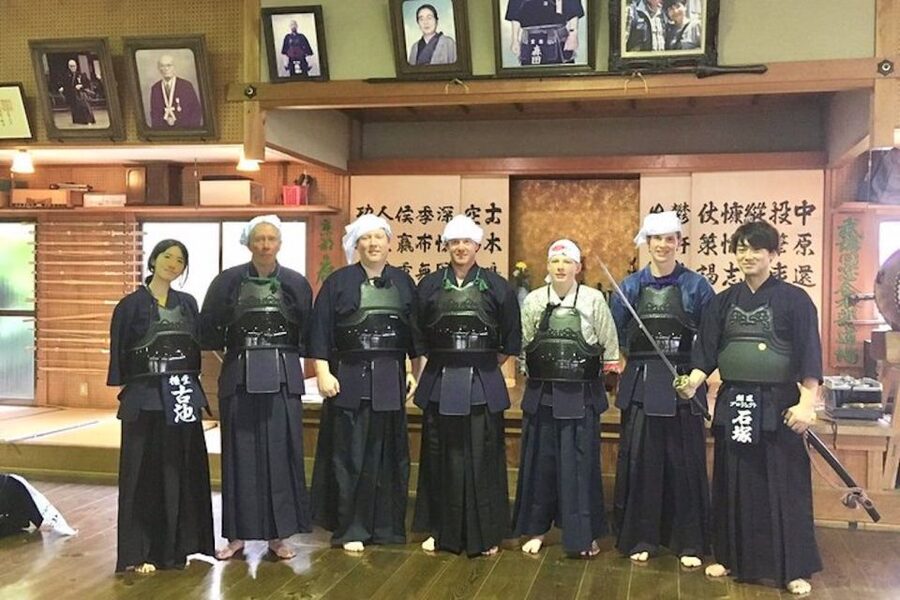
Kendo training has a lot of “invisible” structure, and this workshop teaches it in practical steps.
You start with etiquette and basic instruction, which helps you learn how to stand, how to hold the bamboo sword, and how to follow the cues in a dojo setting. Then you move into hitting drills that let you practice the mechanics without turning it into chaos.
A key part of the workshop is the emphasis on the full course of kendo training. The session is designed to cover the path from ritual to hitting, not just one target drill. You practice hitting with bamboo swords and hitting to the teacher, then return again after you put on the men face protector. That repeat is helpful. It lets you feel what changes when the protective gear is on, and it keeps your learning consistent.
In the best teaching sessions, every correction aims at safety and clarity. This class appears to do that. One of the standout points from the teaching style is that the instructor explains in a way that beginners can follow and that technique is checked closely. That close attention makes a difference, because kendo depends on small details, like how you angle your body and where your power comes from.
If you want a “first taste” of kendo that feels like a real skill-building session, this structure is exactly what you want.
The culture break: history and manner, not just fighting
Some workshops stop at technique. This one adds a cultural component in the middle of the class.
During the interval, you study a kendo culture course. You learn not only about the competitive aspects, like striking and the match-style mini-game, but also about the history of kendo and how it functions as a martial art. The manner piece is important. Kendo treats conduct as part of the training, not a side note.
Why this matters for you as a visitor: it changes how you interpret what you are doing. When you understand why etiquette exists, you stop treating bowing and signaling as “just rules” and start seeing them as part of how kendo protects focus and respect.
It also makes the class feel less like a physical activity and more like a structured introduction. That is why people come out feeling like they learned something deeper than an action photo.
Practice with men: when it clicks
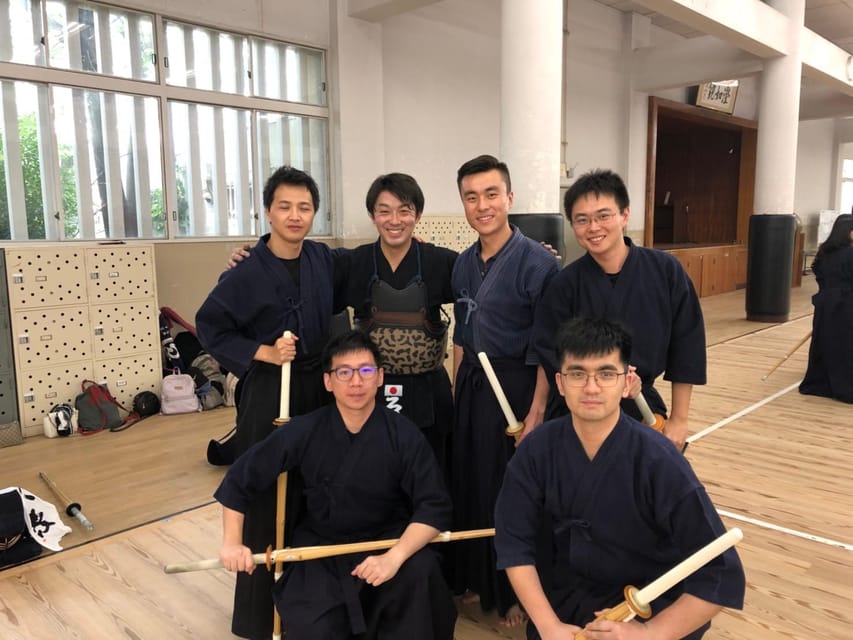
Putting on the men changes everything. It turns the training from “move your arms” into “commit your posture and timing with your face protected.” In this workshop, after learning the earlier basics, you put on the men face protector and go back to hitting drills again.
This second round is where a lot of people feel the session become more real. You can see the target space more clearly with the protective gear, and the rules become more match-like. It is also a transition you can feel in your body. Your stance needs to stay stable. Your timing has to be cleaner.
This is also where good instruction really shows. One name that stands out from the teaching style is Yamasaki sensei. The instruction is described as excellent, with strong teaching and easy-to-follow guidance. That kind of clarity matters when you are trying to connect lecture to actual movement.
And because the match-style mini-game comes right after this practice phase, you do not just learn the steps and then wait. You apply what you practiced in a simple engagement format.
National-level demos, etiquette wrap-up, and the photo moment
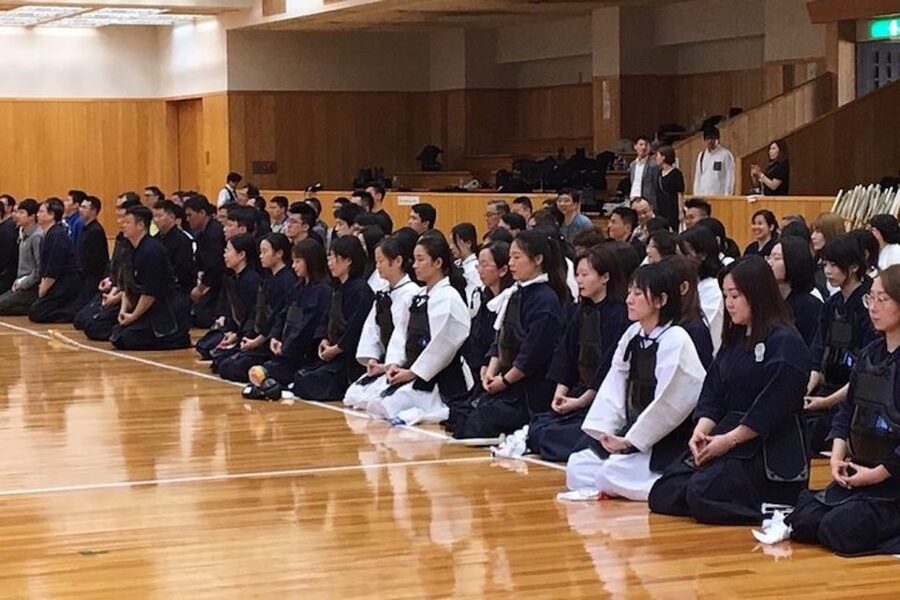
After your own practice, you watch demonstrations by national-level instructors. This part is useful in two ways.
First, it gives you a reference point. You see techniques up close and you can compare what you were learning to what “high-level” looks like when form, distance, and timing are dialed in.
Second, it resets your perspective. After a sweaty, active session, watching skilled kendo can make your brain stop trying to perform and start observing. Even if you cannot name every technique, you notice posture, how the sword path looks, and how controlled the movement feels.
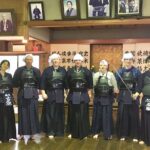
Then the workshop ends with etiquette and photography. Everyone receives a special kendo towel. It is given for use when putting on your face protector during the experience, which is a small detail, but it reinforces that the class is organized and practical. It also becomes a nice “I did this properly” souvenir.
Value in Osaka: is $116 worth it for two hours?
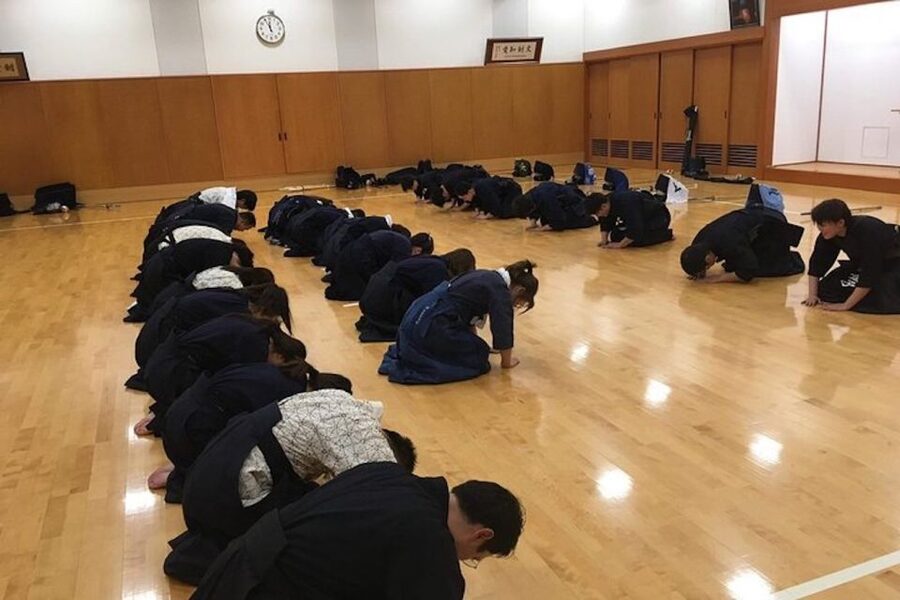
At $116 per person for a 2-hour session, the value depends on what you want from the time.
If you want a quick, cheap photo moment, this might feel pricey. If you want a structured, guided introduction to a real Japanese martial art, it can be a good deal. Here is why.
You get professional instruction, rental armor and equipment, free mineral water, and a free Japanese hand towel. You also get a small group size limited to 2 participants, which is where the value really shows. In a one-to-many setting, you might only receive brief corrections. In a tiny group, you are more likely to get the key adjustments that make the difference between feeling lost and feeling like you are learning.
You also get more than one training phase. The class includes etiquette, lecture, hitting drills, men-protector practice, a match-style mini-game, and national-level demonstrations. That is a lot of content for a short session, and it stays organized.
My practical take: this is best when you treat it like training time, not just an activity.
Who should book this and who should skip it
This workshop suits you if you:
- Want a guided introduction to kendo with English and Japanese support
- Prefer small groups where you can ask questions and get feedback
- Are excited by the discipline side of martial arts, like manners and dojo etiquette
- Want something active but controlled, with safety built into the class structure
It may not suit you if you:
- Need accessibility accommodations for mobility impairments or wheelchair use
- Are traveling with children under 9
- Are pregnant
- Want a fully relaxed experience with no gear and no physical movement
If you are a complete beginner, you should feel comfortable. The workshop is designed for first-timers to participate safely through careful instruction. And if you already know a bit of kendo, you might appreciate the structure and the chance to compare your form with what the instructor guides you toward.
After class: an izakaya night and a Samurai meal idea
When you finish and change clothes, you are free to explore. The activity notes suggest heading out to an izakaya (Japanese pub-style restaurant) afterward. There is even a menu item listed as a Special Samurai meal, which gives you a fun way to keep the theme going without turning your day into a full performance.
Even if you skip the themed meal, having dinner nearby is a smart move because you will likely be hungry after training.
Should you book this Osaka kendo workshop?
Book it if you want a serious first step into kendo, with real instruction, real protective gear, and a training flow that ends with a mini match. The small group size helps you feel guided rather than processed, and the national-level demos give you a sense of what you are working toward.
Skip it if you are looking for passive sightseeing or you fall into the listed “not suitable” categories. Also, if you dislike structured rules and etiquette, kendo may feel less fun than you expected. But if you can handle learning the basics respectfully, this is one of the better ways to experience Japanese martial culture in a short time in Osaka.
FAQ
How long is the Osaka kendo workshop?
It lasts about 2 hours.
Where do I meet for the workshop?
You meet at 鴫野会館 / Shigino Kaikan hall.
Is equipment provided?
Yes. Rental of kendo armor and equipment is included.
What language is instruction offered in?
The instructor offers English and Japanese.
Is the workshop suitable for absolute beginners?
Yes. The session is taught in a way that anyone can safely experience kendo because instructors guide the class.
Is food included?
No. Food is not included.
Who is the workshop not suitable for?
It is not suitable for children under 9, pregnant women, people with mobility impairments, or wheelchair users.
Made by Hand, and Yours to Keep


Blade Work and Stagecraft

Newest Osaka write-ups from the Loving Japan desk

Samurai, Ninja and Sword Experiences, side by side.
 ★ 4.5Samurai Restaurant Show Ticket with 2 DrinksFrom $551,307 reviews
 ★ 5.0Kyoto Samurai ExperienceFrom $1191,294 reviews
 ★ 4.6Samurai Ninja Museum Guided tour and ExperienceFrom $271,010 reviews
 ★ 4.9Kendo and Samurai Experience with Uniform and GearFrom $103815 reviews
 ★ 4.9Samurai Sword Class by Experts in Traditional ArtsFrom $64657 reviews
 ★ 4.5Skip the lines Basic Ticket at SAMURAI NINJA MUSEUM KYOTOFrom $28632 reviews
 ★ 5.0Samurai Sword & Archery Class from Samurai DescendantFrom $193603 reviews
 ★ 5.0Samurai Training Experience KENDO in OsakaFrom $131515 reviews
Filed on these lists too