
REVIEW · JAPANESE CRAFT AND CALLIGRAPHY WORKSHOPS
From Osaka: Sakai Knife Maker or Blacksmith Walking Tour
Japan’s knives start as glowing steel. On this Sakai craft walk, you get rare access to the people who actually make the blades, plus a real sharpening lesson you can carry home. What I love most is the up-close behind-the-scenes access at a knife workshop or blacksmith forge, and the fact you learn traditional sharpening with guidance, not just sit and watch. One consideration: the schedule is shop and workshop heavy, so you will spend most of your time on crafts, with only limited extra time for shopping beyond what’s built into the day.
I also like how the tour makes Sakai feel like a place, not just a factory stop. You start with a classic Sakai sweet shop visit and snack, and it’s a fun way to reset your brain before you start thinking about steel and edge geometry. The Sakai City Craft Museum stop is a helpful bridge, since it gives you the context for why this city is tied to cutlery and craft culture.
If blacksmithing is your goal, plan your day around the Wednesday option. That’s when you visit the blacksmith workshop connected with Eric Chevallier, and you may get hands-on with the forging process, including hammering hot steel.
In This Review
- Key highlights you’ll care about
- From Nankai Sakai Station to a sweet start in Sakai
- Sakai City Craft Museum, where the story of knives makes sense
- Yamawaki Hamono on Tuesdays and Thursdays: watching blades become real knives
- De Sakai on Wednesdays: blacksmithing with Eric Chevallier
- Learning traditional sharpening, so your knife improves at home
- Custom knife ordering and buying time, without wasting your money
- Walking pace, small groups, and language expectations
- Who should book this Sakai knife maker or blacksmith tour
- Should you book? My take on value
- FAQ
- FAQ
- What is the meeting point for the tour?
- How long is the tour?
- Which days are for knife maker versus blacksmith?
- Is French guaranteed on the tour?
- Is there an option to order a customizable knife?
- What is included in the price?
- What should I bring?
- What if the museum is closed on a 3rd Tuesday?
- Is the tour wheelchair accessible?
Key highlights you’ll care about
- Knife-maker vs blacksmith days: Tuesdays and Thursdays focus on the knife maker, while Wednesdays focus on the blacksmith.
- Real workshop access: you step into the private-making world, not just a public showroom.
- Sakai sweet stop that works: mochi and local treats come early, so you snack before the craft focus kicks in.
- Hands-on edge work: a traditional sharpening lesson helps you sharpen with more confidence back home.
- Custom knife option: on knife-maker days, you can order a customizable knife and watch the process.
- Guides who connect the dots: tours often run with high-energy hosts like Remy, Scott, or Jean-Yves.
Make something to take home. Other workshops
- Osaka: Traditional Mochi Pounding Experience with Tasting
★ 4.9 · 306 reviews - 1.5〜2 Hours Traditional Kintsugi Work Shop in Namba Osaka
★ 5.0 · 75 reviews - 【For adult】Traditional Mochi Pounding Experience with Tasting
★ 5.0 · 67 reviews - Osaka: Private Japanese Calligraphy Experience
★ 5.0 · 66 reviews
From Nankai Sakai Station to a sweet start in Sakai
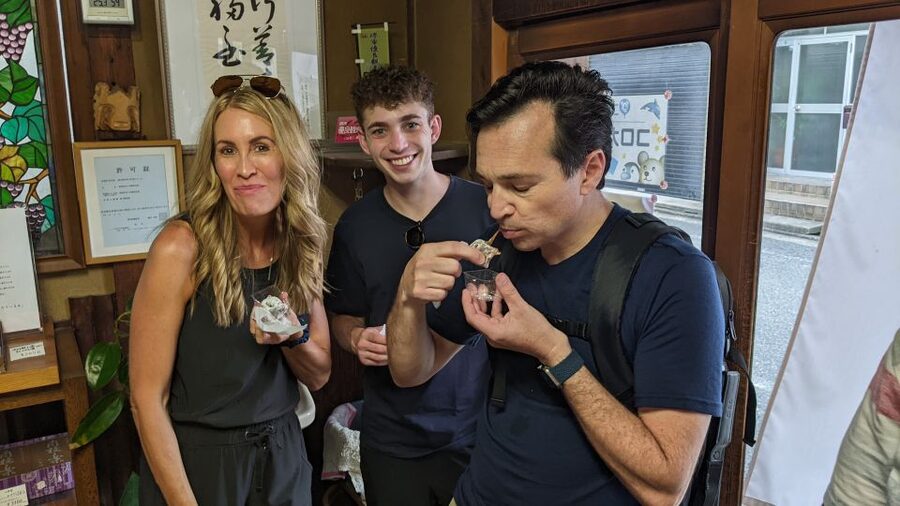
Most days begin at Nankai Sakai Station, just south of Osaka. It’s a simple meet-up, and the pacing starts easy so you can get your bearings fast. Then you head into the neighborhood craft flow, with a traditional sweets shop stop that includes one sweet for you.
This is more than a polite filler. The snack stop is where the tour gives you a taste of Sakai’s everyday culture, and it sets up the rest of the day nicely. On knife and steel tours, people often get hungry and cranky. Here, you get that solved early, and the sweet shop visit also gives you a story about local food traditions.
At one stop at 八百源来弘堂本店, you can expect photo time, a visit, a bit of shopping, and a tasting. Reviews point out mochi favorites like poppyseed mochi and cinnamon mochi. Even if you’re not usually a sweets person, this stop helps you slow down and notice details in the area instead of rushing straight to the forge.
Practical tip: eat the included sweet, and if you think you’ll want more later, plan on buying extra food afterward. Drinks are not included.
Sakai City Craft Museum, where the story of knives makes sense
After the sweet stop, you move toward the Sakai City Craft Museum and its knife shop. You get a mix of guided time and self-guided wandering here, so you can absorb what you want at your own speed.
This museum stop matters because it turns knife making from a cool hobby into a local industry with deep roots. You learn how the city’s identity became tied to blades, and you get the kind of background that makes later workshop details easier to follow. When the guide talks about materials, toolmaking, and sharpening methods, you’ll have mental hooks ready.
There’s also a practical side. A museum is where you can spot terminology and learn what to look for when you later browse at shops. Even if you don’t plan to buy anything, it helps you not feel lost when people start pointing at edges, grinds, and finishing work.
One scheduling note that affects the museum: every 3rd Tuesday, the museum has inventory. On those days the museum might close without notice. If that happens, your guide will adapt and take you directly to the knife company, while still covering cutlery history during the walk and at the office.
Why you should care: that flexibility keeps the day from falling apart, but it can change the balance between museum time and workshop time. If you’re building your schedule around the museum specifically, check the date you book.
Yamawaki Hamono on Tuesdays and Thursdays: watching blades become real knives
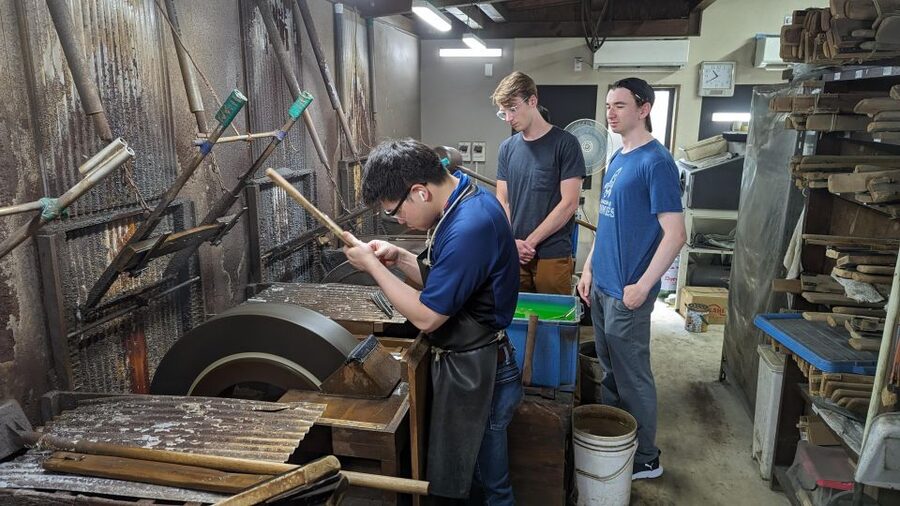
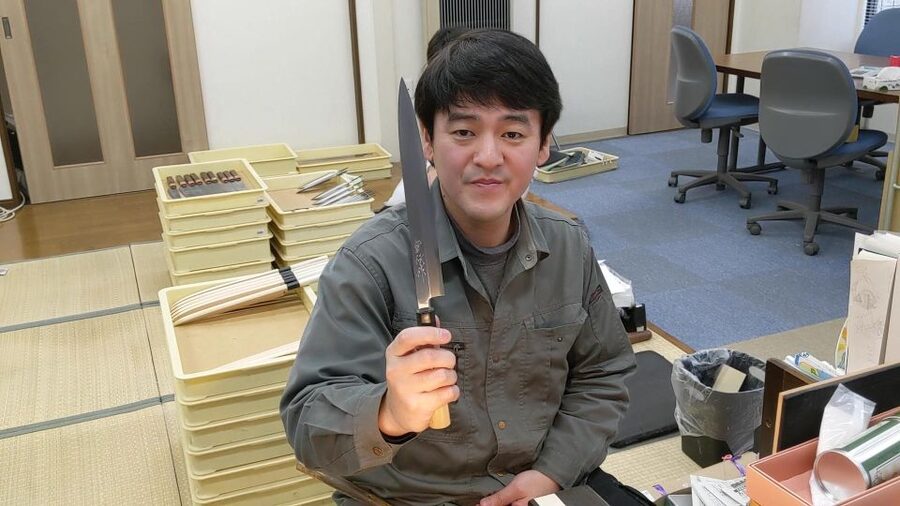
If you choose the knife-maker option, Tuesdays and Thursdays are the classic plan. You get backstage access to the knife making company Yamawaki, a place with 100+ years of history. One key detail that makes this stop special is the flow of materials: raw blades arrive directly from the blacksmith, so you see how different stages of craft connect.
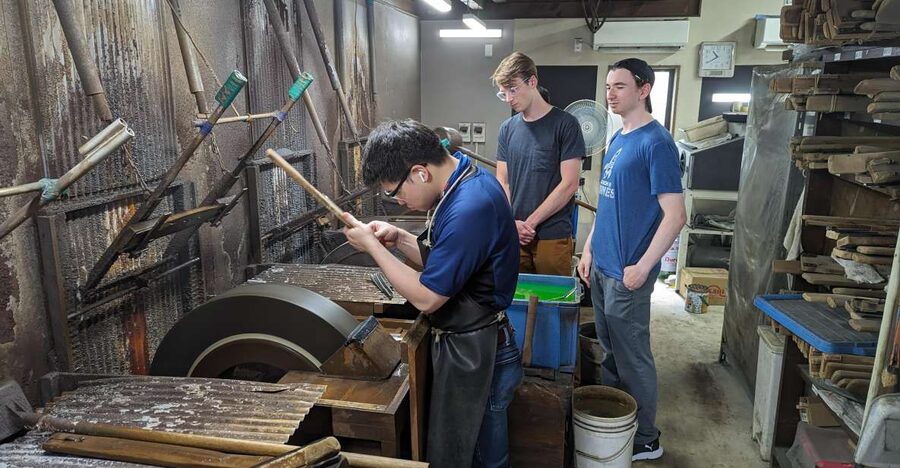
At Yamawaki, you’ll move through areas like a sharpening station and the main office. Then comes the core idea of the day: watching blades get shaped into proper handmade cooking knives. It’s not just a display of finished products. You’re seeing the workflow that turns steel into something you’d actually use at your table.
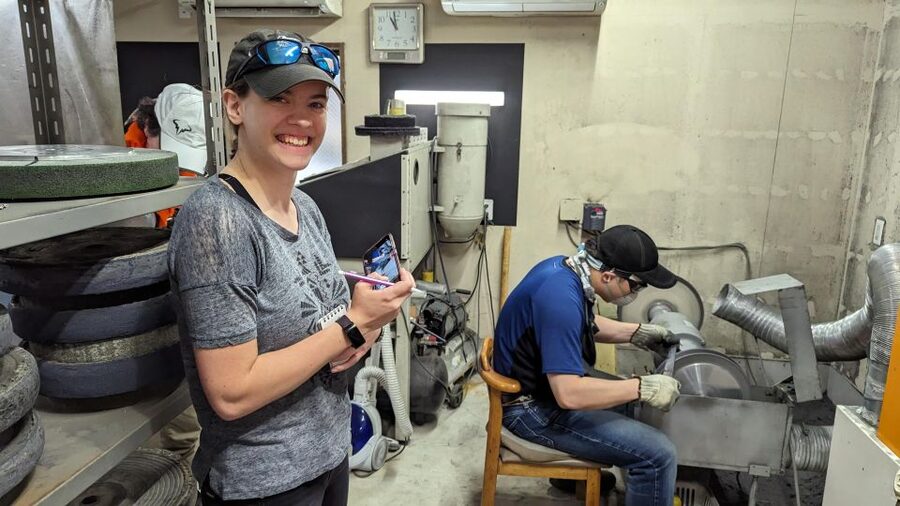
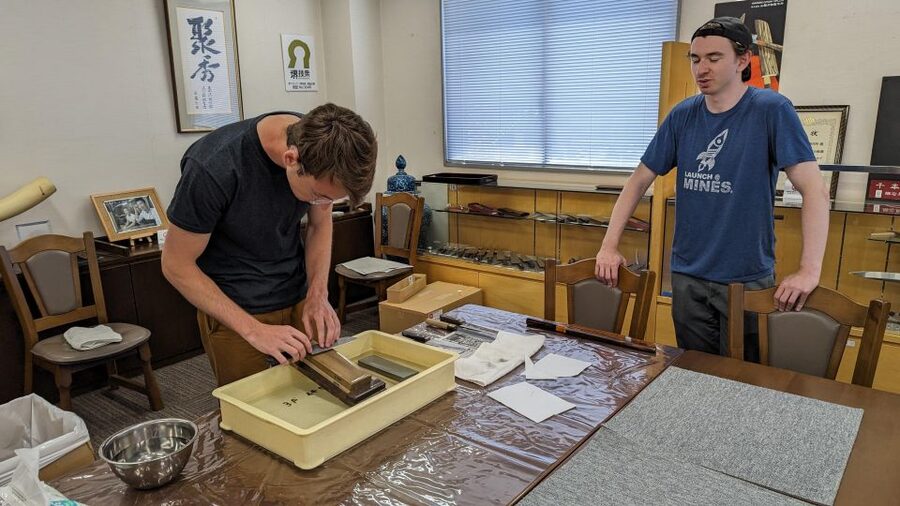
The best part here is learning the sharpening process in a structured way. The tour includes a traditional sharpening technique lesson, and it’s designed to help you understand what the maker is doing and why it matters. You’re not just looking at tools, you’re learning how the edge is treated.
Shopping can also be part of this day in a more active way. On knife-maker days, you have the chance to order a customizable knife, and you can watch the process being made in front of you. For anyone who’s ever thought, I want a Japanese knife but I do not want to gamble, this is the safer path. You get guidance from the people who make the thing.
What to expect in the real-world: you’ll likely stand, look closely, and ask questions. Wear shoes you can stand in, because workshop time is time on your feet.
- Osaka Go Karting Tour with Funny Costume★ 5.0 · 2,658 reviews
- Osaka Castle: Museum and Tower Entry Ticket★ 4.5 · 2,380 reviews
- Osaka: Shinsekai Food Tour with 13-15 Dishes at 5 Eateries★ 4.8 · 2,204 reviews
- Osaka Food Tour: 13 Dishes at 5 Local Eateries★ 5.0 · 2,149 reviews
- Hungry Osaka Street Food Tour:15 Tastings & 3 Drinks with a Local★ 5.0 · 1,727 reviews
De Sakai on Wednesdays: blacksmithing with Eric Chevallier
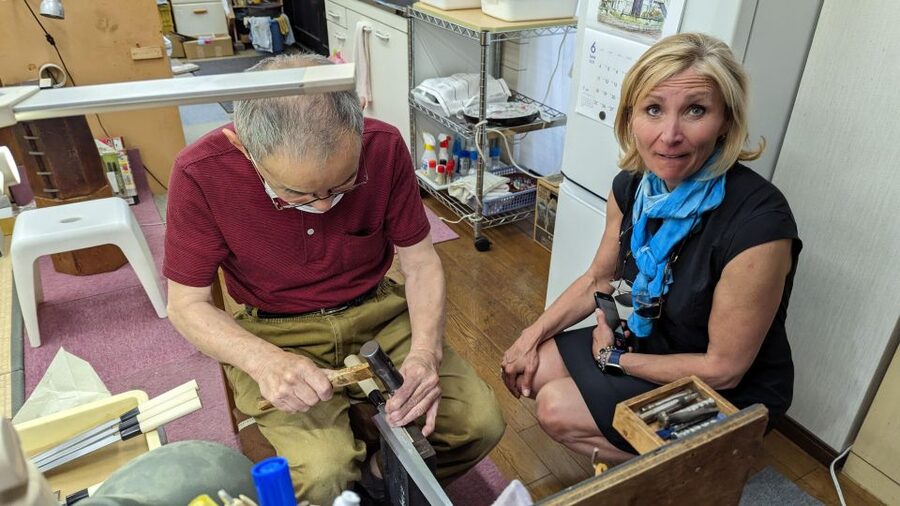
Choose the blacksmith walking tour if you want the raw, human drama of forging. On Wednesdays, the workshop option is tied to the blacksmith and the forge at De Sakai, and it’s connected with Eric Chevallier in the experience.
This day is built around the forging process, taught directly by the artisan. You get detailed instructions in English and French, from the blacksmith himself. That matters, because forging is full of small moves and timing. If you only get a general explanation, you miss half the point.
In practice, this is where reviews get most excited. People highlight getting a hands-on moment. That can include hammering down the glowing steel as the starting point to making a knife, which is a memorable way to understand force, heat, and control. If you’re a visual learner, this is the option.
It also helps that the day still includes the Sakai context. You are not stuck in one room. You walk through parts of Sakai’s craft district, you meet people tied to the local trade, and you connect the food and museum context back to the metalwork.
One timing heads-up for 2026: from March 6 to April 6, 2026, the experience runs as blacksmith only. Even then, Tuesdays and Wednesdays still operate, with the knife maker rate applied to those days during that window. If your trip lands in that period, expect the day to be more forge focused.
Learning traditional sharpening, so your knife improves at home
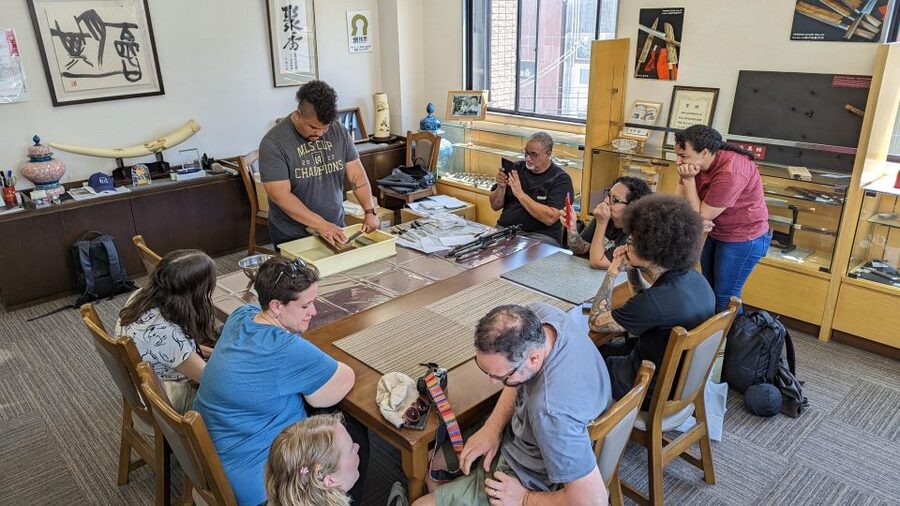
Knife tours often stop at explanation. This one includes a sharpening technic lesson, and that is a big deal for value.
Here’s why: sharpening is where a kitchen knife goes from nice-looking to actually useful. Even a great knife can feel dull if your edge maintenance is off. A traditional Japanese approach tends to focus on specific angles and deliberate motion. You get to learn the method with supervision, so you’re less likely to accidentally create a worse edge.
This lesson also makes the whole day more cohesive. When you watch blades being shaped at Yamawaki or forged at De Sakai, you’ll understand how the edge is supposed to end up. Then when you learn sharpening, you see the full chain: heat and shaping, grinding and finishing, then final edge work.
Practical tip: don’t rush the lesson. Ask how often to sharpen, what to watch for on your blade, and what common mistakes beginners make. The people running the workshop are there for questions.
And if you buy a knife, this lesson turns into an immediate payoff. You can walk out with a better plan for keeping your edge in decent shape rather than leaving with buyer’s guilt and a dull blade.
Custom knife ordering and buying time, without wasting your money
If ordering a knife is on your wish list, you’ll want to think of the process as a conversation, not a transaction. The tour includes shopping time, and knife-maker days include a customizable knife order option, with you able to watch the process.
That means you’re not just picking a random knife size and hoping it fits your cooking style. You can get input that helps you choose an appropriate style and handle feel. In other words, you buy with context, which is the difference between a good souvenir and a tool you actually use.
One thing to keep realistic: shopping is part of the craft world, so the tour won’t turn into an all-day market crawl. You get specific shopping windows built around the workshop visits. Bring a clear budget in mind. If you overspend, it can be hard to enjoy the rest of the day.
Also, the included time is about the craft experience first. Extra food, drinks, and additional shopping are not included. So treat purchases and snacks as separate decisions.
Walking pace, small groups, and language expectations
This tour runs about 210 minutes, so it’s a half-day in feel, with a moderate amount of walking. The route includes short transfers between stops, including a couple of around 15-minute stretches on foot. Expect a good amount of standing time inside workshops.
It’s a private or small-group experience. That matters because knife workshop questions are easier when you are not fighting for attention. It also helps with timing at hands-on stations like hammering or sharpening.
Language is another key planning point. Guides can speak English, and some guides can also speak French. On shared tours, French speaking is not guaranteed. If French is a priority for your group, contact the operator before booking to confirm for your specific date.
You also need an ID card or passport.
Accessibility-wise, the tour is wheelchair accessible, which is great for planning. Still, workshops can have uneven flooring, so ask if you need help navigating specific spaces when you book.
Names to look out for: reviews mention guides like Remy, Scott, and Jean-Yves. Regardless of which guide you get, the common theme is someone who can explain not only what you see, but why Sakai became known for cutlery.
Who should book this Sakai knife maker or blacksmith tour
Book this tour if you meet at least one of these profiles:
- You love crafts and want real access to a working workshop, not a demo and out the door.
- You want a practical sharpening lesson, especially if you already own or plan to buy a Japanese kitchen knife.
- You’re curious about how a city’s culture connects food, tools, and craft history.
- You want a hands-on day. The blacksmith option, especially on Wednesdays, tends to deliver that feeling strongest.
It also fits families with older kids, since the day is visual and interactive. And if you’re coming from Osaka, the area is close enough that you can treat it as a focused day trip.
On the other hand, don’t book if you only want a quick photo stop and nothing more. This experience asks you to pay attention, stand for craft explanations, and engage with the process.
Should you book? My take on value
At $64 per person for about 210 minutes, this tour can be a strong value if you care about outcomes, not just entertainment. You get a craft history context, a sweets stop with tastings, access to either a knife workshop or blacksmith forge, and an included sharpening technique lesson. That combo is what makes it worth the cost.
The deciding factor is your preferred craft vibe:
- Choose Tuesdays or Thursdays if you want knife making detail, workshop flow, and the chance to order a customizable knife.
- Choose Wednesdays if you want forging energy, including hands-on forging moments like hammering hot steel, with Eric Chevallier’s workshop as a centerpiece.
If you want both knives and forging, this tour is a smart way to sample the whole ecosystem of Sakai without doing research for days.
FAQ
FAQ
What is the meeting point for the tour?
The meeting point may vary depending on the option booked. It starts at Nankai Sakai Station, south of Osaka, where you meet your guide.
How long is the tour?
The tour duration is about 210 minutes.
Which days are for knife maker versus blacksmith?
Tuesdays and Thursdays are for the knife maker option. Wednesdays are for the blacksmith option.
Is French guaranteed on the tour?
All guides can speak English. Some guides can also speak French, but French cannot be guaranteed on a shared tour. You should contact the operator before booking to confirm availability for French on your date.
Is there an option to order a customizable knife?
Yes, ordering a customizable knife is an option. This is associated with the knife maker day experience where you can watch the process.
What is included in the price?
The tour includes a bilingual local guide, one sweet at the sweet shop, access to the knife factory, a knife sharpening technic lesson, and shopping time. Custom knife order is included as an option.
What should I bring?
Bring a passport or ID card.
What if the museum is closed on a 3rd Tuesday?
Every 3rd Tuesday, the museum has inventory and it might close without notice. If it does, your guide takes you directly to the knife company and still includes cutlery history during the walk and at the office.
Is the tour wheelchair accessible?
Yes, the tour is listed as wheelchair accessible.
Made by Hand, and Yours to Keep



Newest Osaka write-ups from the Loving Japan desk



Japanese Craft and Calligraphy Workshops, side by side.
 ★ 5.0Tokyo Shinjuku Chopsticks Making ClassFrom $201,763 reviews
 ★ 4.8Chopstick Making Workshop in GinzaFrom $251,366 reviews
 ★ 5.0Chopsticks Making Workshop in Gion with Engraving OptionFrom $15958 reviews
 ★ 4.8Tokyo Sumo Experience: Chanko & Mochi with a Former ProFrom $103567 reviews
 ★ 5.0Kintsugi Experience: Art of Golden Joinery in TokyoFrom $59467 reviews
 ★ 5.0Tokyo Chopstick Making Workshop with ArtisanFrom $26466 reviews
 ★ 4.9Matcha Making Experience with Mochi Sweets in AsakusaFrom $22388 reviews
 ★ 4.8Authentic knife making experience at a blacksmith in KyotoFrom $154350 reviews
Filed on these lists too