
REVIEW · SUSHI AND SASHIMI EXPERIENCES
Tokyo Keen Japanese Knife and Sashimi Workshop
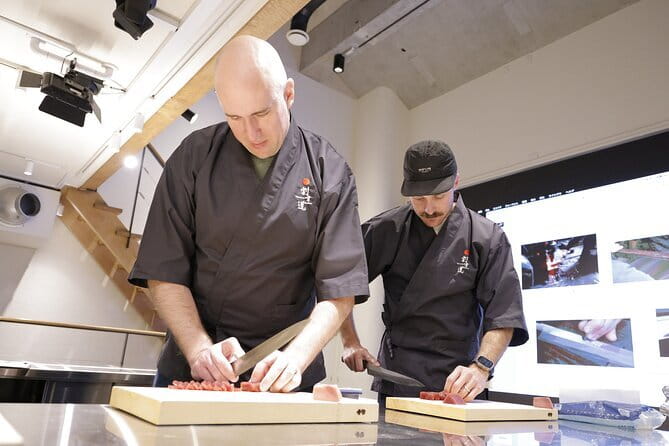
Sharp blade, gentler learning pace. This two-hour, small-group workshop teaches Japanese knife making, whetstone sharpening, and sashimi cutting, then sends you off with zuke-don lunch.
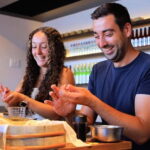
I love the hands-on practice more than the watching part, because you actually handle the knife and repeat the motions until they click. I also love the cultural framing, including Japanese knife customs, plus patient help from the chef team.
One consideration: this is a 2-hour skills session, so it’s not a long food crawl or an open-ended tasting menu.
In This Review
- Key Highlights
- Where You’ll Start in Nishiazabu and Why the Studio Setup Matters
- Japanese Knife Culture Before You Touch a Blade
- Whetstone Sharpening: The Skill You Actually Carry Home
- Sashimi Cutting Practice: Learn What Sharp Really Means
- Make Zuke-don Lunch: Marinated Sashimi Over Rice
- Kappodo Original Sake Tasting and the Lunch-Then-Learn Rhythm
- Price and Value: What You Get for $130.78
- Who This Workshop Suits Best (and Who Might Want Something Else)
- Tips to Get the Most Out of Your Knife Skills Session
- Should You Book This Tokyo Keen Japanese Knife and Sashimi Workshop?
- FAQ
- How long is the Tokyo Keen Japanese Knife and Sashimi Workshop?
- What is the price per person?
- How many people are in the group?
- What is included in the workshop?
- Where does the workshop start and end?
- Is transportation included?
Key Highlights
- Small-group instruction (max 8) with a hands-on rhythm, so you’re not just standing in the back
- Whetstone sharpening basics you can repeat later at home, with guidance even if it’s your first time
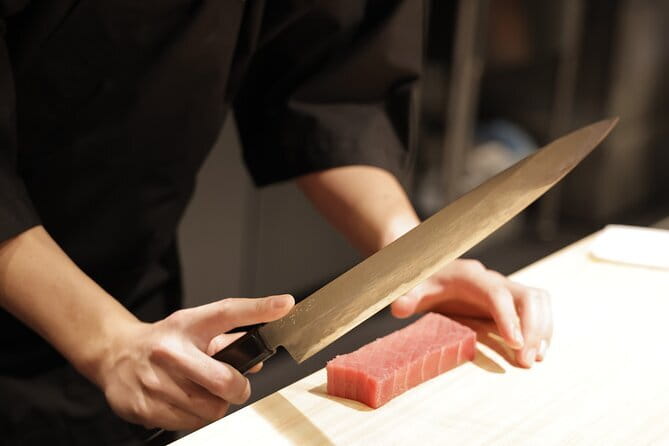
- Sashimi cutting practice using a Japanese knife, so you feel the difference in control and sharpness
- Zuke-don lunch (rice plus marinated sashimi) made by you, with miso soup
- Kappodo original sake tasting alongside your meal
- Meet the team in the Nishiazabu studio, including Chef Naoya and interpreter Hiromi
Counters and courses we sat at around Tokyo
- Sushi Making Tokyo Roll and Authentic Japanese Sushi Class
★ 5.0 · 3,971 reviews - Tokyo: Roll and Authentic Sushi Making Class in Asakusa
★ 4.9 · 1,957 reviews - Make Sushi and Create Unforgettable Memories in Tokyo
★ 5.0 · 1,413 reviews - Tokyo: Sushi Making Class in a Happi Coat near a Famous Spot
★ 4.9 · 1,377 reviews
Where You’ll Start in Nishiazabu and Why the Studio Setup Matters
You’ll meet at Kappodo HQ, at the Tokyo D Kitchen Studio in Nishiazabu (Minato City). The address is: DKビル, 2-chōme-21-12, Nishiazabu, Tokyo 106-0031. It’s in a working cooking space, not a showroom, which matters because this class is built around doing, not just listening.
The group size is capped at 8 travelers. That’s a sweet spot. You get enough time with the instructor while still feeling like you’re part of a real kitchen lesson. You’ll also receive a mobile ticket, so you can keep things simple on arrival.
One more practical point: you’ll get tools and aprons included. That takes away a lot of friction. You can focus on learning the knife motions instead of figuring out what to bring or whether you’re allowed to handle equipment.
Japanese Knife Culture Before You Touch a Blade
This workshop starts with context, and I appreciate that. You begin with an explanation of how a Japanese knife is made, plus the culture and customs around Japanese knives. It’s not just romantic trivia. The point is to help you understand why the knife is shaped and sharpened the way it is, so what you’re about to do makes sense.
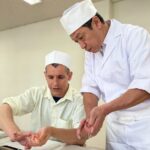
Then you’ll get a knife skills demonstration by the instructor. This part is designed to show you the correct approach before you’re asked to copy it. The difference between a tutorial and a real skill lesson is usually timing, and here the sequence is: concept first, demonstration second, practice third.
Chef Naoya and interpreter Hiromi are part of the teaching team. Based on the way the class is run, you should expect patient instruction and clear explanations in English, with support for questions. That matters a lot if you’re new to Japanese knives. It’s also what makes this feel approachable for people who don’t usually cook sashimi at home.
Whetstone Sharpening: The Skill You Actually Carry Home
If there’s one part of the workshop that turns into a lasting souvenir, it’s the whetstone sharpening lesson.
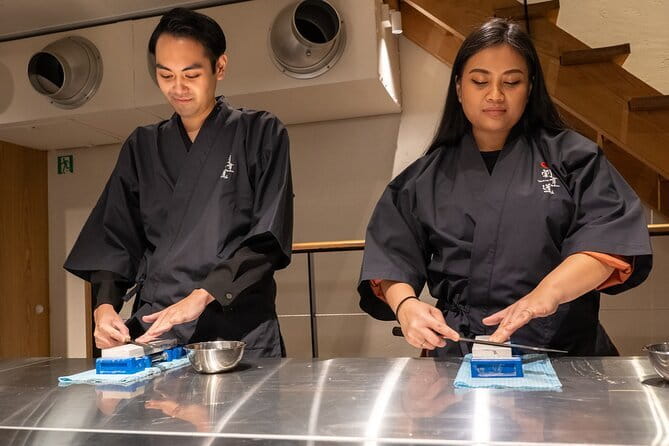
You’ll learn how to sharpen a Japanese knife using a whetstone while the tuna is marinating in the background. The timing is smart. It keeps the session flowing and gives you something productive to focus on instead of waiting around for lunch.
The goal isn’t to turn you into a professional sharpener in two hours. The goal is to understand the basics well enough that you can keep your knife edge in decent shape at home. You’ll test your knife skills after honing your technique, which is the moment many beginners find most satisfying. You can see the improvement in how clean the cutting feels.
A good knife sharpening class does two things at once: it teaches technique and it teaches patience. The instructors’ style is step-by-step and forgiving, so first-timers don’t feel like they’re being rushed through a test.
Make something to take home. Other workshops
- Tokyo Shinjuku Chopsticks Making Class★ 5.0 · 1,763 reviews
- Chopstick Making Workshop in Ginza★ 4.8 · 1,366 reviews
- Tokyo Sumo Experience: Chanko & Mochi with a Former Pro★ 4.8 · 567 reviews
- Kintsugi Experience: Art of Golden Joinery in Tokyo★ 5.0 · 467 reviews
- Tokyo Chopstick Making Workshop with Artisan★ 5.0 · 466 reviews
Sashimi Cutting Practice: Learn What Sharp Really Means
After the sharpening lesson, you move into cutting practice for sashimi. You watch a demonstration first, then you actually cut. That is the whole point of this workshop.
Sashimi cutting is where the workshop earns its keep. It’s one thing to read about how sharp a Japanese knife is. It’s another to feel how it glides through delicate fish and how your hand position affects the cut. When you can reproduce that control, the knife stops being an intimidating object and becomes a tool you understand.
You’ll handle the knife and learn techniques used for sashimi cutting. This is also where being in a small group helps. If your grip or angle needs correcting, you don’t have to wait until the end of class for one vague suggestion.
Fish matters too. The class uses sashimi (with tuna commonly mentioned, but fish can vary depending on availability). The point for you is the slicing technique and how to manage the blade while keeping cuts clean.
If you’ve only ever seen sashimi pre-cut in restaurants, this is the moment you’ll start noticing the difference between careful knife work and quick slicing.
Make Zuke-don Lunch: Marinated Sashimi Over Rice
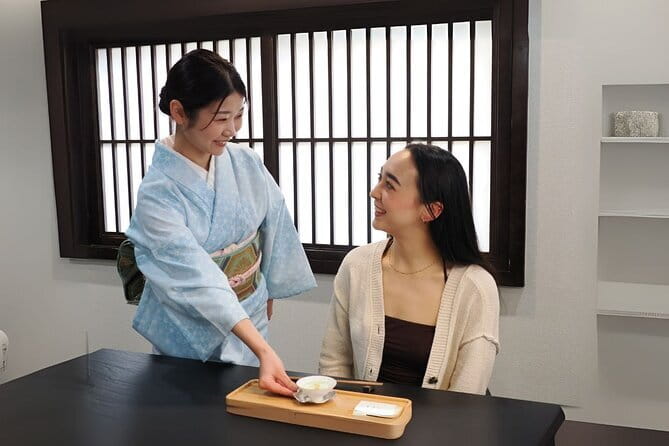
Once your cutting practice is underway, the class shifts toward cooking: zuke-don.
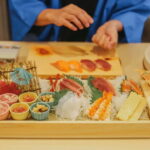
Zuke-don is a bowl of rice topped with marinated sashimi, usually tuna, though the fish used can vary with availability. You’ll learn the process and then enjoy the bowl you made.
The session is set up so you aren’t just assembling ingredients. You’re participating. While the tuna is marinating, you use the whetstone lesson time to build one skill, then you return to the kitchen action for the food part.
A couple reasons this matters from a value perspective:
- You’re eating something that directly depends on the knife skills you learned earlier.
- The workshop wraps around a finished meal, so you get immediate feedback on your effort.
You’ll also have miso soup with your lunch. That turns the meal into a fuller, more satisfying reset after the cutting and sharpening work.
Kappodo Original Sake Tasting and the Lunch-Then-Learn Rhythm
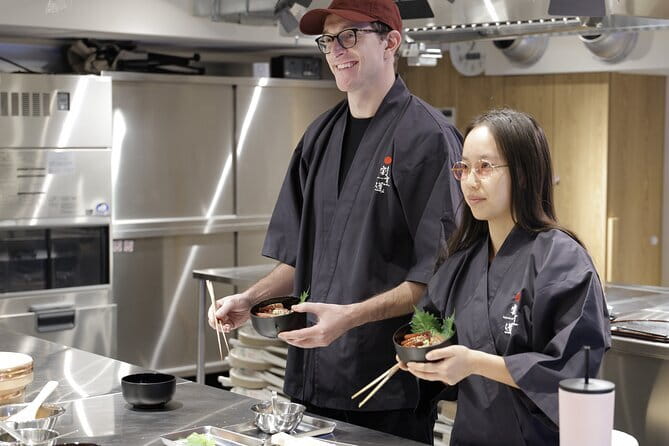
Your lunch includes the tuna bowl you made. The included program also includes a tasting of Kappodo original sake, plus drinks along the way.
There’s a neat rhythm to the experience: you work first, then you eat what you made. Many cooking classes stop at the cooking step. Here, the knife learning and the lunch are tied together, which makes the whole thing feel like one cohesive lesson.
If you enjoy sake, the tasting is a nice bonus without turning the class into a drinking event. You get a small taste alongside lunch, which feels respectful of the teaching time. If you don’t drink, you can still enjoy the rest of the meal and the class focus stays on food and technique.
Price and Value: What You Get for $130.78
At $130.78 per person for about 2 hours, it’s not the cheapest thing on a Tokyo day. But value here comes from multiple built-in components:
- You get hands-on knife instruction, including whetstone sharpening practice and sashimi cutting
- Tools and aprons are included
- Lunch is included, including the bowl you make and miso soup
- There’s a Kappodo original sake tasting and drinks
- You receive a certificate of participation
- You also get a 10% off perk at the shop on the same day (at the 1F Shop)
For comparison in your head, ask yourself what you’d pay for just one part of this experience, like a structured knife lesson or a guided cooking class with lunch. You’re also paying for small-group attention and correction, which is hard to replicate on your own.
The fact that the workshop runs in a compact 2-hour window also helps. You get real learning without consuming your entire day. If you’re sightseeing, that matters.
Who This Workshop Suits Best (and Who Might Want Something Else)
This workshop fits best if you:
- want a hands-on introduction to Japanese knives, not just a lecture
- enjoy cooking and want techniques you can actually try again at home
- like learning culture through practical skills, including customs around knives
- feel more comfortable in a small group setting
It also works well if you’re traveling with someone who’s curious about food and wants an activity that feels different from standard museum stops.
You might want to choose something else if you’re looking for a slow-paced market tour, or if you want a long, multi-course meal experience rather than a focused skill class. This is about knives first, cooking second, and it stays tightly on that theme.
Tips to Get the Most Out of Your Knife Skills Session
Here are a few practical ways to make this kind of class pay off:
- Ask questions early. If something feels unclear about sharpening angle or cutting technique, address it while you’re still in the demonstration stage.
- Watch the instructor’s hands, not just the knife. Japanese knife work is often about angle, grip, and rhythm.
- Practice with calm focus. The class is designed to be patient, and your results improve when you slow down your thinking and follow the steps.
- Eat with attention. After learning zuke-don basics, noticing how the marination and rice setup work will make the meal feel like part of the lesson.
- Plan your day around the timing. It’s about two hours. Keep it as a clear scheduled block rather than tacking it onto the end of a chaotic itinerary.
Should You Book This Tokyo Keen Japanese Knife and Sashimi Workshop?
If you’re curious about Japanese knives and want to leave with real, repeatable skills, I think this is an easy yes. The combination of whetstone sharpening, sashimi cutting practice, and making zuke-don lunch creates a full learning loop. You’re not just consuming information, you’re shaping technique and then eating the result.
Book it if you value small-group attention and clear instruction from Chef Naoya and interpreter Hiromi. The patient teaching style is a big part of why so many people feel comfortable learning something precise.
Skip it if your priority is a longer, broader food tour or you want a more relaxed, wander-through experience. This one is structured, hands-on, and focused.
FAQ
How long is the Tokyo Keen Japanese Knife and Sashimi Workshop?
The workshop lasts about 2 hours.
What is the price per person?
The price is $130.78 per person.
How many people are in the group?
The group size is capped at a maximum of 8 travelers.
What is included in the workshop?
You get all tools and aprons used in the lessons, lunch (the tuna bowl you made), a tasting of Kappodo original sake, a tour guide, and a certificate of participation. You can also enjoy a 10% discount at the 1F Shop on the same day.
Where does the workshop start and end?
It starts at Kappodo HQ / Tokyo D kitchen Studio / Cooking Workshop / Japan, 106-0031 Tokyo, Minato City, Nishiazabu, 2-chōme 21-12 DKビル. It ends back at the meeting point.
Is transportation included?
Private transportation is not included. The workshop is near public transportation.
Made by Hand, and Yours to Keep

Counters and Courses


Newest Tokyo write-ups from the Loving Japan desk



Sushi and Sashimi Experiences, side by side.
 ★ 5.0Sushi Making Tokyo Roll and Authentic Japanese Sushi ClassFrom $593,971 reviews
 ★ 4.9Roll and Authentic Sushi Making Class in AsakusaFrom $581,957 reviews
 ★ 5.0Make Sushi and Create Unforgettable Memories in TokyoFrom $791,413 reviews
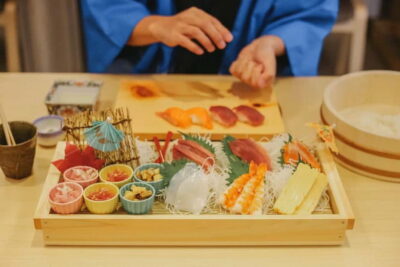 ★ 4.9Sushi Making Class in a Happi Coat near a Famous SpotFrom $421,377 reviews
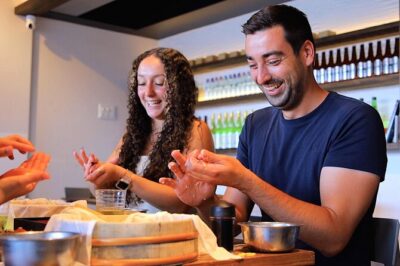 ★ 5.0Sushi Making Osaka Roll and Authentic Japanese Sushi ClassFrom $311,220 reviews
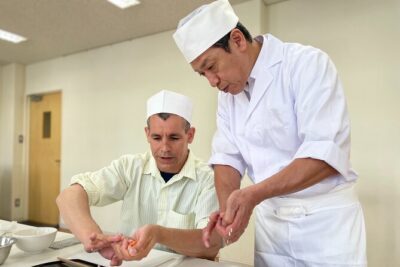 ★ 5.0Tokyo Sushi Making Class in Tsukiji with Professional ChefFrom $491,177 reviews
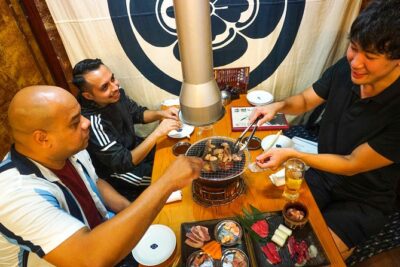 ★ 5.0Tokyo Night Foodie Tour in Shinjuku – Seasonal Sushi, Wagyu BeefFrom $1111,161 reviews
 ★ 5.0Tsukiji Fish Market Guided Tour and Sushi Making with Pro ChefFrom $104775 reviews
Filed on these lists too